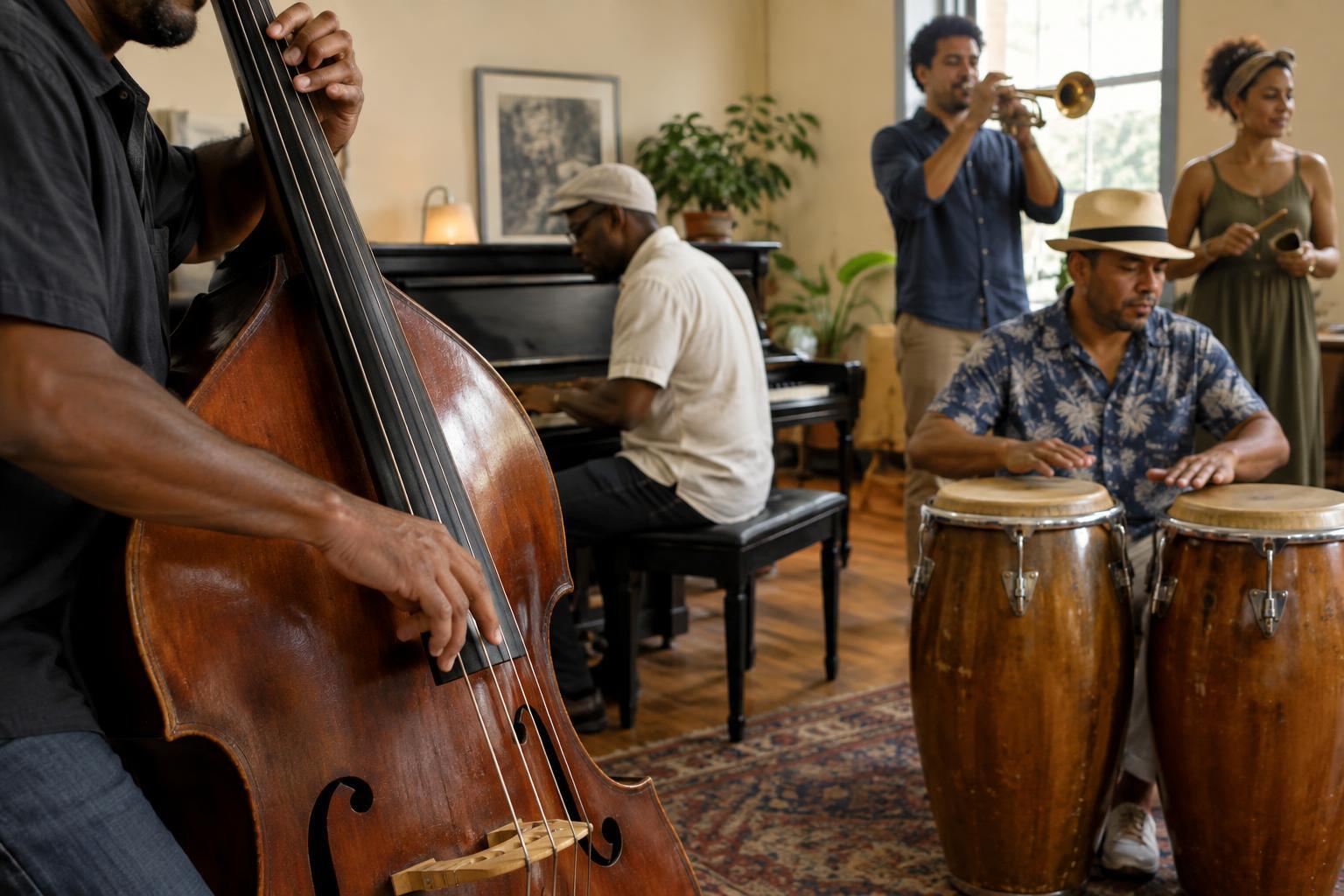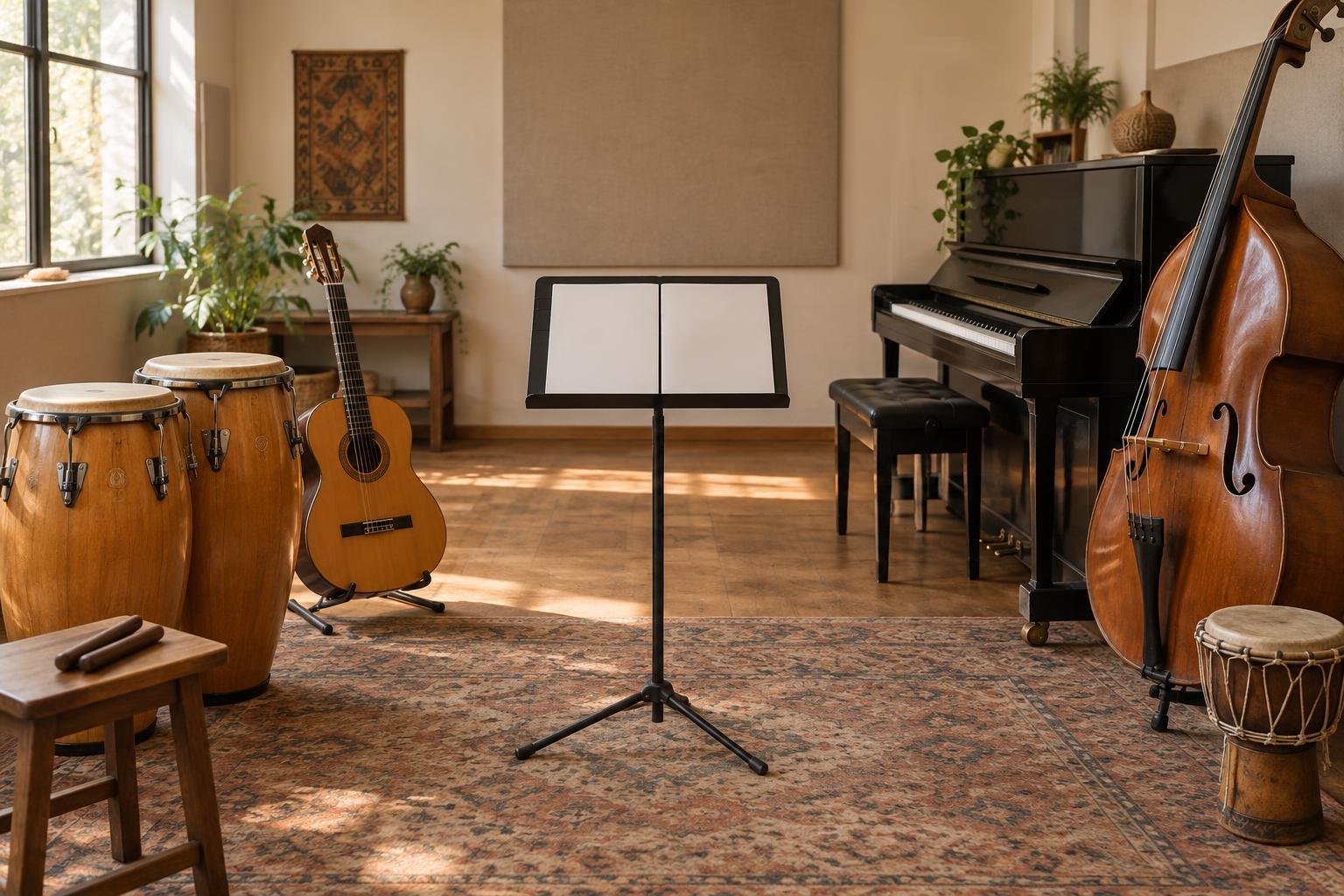
Arranging and ListeningTwo recordings can share a melody and still create different experiences. Compare their grooves, entrances, textures and endings to hear how an arrangement shapes the song—and to bring those ideas into your own listening or playing.
Read article · 4 min↗
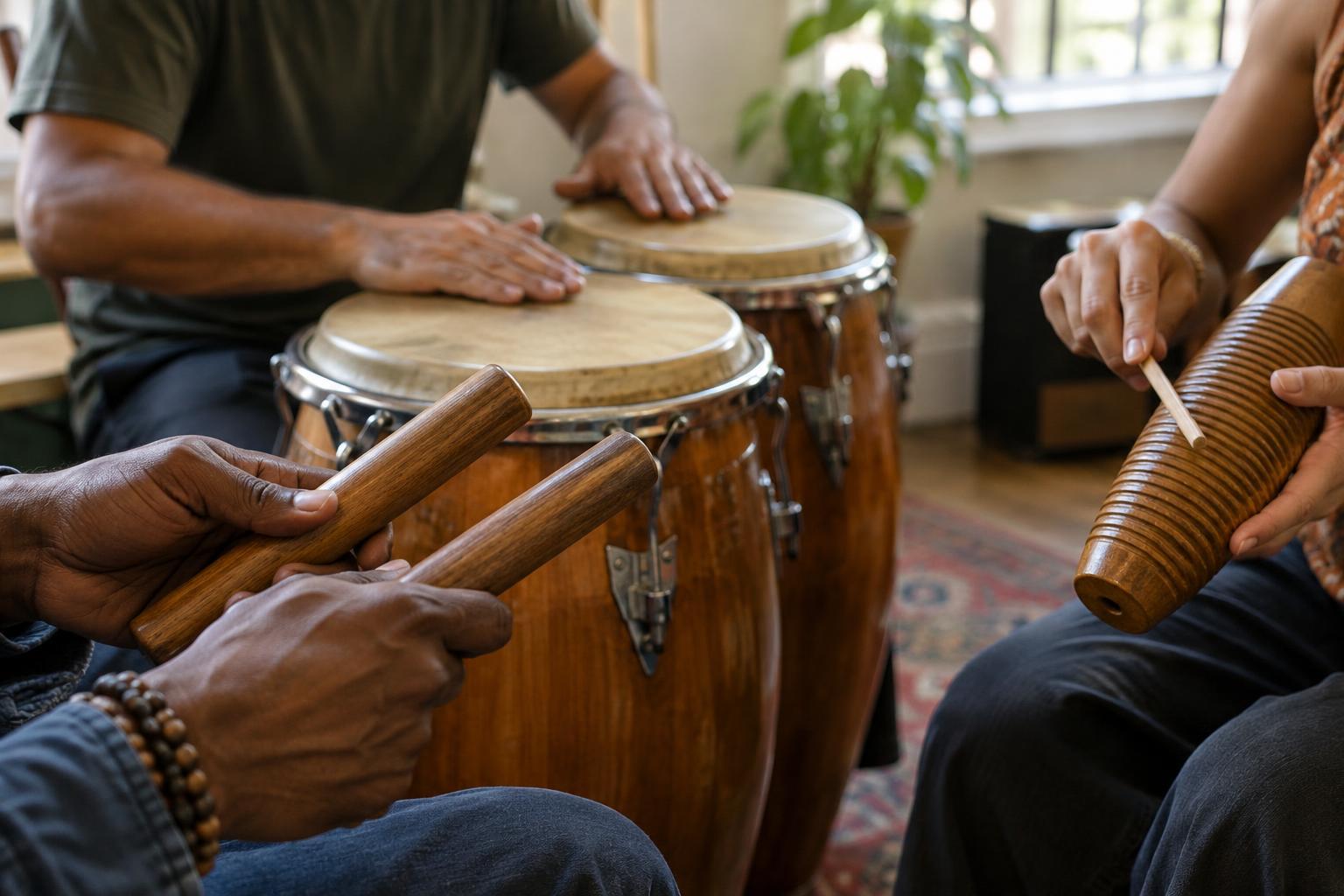
Arranging and ListeningA steady beat can hold several patterns at once. Learn to hear the smaller spaces between beats, follow how percussion and other instruments use them, and practice listening to layered rhythms without losing the pulse.
Read article · 4 min↗
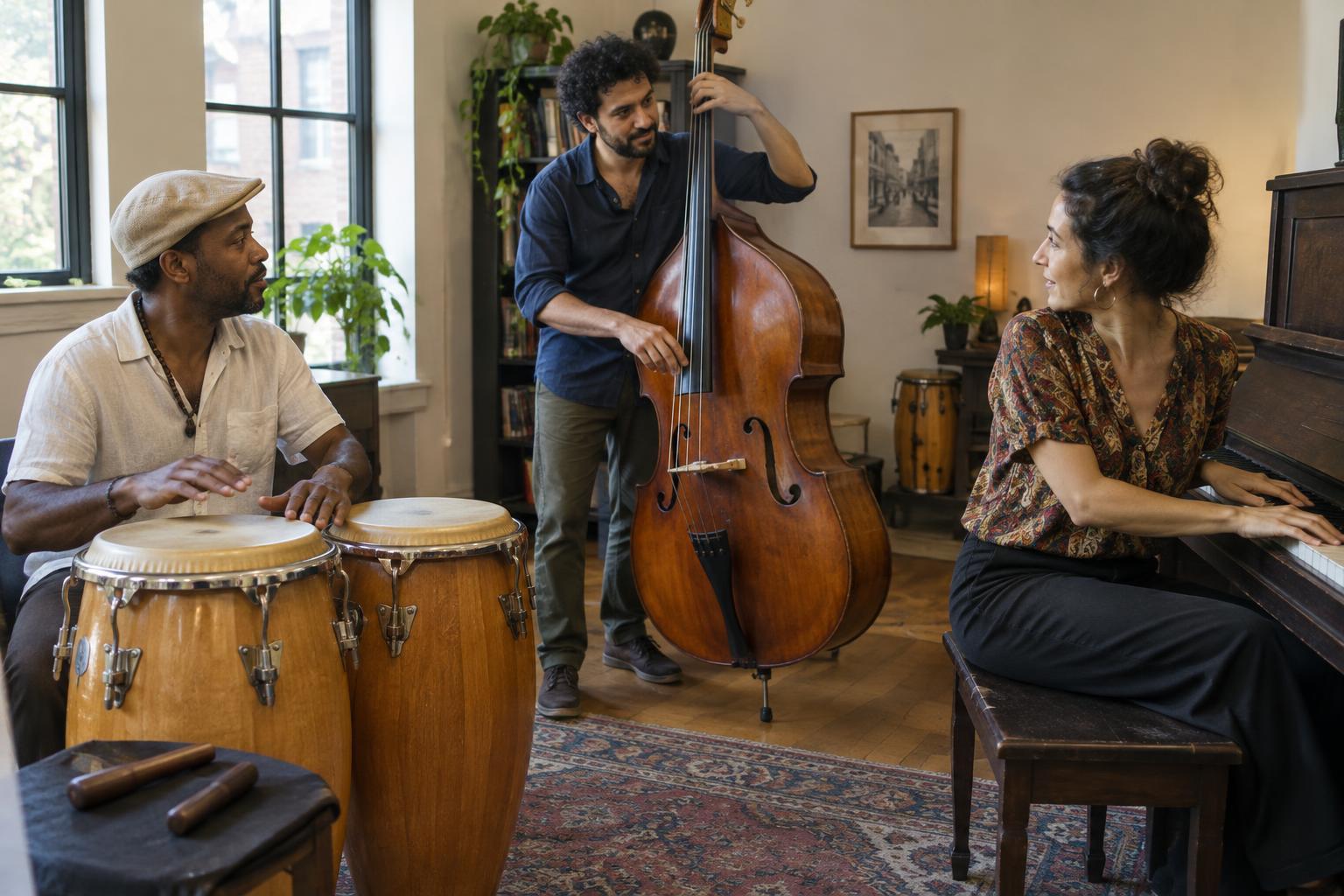
Arranging and ListeningA smaller group cannot play every part of a full-band arrangement, but it can preserve the arrangement’s identity. Learn how to identify essential roles, make room for clave, distribute rhythmic responsibilities and test a reduced chart by listening.
Read article · 5 min↗
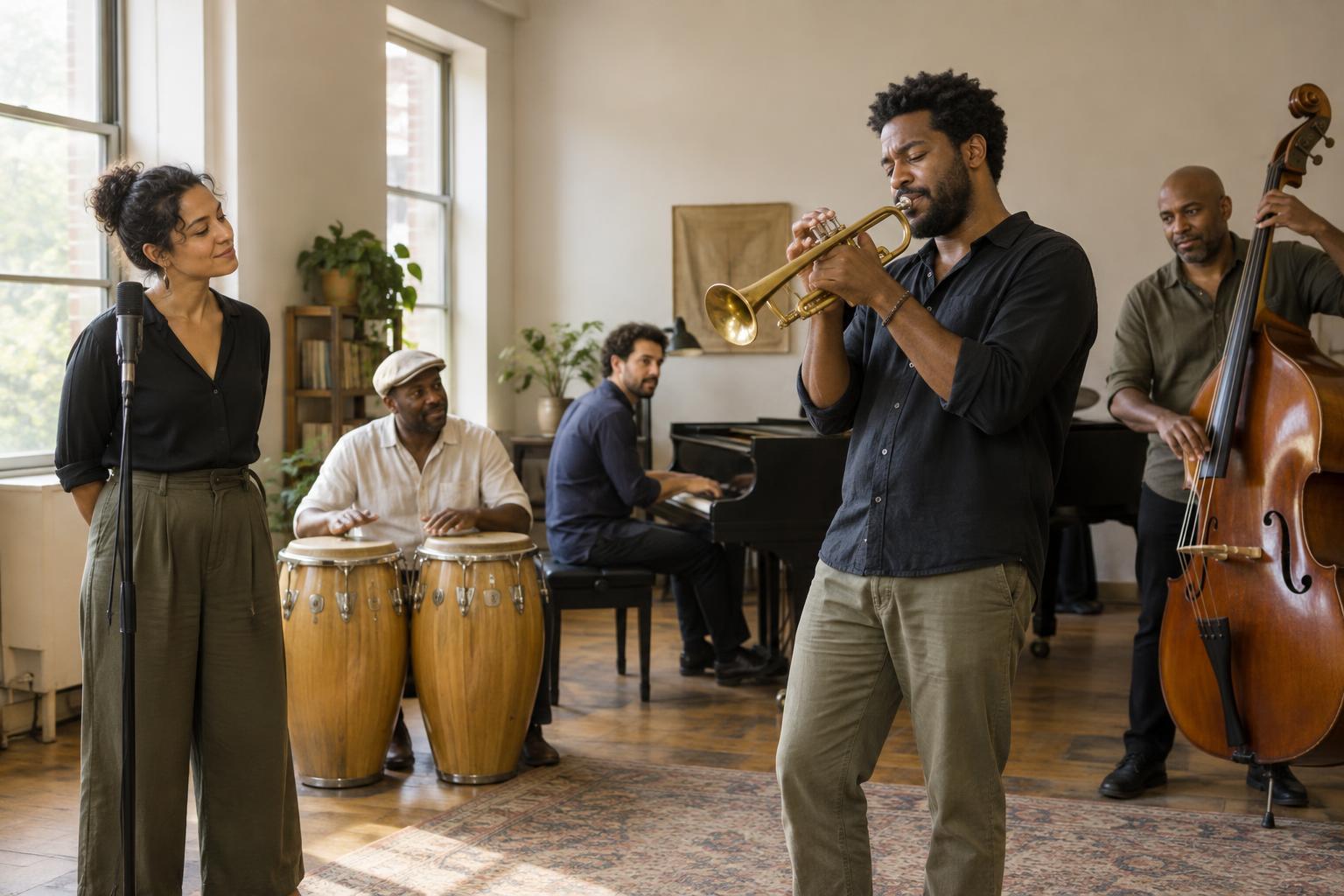
Arranging and ListeningA solo does not require the whole band to play more. Learn how changes in space, register, repetition and percussion can help an improviser take the spotlight without losing the groove.
Read article · 4 min↗
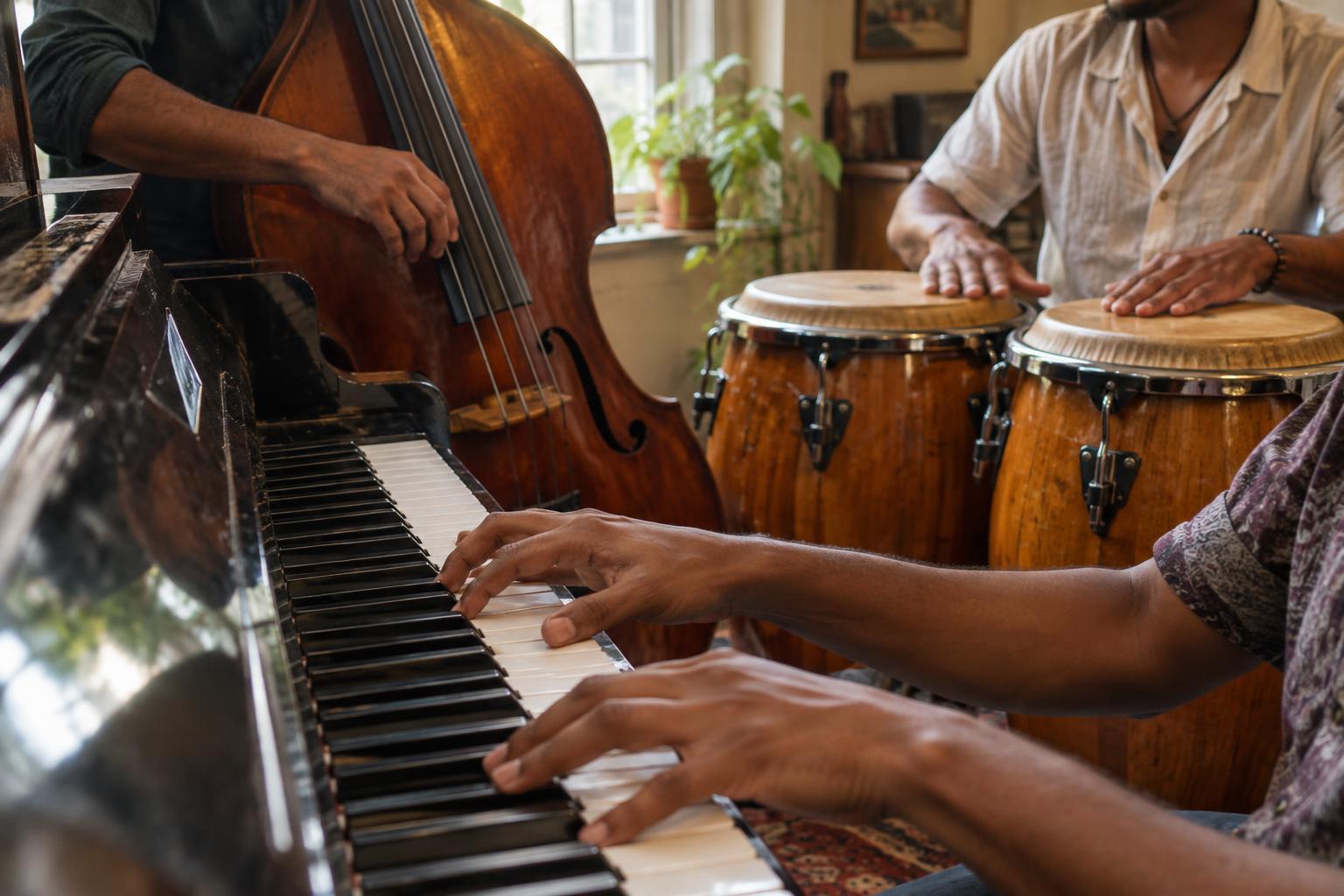
Arranging and ListeningA groove can repeat while the harmony moves at its own pace. Learn how to hear chord-change timing, follow the bass without mistaking every note for a new chord, and practice listening to harmony alongside a repeating rhythm.
Read article · 4 min↗
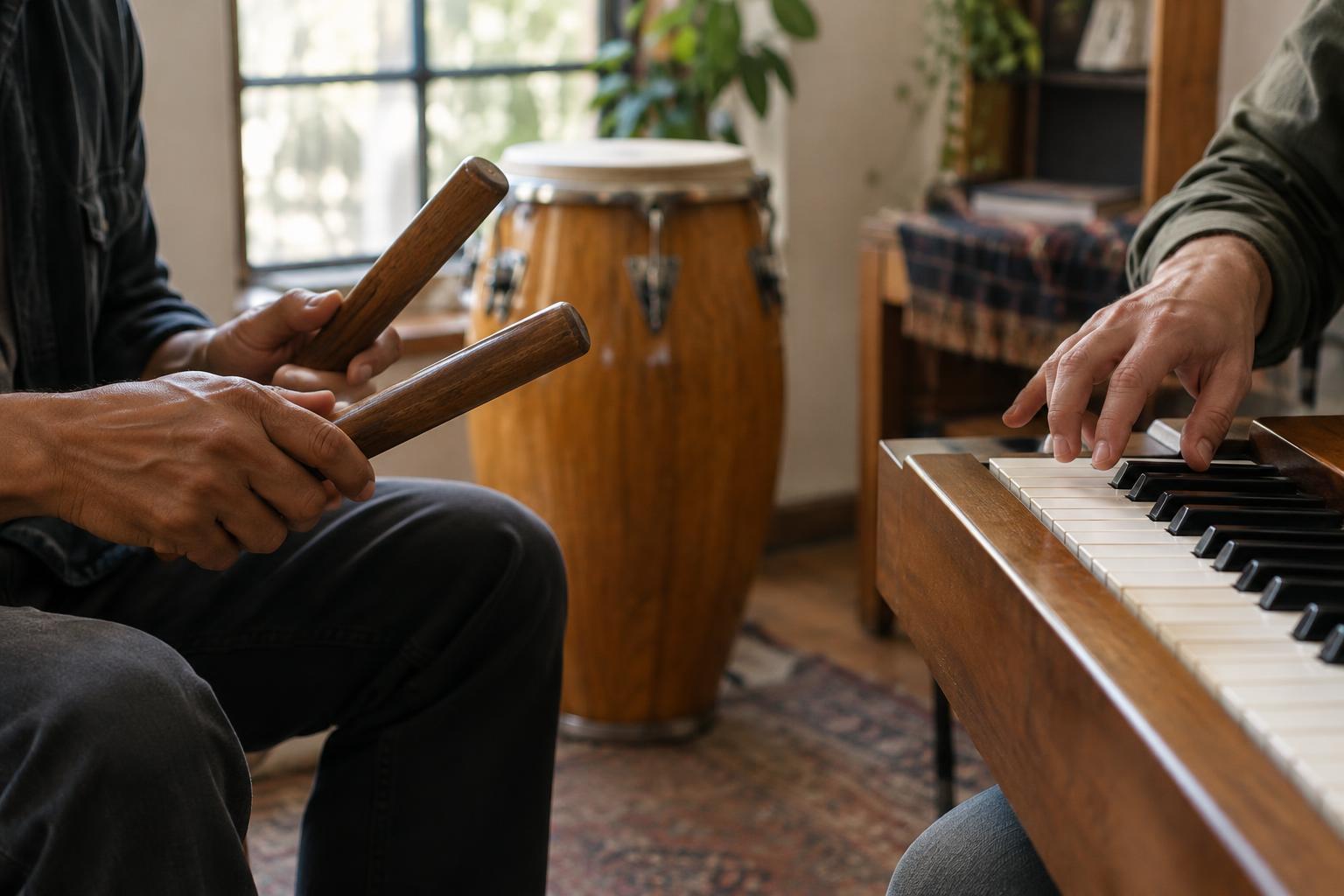
Arranging and ListeningA melody can keep the same notes yet feel more settled, more urgent, or more spacious when its entrances move against clave. Learn to hear that difference and try it in your own arrangements.
Read article · 4 min↗
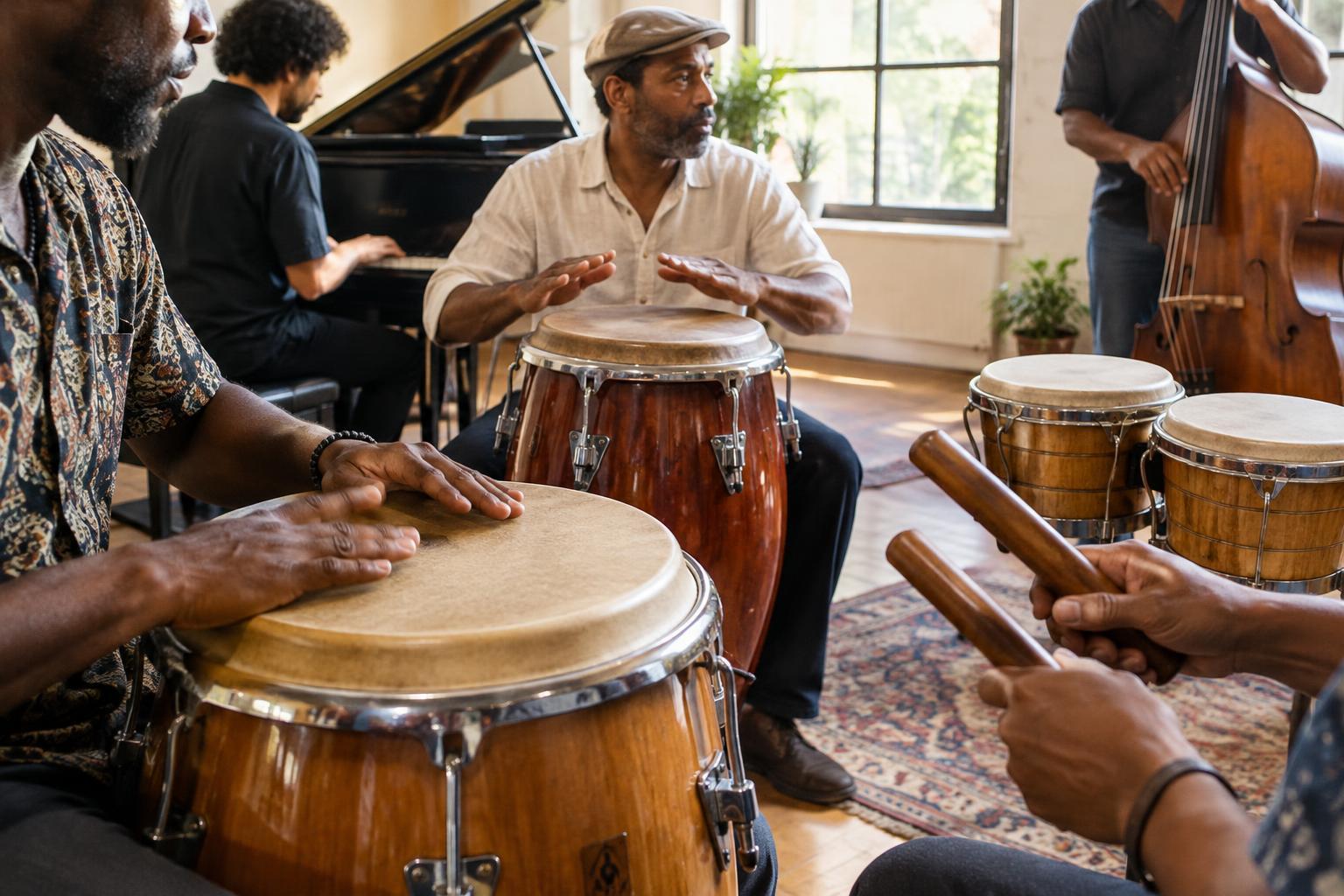
Arranging and ListeningA musical passage can feel more intense even when the volume barely changes. Learn how entrances, rhythmic density, register, space, and contrast can shape energy in an arrangement, with a listening exercise grounded in Afro-Cuban ensemble music.
Read article · 4 min↗
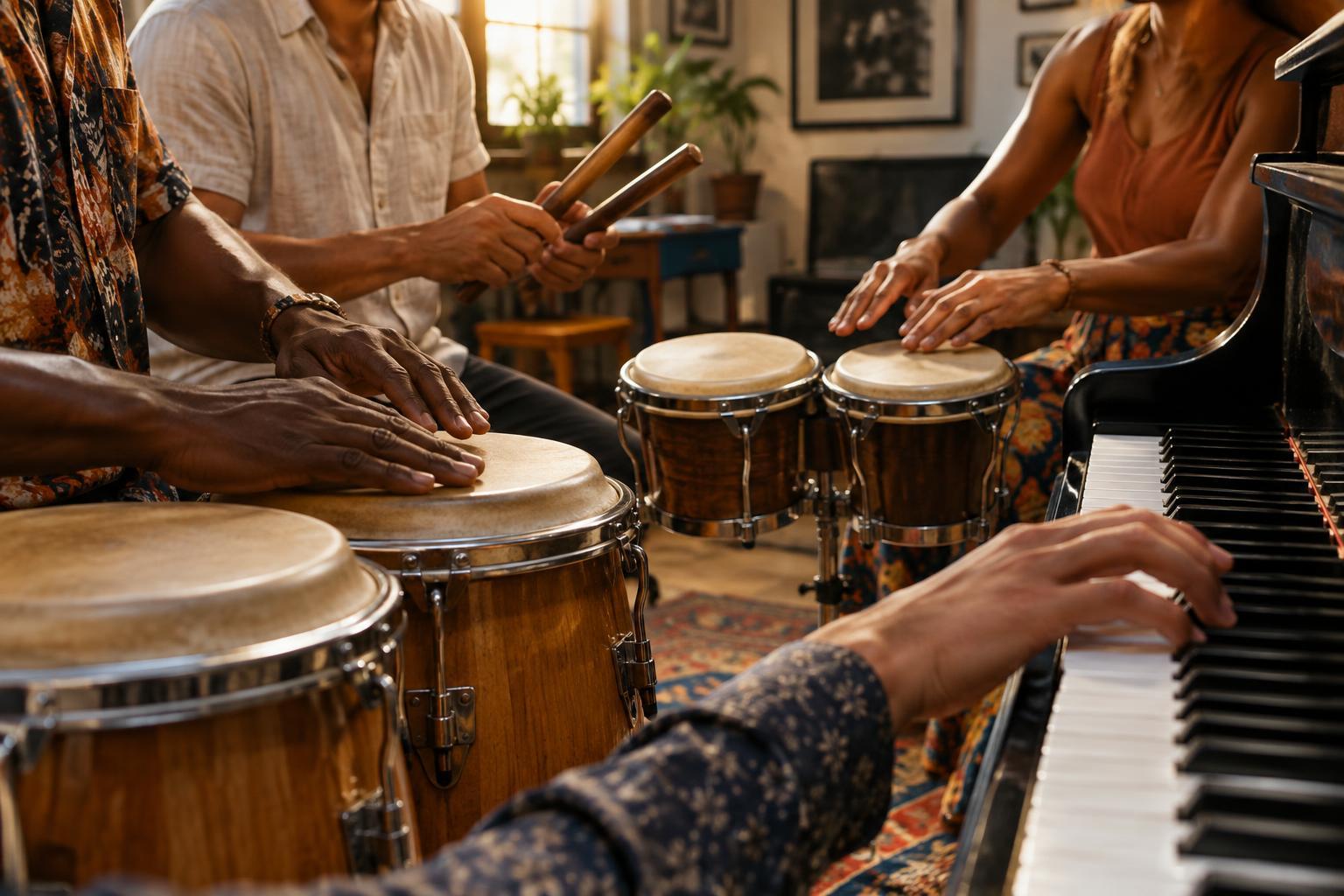
Arranging and ListeningA recording can close with one decisive accent, gradually disappear, or arrive at a phrase the musicians play together. Learn what to listen for in the last few bars—and why a final hit can be part of a larger played ending.
Read article · 4 min↗
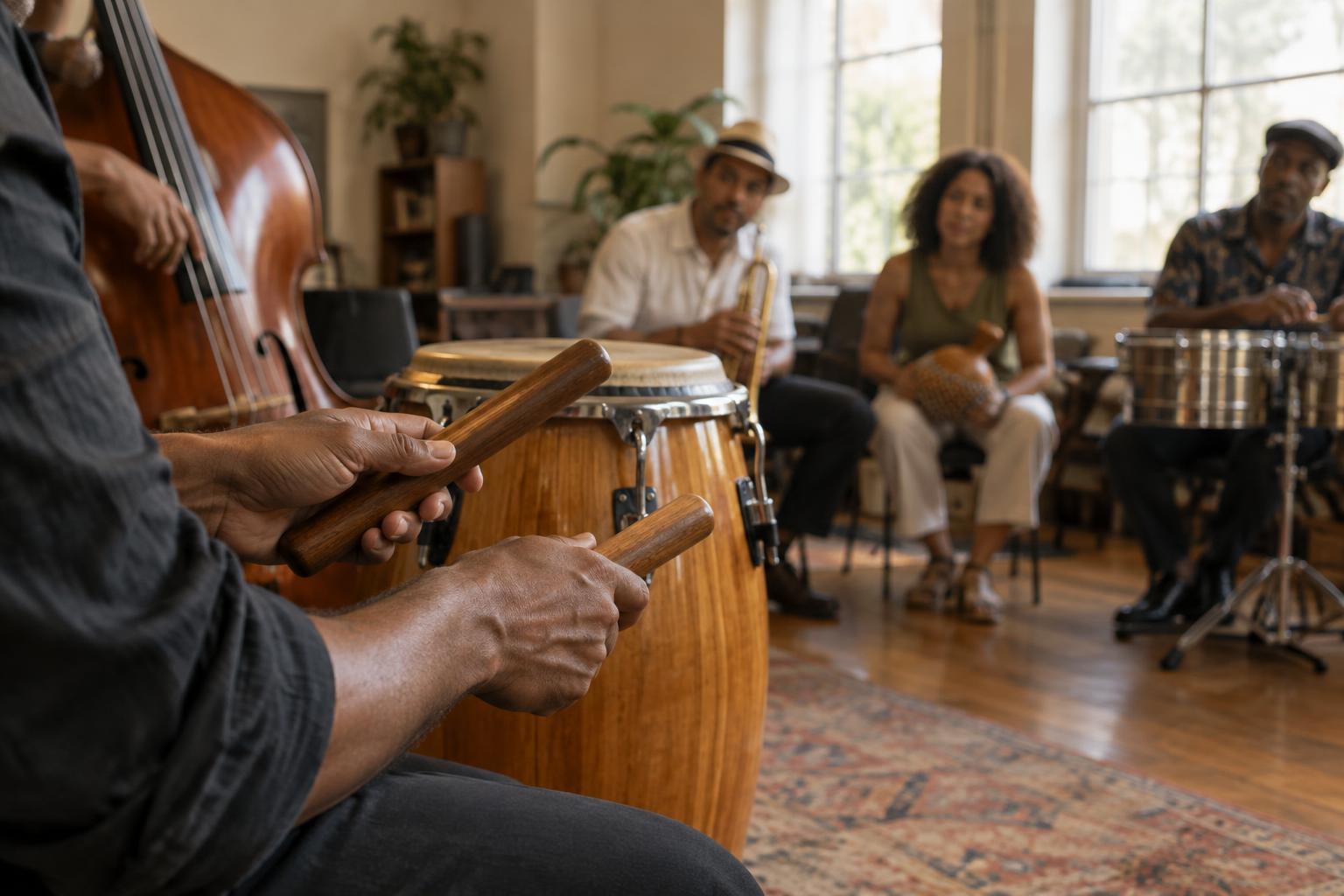
Arranging and ListeningAn introduction can give listeners a sense of the beat before the full ensemble arrives. Learn how sparse percussion, repeating figures, bass movement and melodic phrasing create that expectation—and how to listen for the moment the groove comes into focus.
Read article · 4 min↗
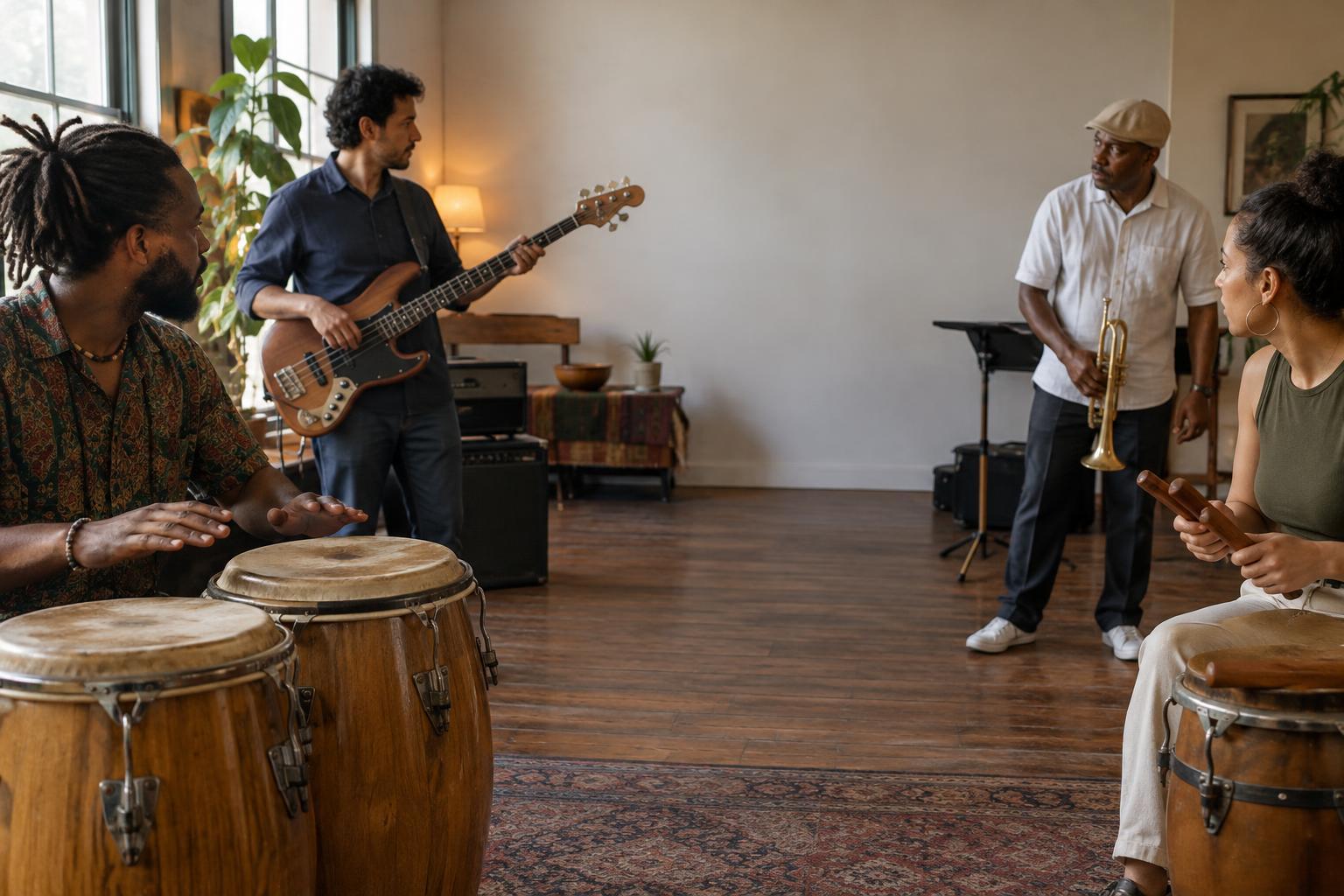
Arranging and ListeningA band can make a return feel powerful by briefly taking sounds away. Learn the difference between a break and stop-time, how musicians keep their place through the gaps, and what to listen for when the full groove comes back.
Read article · 4 min↗
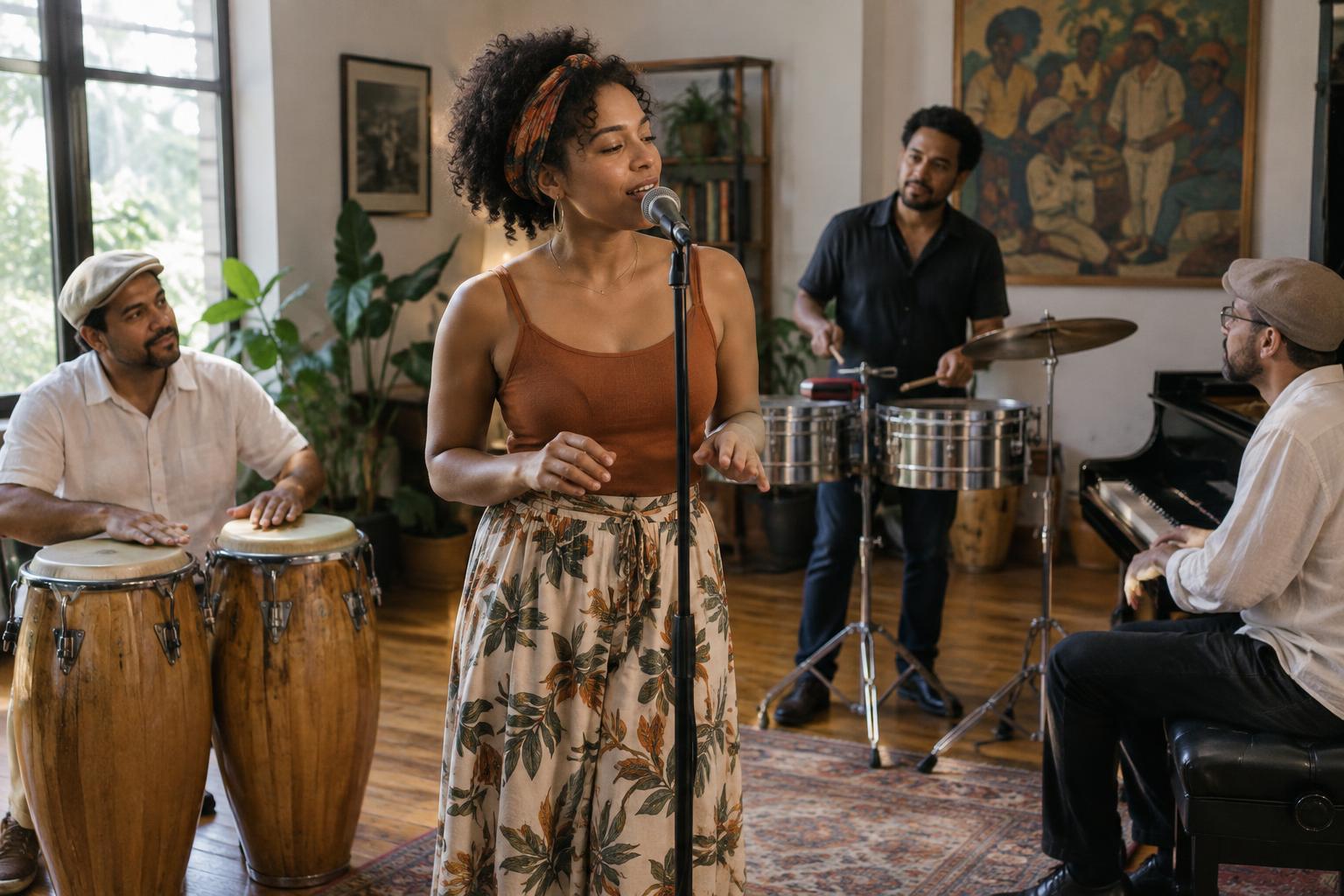
Arranging and ListeningA busy groove does not have to compete with the voice. Learn how to use register, rhythm, dynamics and rehearsal listening to keep a lead singer clear without losing the energy of the ensemble.
Read article · 4 min↗
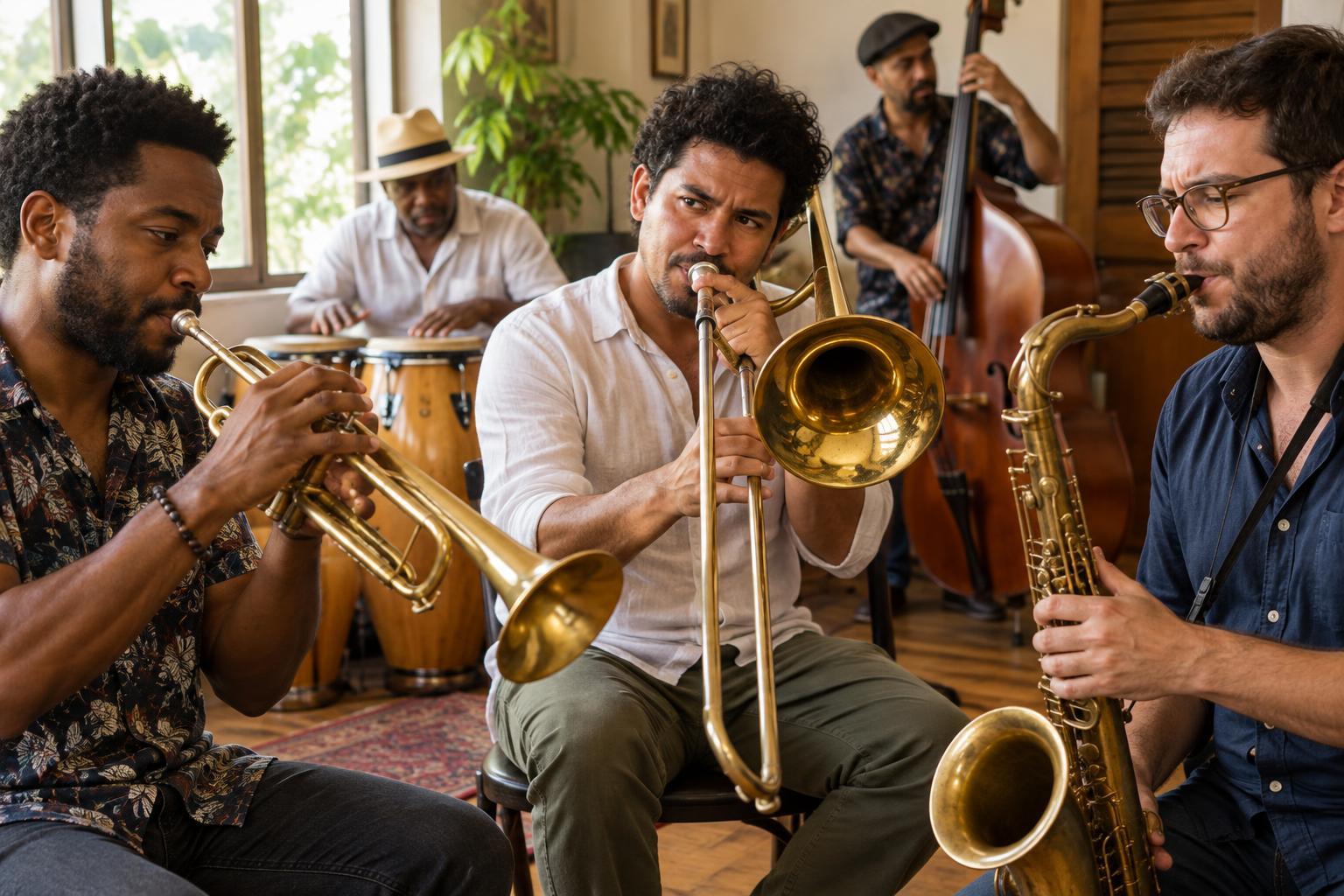
Arranging and ListeningA horn phrase can cut through a dance arrangement as one line, spread across octaves or open into harmony. Learn how to hear these textures, why an arranger might choose each one and how to try them without crowding the rhythm section.
Read article · 4 min↗
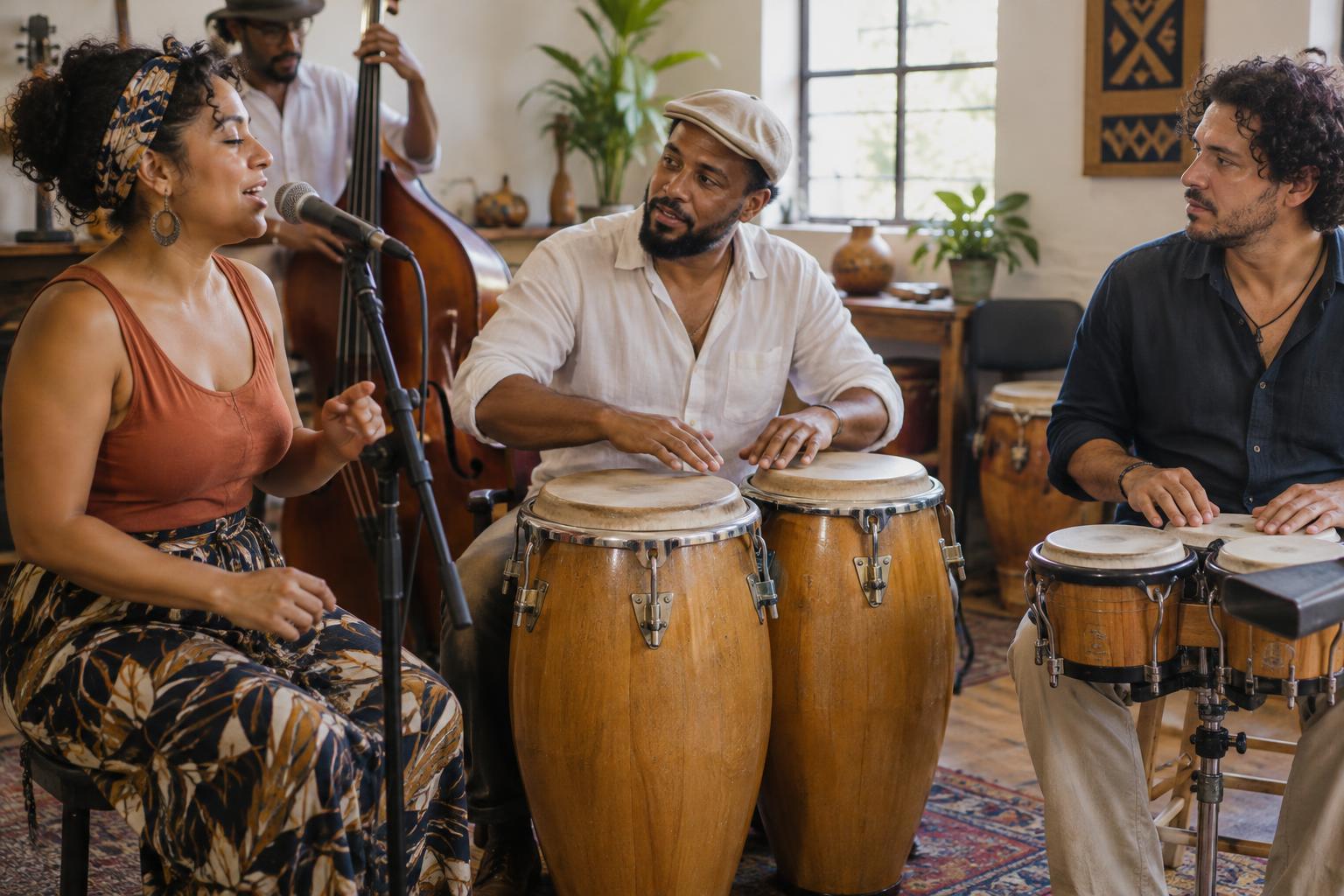
Arranging and ListeningA percussion part does not need to play throughout a song to matter. Learn how entrances, pauses, and changes in texture can clarify form, support singers, and make a groove feel newly alive.
Read article · 4 min↗
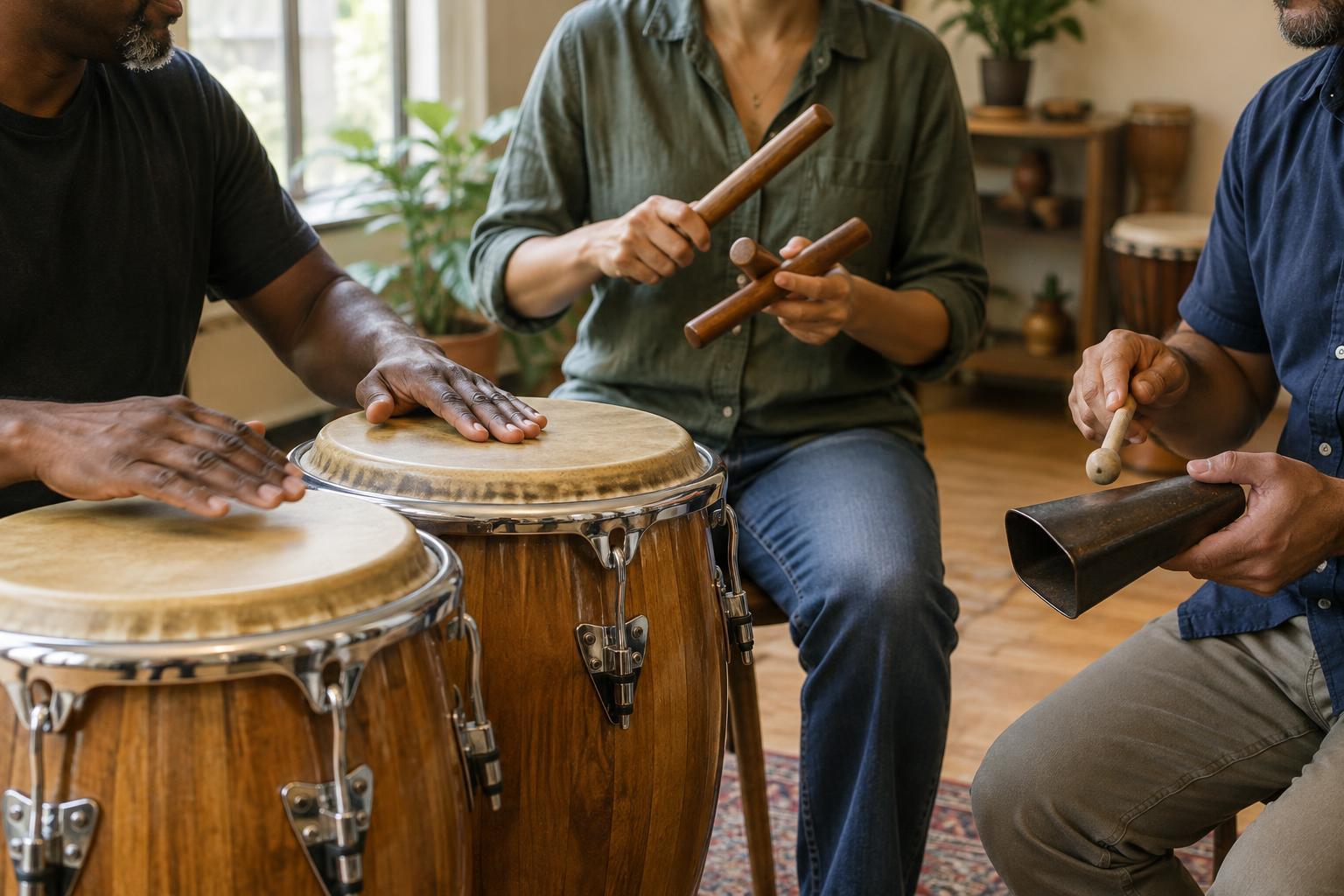
Arranging and ListeningA percussion ensemble can feel busy without every player doing the same job. Learn to hear the pulse, the notes between beats and the accents that shape a phrase, then try a simple listening and arranging exercise.
Read article · 4 min↗
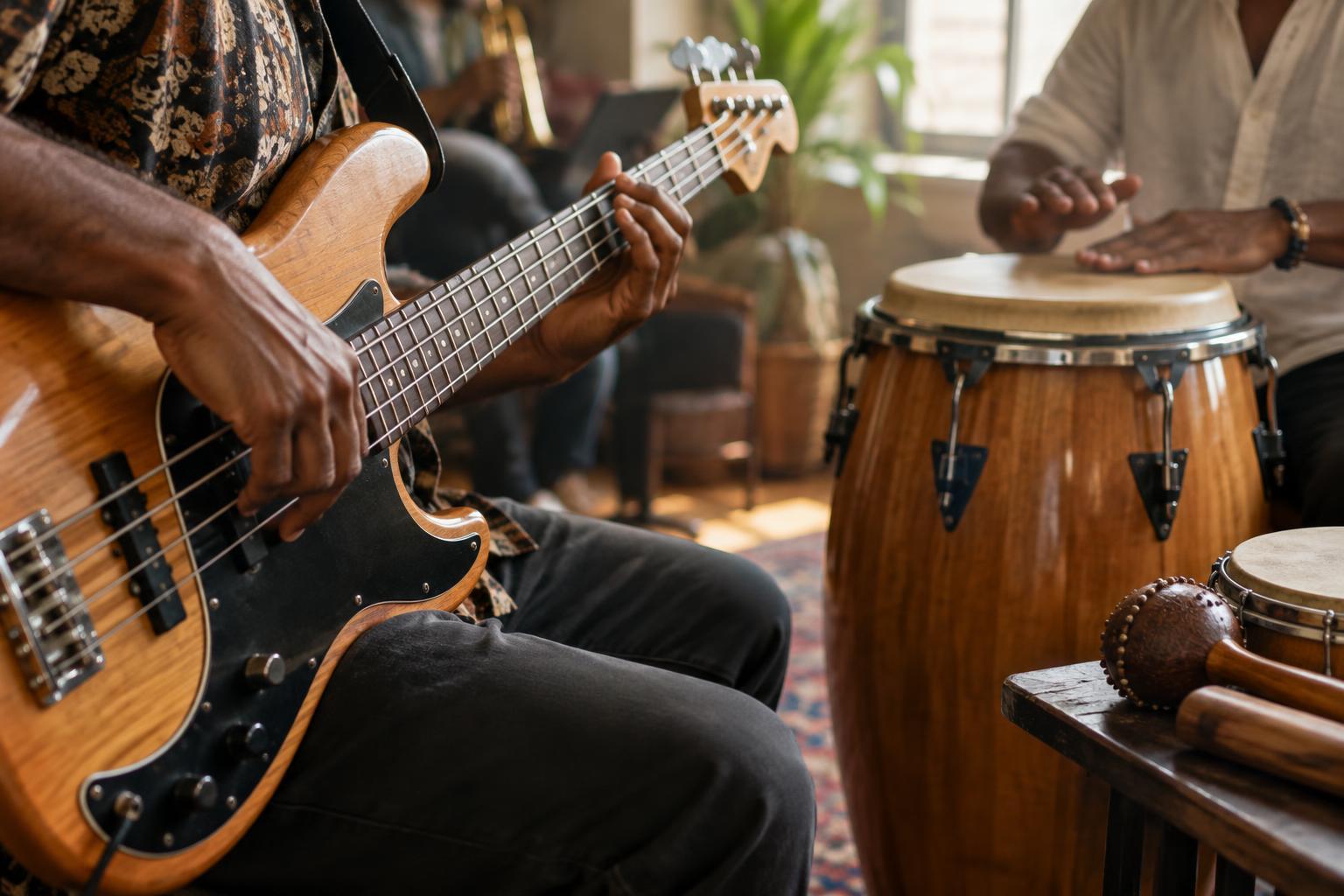
Arranging and ListeningA bass note can point toward the next measure by arriving just before beat one. Learn how to hear that anticipation, distinguish it from the downbeat, and use it thoughtfully when listening, practicing, or arranging.
Read article · 4 min↗
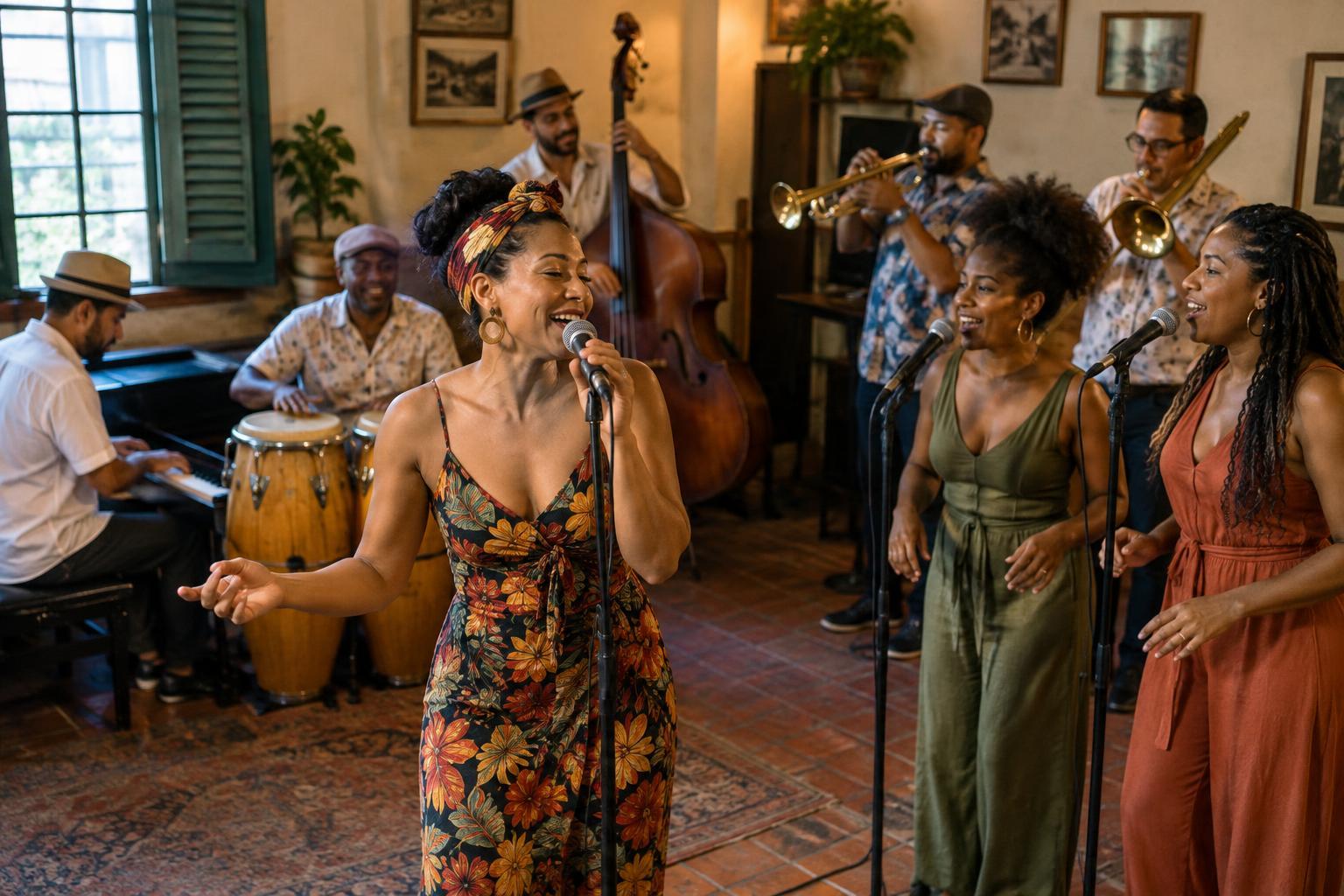
Arranging and ListeningA Cuban dance arrangement can change shape while its pulse keeps moving. Learn to recognize verses, coros and instrumental passages by listening for shifts in the voice, rhythm section, horns and overall texture.
Read article · 4 min↗
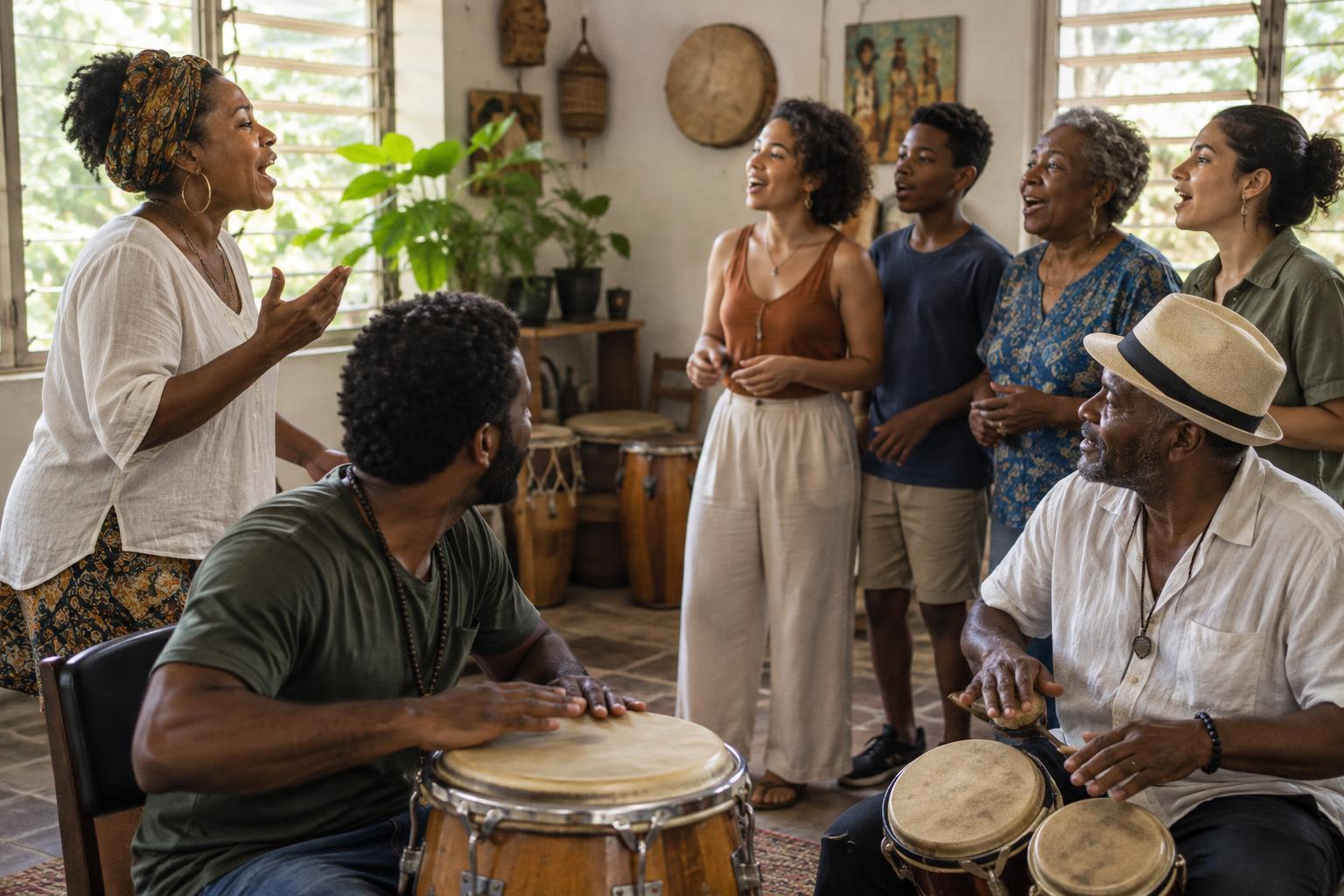
Afro-Cuban MusicCall and response is more than one voice answering another. Learn how to hear the exchange between lead singers, choruses and drums in Afro-Cuban music, then try a simple listening exercise.
Read article · 4 min↗
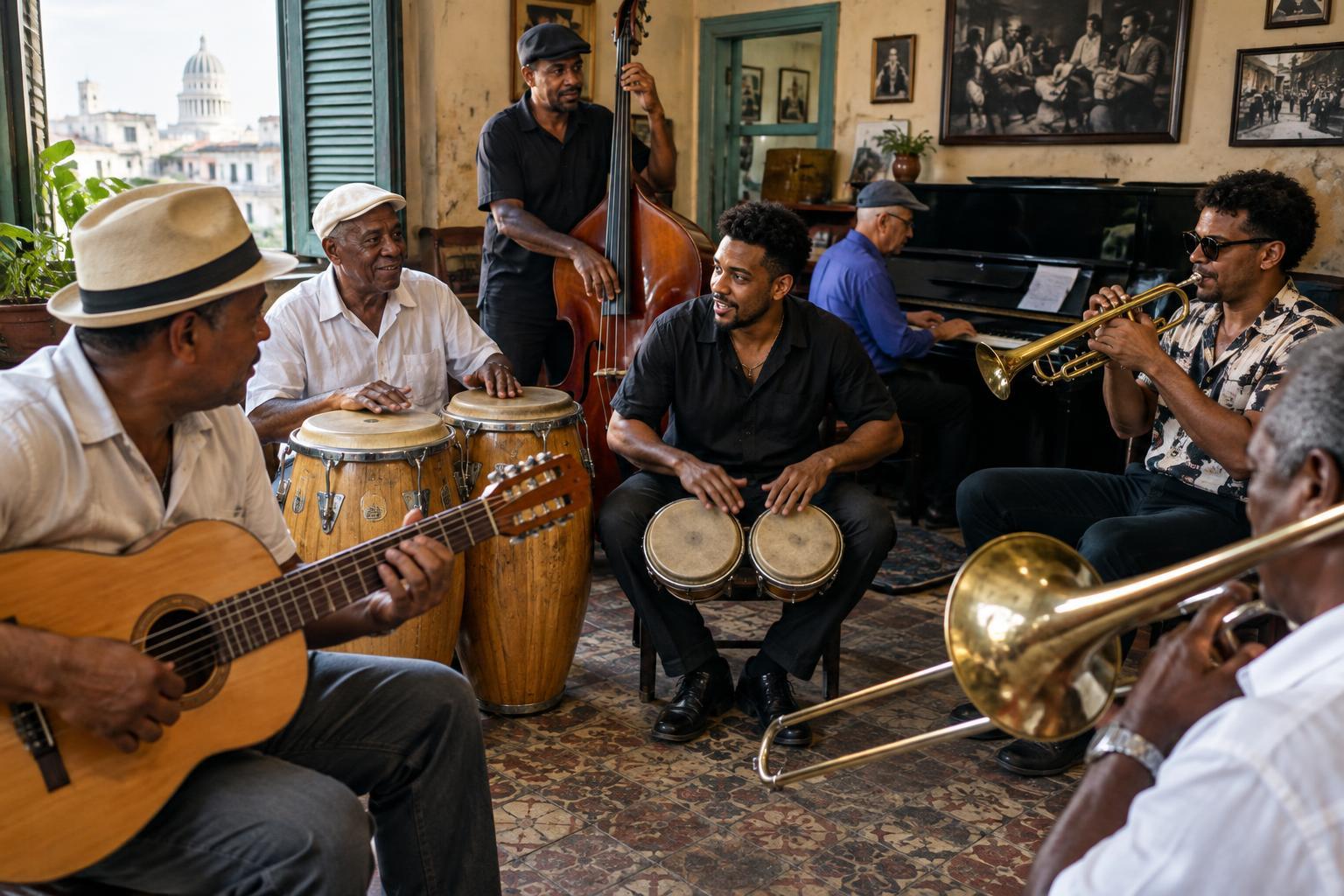
Afro-Cuban MusicSon, salsa and timba share musical roots, but they are not interchangeable names for the same sound. Learn how each developed, what to listen for, and how to compare recordings without reducing rich traditions to a single rhythm.
Read article · 4 min↗
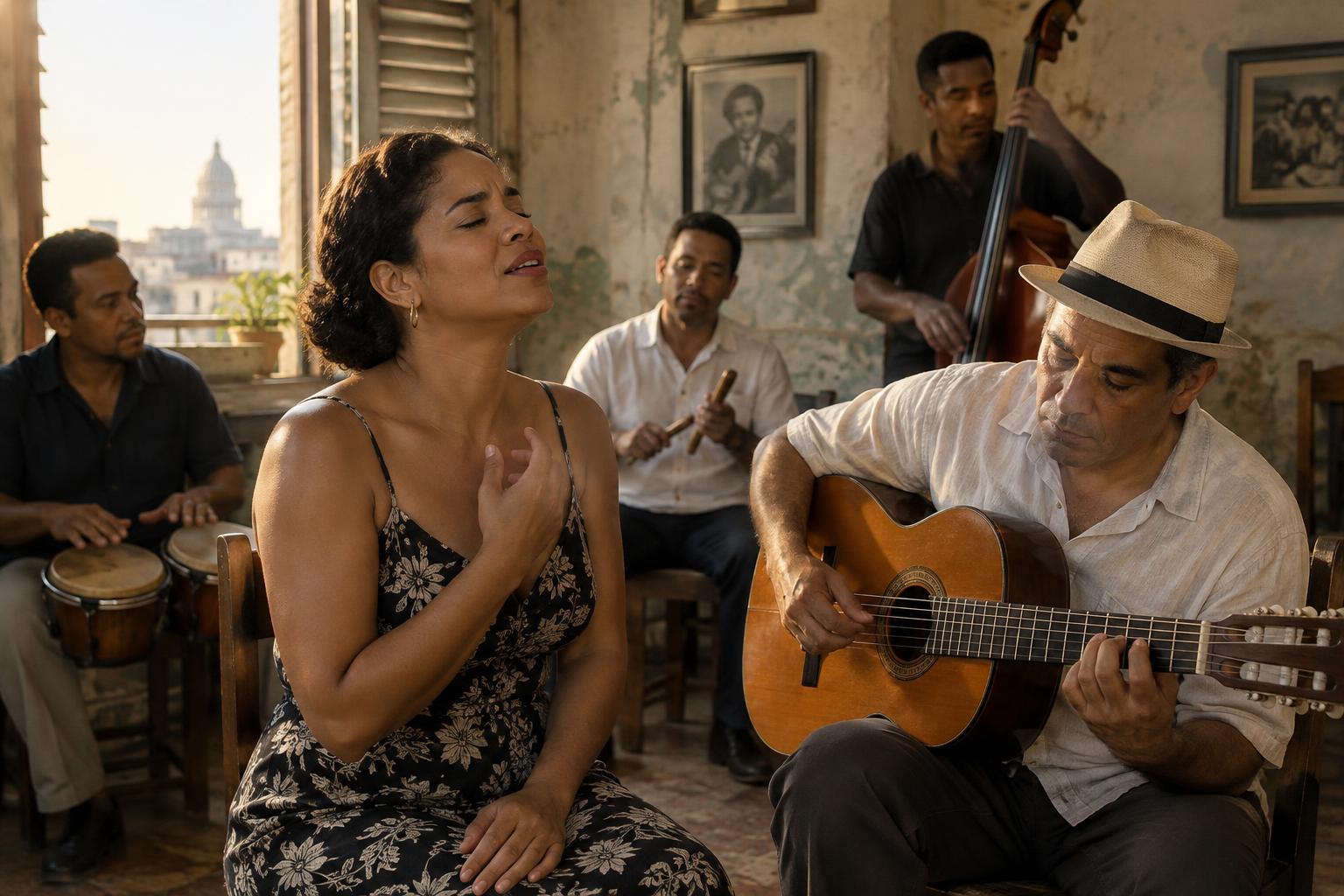
Afro-Cuban MusicCuban bolero and son can share instruments, singers and even a performance. The clearest distinction is often how the music moves: bolero tends to draw attention to a sustained melody and intimate lyric, while son builds a repeating groove that invites call and response. Learn what to listen for without treating either tradition as a rigid formula.
Read article · 4 min↗
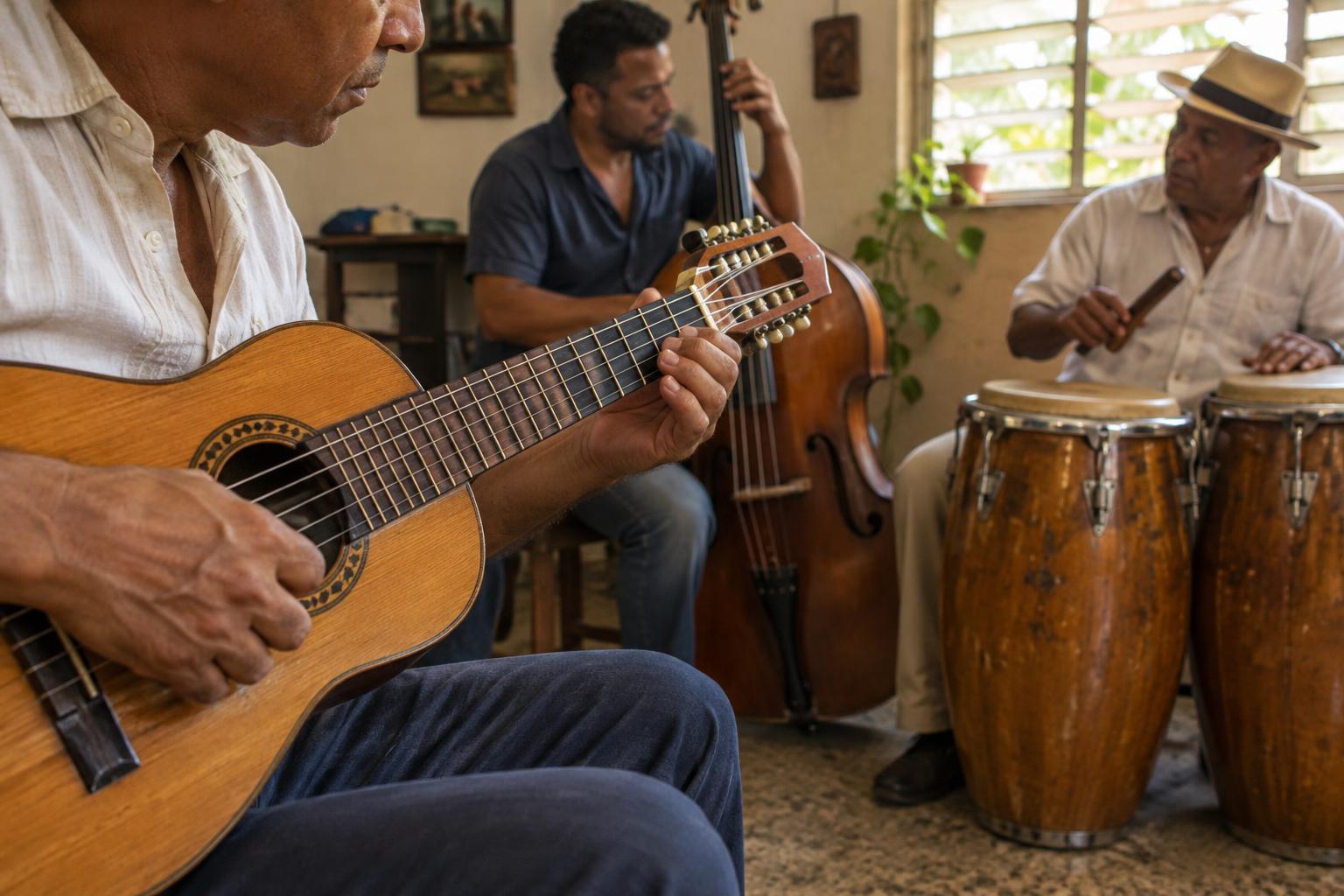
Afro-Cuban MusicA guajeo is a repeating instrumental phrase that helps give many Cuban styles their forward motion. Learn how it works with clave, bass, percussion and vocals, then try a simple listening and practice exercise.
Read article · 4 min↗
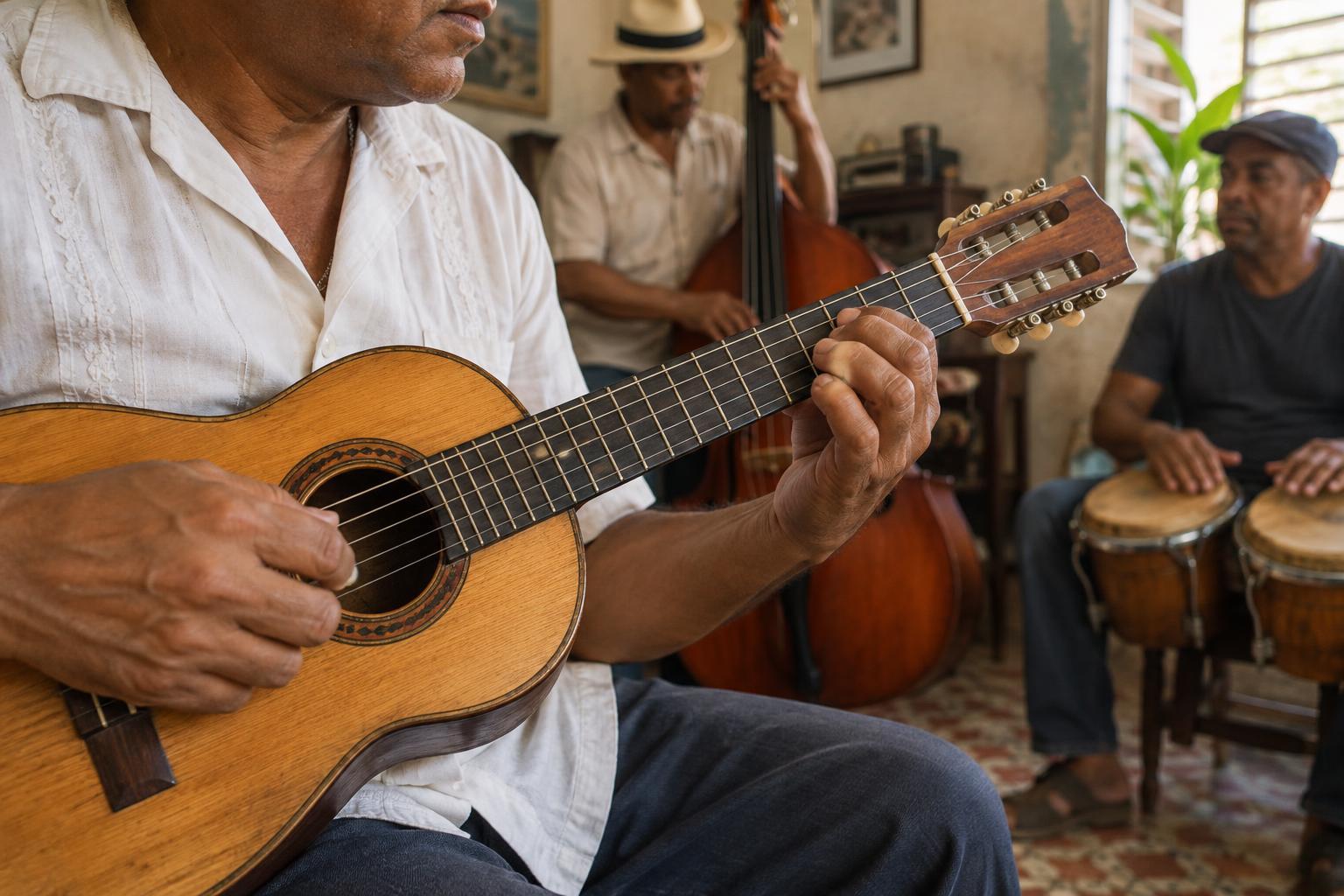
Afro-Cuban MusicThe Cuban tres does more than add a bright string sound to son. Its repeating figures connect harmony, rhythm and melody while leaving room for voices, bass and percussion. Learn what to listen for and try a simple ensemble exercise.
Read article · 4 min↗
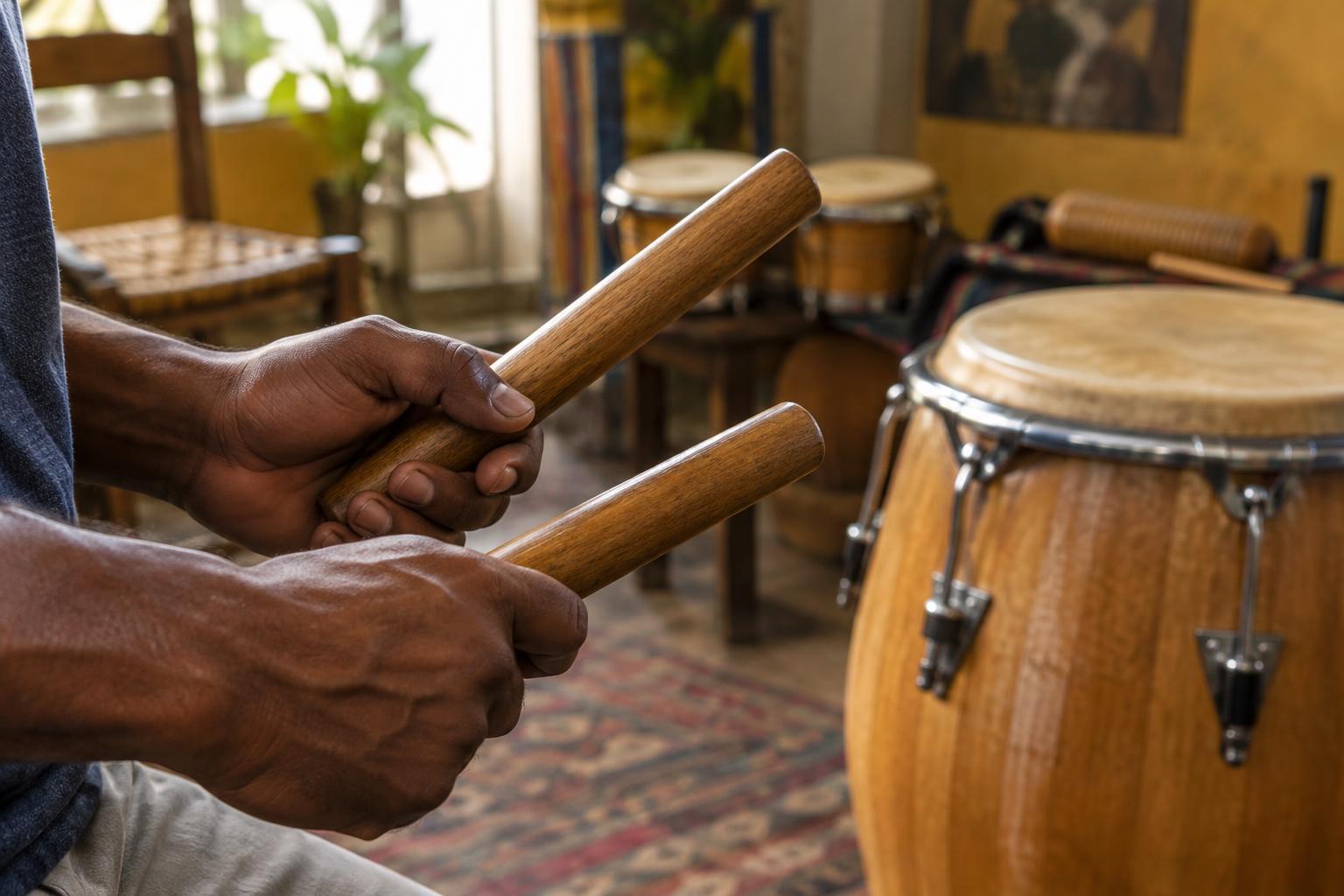
Afro-Cuban MusicSon clave and rumba clave share a five-stroke, two-measure framework, but one shifted stroke changes how the phrase feels. Learn to count both patterns, hear their relationship to Cuban styles, and practice without reducing the music to a formula.
Read article · 4 min↗
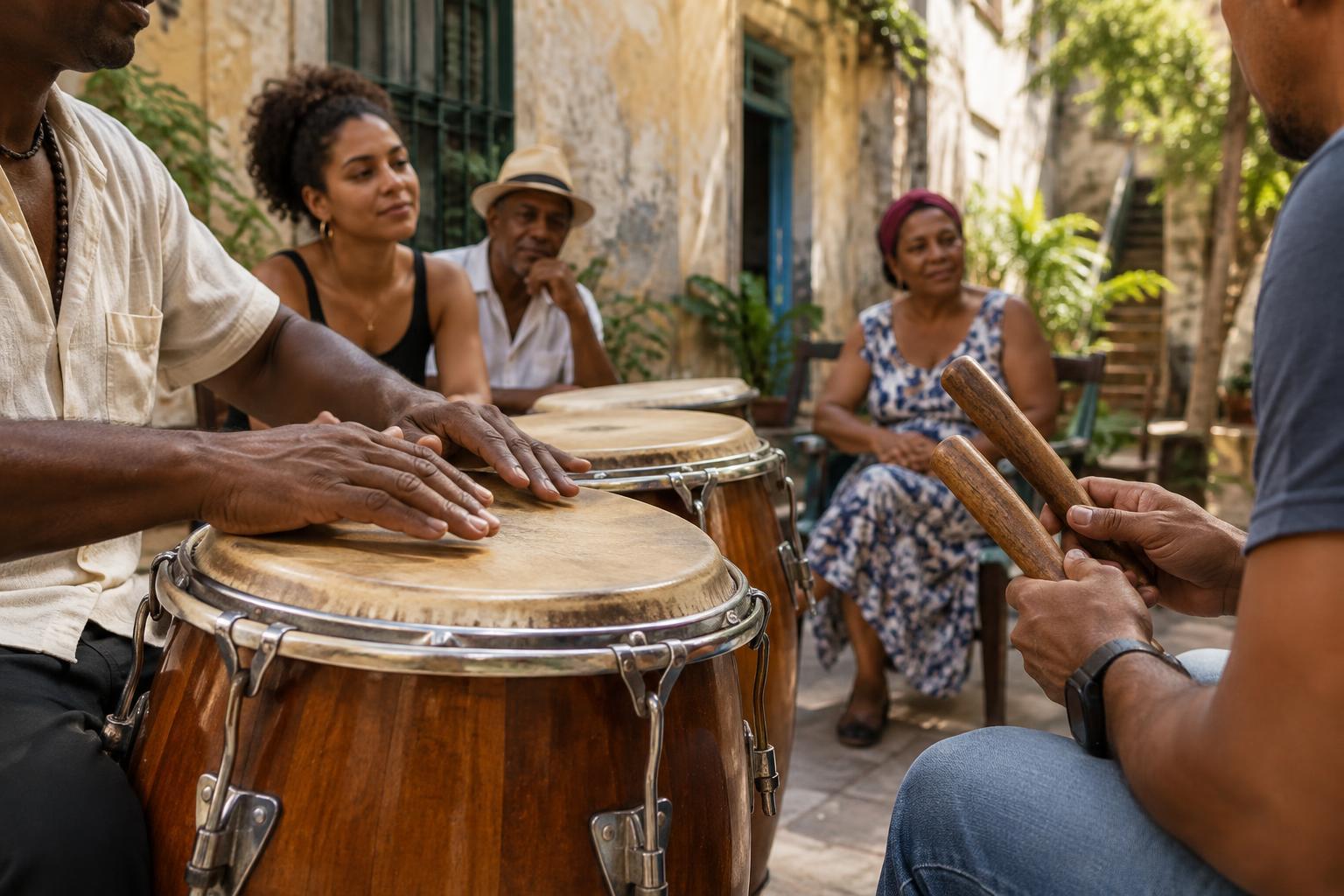
Afro-Cuban MusicAbakuá has shaped parts of Cuba’s musical life, but its initiatory practices are not a listening exercise or a source of entertainment. Learn how to recognize public musical influence, distinguish it from sacred practice, and listen with care.
Read article · 4 min↗
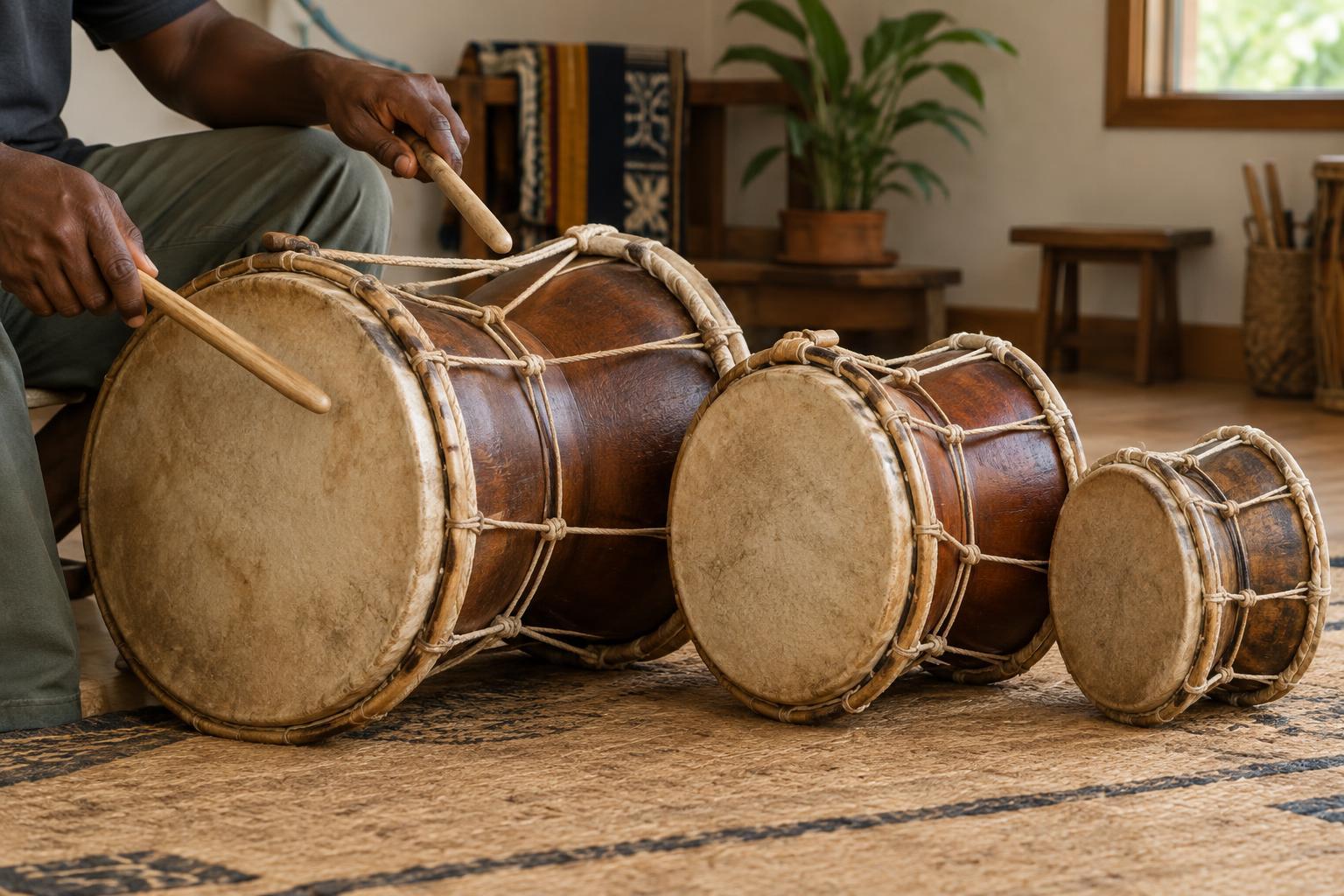
Afro-Cuban MusicBatá drumming brings layered rhythms, conversation and ceremonial meaning together in Lucumí traditions. Learn the roles of the three drums, what to listen for, and how to approach the music with care.
Read article · 4 min↗
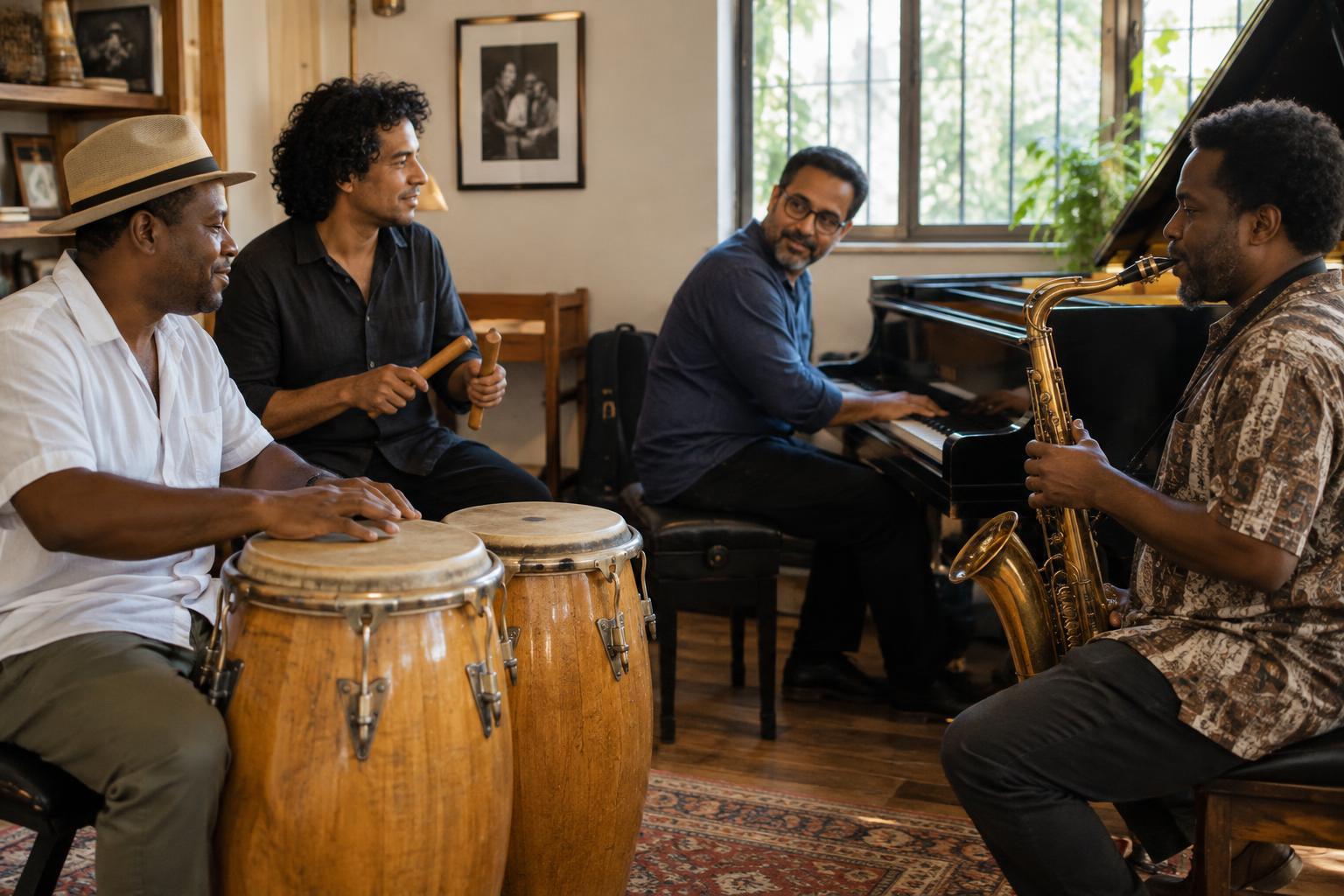
Afro-Cuban MusicAfro-Cuban jazz brings Cuban rhythmic approaches into conversation with jazz improvisation. Learn how clave, the rhythm section and the arrangement work together, then try a simple listening and practice exercise.
Read article · 4 min↗
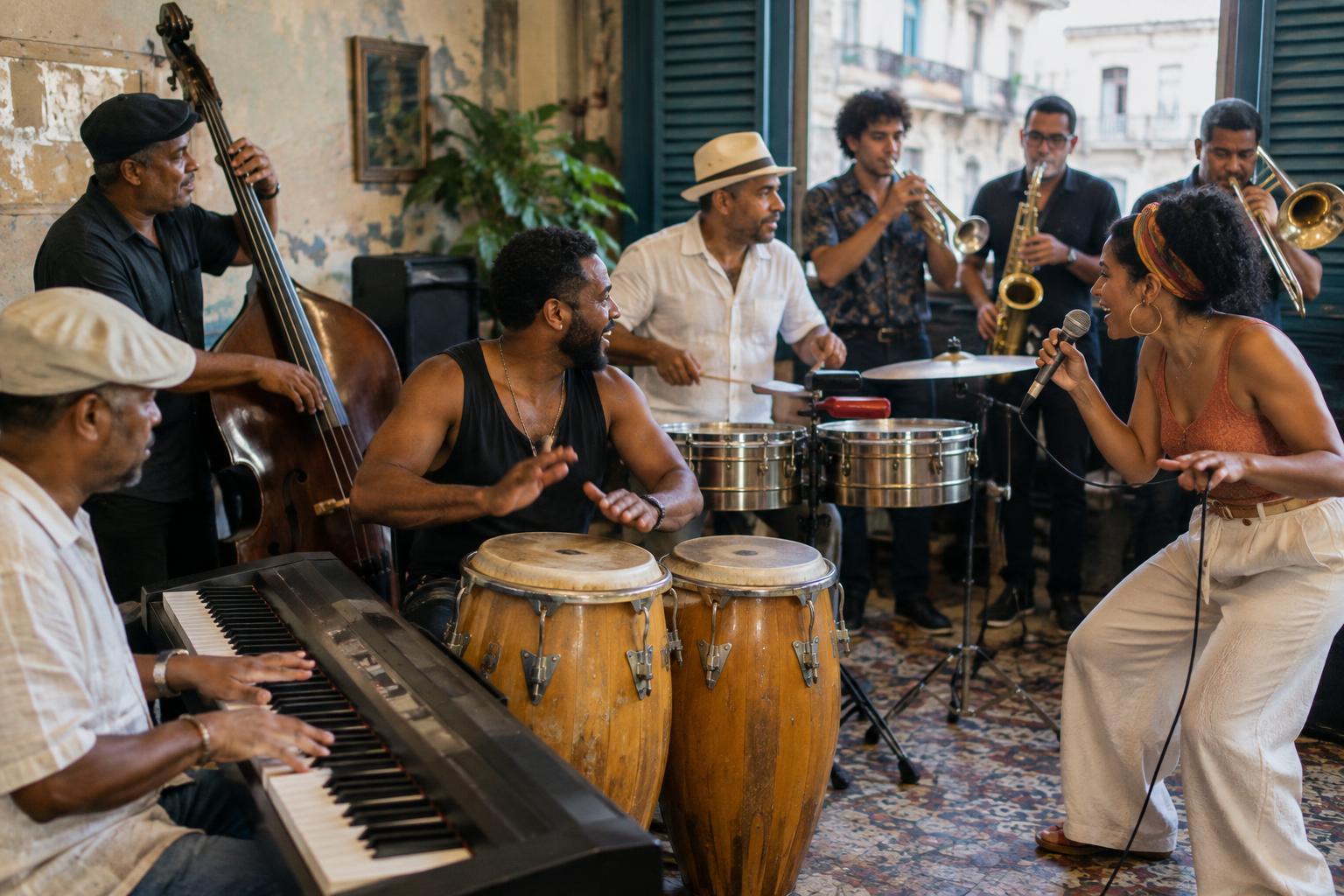
Afro-Cuban MusicTimba draws on Cuban dance-music traditions while making striking use of shifting grooves, dense arrangements and energetic exchanges between singers and band. Learn what to listen for—and why no single rhythm defines the style.
Read article · 4 min↗
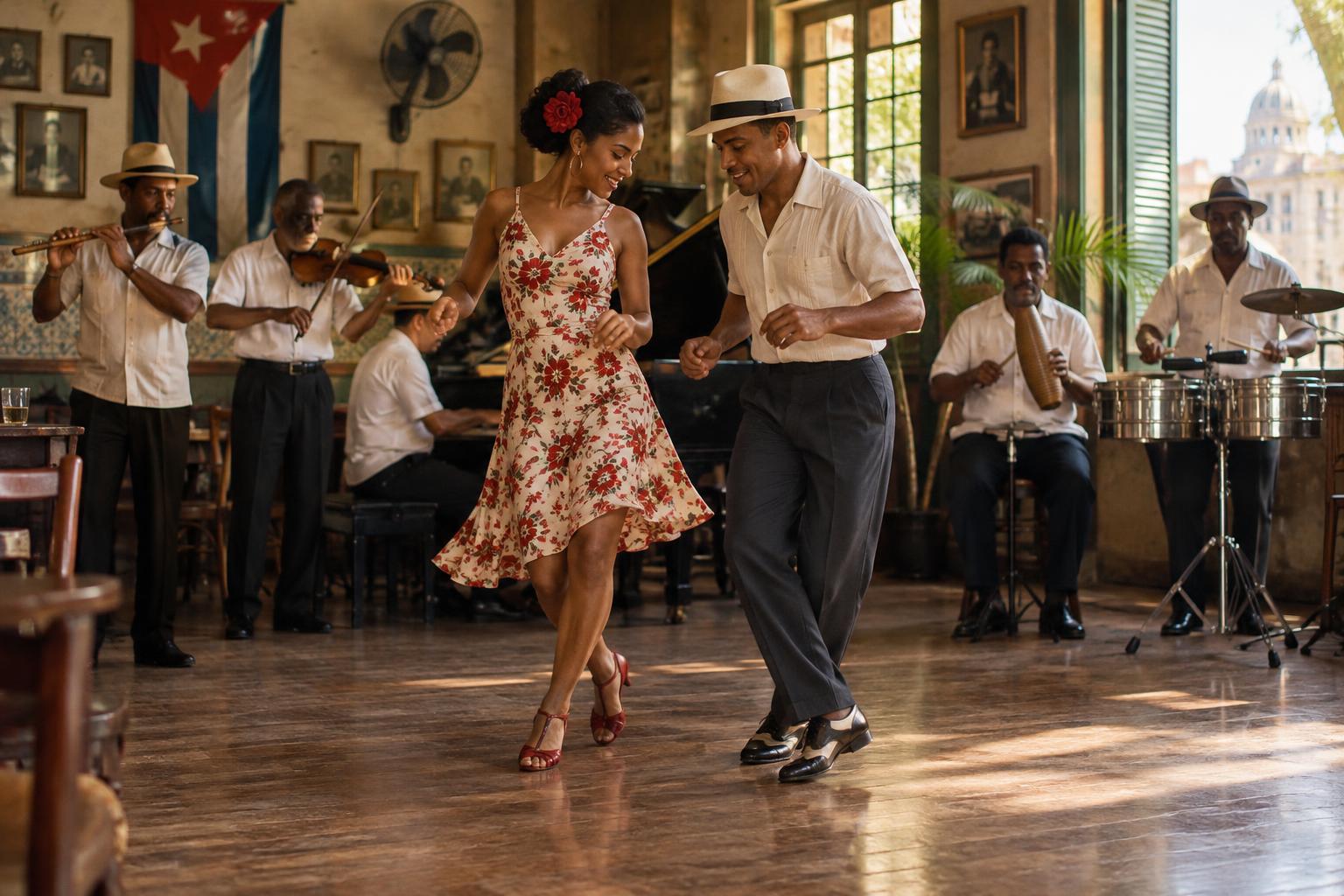
Afro-Cuban MusicCha-cha-chá grew out of Cuban dance music and invites listeners into a steady, clearly articulated groove. Learn how its characteristic quick steps relate to the music, how it differs from mambo, and what to listen for in a charanga arrangement.
Read article · 4 min↗
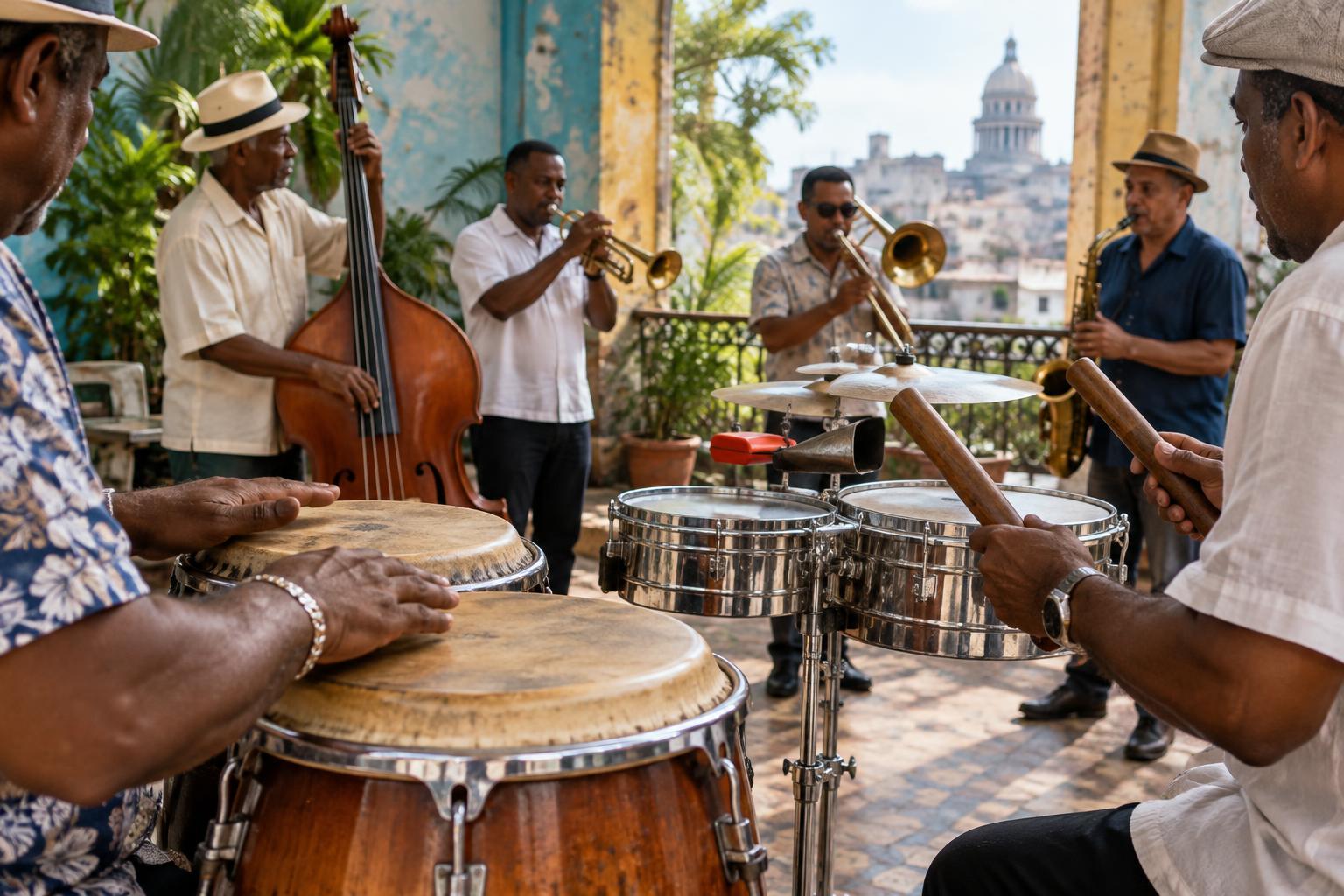
Afro-Cuban MusicMambo became famous as dance music, but its energy grew from musical ideas already developing in Cuba. Explore the connections to danzón, syncopation, Afro-Cuban percussion and ensemble arranging, then try a listening exercise that reveals how the parts work together.
Read article · 4 min↗
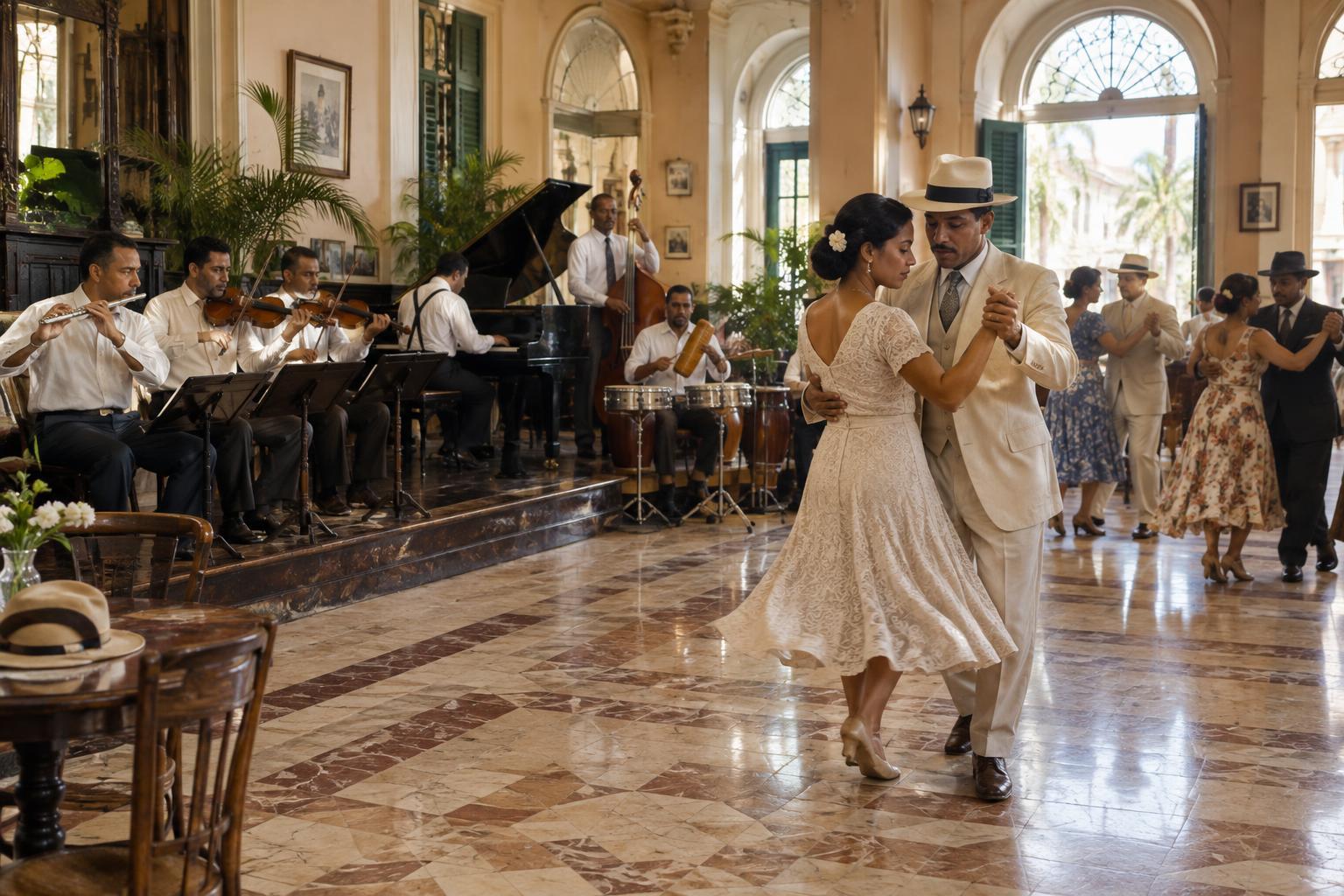
Afro-Cuban MusicDanzón grew from Cuban social dance traditions into a form known for its elegant phrasing, recurring themes and close relationship between music and movement. Learn how its ensembles changed and what to listen for as a piece unfolds.
Read article · 4 min↗
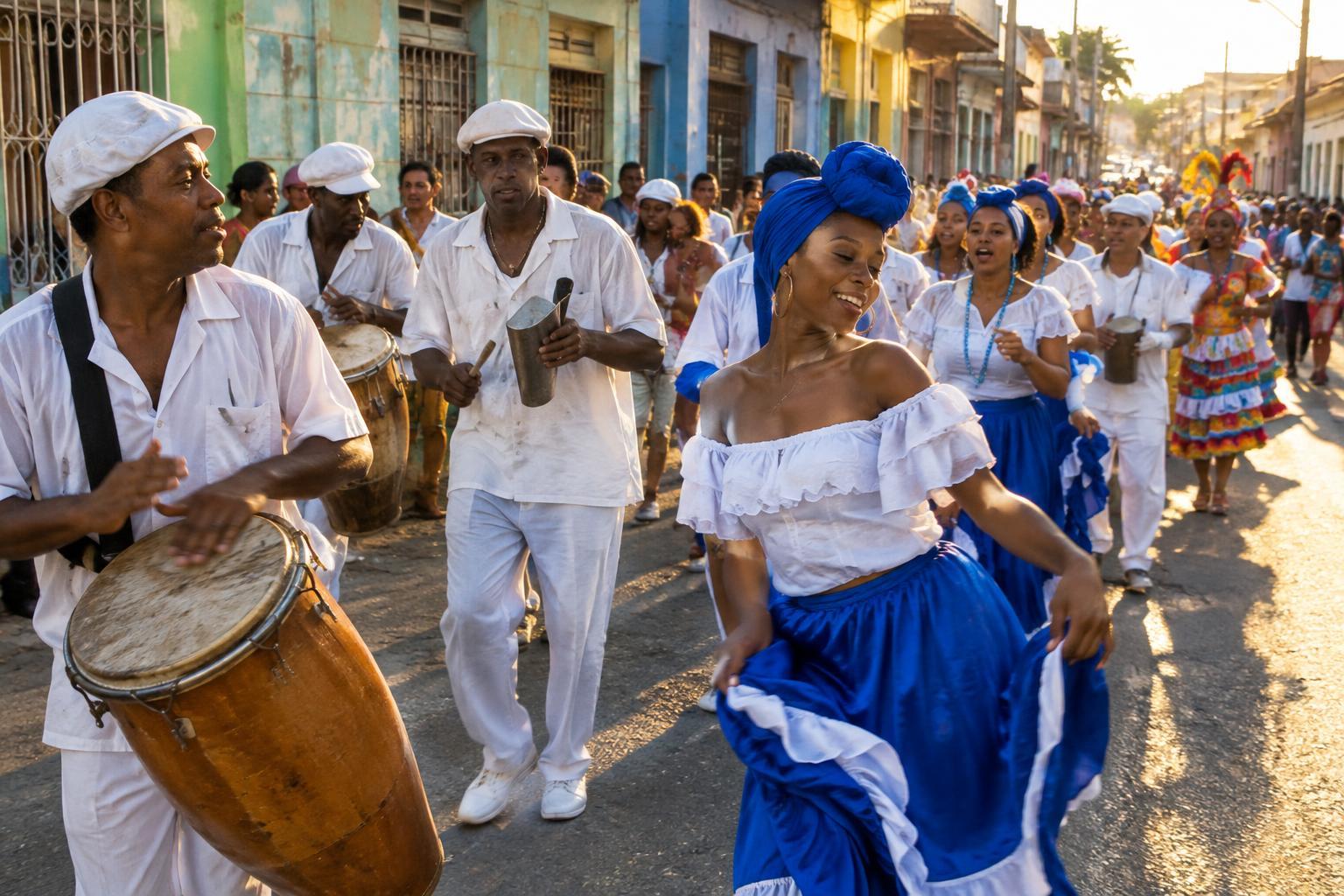
Afro-Cuban MusicConga de comparsa is music made to move through the street. Learn how percussion, voices and dancers work together in Cuban carnival, and try a listening exercise that follows the procession rather than a single instrument.
Read article · 4 min↗
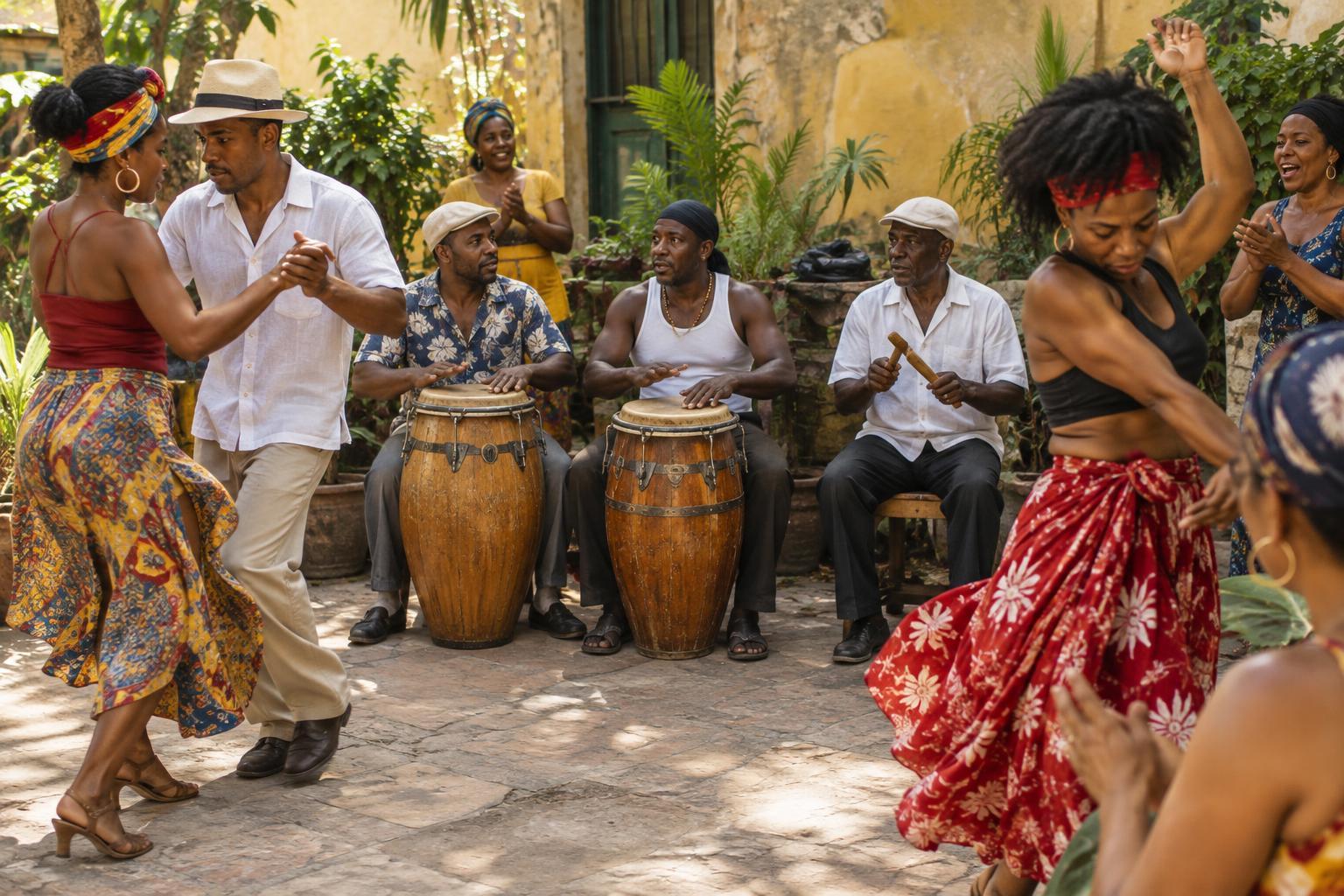
Afro-Cuban MusicYambú, guaguancó and columbia share singing, percussion and a close relationship between dancers and drummers. Learn to recognize each style by its feel, dance and musical conversation, without treating tempo as the only clue.
Read article · 4 min↗
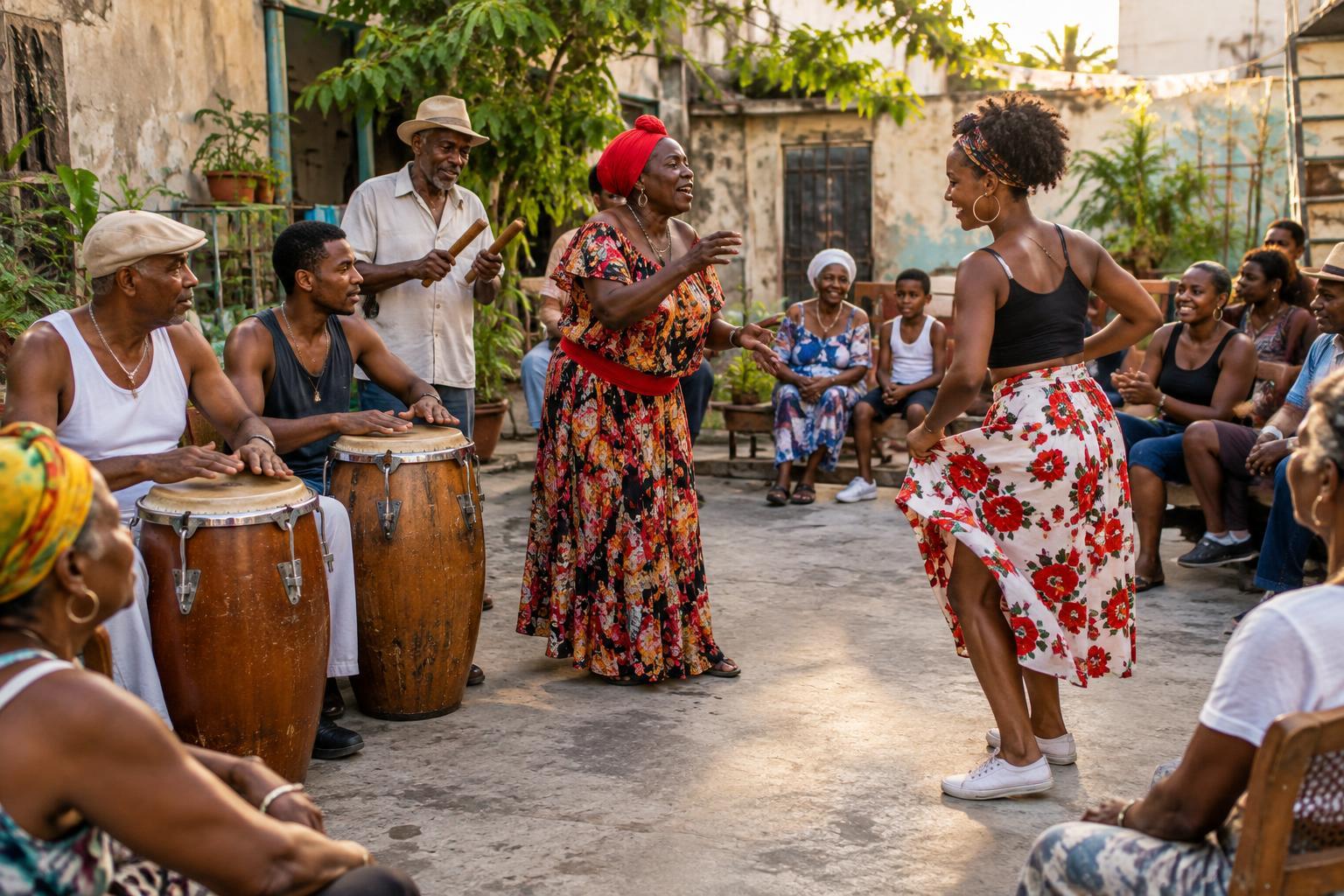
Afro-Cuban MusicCuban rumba is more than a set of rhythms. It is a social practice shaped by Afro-Cuban communities, in which singing, drumming and dancing make room for participation, exchange and individual expression.
Read article · 4 min↗
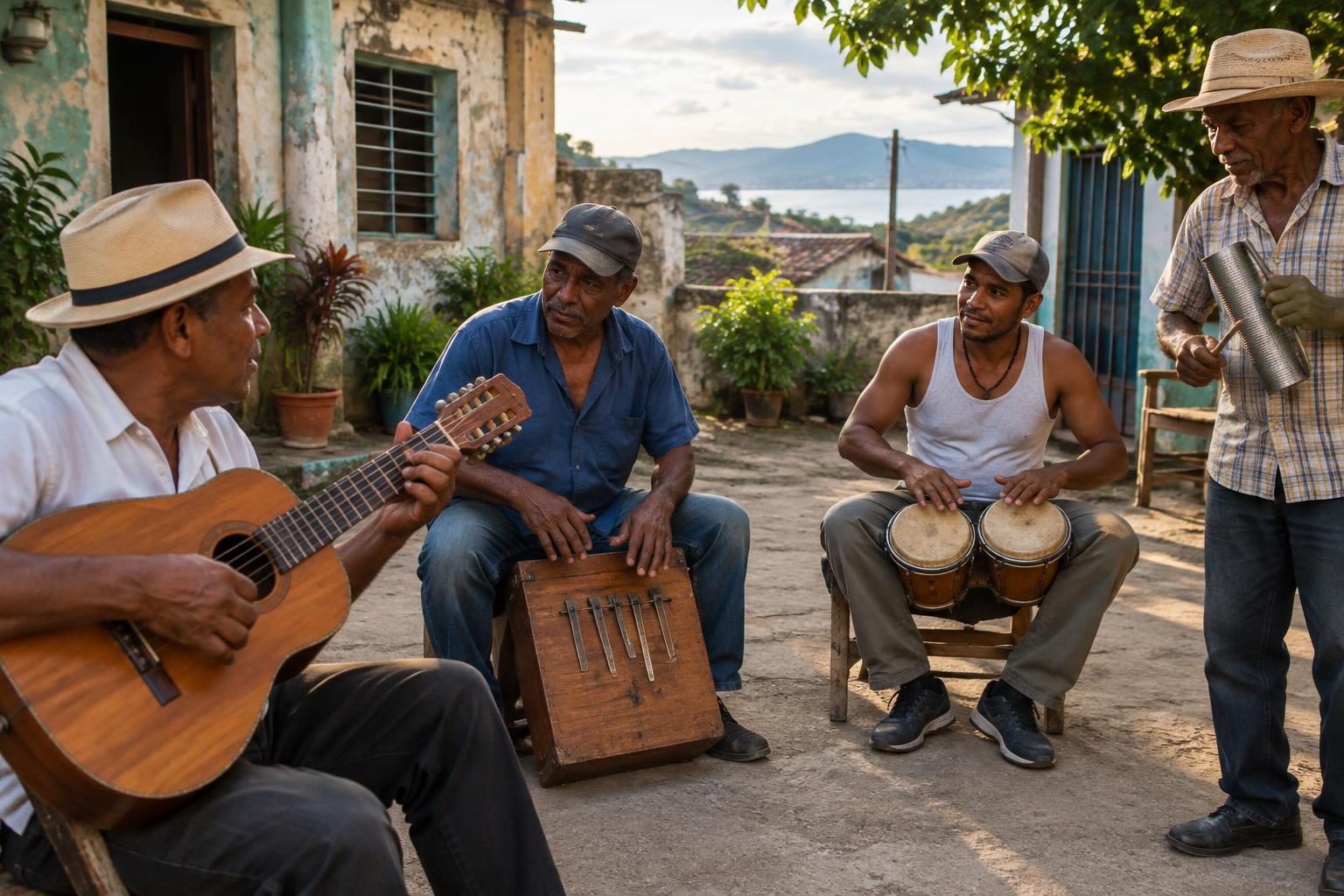
Afro-Cuban MusicExplore the Guantánamo roots of changüí, the roles of the tres, marímbula, bongó de monte and scraper, and a practical way to hear how its groove fits together.
Read article · 4 min↗
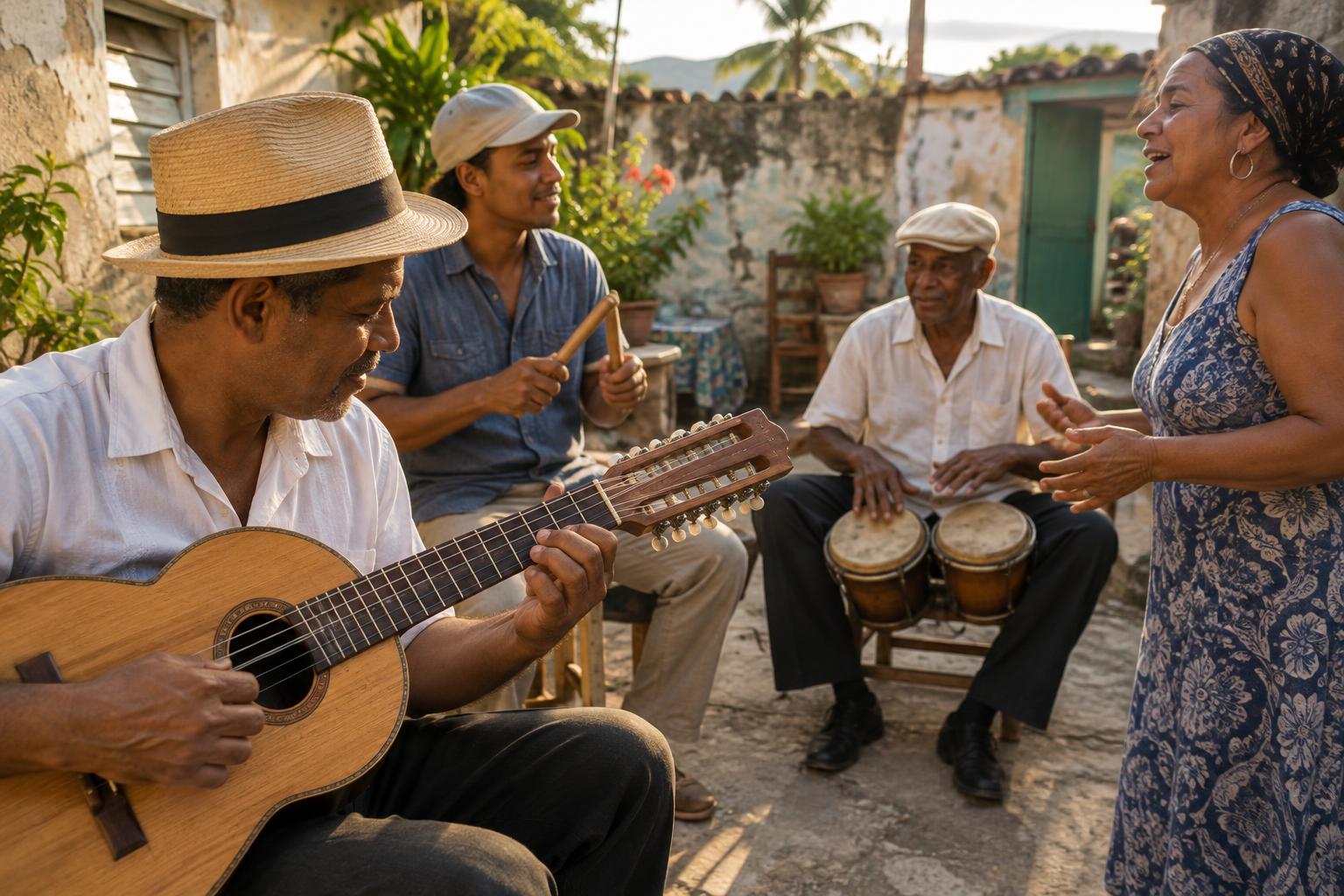
Afro-Cuban MusicSon cubano grew from the musical life of eastern Cuba into a style heard far beyond the island. Explore the interplay of voices, instruments and clave, and learn what to listen for as a song unfolds.
Read article · 4 min↗
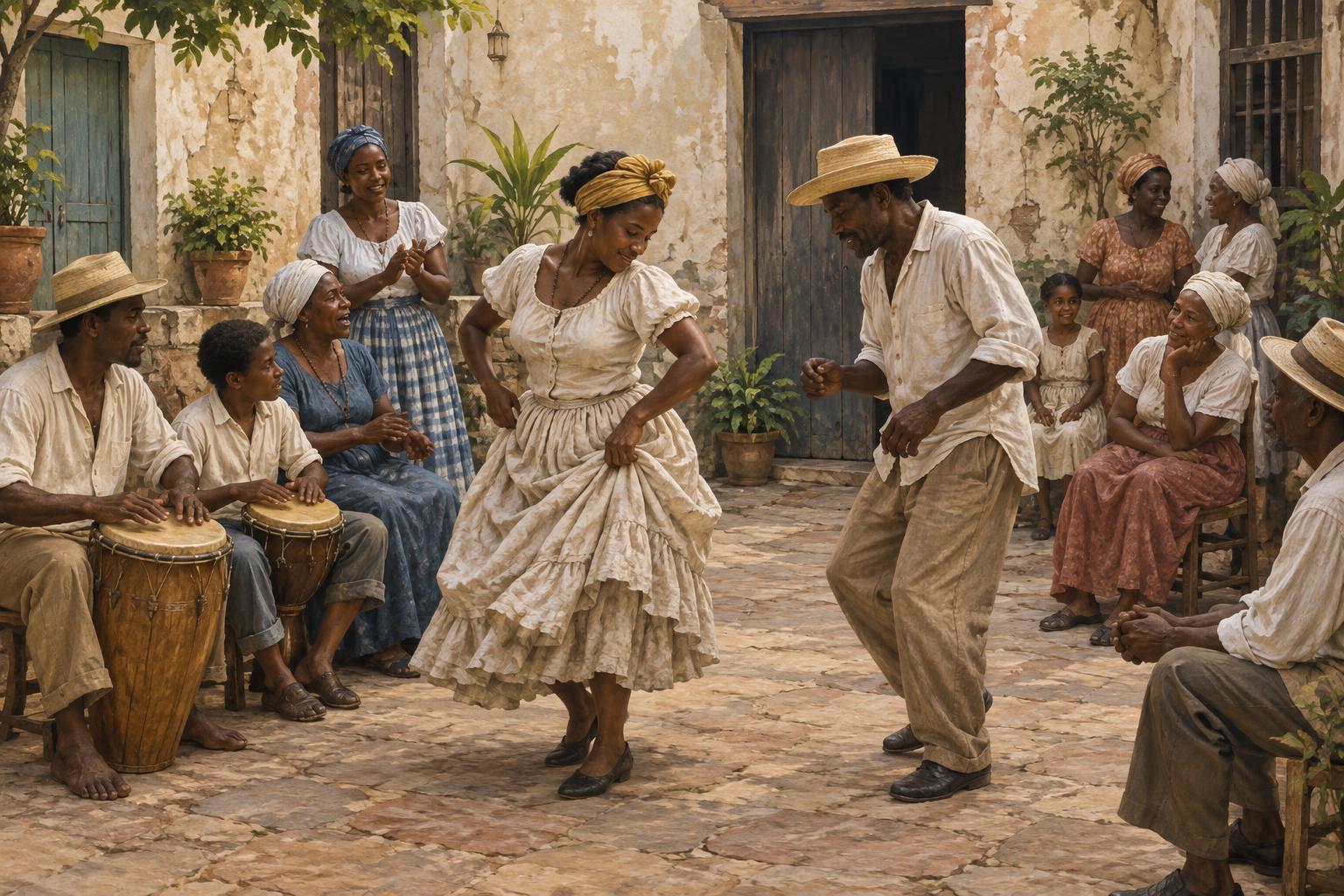
Afro-Cuban MusicCabildos offered some Africans and their descendants in colonial Cuba spaces to gather, organize mutual support, and sustain cultural practices. Their musical importance lies not in a single preserved rhythm, but in the ways people adapted song, dance, and percussion under difficult conditions.
Read article · 4 min↗
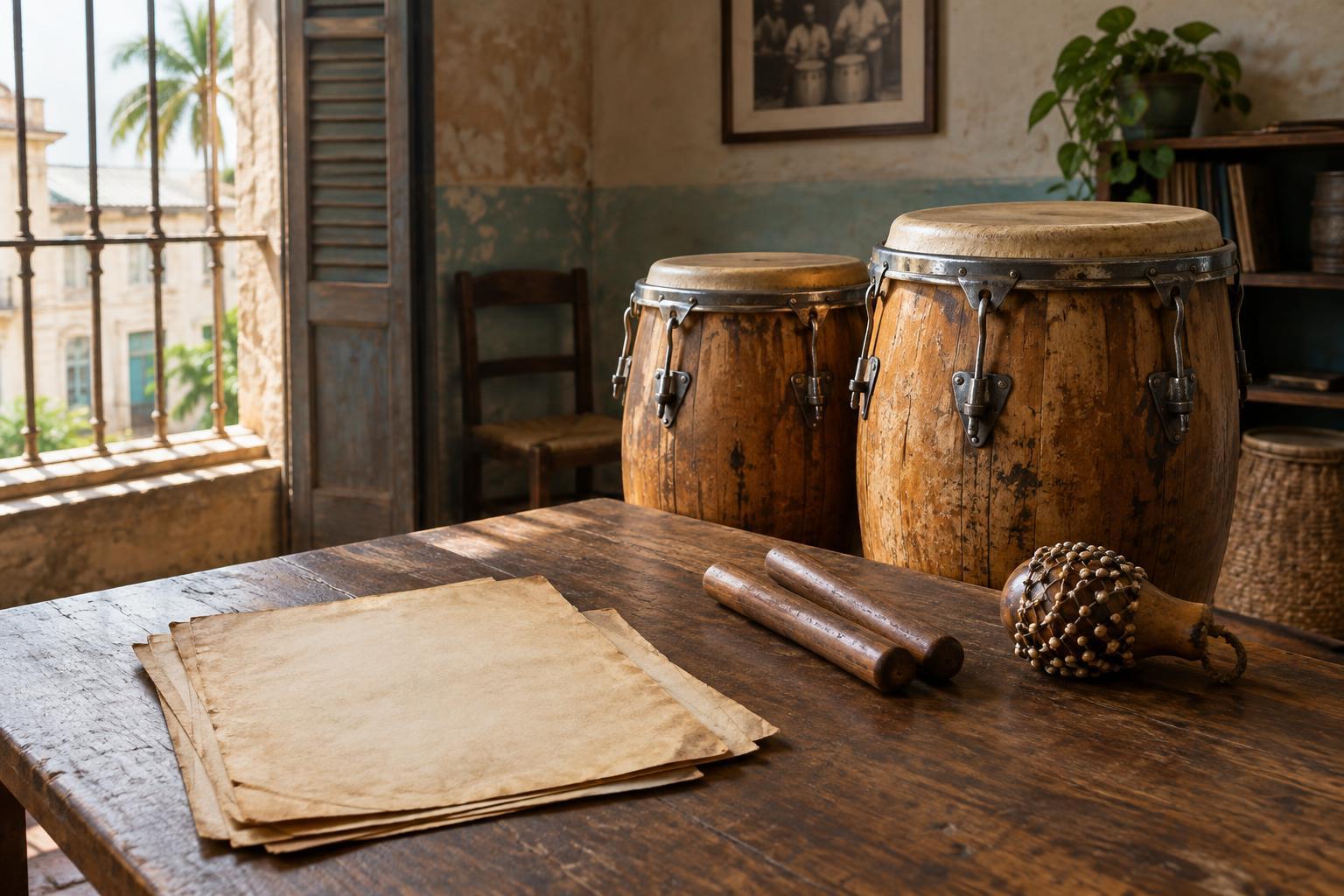
Afro-Cuban MusicAfrican musical traditions shaped Cuban music, but no single rhythm tells a complete story of origin. A careful look at instruments, language, communities and historical records reveals both meaningful connections and important gaps.
Read article · 4 min↗