A music made together
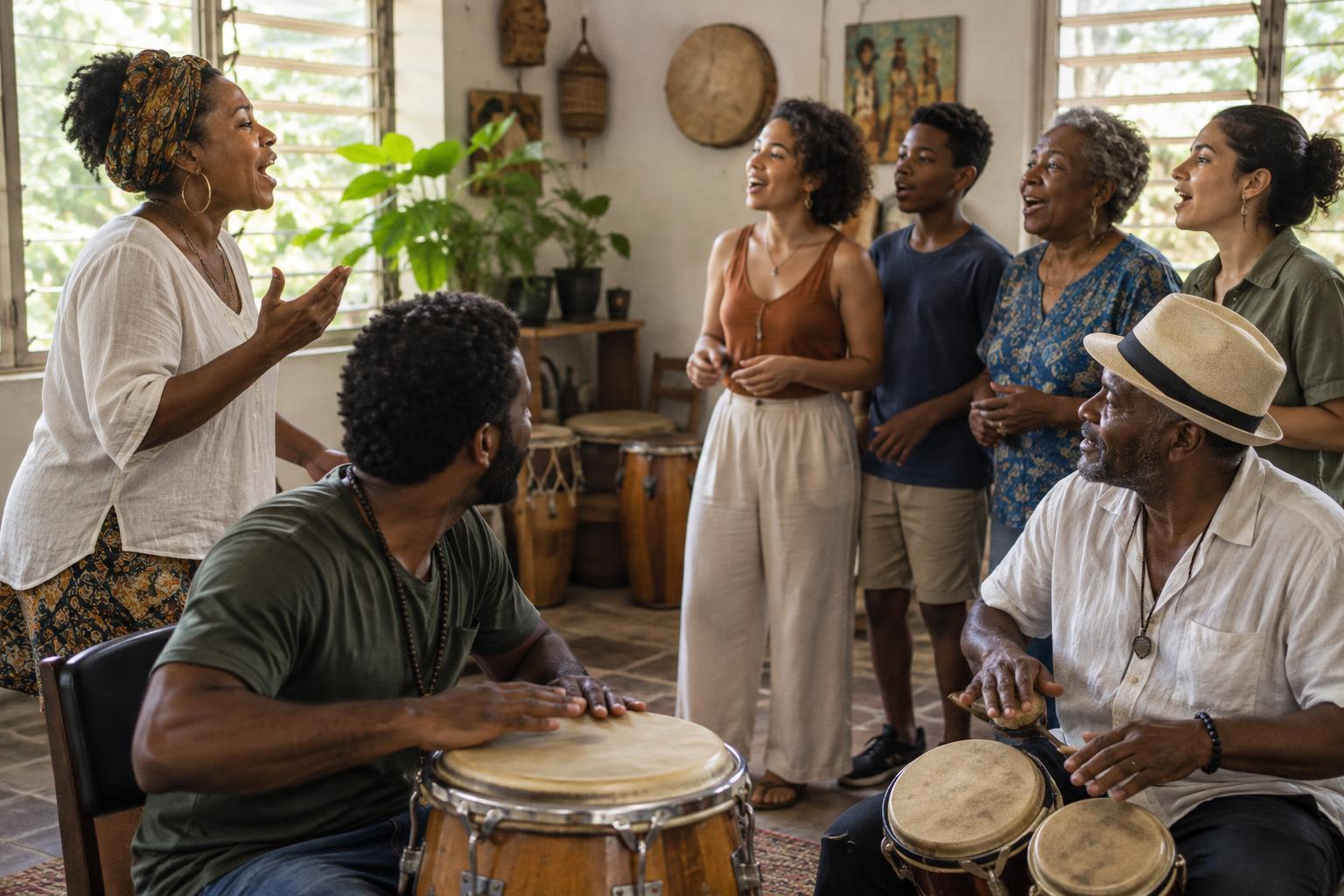
Cuban rumba is a family of music and dance practices with roots in Afro-Cuban communities. It grew through social gatherings rather than as a composition intended for a silent audience. People sing, drum, clap, dance and respond to one another. A gathering might include skilled performers, neighbors who know the songs and newcomers learning by watching. The relationships among them are part of the music.
Rumba is closely associated with places such as Havana and Matanzas, but it should not be treated as one unchanging sound shared by every community. Participants have carried their own songs, styles and memories into it. Nor is rumba simply a preserved fragment of an African past: it is a Cuban tradition shaped by people of African descent and by the particular social life around them.
The spaces around the rhythm
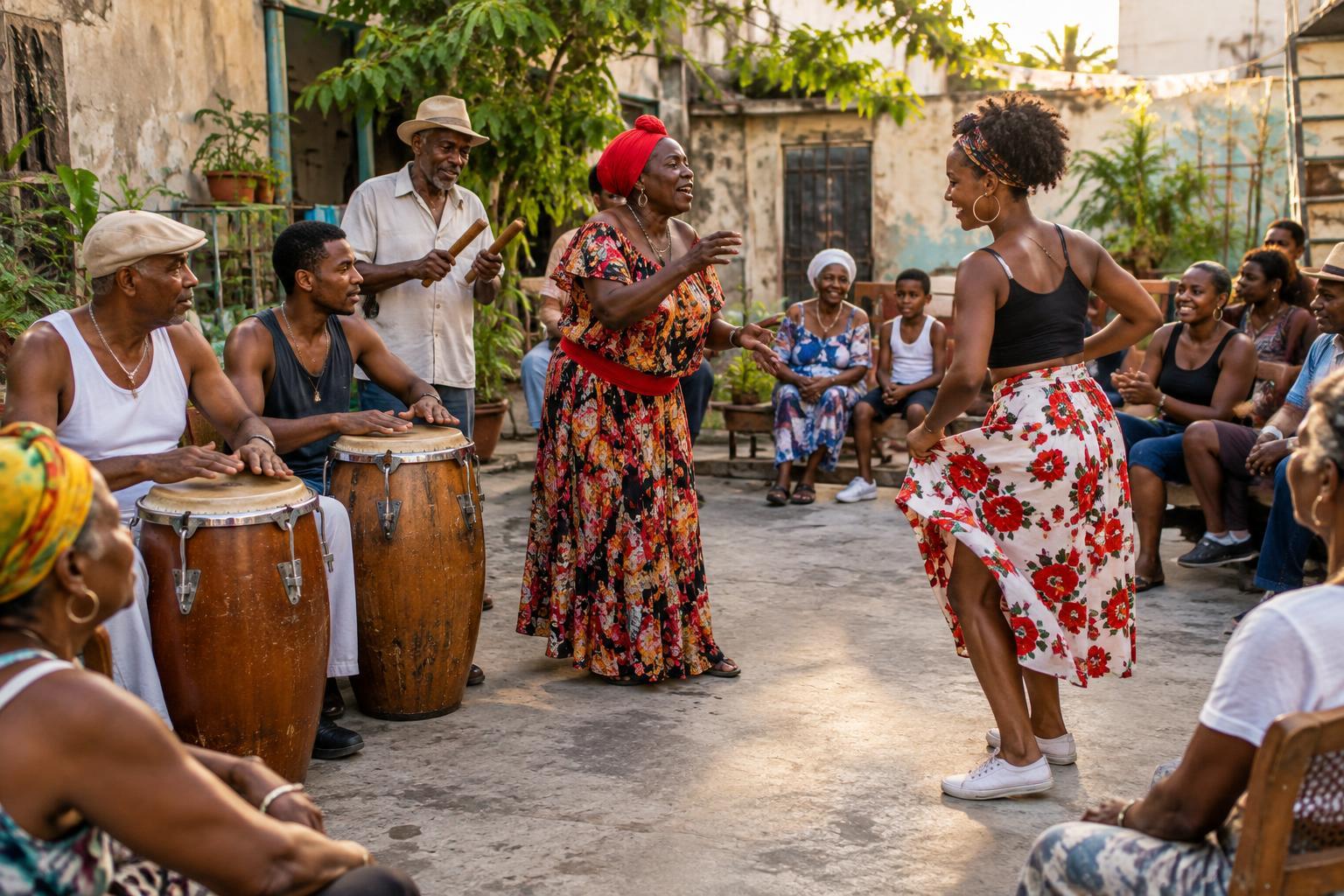
To understand rumba’s community roots, picture a social space before you picture a stage. Courtyards, neighborhood gatherings and other shared spaces have provided room for people to meet and make music. The practical details matter: enough space for a dancer to enter, enough proximity for a singer to hear a response, and enough attention for everyone to follow the pulse. A rumba can feel intimate even when many people are present, because its energy moves between individuals and the group.
These settings also help explain why participation is not divided neatly into performers and spectators. Someone may listen for a while, join a chorus, clap a supporting pattern or step forward to dance. Experience and skill still matter, and not every person has the same role. But the music depends on people noticing what others do and making room for an answer.
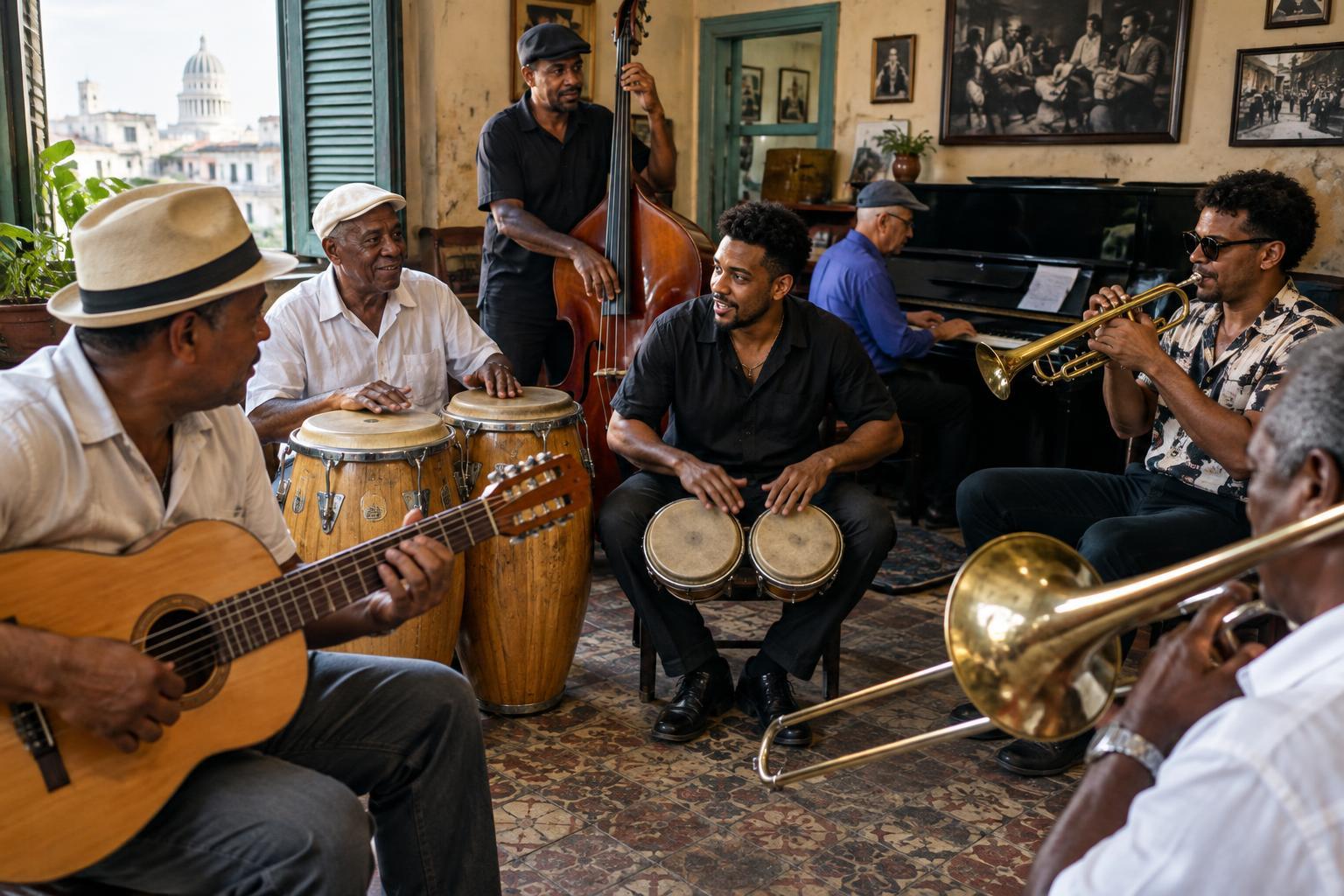
Rumba also appears in organized performances and recordings. Those settings can bring artistry to a wider audience, but they change what a listener sees. A short stage presentation may foreground a dancer or drum solo; it may reveal less of the conversation that can unfold over time at a community gathering. Both settings offer ways to encounter the tradition, though neither represents every rumba.
How sound and movement interact
A rumba often draws on a steady framework of interlocking parts: a repeating clave pattern, supporting percussion, lead-drum phrases and voices that move between a lead singer and a responding chorus. Depending on the setting, musicians may use conga drums, wooden percussion, handclaps or other available sounds. The point is not that every gathering uses an identical set of instruments. It is that each part helps establish a shared place in the rhythm while leaving space for conversation.
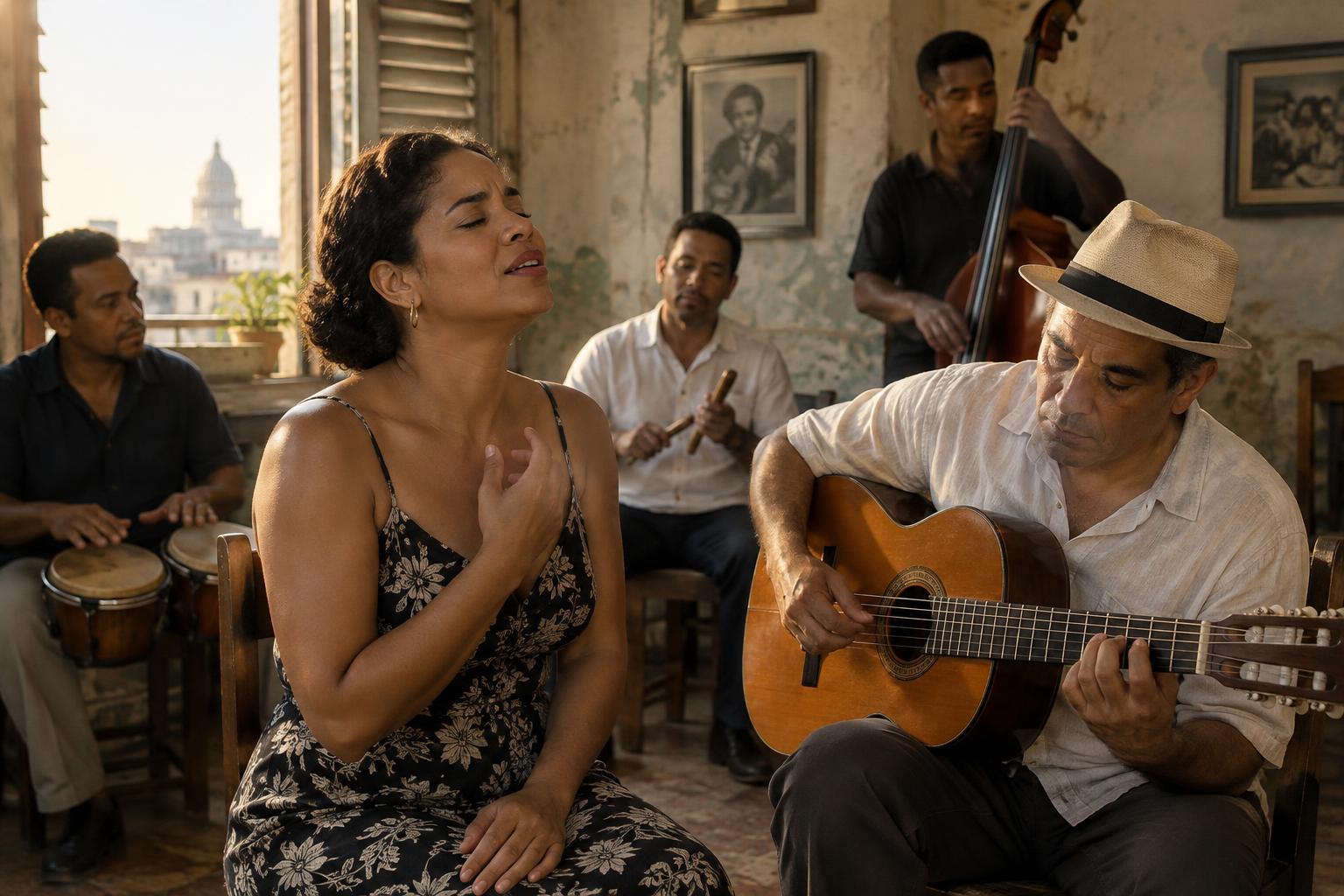
Listen to how a singer’s line invites the chorus, then to how a lead drum responds to a dancer. The dancer is not merely following accompaniment. A step, pause or change of direction can prompt a new drum phrase; the phrase can, in turn, invite another movement. This exchange rewards close listening more than trying to identify a single dominant beat.
Names such as yambú, guaguancó and columbia refer to distinct rumba styles, with differences in pace, movement and interaction. They are useful guides, but a label cannot capture every local approach or individual performance. If you are new to rumba, begin by noticing the roles people take before trying to sort every sound into a style.
Listening with social context
For a practical first listen, follow one element at a time. Find the recurring pulse or clave, then notice where the chorus enters. On another pass, attend to the exchange between lead voice, drum and dancer. Ask what changes when someone joins in: does the energy rise, does a musician leave more space, or does a phrase return in a new form? These questions help reveal rumba as coordinated social action, not just a rhythm to count.
Context matters as much as technique. Rumba emerged through communities whose cultural work has not always received equal recognition. When learning from a recording, class or performance, look for the names of the musicians and dancers, and notice whether the people teaching it describe where their practice comes from. Approach a gathering as a guest: listen first, respect the space and take cues from its participants. Rumba’s vitality lies not only in patterns that can be practiced, but in the people who bring those patterns into conversation.