An exchange, not a rigid formula
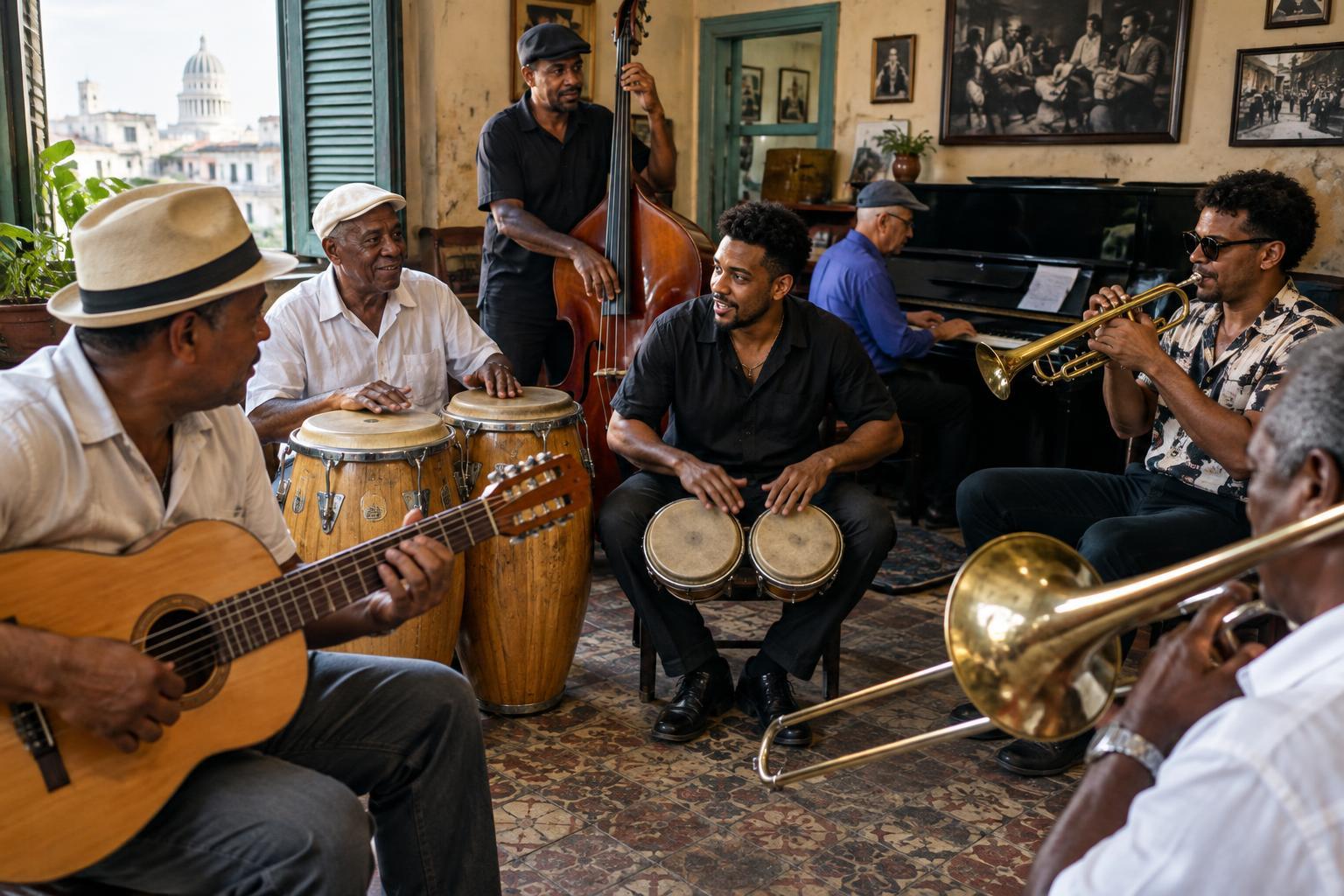
Call and response describes a musical exchange: one part offers a phrase, and another replies. The reply might repeat the words, complete an idea or provide a contrasting rhythm. In Afro-Cuban music, the participants may be a lead singer and a chorus, or several percussion parts interacting. Listening for these exchanges can make a dense ensemble easier to follow because it gives you a question to ask: who is making space for whom?
The phrase does not name a single pattern shared by every Afro-Cuban tradition. Son, rumba and other forms have distinct histories and ways of organizing voices and instruments. Rather than assuming that every short sound is a call and the next sound its answer, listen for a recurring relationship. Who returns with a familiar phrase? Who changes their part while that phrase stays steady? Those clues often reveal the structure.
Follow the lead singer and chorus
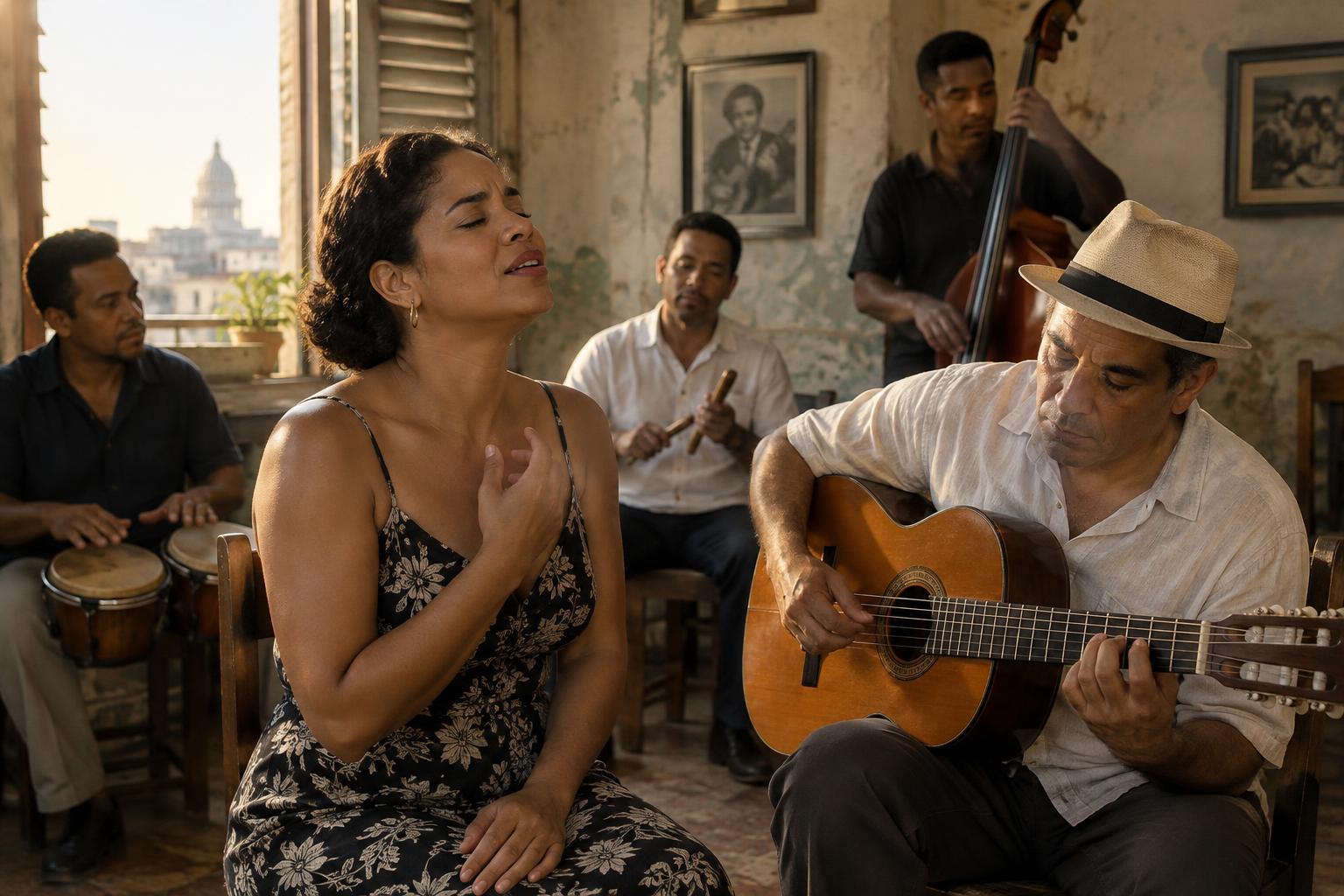
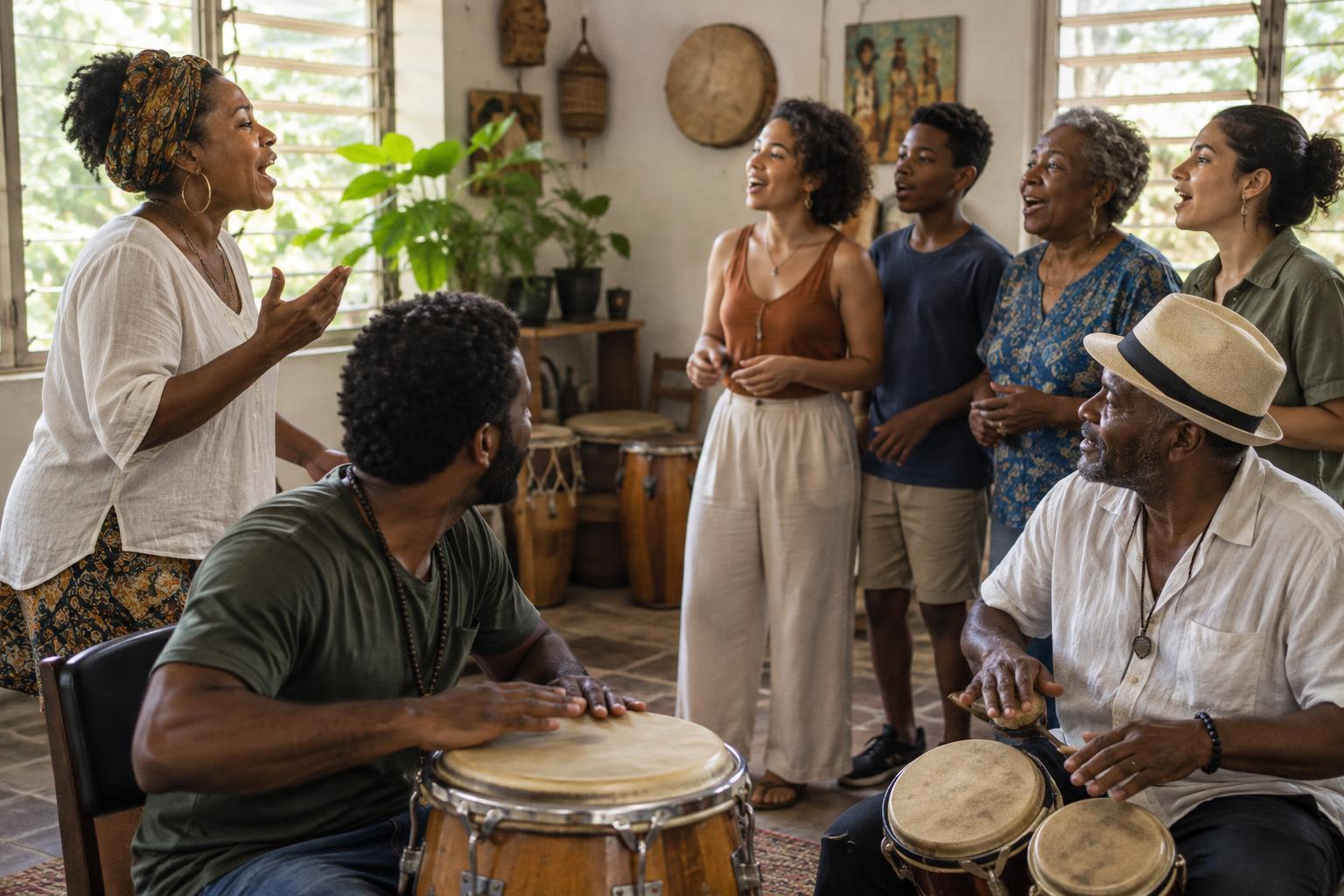
A useful place to begin is the exchange between a lead singer and a group chorus. In a son montuno passage, for example, the chorus may return to a short refrain while the lead singer delivers changing lines, often called pregones. You can hear the chorus as an anchor: its repetition makes the lead singer’s variations stand out. The response need not arrive only after the lead stops. Phrases may overlap, giving the music a feeling of continuous motion.
Listen first for words or syllables you recognize each time the chorus enters. Then notice whether the lead changes the length, wording or placement of a line before the next response. In some rumba performances, a lead voice and chorus also exchange phrases, though the character of that exchange depends on the style and performers. If you do not understand the lyrics, you can still hear the difference between a recurring group phrase and a more flexible solo line. Understanding the words adds another layer, but it is not a prerequisite for hearing the musical conversation.
Hear the conversation among drums
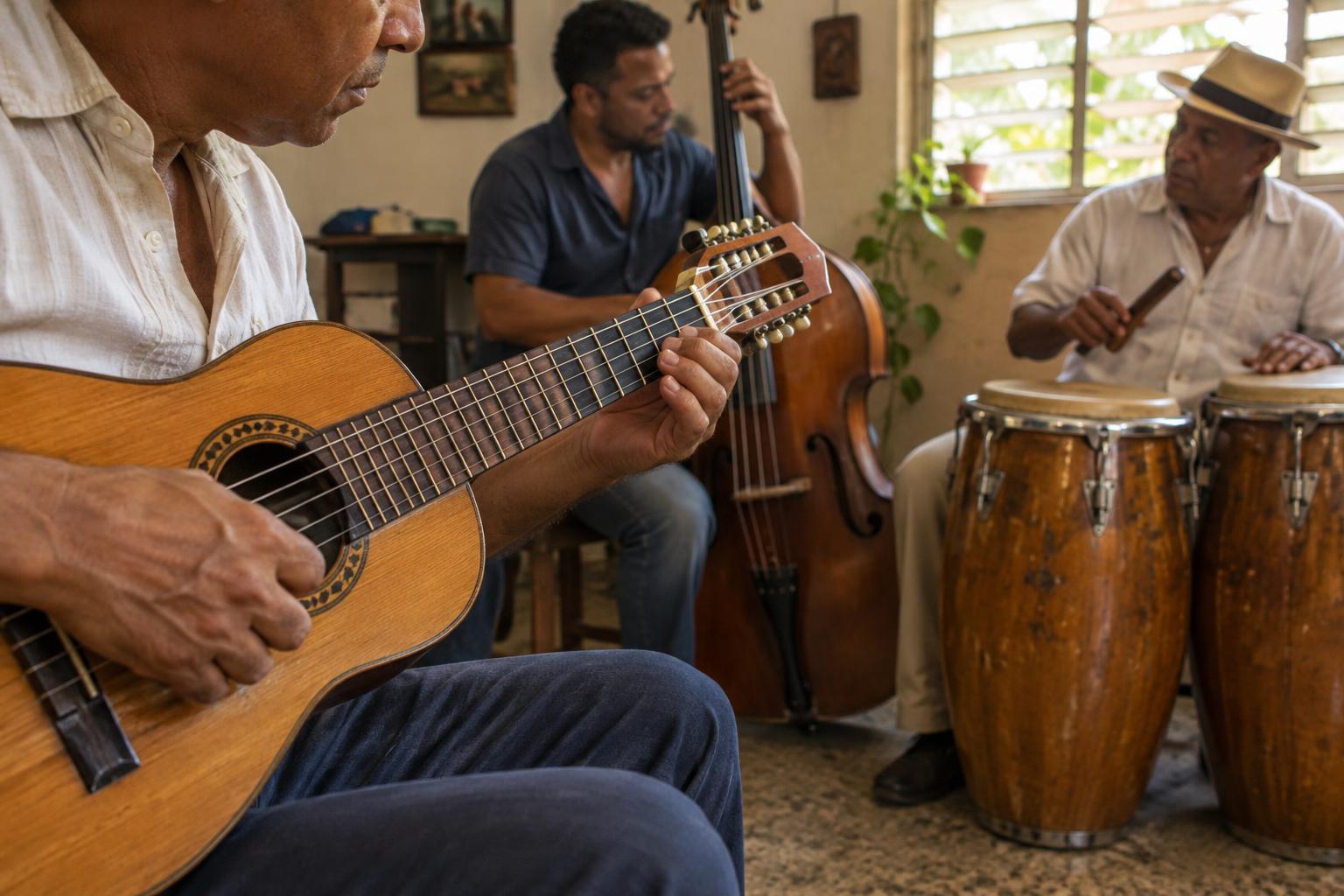
Percussion does not have to imitate speech to create a sense of dialogue. In rumba, for instance, a drum part that varies against steadier supporting parts can sound as if it comments on the shared rhythm. A player may leave a gap, place a contrasting accent or answer a gesture from a singer or dancer. Meanwhile, other musicians maintain patterns that help the ensemble stay together. The exchange is easier to hear when you attend to both the changing part and the parts that remain consistent.
Try not to label every loud drum stroke a response. Ask what preceded it and whether a similar interaction happens again. Did the drum fill a space left by the voice? Did a vocal entrance follow a drum phrase? Did two instruments alternate gestures, or did they overlap? These questions are more useful than expecting a neat turn-taking sequence. In traditions involving sacred music, drumming can carry meanings and responsibilities beyond what an unfamiliar listener can identify by ear. Approach those performances as specific cultural practices, not simply as collections of rhythmic effects.
Keep the shared pulse in view
Calls and responses make sense within a larger rhythmic setting. A repeating timeline, often discussed through clave in son and rumba contexts, can help you hear where a phrase begins, stretches or resolves. The clave pattern may be played aloud, suggested by other instruments or absent from the sound you can easily pick out. You do not need to identify it immediately to hear an exchange. Start with the pulse you can feel, and notice where the chorus or a recurring percussion part returns.
The most interesting answer is not always the most obvious one. A singer might extend a phrase across the point where you expected the chorus, or a drum might play around the pulse without losing its connection to the ensemble. Listen for that balance between repetition and variation. Repetition gives you a reference; variation makes each return matter.
A three-pass listening exercise
Choose a recording in which you can distinguish a lead voice, a chorus and percussion. On the first pass, follow only the voices. Quietly mark each chorus entrance with a tap or a note on paper. Do not worry about naming the style or counting every beat. Your aim is to recognize the phrase that returns and hear what changes between its appearances.
On the second pass, focus on one percussion sound. Notice when it repeats a pattern and when it becomes more active. On the third, bring the layers together: listen for a vocal phrase, the chorus response and any drum gesture that occurs around them. If the relationships are unclear, replay a short passage rather than trying to track the entire performance. With practice, call and response becomes less like a rule to spot and more like a way to hear musicians listening and making room for one another.