A tradition rooted in eastern Cuba
Changüí is closely associated with the Guantánamo region of eastern Cuba. It is a social music: instruments, singing and dancing work together, and a performance can leave room for a player or singer to respond to what others are doing. Listening for that exchange is a better introduction than trying to reduce the music to one rhythm played the same way every time.
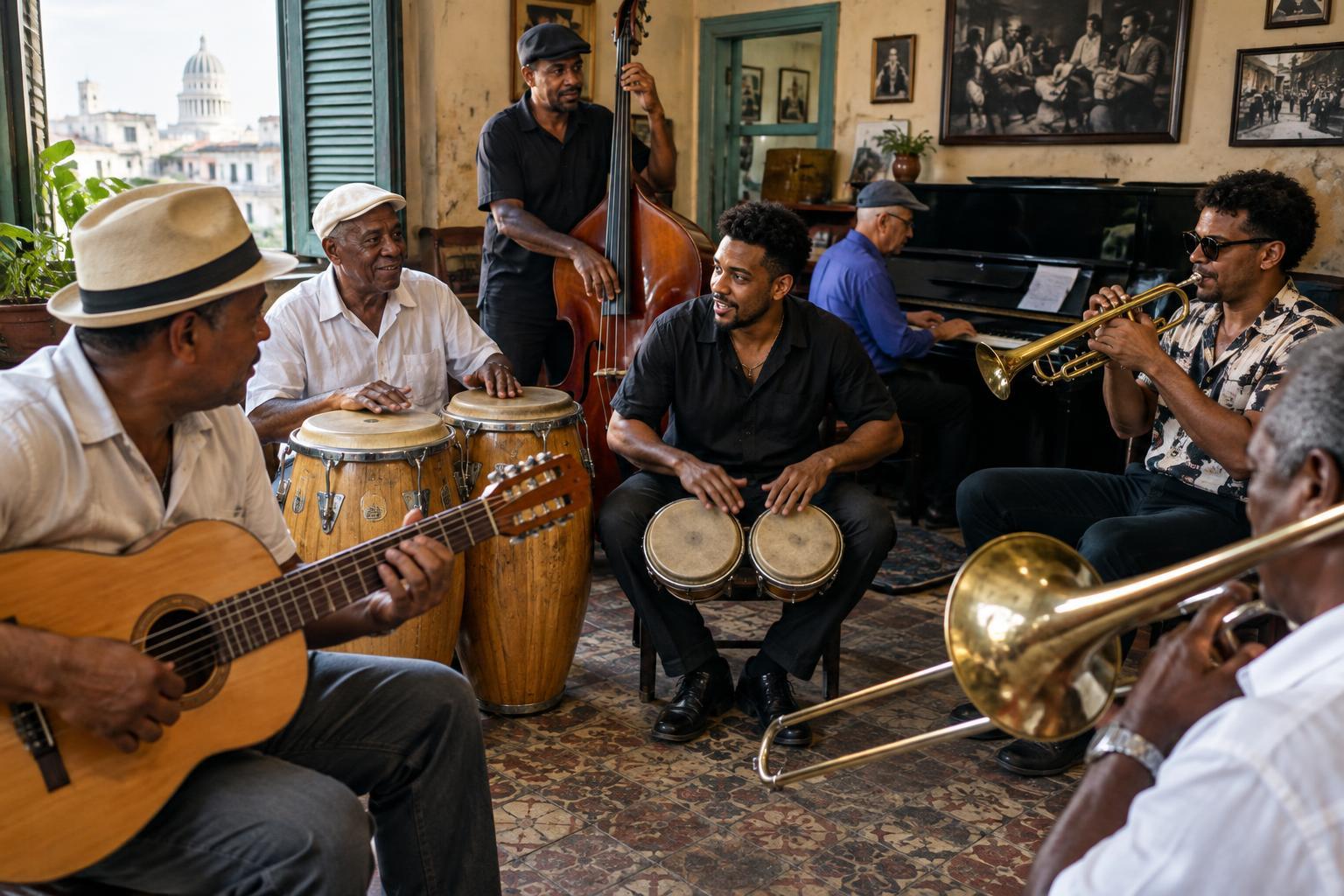
The tradition reflects the intertwined African and Spanish inheritances of Cuban music, shaped by the communities that have played and sustained it. Changüí is often discussed alongside son, and listeners may hear shared features such as the tres, call-and-response singing and interlocking parts. Their relationship is richer than a simple claim that one style became the other. Changüí has its own regional identity and performance practices, which are worth hearing on their own terms.
Meet the ensemble
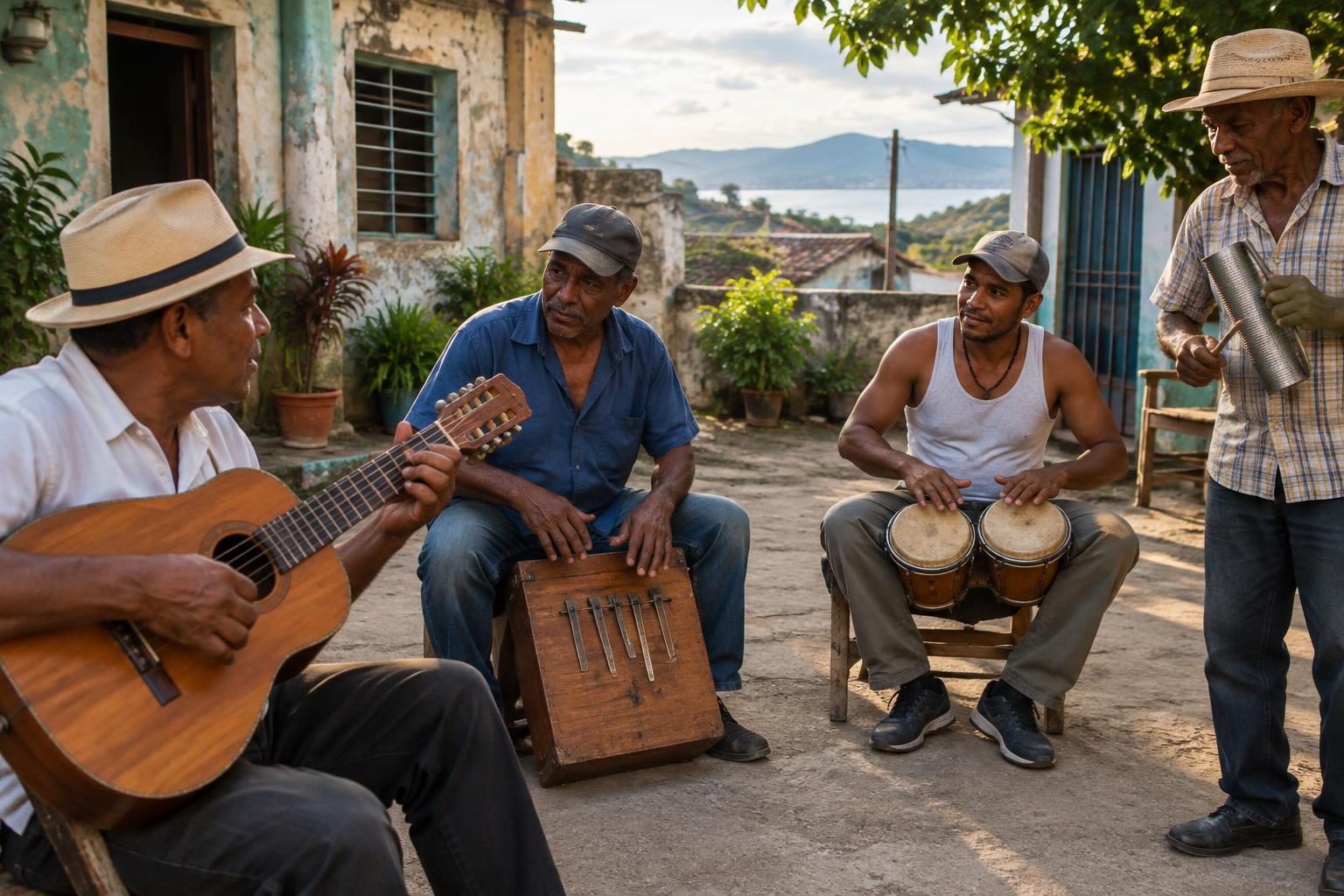
A characteristic changüí group brings together voices, tres, marímbula, bongó de monte, a scraper often called the guayo, and maracas. Ensembles can vary, but these sounds offer a useful listening map. The tres, a Cuban string instrument with paired strings, plays bright, repeating figures and responsive phrases. Rather than simply strumming chords, a tres player can create a pattern that both marks the groove and leaves space around the singing.
The marímbula supplies low notes with metal tongues plucked against a wooden box. It gives the ensemble a bass foundation without sounding like a modern electric bass. The bongó de monte contributes a hand-drum voice with accents and variations; it is helpful not to assume that it plays exactly the role of bongos in every other Cuban style. The guayo’s scraping sound and the maracas add distinct, recurring textures. Together, these parts make a rhythmic conversation, not a stack of instruments all striking the same beat.
How to hear the groove
Start with the low marímbula notes. Notice how much space sits between them, then listen for the quicker motion of the scraper and maracas. Bring the tres into focus next: its phrases may seem to lean toward or away from the beats you were following. The pleasure of the groove lies partly in those different placements. You can feel a steady pulse without expecting every instrument to announce it at once.
Clave is a useful concept in much Afro-Cuban music: it describes a guiding rhythmic relationship that helps parts fit together. But do not begin by forcing every changüí performance into a familiar written 3–2 or 2–3 clave exercise. Clave sticks need not be present, and an ensemble’s phrasing is best understood through attentive listening to the whole group. Follow where the tres figure returns, where the drum answers, and how the singers enter. Repeated listening will tell you more than counting an isolated pattern over the recording.
Voices, variation and room to respond
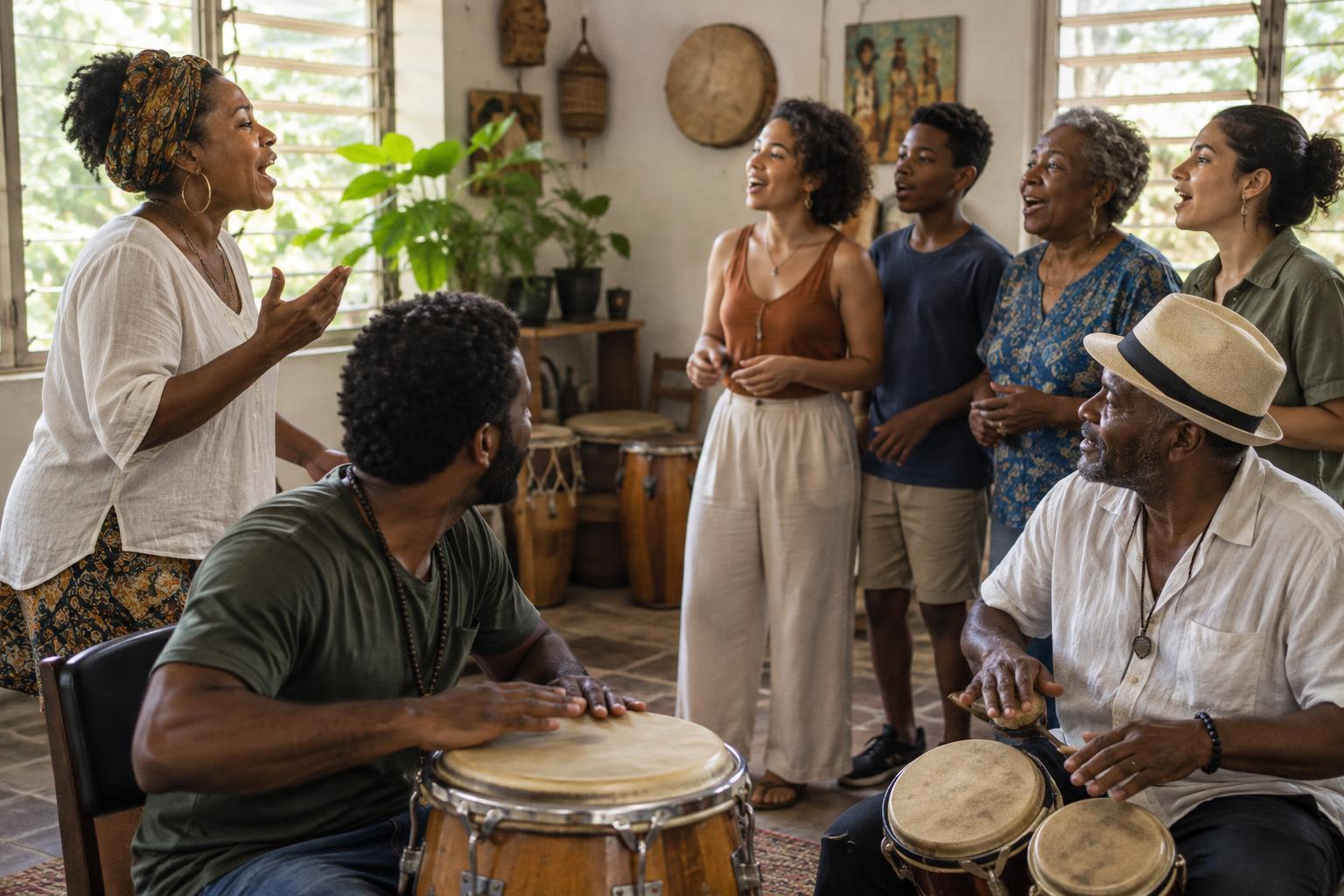
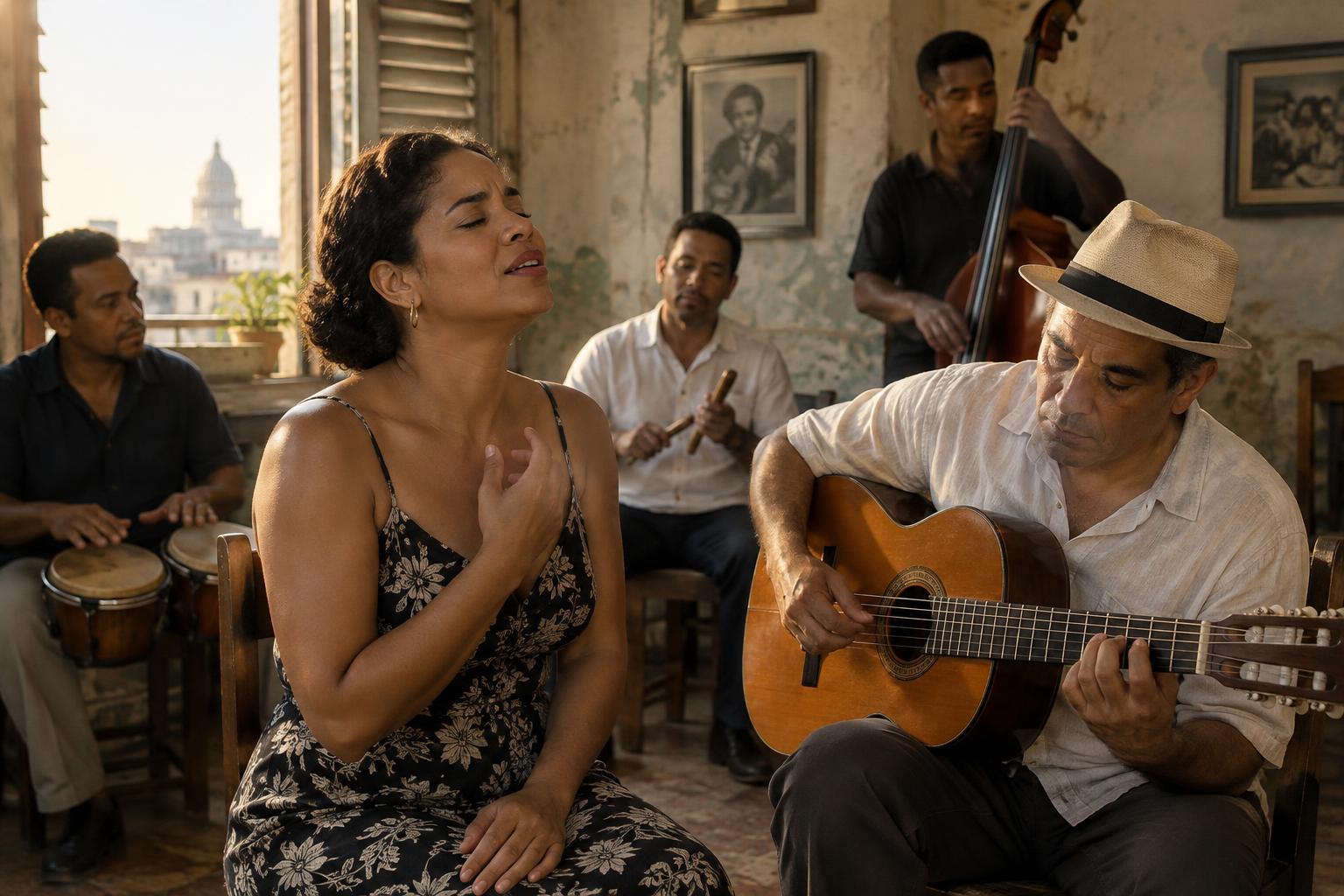
Listen for the relationship between a lead singer and a responding chorus. A lead line may introduce an idea while the group’s repeated response gives everyone a point of return. As that exchange continues, instrumental phrases can vary around it. Repetition does not mean that nothing changes: a small shift in a drum accent, a new tres answer or a differently placed vocal phrase can alter the feel while the shared groove stays recognizable.
This is also why a neat instrument-by-instrument description has limits. The parts gain meaning through interaction, and musicians may make choices suited to the singers, dancers and occasion. If you are new to changüí, resist treating one recording as a fixed template. Hearing more than one performance can reveal both the qualities that connect them and the choices that make each ensemble distinct.
A short practice for active listening
Choose a changüí performance and listen to the same short passage three times. On the first pass, tap a comfortable, even pulse without worrying about naming the meter or clave direction. On the second, stop tapping and follow only the marímbula; hum its low-note pattern if you can. On the third, keep that bass pattern in mind while attending to the tres. Notice where its notes coincide with the bass and where they do not.
Then listen once more for a vocal response or a change in the drum part. If you are practicing with others, divide these listening jobs among the group and describe what each person heard before trying to play anything. A simple ensemble exercise is to maintain a steady pulse, repeat a sparse bass pattern and add a contrasting short phrase above it. This will not reproduce changüí, but it can sharpen your ear for the space and coordination that make its interlocking parts so compelling.