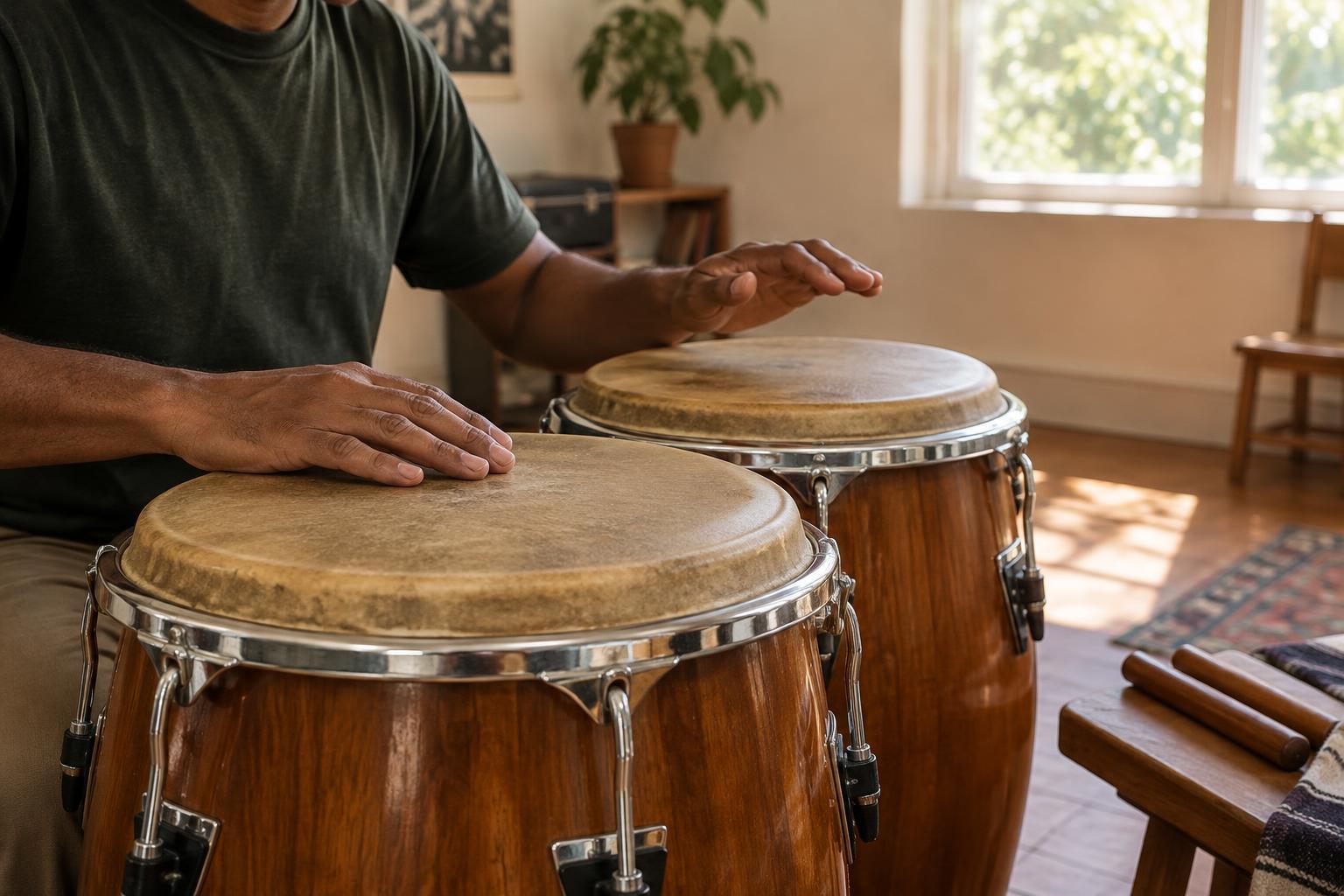
Practice ExercisesA rhythm can feel different at a whisper, a comfortable volume, and a strong volume. This exercise helps you change the energy of a short pattern without speeding up, dragging, or losing its shape.
Read article · 4 min↗
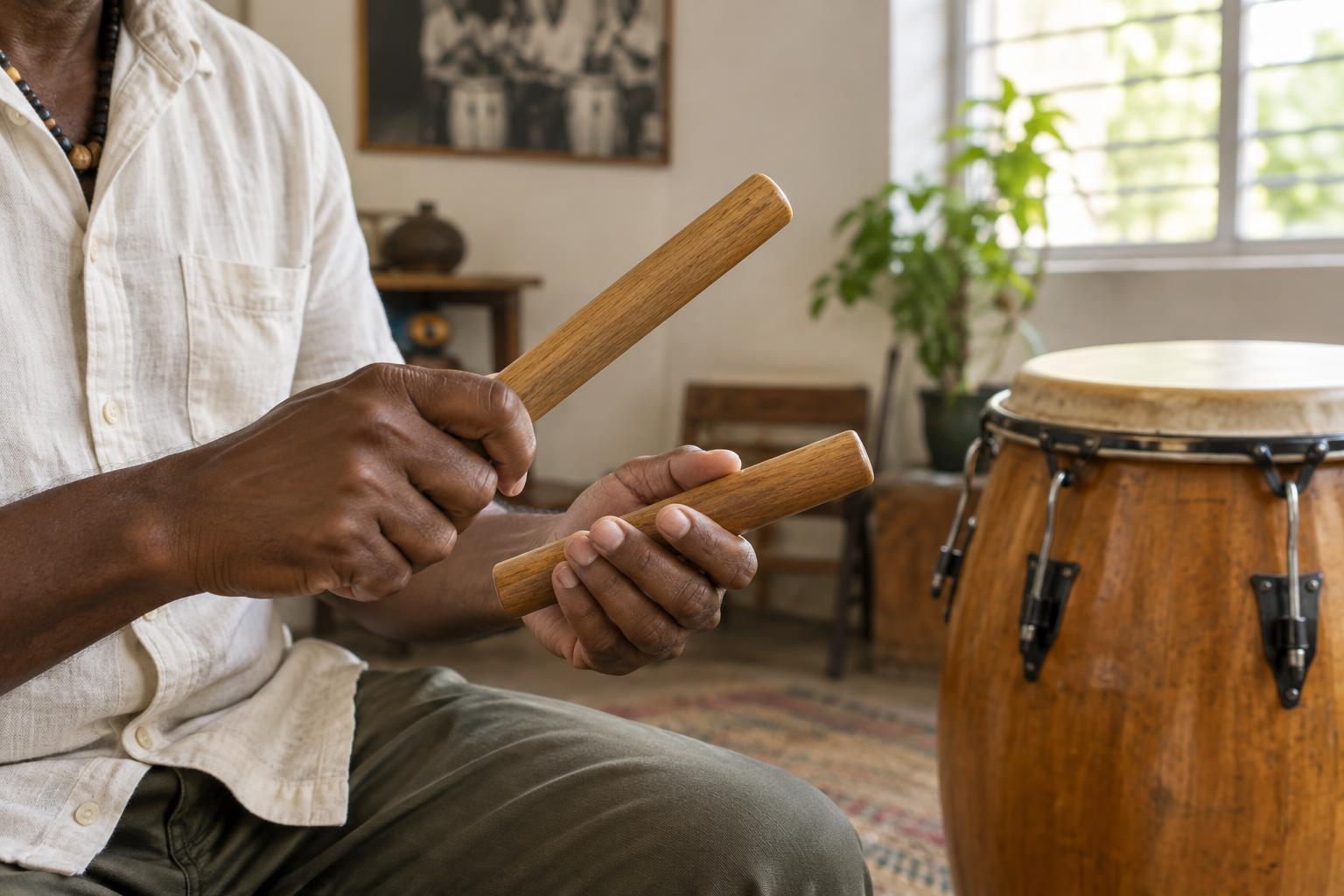
Practice ExercisesA missed stroke does not have to become a missed phrase. Practice keeping the pulse, identifying the start of the two-bar cycle, and re-entering without squeezing in the note you lost.
Read article · 4 min↗
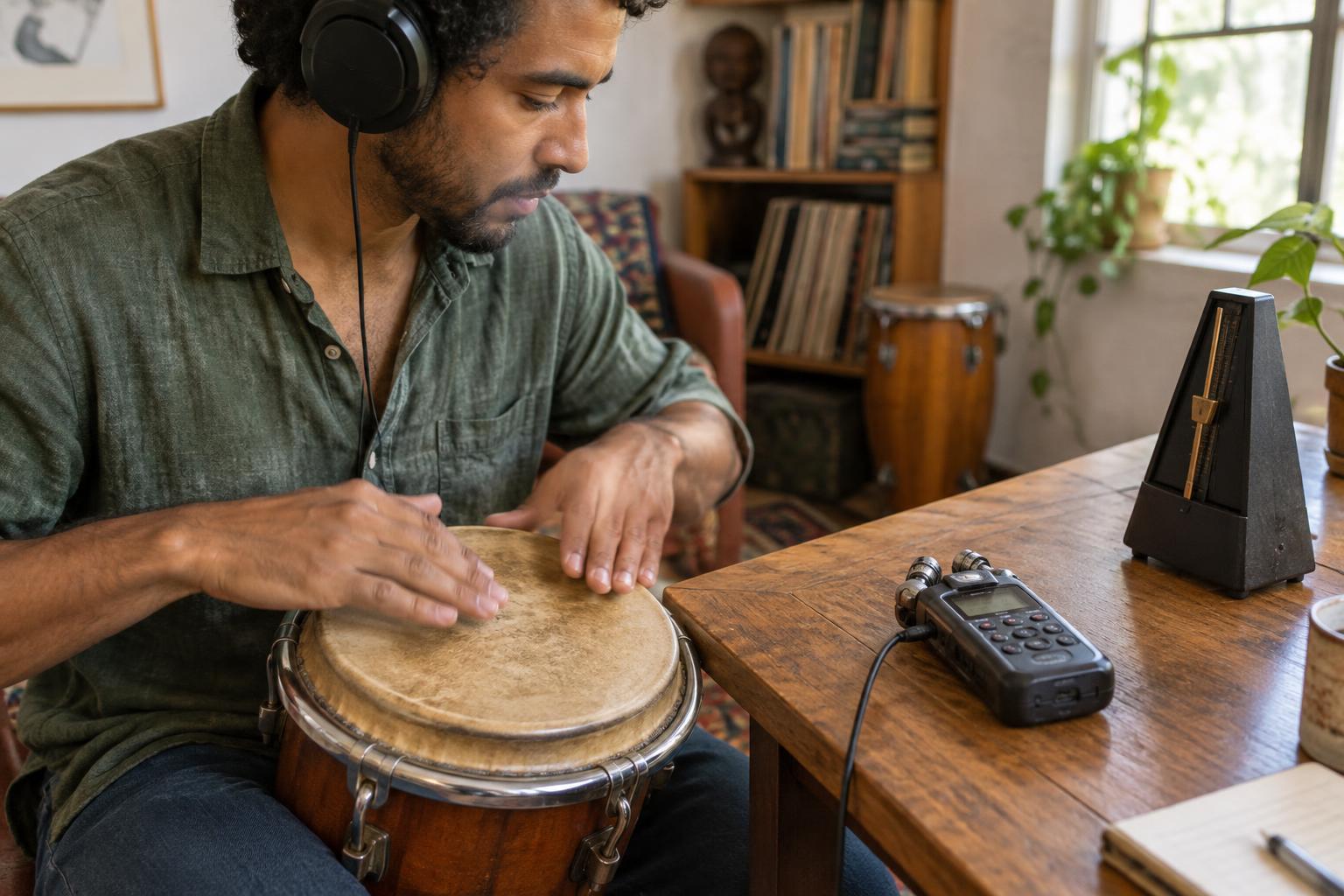
Practice ExercisesA short recording can reveal timing habits that are hard to notice while you play. Learn a simple way to record a groove, compare it with a steady reference, and turn what you hear into a focused practice exercise.
Read article · 4 min↗
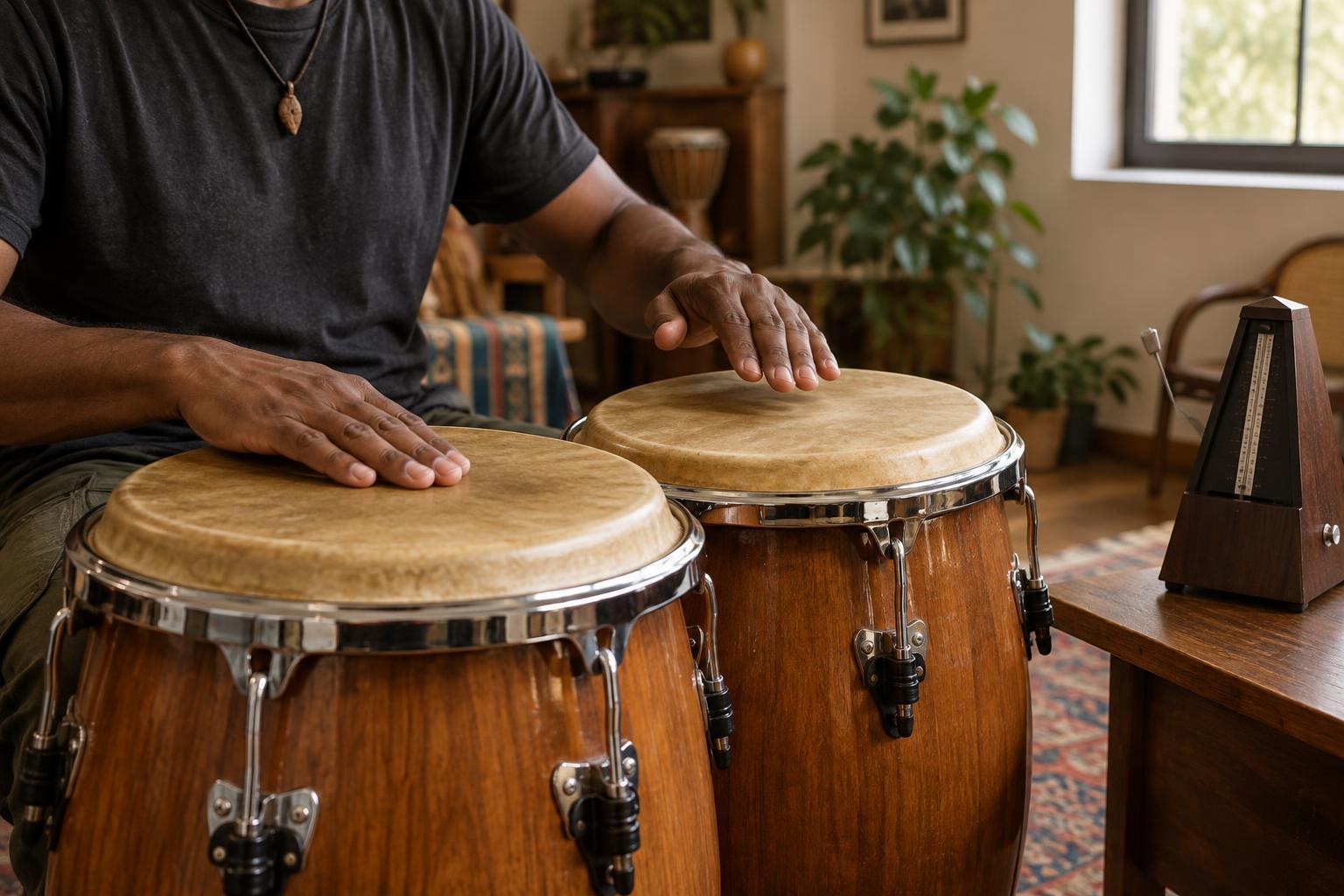
Practice ExercisesA tempo ladder helps you increase speed in small, deliberate steps while keeping the pulse, accents and spaces between notes clear. Learn how to choose a starting tempo, test each step and adjust the exercise when a pattern begins to blur.
Read article · 4 min↗
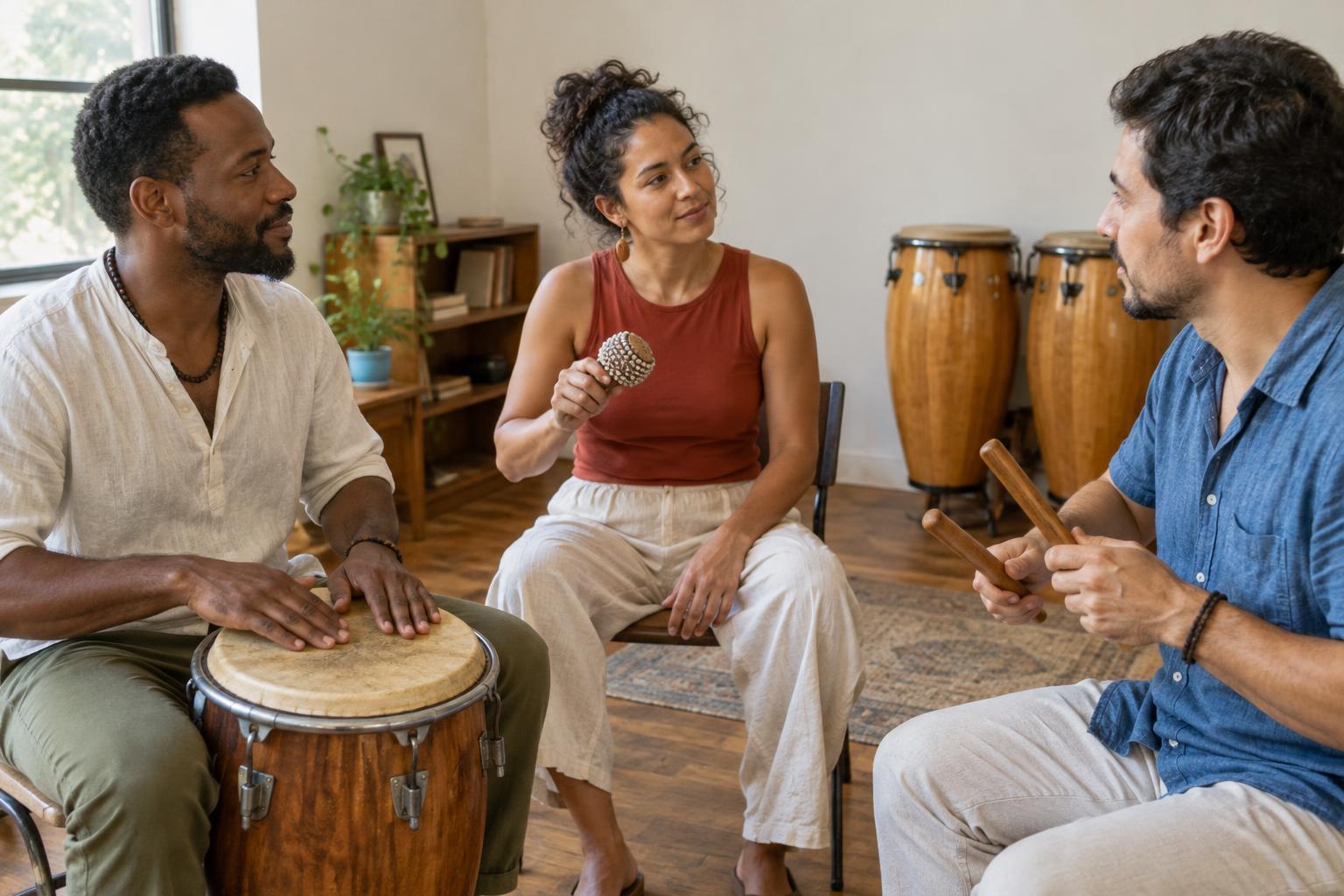
Practice ExercisesGive three players one job each: hold the pulse, mark the subdivision or play clave. Then rotate. This simple circle helps developing musicians hear how the parts relate without treating clave as just another click track.
Read article · 4 min↗
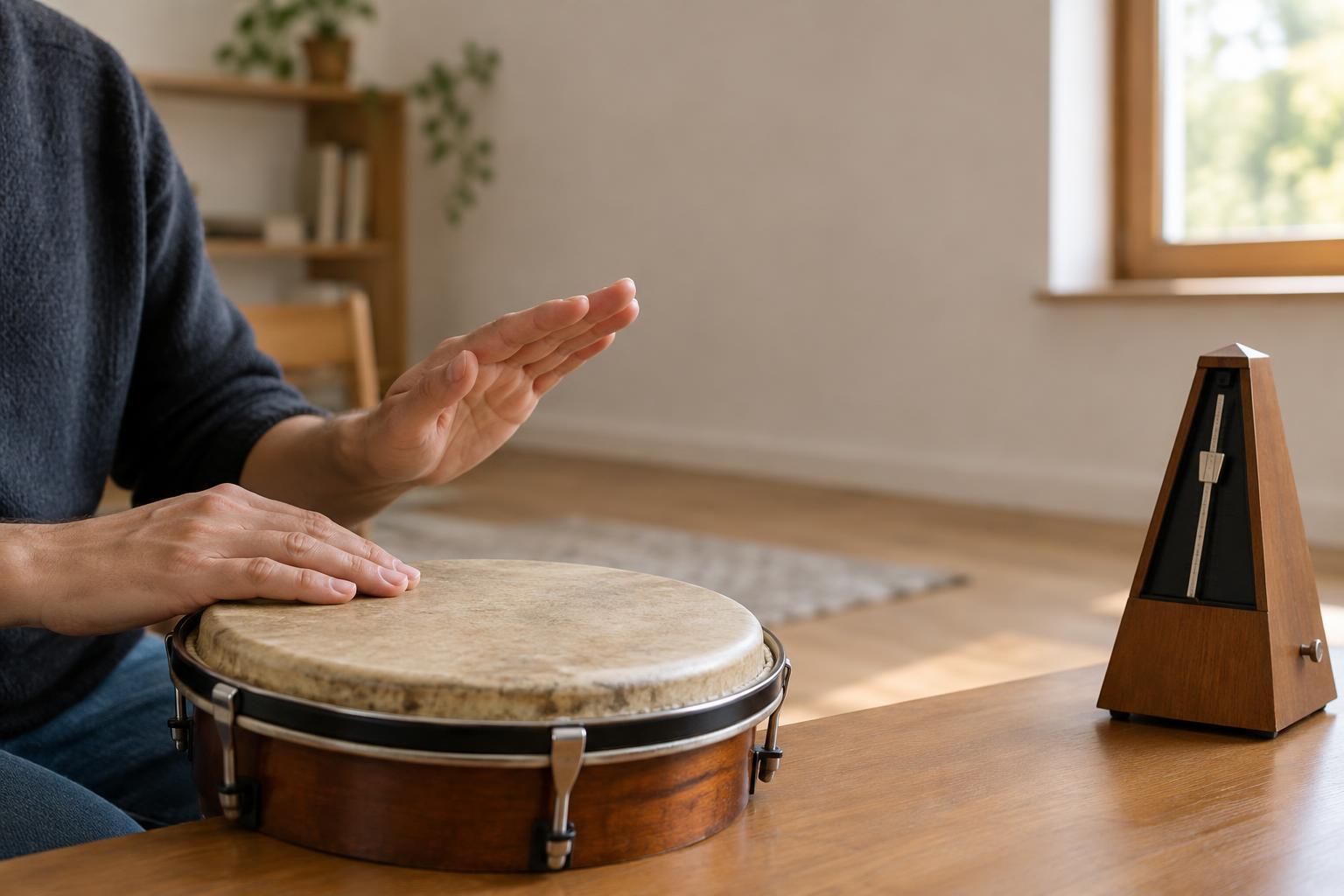
Practice ExercisesSyncopation is not just a matter of adding offbeat notes. This exercise uses a simple pattern, a steady pulse, and deliberate silence to help you feel where each accent lands.
Read article · 3 min↗
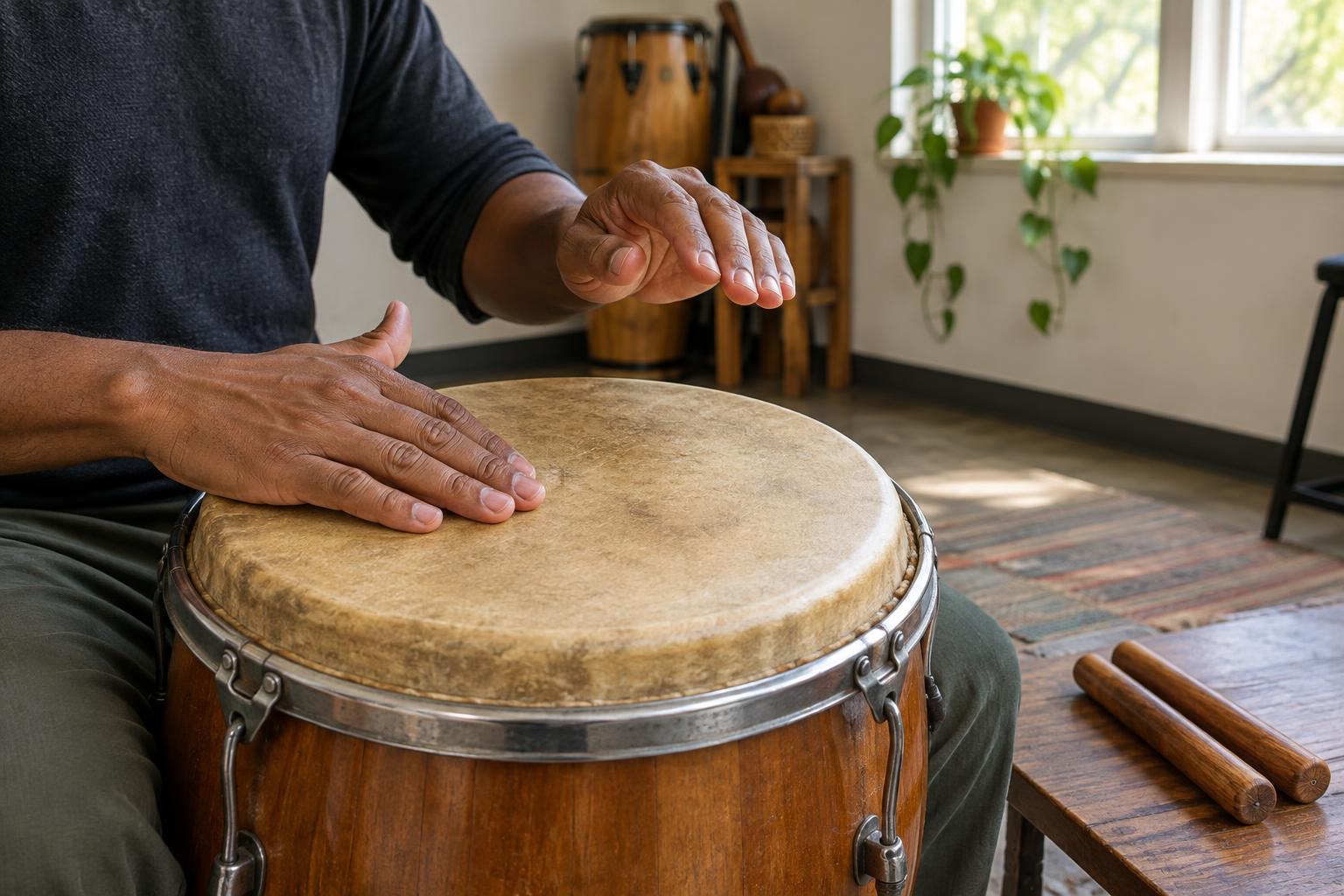
Practice ExercisesPlay the same eight notes in every bar, but give a different beat the emphasis each time. This simple exercise helps you separate accent from timing, hear all four beats clearly, and bring more control to your playing.
Read article · 4 min↗
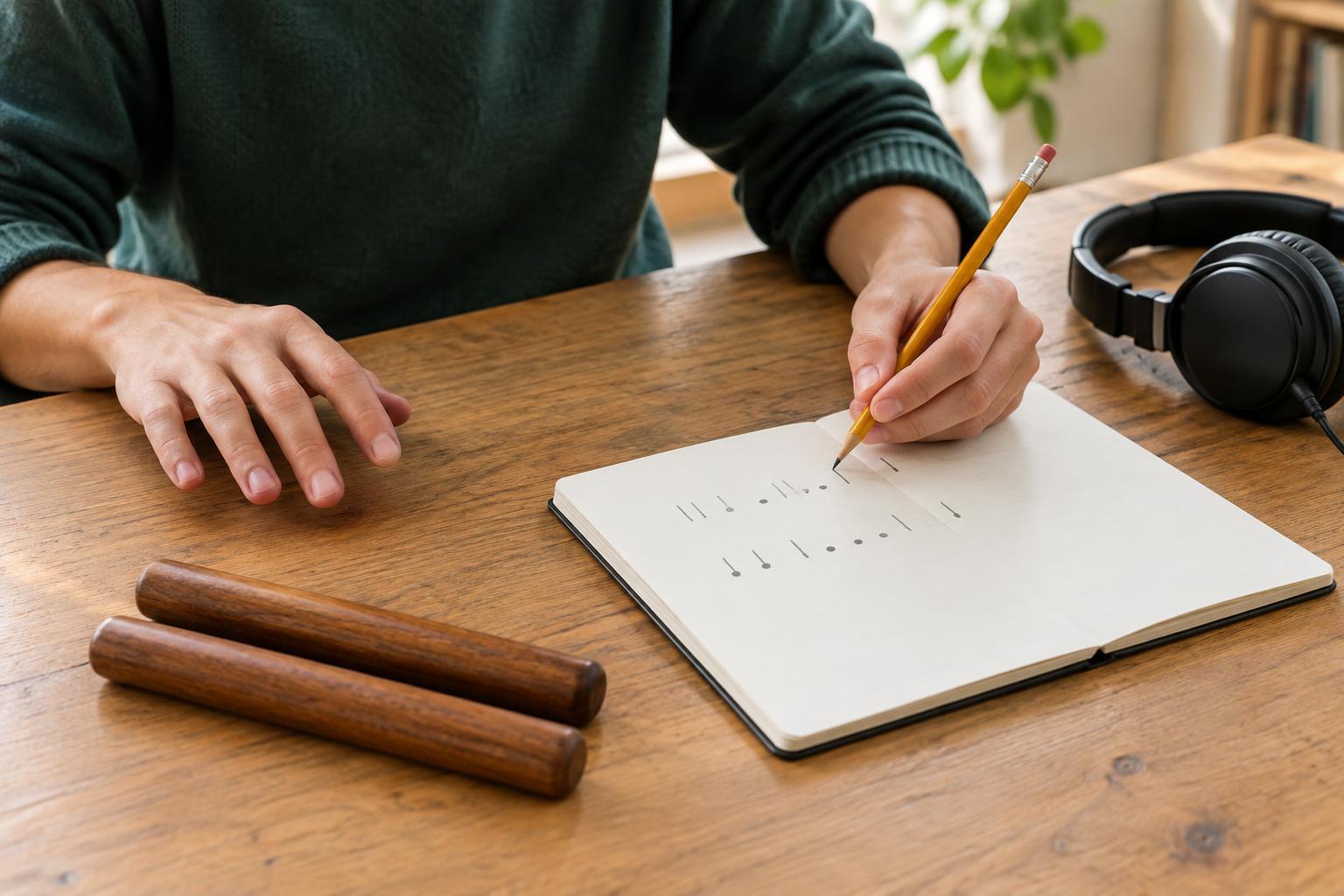
Practice ExercisesA practical listening exercise for turning a short percussion phrase into a rhythm you can clap, write down and check against the recording. Start with the pulse, mark only the attacks you hear clearly, and use repeated listening to resolve the rest.
Read article · 4 min↗
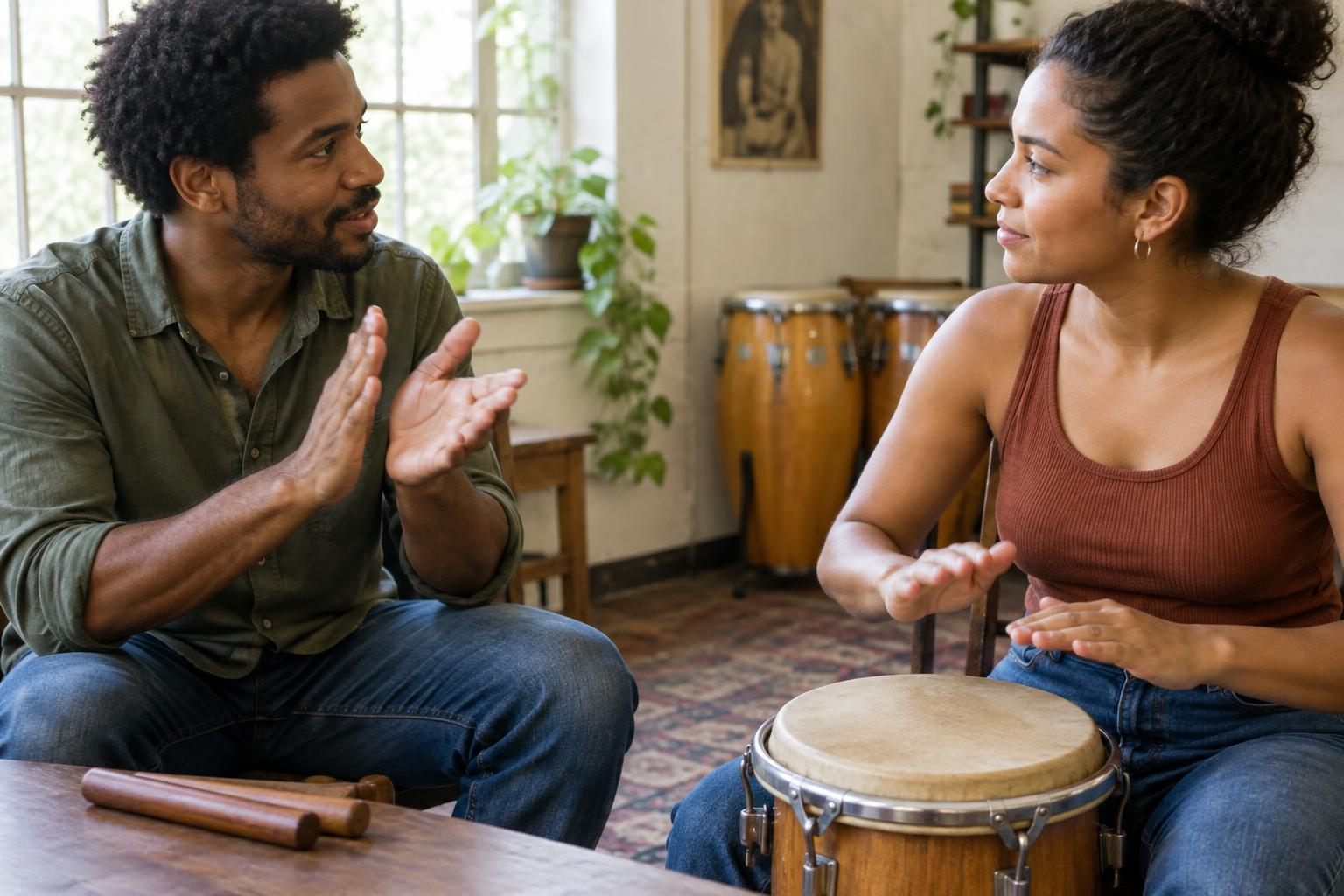
Practice ExercisesBuild a short rhythmic conversation you can clap, speak, or play on a percussion instrument. This exercise shows how to make a two-bar call, answer it with a contrasting phrase, and keep the pulse steady throughout.
Read article · 4 min↗
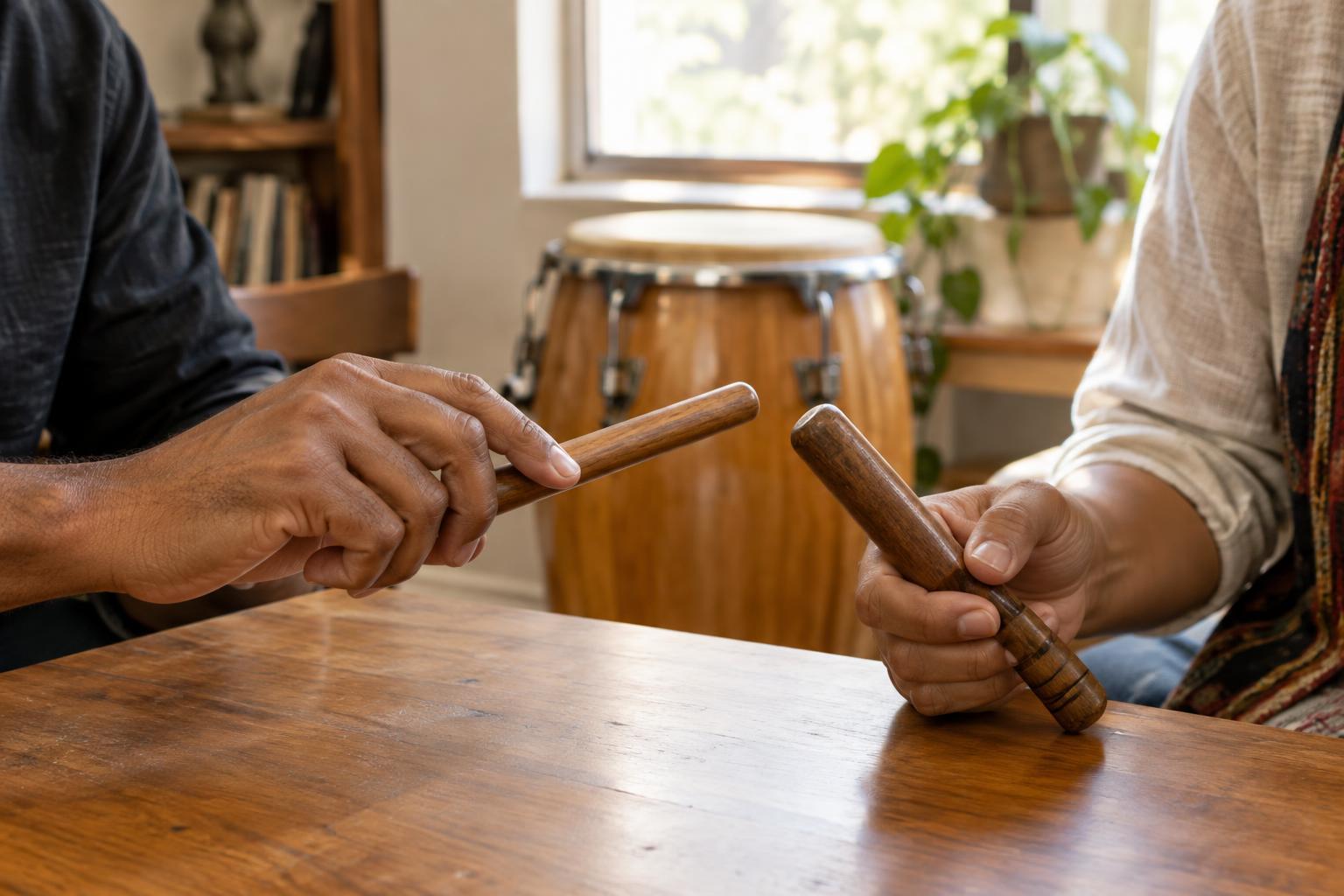
Practice ExercisesA pickup can make the start of a rhythm cycle feel clear and connected. These short exercises use counting, clapping and listening to help you enter a two-bar phrase without rushing or losing your place.
Read article · 4 min↗
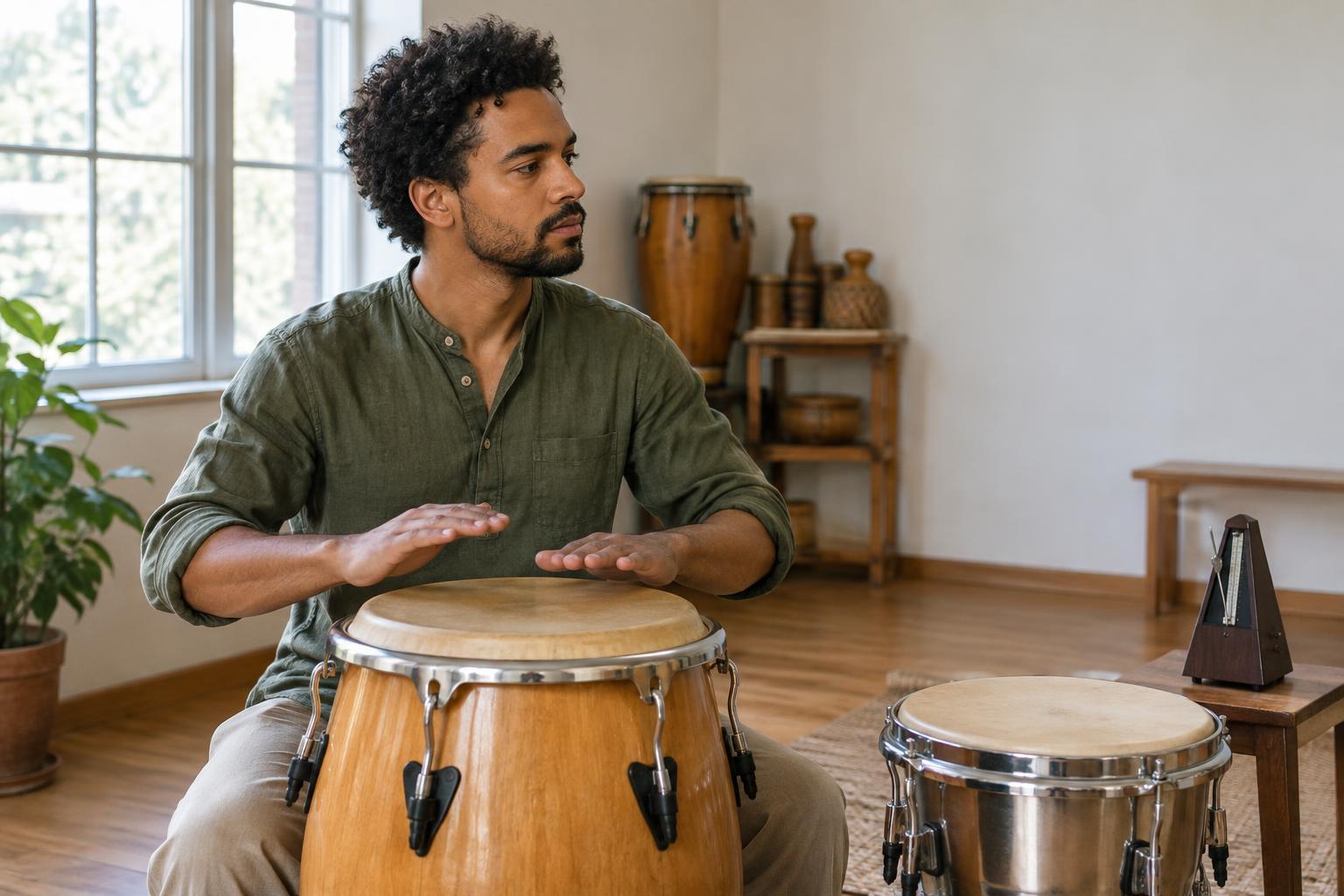
Practice ExercisesA rest is part of the rhythm, not a pause in your attention. Practice silent one-, two- and four-bar gaps with a steady pulse, clear re-entry points and simple listening checks.
Read article · 4 min↗
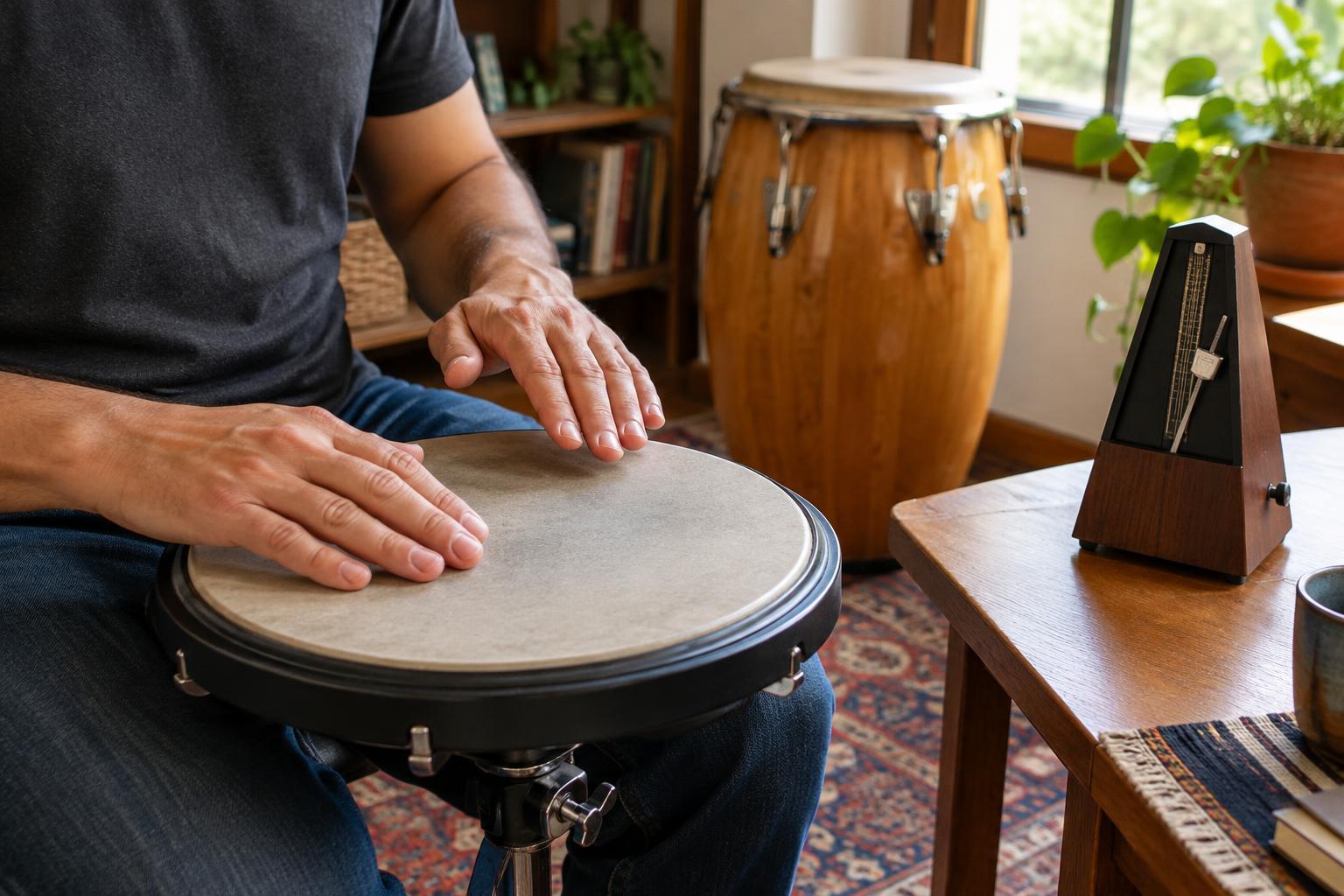
Practice ExercisesA click on two and four can help you feel the space between beats in 4/4 time. Learn how to set the metronome to half your playing tempo, place the clicks correctly, and recover when your ear shifts them onto one and three.
Read article · 4 min↗
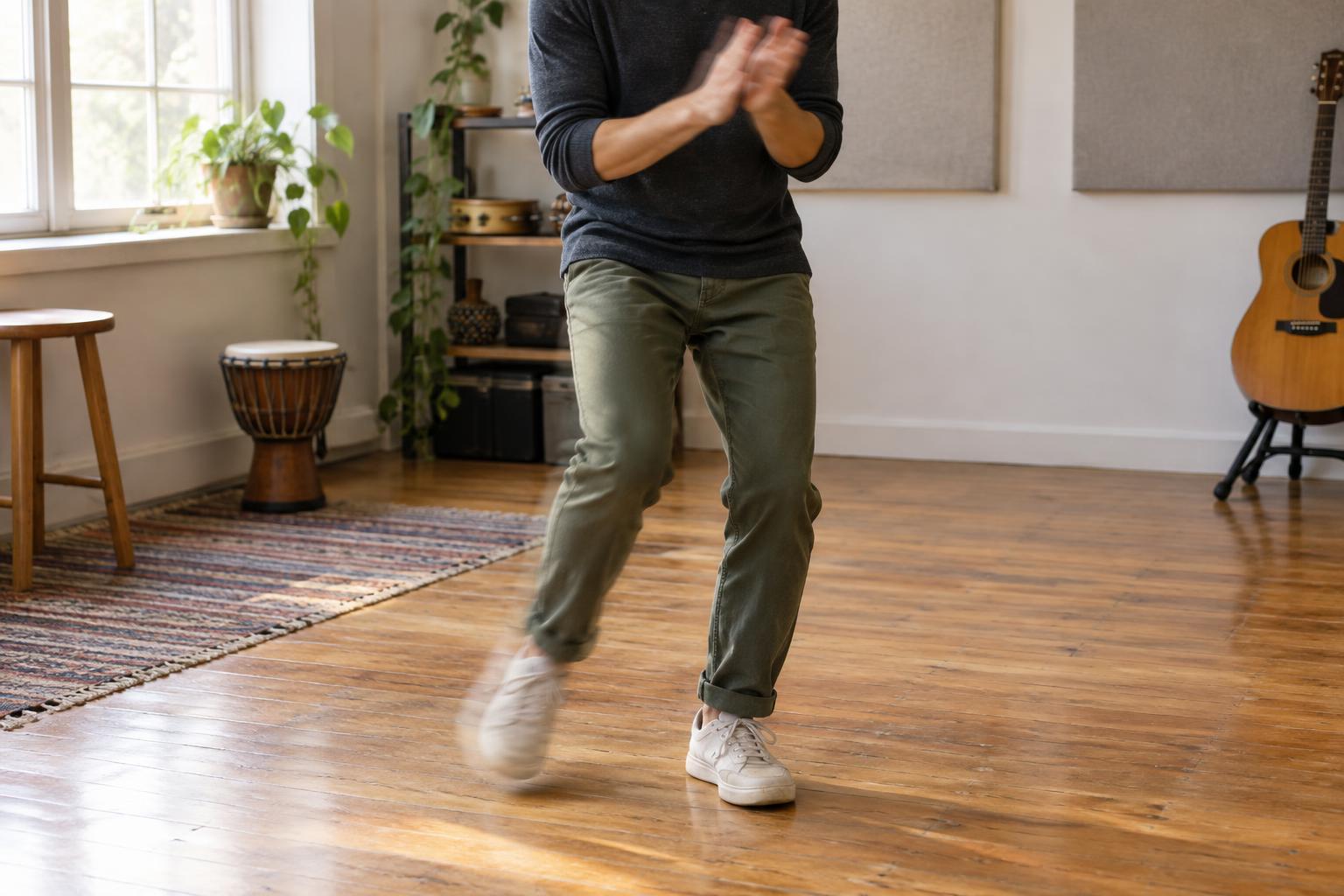
Practice ExercisesThree-against-two becomes easier to feel when your feet mark two evenly spaced beats and your hands clap three evenly spaced beats across the same span. Learn a six-count pattern, build it slowly, and use listening and movement to keep both parts steady.
Read article · 4 min↗
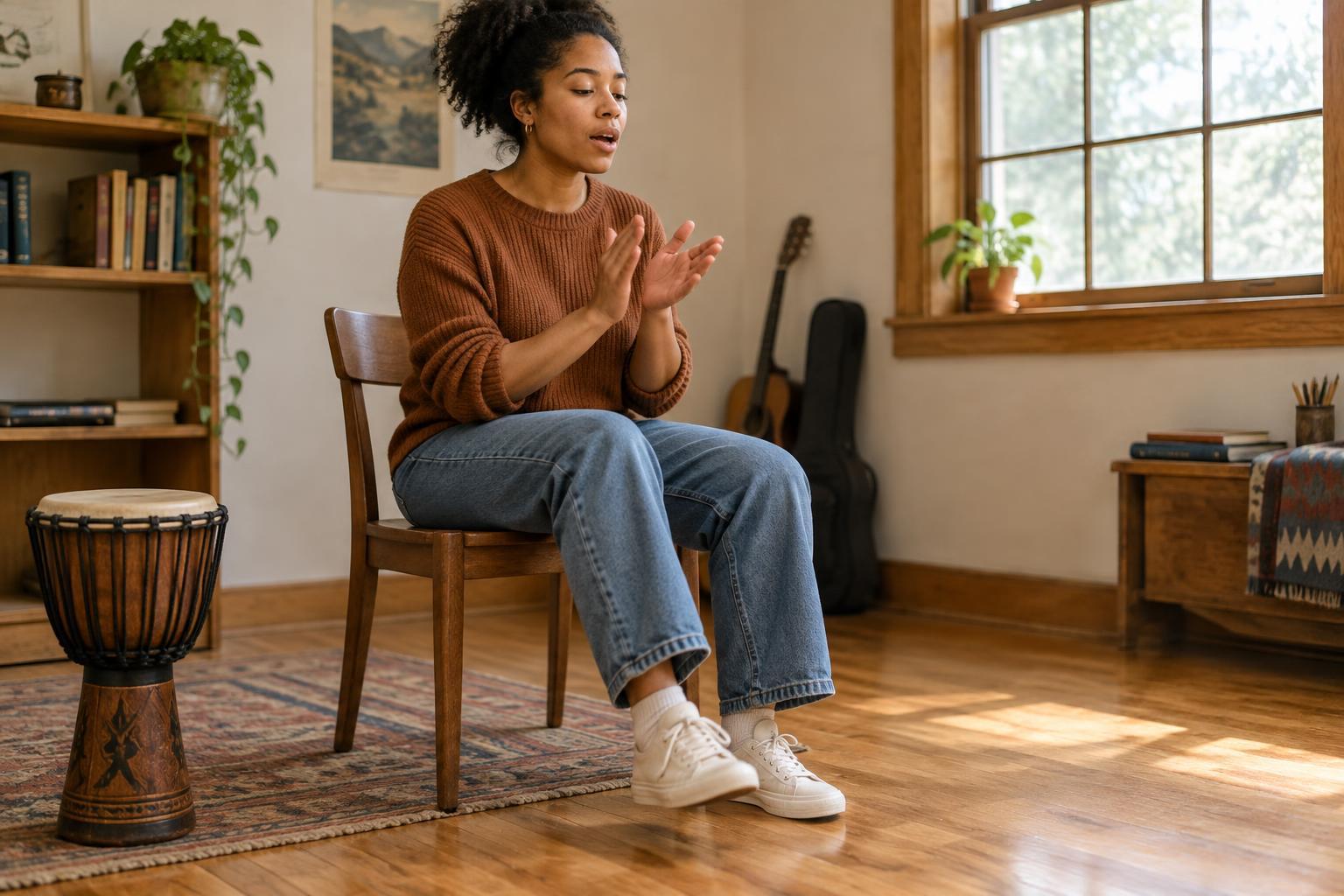
Practice ExercisesLearn to feel three evenly spaced sounds inside each beat with a simple voice, hands and feet exercise. Build a steady pulse, move your claps through each triplet position, and listen for the space between notes.
Read article · 3 min↗
Practice ExercisesBuild a steadier sense of subdivision by speaking four syllables per beat and tapping simple patterns. This exercise starts with an even pulse, then adds rests, accents and short listening checks without asking you to play faster.
Read article · 4 min↗
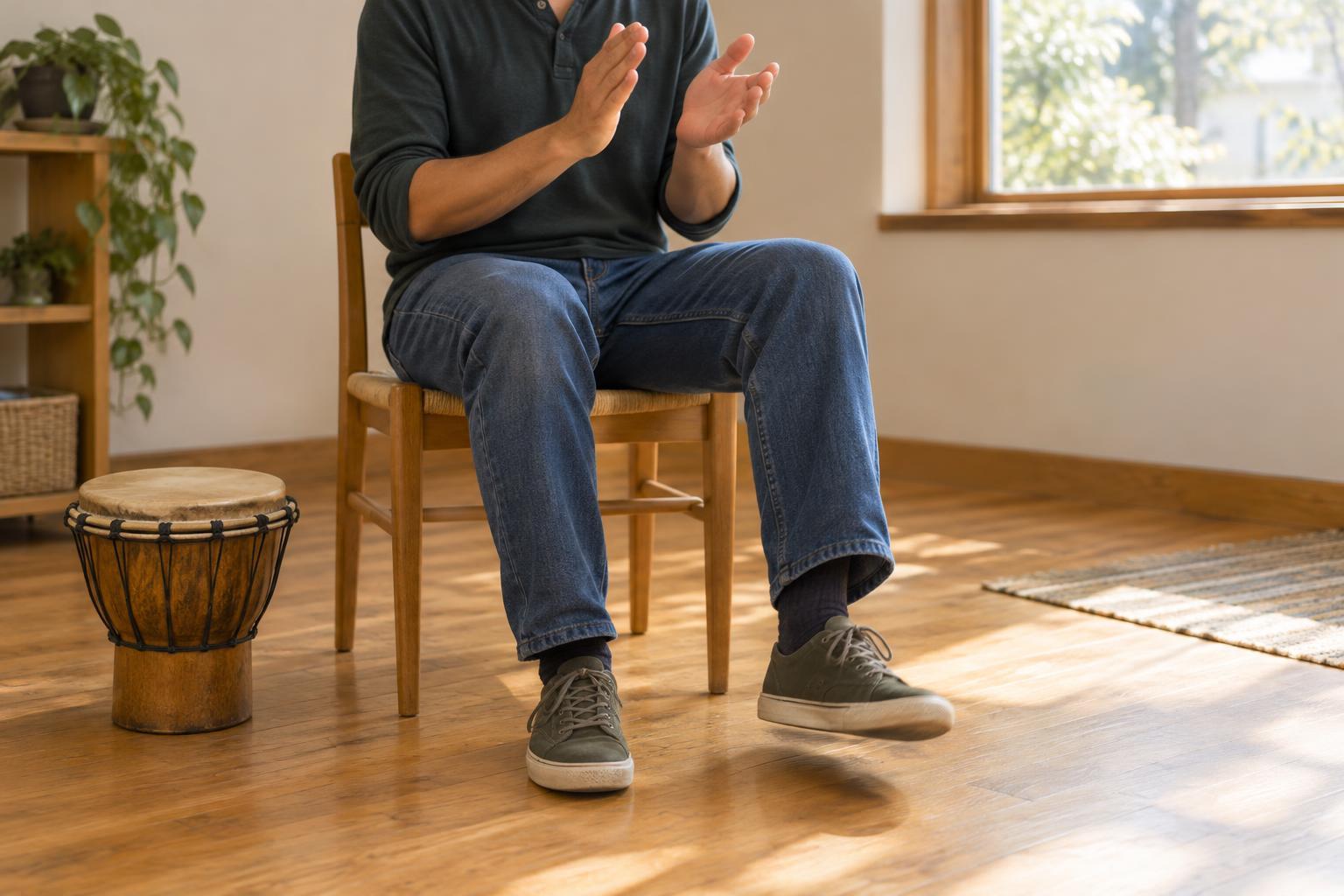
Practice ExercisesA steady foot tap and an offbeat clap can feel surprisingly difficult at first. This step-by-step exercise helps you hear the space between beats, place each clap on the “and,” and keep your foot grounded as the tempo changes.
Read article · 4 min↗
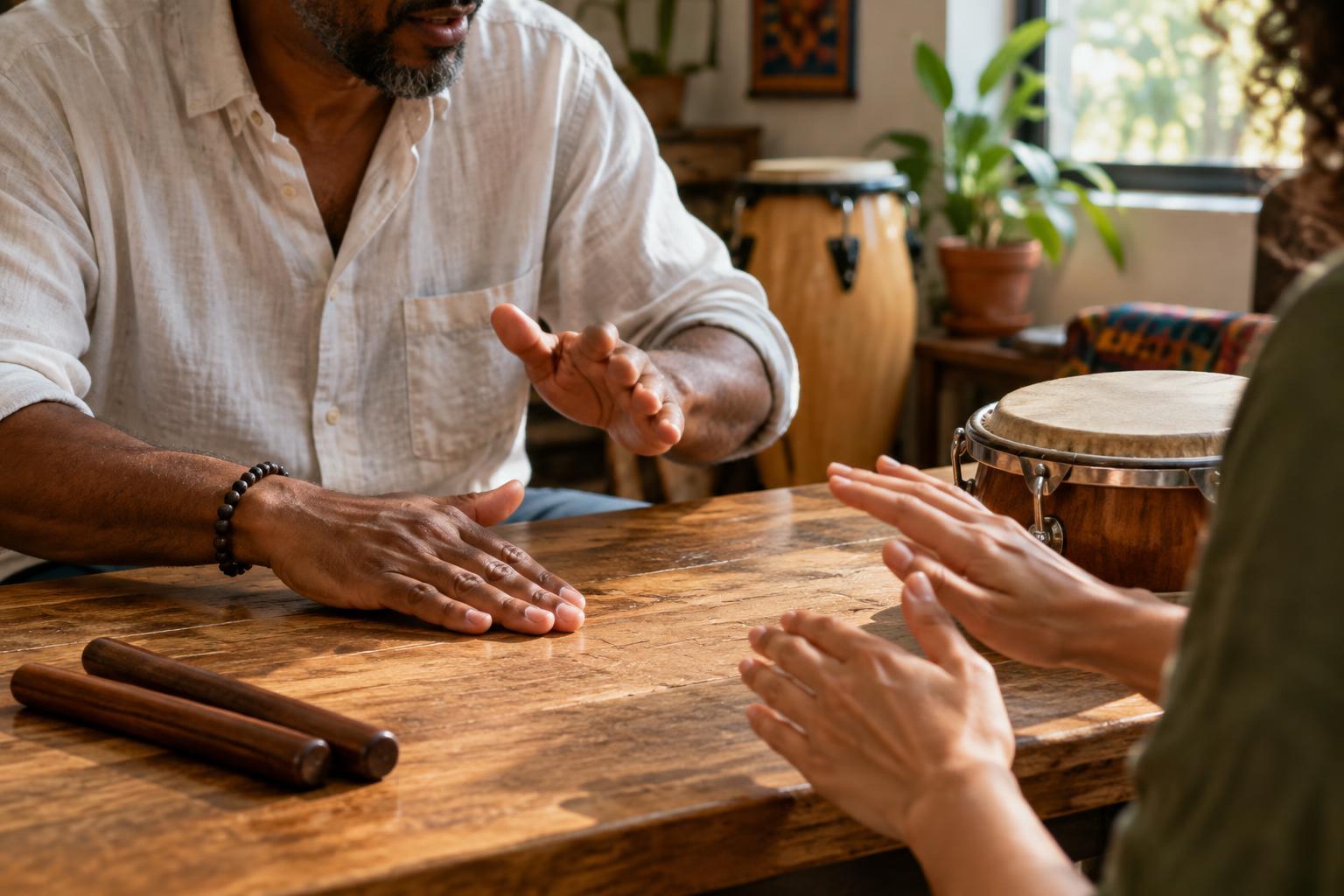
Practice ExercisesA steady cycle of six subdivisions can feel like two broad beats or three shorter ones. Practice shifting between those groupings with voice, hands and steps, then use the exercise to listen more closely to Afro-Cuban 6/8 music.
Read article · 4 min↗
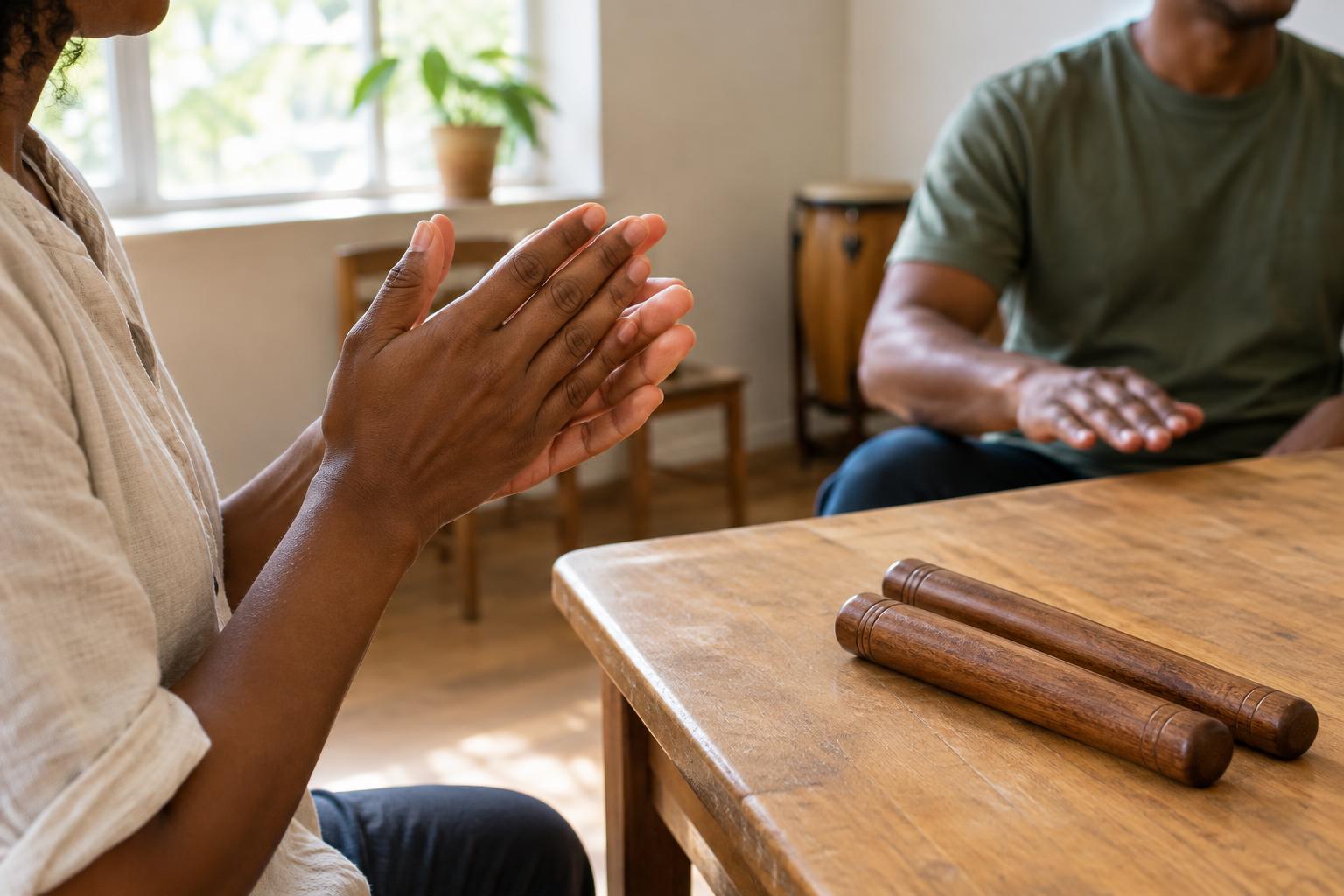
Practice ExercisesThe last stroke on the three-stroke side of rumba clave can be easy to clap too early. This slow, two-bar drill helps you place it after beat four while keeping a steady pulse.
Read article · 4 min↗
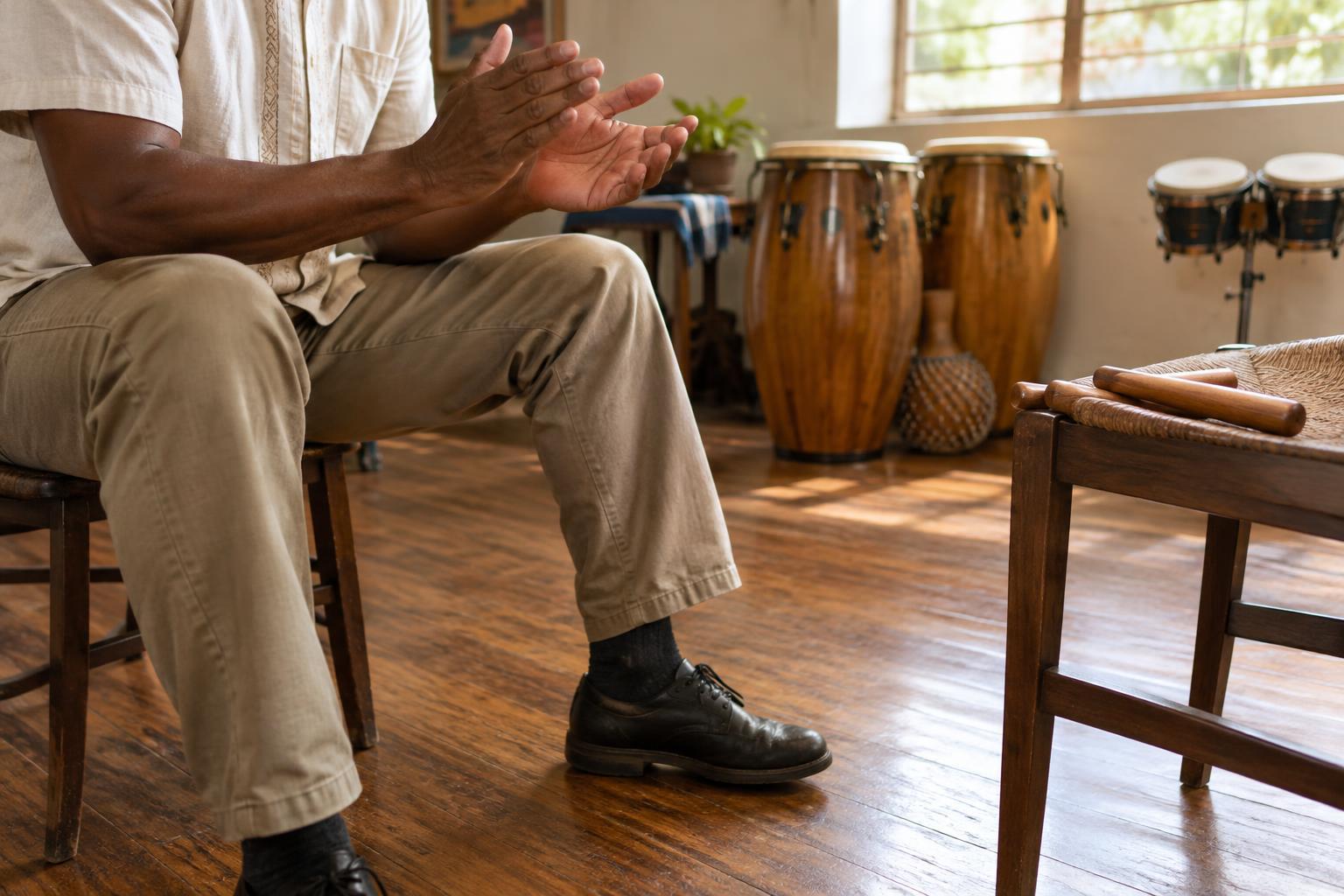
Practice ExercisesLearn to keep your foot on four even beats while your hands clap the five strokes of son clave. Start with one measure at a time, then practice switching between 3–2 and 2–3 without losing the pulse.
Read article · 3 min↗
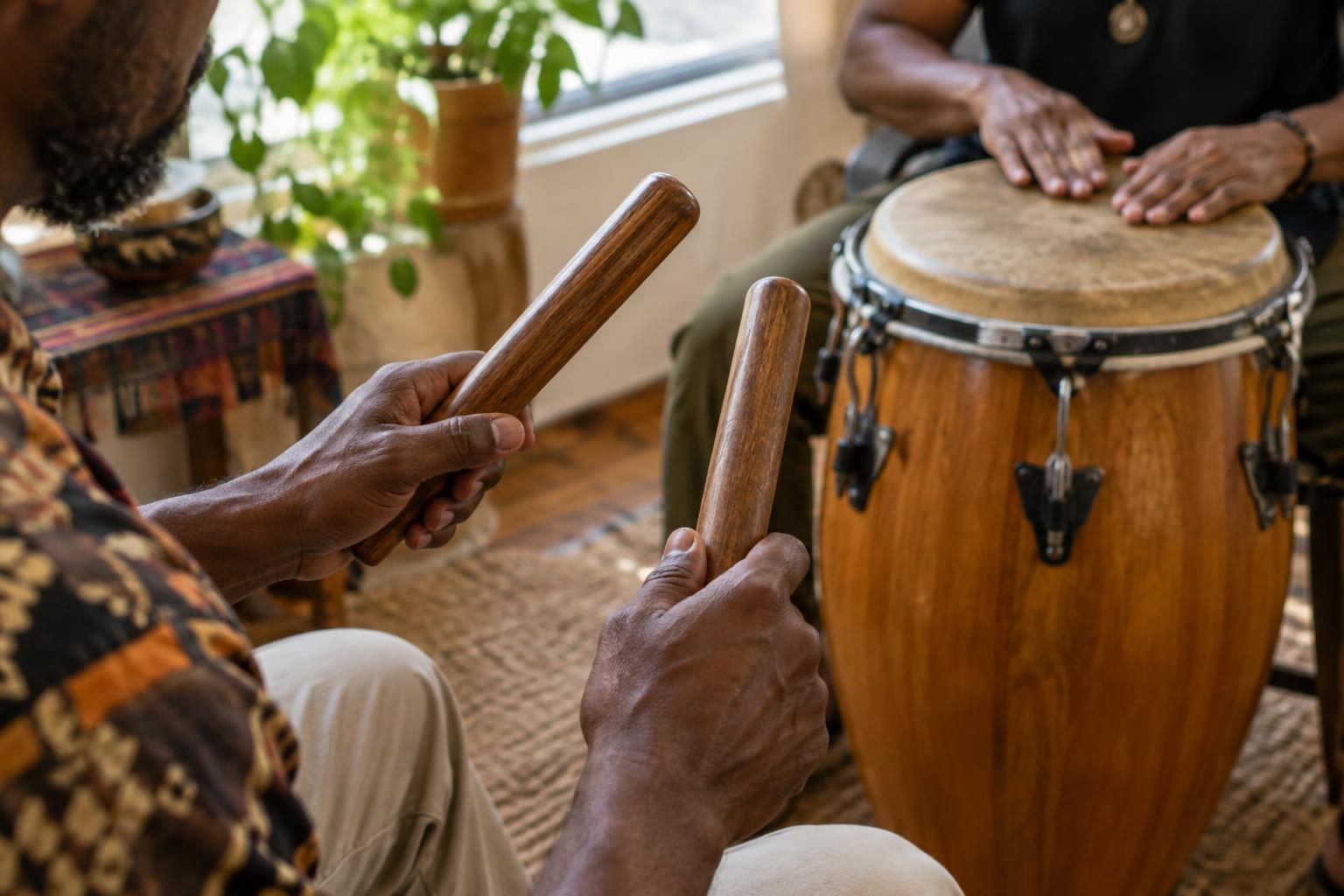
Practice ExercisesA two-bar rhythm can feel easy until you lose track of which bar you are in. Learn to count an eight-beat cycle, hear its return, and recover your place without stopping the music.
Read article · 4 min↗
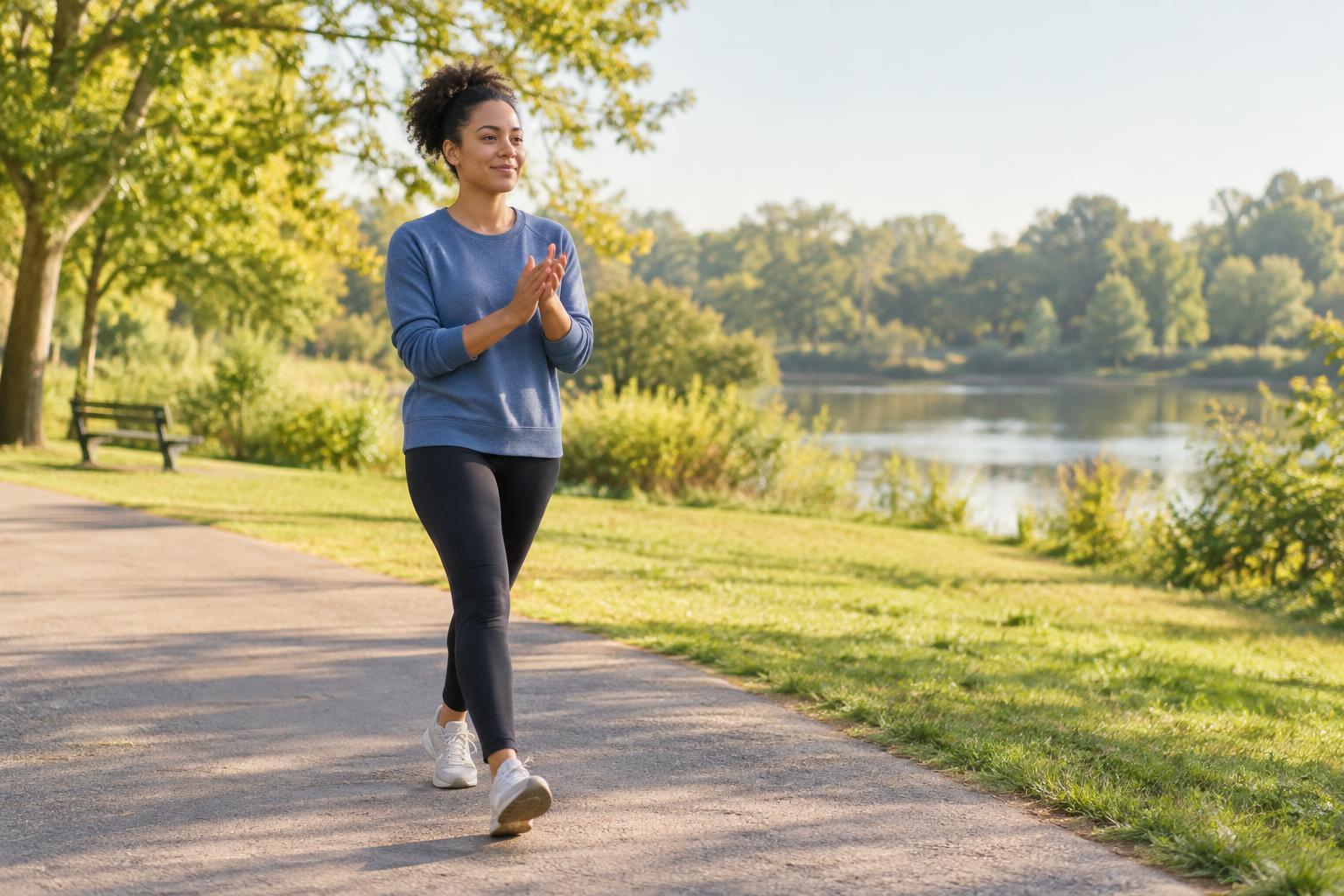
Practice ExercisesUse an ordinary walk to feel a steady musical pulse, then add claps on the beat, on selected beats, and between steps. This five-minute drill needs no instrument and can be adjusted to a comfortable pace.
Read article · 4 min↗