Listen to the singer before removing parts
A rhythm-heavy arrangement can feel exciting from inside the band while leaving little room for the lead singer. The problem is not always volume. Short, bright percussion sounds, repeated keyboard chords and horn responses can all draw attention to the same moments as the words. Before changing the groove, listen to a full verse with one question in mind: which syllables are hard to understand? Notice whether an instrument plays at those moments, occupies a similar pitch range or simply pulls your ear away from the lyric.
The goal is not to make every instrument quiet. It is to give the listener a clear path between the singer and the groove. Record a rehearsal from a position where an audience member might stand, then listen at a modest volume. If the vocal disappears whenever the whole band enters, try changing one part at a time. A small rhythmic adjustment may help more than turning down an entire section.
Protect the words with timing and register
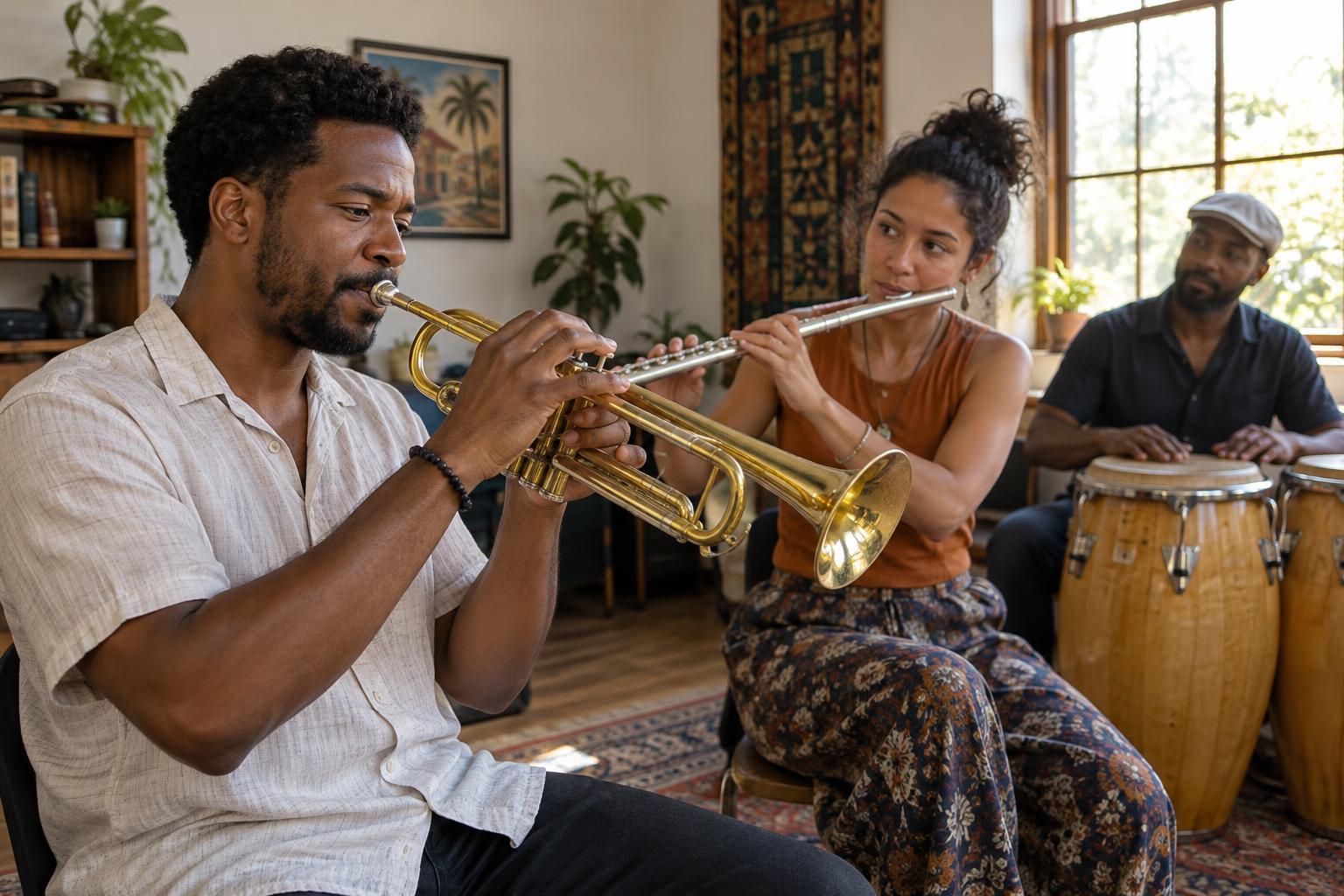
Space can be measured in beats as well as volume. A piano or guitar pattern that strikes under every important word may be easy to revise: leave out one attack, shorten a chord or move a response into the gap after the phrase. Backing singers and horns can answer the lead instead of doubling its busiest lines. These choices preserve conversation within the arrangement, allowing the ensemble to sound active without asking the listener to follow several statements at once.
Register matters too. If a chord instrument repeatedly plays in the singer’s range, try a different voicing or a simpler figure lower or higher on the instrument. A bass line can stay strong while leaving its upper fills for the ends of vocal phrases. There is no fixed frequency slot that belongs to every voice; the useful question is whether a part masks this singer, in this song. Let the melody and the intelligibility of the words guide the choice.
Keep the rhythmic conversation intact
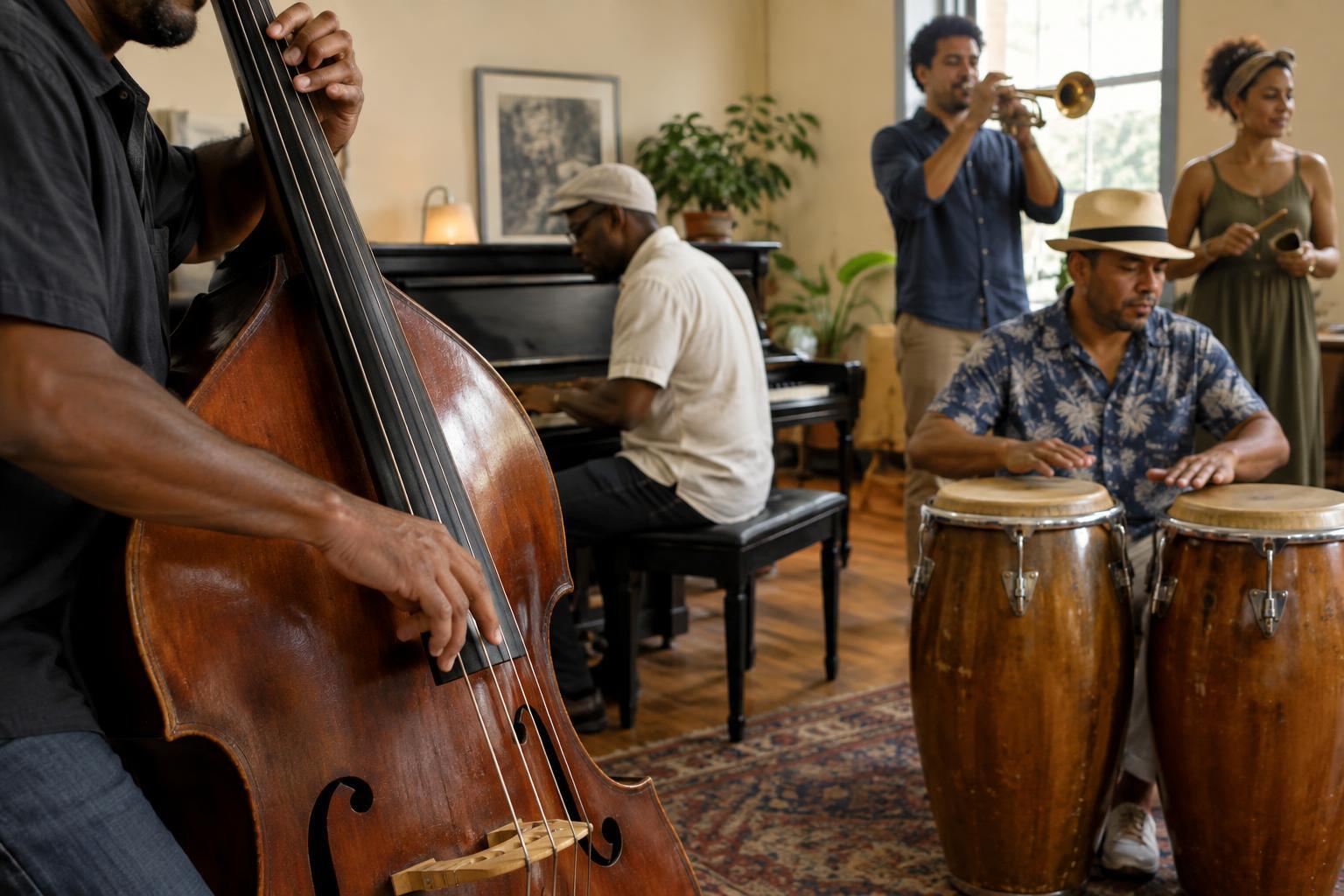
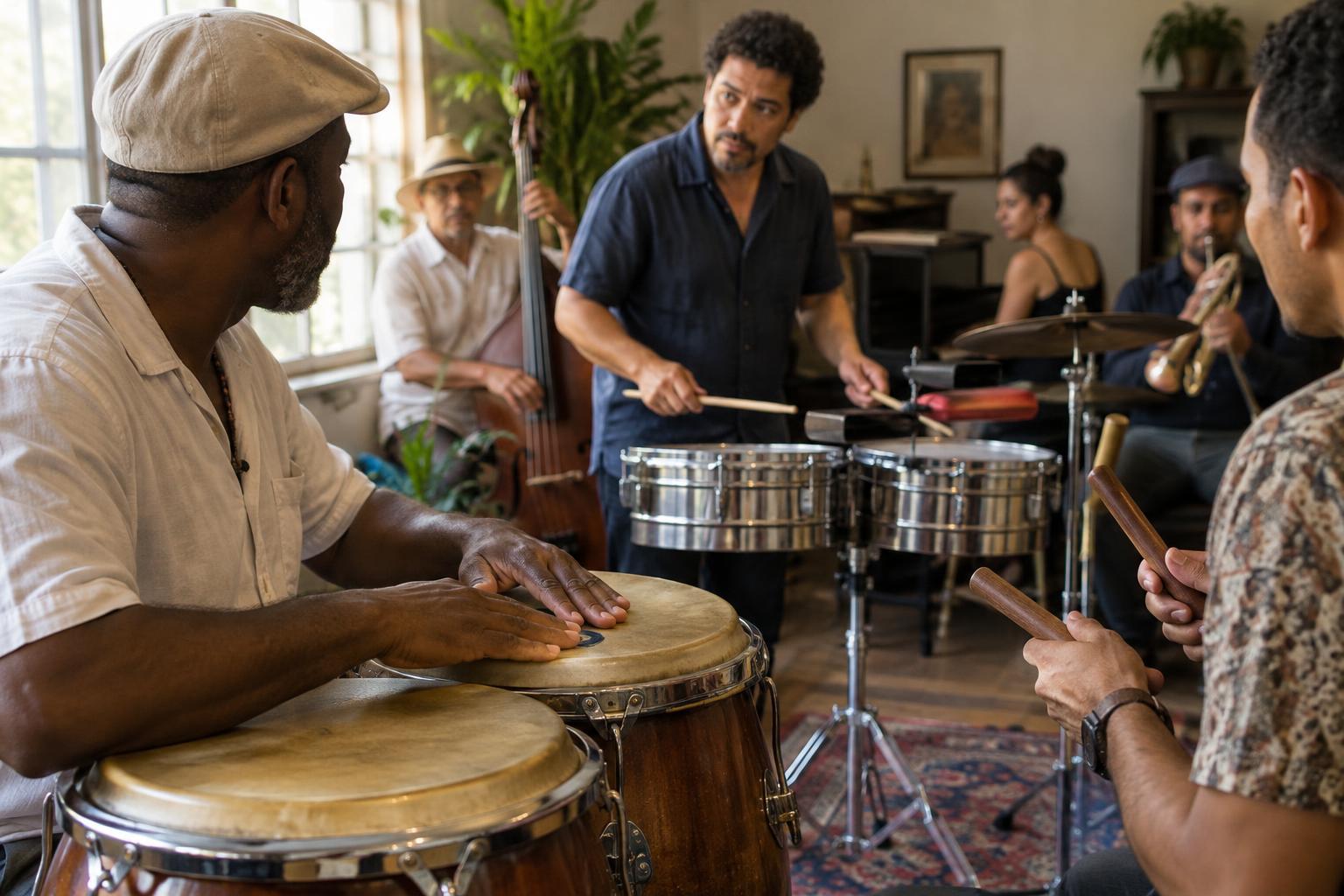
In an Afro-Cuban-influenced arrangement, making space should not mean treating percussion as disposable background. Interlocking parts often give the music its character. Listen for the role of each instrument before simplifying it: one part may mark a repeating pattern, another may add color, and another may answer the singer. Rather than asking everyone to play less everywhere, decide where the vocal needs an opening and which part can create it without weakening the ensemble’s shared pulse.
If the music is organized around clave, consider how a proposed change sits in relation to that pattern. A fill that sounds effective on its own may feel awkward if it obscures an important entrance or shifts the phrasing against the rest of the band. Practices vary across styles and ensembles, so listen to the musicians who know the tradition and the specific piece. Thoughtful space is an arrangement choice, not a reason to flatten distinct rhythmic roles into one generic beat.
Shape the arrangement across the song
A singer does not need identical support in every section. A sparse first verse can establish the lyric; a fuller second verse can add a percussion layer or a sustained harmony. Between lines, a brief instrumental response can provide energy without covering the next entrance. If a chorus invites stronger ensemble singing, that may be the place for the broadest texture. Contrast makes the dense passages feel more powerful because the listener has heard what came before.
Dynamics can create the same contrast on a smaller scale. Ask players to notice the start of each vocal line and ease their attack there, then let a response grow after the phrase. Percussionists can sometimes maintain the pattern while changing touch or choice of sound. Horn and keyboard players can distinguish between a supportive sustained note and a sharply articulated figure. Agree on these decisions together so the singer is not forced to compensate by pushing harder throughout the song.
Test the space in rehearsal
Start with the voice and one anchoring part, such as bass or a core percussion pattern. Add instruments one at a time while the singer repeats the same short passage. When a new part makes a word less clear, test two versions: one with fewer notes and one with the same notes placed after the vocal phrase. Keep whichever version supports both the groove and the lyric. This exercise gives players a concrete task rather than a vague request to “stay out of the way.”
Finally, run the complete section without stopping. An opening that works in isolation may not work after a fill, a transition or a change in vocal intensity. Listen for whether the singer can enter comfortably and whether the ensemble still feels connected. The best solution may be a single rest, a softer attack or a response delayed by a beat. Making room is not about emptying the arrangement; it is about choosing when each voice in the musical conversation should speak.