A dance shaped by Cuban social life
Danzón took shape in Cuba in the late nineteenth century, drawing on earlier social dances including the contradanza and danza. Those forms had European connections, but Cuban musicians and dancers made them their own through local performance practices and rhythmic ideas. Danzón is best understood as part of that continuing exchange, not as a European form with a Cuban beat added afterward.
The form grew in settings where an orchestra played for dancers. Its measured pace gave couples room to move together, pause and respond to changes in the music. Miguel Faílde is frequently associated with the early development of danzón, though no single musician accounts for everything the form became. As it spread and changed, danzón remained closely tied to the choices of performers and dancers.
The sound of the ensemble
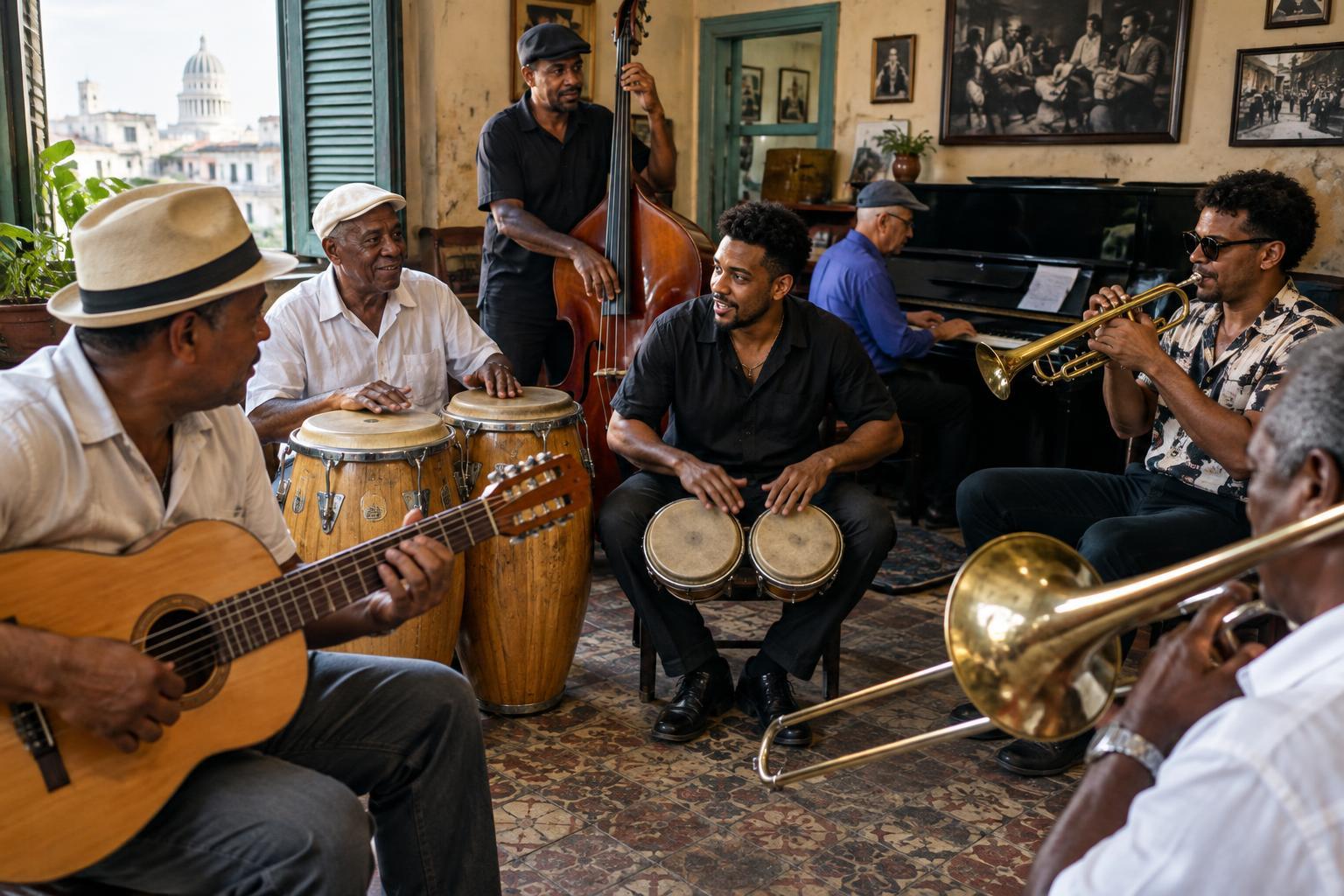
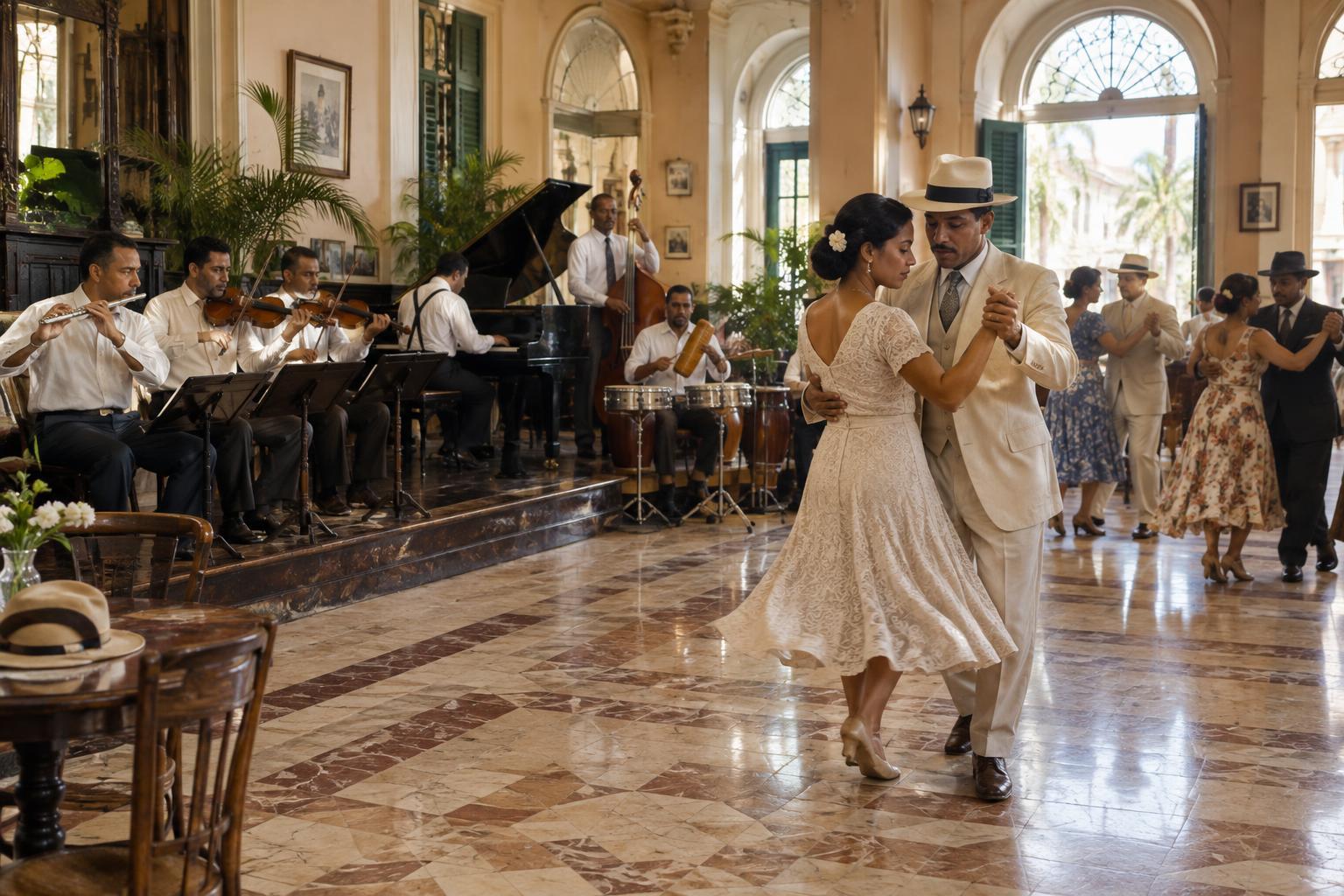
Early danzones could be played by an orquesta típica, an ensemble whose wind and brass instruments gave the music a substantial sound. Over time, the charanga became especially associated with danzón. A charanga commonly features flute and violins alongside piano, bass, timbales and güiro, although the lineup varies. The shift in instrumentation changed the music’s texture without erasing its identity as dance music.
Try listening to the roles rather than identifying every instrument at once. A flute may carry a nimble melody while violins sustain or answer it. The bass outlines the movement of the harmony, and the piano helps connect melodic phrases to the pulse. Timbales and güiro add crisp rhythmic detail. Their patterns matter, but they need not dominate the sound: in danzón, a light percussion part can do a great deal of work.
Hear the sections before counting them
A useful first listening task is to notice when familiar music returns. Many danzones present an opening idea that acts as a reference point between contrasting sections. Musicians may call this recurring passage an introduction or paseo. The paseo is also connected to the dance: it can offer a moment for couples to walk or reset before the next dancing passage.
After that opening, listen for a new melody with its own character. A later section may change register, feature a different instrument or bring a fresh rhythmic emphasis. When the opening idea comes back, ask what it separates: two melodies, two instrumental colors or two levels of energy? You do not need to label every passage on a first hearing. Recognizing return and contrast is the quickest way into the form.
Not every danzón follows the same map. Arrangements can vary in the number of sections, the way passages are repeated and how they end. Treat a recurring paseo as a listening clue rather than a rule that every recording must satisfy.
From poised phrasing to a stronger drive
Danzón often balances graceful melodic phrases with a steady dance pulse. To hear that balance, keep time quietly while following the melody. Where does a phrase seem to come to rest? Does the percussion continue to move through that resting point? The contrast between a melody’s shape and the underlying pulse can make the music feel both composed and alive.
In some later developments, especially danzón-mambo, a concluding section takes on a more insistent rhythmic drive. Short repeated figures and exchanges among instruments can shift the feel from spacious to tightly interlocking. This is an important development, but it should not be projected backward onto every danzón. A piece can sound complete without a forceful final section.
Listeners familiar with clave may be tempted to assign a fixed clave direction immediately. It is more useful here to hear how the ensemble phrases together. Notice repeated accents, the bass and percussion relationship, and the points where melodies enter. Those observations give you a firmer sense of the groove than forcing every passage into one pattern.
A simple listening exercise
Play a danzón once without taking notes. On the second pass, make a short sequence of labels such as “opening,” “new melody,” “opening returns” and “livelier passage.” Add an instrument name only when you feel confident. On a third pass, tap the steady pulse and notice whether your sense of the beat changes when the arrangement becomes busier.
If you can, watch dancers as well as listening to musicians. The relationship between walking, pausing and dancing can clarify why a musical return matters. Danzón’s structure is not merely a set of sections to memorize: it gives people shared cues for moving and playing together. Hearing those cues is a way to appreciate both its musical design and its roots as a Cuban social dance.