A community tradition, not a musical genre
Abakuá is an Afro-Cuban initiatory society with historical roots in the Cross River region of West Africa. Its communities developed in Cuba, especially around Havana and Matanzas. Members maintain relationships, responsibilities and practices that cannot be reduced to a set of rhythms. For a listener, that distinction matters: hearing Abakuá influence in music does not mean gaining access to Abakuá itself.
Cuban musicians have drawn on many overlapping traditions in public performance. A song may refer to Abakuá, a performer may be a member, or a passage may evoke a sound associated with public presentations. None of those facts makes every element of the music an open invitation to imitate a ceremony. The useful question is not “How do I reproduce the secret version?” but “What has the musician chosen to share publicly, and how does it work in this recording?”
Where public musical influence can be heard
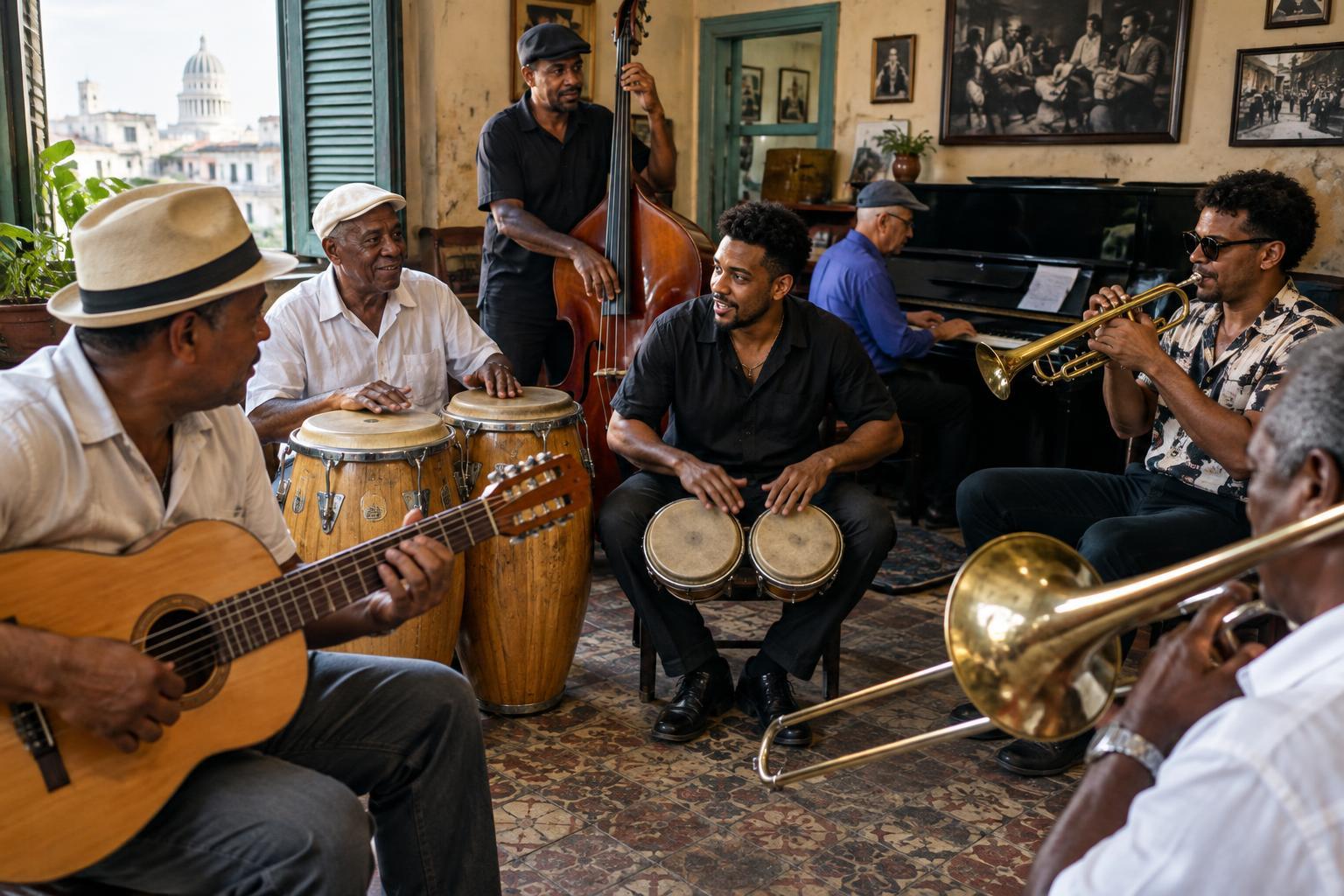
Abakuá influence can appear in public Cuban music through vocal phrasing, call-and-response, percussion, movement and references in lyrics. It is often discussed alongside rumba and other urban Afro-Cuban performance traditions. These connections are real, but they are not simple labels: musicians and audiences have long moved among social settings, and a shared musical gesture does not necessarily belong to one tradition alone.
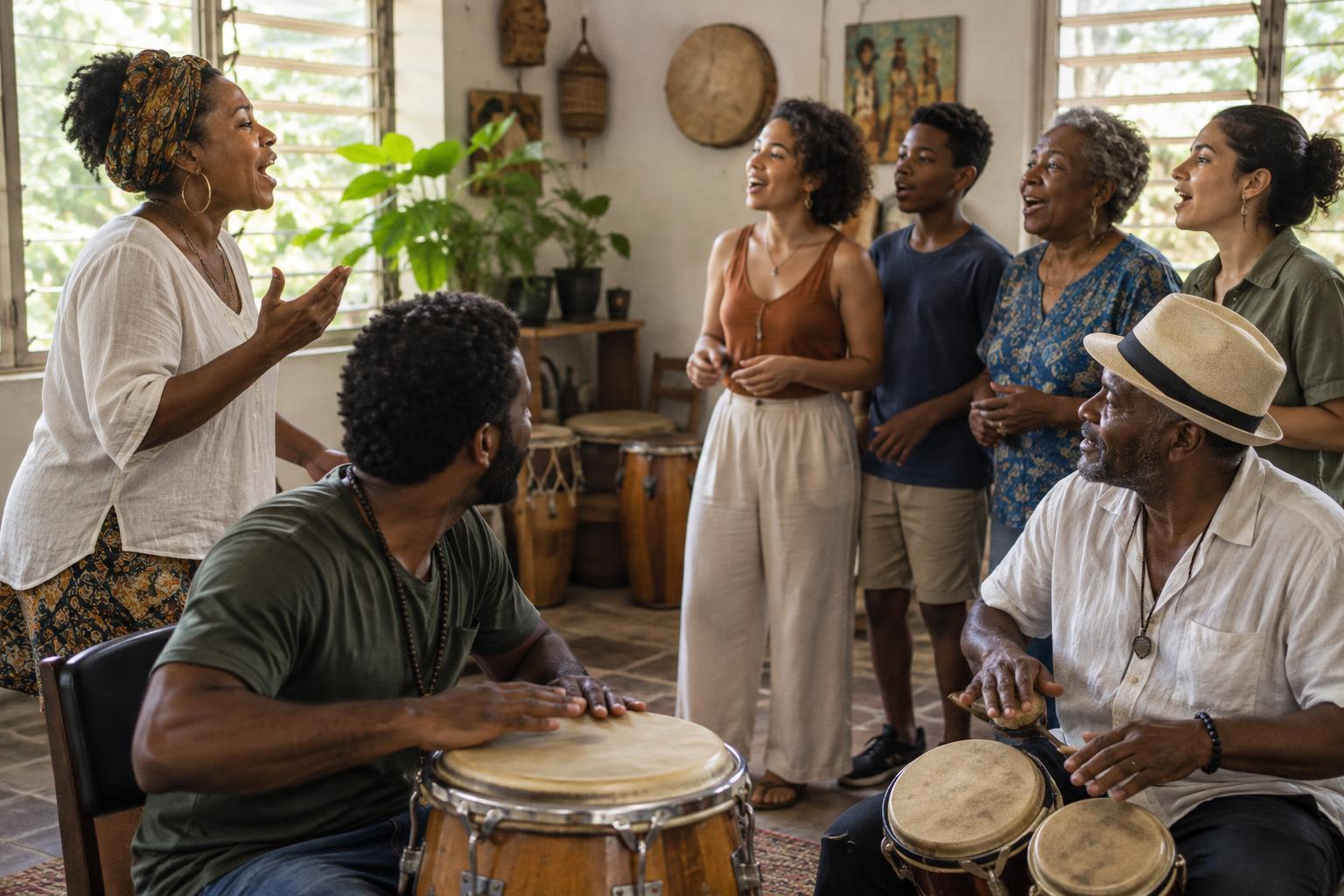
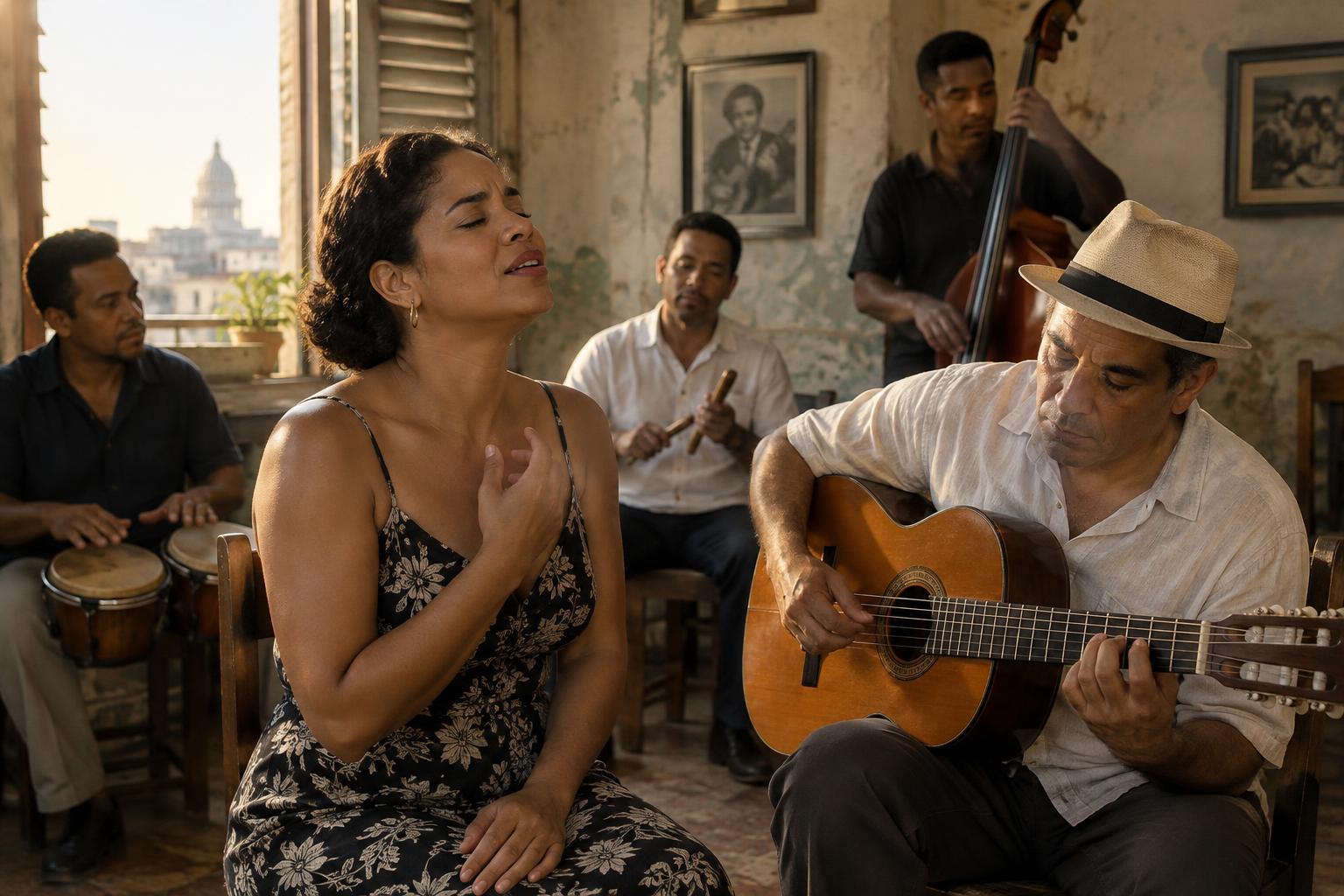
Listen, for example, for the relationship between a lead voice and a responding group. Rather than treating the words as exotic sounds, notice when the response enters, whether it stays constant, and how the lead singer changes the energy around it. In a percussion-led passage, listen for parts that interlock rather than searching for a single “Abakuá beat.” Those are musical observations you can make from a public performance without claiming knowledge of its initiatory meaning.
It also helps to distinguish a reference from a reconstruction. A band may adapt a phrase, rhythmic idea or performance style for a stage or recording. The resulting arrangement has its own purpose and audience. Describing what you hear in that arrangement is more precise than calling it an unaltered version of a sacred practice.
Context changes what a sound means
The same listener can encounter a musical idea at a neighborhood gathering, in a commercially released track or in a lesson. Each setting shapes what is being offered. A recording is available to hear again; it does not follow that every practice associated with its sound is available to copy, translate or teach. Public circulation and unrestricted access are not the same thing.
Names and terms require similar care. If an artist uses an Abakuá reference in a title or lyric, first identify it as that artist’s choice in that particular work. Avoid assuming you know its full meaning from a brief explanation, or presenting an uncertain translation as fact. When discussing the music with others, a phrase such as “the song references Abakuá” often says more accurately what you know than “this song explains an Abakuá ritual.”
A respectful listening exercise
Choose a publicly released Cuban recording whose artist or release information identifies an Abakuá connection. On the first listen, follow the overall shape: when do voices enter, when does the texture thicken, and where does the music leave space? On the second, attend to one relationship, such as lead and chorus or a repeated percussion part against changing vocal lines. Write down what you can actually hear before interpreting what it represents.
On a third listen, separate three kinds of notes: musical observations, context supplied by the artist or release, and questions you cannot answer. “The chorus repeats after each lead line” is an observation. “The artist describes the piece as drawing on Abakuá” is supplied context. “Does this passage have a particular ceremonial role?” may remain a question. Keeping those categories apart makes your listening sharper and helps prevent guesswork from becoming a claim.
Learn from what is shared, and leave room for what is not
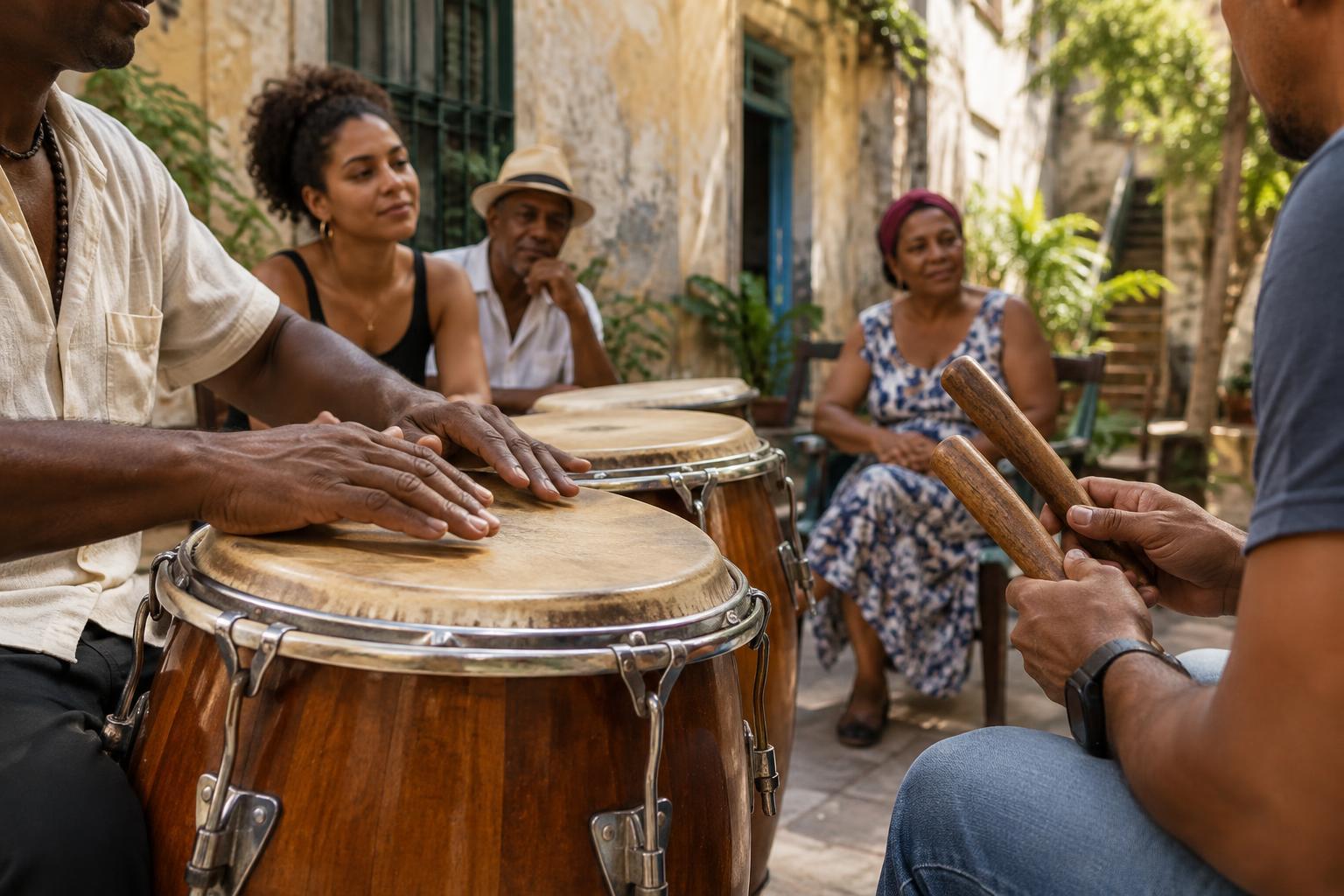
Developing musicians can study arrangement without attempting to reenact initiatory practice. Try mapping the entrances in a public recording, practicing the timing of a response with classmates, or comparing how two bands build intensity through repetition. Name the specific recording or performer that prompted your study, and describe your exercise as an exercise—not as an authentic Abakuá performance.
Respectful listening does not require pretending that Abakuá has had no influence beyond its own communities. It asks for a clearer boundary: appreciate what musicians have made public, credit their choices, and do not treat restricted knowledge as a missing piece you are entitled to obtain. That boundary makes it easier to hear both the artistry of Cuban music and the continuing importance of the people and communities behind it.