The same notes can tell a different rhythmic story
Imagine singing a short phrase over an accompaniment, then singing it again with the same pitches and note lengths—but starting an eighth note later. The melody may suddenly sound as though it leans forward or answers the groove rather than announcing it. Nothing about its contour has changed. Its relationship to the surrounding rhythm has.
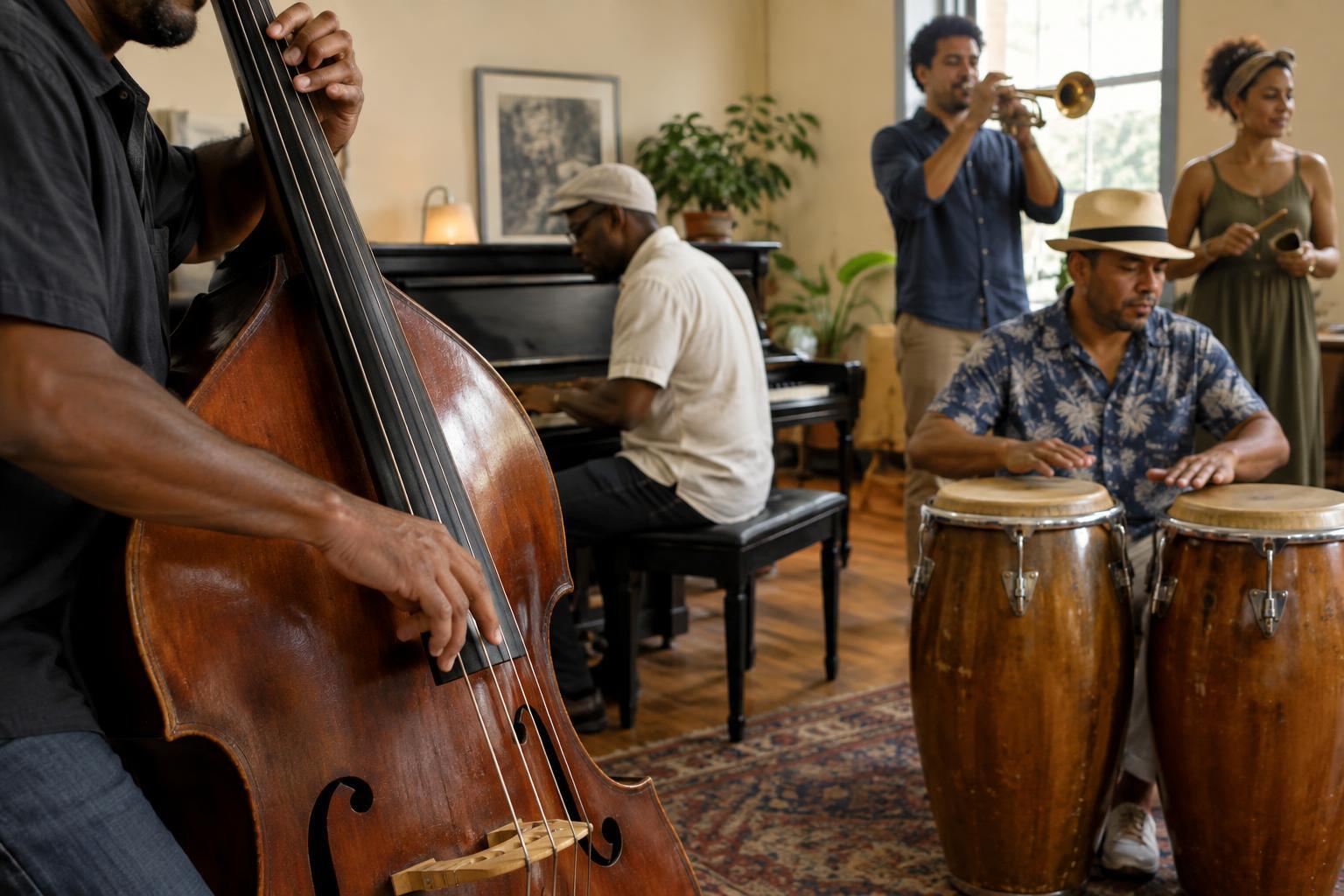
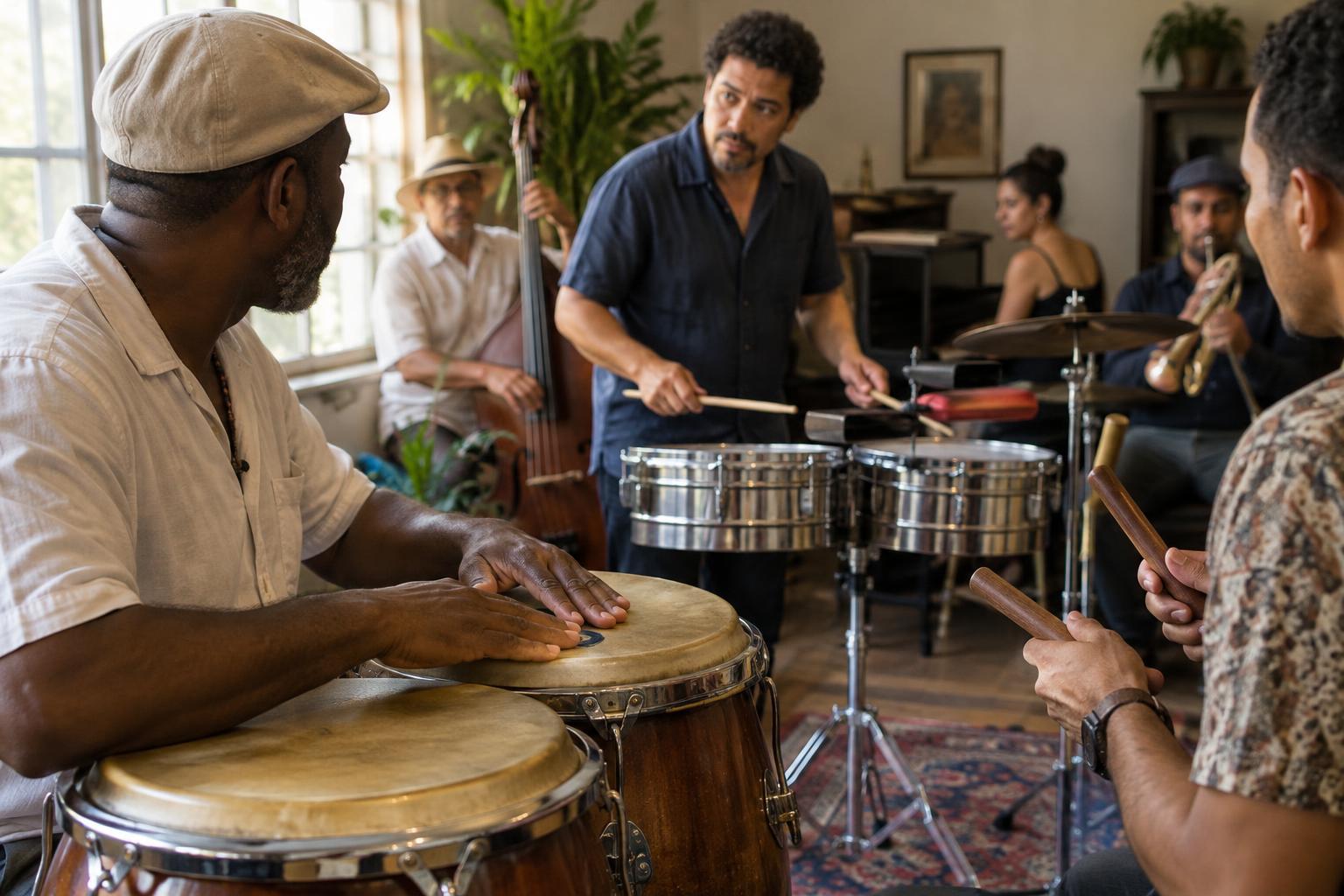
Clave offers a useful way to hear that relationship in many Afro-Cuban styles. It is a recurring two-measure rhythmic pattern that helps organize how parts fit together. Musicians often speak of a three-stroke side and a two-stroke side. The distinction matters even when no one is striking the pattern aloud: percussion, bass, harmony, and melody can all make its shape perceptible. Clave is not a rule that every melodic note must land on a clave stroke. It is a point of orientation for hearing where a phrase begins, gathers energy, and comes to rest.
Find your place in the two-measure cycle
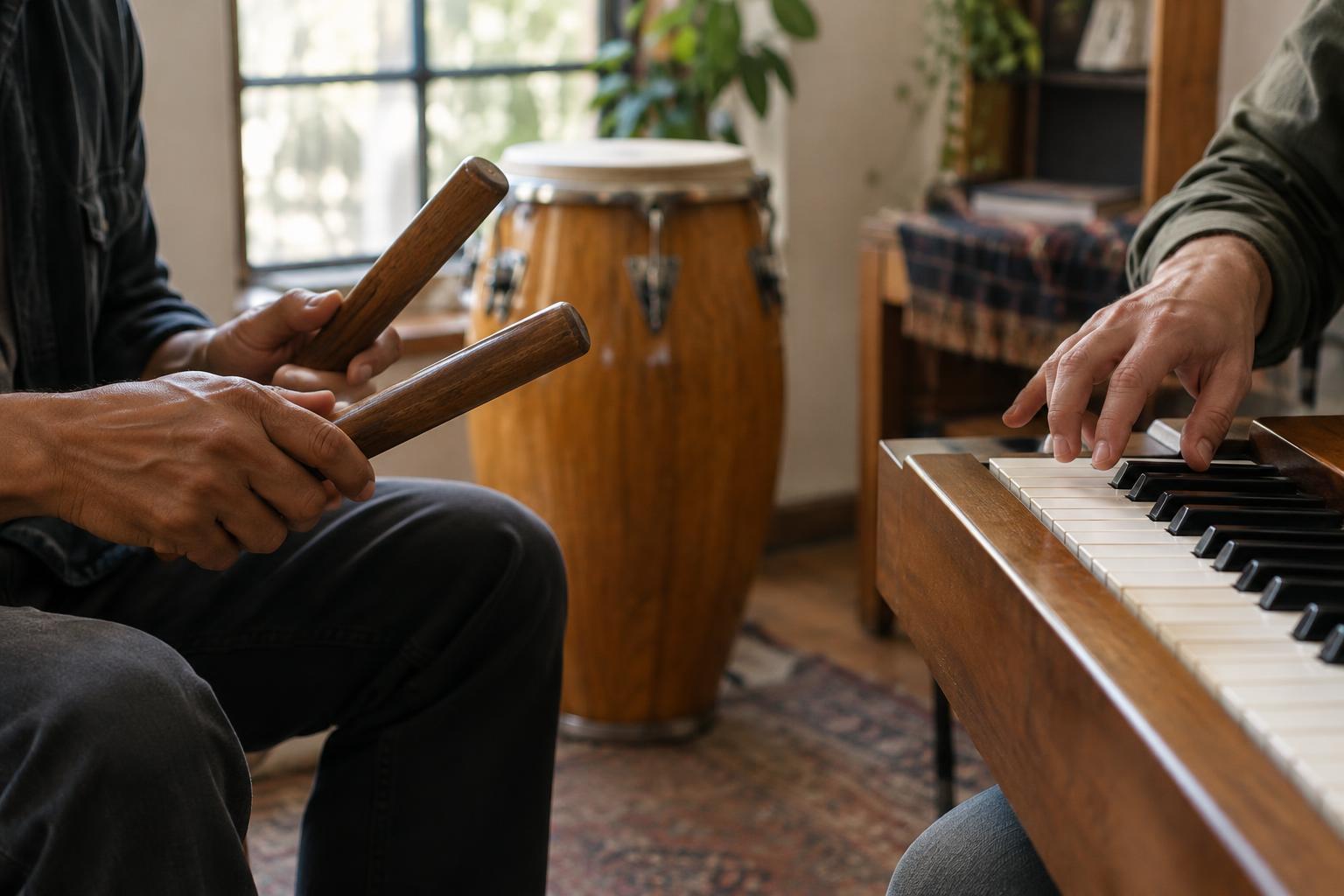
For a simple listening exercise, use son clave counted across two bars of 4/4. On its three side, place strokes on beat 1, the “and” of 2, and beat 4. On its two side, place strokes on beats 2 and 3. Reversing the order gives you 2-3 rather than 3-2 son clave. Counting is a starting aid; in performance, the pattern belongs to a larger musical feel, not just marks on a page.
Now choose a brief melody with a clear opening note. Sing it first so that note lands with the first stroke of the three side. Then begin the same melody on the next eighth-note subdivision while the clave continues unchanged. Notice which sung notes now meet a stroke, which fall between strokes, and where the phrase ends in the cycle. Try another entrance on beat 2. Rather than asking which version is correct, ask what each version makes you expect next. Does the opening feel like an arrival, a pickup, or a reply?
Entrances, accents, and pauses shape the feel
An entrance is only one way a melody relates to clave. A long note held across a stroke can create a different impression from a short note struck directly on it. An accented syllable between strokes may bring welcome motion, while the same accent in another place may crowd a bass or percussion figure. Silence matters too: leaving room before an important note can make that note feel decisive without making it louder.
To compare these effects, keep a two-bar clave going and sing a phrase of four or five notes. First, give its strongest note a direct meeting with a clave stroke. Next, move the phrase while preserving its intervals and approximate durations, so that the strong note falls between strokes. Finally, leave a short rest before that note. Record the three passes if possible, then listen without counting. Which phrase feels open? Which seems to press ahead? Your answers may depend on the tempo and the other parts playing, so treat the exercise as ear training rather than a test with one correct result.
Arrange around the melody, not just under it
When arranging, changing a melody’s placement affects more than the vocal or lead instrument. A bass note that once supported the start of a phrase may now arrive before it. A piano or guitar chord may compete with a newly accented syllable. Before moving every accompaniment part, try one small adjustment at a time: shorten a chord, leave a gap under the entrance, or let the bass hold steady while the melody shifts. The contrast may be more expressive than having every part make the same accent.
Keep track of the full two-bar cycle as you experiment. A phrase can sound convincing in isolation yet feel awkward when it repeats into the next cycle or leads into a response. Listen through several repetitions and pay attention to the handoff between phrases. If you are working within an established style or with musicians who know it well, learn from the phrasing of that music rather than treating clave as a grid on which any rearrangement has the same effect.
Listen for relationships, not a hidden code
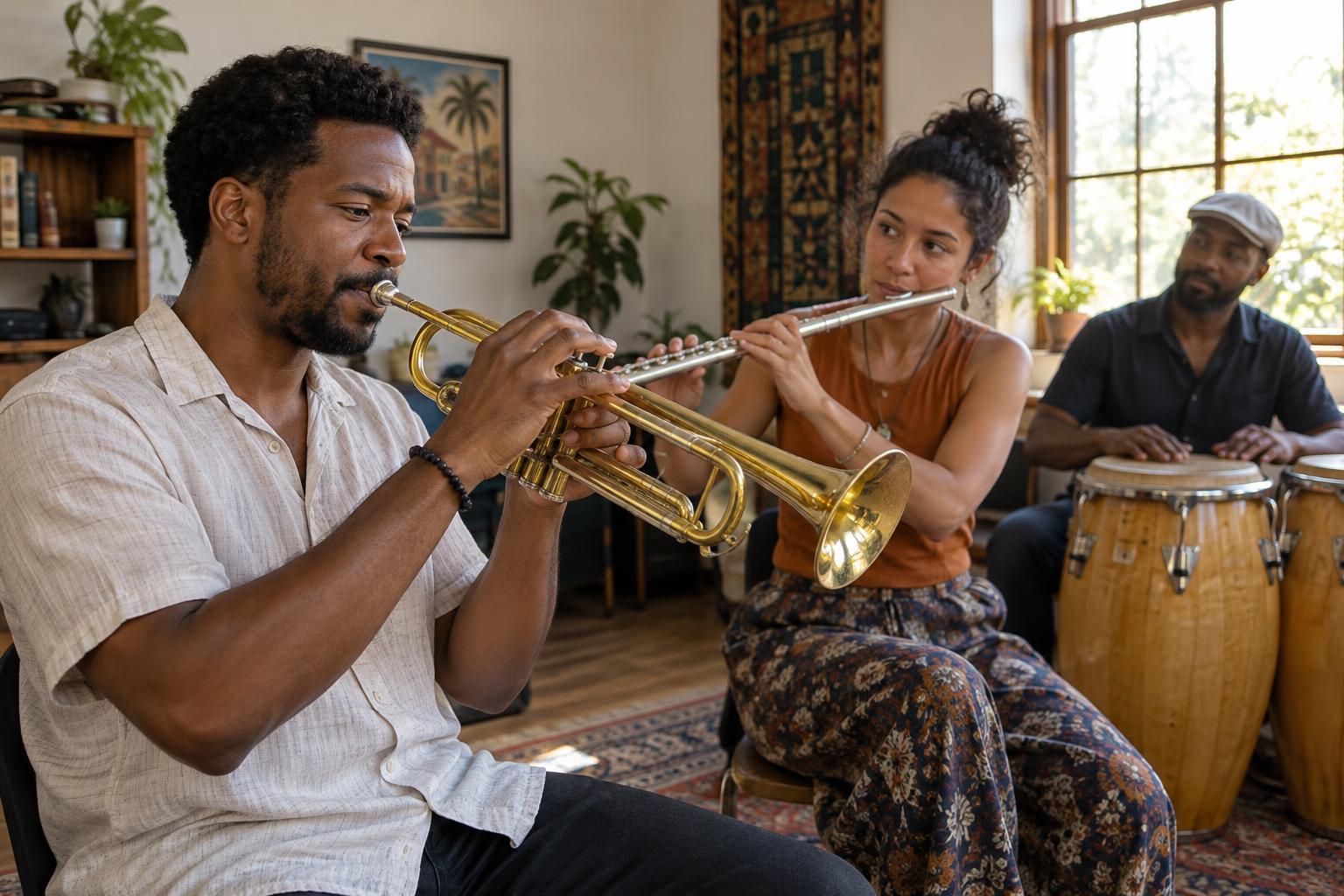
On your next focused listen, follow one melodic line for two cycles. Tap the broad pulse, identify where the phrase enters, and notice its most prominent accents and rests. Then shift your attention to a supporting part. Does it meet the melody, leave space for it, or answer it? You do not need to identify every subdivision to hear those relationships.
Clave helps explain why a small change in timing can make familiar notes feel newly grounded or newly restless. It also invites careful listening to an ensemble: a melody’s character comes partly from the rhythmic space around it. Use counting and rearranging to sharpen your ears, then return to the whole performance—the interplay among musicians is where the placement comes alive.