Two kinds of motion at once
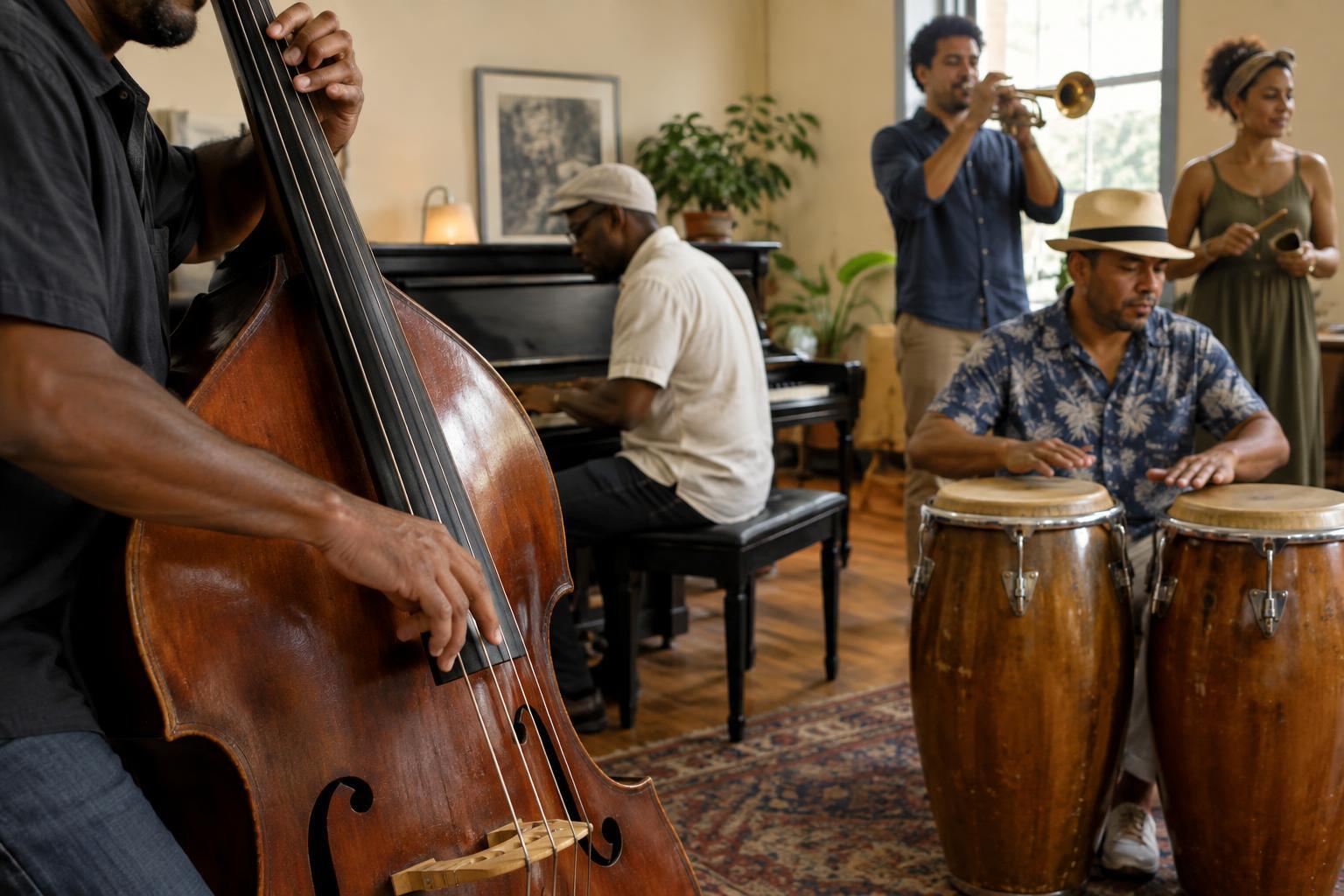
A repeating groove gives listeners a reliable sense of motion. A percussion pattern, bass figure, or keyboard part may return again and again, making each cycle feel familiar. Harmony can move on a different schedule. A chord might last for several cycles, change once per measure, or move quickly before settling again. The pace and placement of those changes is called harmonic rhythm.
Harmonic rhythm is about when the harmony changes, not how fast the song feels. Imagine the same steady groove under two arrangements. In one, a single chord holds for four measures before moving. In the other, the chords change every measure. The pulse and percussion could stay identical, yet the second arrangement may feel more active because it gives the ear more harmonic landmarks.
Listening to both layers takes practice. Rather than trying to name every chord at first, notice where a change seems to happen. Does the harmony turn at the start of a measure, just before it, or somewhere less expected? Those observations are enough to begin hearing how the groove and the chord progression work together.
Find the change without losing the groove
Start with the part that helps you keep your place. Tap a comfortable pulse, then listen for a repeating rhythmic phrase. If you are listening to an Afro-Cuban-influenced arrangement, a clave pattern may be one point of reference, but not every instrument states it directly. Avoid assuming that a chord must change at the beginning or end of a clave cycle. The rhythmic framework and the harmonic rhythm are related choices in an arrangement, not the same pattern.
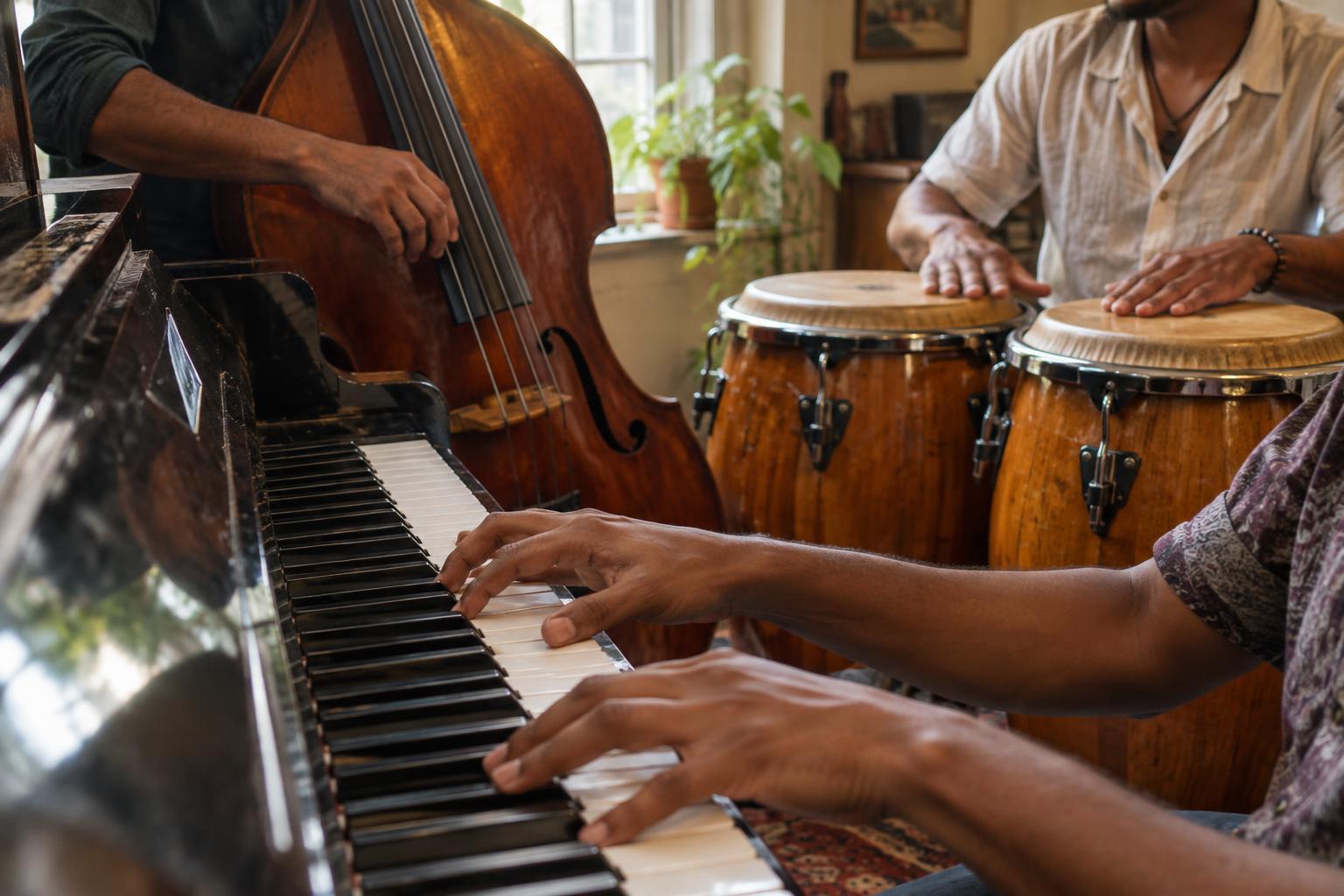
Next, listen to the bass and sustained or repeated chord sounds. A new bass note can announce a change, but it does not always mean a new chord: the bass may move among notes that belong to the same harmony. Conversely, a keyboard or guitar part may reveal a new chord while the bass holds or approaches its next note. Listen for several parts agreeing that the harmonic center has shifted.
Try marking the moments of change with a quiet tap or a written slash while the groove continues. Leave space between marks when a chord holds. This simple map shows whether the harmony changes regularly or uses a mixture of long holds and quicker turns. You can make the map without knowing chord names.
Hear anticipation and repetition in the arrangement
A chord change may feel as though it arrives early when a bass note or chordal accent anticipates a strong beat. Keep tapping the pulse and ask two separate questions: when did you first hear the new harmony, and where does the next strong beat fall? In a syncopated arrangement, those moments need not coincide. Hearing that gap can make the groove feel clearer, not more complicated.
Repeating figures add another useful distinction. An ostinato, such as a recurring keyboard pattern, may keep the same rhythm while its notes shift to fit new chords. Alternatively, the figure and harmony may both stay put while melody or percussion provides contrast. Follow the shape of the figure first, then notice which pitches sound different on each return.
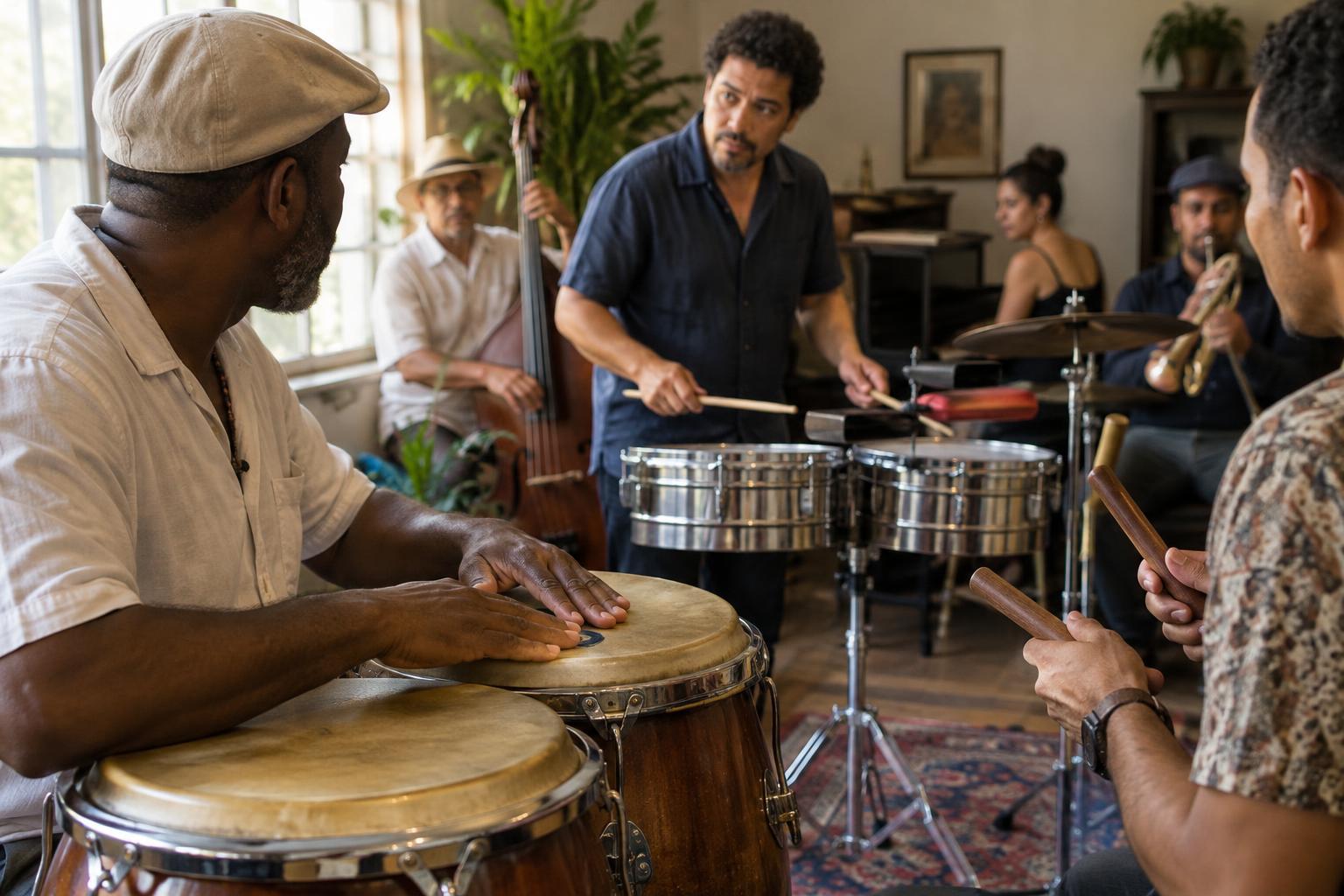
In Afro-Cuban music and music shaped by it, parts often interlock rather than all emphasizing the same moment. Specific practices vary by style and ensemble, so a recording is more useful than a single rule about where changes belong. Pay attention to how the bass, chordal instruments, percussion, and melody each guide your hearing.
A short listening and practice routine
Choose a short passage with a groove you can comfortably follow. On the first listen, ignore chord names and tap the pulse. On the second, count or feel the larger repeating phrase. On the third, make a mark whenever you hear a likely chord change. Replay the passage to check uncertain spots, especially where a fill or accent might have sounded like a harmonic change.
If you play an instrument, loop a simple groove and hold one chord over it. Then try changing between two chords every two measures, every measure, and at uneven intervals. Keep the rhythmic parts steady. Notice how each version changes the sense of direction without changing the tempo. Finally, place a change just before a strong beat and listen to how the new harmony leads into it.
Return to the original passage and listen for the effect of each change, not only its location. A long-held chord might give a busy groove room to breathe; a brief run of changes might build momentum toward a return. Harmonic rhythm becomes easier to hear when you treat it as one layer of the arrangement: independent enough to follow, but always in conversation with the groove.