Start with the beat, then listen between beats
When several instruments play together, they do not need to strike at the same moment to share a beat. A bass note may mark a strong pulse while a shaker fills the spaces around it. A piano or guitar might play just before or after a beat, creating motion without changing the underlying tempo. Subdivision is a way to hear those smaller, recurring spaces within the pulse.
Begin by tapping a steady beat along with a recording. Keep tapping even when an instrument plays somewhere your hand does not land. Next, notice whether the spaces between your taps seem to divide naturally into two equal parts, three equal parts, or finer groupings. You do not have to name the meter immediately. The first goal is to hear a reliable pulse and recognize that many notes belong between its beats.
Find a part that makes the smaller spaces audible
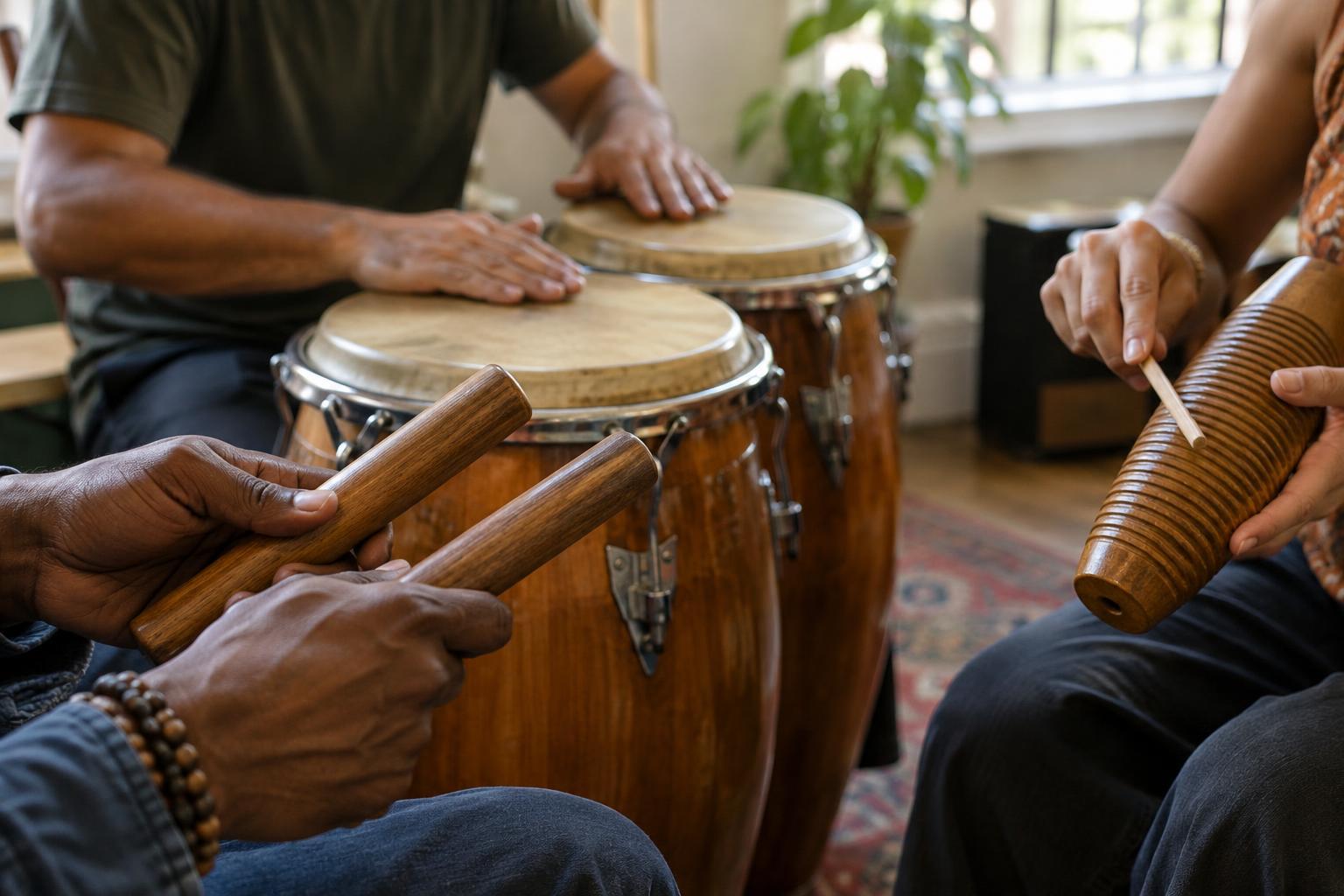
An instrument playing frequent, fairly even notes can be a useful guide. Listen for a shaker, hi-hat, güiro, or repeated keyboard figure, depending on the arrangement. Tap the beat while quietly saying “and” halfway between taps if the music supports a two-part division. If you hear three evenly spaced positions across each beat, try saying “one-trip-let” while maintaining the same slow tap. Let what you hear guide the syllables, rather than forcing every recording into one pattern.
A busy part is not always a strict timekeeper. Its player may vary accents, leave gaps, or place notes with a relaxed feel. If it stops helping, return to another recurring sound or keep the pulse in your body. It can also help to listen for a full phrase instead of judging one isolated note. Repetition often makes the relationship between the beat and the smaller spaces easier to hear.
Hear how parts divide the work
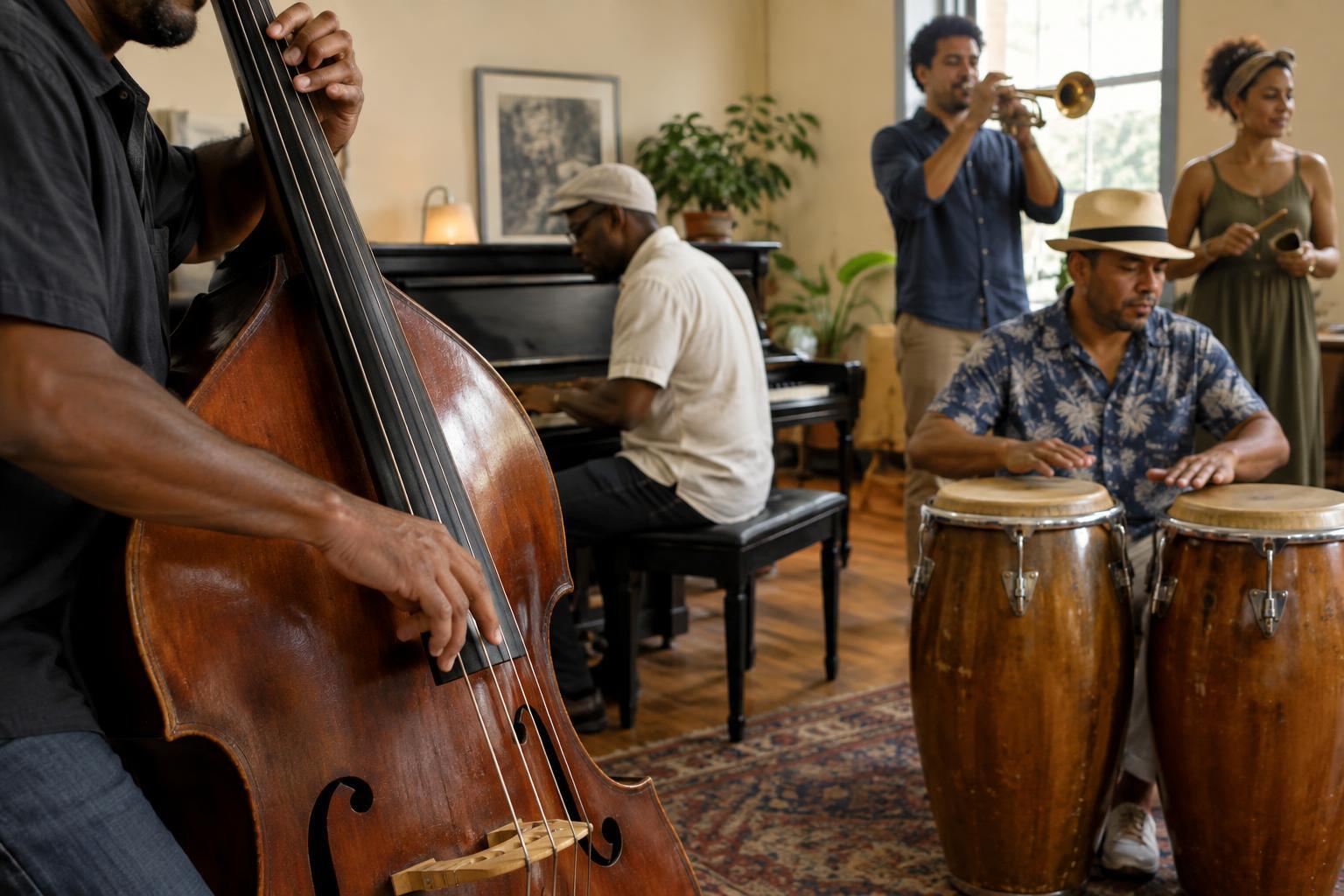
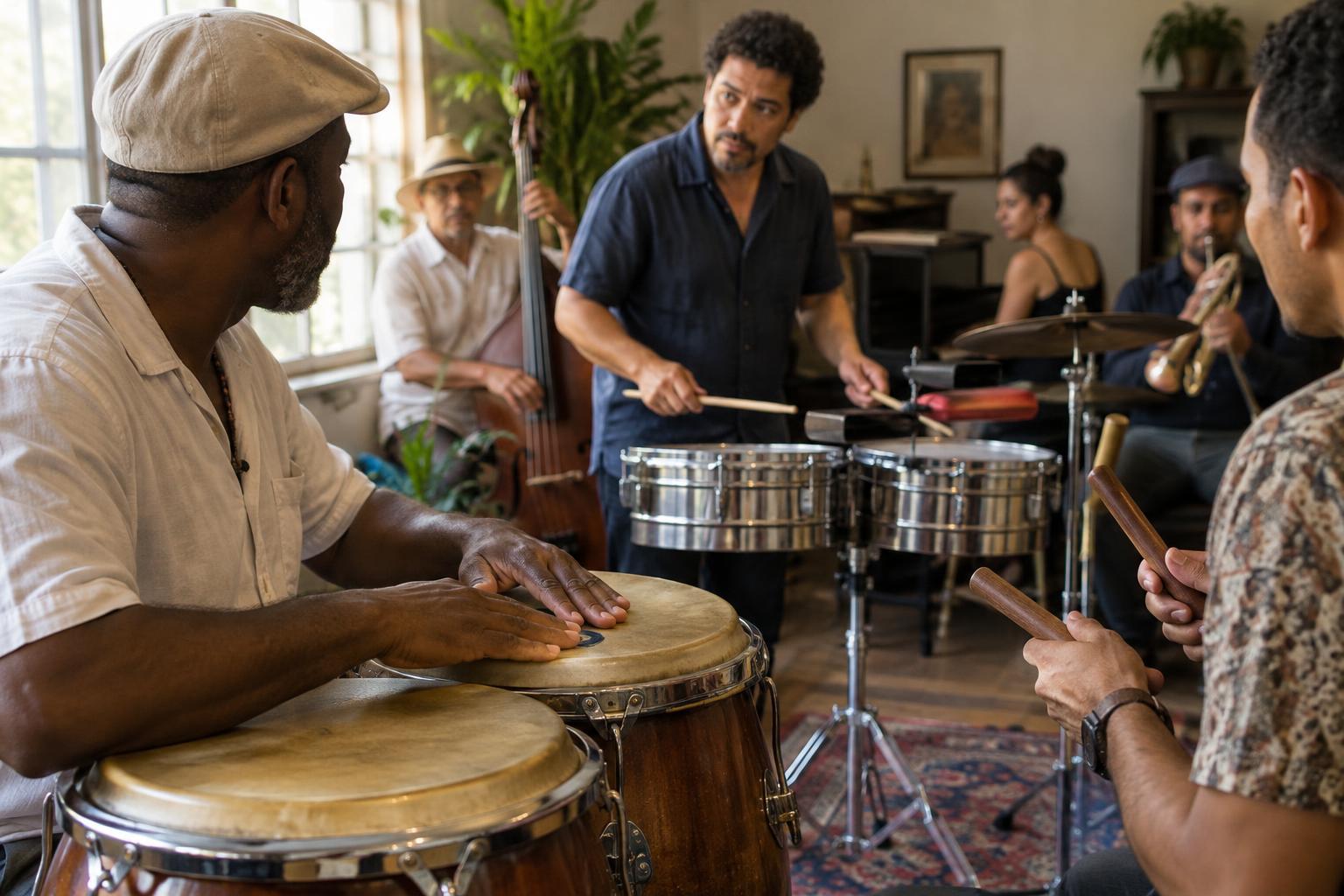
In a layered arrangement, no single instrument has to play every subdivision. One part may mark the beat, another may emphasize offbeats, and another may leave carefully placed rests. Try following one part for a few cycles, then switch your attention to a different part without changing your tap. Ask where each sound falls: on a tap, halfway to the next tap, or at another recurring point between them.
This is especially useful when listening to Afro-Cuban music, where interlocking patterns can be more informative than any one part heard alone. Clave may help organize a phrase, but it need not be sounded by a pair of sticks throughout a recording. Avoid assuming that every audible accent is a clave stroke. Instead, listen for repeating relationships among the parts, and stay open to differences in style, ensemble, and arrangement.
Try a short listening exercise
Choose a brief passage you can replay. On the first listen, tap only the beat. On the second, keep tapping and voice the subdivision softly, using a simple syllable on each smaller position. On the third, stop voicing and focus on one instrument: which of its notes line up with your tap, and which fall between taps? Then repeat the exercise with a different instrument.
If you lose the beat, slow your tapping or choose a passage with a clearer recurring bass or percussion figure. You can also practice away from a recording: tap four steady beats, clap halfway between each tap, and then reverse the roles. Once that feels comfortable, leave some claps out while keeping the taps steady. The gaps make it tempting to speed up; holding the pulse through them trains the same attention you need when a recorded part rests.
Listen to the arrangement, not just the count
Counting can reveal where notes sit, but it is only one listening tool. After you can follow the beat and subdivision, notice what changes when an instrument enters or drops out. Does a sparse bass part make a percussion pattern feel more prominent? Does a repeated offbeat chord make the beat feel lighter or more urgent? Those effects arise from how the parts relate, not simply from the number of notes played.
You may hear a note as slightly early or late without being able to assign it a precise spoken syllable. That does not mean you have failed to listen. Keep the steady beat, return to a longer phrase, and compare what repeats. Over time, hearing subdivision becomes less like solving a counting puzzle and more like following a conversation: each part has its own line, while the shared pulse lets the lines make sense together.