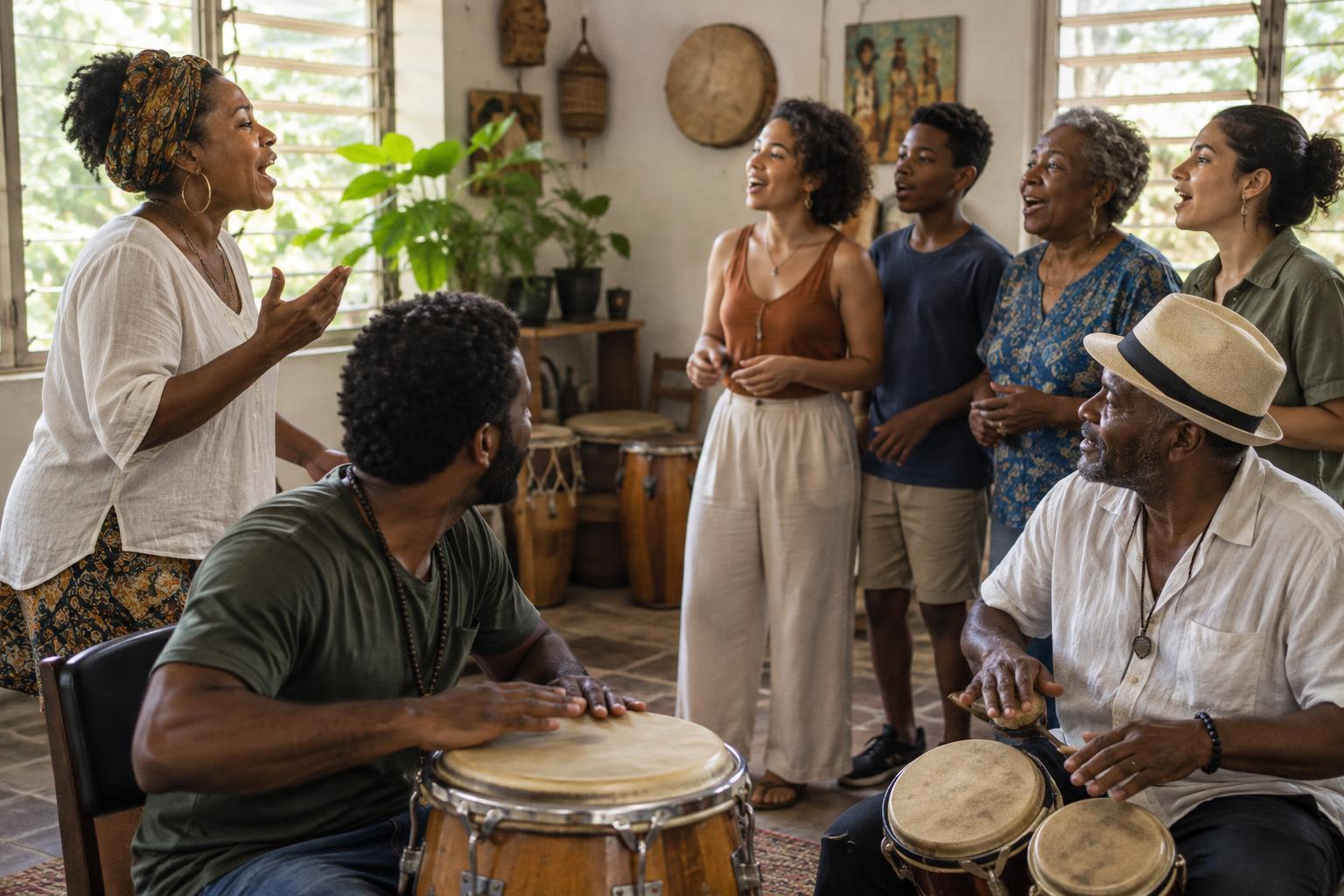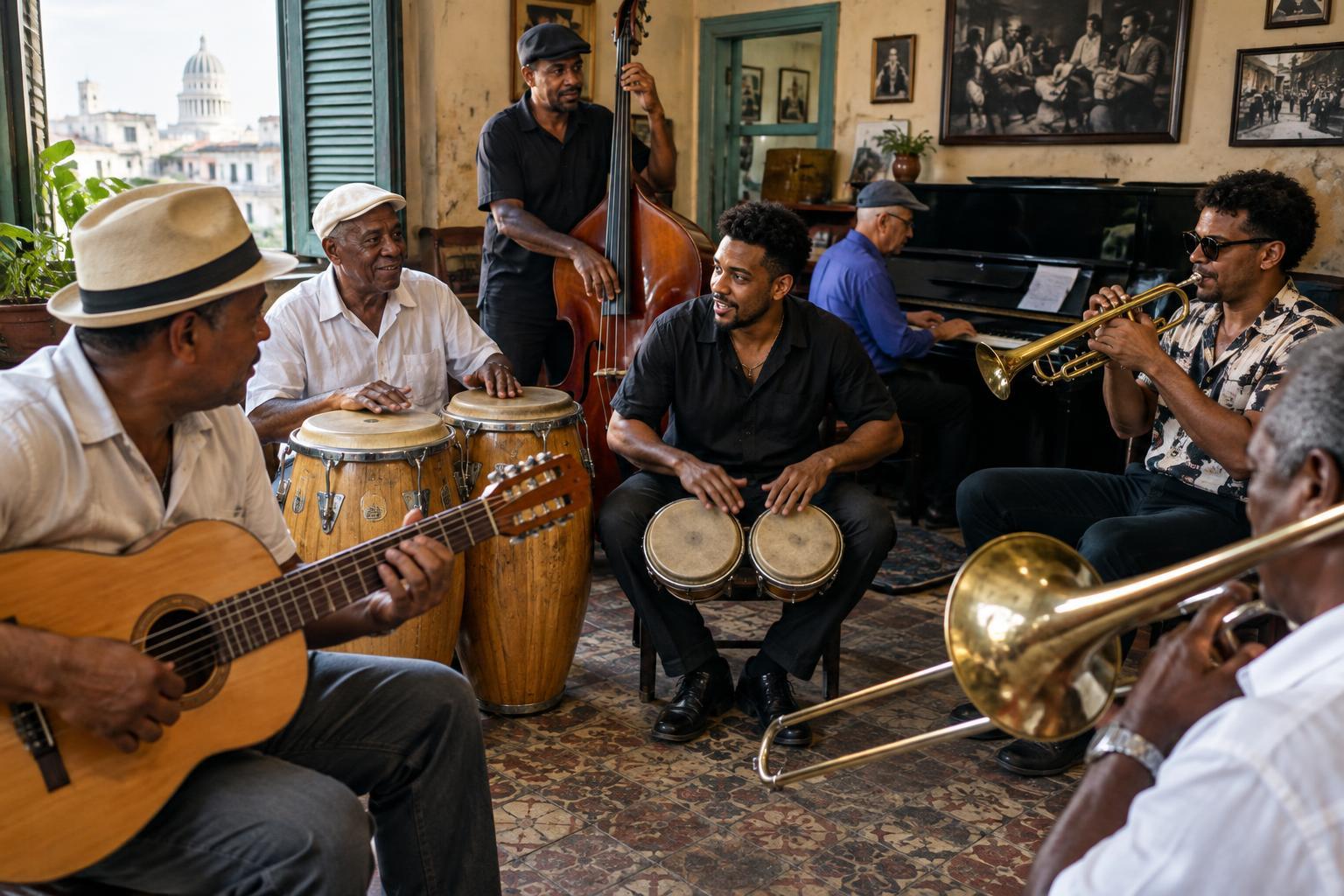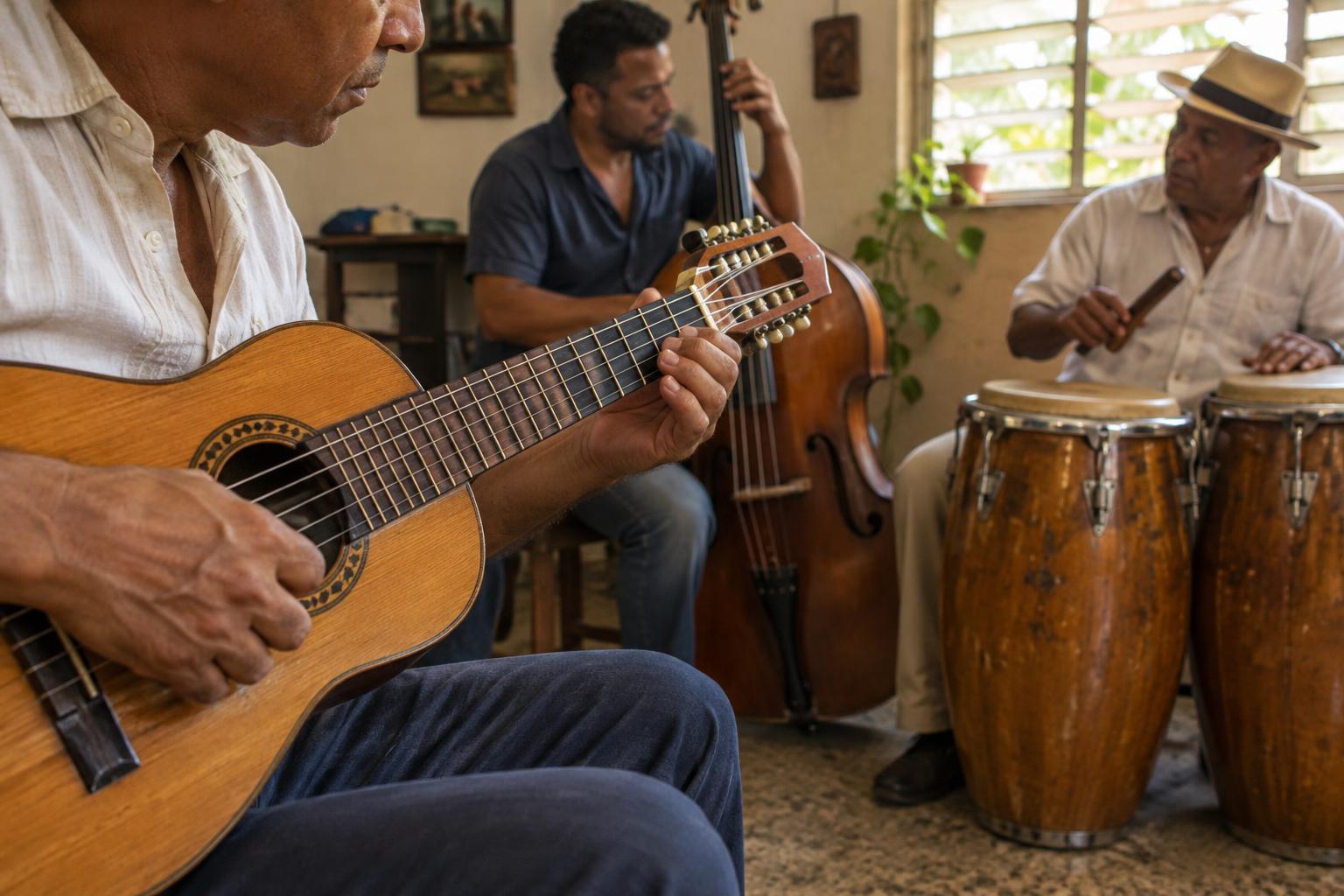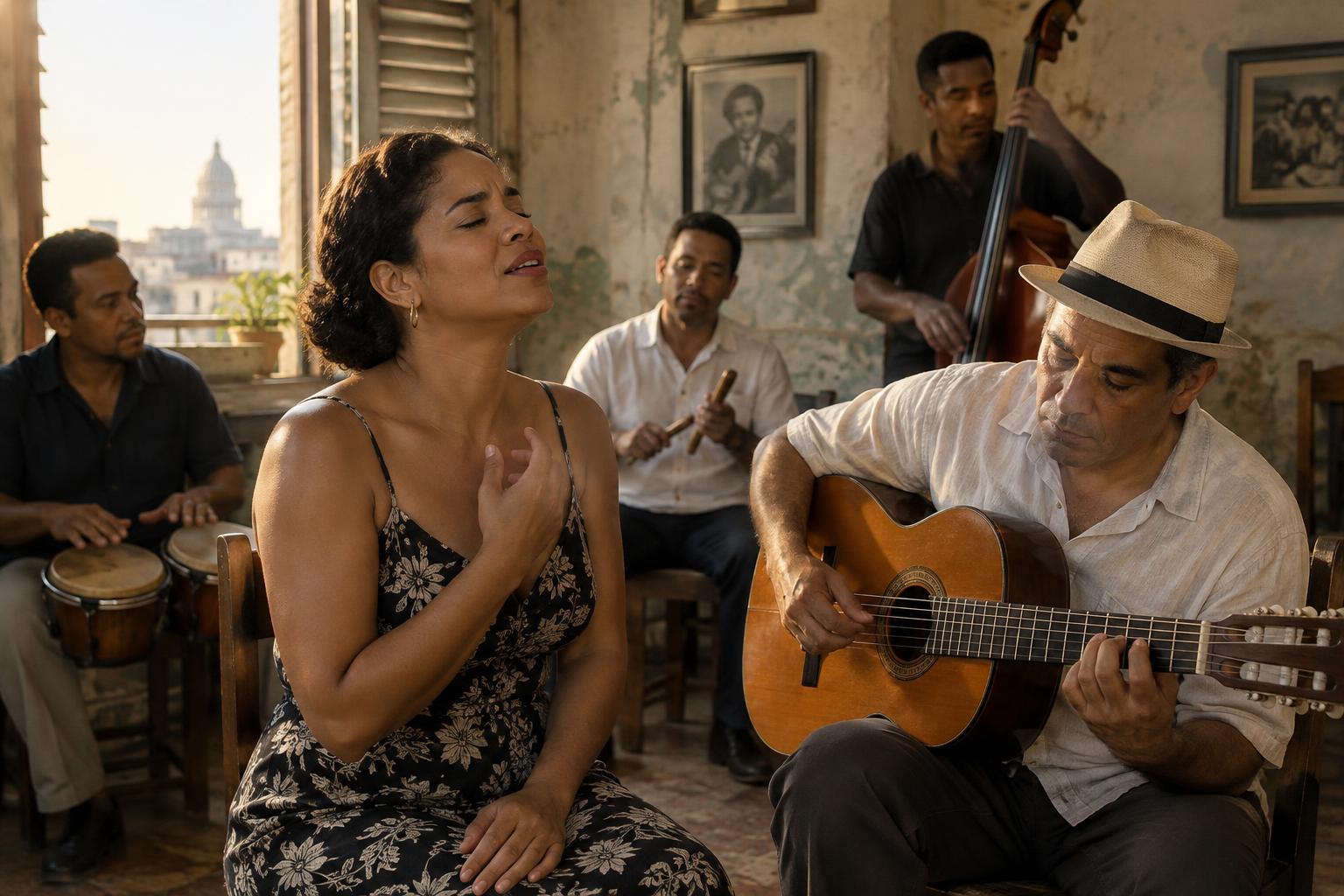
Start with the song, not a checklist
Cuban bolero is a song tradition that often places an expressive vocal melody at the center. Its lyrics frequently address love, longing or separation, and a singer may linger over a phrase rather than deliver every syllable squarely on the beat. The accompaniment supports that phrasing with a steady pulse and changing harmony. These are useful listening clues, not requirements: a bolero can be restrained or dramatic, sparse or richly arranged.
The word bolero can also refer to music from other places, so “Cuban bolero” is a helpful distinction. Within Cuban music, bolero developed through the work of composers, singers and accompanists, and it has continued to change as musicians bring their own approaches to it. Listen for the relationship between melody, words and accompaniment before deciding which label fits a recording.
What does bolero’s song form sound like?
A bolero often unfolds in complete lyrical sections: a singer presents a melodic thought, moves through a contrasting or developing passage, and may return to a familiar line or refrain. Rather than expecting one fixed number of bars or a mandatory verse-and-chorus pattern, follow where the lyric goes. Does the music make room for a new sentence and harmonic turn? Does a later line feel like a return or an answer? Those landmarks reveal the song’s shape more reliably than a formula.
Notice what the accompaniment does at the ends of vocal phrases. A guitar, piano or ensemble may fill the space briefly, then settle back as the next line begins. Even when the rhythm is clear, the performance can feel guided by the singer’s delivery. Try humming the principal melody after one hearing. If you can trace a sequence of lyrical phrases with a recognizable return, you are hearing the song-centered quality that often characterizes bolero.
How son organizes the listener’s attention
Cuban son also has songs and expressive singers, but its rhythmic conversation is often more prominent. Interlocking parts can include a repeating bass pattern, percussion, and a guitar-like tres figure or piano pattern. In many performances, an opening song section gives way to a more cyclical passage: a repeated vocal refrain, often called a coro, alternates with a lead singer’s responses. The repeating accompaniment gives that exchange a place to grow.
This is a useful contrast, not a rule that son is rhythmic and bolero is not. Both have pulse, and both can involve dancing, skilled improvisation and carefully shaped arrangements. Ask instead what seems to drive the performance forward. Is it the unfolding lyric and melody, with instruments framing each phrase? Or does a repeated groove become the main setting for vocal exchanges and instrumental variation? A son may move between those priorities within a single track.
Rhythm and instrumentation are clues, not verdicts
Tempo alone cannot identify either style. A slow son does not automatically become a bolero, and an animated bolero need not lose its identity. Likewise, hearing guitar, piano, maracas or a particular percussion instrument is not enough to settle the question. Musicians use different combinations of instruments, and arrangements can borrow textures associated with several Cuban traditions.
If you know clave, listen for how parts relate to the underlying rhythmic cycle, but do not assume that a plainly audible clave pattern must be present. In bolero, the pulse may be felt through soft accompaniment while the singer stretches across it. In son, repeating parts may make the cycle easier to track. These differences in emphasis can help, but forcing every phrase into a counted pattern may distract from what the ensemble is doing.
Listen for the meeting point
Bolero and son are not sealed categories. Musicians have long combined their approaches, and a performance described as bolero-son may begin with an intimate, song-led passage before opening into a stronger son-style groove. An arrangement might keep the same lyric while changing how the bass, percussion and voices interact. In that case, the shift is part of the musical story, not a problem to solve with a single label.
For practice, choose two recordings identified by their performers or releases as a bolero and a son. On a first listen, mark each change in vocal section. On a second, tap the pulse and note when an instrumental pattern repeats. On a third, listen for whether the accompaniment follows the singer’s phrasing or establishes a cycle for call and response. Then try a bolero-son and notice where your answer changes. Describing what you hear will teach you more than deciding by tempo or mood alone.