What were cabildos?
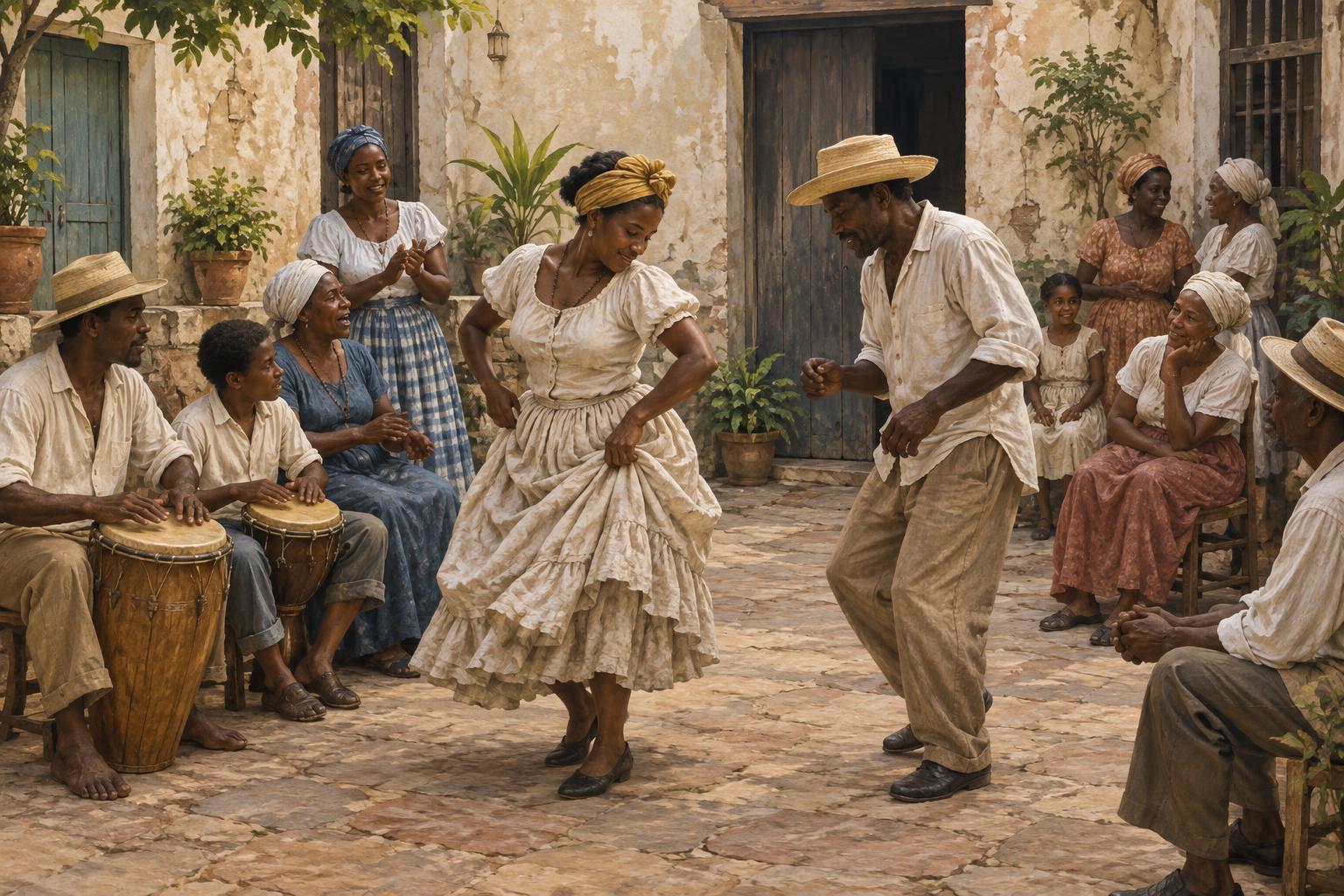
In colonial Cuba, cabildos de nación were associations in which Africans and their descendants gathered, often around a shared place of origin or an identity recognized by colonial society. Members could organize celebrations, provide mutual assistance, and support one another through illness, death, and other needs. The term “nation” did not necessarily describe a single ethnic group in the way a modern reader might expect. Names and membership reflected both people’s own connections and the categories imposed on them.
Cabildos existed within a society built on enslavement and unequal power. Their ability to meet and celebrate was subject to restrictions that varied by place and period. It would be misleading to describe them as spaces of complete freedom. Yet it would also overlook the work of their members to see them only as institutions permitted by colonial authorities. People used the room available to build relationships and maintain forms of collective life.
A place for gathering, care, and celebration
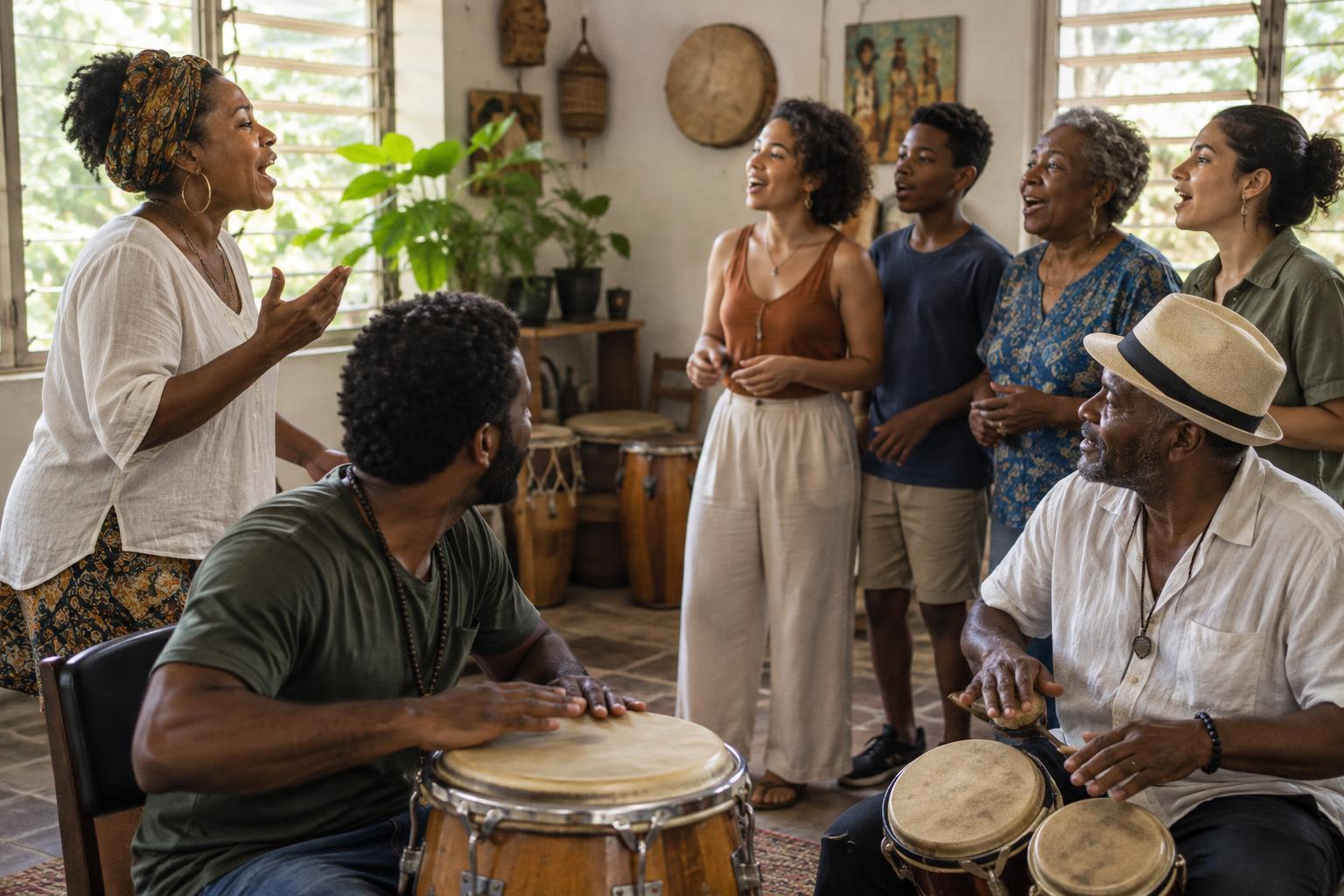
Community life gives the musical history of cabildos its context. A gathering might bring together people who could share language, memories, foodways, religious practices, or knowledge of dance and music. Mutual aid and celebration were not separate concerns: preparing an event, caring for a member, and teaching a younger participant all depended on sustained relationships. These activities helped people create continuity even when displacement and colonial control had disrupted families and communities.
Cabildos were not interchangeable. Their membership, resources, practices, and degree of public visibility differed. Some traditions were expressed in gatherings open to a wider audience; others belonged to more intimate settings. Treating every cabildo as the same kind of musical organization flattens both its social purpose and the choices its members made about what to share.
How musical knowledge could endure
Song, percussion, and dance are learned with other people. Participants can hear a phrase repeated, watch how a dancer answers a drum, and gradually learn when to enter or hold back. A community that meets over time creates opportunities for this kind of learning. Cabildos could therefore help sustain musical knowledge not only through formal teaching, but through the ordinary work of gathering, rehearsing, remembering, and celebrating.
Preservation did not mean keeping every practice unchanged. People in colonial Cuba came from different backgrounds, encountered new instruments and social settings, and faced limits on where and how they could perform. Musical practices could be retained, adapted, combined, or set aside. Nor should a present-day rhythm be assigned a single cabildo origin without specific evidence. Cabildos matter to musical history because they supported people and practices across generations, not because they offer a simple origin story for every Afro-Cuban style.
Listening beyond a single rhythm
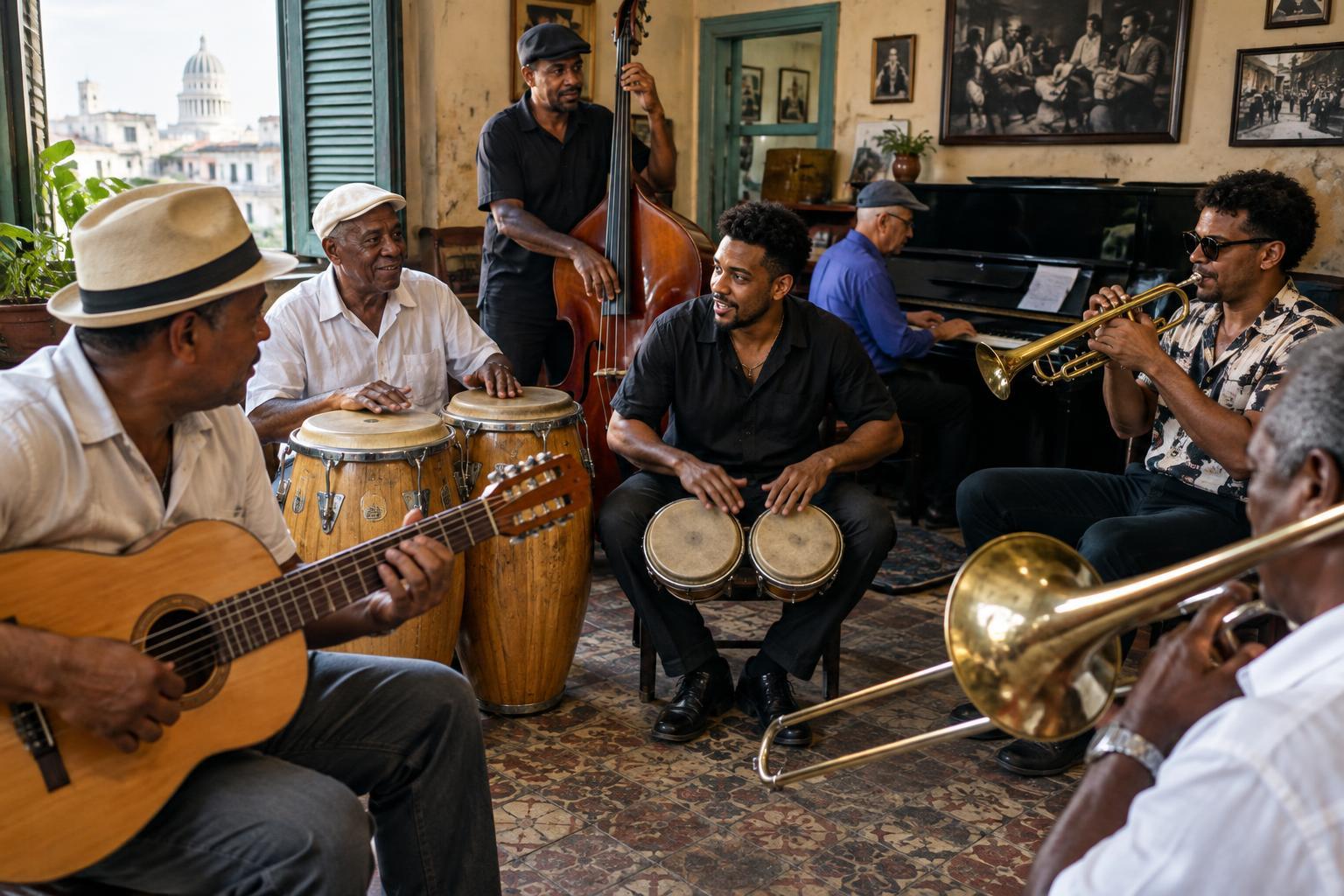
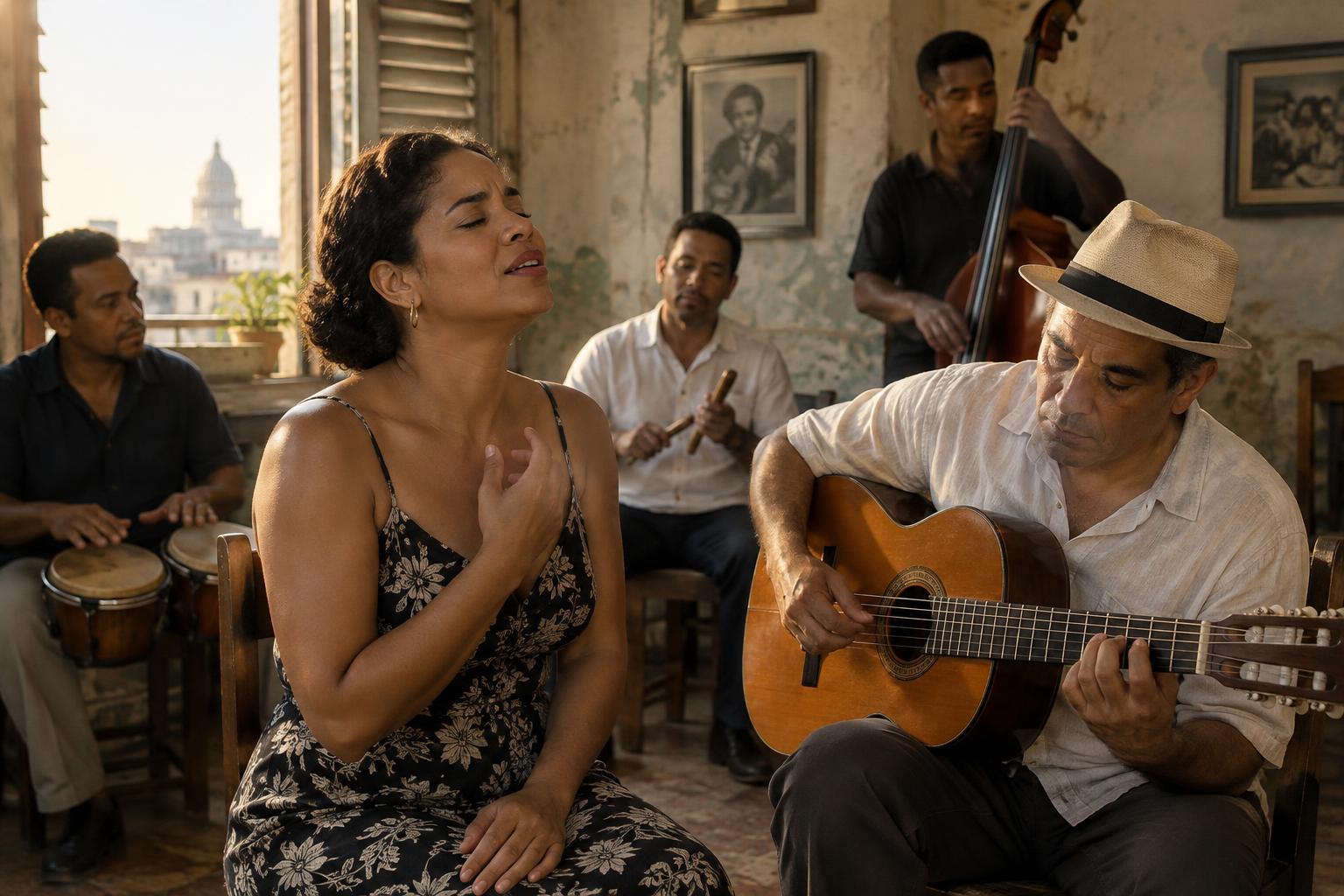
A listener approaching Afro-Cuban music may first notice a repeating drum pattern or a strong pulse. Cabildo history suggests listening for relationships as well: between a leader and a responding group, between percussion and movement, or between repeated patterns and changes made in the moment. These are useful listening questions, not a claim that one sound represents all cabildos or all African-derived traditions in Cuba.
Try listening to a performance twice. On the first pass, follow the sound that seems to anchor the group. On the second, attend to the voices, dancers if visible, and quieter parts around it. What repeats? Who answers whom? When does the energy shift? If you play music, you can practice this attention without imitating a ceremonial setting: keep a steady pulse, sing a short phrase, and let a partner answer it. Notice how the exchange changes your sense of time.
Remembering the people behind the music
Cabildos are sometimes introduced as a stepping stone toward later musical genres. That connection can be useful, but it should not make the people who formed these associations disappear behind the music they helped carry forward. Their gatherings addressed belonging, care, and identity under colonial conditions. Musical activity was part of that wider life, not simply a rehearsal for what audiences would hear in the future.
A respectful account leaves room for both constraint and creativity. Colonial records and broad labels cannot capture every member’s experience, and no one cabildo can stand for the full range of African and Afro-Cuban life. For listeners, the enduring lesson is to ask not just where a rhythm came from, but who had the opportunity to gather, learn, and pass it on—and what it took to keep doing so.