An entrance can tell you where you are
A song can change sections without changing tempo. A singer begins a verse, a chorus returns, or an instrumental passage takes over while the underlying pulse continues. Percussion helps listeners hear those boundaries. A shaker entering on a chorus may make the same beat feel more active. A drum dropping out beneath a verse can make the voice feel closer, even if the bass and chords stay in place.
These choices work because listeners notice contrast. If every instrument plays at full activity from beginning to end, an important arrival has less room to stand out. An arranger can instead hold back a part, then bring it in when the music calls for extra motion or emphasis. The entrance is not necessarily louder than what came before; a light, steady pattern can change the feel simply by filling a space that was empty.
What remains matters as much as what leaves
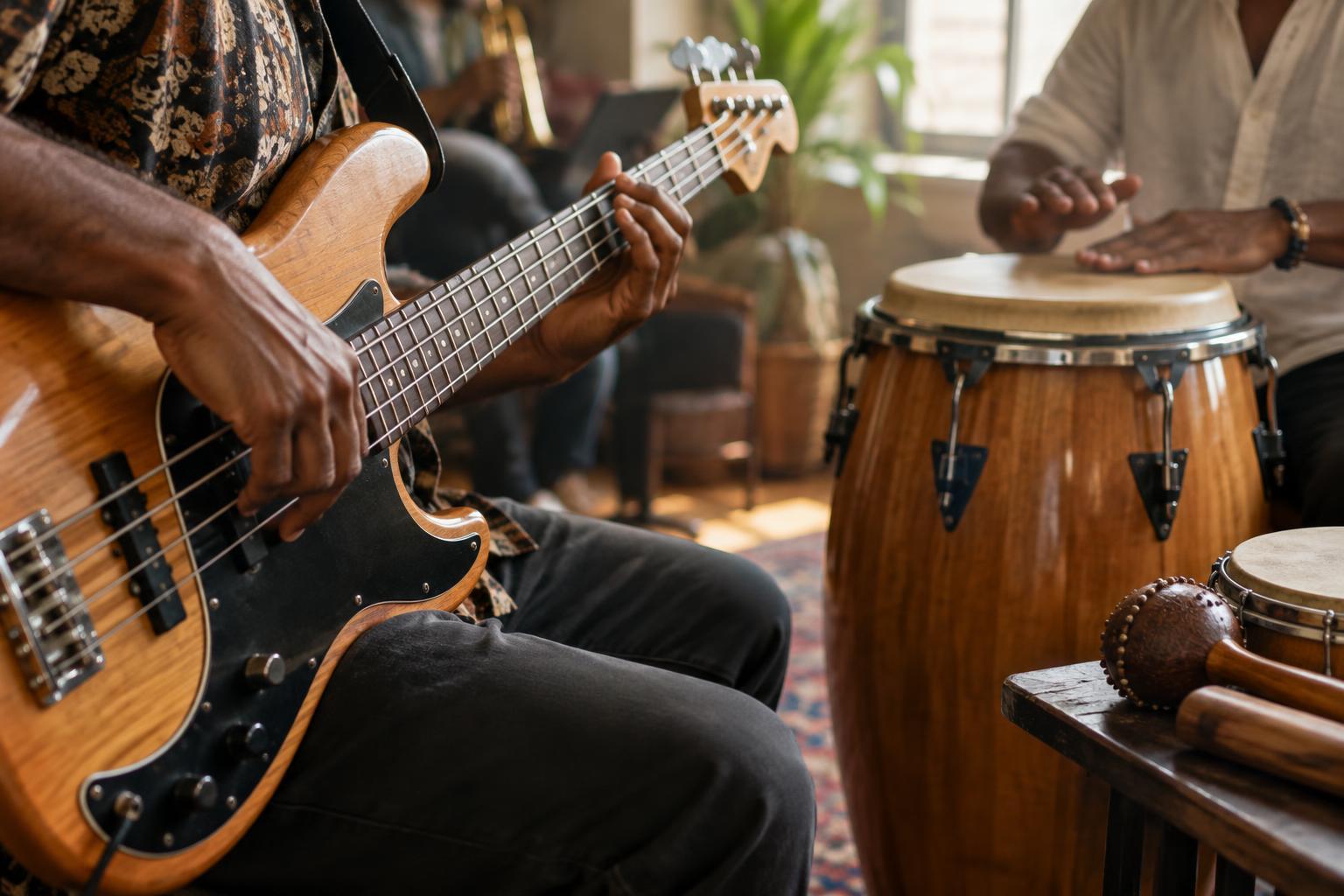
When a percussionist stops, the groove need not stop with them. A bass line, handclaps, piano pattern, or another percussion part may keep the pulse clear. This is why a drop-out can create anticipation rather than confusion: the listener still has enough rhythmic information to follow the song, but hears an opening where a familiar sound used to be.
Listen for the difference between removing a layer and removing the foundation. If a busy auxiliary pattern falls silent while a steady timekeeping part remains, the texture may feel spacious. If several parts stop together just before a new section, the brief gap can make the next downbeat feel decisive. Neither approach is a fixed rule. The useful question is whether the remaining sounds let the listener feel the intended pulse through the change.
Supporting voices, solos, and conversation
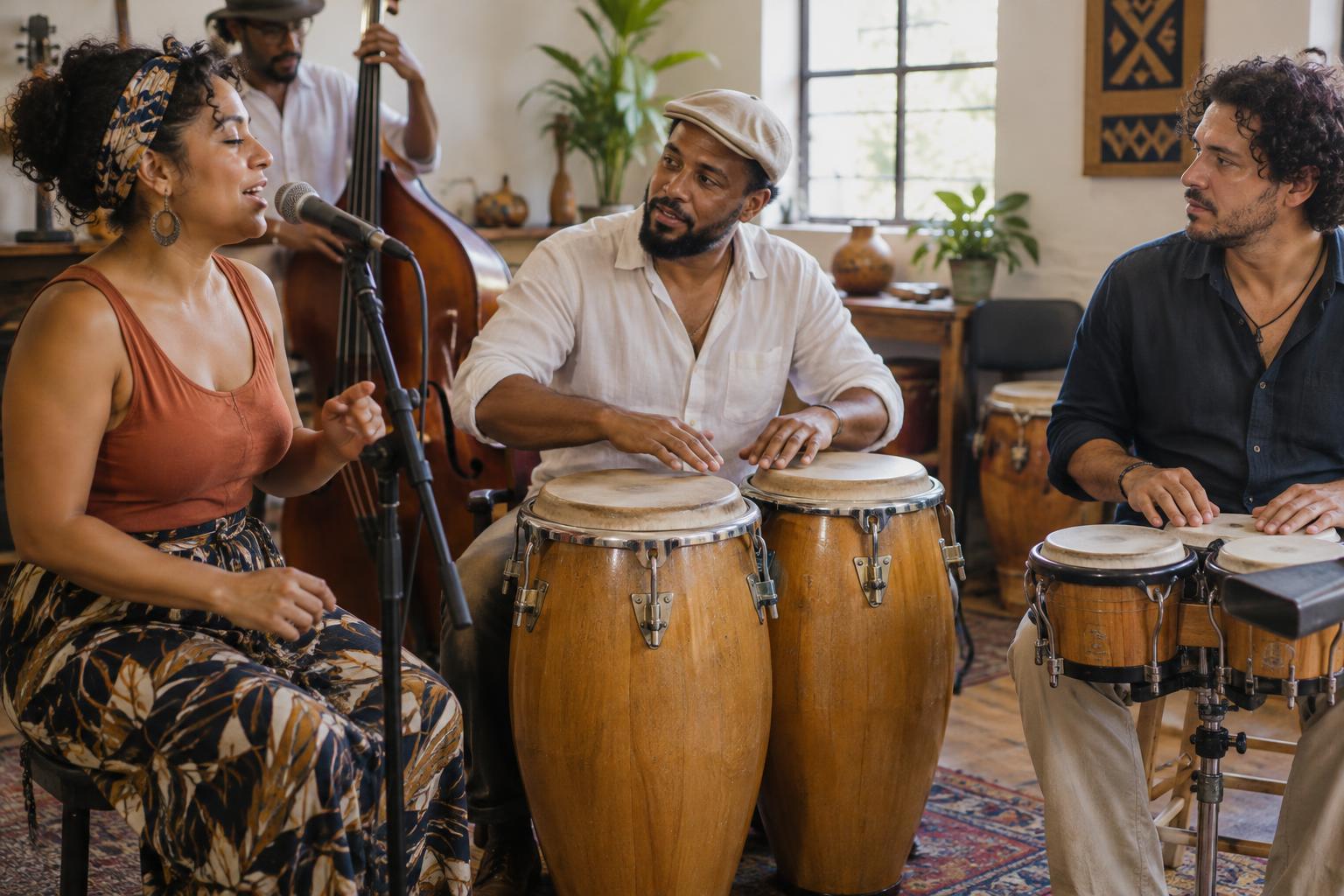
Percussion also enters and leaves to make room for other musical ideas. During a lyric-heavy passage, fewer attacks may help words come through. Around a solo, an accompanist might simplify a pattern so the soloist’s phrasing is easier to hear. When a singer finishes a phrase, a short percussion response can occupy that space without competing with the voice.
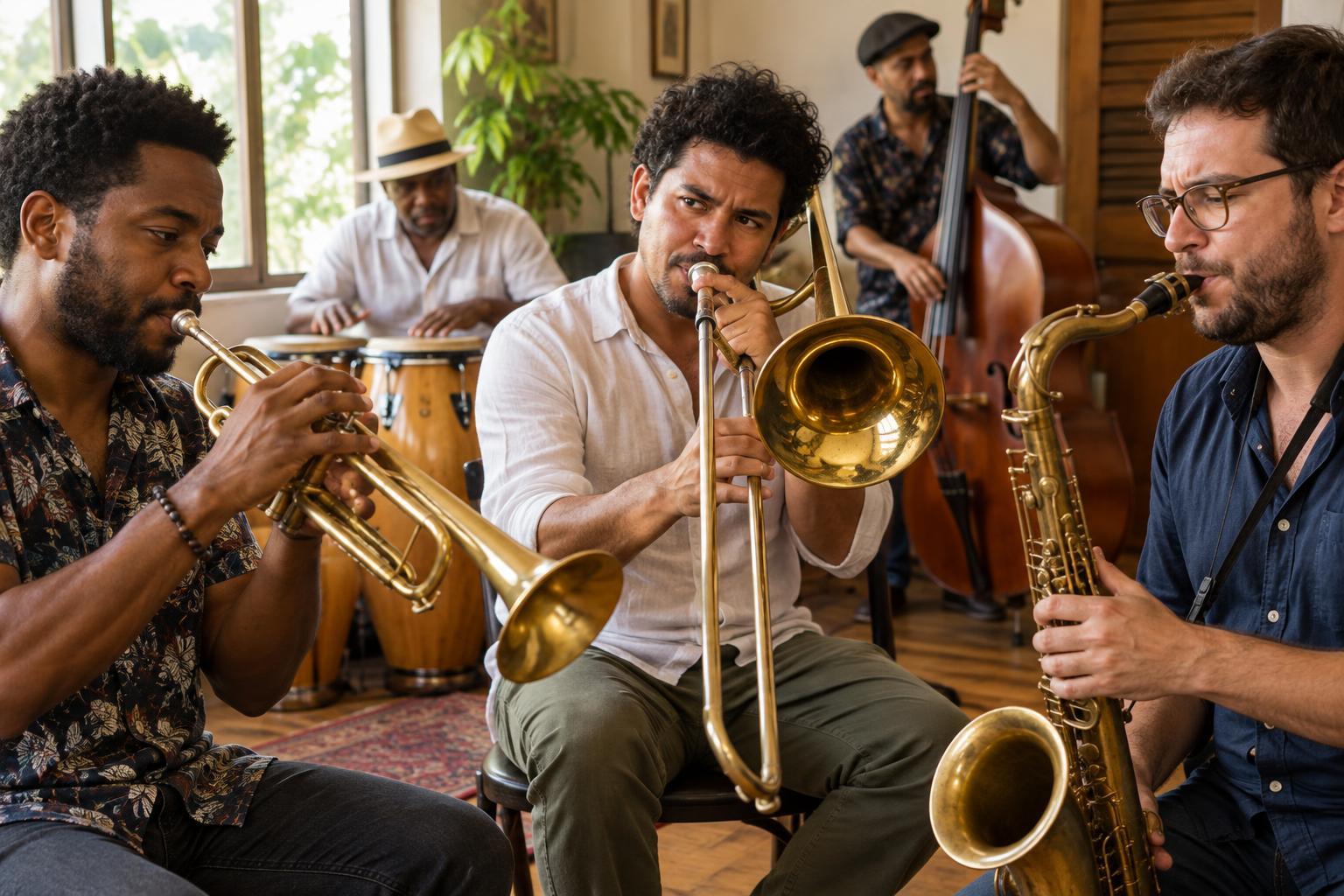
In many Afro-Cuban musical settings, interlocking parts create movement through their relationships rather than through constant individual activity. Clave may serve as an organizing reference whether or not it is struck aloud throughout a performance. Instruments and patterns vary by style and ensemble, so it is worth listening to the particular recording rather than assuming one standard lineup. A part’s absence does not mean its timing has ceased to matter: musicians may continue to orient their phrases around a shared rhythmic framework.
Energy can change without a faster tempo
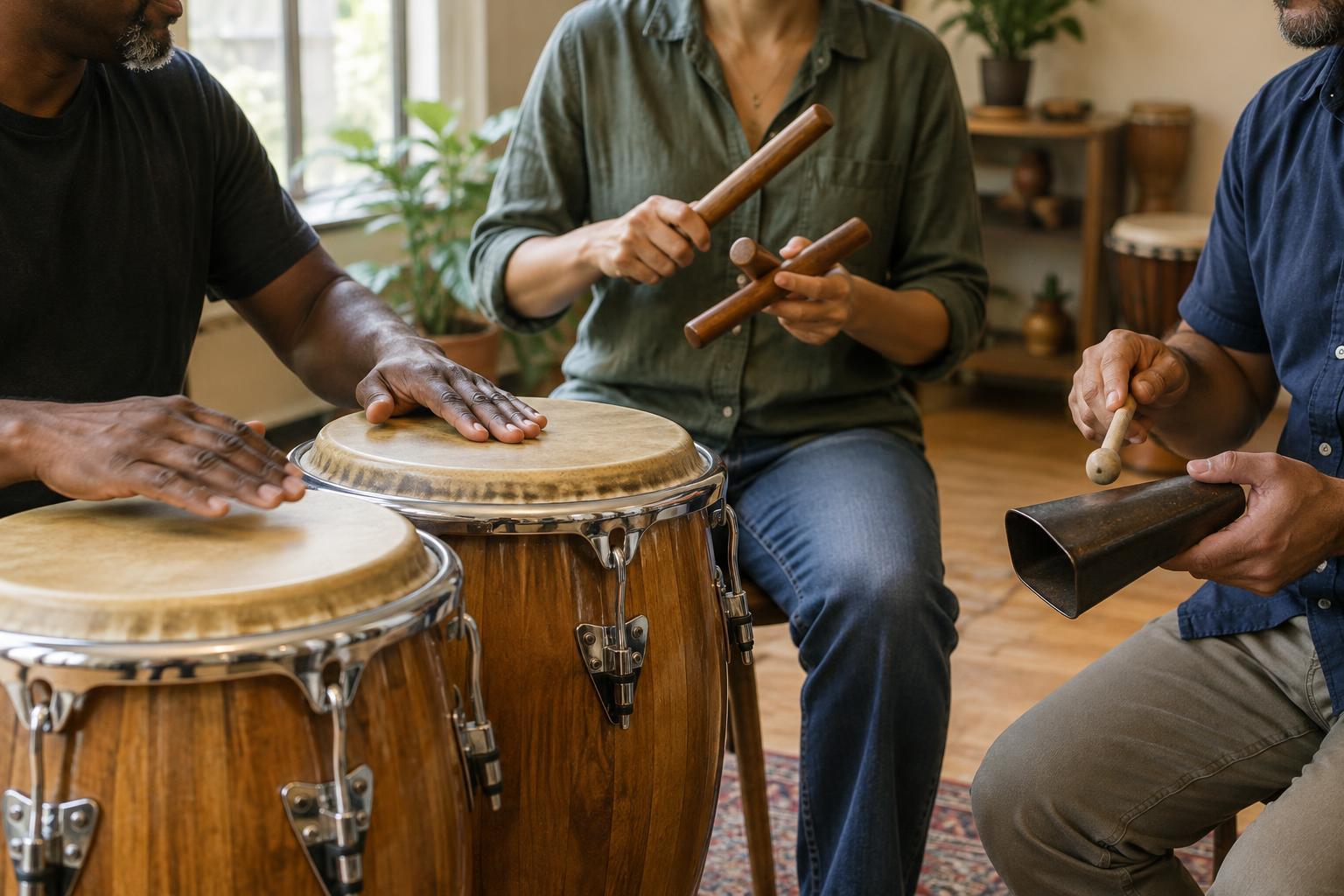
More percussion often increases the sense of activity, but the effect depends on what the new part plays. A sparse accent might mark a transition; a repeating subdivision can make a section feel more driving; a lower drum sound can add weight. Removing one of those layers can bring the energy back down while leaving the tempo untouched. This gives an arrangement a way to rise and settle over the length of a song.
A return can be especially effective when a sound has been absent long enough for the ear to miss it. If a bell pattern appears for an instrumental section, disappears under a quieter passage, and returns near the end, its re-entry can connect those moments. Rather than asking whether the percussion is always present, ask what each presence or absence makes possible for the rest of the ensemble.
A practical way to listen and arrange
Choose a song with at least two contrasting sections and listen once without writing anything down. On a second pass, make a simple section map: opening, verse, chorus, break, or whatever labels help you follow it. For each section, note which percussion sounds you can actually hear. If you cannot identify an instrument, describe its sound instead: bright repeated ticks, low accents, or a dry hand-played pattern. Mark the exact moments when a sound enters, stops, or changes.
Then listen across each boundary. What carries the pulse while a part is absent? Does the change leave room for a voice, announce a new section, or build expectation? To try the idea yourself, loop a short groove with two percussion layers. Play both for one pass, remove one for the next, then restore it. Keep the tempo and other parts steady. The exercise makes the arranging effect easier to hear: a part can contribute by playing, but it can also contribute by waiting for the right moment.