Start with the arrangement, not a fixed formula
A Cuban dance recording often feels continuous: the percussion holds a pulse, the bass keeps the floor moving, and one musical idea flows into another. Yet the arrangement may pass through several distinct sections. Hearing those changes helps you follow the song as a story and as an invitation to dance.
The labels verse, coro and instrumental section are useful listening tools, not a universal blueprint. Forms vary across genres, eras and bands, and a passage may combine features of more than one section. Rather than waiting for every recording to follow the same order, listen for changes in who carries the main idea and how the ensemble responds.
Hear the verse through the lead voice
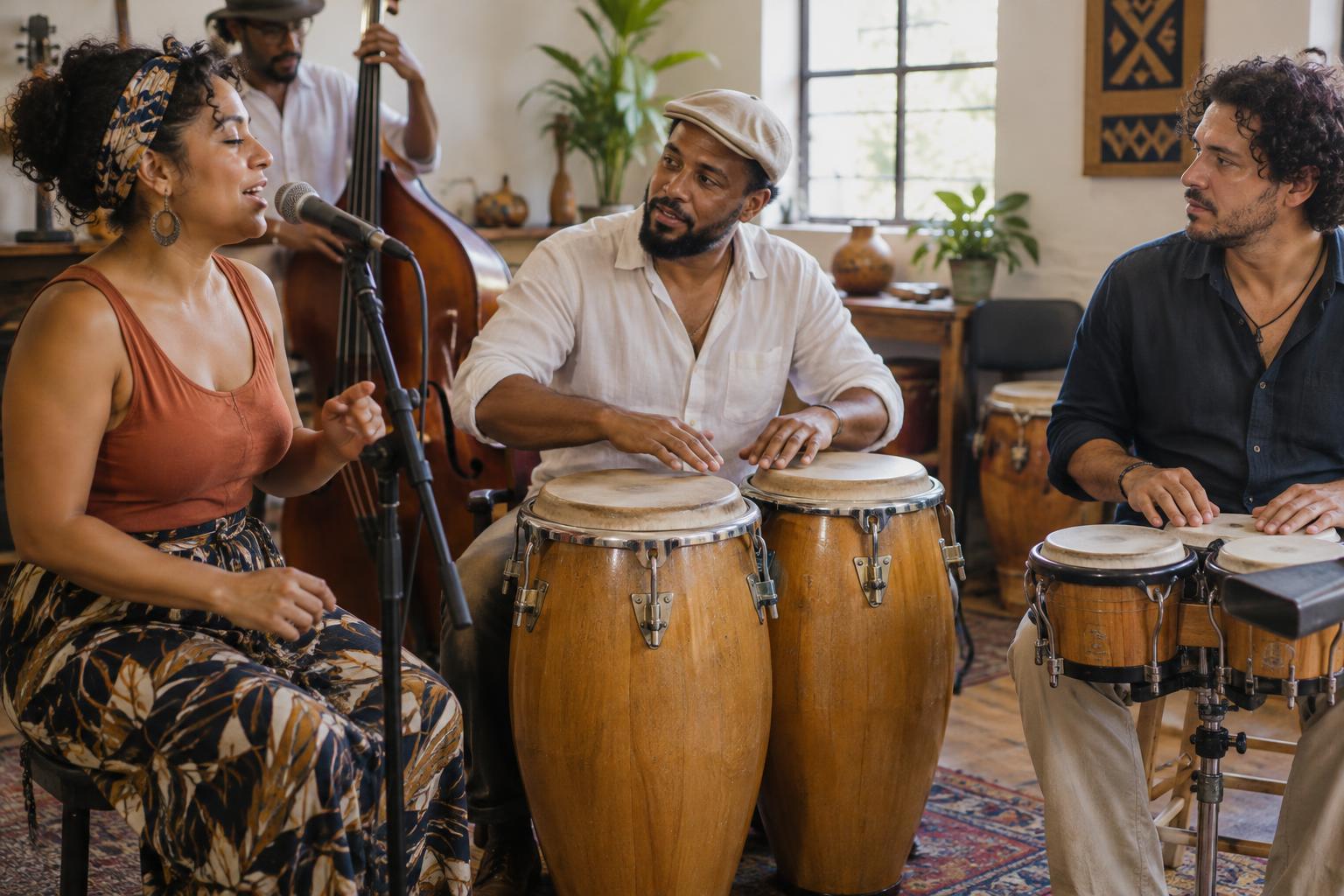
In a verse, a lead singer often carries longer lines that develop the song’s subject. The melody and words tend to change from phrase to phrase. The band may leave room around the voice, even when the groove is strong. Listen for the singer completing a thought while piano, bass and percussion provide a supporting pattern.
A practical clue is repetition. If you can predict the next line because the whole group has sung it several times, you may already have moved beyond the verse. If the lead voice is still telling or unfolding something in varied lines, you are more likely hearing verse material. An instrumental introduction or short transition can appear before, between or after those lines, so the first entrance of the singer does not necessarily mark a neat starting boundary.
Recognize the coro by its returning answer
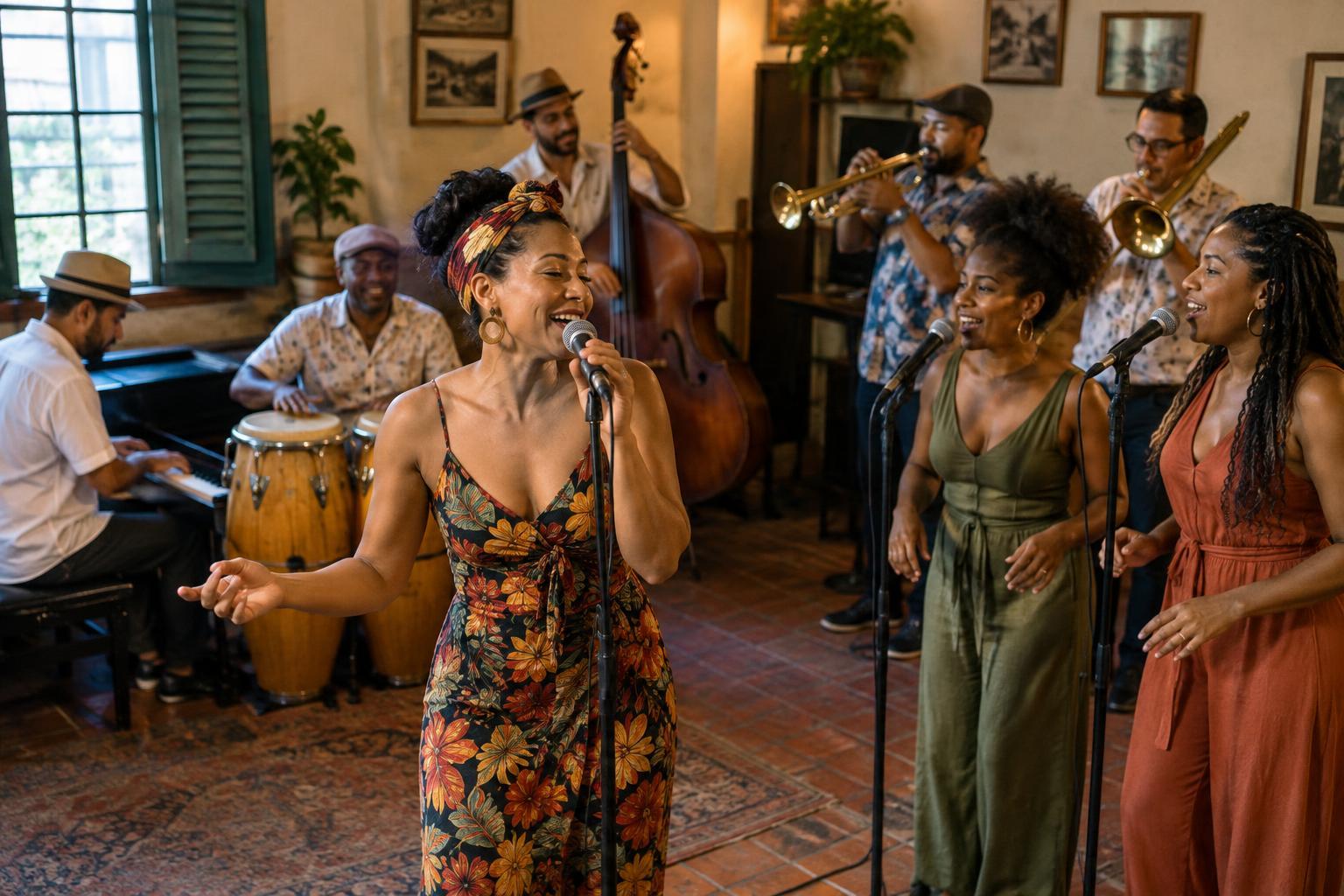
Coro means chorus. In many Cuban dance arrangements, a group of voices repeats a short, memorable phrase while a lead singer answers, comments or improvises around it. This exchange is often called coro-pregón. Try following the group voices first: once you know their recurring line, the lead singer’s changing phrases become easier to hear as the other side of a conversation.
The shift into a coro may bring a change in energy. A piano figure might become more insistent, the bass pattern may feel more driving, and percussion or horns may add new accents. These are possibilities rather than requirements. The clearest sign is usually the vocal relationship: a recurring group response set against changing lead phrases.
A coro is not always a one-time destination. A band may return to it after a solo, change the group’s line, or alternate it with horn passages. Keep listening for the repeated answer instead of assuming that every new layer of sound begins a wholly new section.
Follow the instruments when the voices step back
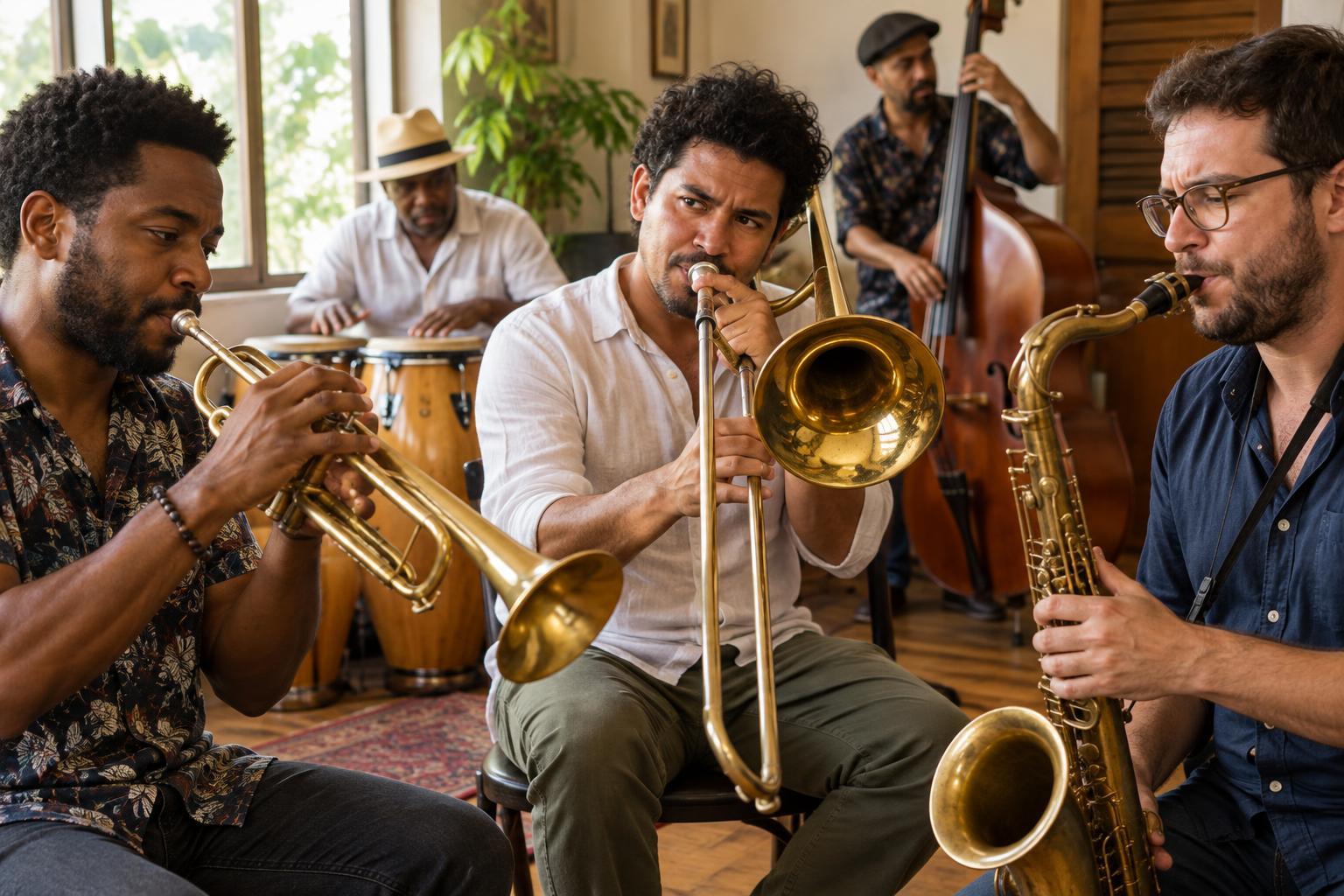
An instrumental passage can serve several purposes. Horns may play a tightly arranged figure; piano, tres or another instrument may take a solo; or the ensemble may use a short break to set up the next vocal entrance. Some traditions have more specific names for particular passages, but you do not need to name each one to hear its role. Ask what has moved to the foreground and whether the material repeats or changes.
A horn figure may sound like a statement shared by several players, with crisp entrances and a recognizable shape each time it returns. A solo usually draws attention to one player developing ideas over the continuing accompaniment. During either passage, the rhythm section may keep the dance pulse steady. That continuity is part of the arrangement: a new section can begin without a stop or a dramatic change of tempo.
Map one recording with three listening passes
On the first pass, listen only to the voices. Note when a lead singer delivers varied lines, when a group repeats an answer, and when the voices disappear. Use simple labels such as “lead,” “group” and “no voice.” Do not worry yet about the names of instruments or exact boundaries.
On the second pass, follow the accompaniment. Notice whether the piano pattern changes, whether the bass emphasizes a different shape, and when percussion or horns make an entrance especially clear. On the third pass, combine your notes into a rough map: introduction, verse, coro, horn passage, solo, return to coro, or whatever sequence you actually hear. If a boundary seems gradual, mark it as gradual.
Finally, listen once without taking notes. Can you anticipate the group response or sense when the horns are about to take over? That is the goal of the exercise: not to force a recording into a template, but to hear how musicians use repetition, contrast and exchange to guide dancers and listeners through the music.