Think of register as a map, not a rule
Register describes where a sound sits from low to high. In an ensemble, that range gives the ear one way to sort simultaneous parts. A bass line may anchor the low end, a piano figure may occupy the middle, and a bell or voice may draw attention higher up. When these parts have distinct places, a listener can often follow each one without hearing it alone.
Register is only part of the picture. Two instruments can play in the same range and still sound separate because their tone, rhythm or note length differs. Conversely, parts in different ranges can feel tangled if they strike together constantly or compete for attention. The useful question is not “Does every instrument have its own register?” but “Can the listener tell what each part is doing?”
Hear the jobs within the texture
Start by listening for functions rather than instrument names. What supplies the low pulse? Which part outlines harmony? Which sound carries the melody, and which adds short responses or accents? Then notice where each function sits in register. This approach is especially helpful when a recording has many layers or when several instruments share similar rhythmic figures.
In a rhythm-centered arrangement, separation does not mean isolating every note. A low bass phrase and a higher percussive pattern might interlock to create one larger groove. Their different registers make that relationship easier to hear. A middle-register chordal part can fill space between them, but it may need room in its rhythm or voicing so the groove remains clear.
Listen, too, for movement. A melody that drops into the middle register may briefly meet the accompaniment there. That overlap can add warmth or intensity; it is not automatically a problem. If a featured line becomes hard to follow, the arrangement might create space by thinning the accompaniment for a phrase rather than moving the melody.
Notice how range works in Afro-Cuban ensembles
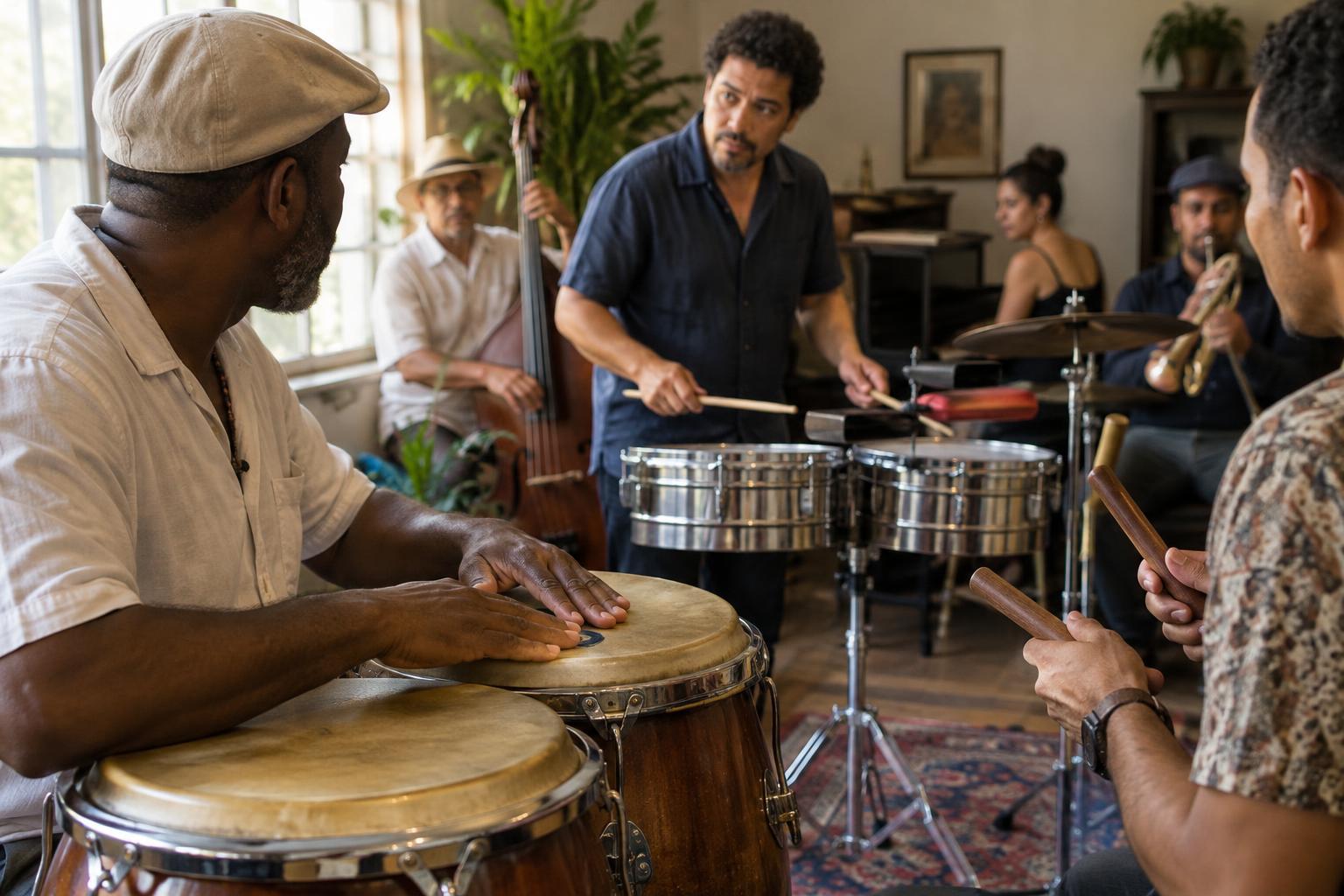
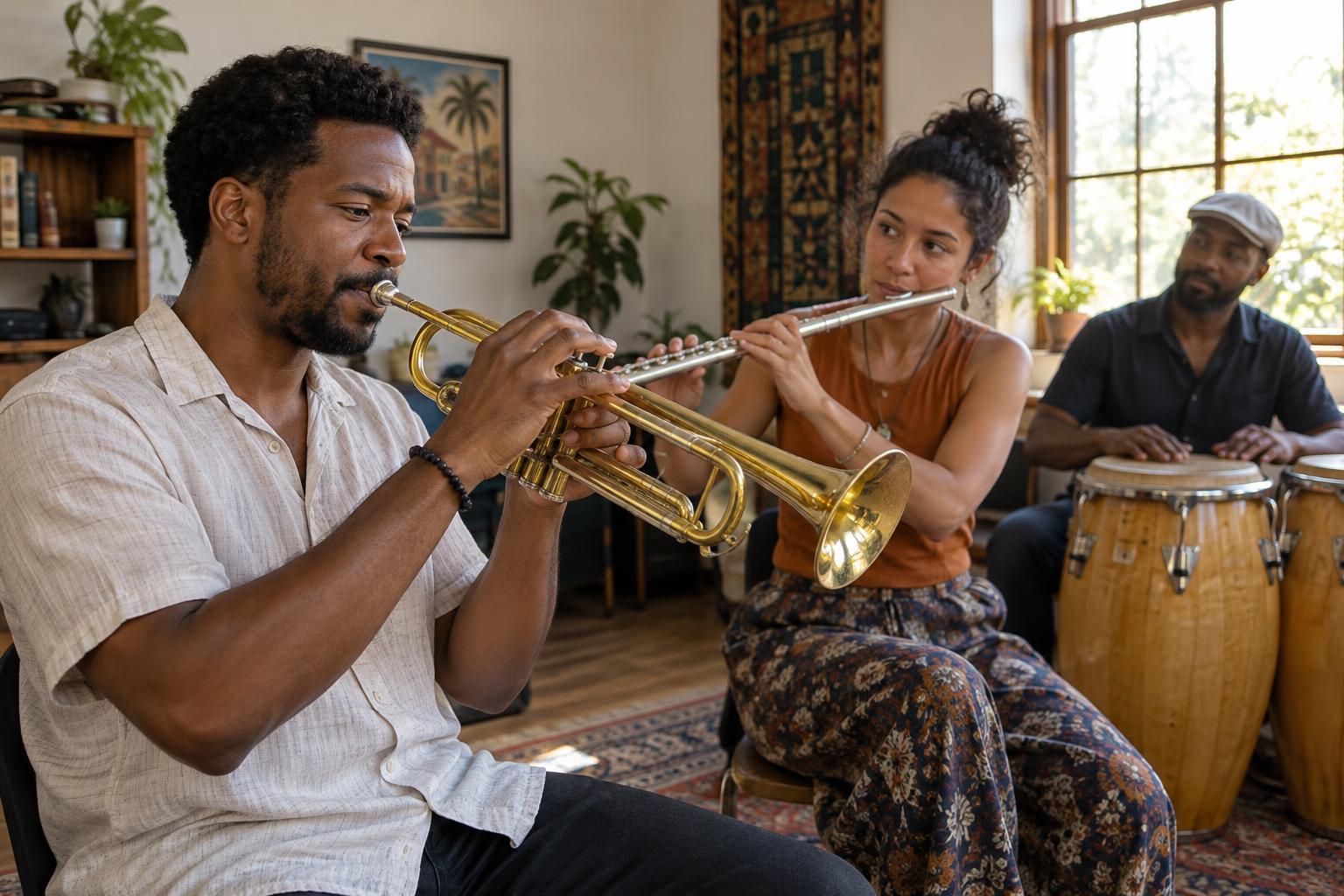
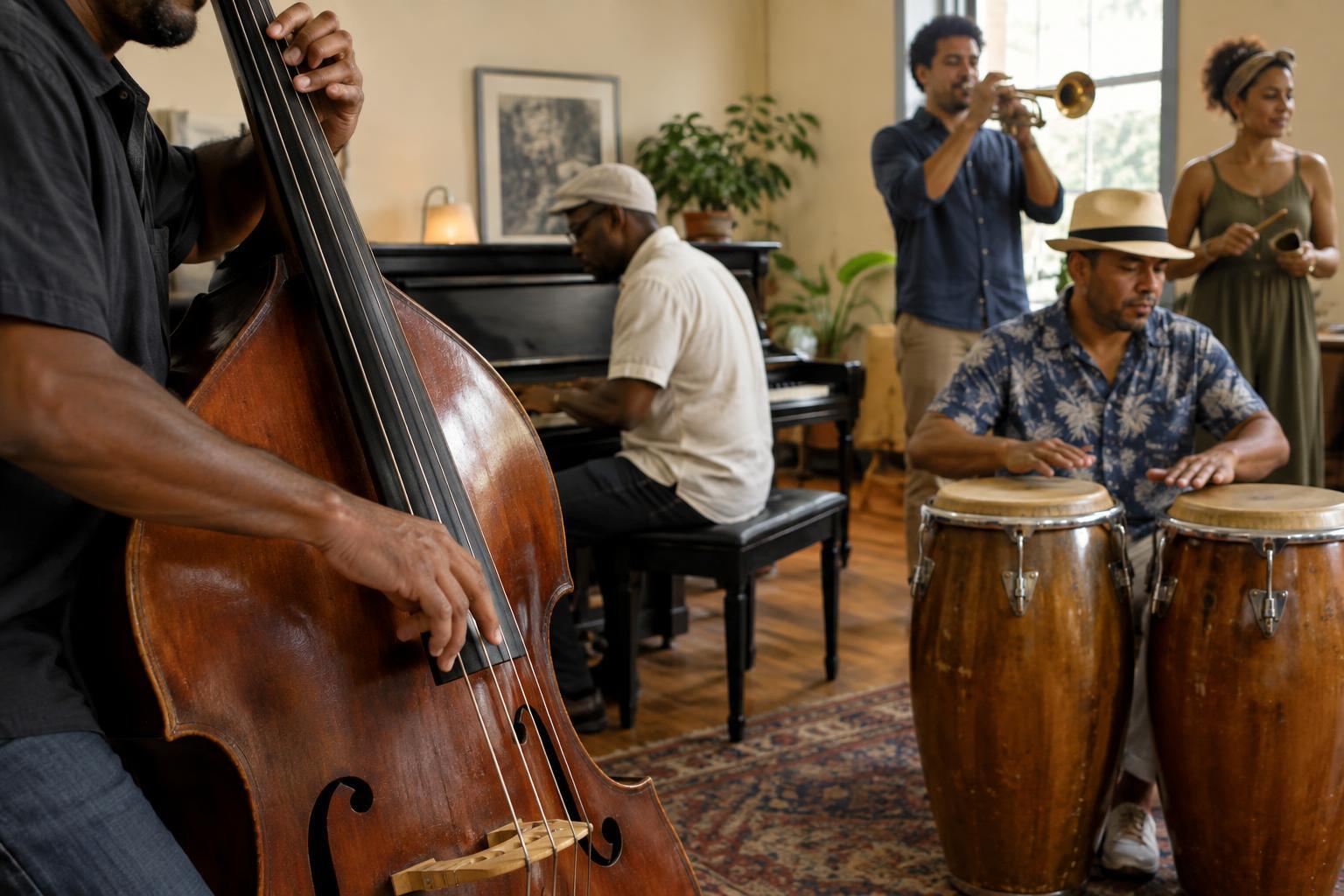
Afro-Cuban music offers many opportunities to hear layered parts with distinct roles. Depending on the style and ensemble, bass, piano, voices, horns, hand percussion and bells may all contribute to the rhythmic conversation. Their registers can help a listener locate parts, while their patterns and entrances explain how those parts relate. There is no single register plan that defines these traditions.
For example, a pianist might place a repeating figure in a range that leaves the bass audible below and a vocal line clear above. A horn phrase might enter in that same middle space, so the piano could play fewer notes, use a different voicing or pause at a key moment. Percussion complicates a simple low-to-high map: a drum’s body and its sharper attack may be heard in different parts of the sound spectrum.
Clave is worth listening for as a rhythmic reference, whether or not a separate clave instrument is audible. Register cannot tell you by itself how a phrase relates to clave. To hear that relationship, pay attention to when accents land and how repeated parts fit together over time. Register helps you find a part; rhythmic listening helps you understand its place in the pattern.
Try a three-pass listening exercise
Choose a recording with several clearly audible layers. On the first pass, follow only the lowest part you can identify. Hum its contour or tap when it enters and rests. On the second pass, listen for a recurring middle-range part, such as chords, a repeating piano figure or a melodic response. Notice whether it plays continuously or leaves gaps. On the third pass, follow a higher voice, instrument or bright percussion sound.
Now listen to the full texture and ask when two parts meet in the same range. Do they obscure each other, trade phrases or reinforce a shared accent? Try repeating a short passage at a comfortable volume. If you cannot confidently name an instrument, describe what you hear instead: “short high attacks” or “sustained middle notes” is enough to make a useful observation.
Make space without making the music sparse
If you are arranging, begin with the part the listener most needs to follow. Place supporting notes around it, then listen for passages where another part occupies the same register at the same time. Test one small change: move a chord voicing, remove a doubled note, shorten an accompaniment figure or let an instrument answer between phrases. Change one thing at a time so you can hear what improved the balance.
Avoid treating low, middle and high as fixed assignments. A shared register can create a powerful unison, and a sudden shift in range can mark a new section. Clarity comes from deliberate choices about when parts blend and when they separate. The goal is not to hear every instrument equally at every moment, but to let the arrangement guide attention through the groove.