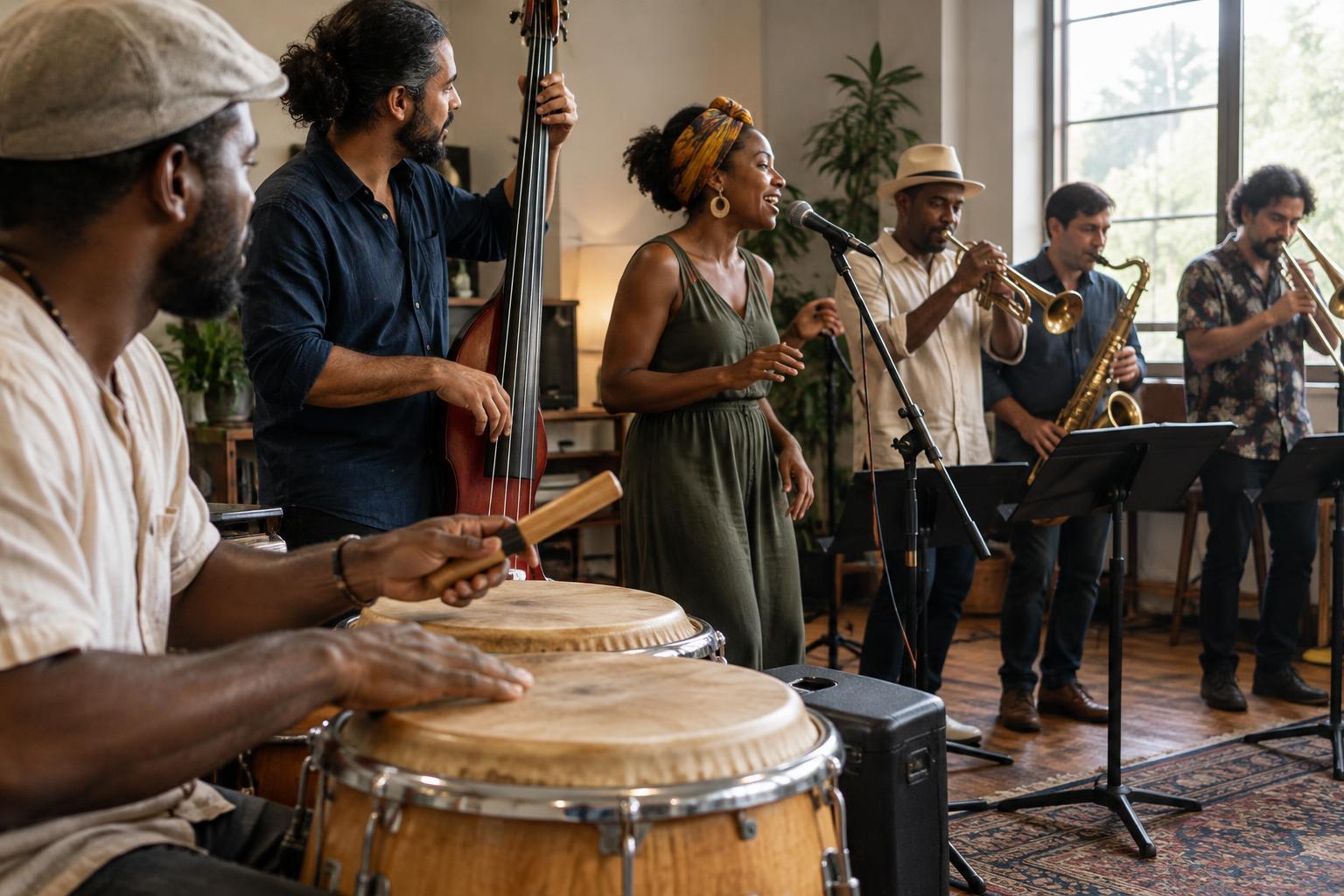
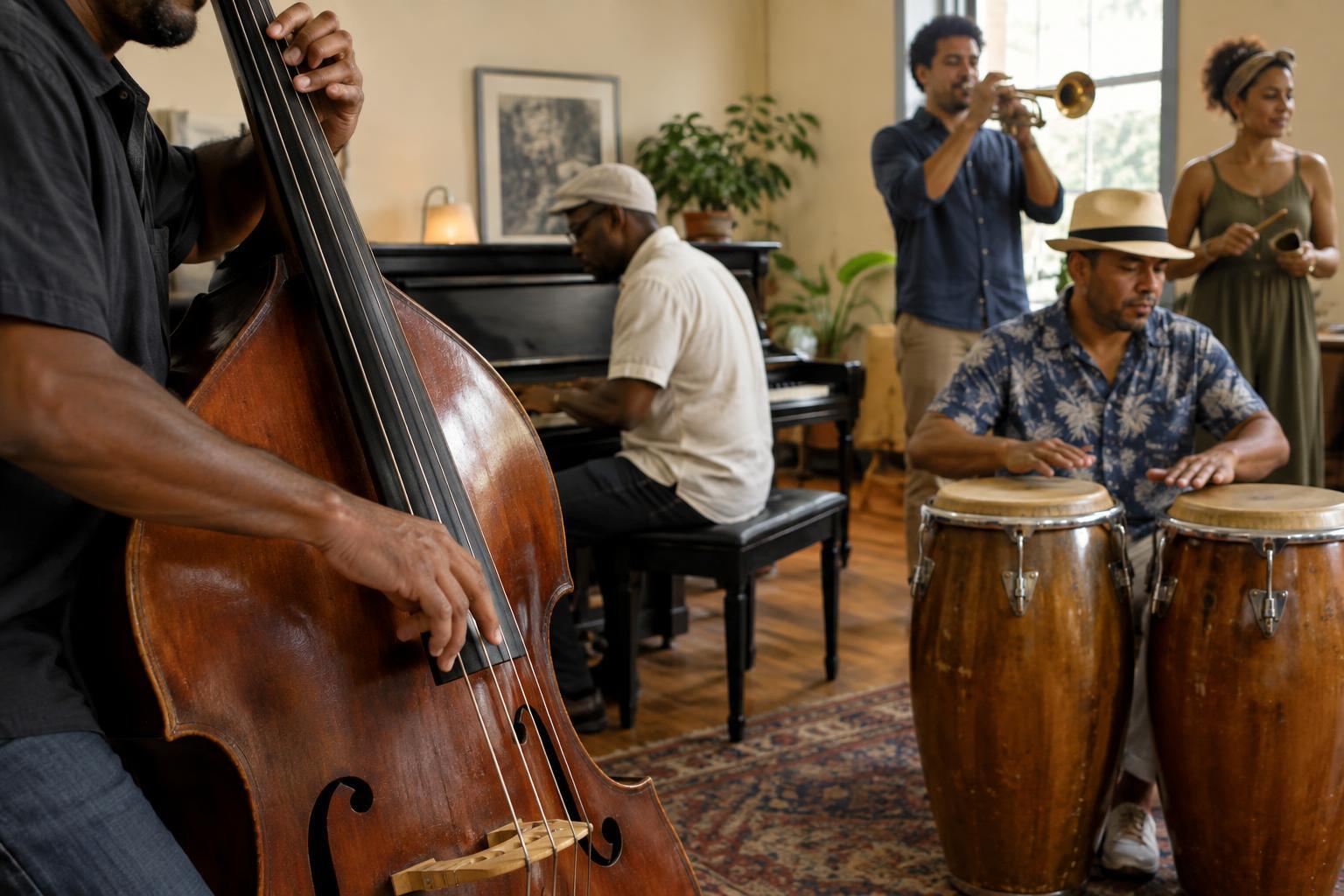
Arranging and ListeningWhen several instruments play at once, register helps listeners hear where each part belongs. Learn to identify low, middle and high layers, and use that awareness to make crowded arrangements easier to follow.
Read article · 4 min↗
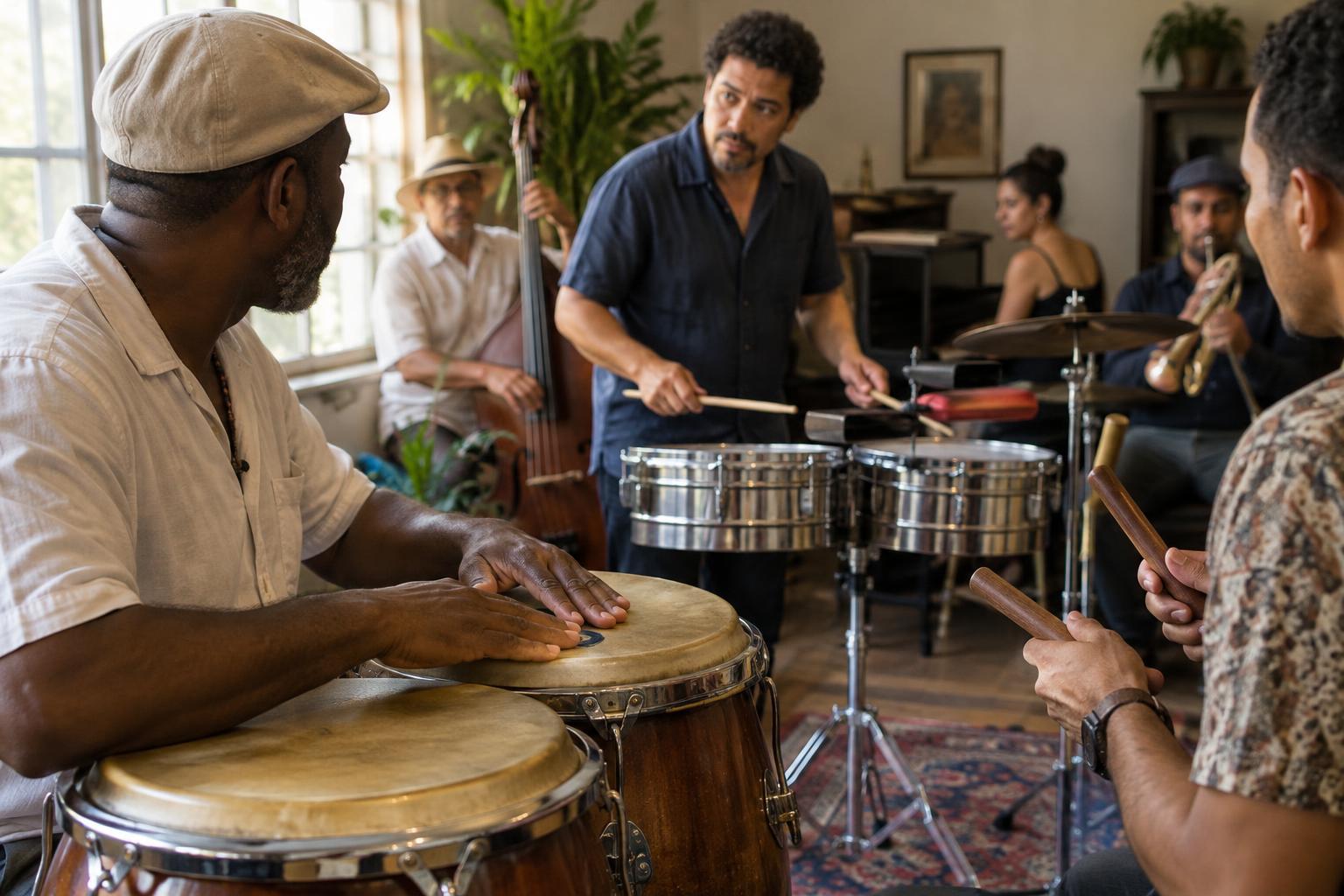
Arranging and ListeningA new section often announces itself before it arrives. Learn to hear changes in texture, rhythm, melody, and ensemble interaction, with practical listening exercises drawn from Afro-Cuban music.
Read article · 4 min↗
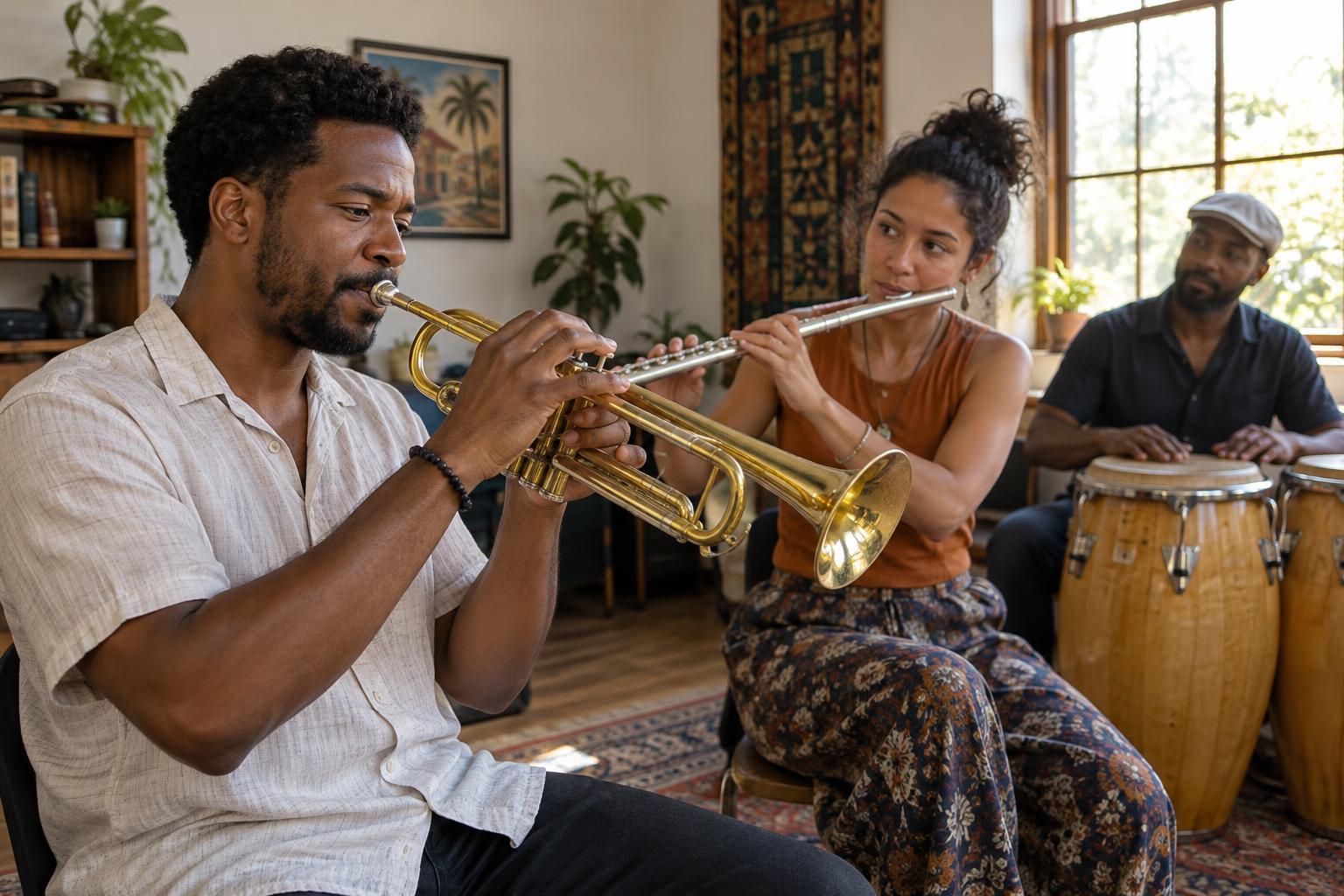
Arranging and ListeningA countermelody gives the ear another path through an arrangement. Learn how to follow it while keeping the main tune in view, and try simple listening and arranging exercises that make the relationship between the two lines easier to hear.
Read article · 4 min↗

Arranging and ListeningBackground vocals can make a chorus feel wider, add warmth to a phrase, or answer a lead singer without taking over. Learn how register, rhythm, vowel shape, and space help supporting voices serve the song.
Read article · 4 min↗
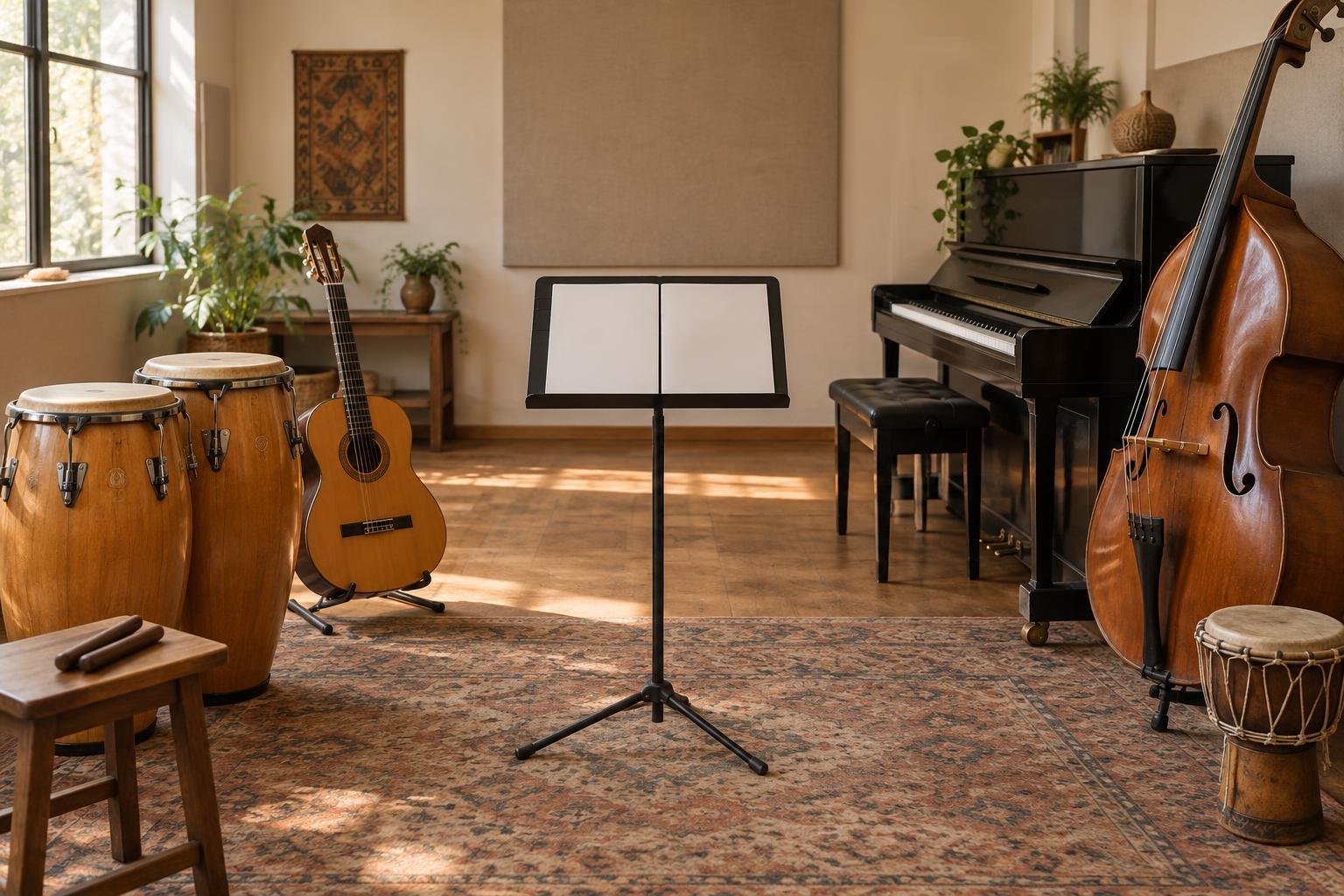
Arranging and ListeningTwo recordings can share a melody and still create different experiences. Compare their grooves, entrances, textures and endings to hear how an arrangement shapes the song—and to bring those ideas into your own listening or playing.
Read article · 4 min↗
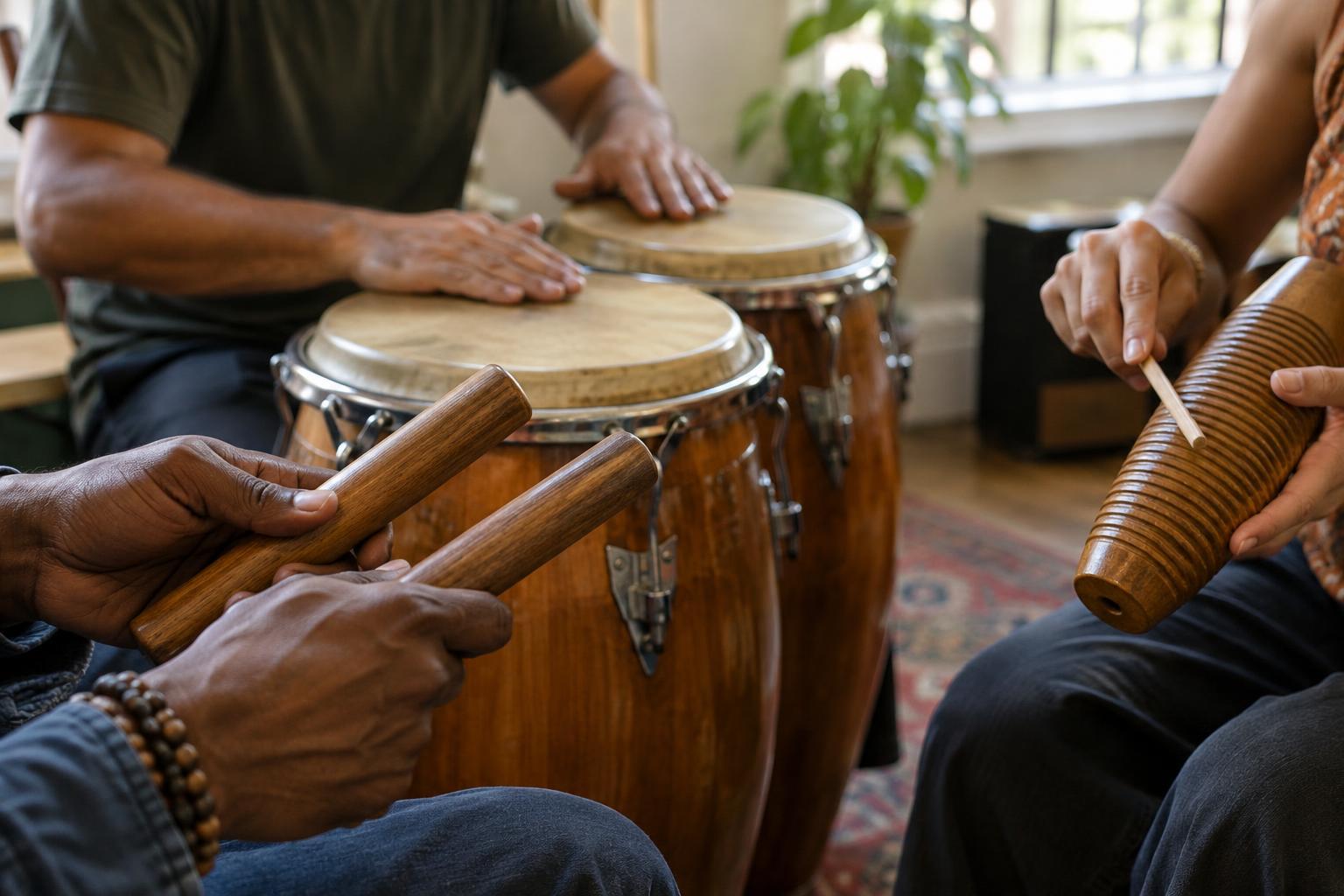
Arranging and ListeningA steady beat can hold several patterns at once. Learn to hear the smaller spaces between beats, follow how percussion and other instruments use them, and practice listening to layered rhythms without losing the pulse.
Read article · 4 min↗
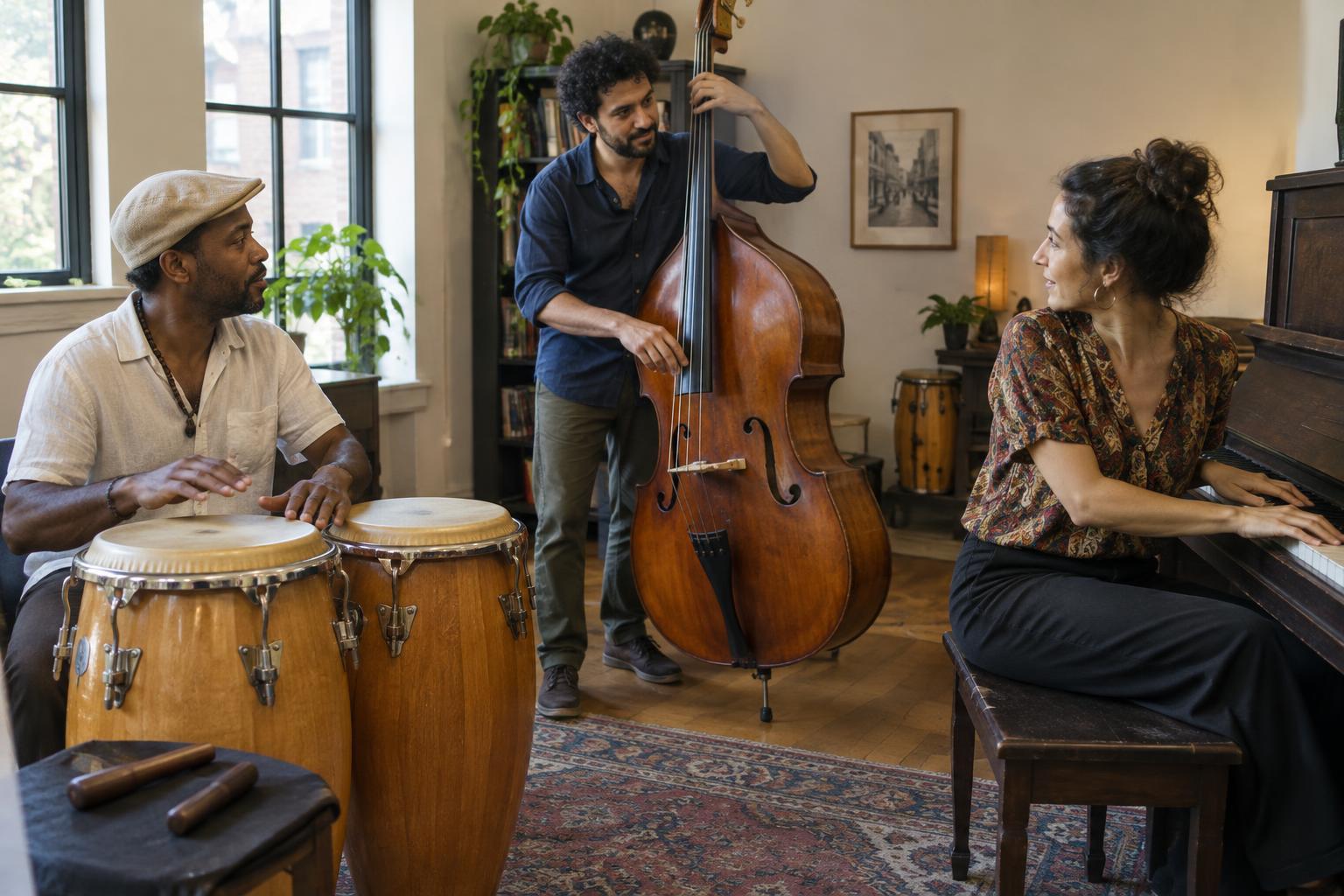
Arranging and ListeningA smaller group cannot play every part of a full-band arrangement, but it can preserve the arrangement’s identity. Learn how to identify essential roles, make room for clave, distribute rhythmic responsibilities and test a reduced chart by listening.
Read article · 5 min↗
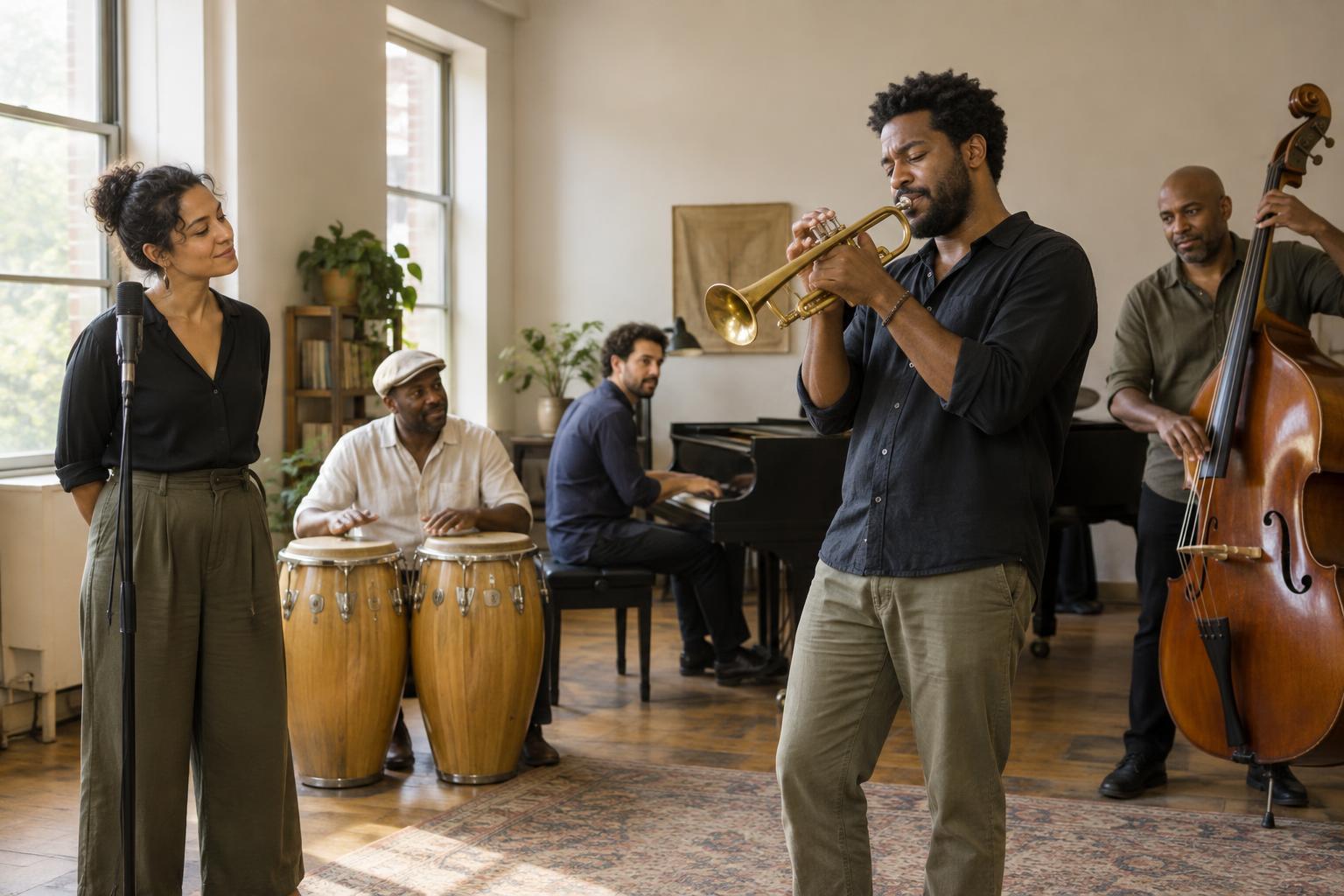
Arranging and ListeningA solo does not require the whole band to play more. Learn how changes in space, register, repetition and percussion can help an improviser take the spotlight without losing the groove.
Read article · 4 min↗
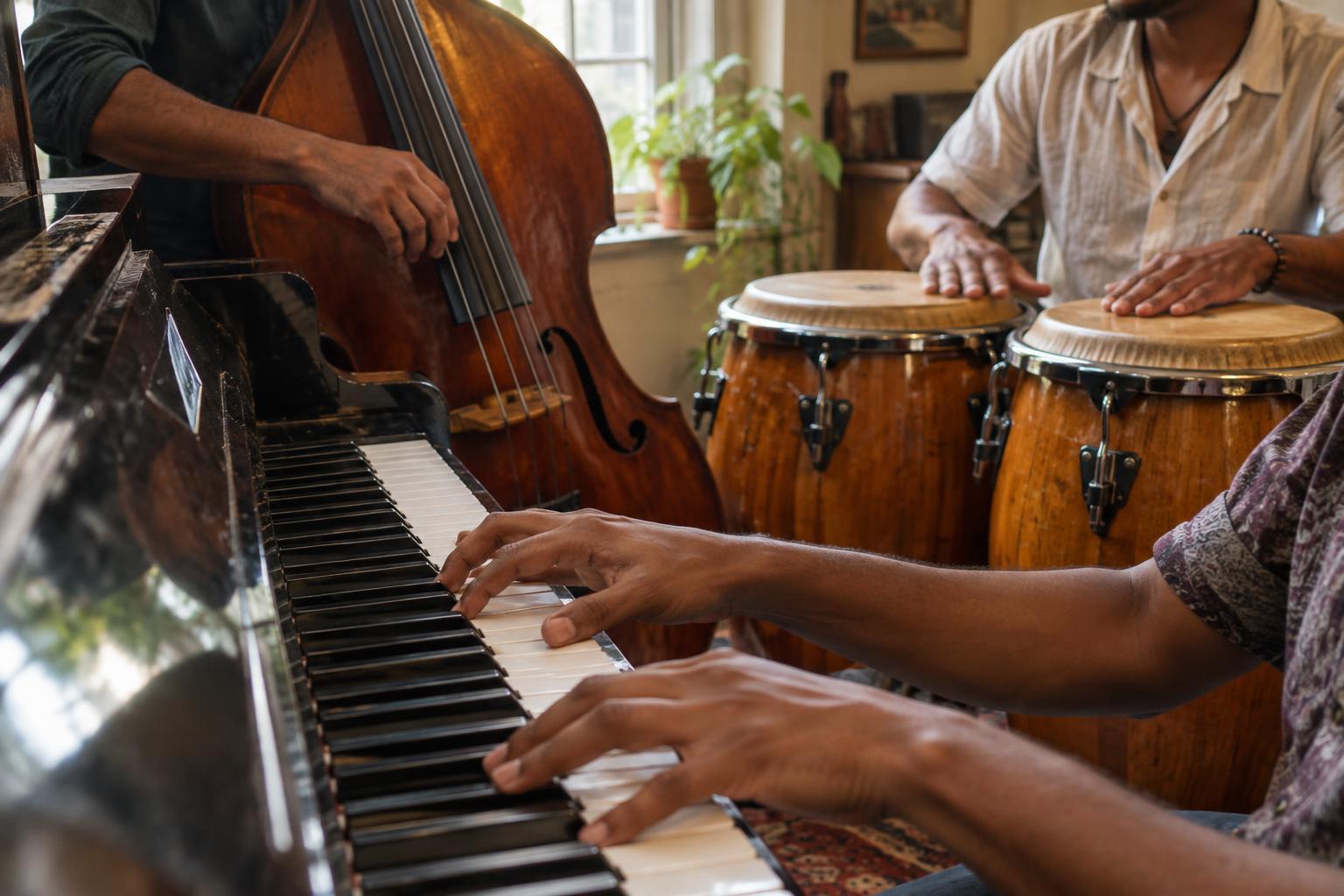
Arranging and ListeningA groove can repeat while the harmony moves at its own pace. Learn how to hear chord-change timing, follow the bass without mistaking every note for a new chord, and practice listening to harmony alongside a repeating rhythm.
Read article · 4 min↗
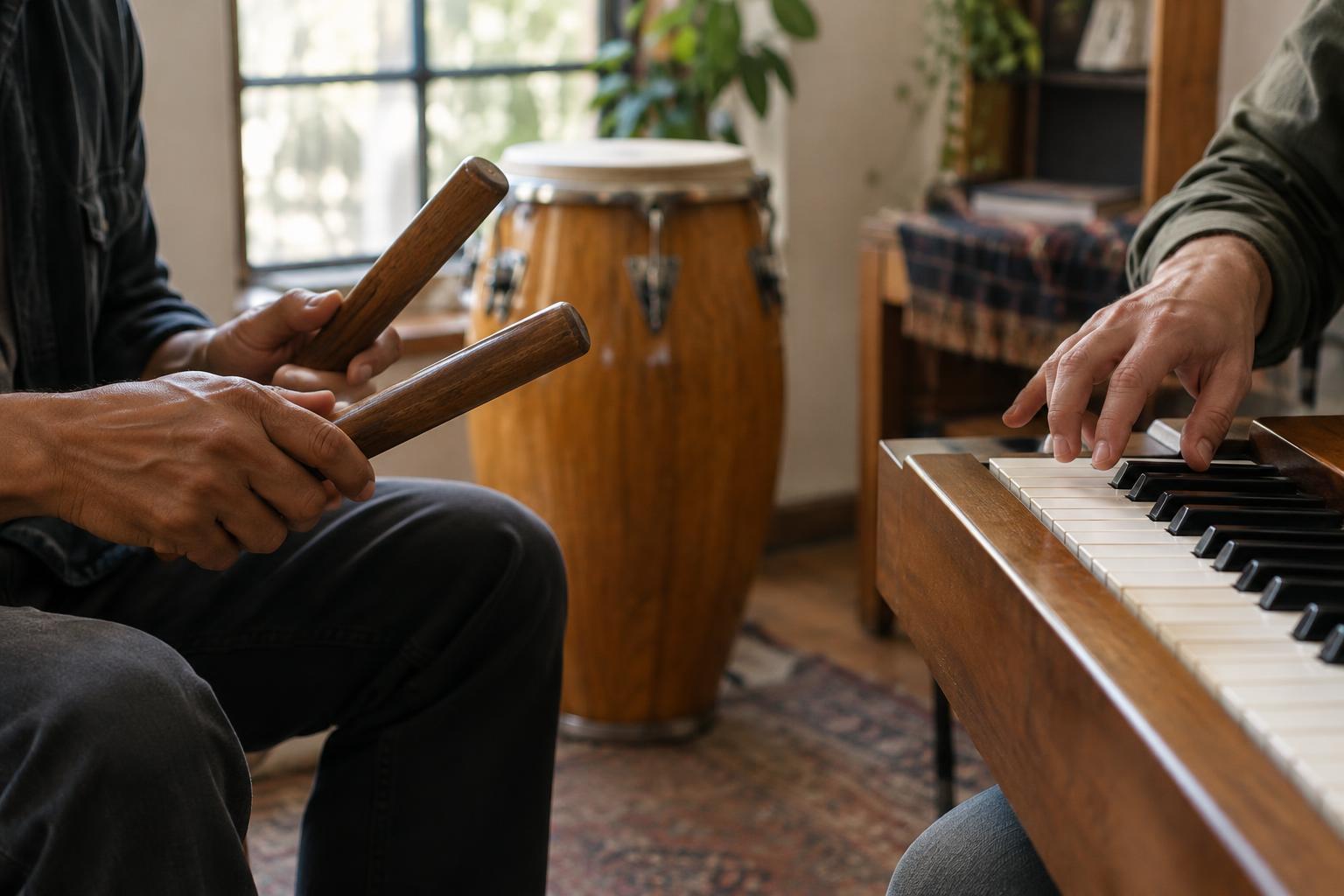
Arranging and ListeningA melody can keep the same notes yet feel more settled, more urgent, or more spacious when its entrances move against clave. Learn to hear that difference and try it in your own arrangements.
Read article · 4 min↗
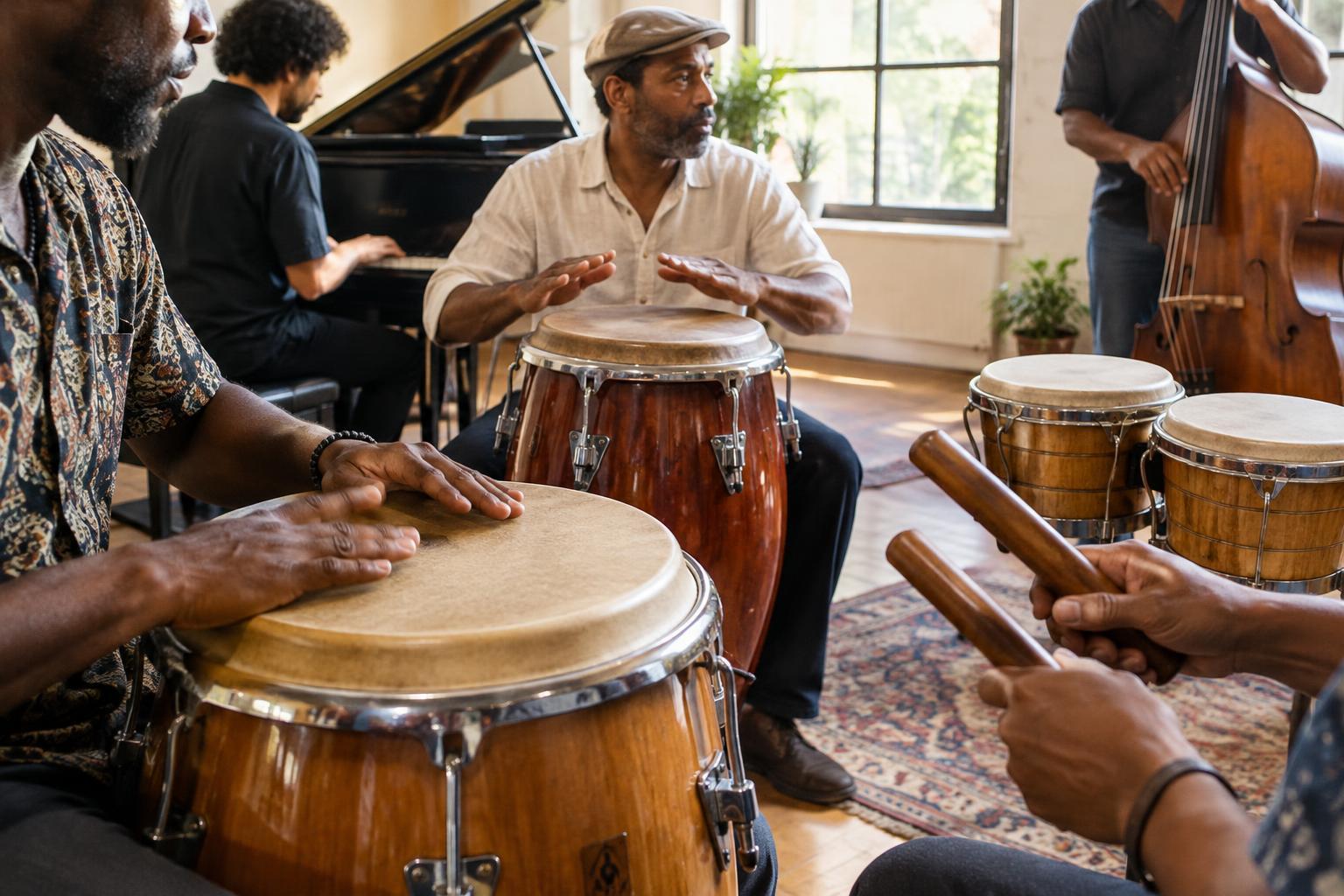
Arranging and ListeningA musical passage can feel more intense even when the volume barely changes. Learn how entrances, rhythmic density, register, space, and contrast can shape energy in an arrangement, with a listening exercise grounded in Afro-Cuban ensemble music.
Read article · 4 min↗
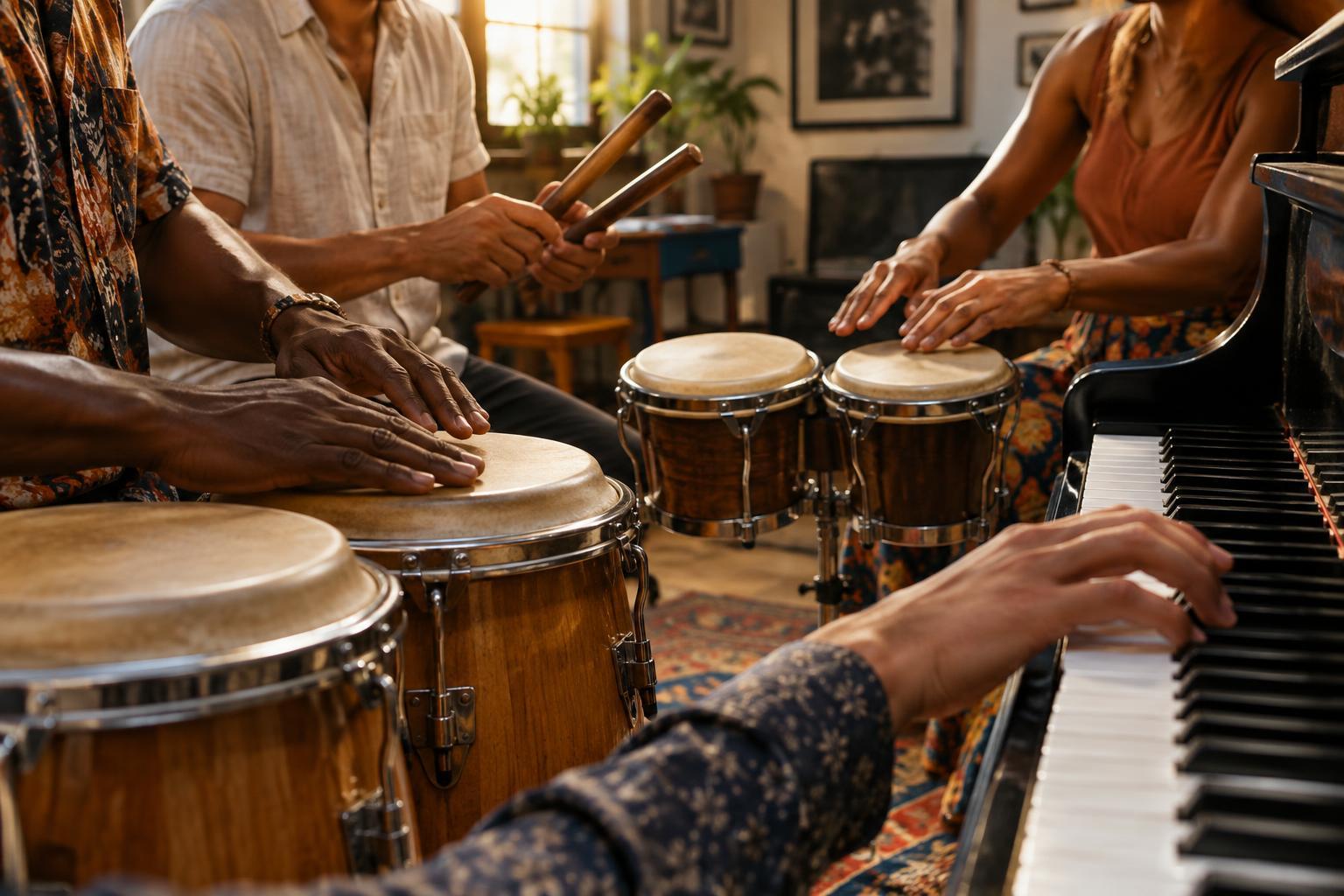
Arranging and ListeningA recording can close with one decisive accent, gradually disappear, or arrive at a phrase the musicians play together. Learn what to listen for in the last few bars—and why a final hit can be part of a larger played ending.
Read article · 4 min↗
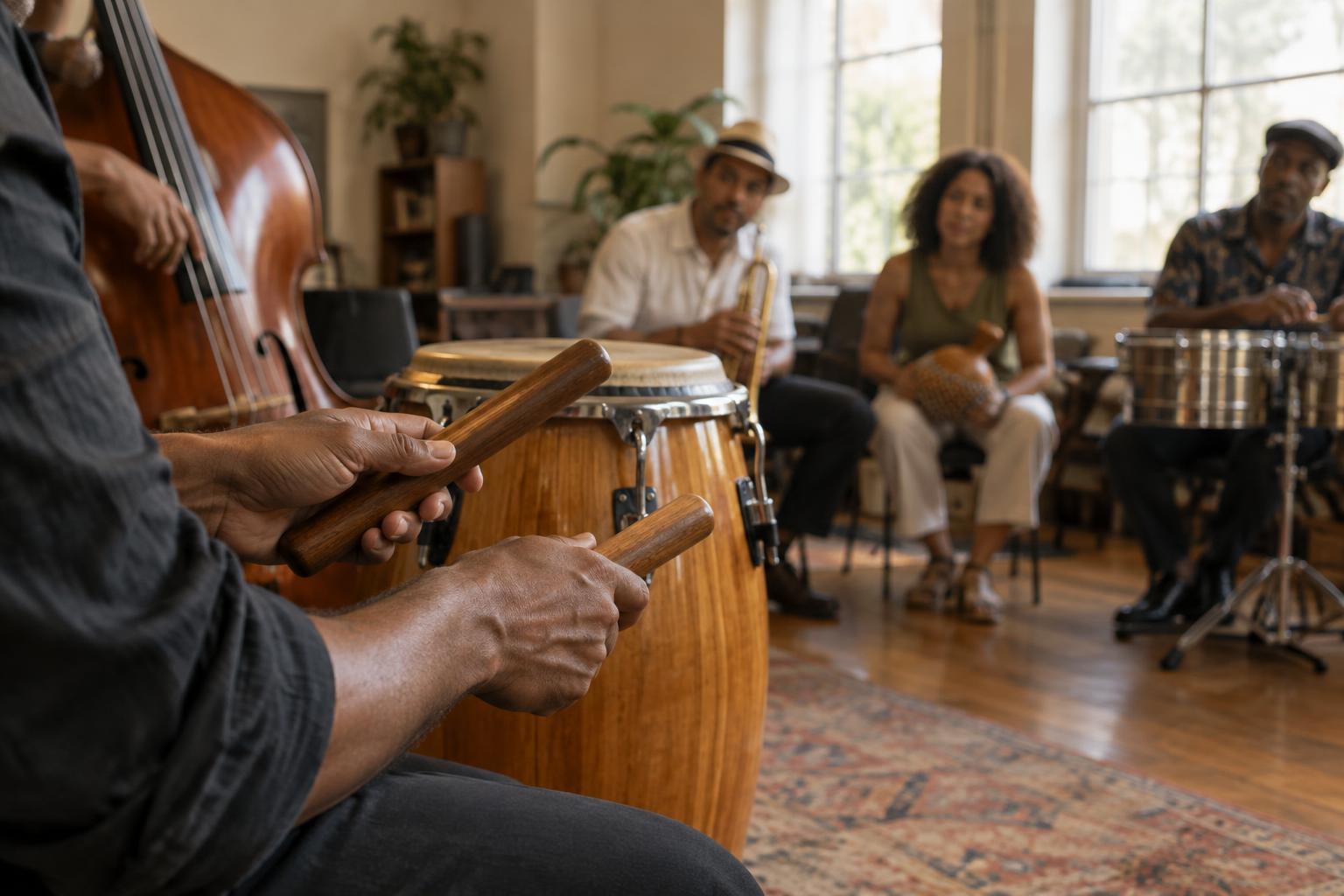
Arranging and ListeningAn introduction can give listeners a sense of the beat before the full ensemble arrives. Learn how sparse percussion, repeating figures, bass movement and melodic phrasing create that expectation—and how to listen for the moment the groove comes into focus.
Read article · 4 min↗
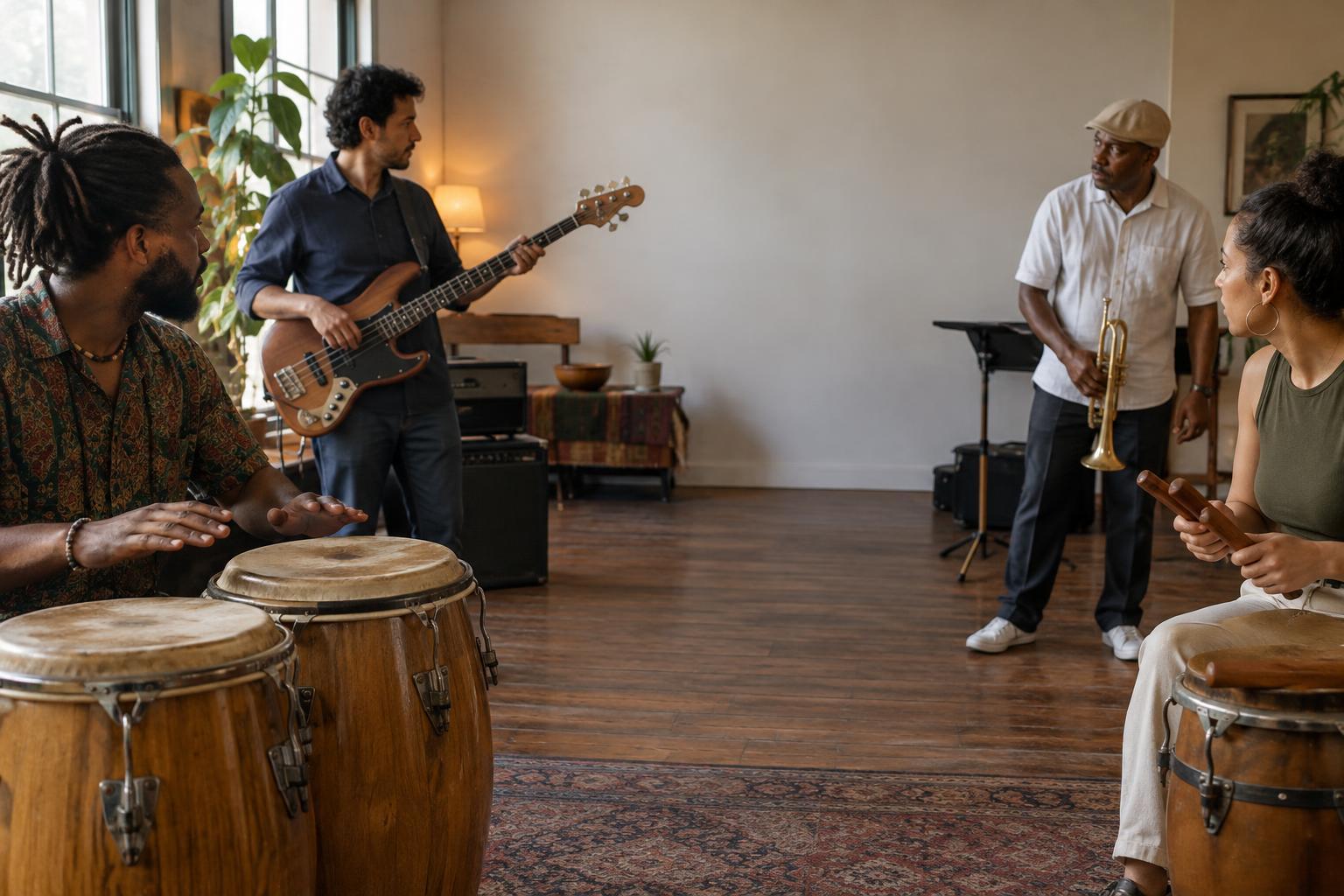
Arranging and ListeningA band can make a return feel powerful by briefly taking sounds away. Learn the difference between a break and stop-time, how musicians keep their place through the gaps, and what to listen for when the full groove comes back.
Read article · 4 min↗
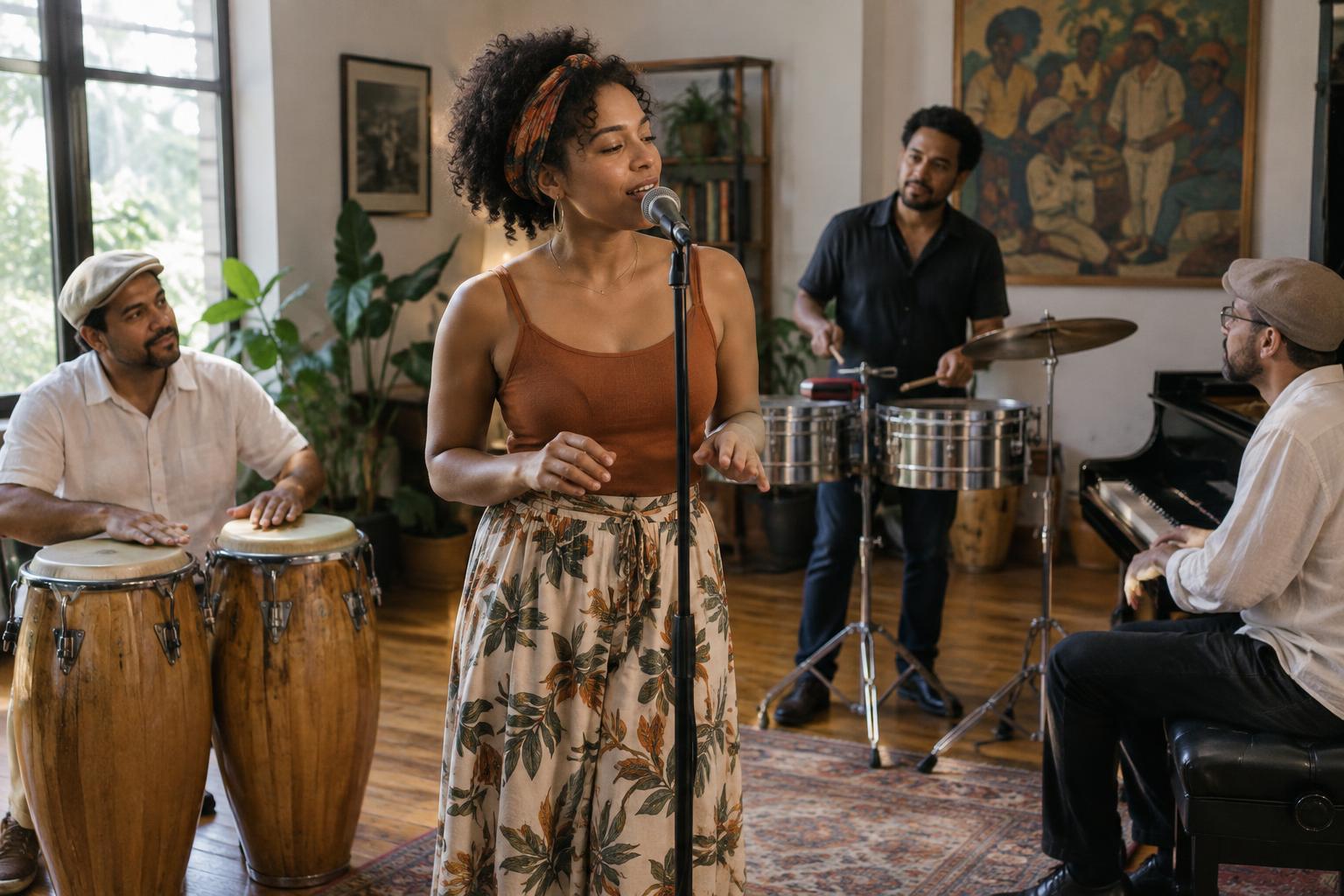
Arranging and ListeningA busy groove does not have to compete with the voice. Learn how to use register, rhythm, dynamics and rehearsal listening to keep a lead singer clear without losing the energy of the ensemble.
Read article · 4 min↗
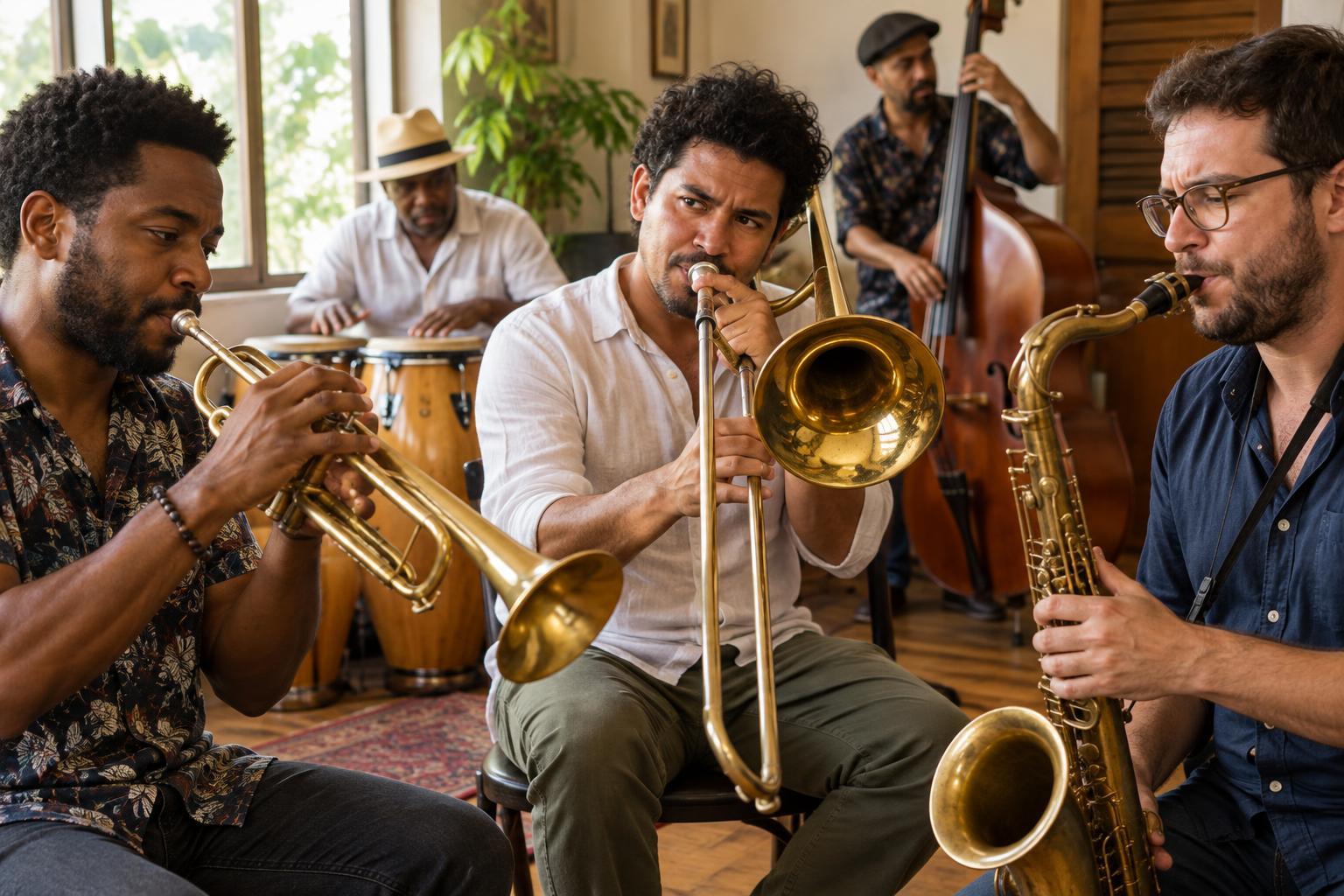
Arranging and ListeningA horn phrase can cut through a dance arrangement as one line, spread across octaves or open into harmony. Learn how to hear these textures, why an arranger might choose each one and how to try them without crowding the rhythm section.
Read article · 4 min↗
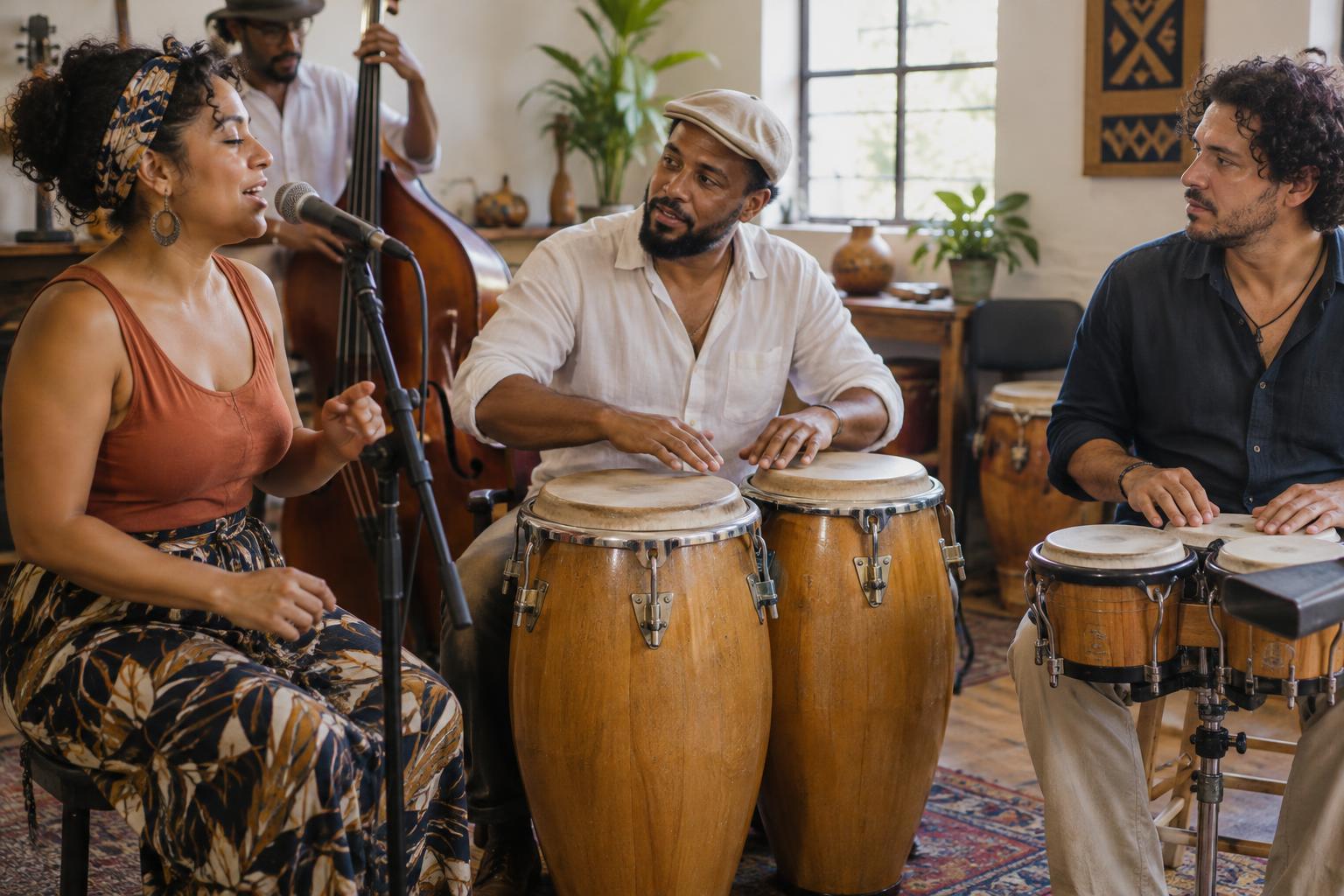
Arranging and ListeningA percussion part does not need to play throughout a song to matter. Learn how entrances, pauses, and changes in texture can clarify form, support singers, and make a groove feel newly alive.
Read article · 4 min↗
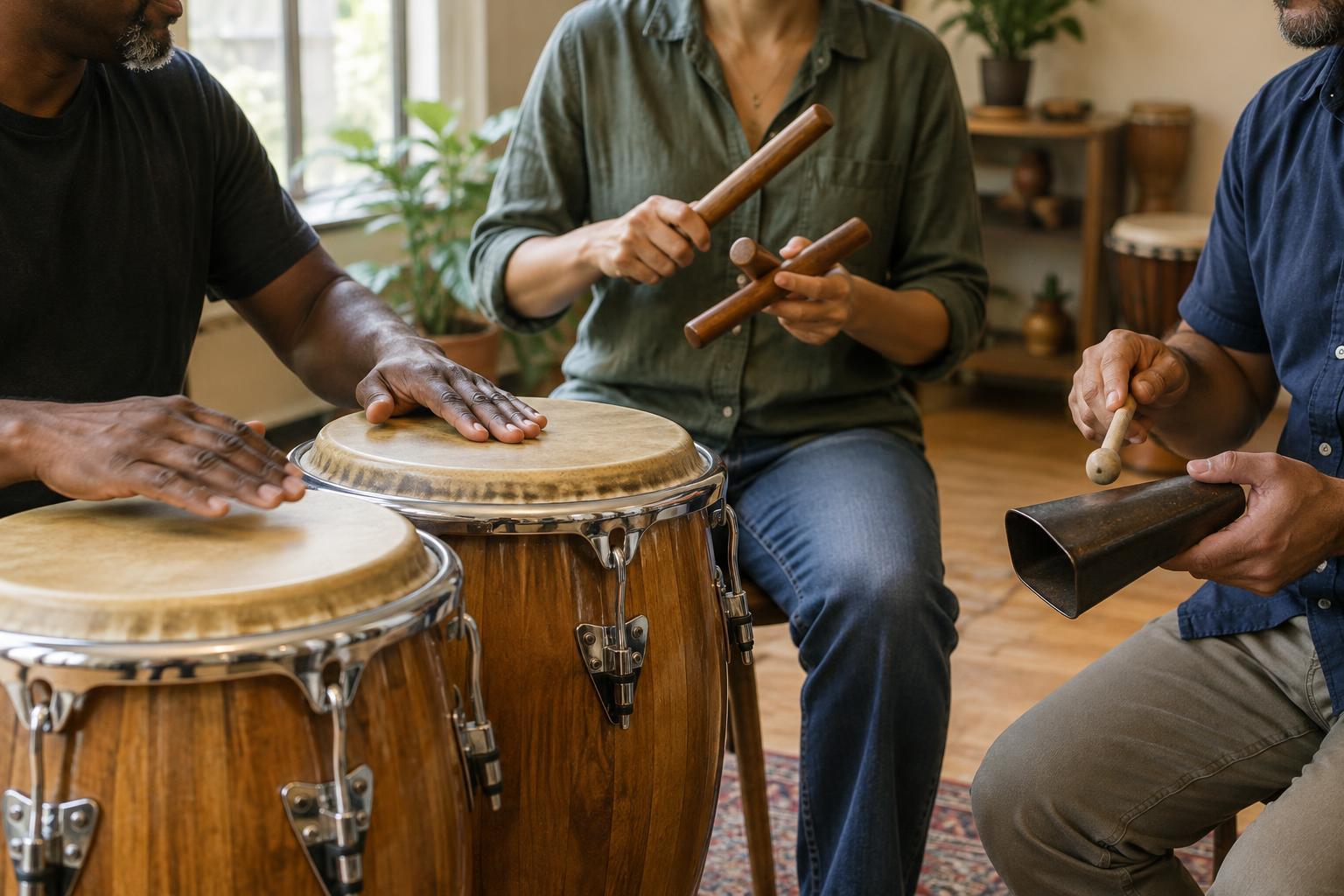
Arranging and ListeningA percussion ensemble can feel busy without every player doing the same job. Learn to hear the pulse, the notes between beats and the accents that shape a phrase, then try a simple listening and arranging exercise.
Read article · 4 min↗
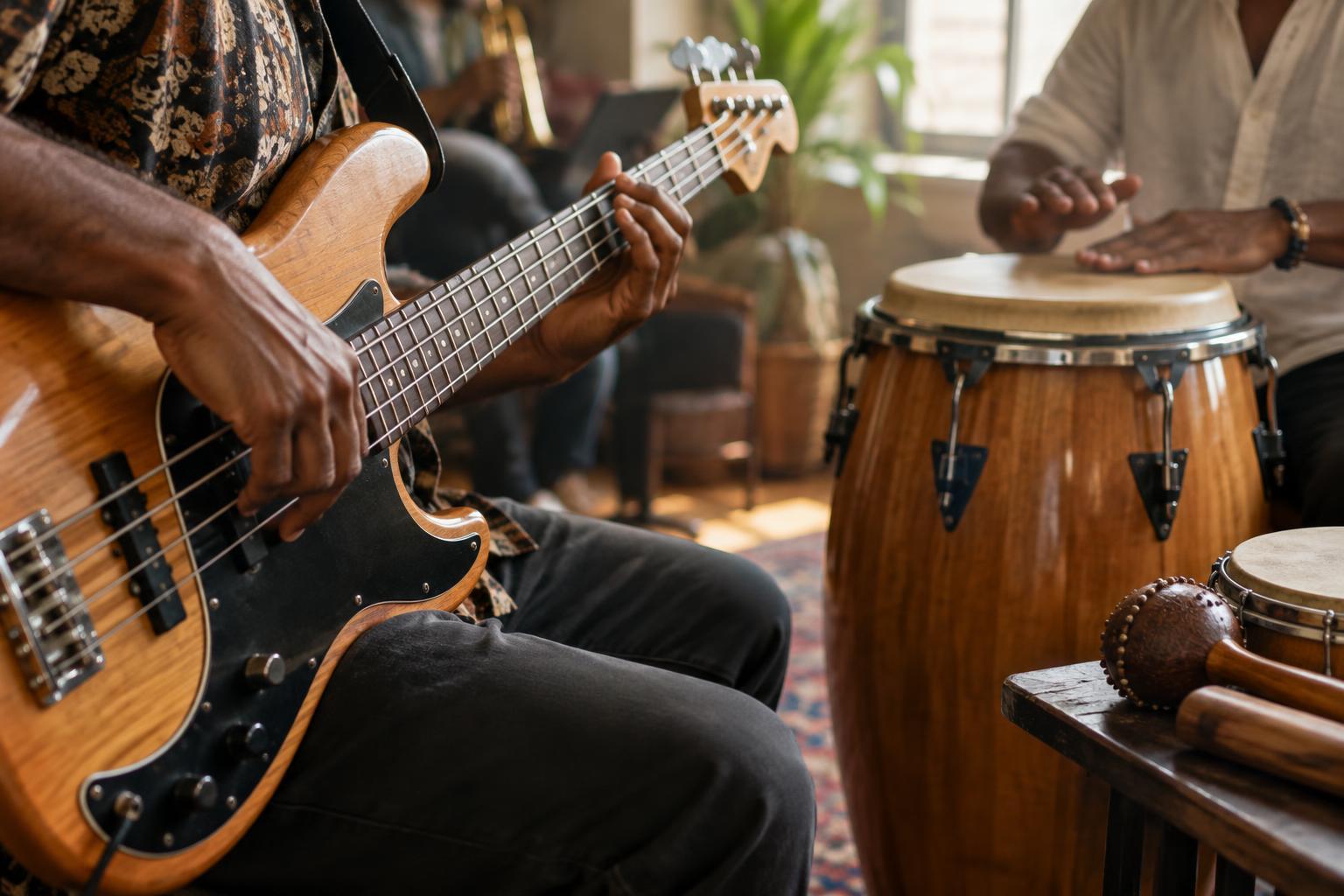
Arranging and ListeningA bass note can point toward the next measure by arriving just before beat one. Learn how to hear that anticipation, distinguish it from the downbeat, and use it thoughtfully when listening, practicing, or arranging.
Read article · 4 min↗

Arranging and ListeningA Cuban dance arrangement can change shape while its pulse keeps moving. Learn to recognize verses, coros and instrumental passages by listening for shifts in the voice, rhythm section, horns and overall texture.
Read article · 4 min↗