What a horn voicing changes
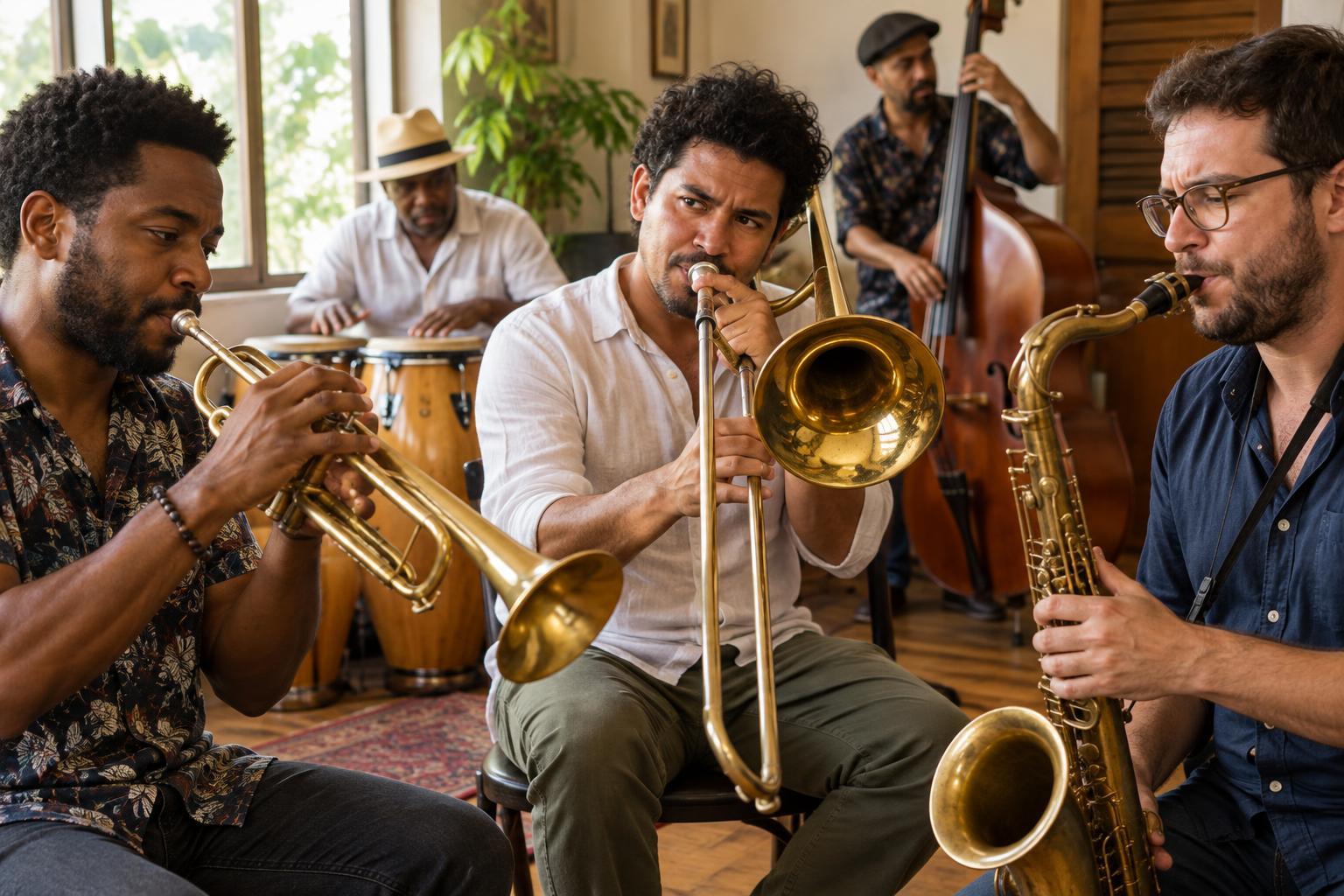
In Cuban dance music, horn parts do more than state a melody. A short phrase can answer a singer, mark a transition or add lift to a repeated groove. The notes matter, but so does their voicing: the way players divide those notes among instruments and registers. The same rhythmic figure may feel compact in unison, broad in octaves or richly colored in harmony.
There is no single horn-section sound shared by every Cuban dance style or ensemble. Instrumentation, musical era, repertoire and band size all affect the options. Some arrangements put horns at the center; others use them sparingly. Rather than treating one texture as the authentic choice, listen for what the phrase needs to accomplish alongside the voice, percussion, bass and piano.
Unison: one line, several voices
In a unison passage, players perform the same melodic line in the same register, or as close to that register as their instruments allow. They may read different written notes because transposing instruments sound at different pitches from what is written. What reaches the listener, however, is a shared line. Small differences in attack, tone and articulation can make it sound larger than a solo instrument without turning it into a chord.
Unison works especially well for a concise rhythmic hook or a clear response to a vocal phrase. Its strength is focus: the ear can follow the shape and timing without sorting through several pitches at once. To hear it, follow a horn entrance and ask whether the instruments move together at roughly the same height. Notice where they release the final note. A coordinated cutoff can make the silence after a phrase feel as intentional as the notes.
Octaves: a wider outline
An octave voicing keeps the melodic contour together but places some players higher or lower. Because the parts use the same note names at different registers, listeners can often perceive a single, expanded line rather than independent harmony. The lower voice can give the phrase weight while the upper voice adds brightness. This is a useful way to make a figure feel bigger without introducing extra chord tones.
Octaves also change the space a line occupies. A high trumpet phrase doubled by a lower horn may connect the top of the arrangement to its middle range; too much low-register activity, though, can compete with bass or piano figures. For a listening test, compare a horn phrase with its next appearance. If its rhythm and contour stay the same but the sound seems to stretch vertically, an octave doubling may be part of the change.
Harmony: color with a cost
A harmonized horn line gives players different pitches at the same time. Two parts might move together, separate briefly or hold a note while another part changes. Harmony can add warmth, tension or a sense of arrival, especially at the end of a phrase. It also asks more of the arrangement: added notes can blur a rhythmic accent if every instrument plays continuously.
An arranger can preserve clarity by choosing where harmony appears. A line might begin in unison, open into harmony on a longer note, then return to a single punchy figure. The pitches should fit the underlying chord and the line’s direction, but spacing and register matter too. Close notes in a low register may be harder to distinguish than the same notes placed higher. Listen for moments when the horns sound like a compact melodic shape and moments when you can hear distinct pitches inside it.
Practice hearing and shaping the choice
Choose a short horn response in a Cuban dance recording and listen several times. First tap its rhythm without trying to name the pitches. Next, sing the top line. On another pass, listen below it: do you hear the same line at a lower height, or notes that move differently? Finally, notice what happens immediately before and after the horns enter. A brief gap in the vocal or piano part may be what makes the horn figure clear.
To try the idea yourself, write a two-bar phrase that leaves room for the groove and for a singer’s imagined call. Play or sing it first as one line, then add an octave doubling, then a second line using notes from the supporting chord. Keep the rhythm identical at first so you can judge the change in texture. Check how each version sits against the percussion and bass. The best choice is not necessarily the fullest one: it is the one that makes the phrase legible and gives the dancers’ pulse room to breathe.