A style formed through exchange
Son cubano took shape in eastern Cuba through the work of musicians in communities where different musical practices met. Accounts of its beginnings often point to the countryside and towns of the Oriente region, but son was not invented in one place by one person. It developed as people played for gatherings, adapted songs and carried musical ideas between rural and urban settings.
Descriptions of son often mention Spanish-derived string instruments alongside African diasporic approaches to rhythm, singing and collective music-making. Those connections matter, but treating the style as two separate ingredients mixed together misses how Cuban musicians made something distinctive over time. Son is better heard as a living conversation: a lead voice meets a chorus, short instrumental phrases answer a singer, and repeating rhythms leave room for variation.
The sound of an early son ensemble
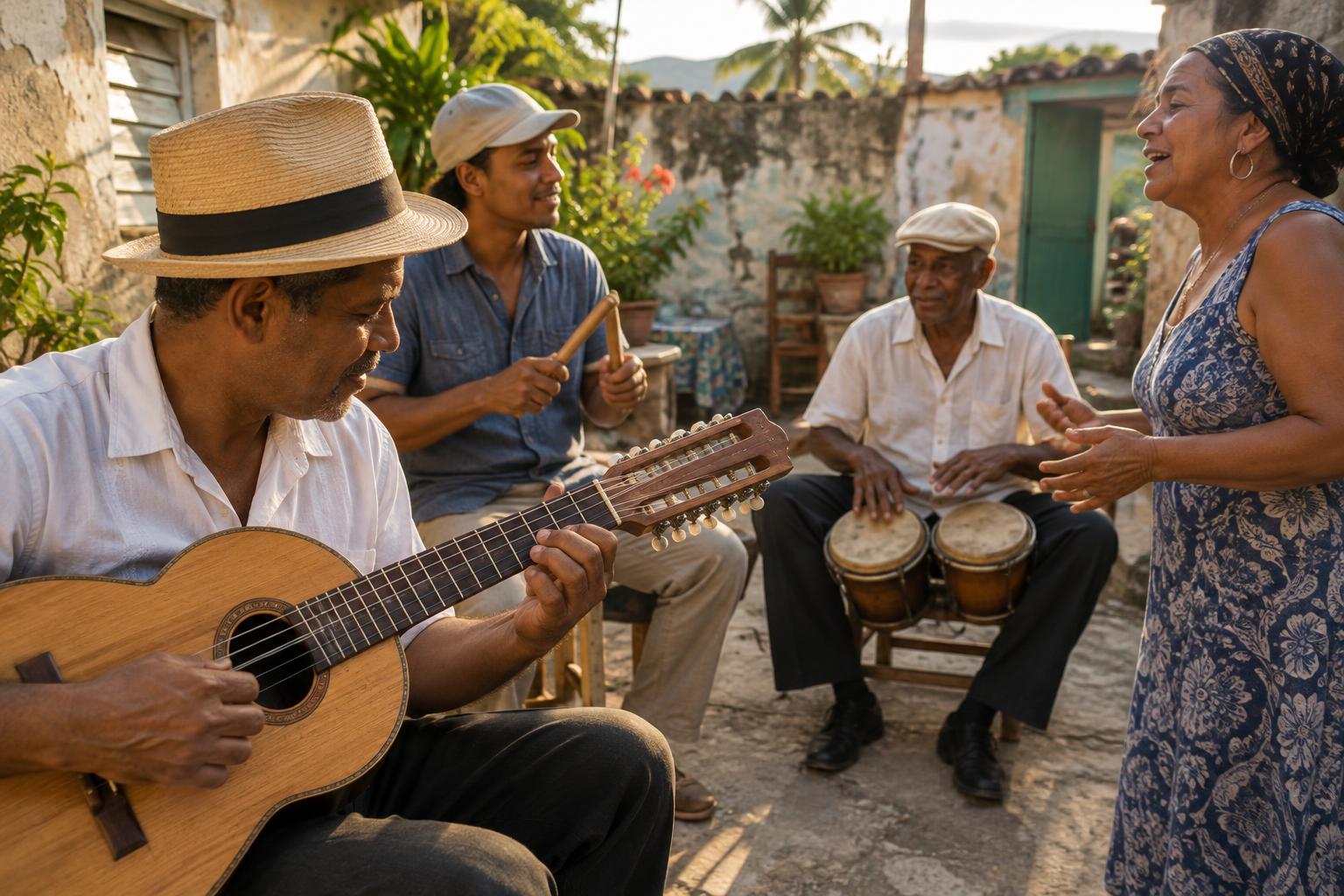
The tres is one of son’s characteristic voices. This small, guitar-like instrument has strings arranged in pairs and can supply bright, interlocking patterns rather than simply strumming chords. A guitar may provide a steadier harmonic foundation, while a bass voice or instrument anchors the low end. Early ensembles used different ways of producing that bass part, including instruments such as the marímbula or botija; there was no single fixed lineup.
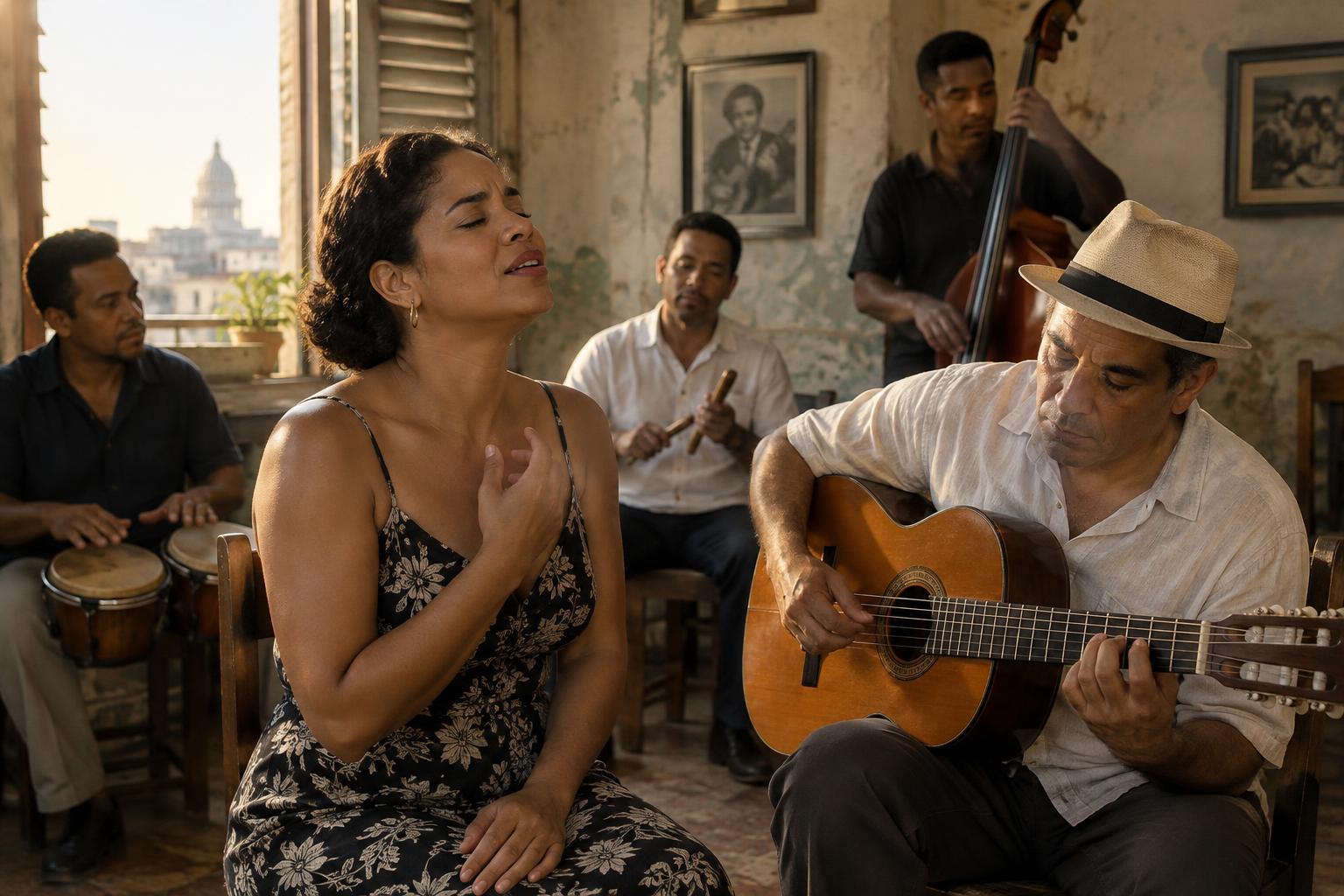
Percussion helps give the music its forward motion. Claves can mark a recurring pattern, maracas add a continuous texture, and bongos contribute accents and conversation with the other parts. In many son performances, no instrument carries the entire groove alone. Try listening first to one part, then to the spaces around it: the lift of a tres phrase may be clearer when you notice how the bass and percussion make room for it.
Clave as a guide, not a cage
Clave can refer both to a pair of struck sticks and to a guiding rhythmic pattern. A commonly taught son clave spans two measures: one side has three strokes and the other has two. Musicians describe its direction as 3-2 or 2-3, depending on which side comes first. The pattern may be sounded plainly on claves, suggested by other instruments, or left for the players and listeners to feel.
For a simple listening exercise, tap a steady beat through two measures while a recording plays. Then listen for recurring accents that seem to connect phrases across those measures. Do not worry if you cannot immediately pick out every clave stroke. The useful question is how the vocal line, bass and percussion relate to the repeating cycle. Clave helps organize their exchange; it does not mean every note must fall directly on one of its strokes.
From song to shared response
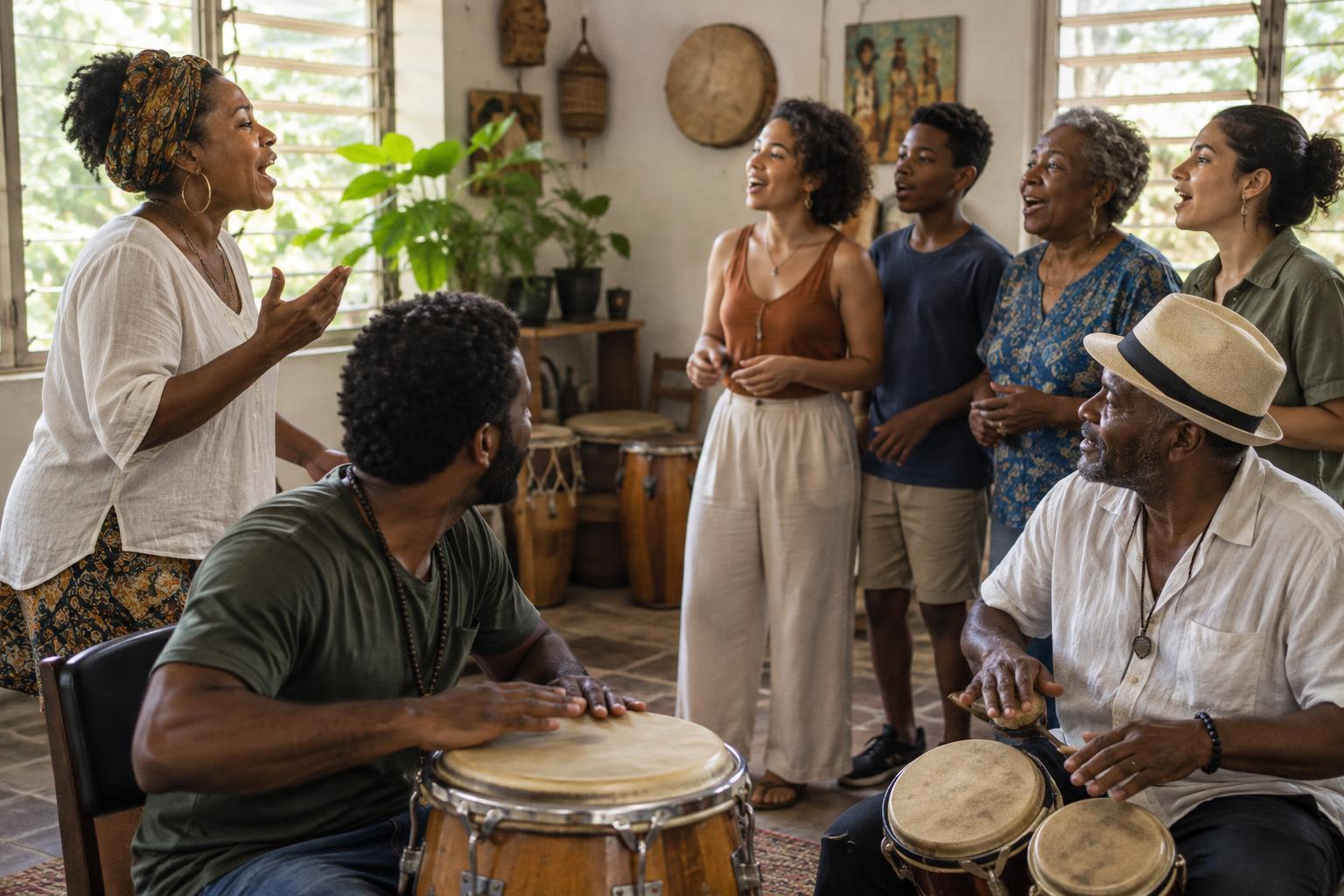
Many son arrangements create a contrast between a more narrative opening and a section built around a repeating chorus, often called the montuno. In that later section, the coro repeats a phrase while a lead singer, or pregonero, responds with changing lines. Instrumental parts can also grow more insistent, making the arrangement feel open to dancing and improvisation. Not every performance follows the same sequence, so listen for the shift in interaction rather than expecting a rigid template.
This structure shows why son is more than a collection of rhythms. Repetition gives the group common ground, while each response can bring a new accent, phrase or idea. To hear the arrangement develop, choose one song and note when the chorus first enters. On a second listen, follow only the lead singer’s responses. On a third, notice whether the instruments change their patterns around those voices.
How son traveled and changed
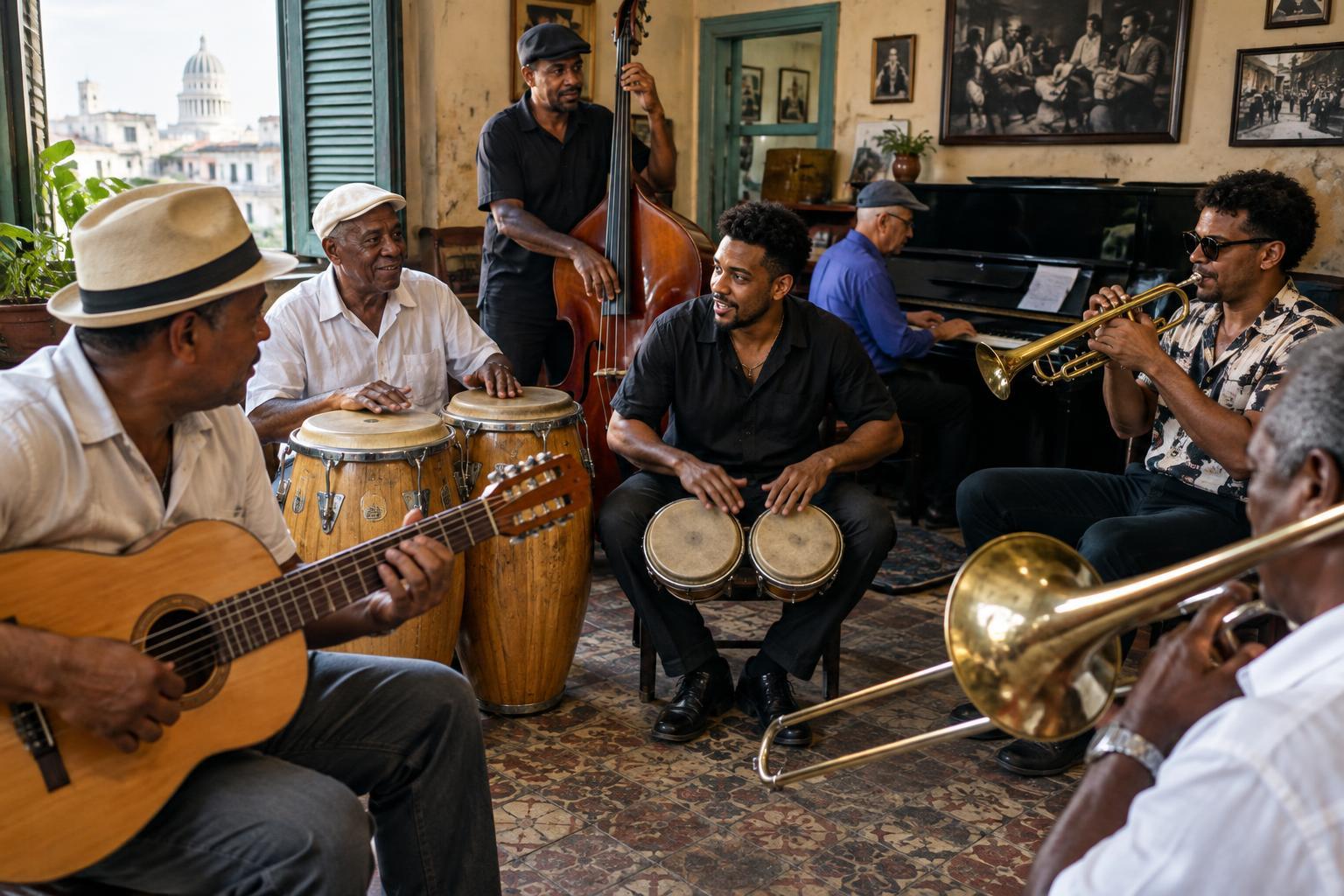
As musicians moved between eastern Cuba and Havana, son entered new performance settings and reached wider audiences. Ensembles expanded and adapted; the trumpet became an important voice in many urban groups, alongside the strings, voices and percussion. Recordings and broadcasts helped carry particular sounds farther, but they did not freeze the music into one definitive form. Musicians kept reshaping son for their audiences and fellow players.
Son’s influence can be heard in later Cuban music and in styles developed beyond Cuba, yet it is worth listening to son on its own terms. Start with the relationship among a steady pulse, an interlocking tres part and a responsive chorus. Then notice what varies from one performance to another. That balance of shared patterns and individual choices offers a way into son’s history without reducing a rich tradition to a single beat or origin story.