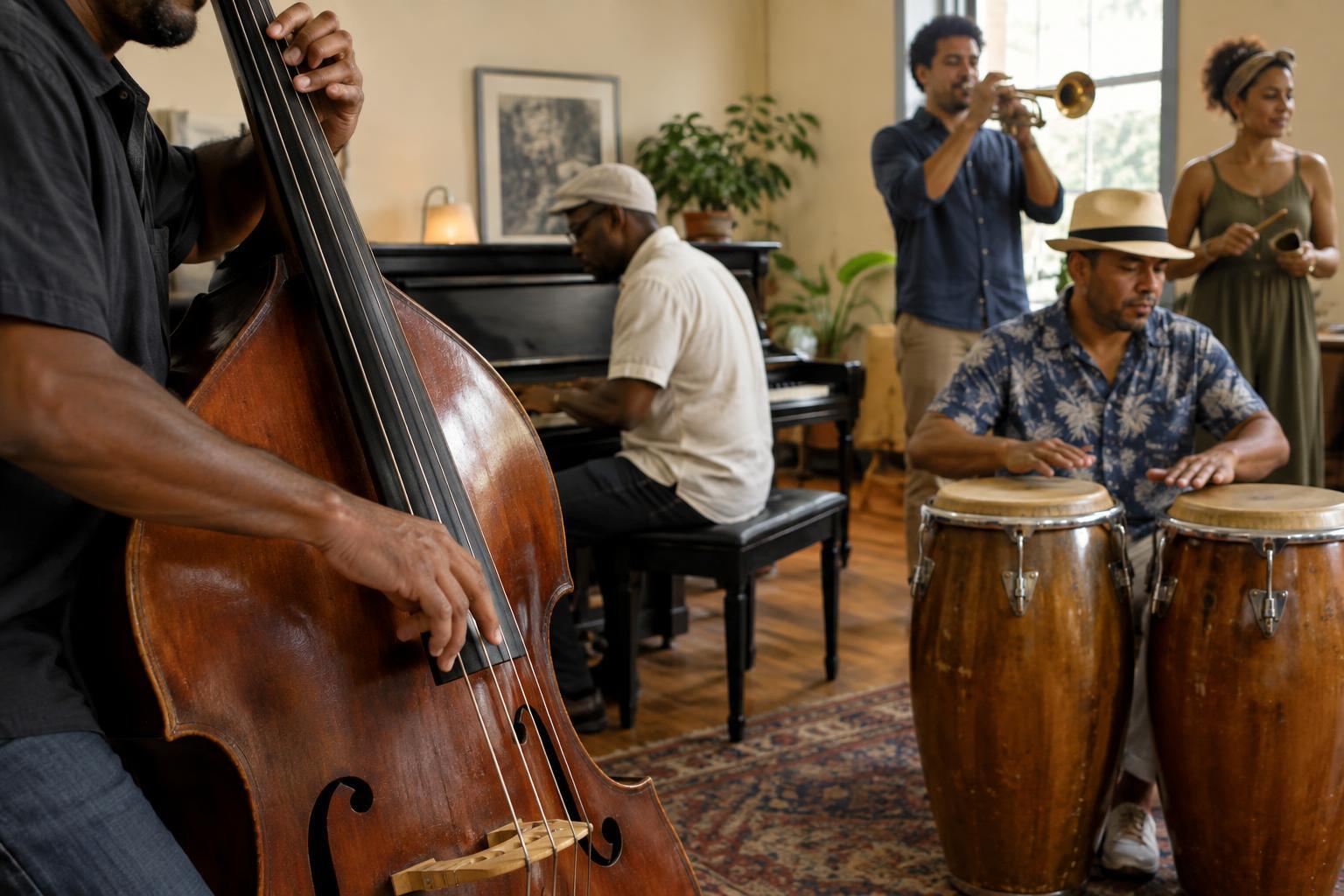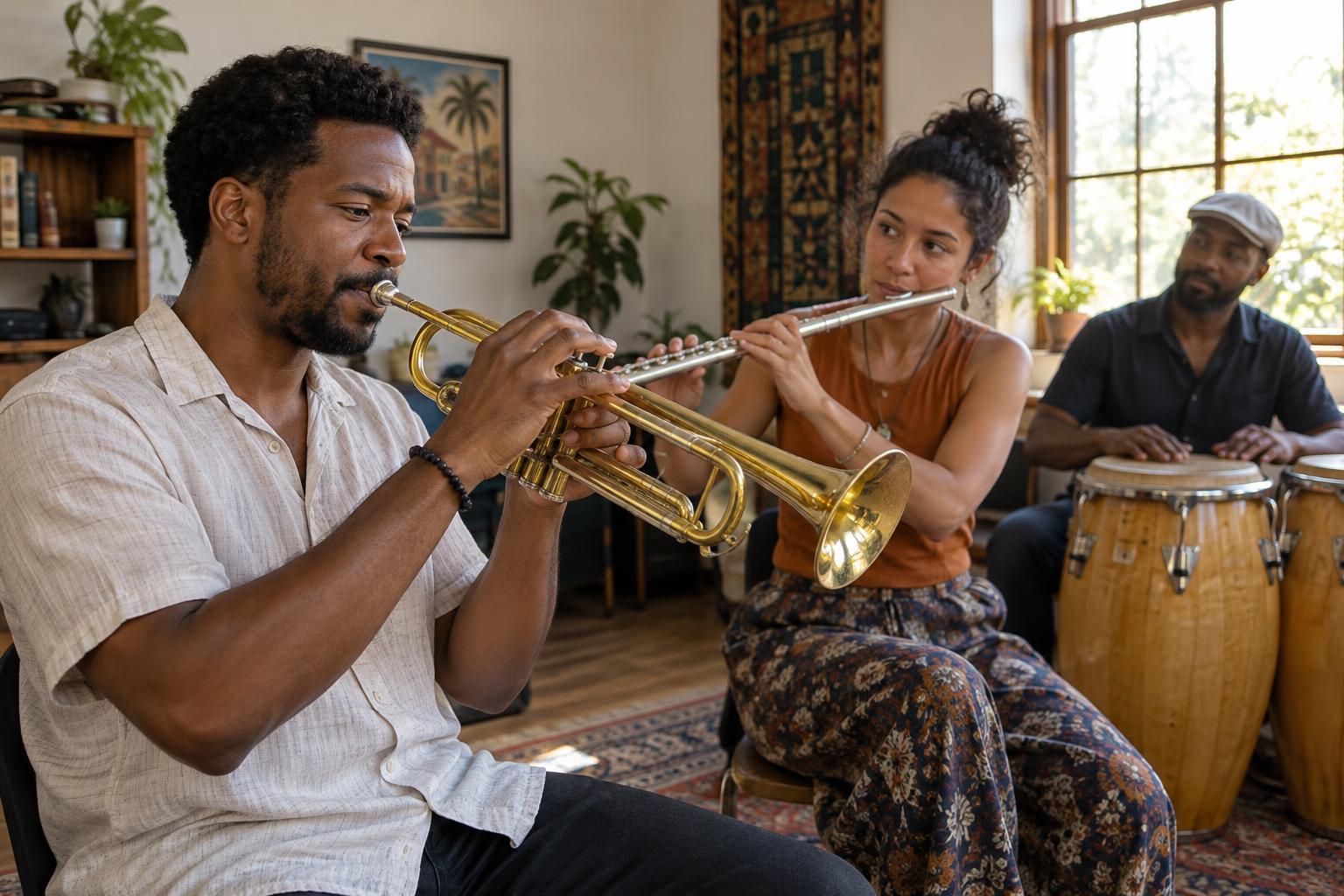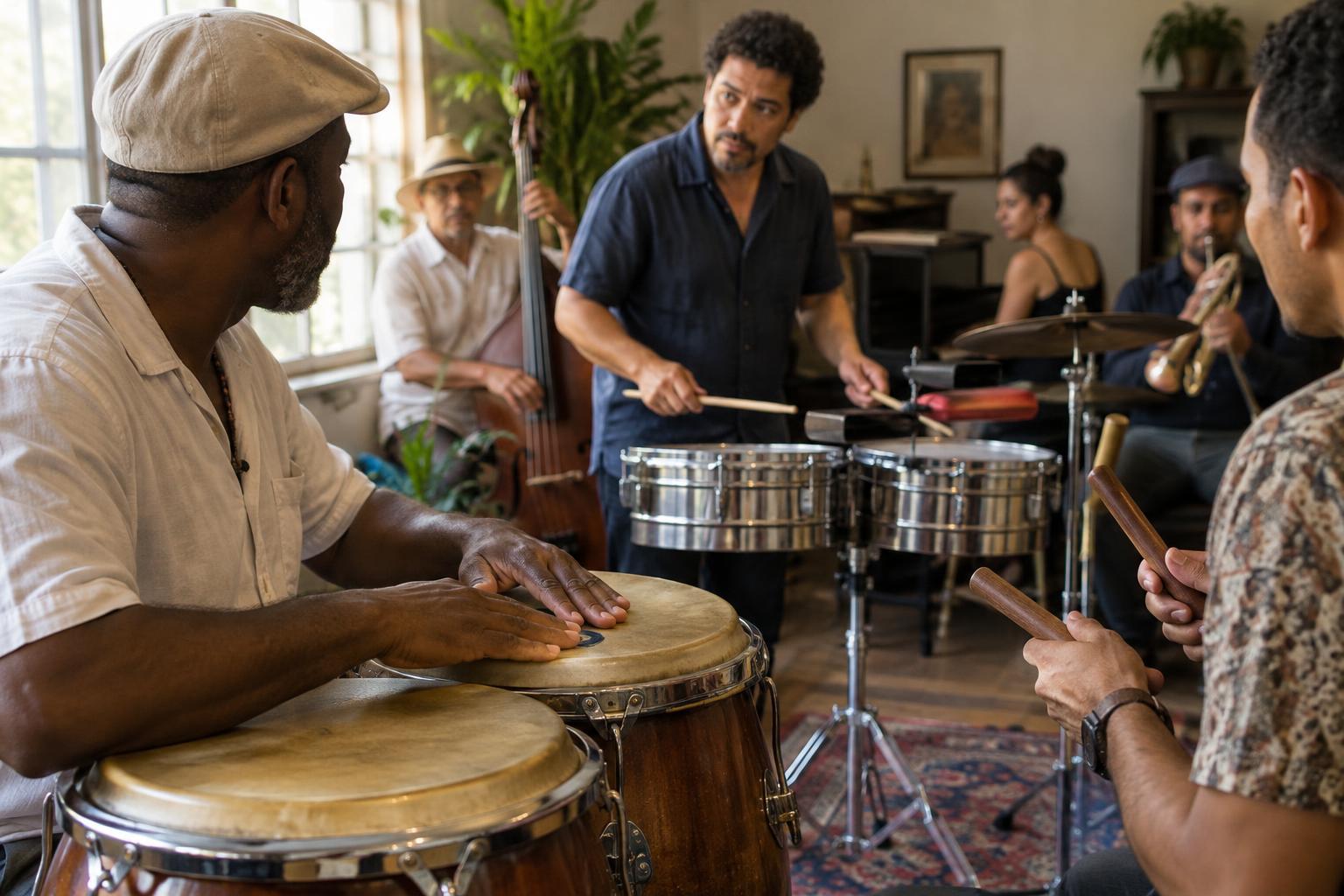
Listen for preparation, not just arrival
A section change is easy to notice after it happens: a chorus begins, the horns enter, or the groove becomes more intense. The useful listening skill is hearing the preparation. Musicians may clear space, repeat a short figure, add a fill, or shift the energy so the next section feels deliberate rather than sudden.
Think of these signals as cues, not fixed rules. A cue might last several measures or only a beat. It may come from a singer, a percussionist, an arranger’s written figure, or several players listening to one another. When you recognize one, ask two questions: What is about to end, and what seems ready to begin?
Notice what enters, leaves, or changes its role
Texture is one of the clearest guides. A band may thin out before a new section, leaving a voice and a few percussion sounds exposed. It may then bring back the full ensemble at once. The reverse can also happen: a new bell pattern, a stronger bass figure, or horns playing together can make a section feel larger without changing the underlying pulse.
In many Afro-Cuban dance-music arrangements, a move from a more narrative vocal passage into call-and-response can be especially audible. A repeated coro gives the listener a phrase to recognize, while a lead singer’s responses vary around it. Repeated piano or bass figures may help establish the new space. These are useful patterns to listen for, but they are not a checklist that every song follows.
Hear fills, breaks, and repeated figures as signposts
A fill briefly departs from an established pattern. Because your ear has learned what usually happens, even a small variation can attract attention. A percussion fill might lead into a new phrase; a horn figure might answer the singer and set up the next entrance. Try to hear where the fill lands, not only how busy it sounds. Its final note or accent often points toward the next downbeat.
A break works through contrast. Players may stop together, leave a short silence, or strike a shared accent before the groove resumes. Repetition can signal a turn too: a short figure played several times may build expectation until a new section answers it. Not every fill or break announces a structural change, so check what follows. Does a new pattern settle in, or does the music return to what you were already hearing?
Keep the pulse while the arrangement moves
The most helpful anchor is the steady pulse beneath the activity. Tap it quietly as you listen, especially during a stop or fill. If you lose it whenever the band changes texture, the new entrance may feel surprising even when it has been carefully prepared. Once the pulse feels secure, listen for where phrases begin and end. Many cues make sense as the close of one phrase and the invitation to another.
Clave can help orient listening in music where it is part of the rhythmic organization, but it should not be treated as a universal audible warning signal. It may be played explicitly, implied by other parts, or difficult for a new listener to pick out. Rather than forcing every cue into a counting exercise, notice how accents and entrances relate to the ongoing groove. Let the whole ensemble teach you where the turn occurs.
Practice predicting the next section
Choose a recording with several contrasting sections. On the first listen, simply mark moments when the music changes: a voice gives way to a chorus, an instrumental passage begins, or the ensemble drops back. On the second listen, start shortly before each moment and identify the earliest clue you can hear. Was it a fill, a repeated line, a pause, or a change in who was playing?
Next, pause the recording just before a suspected turn and predict what will happen. You do not need to name the section correctly; predicting that the voices will enter or that the texture will grow is enough. Play through the transition, then listen again while tapping the pulse. With repeated listening, the goal is not to guess every arrangement. It is to hear how musicians prepare, coordinate, and give shape to a change together.