Start with what the styles share
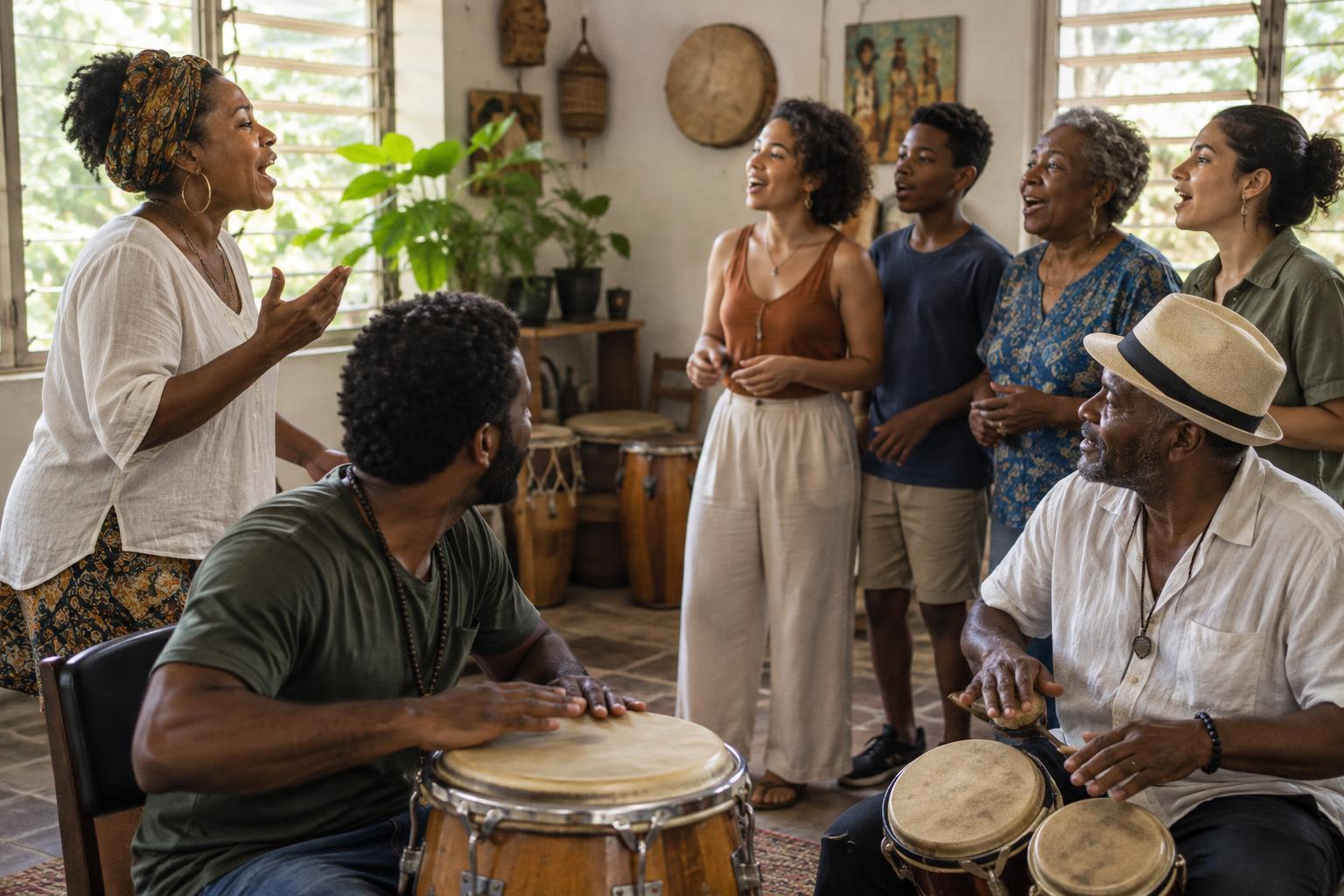
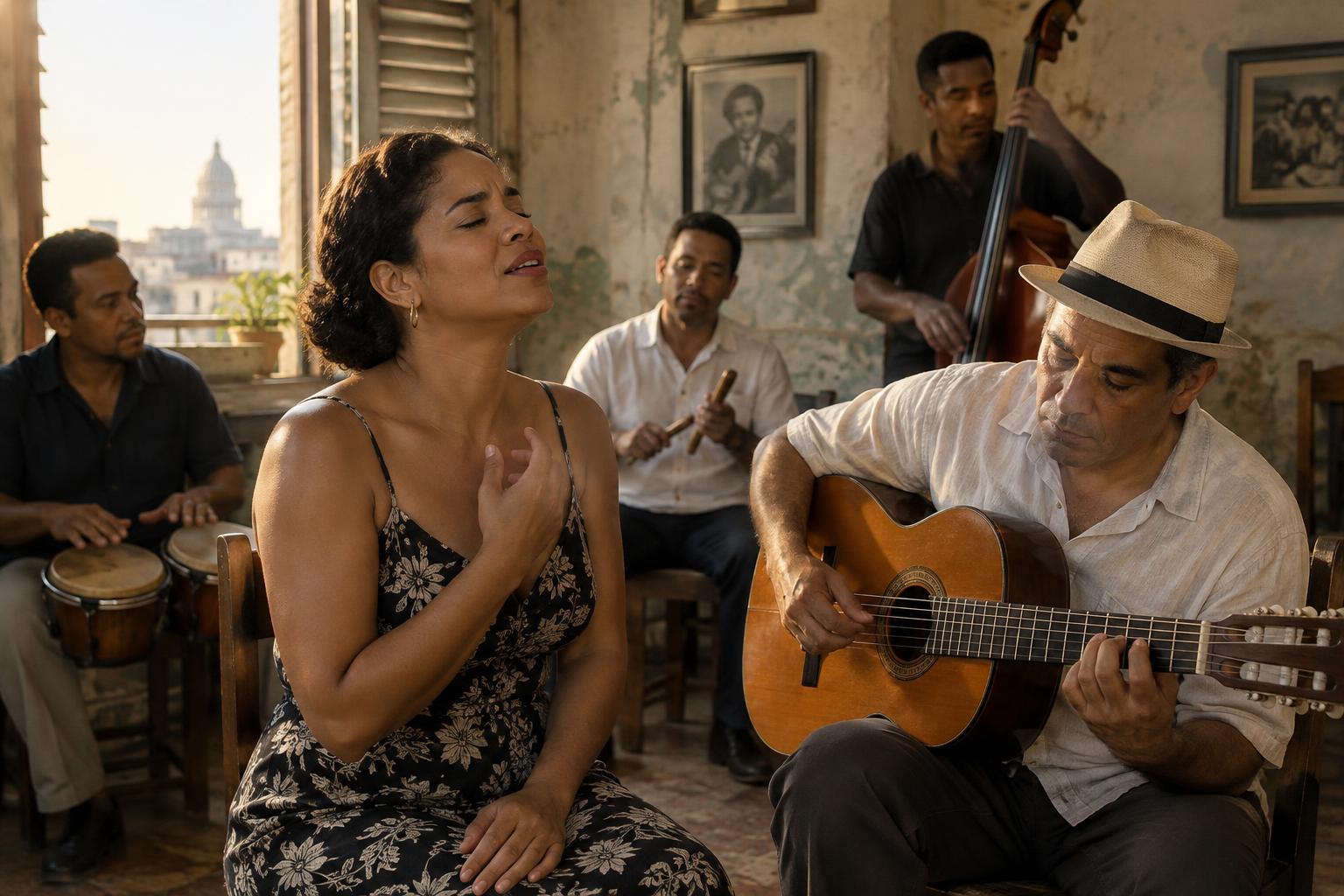
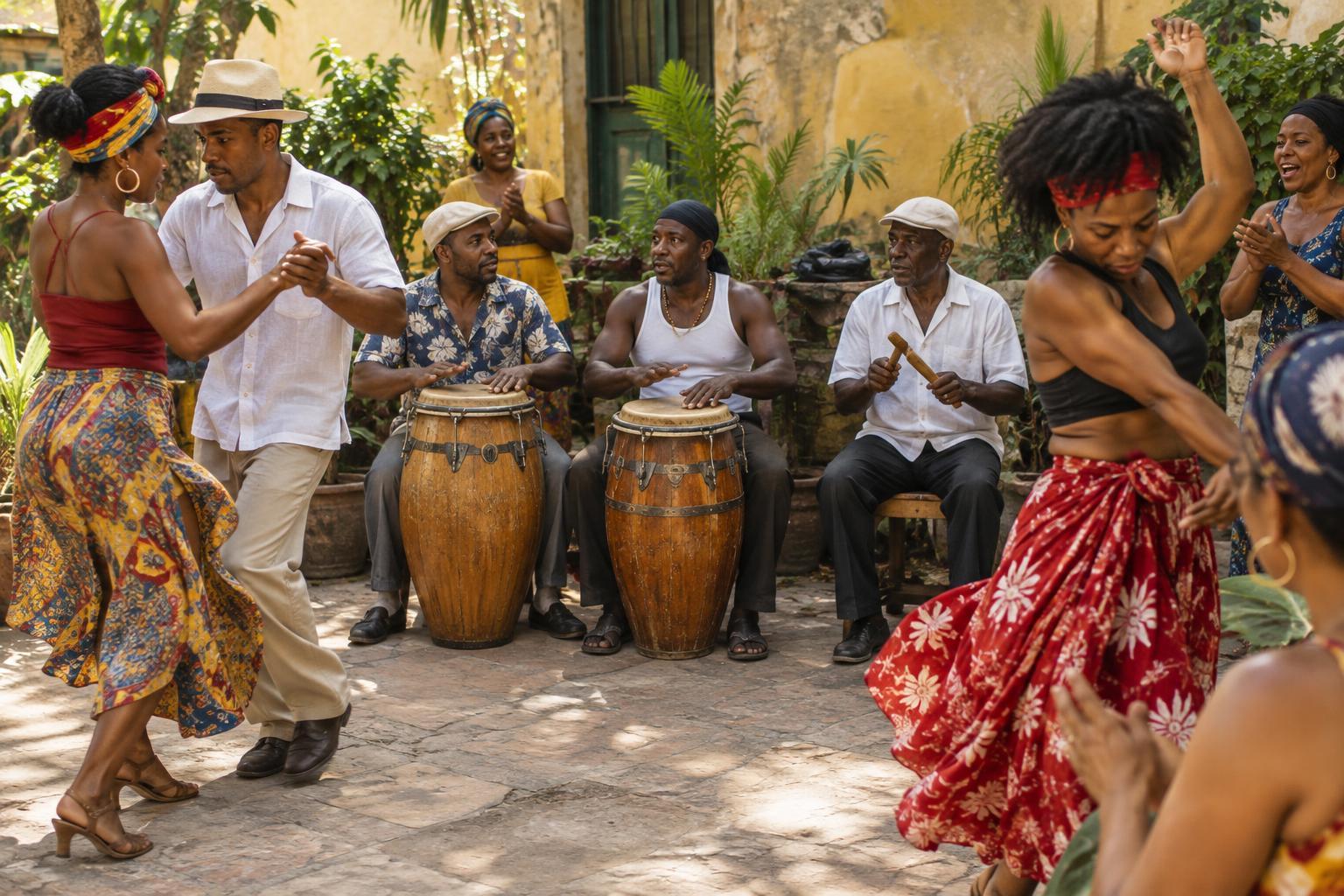
Cuban rumba is a family of Afro-Cuban music and dance traditions shaped in community settings. It is distinct from the ballroom dance also called rumba. In yambú, guaguancó and columbia, singing and percussion work together with movement: a lead singer may introduce a phrase, a chorus answers, and a higher-pitched drum responds to what a dancer does. The music is not simply a fixed beat beneath a performance; the participants listen and react to one another.
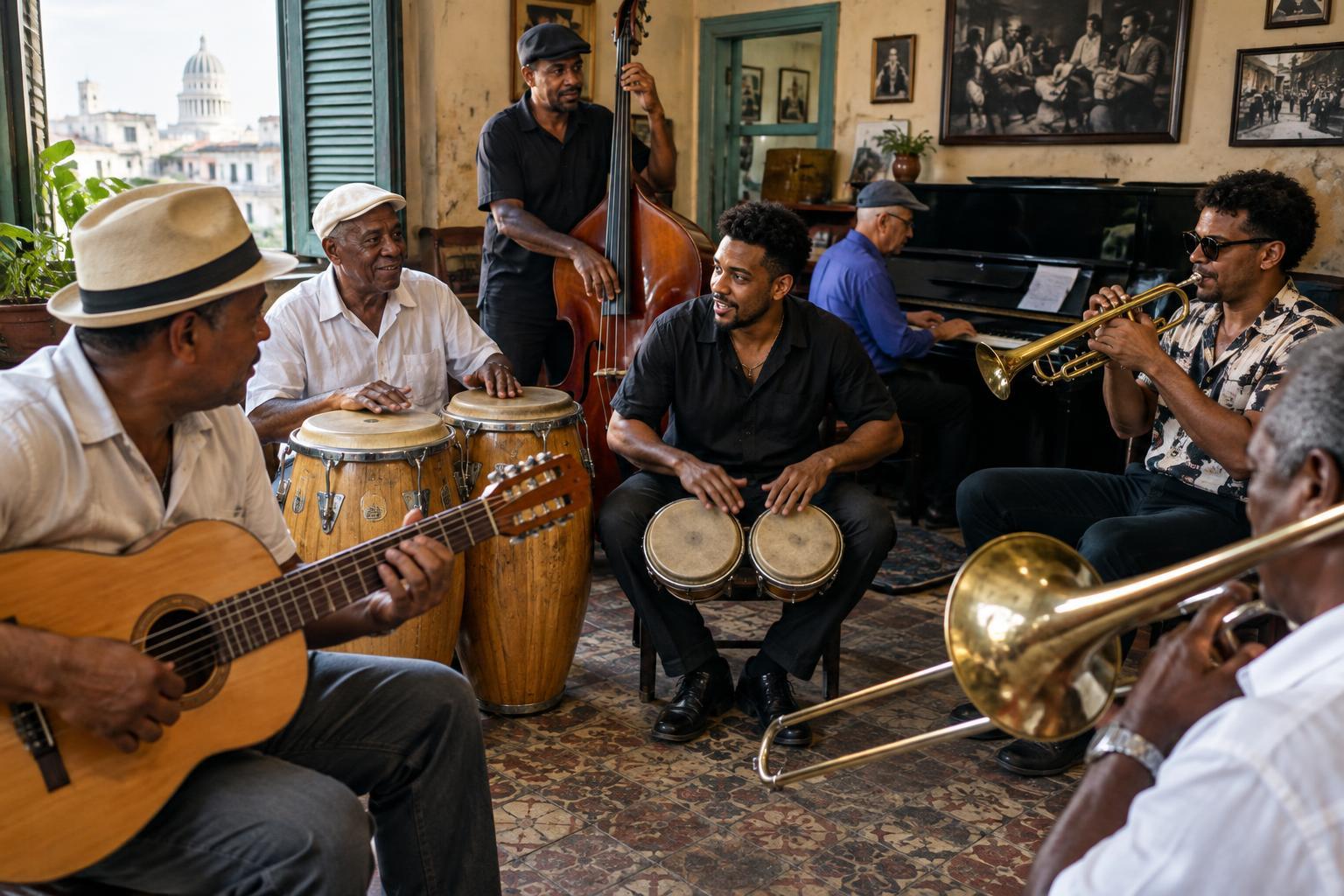
You may hear claves, sticks striking a hard surface, box drums or congas, depending on the setting. A repeating clave pattern helps organize the rhythm, while other parts interlock around it. Instruments alone rarely identify a style with certainty, because ensembles and arrangements vary. To tell the three apart, listen for a combination of pace, rhythmic feel, vocal exchange and the kind of dancing the music invites.
Yambú: space and measured movement
Yambú often has a more unhurried, measured character than guaguancó or columbia. Its pace leaves room to hear the separation between percussion parts and to notice how singers stretch a phrase before the chorus replies. The dance is typically a restrained partner exchange, with small gestures and a sense of composure rather than a display of speed.
Try listening without counting at first. Notice whether the movement seems to settle into the rhythm instead of pressing forward. A recording need not be slow by a particular number of beats to be yambú, and a relaxed passage in another style does not automatically become yambú. The broader character of the singing, drumming and dance is the better guide.
Guaguancó: a lively partner conversation
Guaguancó commonly feels more driving than yambú. In its partner dance, two people play out a lively exchange of approach and response. One characteristic gesture is the vacunao, a symbolic movement toward the partner that the partner may evade or answer. Understanding that interaction helps explain why the higher drum can sound so alert: its accents may follow, anticipate or punctuate the dancers’ gestures.
For a listening clue, find the steady repeating parts first, then focus on the drum that varies its phrases above them. Does an accent sound like a response to a sudden turn or pause? Singing also matters: the lead voice and chorus can build momentum together with the percussion. Avoid identifying guaguancó solely by a fast tempo or a particular drum sound; its partner-dance conversation is a stronger clue when you can see it.
Columbia: a different rhythmic feel and solo dance
Columbia is commonly associated with a quicker, more athletic solo dance. A dancer may challenge the drummer with footwork, changes of level or abrupt stops, and the drummer responds in real time. Although columbia has historically been associated with male dancers, that history should not be mistaken for a rule about who can dance it.
Its rhythmic feel is often described as compound, with a six-pulse framework that can feel different from the more even stepping sensation a new listener might hear in yambú or guaguancó. Do not assume every drum accent marks a main pulse. Instead, listen for where a repeating cycle comes around again, then hear how the variable drum part plays across it. If you are watching a performance, the solo dancer’s exchange with the drum is often the clearest sign.
A simple way to practice hearing the difference
Choose one performance of each style and make three listening passes. First, follow only the voices: where does the lead singer enter, and when does the chorus take over? Second, track a quiet repeating percussion part while letting the more changeable drum phrases sit above it. Third, watch the dancers, if video is available. Is the movement measured and partnered, lively and partnered, or centered on a solo dancer’s exchanges with a drummer?
Then return to the same performances without looking at their labels. Describe what you hear before naming a style: “spacious partner movement,” “animated partner exchange,” or “solo dancer over a compound-feeling cycle.” These are starting points, not tests with one infallible answer. Rumba is a living practice, and performers make choices within each style. Listening for relationships among singers, percussionists and dancers will take you further than memorizing a single tempo or pattern.