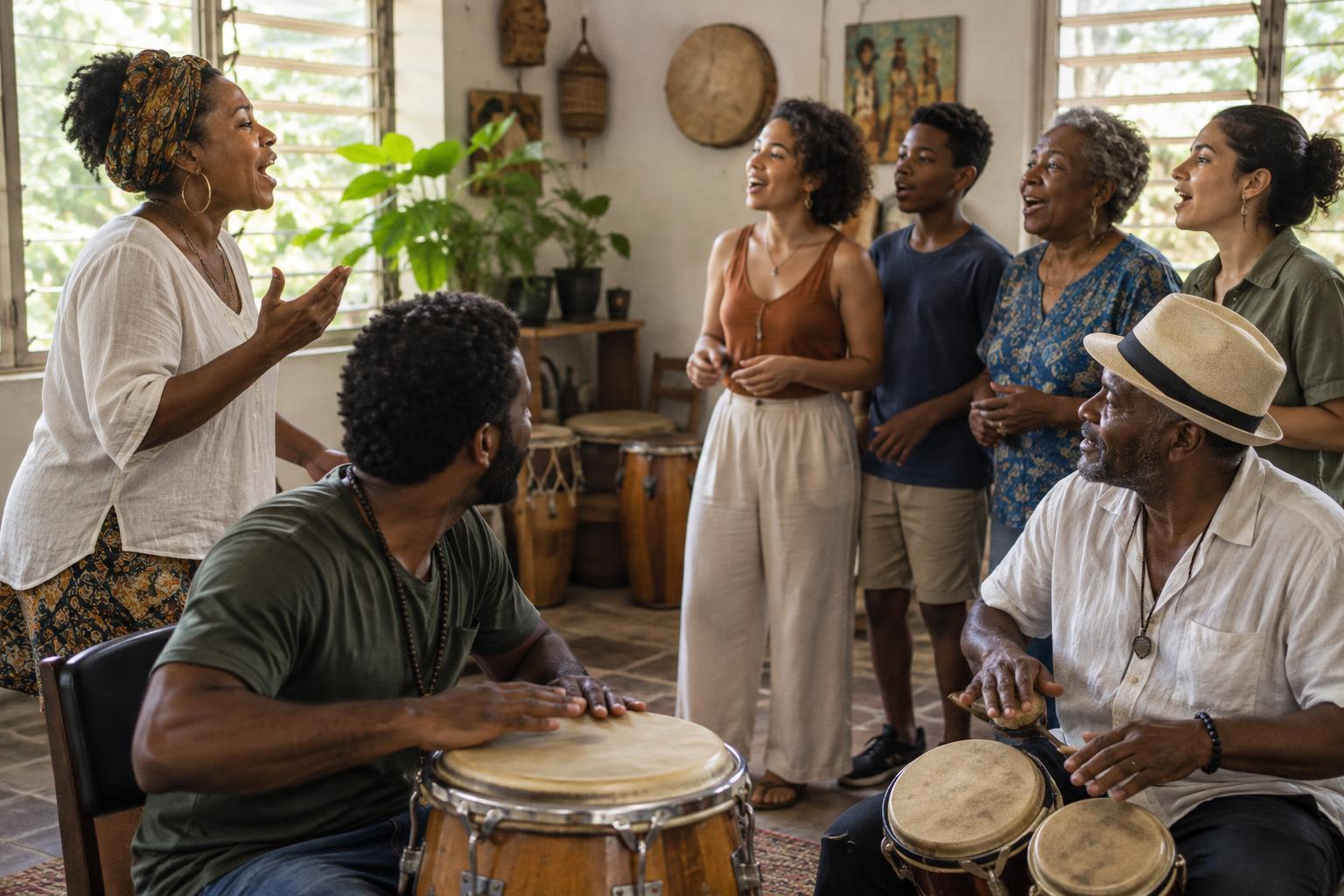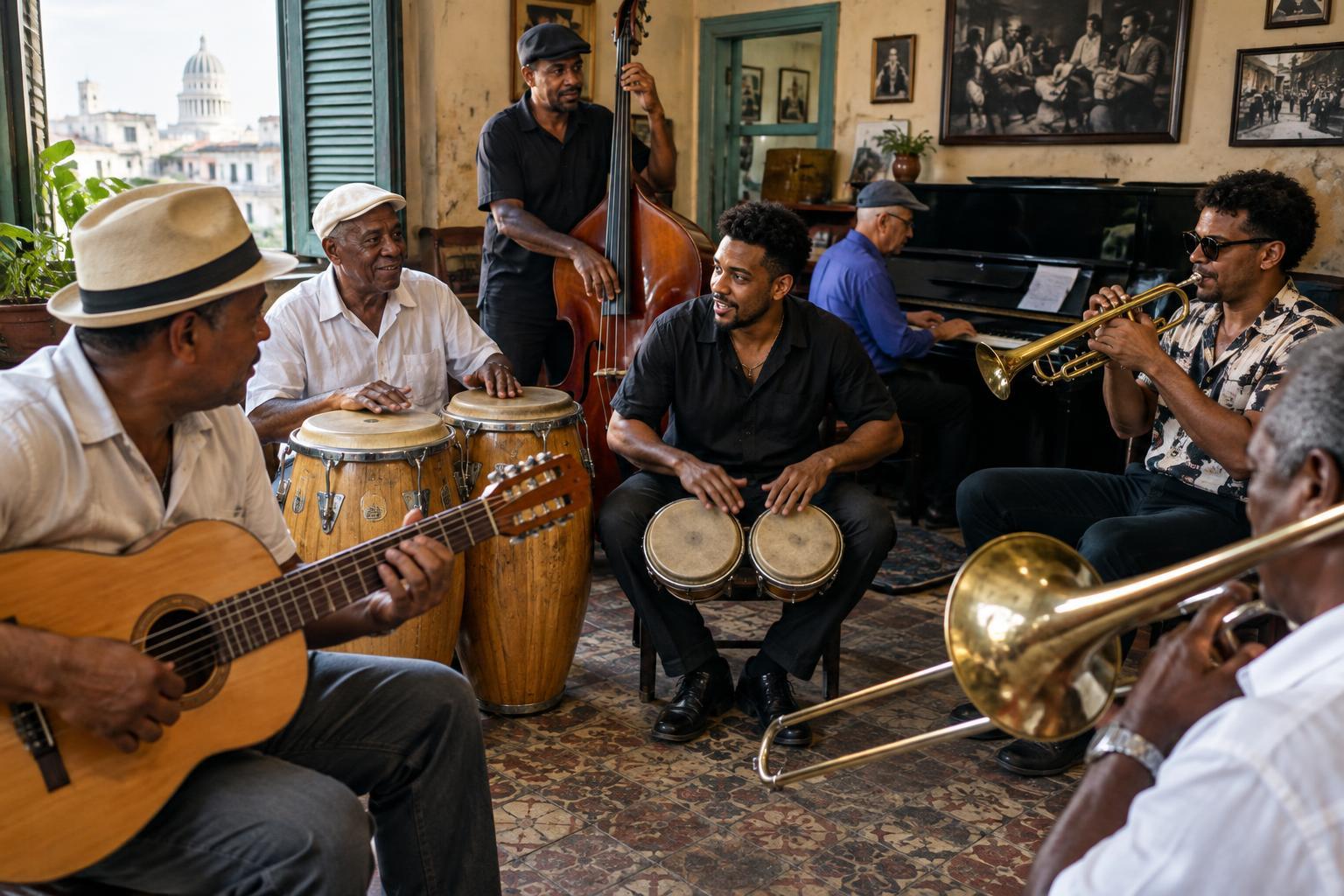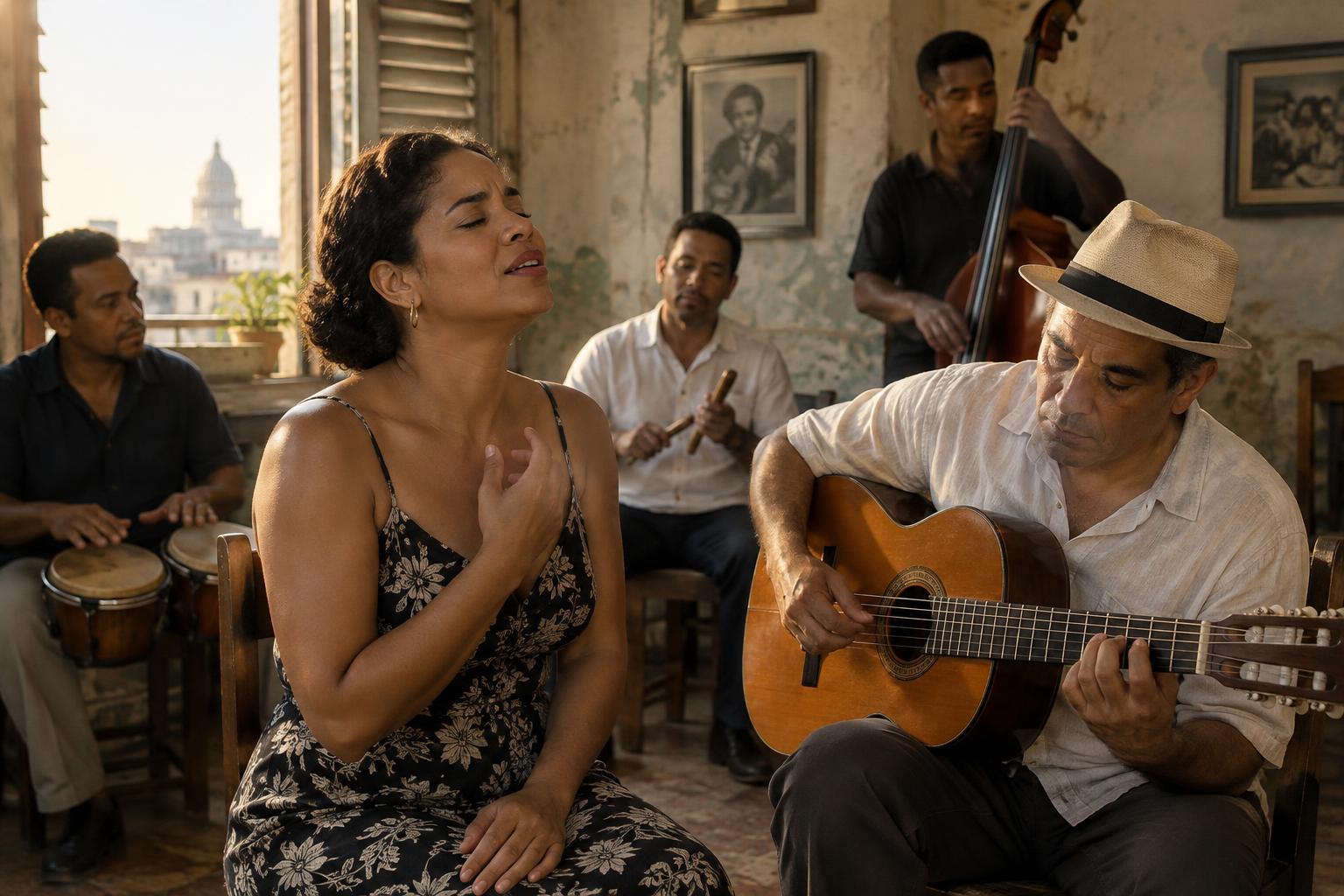
Before the dance craze, there was a musical conversation
Mambo is often introduced through its dramatic public image: fast dancers, bright brass and a band that seems to surge forward at every turn. That image captures some of the excitement, but it can hide the Cuban musical ideas underneath. Mambo grew through musicians’ experiments with rhythm, melody and ensemble texture. It was not simply a dance beat invented for a ballroom.
One important setting was the Cuban danzón, a social dance music whose ensembles could move through contrasting passages. Musicians associated with the danzón tradition, including Orestes López, Arcaño y sus Maravillas and Israel “Cachao” López, helped develop more rhythmically open and driving passages. The word “mambo” came to be associated with this kind of musical energy, though its meaning has varied across repertories and communities. It is useful to hear mambo as a developing set of musical approaches rather than as one sound that appeared fully formed.
What makes the rhythm feel alive?
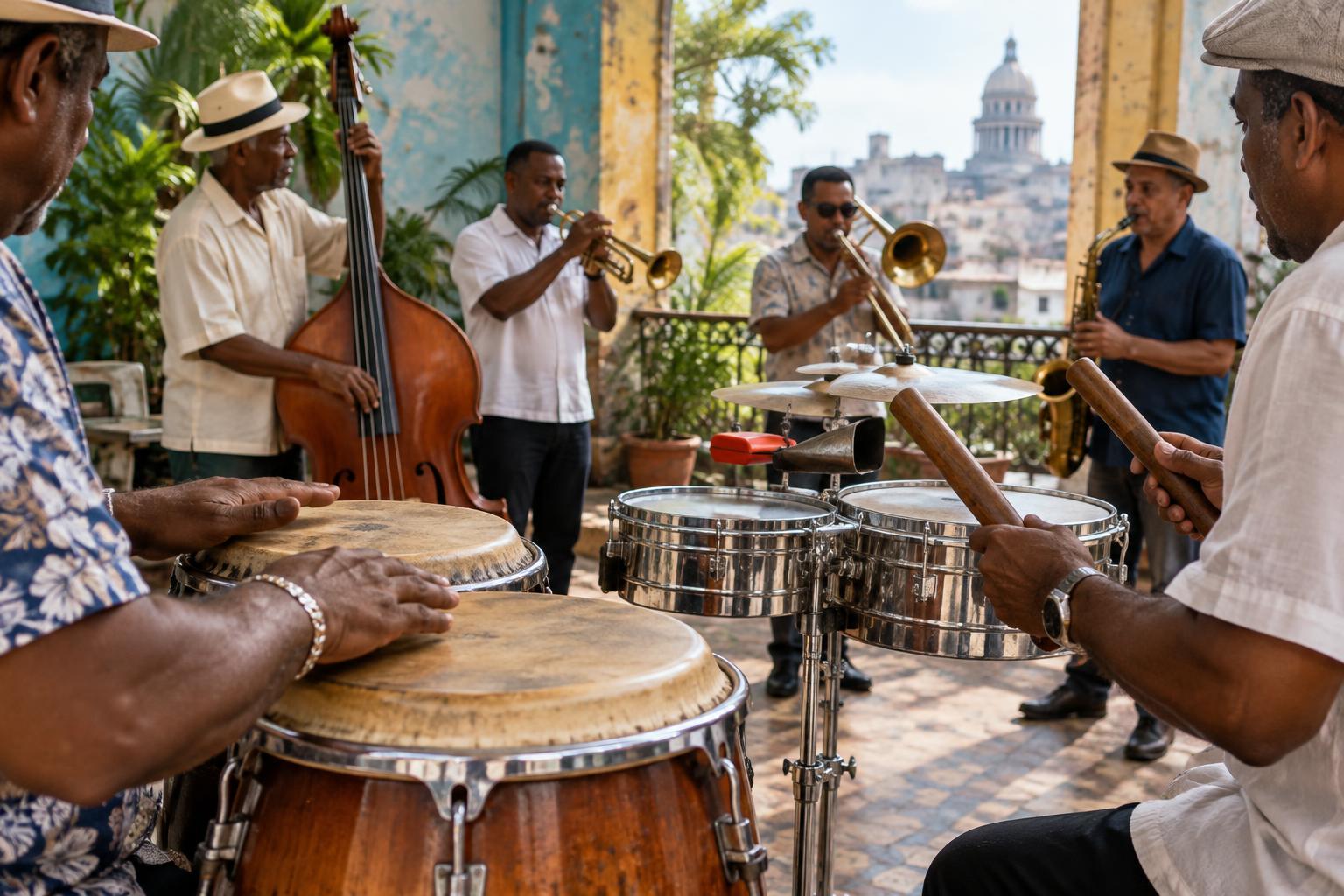
Much of mambo’s momentum comes from interlocking parts. A bass pattern may anticipate a beat instead of landing squarely on it. Piano figures can repeat in a cycle while changing their accents or notes. Percussion adds distinct voices: a bell may give a bright point of reference, while drums and hand percussion answer, fill space or mark a transition. The result is not one instrument playing a complicated rhythm. It is a group making space for several simpler ideas to fit together.
Clave is an important rhythmic reference in much Afro-Cuban music, but listening for it does not always mean finding someone striking the familiar five-stroke pattern throughout a recording. A clave relationship can be expressed through accents and phrases across the ensemble. Nor does every mambo recording use exactly the same percussion setup. Listen for how the parts agree on where phrases turn around, especially when the band shifts from a melody to a repeating groove.
From Cuban ensemble ideas to a big-band sound
As mambo reached wider dance audiences, bandleaders reshaped it for different ensembles and venues. Dámaso Pérez Prado became especially associated with an exuberant orchestral sound: forceful brass figures, sharp breaks and exchanges between sections of the band. These arrangements could make a rhythmic idea instantly audible to a large room. They also gave dancers clear moments of release after a passage of mounting tension.
This does not mean the brass created mambo on its own. Behind a horn line, the rhythm section may maintain a steady cycle that makes a sudden stop or entrance feel powerful. A short riff can be passed between saxophones and trumpets, repeated at a new intensity, or answered by a percussion fill. Mambo’s history includes both Cuban musical development and later popularization across borders. Keeping those contributions distinct helps explain why recordings labeled “mambo” can sound quite different from one another.
Hear the arrangement, not just the tempo
Choose a mambo recording and listen once without trying to count. Notice its shape: where does a new section begin, where does the texture thin out, and when does the full ensemble return? On a second pass, follow only the bass. Try tapping each note you hear rather than tapping every beat you expect. If the bass seems to lean into the next beat, that anticipation is part of the groove’s lift.
On a third pass, follow a repeating piano or horn figure. Ask what changes around it. A phrase may stay nearly identical while percussion grows busier, horns answer it or a break briefly removes the pulse. Finally, listen for the return to the repeating groove after each contrast. This exercise works even if you cannot name every instrument. It shifts attention from “How fast is this?” to “How are these musicians creating motion together?”
Listening with the roots in view
Mambo’s dance-floor success is part of its story, but it is not the whole story. The music reflects Cuban musicians’ work within living traditions of ensemble playing, rhythmic exchange and social dancing. Its later forms also show how arrangements change when bands, audiences and performance spaces change. Recognizing both processes makes the music more interesting, not less immediate.
The next time a mambo recording opens with a dazzling horn phrase, listen past that first burst. Find the repeating parts beneath it, then notice how the ensemble bends, interrupts and rebuilds them. The thrill of mambo is not only in its volume or speed. It is in the conversation that makes the whole band move.