Timba grows from a living tradition
Timba is a Cuban dance-music style that developed from several connected traditions, including son, mambo, Cuban popular dance orchestras and songo. Musicians also brought in sounds associated with jazz, funk and other popular music. These connections matter, but timba is not simply an older style played faster or louder. Its distinctive effect often comes from how a band changes the music while a song is in progress.
Comparing timba with “earlier Cuban dance music” requires care: son, mambo and songo each cover a range of sounds, and Cuban bands have always experimented. Many ingredients listeners associate with timba—call-and-response singing, syncopated bass, piano patterns and powerful horns—have long histories. The useful question is not whether timba invented an ingredient, but how its musicians combine and transform familiar materials for dancers.
A groove built to change
In many Cuban dance styles, a repeating rhythmic pattern gives singers and instrumentalists room to vary their parts. Timba uses repetition too, but its arrangements can make the ground seem to move beneath the listener. A band may thin out to voice and percussion, bring in a new bass figure, stop together for a brief break, then return with a heavier groove. These coordinated changes are often called gears or cambios.
Listen for the moment when a repeated vocal refrain continues but the accompaniment changes around it. The piano may switch patterns, the bass may leave more space or accent different beats, and the drums may signal a new section. A short, rehearsed ensemble phrase—often called a bloque—can announce a turn or interrupt the flow before the dancers find the pulse again. The excitement comes partly from surprise and partly from the band’s precise return to a shared beat.
Clave, bass and piano: familiar roles, fresh pressure
Clave is a guiding rhythmic relationship in much Afro-Cuban music, not a rule that every instrument must strike the same five notes. In timba, a clave pattern may be played clearly, implied by the arrangement or temporarily difficult for a newcomer to hear. Rather than trying to force every accent into a simple count, follow a repeated vocal phrase and notice where the band’s breaks and returns settle in relation to it.
The bass often helps create timba’s physical pull. It may repeat a tumbao, then shift to a figure with a different contour or a stronger connection to the downbeat. Piano can do something similar: a montuno may be dense, angular or rhythmically displaced, and it may change when the arrangement enters a new gear. Earlier Cuban styles also feature inventive bass and piano playing; timba often makes the contrast between one pattern and the next a prominent part of the song.
Percussion, horns and voices in conversation
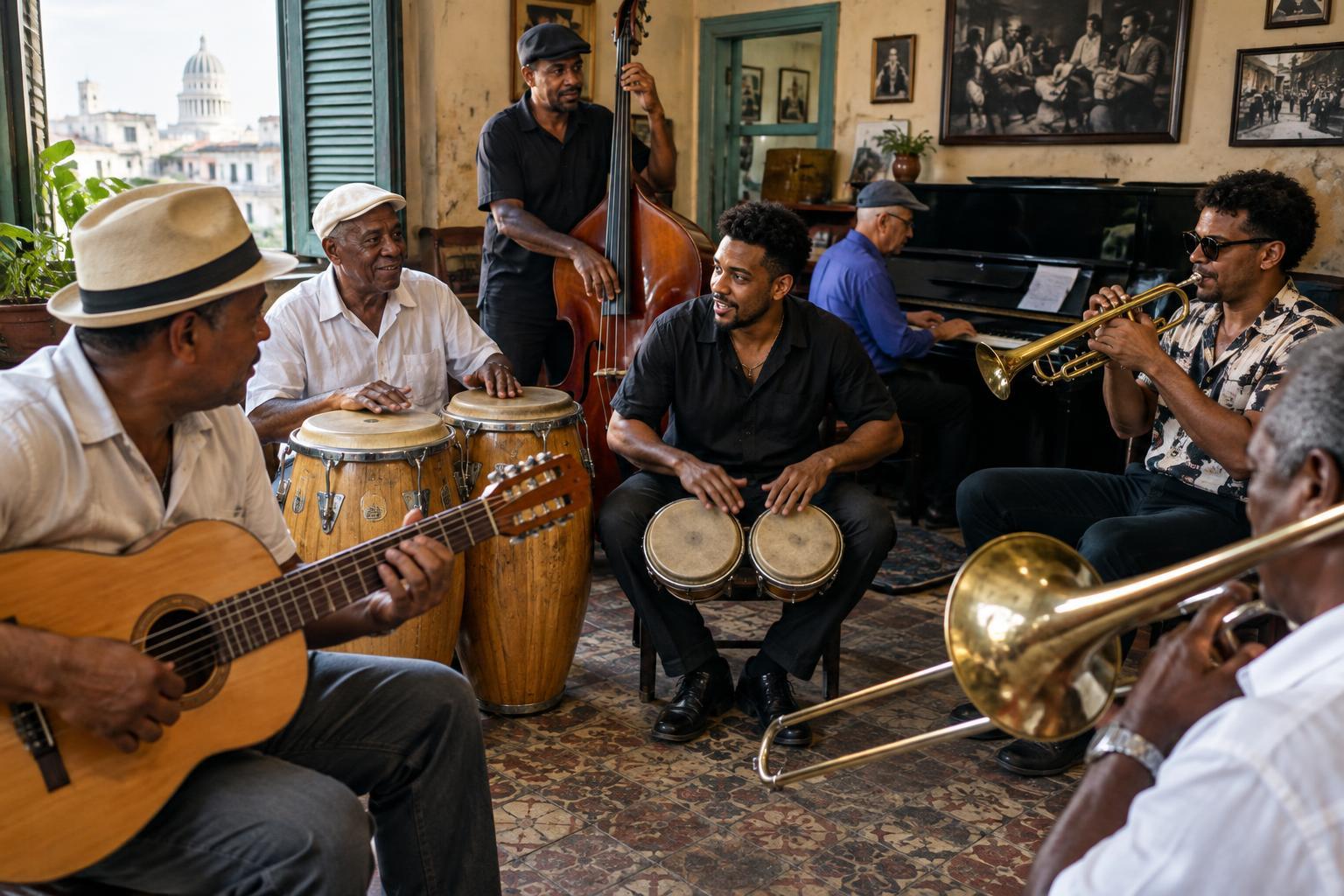
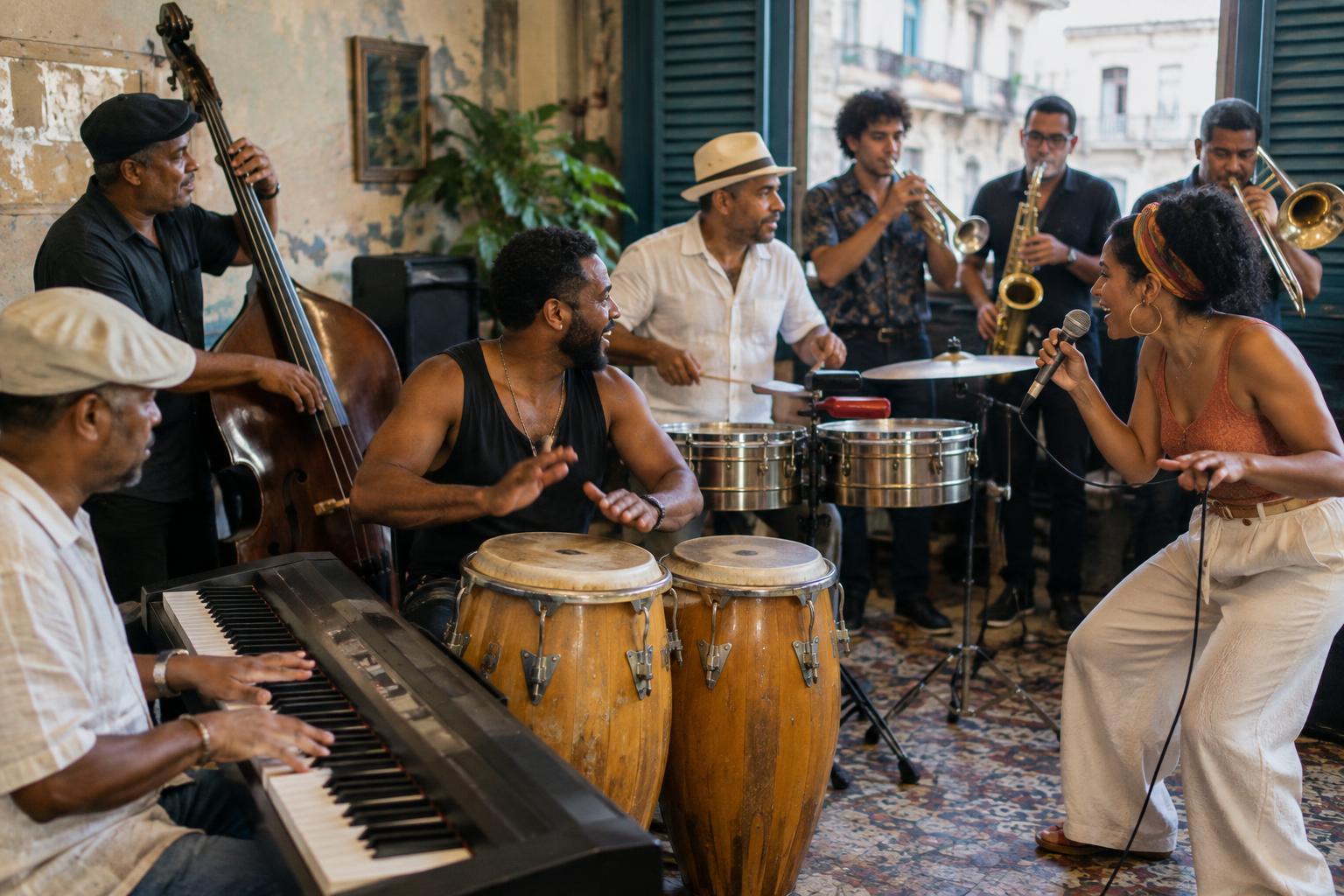
Timba’s percussion may combine drum kit, congas, timbales, bells and other instruments, depending on the band. Instead of treating each part as an isolated rhythm, hear how the players coordinate entrances and exits. A drummer might alter the feel while the conga pattern keeps continuity; a bell can make a new section feel suddenly open and bright. These choices serve the arrangement and the dancers, not just instrumental display.
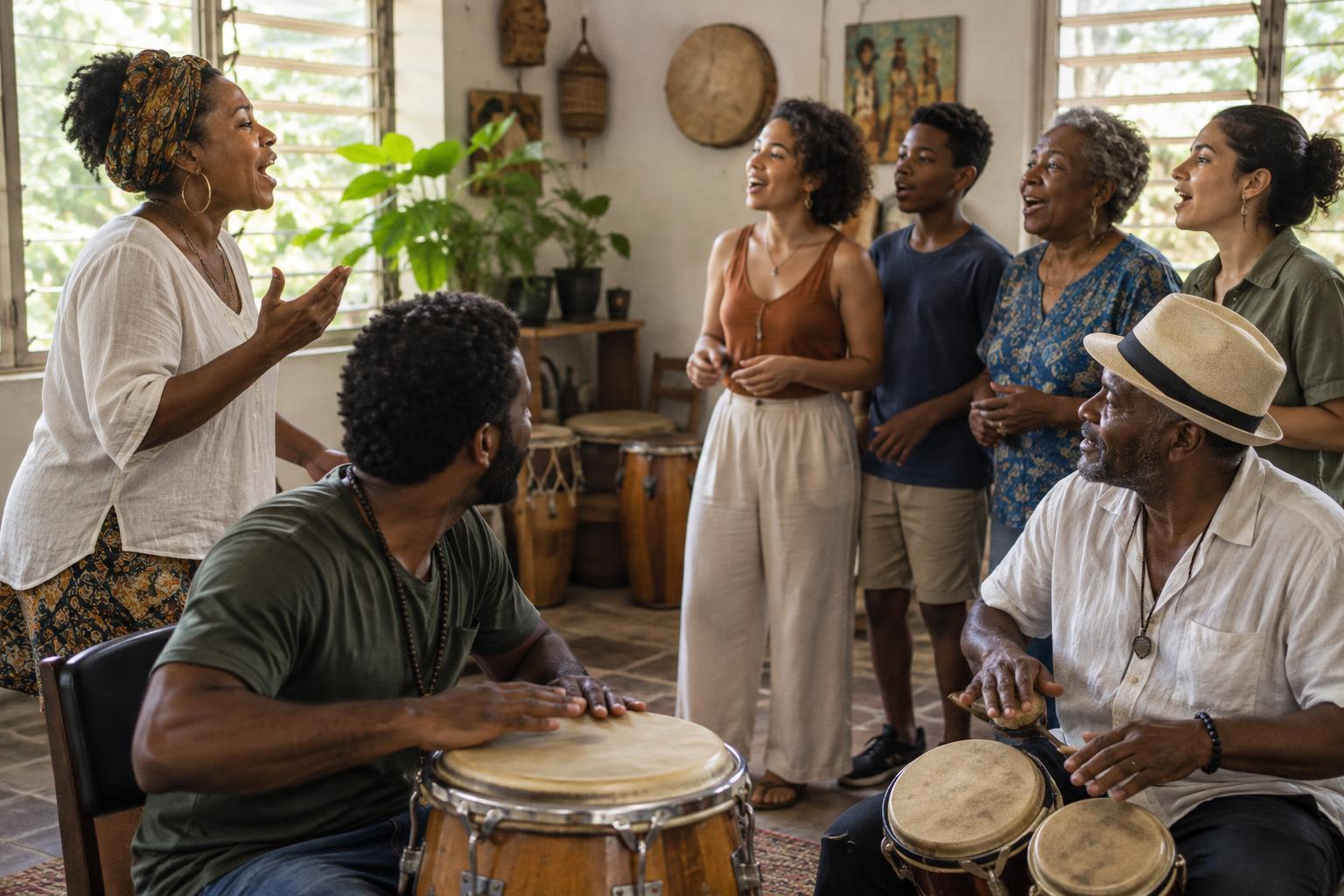
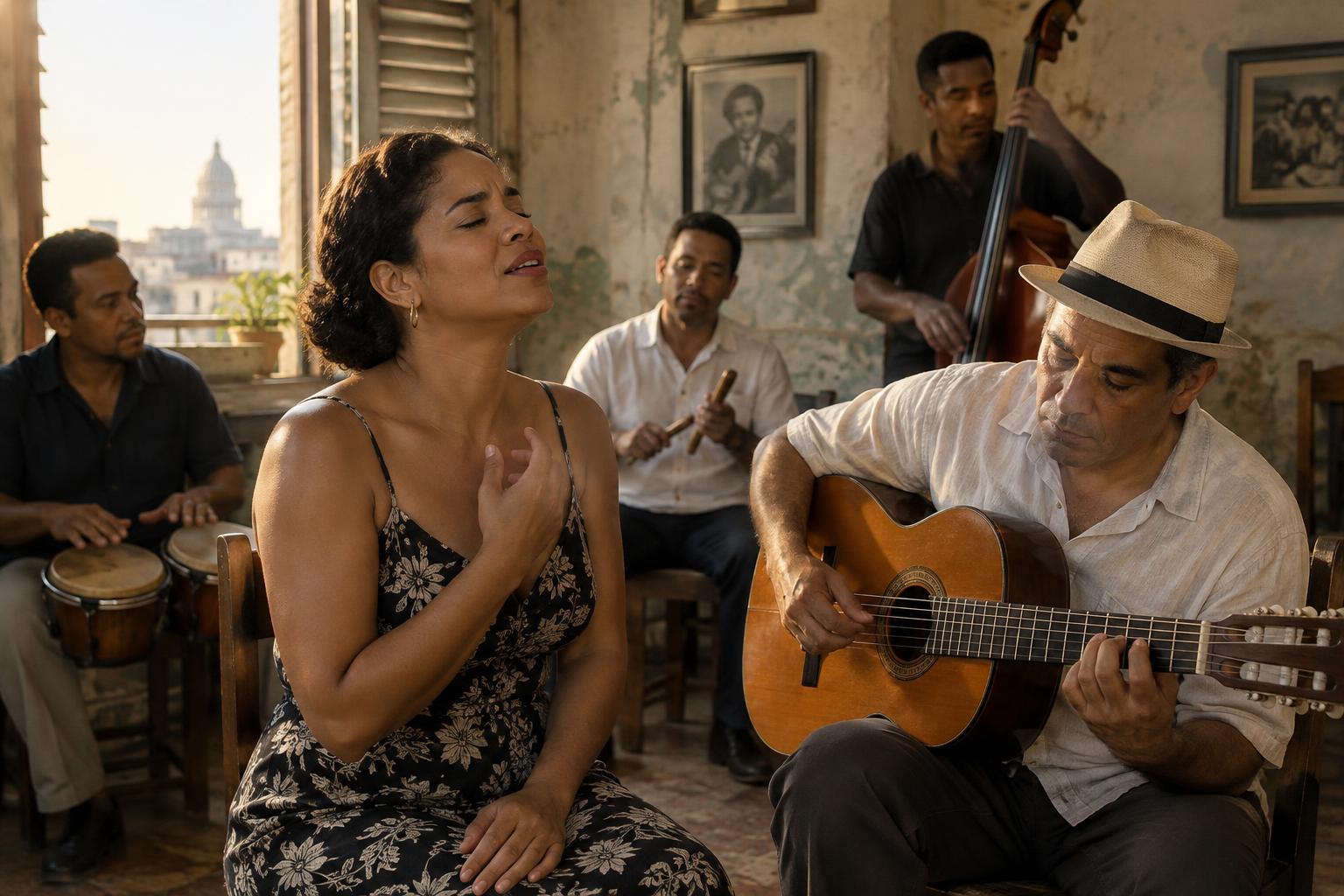
Vocals are equally important. A lead singer may trade phrases with a chorus in the call-and-response practice often described as coro and pregón. The lead can vary a line or cue the band, while a recurring coro gives the audience something to recognize and answer. Horns may punctuate those exchanges with sharp, rhythmically placed figures rather than playing a continuous melody. The result can feel conversational: singers, percussion, bass, piano and horns each help mark the next turn.
How to hear the difference for yourself
Choose a timba track and listen three times without worrying about identifying every instrument. First, follow the chorus: when does it repeat, and what changes underneath it? Next, attend to the bass and piano. Tap a steady pulse, then notice whether their patterns shift while your pulse remains the same. Finally, listen for ensemble stops, horn responses and percussion cues that prepare a new section. If a passage feels suddenly more intense, ask which parts changed rather than assuming the tempo increased.
Try the same exercise with a son or songo recording. You may hear shared rhythmic ideas alongside different approaches to texture, repetition and contrast. One recording cannot stand for an entire genre, so treat the comparison as a way to sharpen your ears, not to rank styles. Timba rewards this kind of listening: its impact lies as much in the relationships among musicians and dancers as in any single beat.