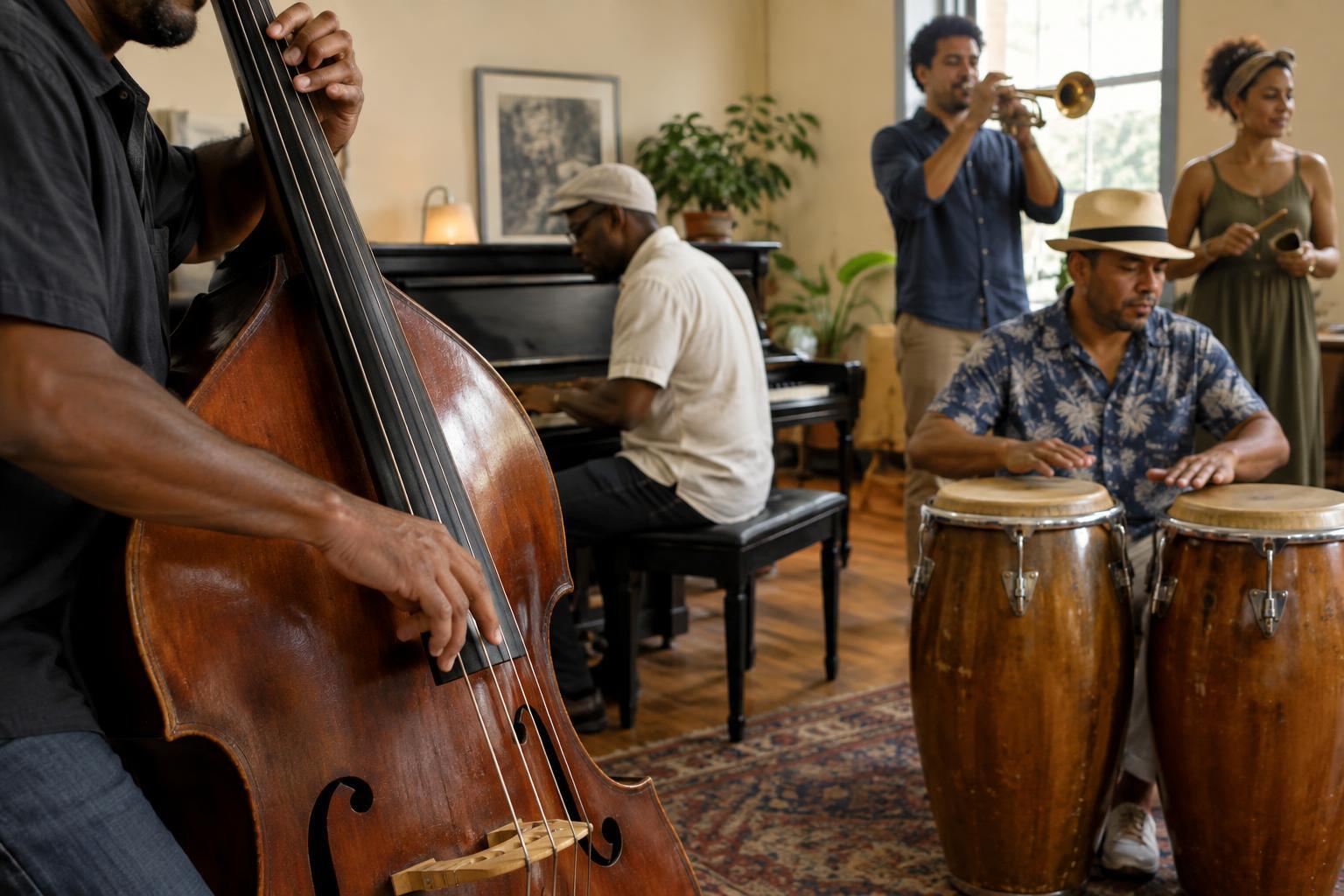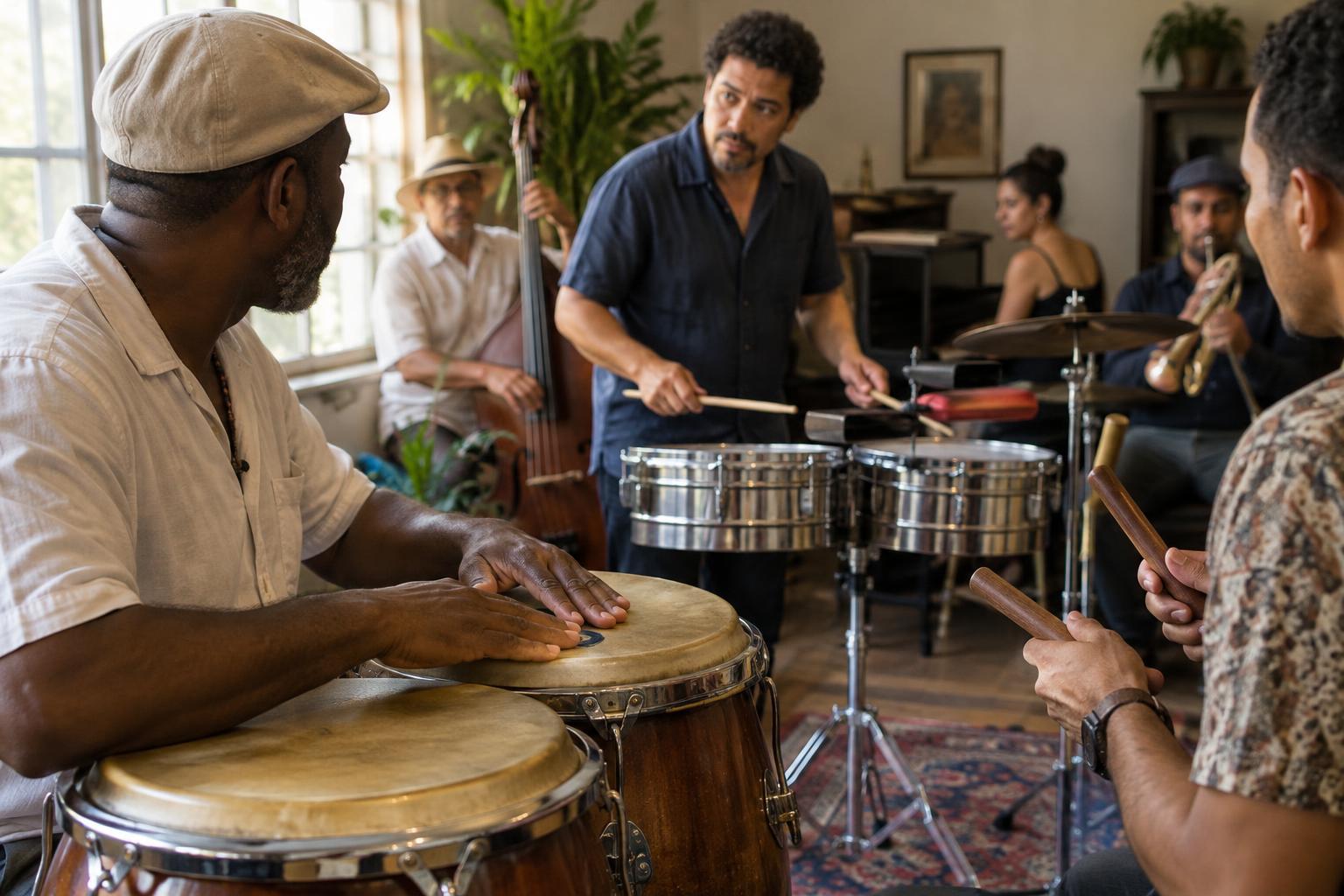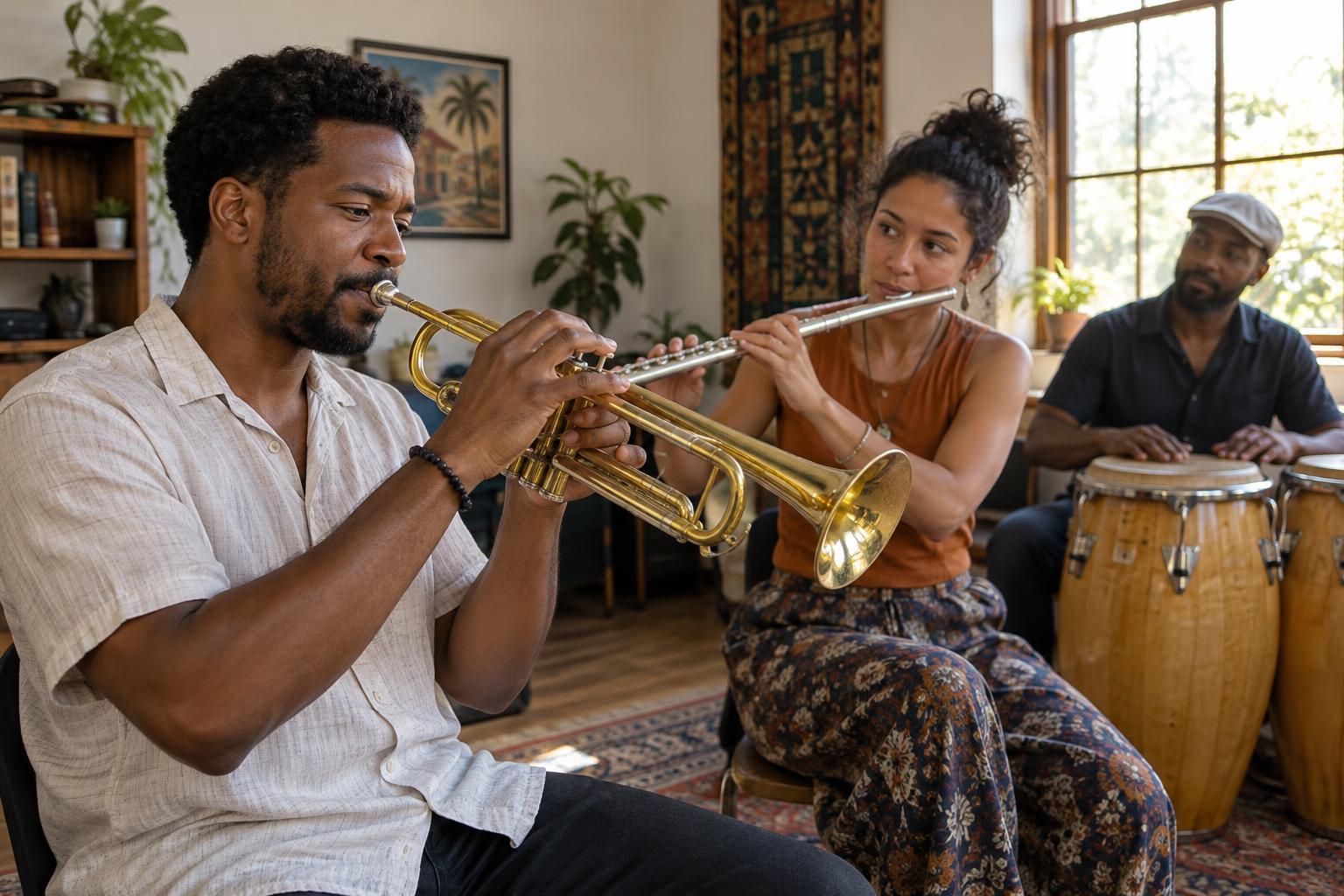
Three ways a track can end
The last seconds of a recording offer clues about both the arrangement and the recording itself. A final hit is a coordinated accent that marks a stopping point. A fade is a gradual reduction in the recorded sound level. A played ending is a closing passage performed by the musicians: it might include a short rhythmic figure, a return to a melody, a held chord, or several accents before the group stops.
These are useful listening labels, not mutually exclusive categories. A played ending can finish with a final hit. A recording might fade over a passage the musicians were playing as an ending. To hear the distinction, ask two questions: What does the ensemble appear to be doing, and what does the recording let you hear of it?
Recognizing a final hit
A final hit often feels like punctuation. Several parts converge on an accent, after which no new rhythmic pattern begins. A piano chord, bass note, horn attack, drum accent, or hand-percussion stroke may land together, though not every instrument has to play. The sound can stop sharply or ring out naturally. That lingering cymbal or chord is a tail of the hit, not necessarily another musical event.
Listen one or two bars before the accent. Does the bass shorten its pattern? Do the drums set up the arrival? Does a melody or horn line point toward a shared landing place? A strong accent in the middle of a song may sound similar in isolation, so the silence or decay after it matters. If the groove resumes, you probably heard a break rather than the ending.
Hearing a fade
In a fade, the recorded music becomes quieter while the performance may continue. Listen for repeated material that keeps its shape as its overall level falls: the bass maintains its motion, percussion keeps time, and voices or instruments continue answering one another. Eventually the details become too quiet to follow. Unlike a coordinated stop, the last audible note may not feel like a deliberate point of arrival.
Do not confuse a fade with musicians playing more softly. In a performed diminuendo, players may change their touch, spacing, or instrumentation as they reduce intensity. In a recording fade, the whole mix often recedes together, including background sounds and the tails of notes. The two effects can overlap, and a recording alone may not reveal exactly what happened in the room. You can still describe what you hear: “the groove continues as the recording fades.”
Following a played ending
A played ending is easier to hear when you follow the arrangement rather than wait for the last sound. The musicians may leave a repeating groove, play a closing figure together, pause, then return for a final chord. One section might answer another; the percussion might mark the space around the accents instead of striking every one. The ending has a sequence of decisions that gives the listener a sense of departure and arrival.
In Afro-Cuban-derived arrangements, listen to how a closing figure relates to the pulse and to the rhythmic cycle you have been tracking. You do not need to identify every stroke of clave to notice when a phrase repeats, shifts, or stops. Avoid assuming every piece uses the same closing formula: ensembles and styles handle endings differently. Follow the relationship among bass, percussion, melody, and accents in the recording at hand.
A short listening exercise
Choose a recording and replay its last twenty seconds three times. On the first pass, tap the pulse and note whether it continues to the edge of what you can hear. On the second, follow one part, such as the bass or a hand drum: does it repeat, change its pattern, or stop with the group? On the third, listen to the recording level. Does everything recede together, or do the players seem to make a softer musical phrase?
Then describe the ending in one sentence without forcing it into a single label. You might hear “a two-bar closing figure followed by a final hit,” or “the repeated groove fades before any stop is audible.” If you lose the pulse near the end, replay an earlier phrase and carry your tapping forward. The goal is not to guess what happened after the recording ends; it is to hear how the music guides you toward its audible finish.