A family resemblance, not a straight line
Son, salsa and timba are connected through musicians, dance floors and rhythmic ideas. They are not three stages of one genre in which each neatly replaces the last. Son developed in Cuba; salsa took shape as a broad name for dance music made by musicians across the Caribbean and its diasporas; and timba emerged in Cuba with a distinctive approach to arranging and groove. Each name covers a range of sounds.
A useful way to begin is to listen for what the music asks the ensemble to do. Does a repeating pattern leave room for singers to trade lines with a chorus? Does the band build toward a horn-driven dance section? Do the bass, piano and percussion suddenly change their parts together? These questions reveal more than trying to identify a genre from one instrument alone.
Son: a foundation with room to move
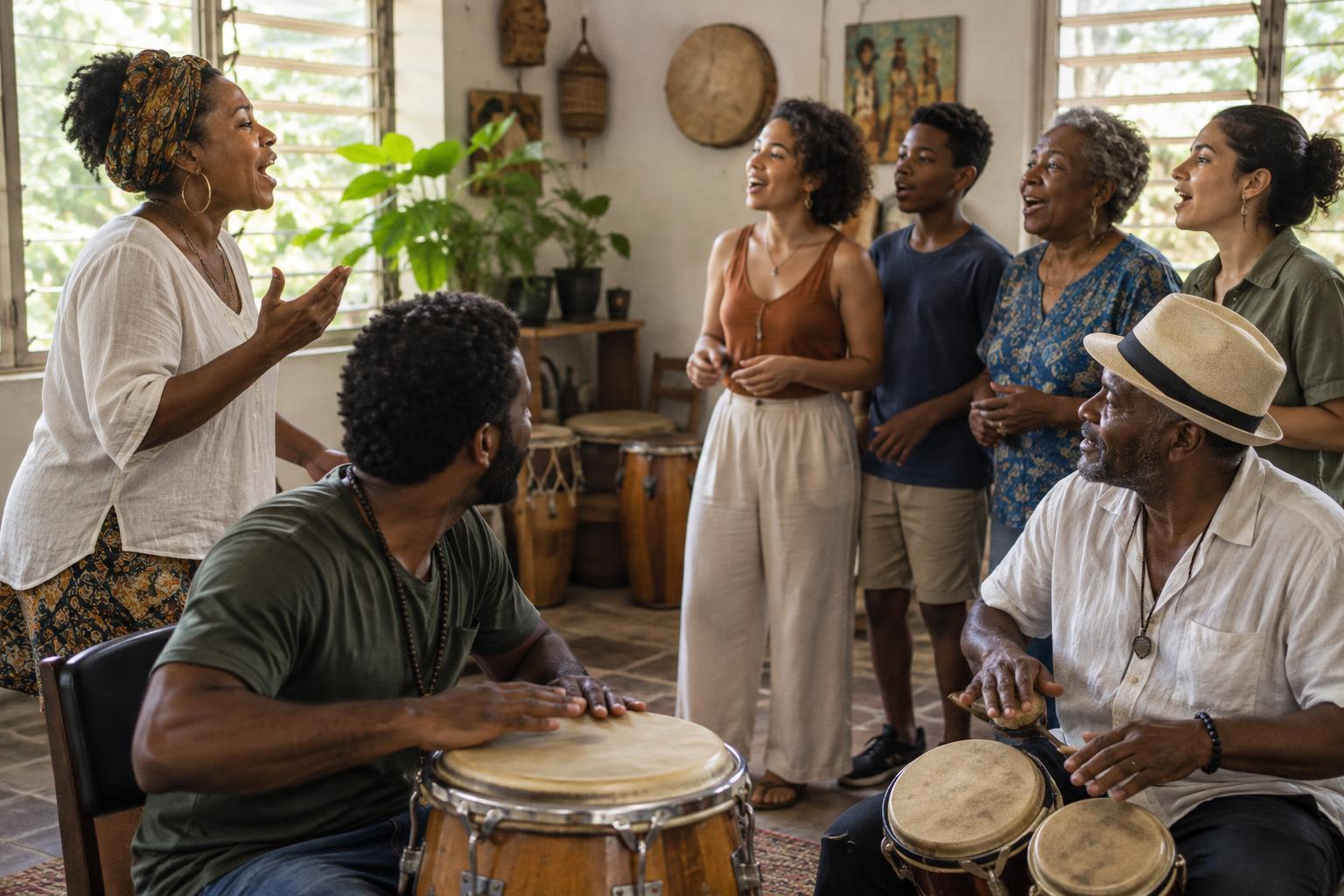
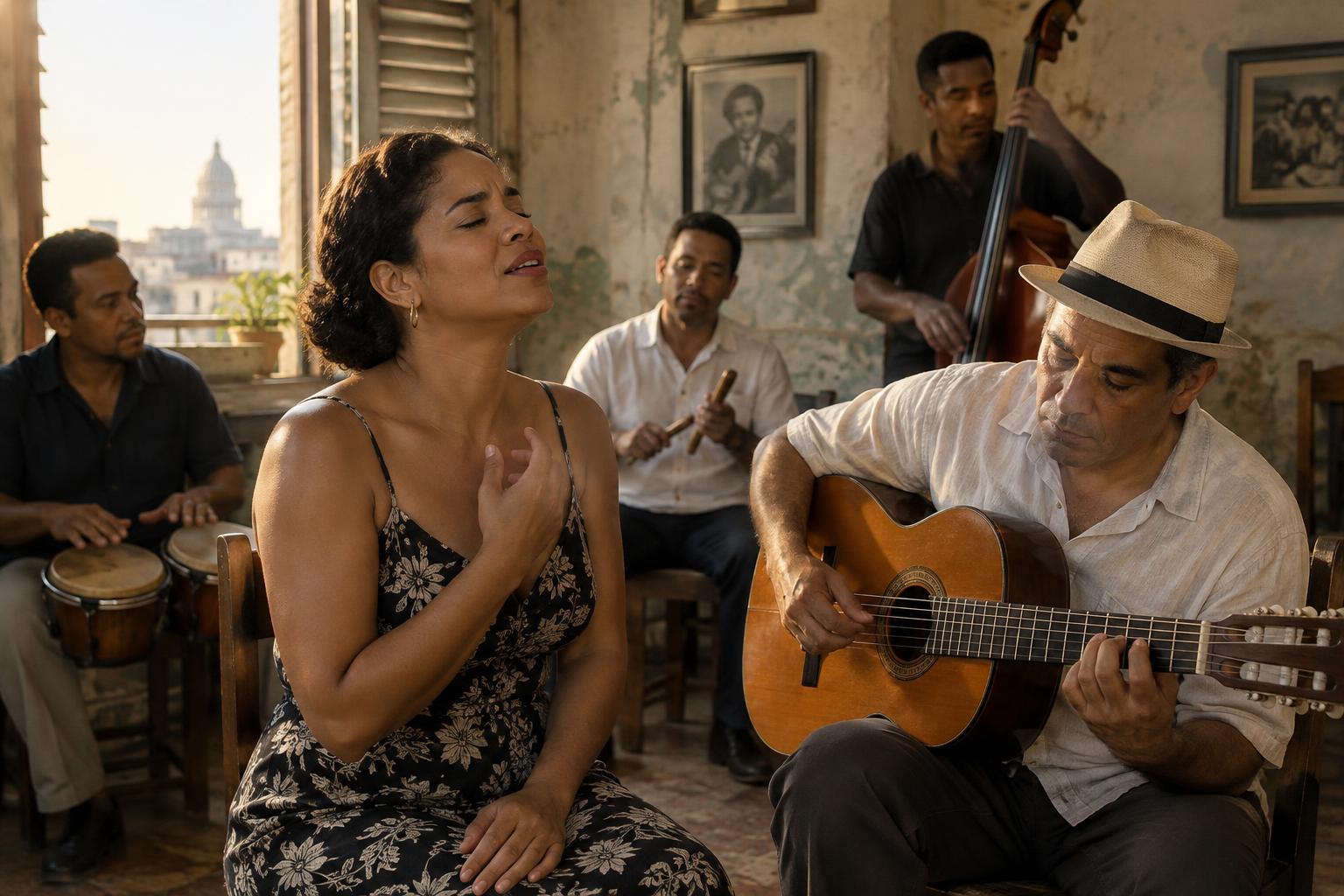
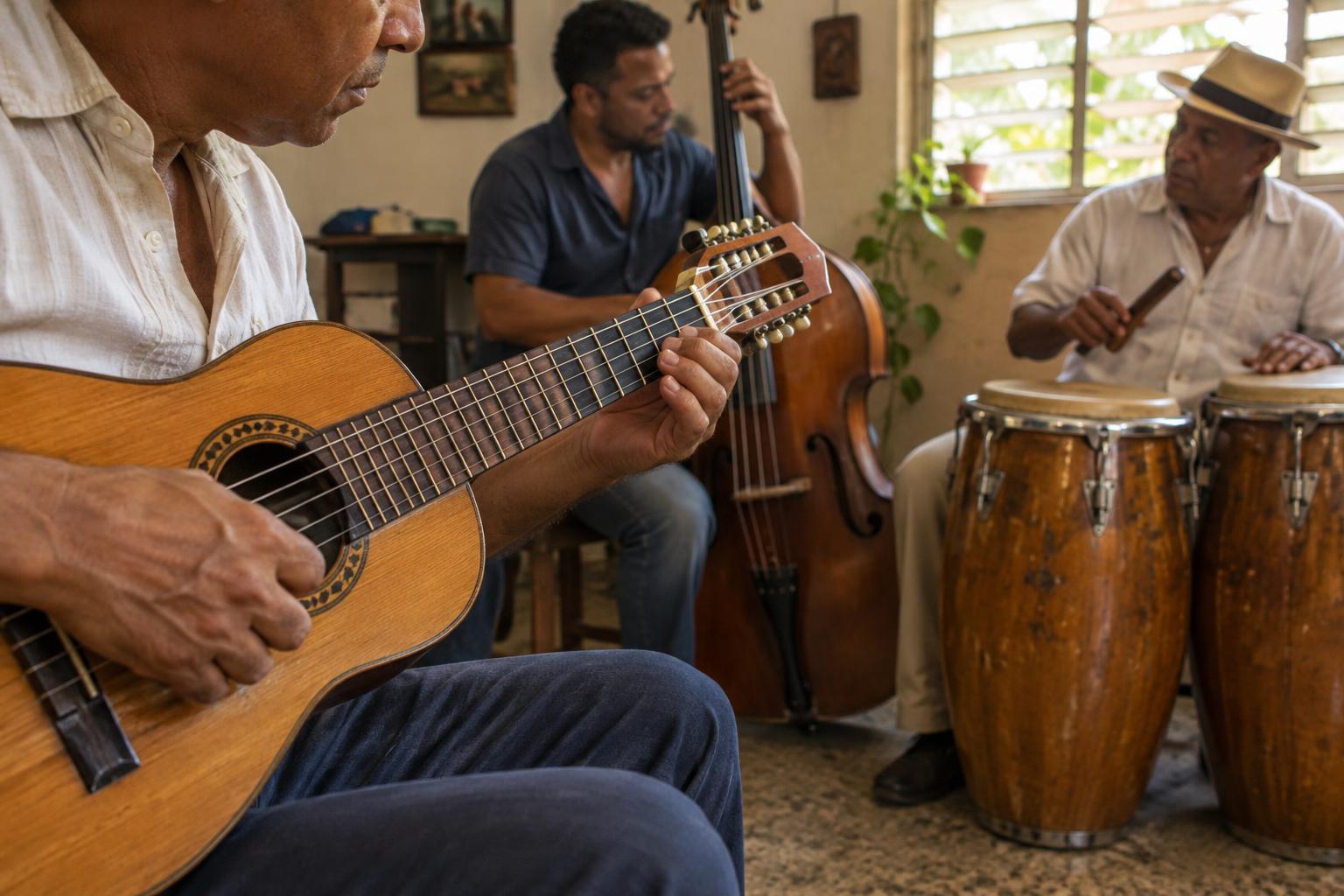
Cuban son brings together musical practices with African and European roots. In many son settings, a lead singer moves between composed verses and a more open exchange with a chorus, often called a montuno section. The groove may include a repeating bass line and interlocking parts played by instruments such as tres, guitar, maracas, bongó and clave. Ensembles and arrangements vary, so no single instrument list defines every performance.
Clave can be a helpful listening guide. Its five-stroke pattern is commonly described as having a three-stroke side and a two-stroke side. Rather than trying to hear five loud clicks, notice how phrases and accents sit around that cycle. A clave instrument may be audible, but the organizing pattern can also be implied by other parts. Son’s repeating phrases create a stable setting for variation: singers answer one another, percussionists add detail, and dancers respond to the groove.
Salsa: a broad conversation across places
Salsa is a broad term, not a single rhythm invented in one moment. It is strongly associated with Latin American and Caribbean communities in New York, including Puerto Rican and Cuban musical connections, and with musicians elsewhere who brought their own approaches. Son and son montuno are important parts of its musical vocabulary, alongside other Afro-Caribbean dance traditions and influences from jazz.
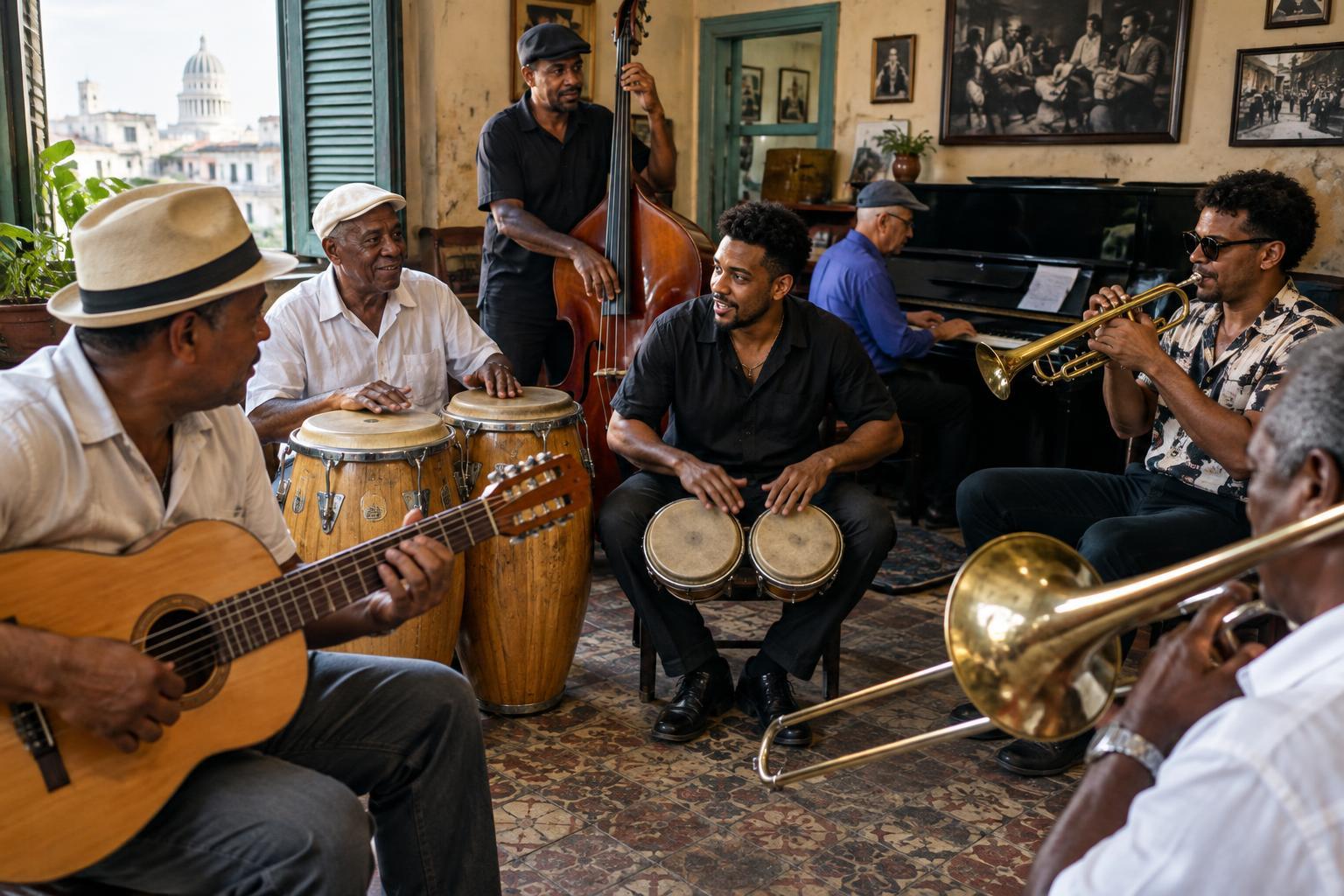
In many salsa recordings, listen for a clear pulse for dancing, call-and-response singing, a piano guajeo or other repeating figure, active bass and percussion, and arranged horn passages. But those features are clues, not a checklist. Some tracks feel spacious and relaxed; others use dense brass lines and dramatic breaks. If a recording is described as salsa, ask what that description helps you hear—and which of the musicians’ specific traditions it might leave unnamed.
Timba: shifting gears inside the groove
Timba developed in Cuba, drawing on Cuban dance-music traditions while making room for influences that can include jazz, funk and rumba. It often rewards close attention to the whole band’s arrangement. A bass pattern may change, the piano may move to a new repeating figure, the percussion may switch textures, and singers or horns may cue the shift. The result can feel like the ensemble is changing gears without losing its connection to dancing.
Those coordinated changes are a useful first clue, though not every timba track is equally dense or unpredictable. Like son and salsa, timba may use call and response, repeated rhythmic figures and a relationship to clave. Clave does not mean that every accent must land on an audible clave stroke. Try following one part through a transition: when the bass changes, does the piano follow, answer it or hold steady?
A listening exercise for hearing the differences
Choose one recording identified as son, one as salsa and one as timba. Listen to each twice. On the first pass, tap a comfortable pulse and mark the moments when a solo voice gives way to a chorus. On the second, follow the bass or piano. Note where a pattern repeats, where it changes, and what the rest of the band does at that moment. You do not need to count every subdivision to hear how an arrangement creates momentum.
Then compare your notes rather than ranking the recordings by complexity or treating one style as more authentic than another. You may hear son’s conversational space, salsa’s many ways of organizing a dance-band sound, and timba’s sharply coordinated shifts. You may also find exceptions. Genre names can help you enter the music, but listening to particular musicians, ensembles and performances is how those names become meaningful.