A musical conversation, not a single formula
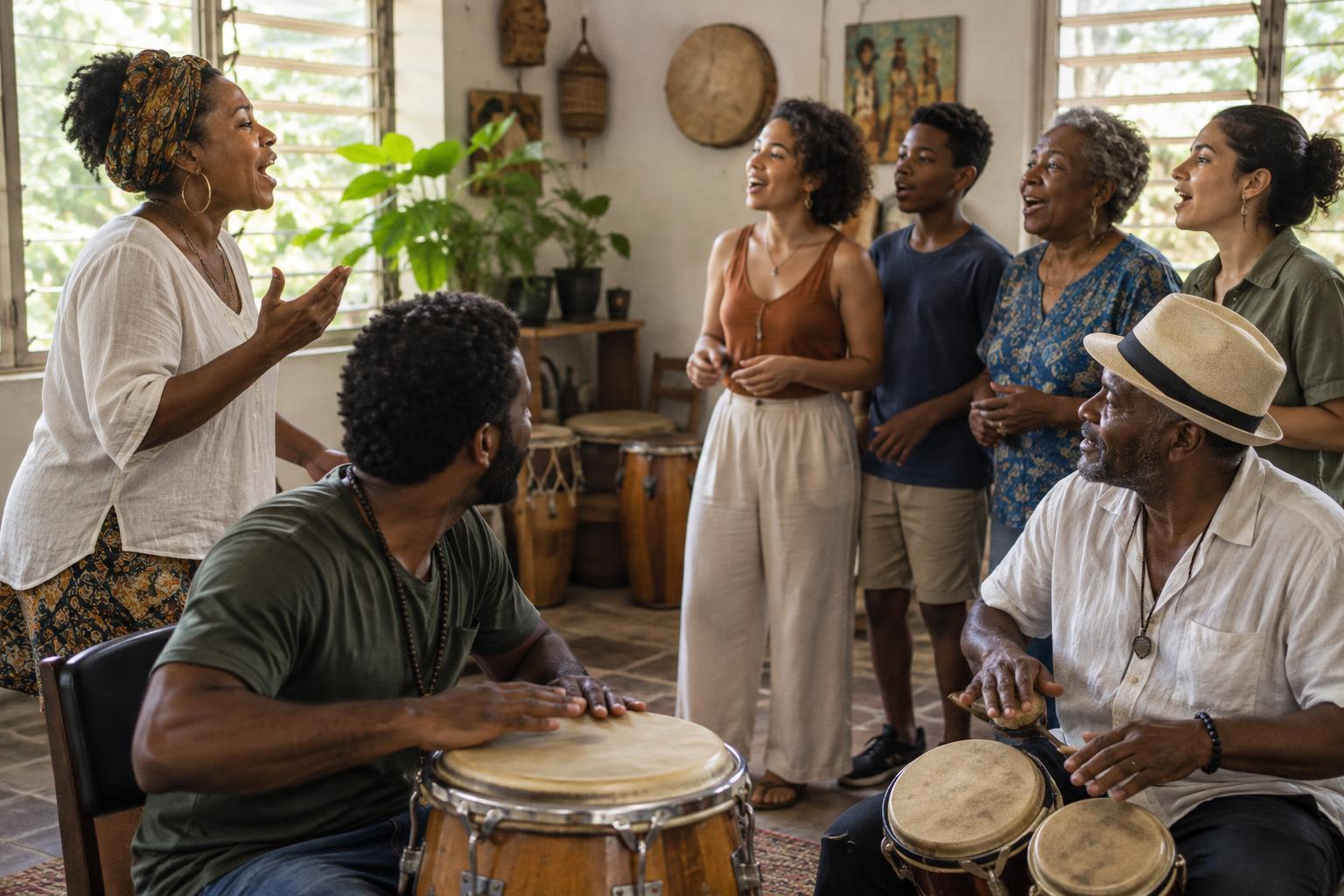
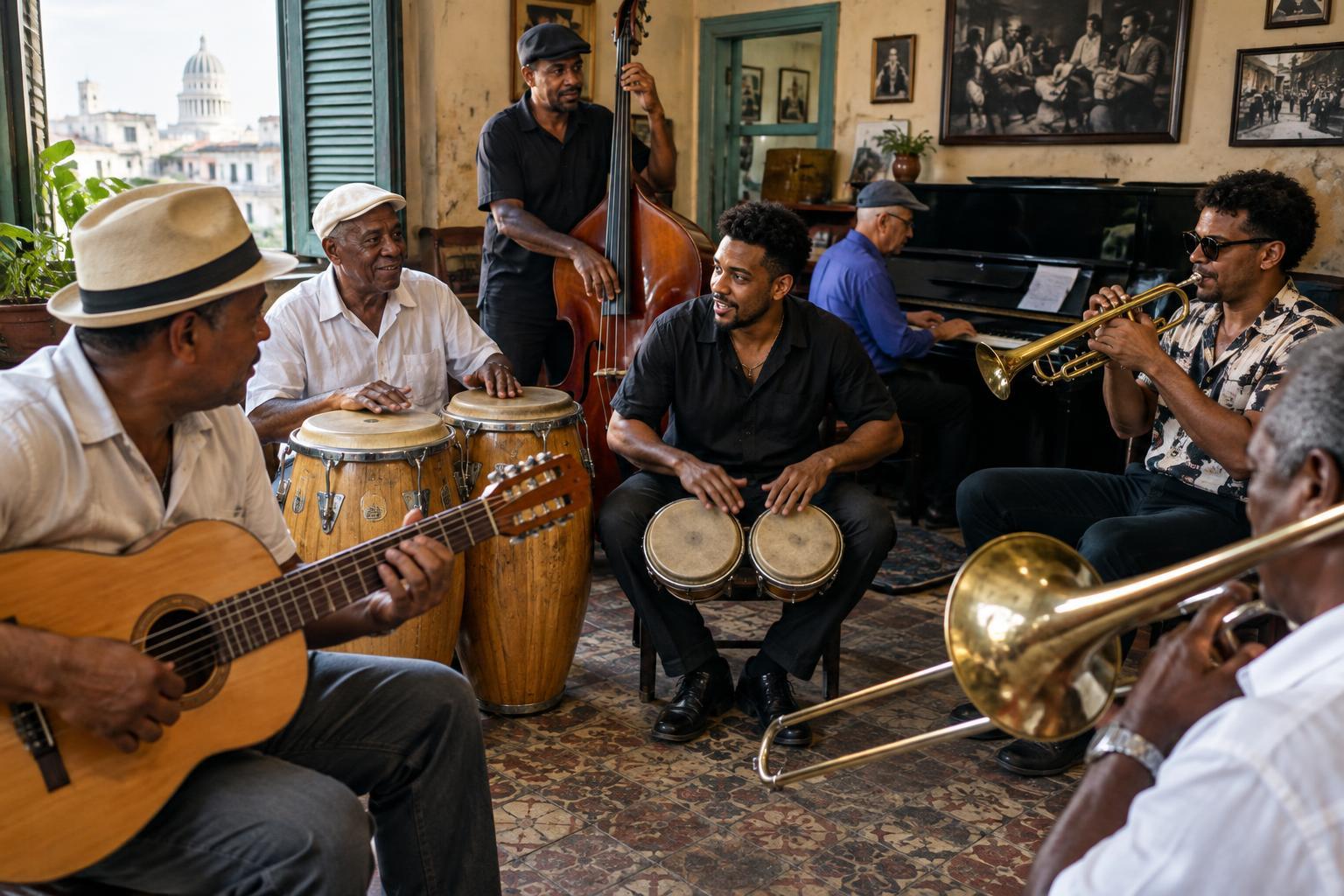
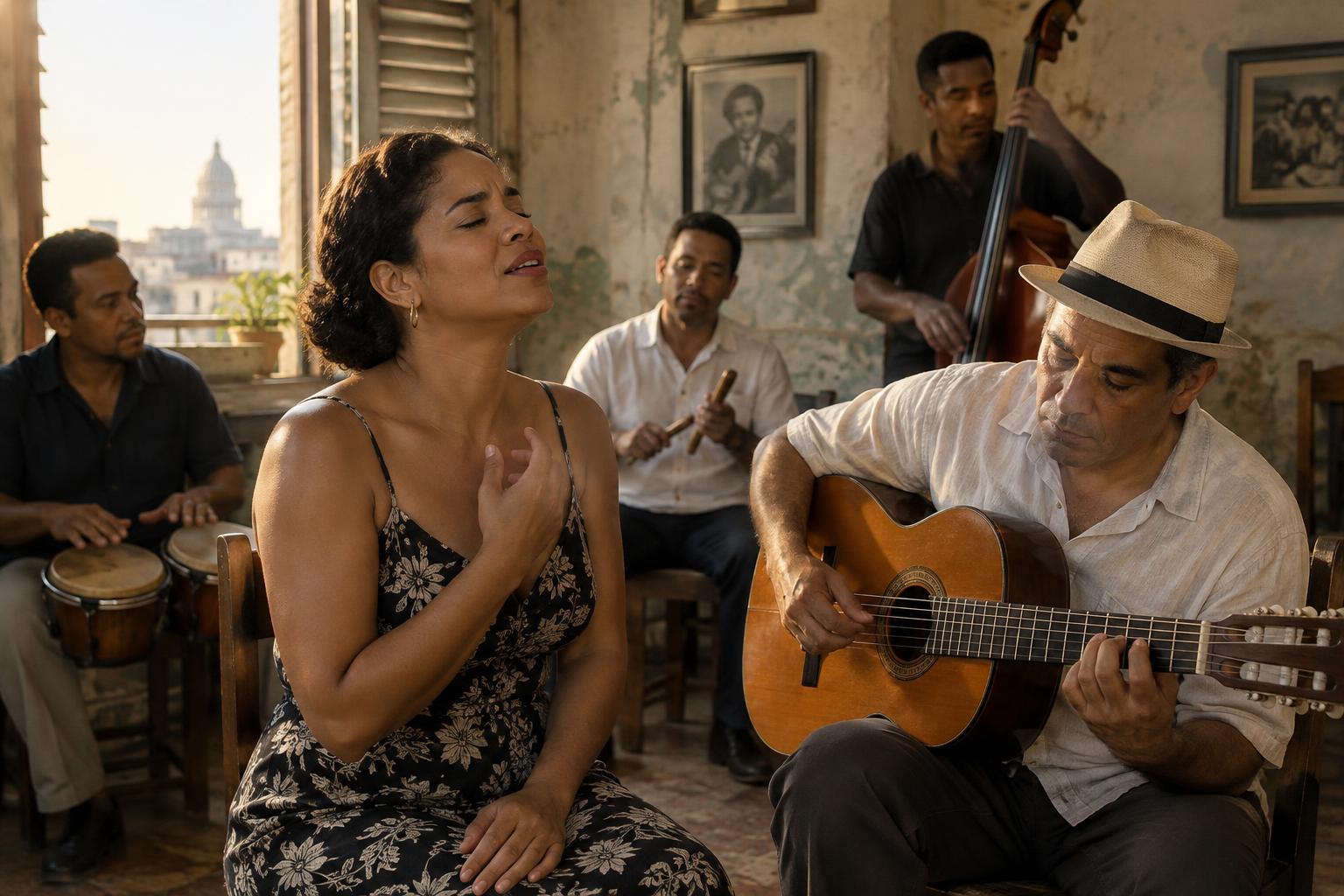
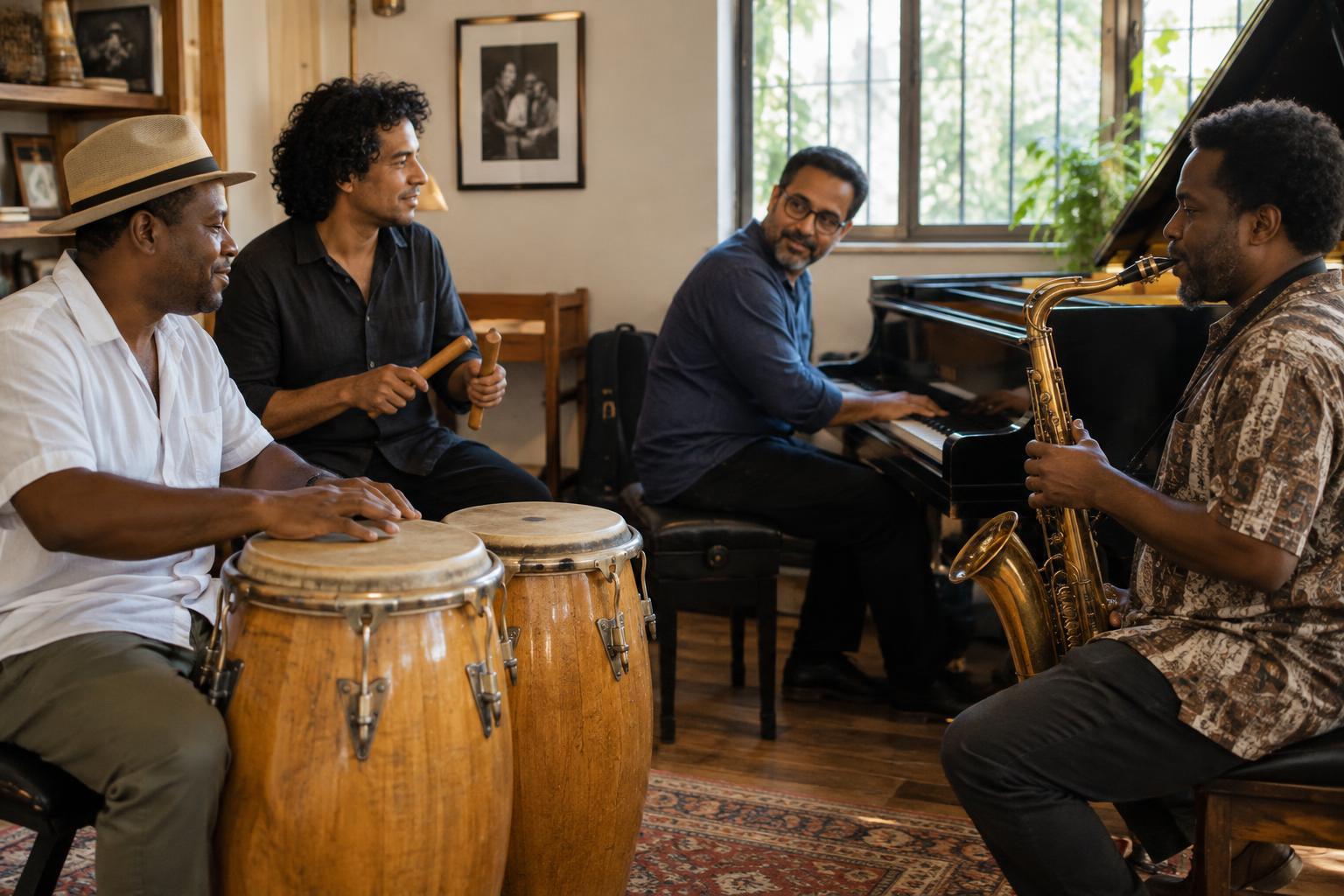
Afro-Cuban jazz brings approaches from Cuban music into conversation with jazz harmony, ensemble playing and improvisation. A piece might feature a horn solo over a Cuban-derived groove, an arrangement built around recurring rhythmic phrases, or a jazz ensemble working closely with congas and other percussion. There is no single beat or instrumentation that defines every performance.
The music grew through collaboration among musicians rather than through a simple transfer of “Cuban rhythm” into jazz. Cuban musical traditions have their own histories and purposes, and jazz draws on more than one tradition too. Listening for how players respond to one another is more revealing than treating the percussion as a decorative layer beneath a jazz solo.
Clave gives the ensemble a shared orientation
Clave can mean both a pair of wooden sticks and a recurring rhythmic pattern. In many Cuban-derived styles, the pattern provides a framework for the way other parts fit together. You may not hear anyone play it explicitly: the piano, bass, percussion and melody can make its shape felt through their combined accents and spaces.
One useful starting point is son clave, a two-bar pattern with three strokes in one bar and two in the other. In a common 3–2 orientation, count four beats in each bar: the three-stroke side falls on beat 1, the “and” of beat 2, and beat 4; the two-stroke side falls on beats 2 and 3. The reverse orientation is called 2–3. These labels describe where the pattern begins, not which direction is better. Not every Afro-Cuban jazz piece uses son clave, and hearing the pattern in a full band takes time.
The rhythm section makes room for improvisation
In many arrangements, the bass supplies a repeating line that helps establish the groove, while the piano plays a syncopated, often recurring figure sometimes called a montuno. Congas, bongos, timbales, drum kit and smaller percussion may each contribute a distinct part. The effect is interlocking: no one instrument has to state every beat. Rests and offbeat notes help give the ensemble its motion.
A soloist can play freely against that foundation without abandoning it. A horn phrase might start before an expected beat, stretch across a bar line or answer a rhythmic figure from the piano. The player need not accent every clave stroke. What matters is how the phrase relates to the ensemble’s underlying orientation. Arrangers can heighten that relationship with horn figures, breaks and shifts in texture that make an improvised passage feel connected to the larger piece.
History is part of what you hear
The meeting of Cuban music and jazz took shape through musicians working across scenes and communities. Mario Bauzá, Chano Pozo and Dizzy Gillespie are among the figures associated with influential collaborations in this music. Their work is an entry point, not a complete account: Cuban performers, bandleaders and percussionists brought extensive musical knowledge to these exchanges.
That context matters when listening. Rhythms heard in Afro-Cuban jazz did not begin as generic accompaniment for jazz improvisation. They belong to varied Cuban musical practices, which differ in sound and setting. Learning the names of the musicians and the rhythmic ideas in a recording can help you hear their contributions more clearly, while leaving room for the choices that make each ensemble distinctive.
A practical way to listen and practice
Start with one Afro-Cuban jazz performance and listen three times. On the first pass, follow the bass and notice where its pattern repeats. On the second, attend to the piano and percussion: which parts repeat, which leave space, and which change to mark a new section? On the third, follow a soloist. Notice whether a phrase lands with the rhythm section, pushes against its accents or pauses while the groove continues.
For a hands-on exercise, count two bars of four at a comfortable pace and clap the 3–2 son clave described above. Keep the count steady even where no clap falls. Then switch to 2–3 by starting with the two-stroke bar. Finally, speak a short improvised phrase while you clap, allowing some syllables to fall between strokes. The goal is not to force every note onto the pattern; it is to feel how an independent phrase can stay in conversation with a shared rhythmic framework.