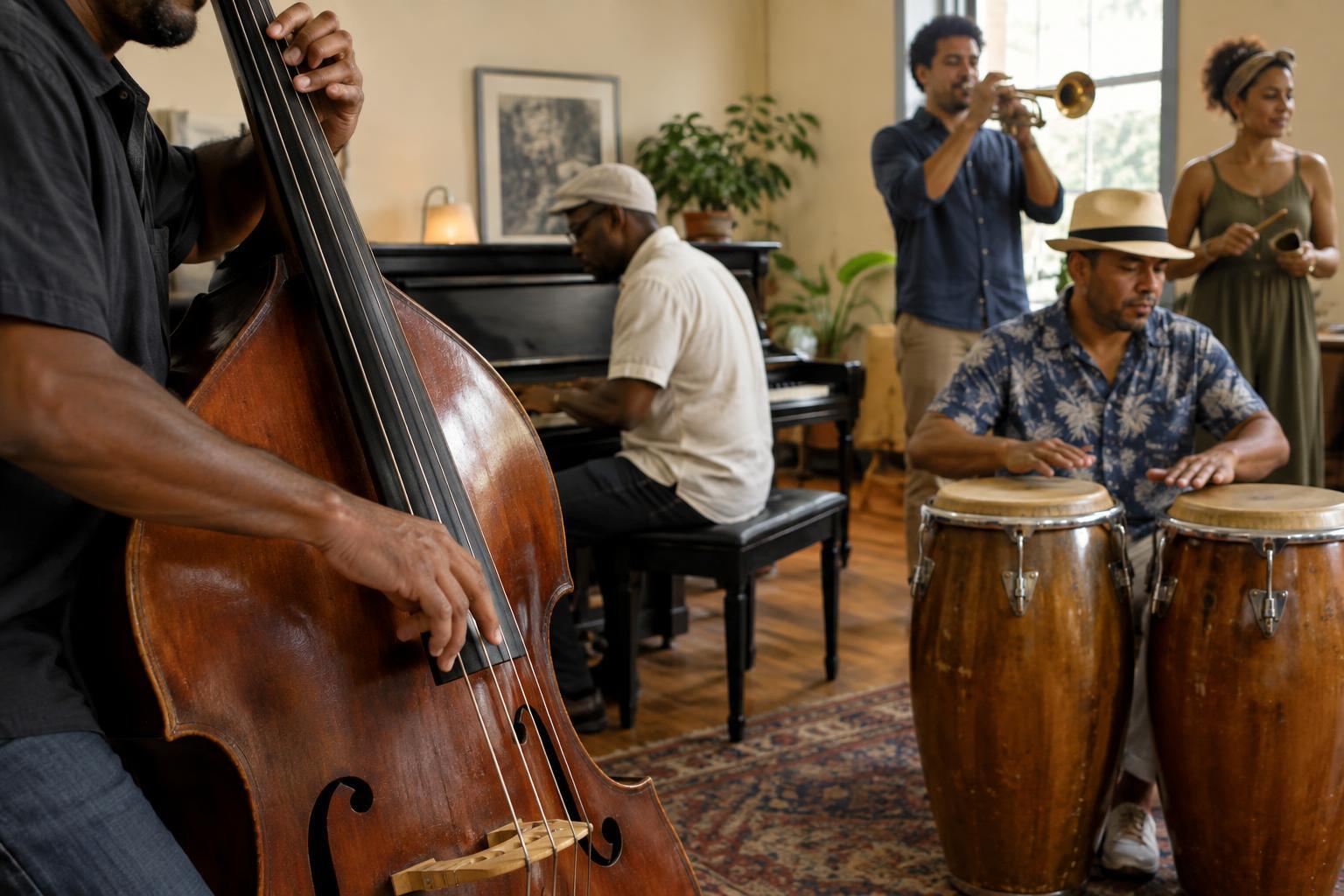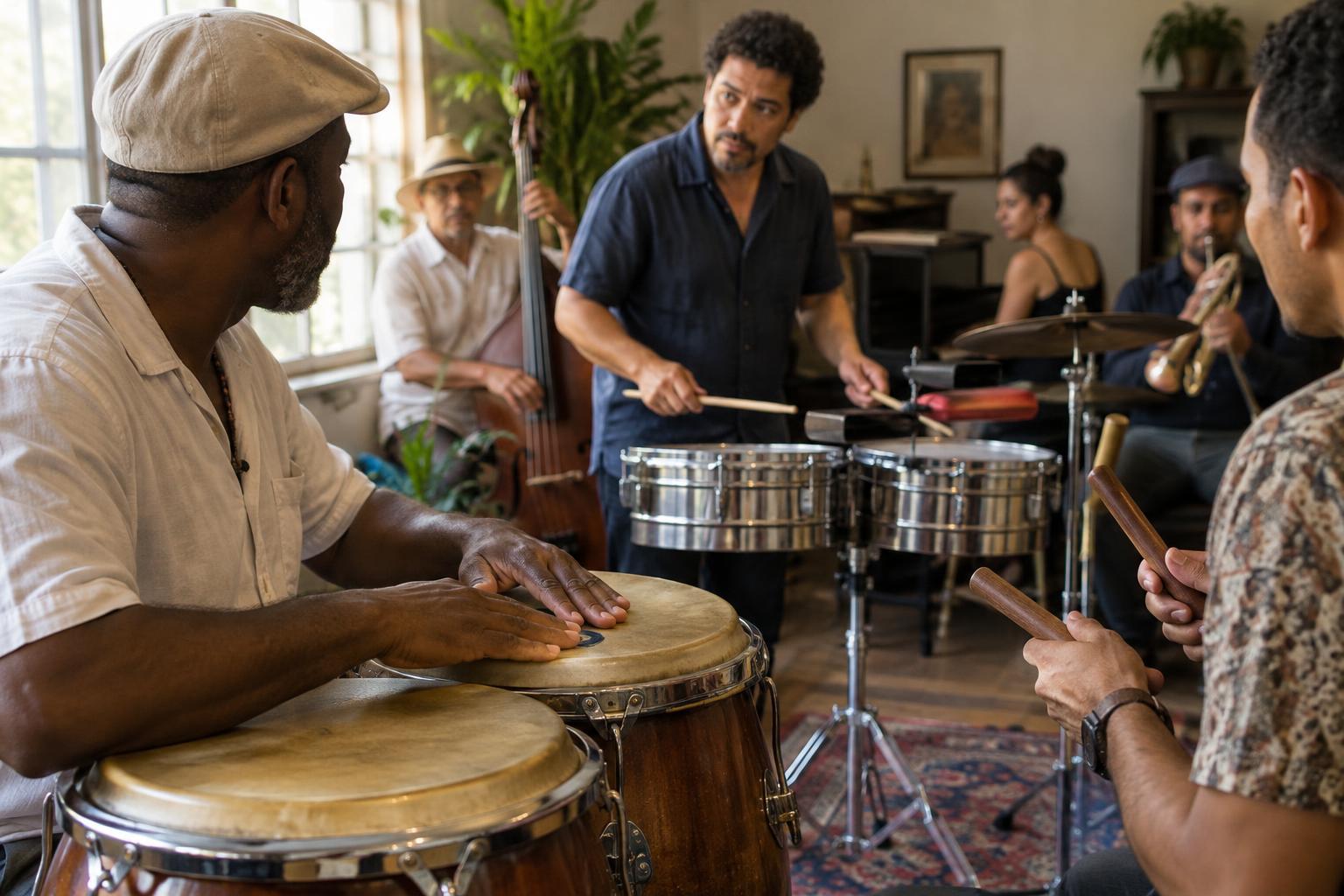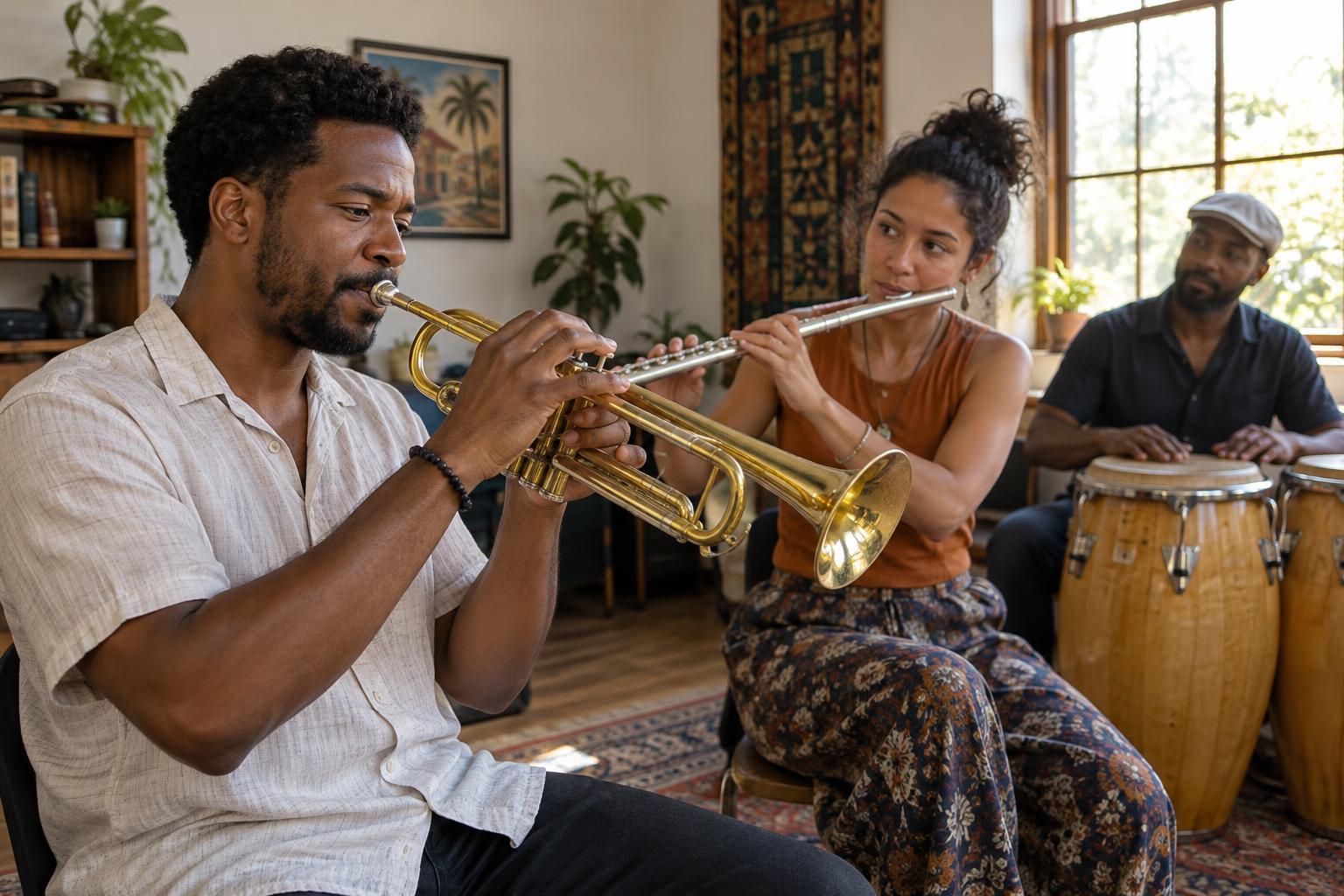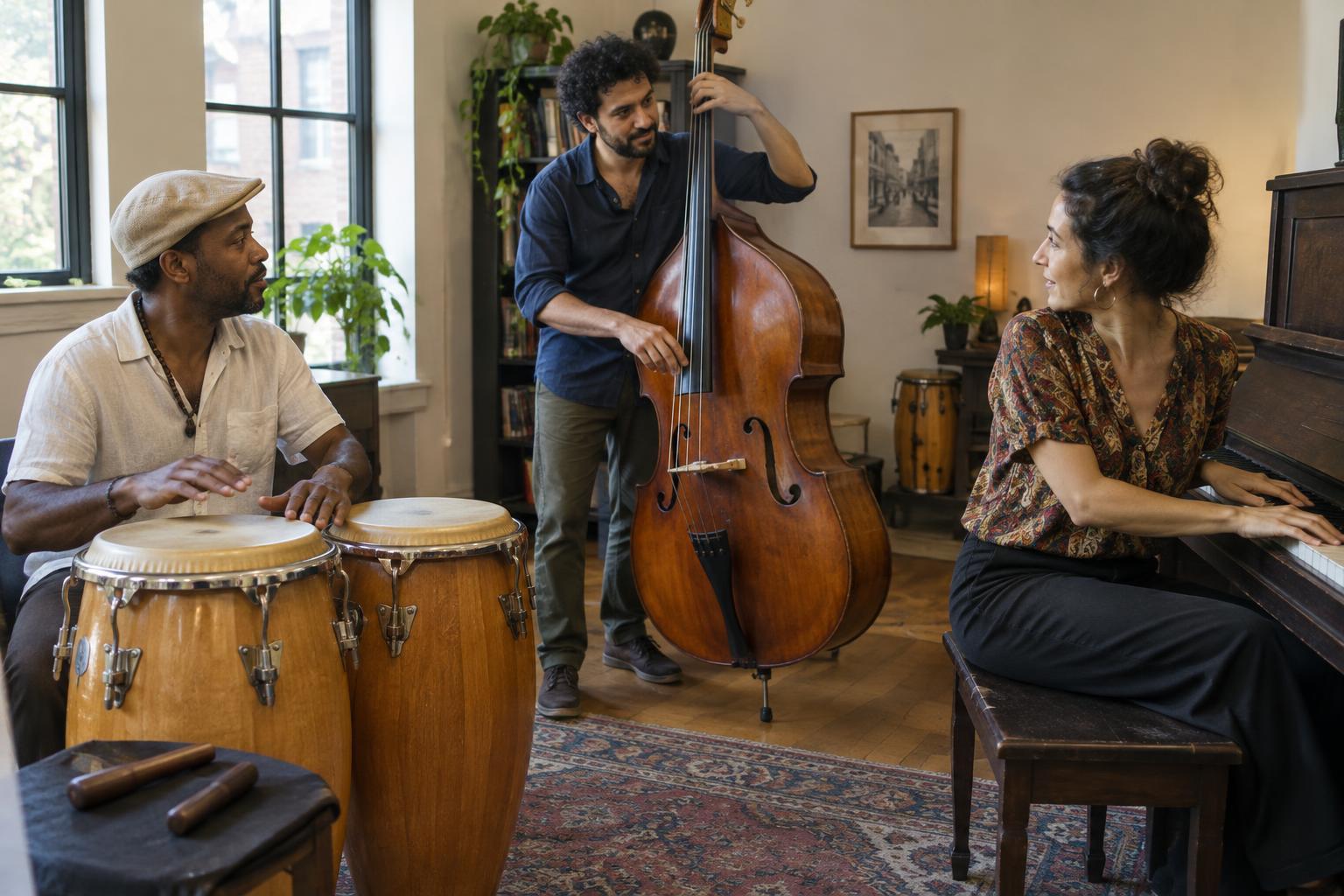
Find the arrangement beneath the instrumentation
A full band can separate its jobs among many players: one holds the pulse, another supplies a repeating pattern, a horn section answers the singer, and percussion adds motion around them. In a small ensemble, those jobs still matter, but the original instruments may not be available. Start by listening for functions rather than trying to copy every note.
Make a short map of the tune. Where does the main melody enter? Which bass figure makes the groove recognizable? Is there a recurring piano or guitar pattern, a percussion conversation, or a brief ensemble hit that announces a new section? Mark the moments when the texture changes, such as a break before a chorus or a response after a sung line. These landmarks often do more to preserve the arrangement’s identity than a dense transcription.
Then sort the material into three groups: essential, adaptable and optional. The melody, harmonic direction, bass motion and key rhythmic cues usually deserve first attention. A horn line might become a keyboard phrase; a layered percussion figure might become one clear pattern with a few carefully placed accents. A decorative line can be omitted if its absence gives the remaining parts room to speak.
Let clave guide the choices
In music shaped by Afro-Cuban traditions, clave is more than a pattern to add on top. It can organize how phrases lean, where answers land and how the ensemble builds tension and release. Before reducing an arrangement, listen across several measures and ask how the melody, bass and accompaniment relate to that underlying orientation. Do not decide the clave direction from a single isolated accent.
A small group does not always need someone audibly playing the clave pattern. Musicians can carry its relationship through their parts: a bass entry, a chordal response or the placement of an ensemble break may make the rhythmic shape clear. If a player does perform clave, treat it as a guide for the group, not as a substitute for listening to the whole groove.
Different Afro-Cuban styles and individual arrangements use different rhythmic approaches. If you are working from a specific recording or tradition, study its phrasing rather than applying one generic syncopated pattern. When a proposed replacement part feels awkward against the melody or bass, try moving or simplifying it instead of adding more notes.
Give each player a clear rhythmic job
Imagine reducing a chart for singer, bass, keyboard and one percussionist. The singer carries the melody and may cue responses. The bass establishes a dependable relationship between harmony and pulse. The keyboard can suggest a repeating accompaniment pattern, supply sparse chords or answer the vocal, but it need not do all three at once. The percussionist can prioritize a steady foundation and save fills for transitions.
If the group has a drum kit rather than hand percussion, ask which rhythmic function each limb is serving before assigning sounds. A restrained pattern that leaves space for the bass may work better than an imitation of several percussion instruments played simultaneously. Likewise, a guitarist can alternate between short chord attacks and a melodic answer instead of trying to sustain a constant strum beneath both.
Watch for duplicated accents. When bass, keyboard and percussion all stress the same offbeat at the same volume, an arrangement can feel crowded rather than stronger. Rehearse a passage with just bass and percussion, then add one chordal part. Give every added layer a reason to be there: reinforcing a phrase, creating contrast or signaling a change.
Use space and contrast as arranging tools
A full band may create excitement by adding players. A small group can create a similar sense of arrival by changing density. Try beginning a verse with bass and voice, bringing in chords on a later phrase, then using a short unison figure to lead into the next section. A well-placed rest can make that figure sound larger without making anyone play louder.
Responses are especially useful when a horn section is missing. Rather than transferring every horn voicing to a keyboard, choose the most memorable contour and place it between vocal lines. If the original has several simultaneous figures, alternate them across repeated sections. Listeners can hear more of the arrangement over time, while the musicians retain a playable texture.
Keep transitions unmistakable. Agree on who cues a stop, who restarts the groove and which instrument marks the final phrase. These decisions are practical as well as musical: a compact ensemble has fewer players available to cover an uncertain entrance.
Test the reduction by listening, not counting parts
Record a rehearsal and listen without looking at the chart. Can you follow the melody and feel the groove? Do the accompaniment and fills support the phrasing, or do they compete with it? Notice whether an important response disappears and whether any player must rush to switch between roles. Revise one section at a time, removing material before assuming you need to add more.
For a useful exercise, play the same eight measures in three versions: melody and bass only; melody, bass and one rhythmic accompaniment; then the full reduced arrangement. Compare what each addition contributes. If the second version already communicates the character of the passage, reserve the extra layer for a later repeat or a transition.
The goal is not to make a small ensemble sound like a band with missing members. It is to build a complete musical conversation from the players present, with clear roles, responsive phrasing and respect for the rhythmic tradition informing the tune.