A rhythm that travels
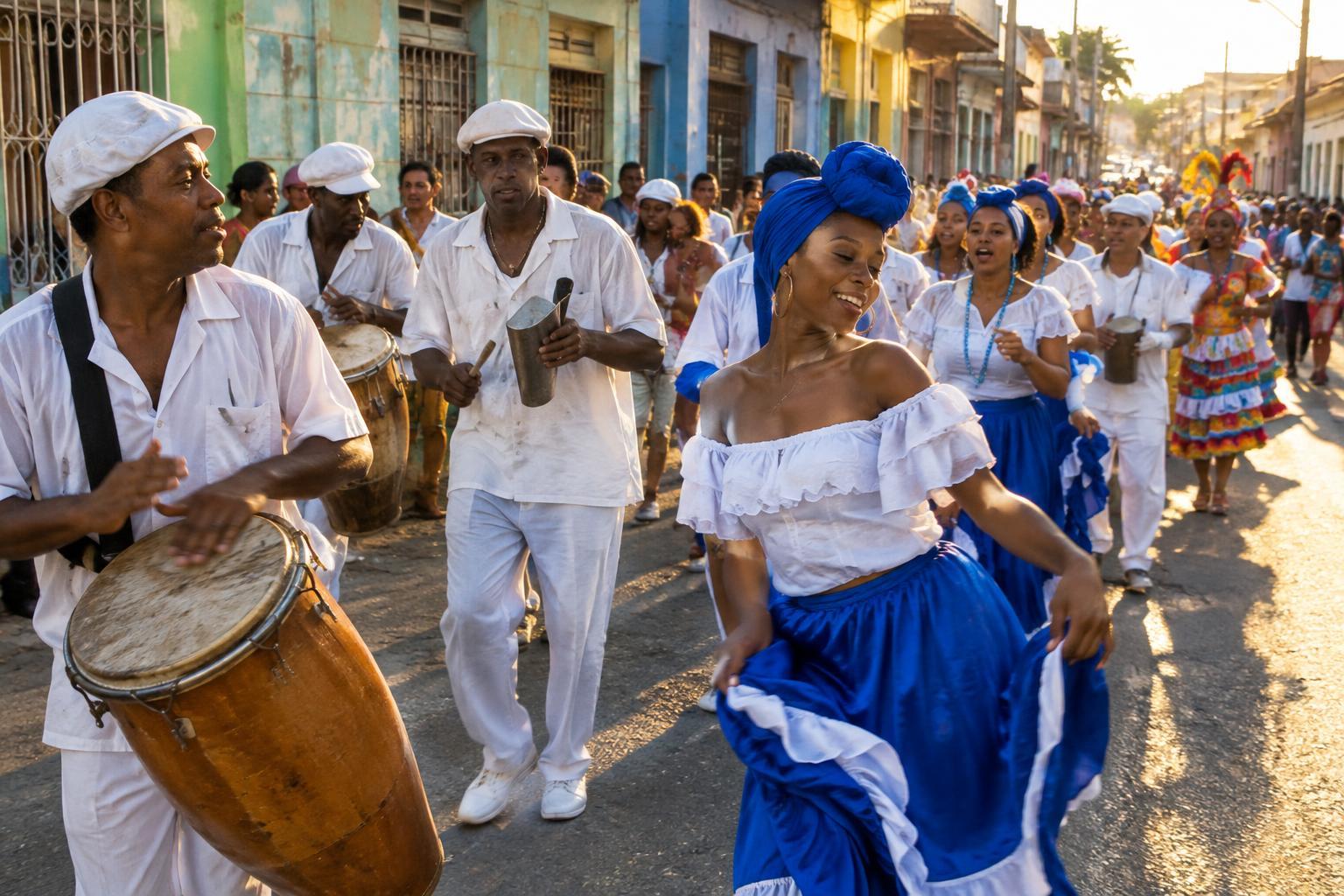
Conga de comparsa makes sense when you imagine a procession, not a band fixed on a stage. A comparsa is an organized carnival group whose music and movement belong together. Players set a driving pulse, singers and participants join in, and the sound travels as the group moves through the street. In Cuba, conga de comparsa is especially associated with the carnival traditions of Santiago de Cuba, though carnival practices vary from place to place.
The word “conga” can cause confusion. It may refer to a drum, to several kinds of music or dance, or to the street-procession music discussed here. Those meanings are related but not interchangeable. In a comparsa, the important unit is the group: percussion, voices, dancers and the people who respond to them. The rhythm has a practical job. It must carry across an open space and give people a shared sense of where to step.
How the percussion works together
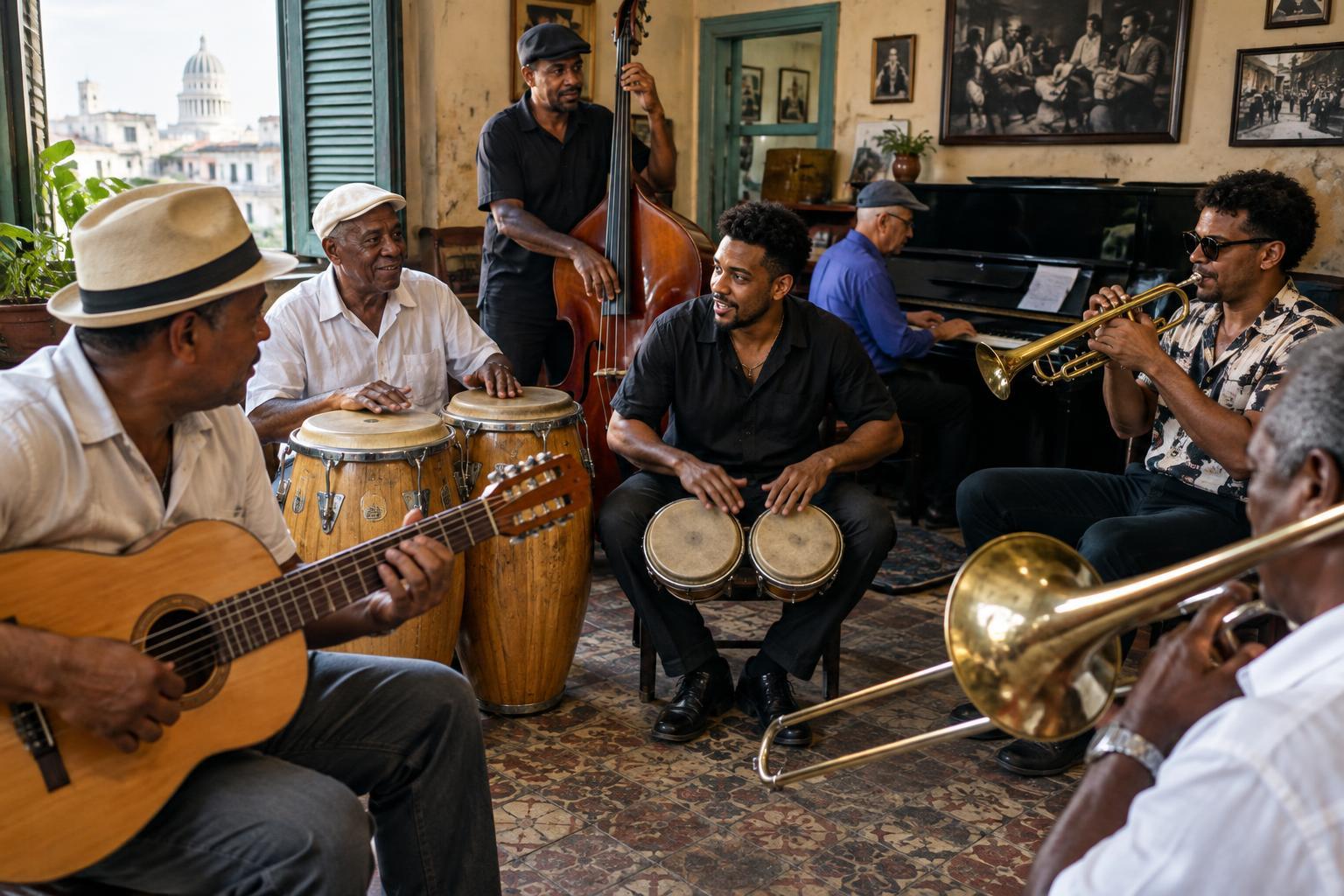
Rather than listening for one master drum, notice how contrasting sounds lock together. Low drum strokes can make the pulse feel broad and grounded. Higher, sharper strokes add motion around it. Bells and other metal percussion cut through the outdoor noise with a repeating pattern. In Santiago traditions, instruments may include bocú drums, bass drums, bells and metal objects played for their bright attack. Instrumentation is not identical in every comparsa.
Each part can be simple on its own, yet the combined rhythm feels busy and forward-moving. Repetition helps everyone stay connected while accents and short variations keep the music animated. If you play percussion, resist treating a recorded groove as a formula that every group must follow. The choice of instruments, the balance between them and the way players respond to the procession are all part of the sound.
The corneta china, a piercing wind instrument heard in some Santiago congas, adds another distinctive layer. Its sound can ride above the drums and signal phrases that participants recognize. It is worth listening for, but it should not be treated as a required ingredient in every Cuban carnival performance.
Voices, movement and the street
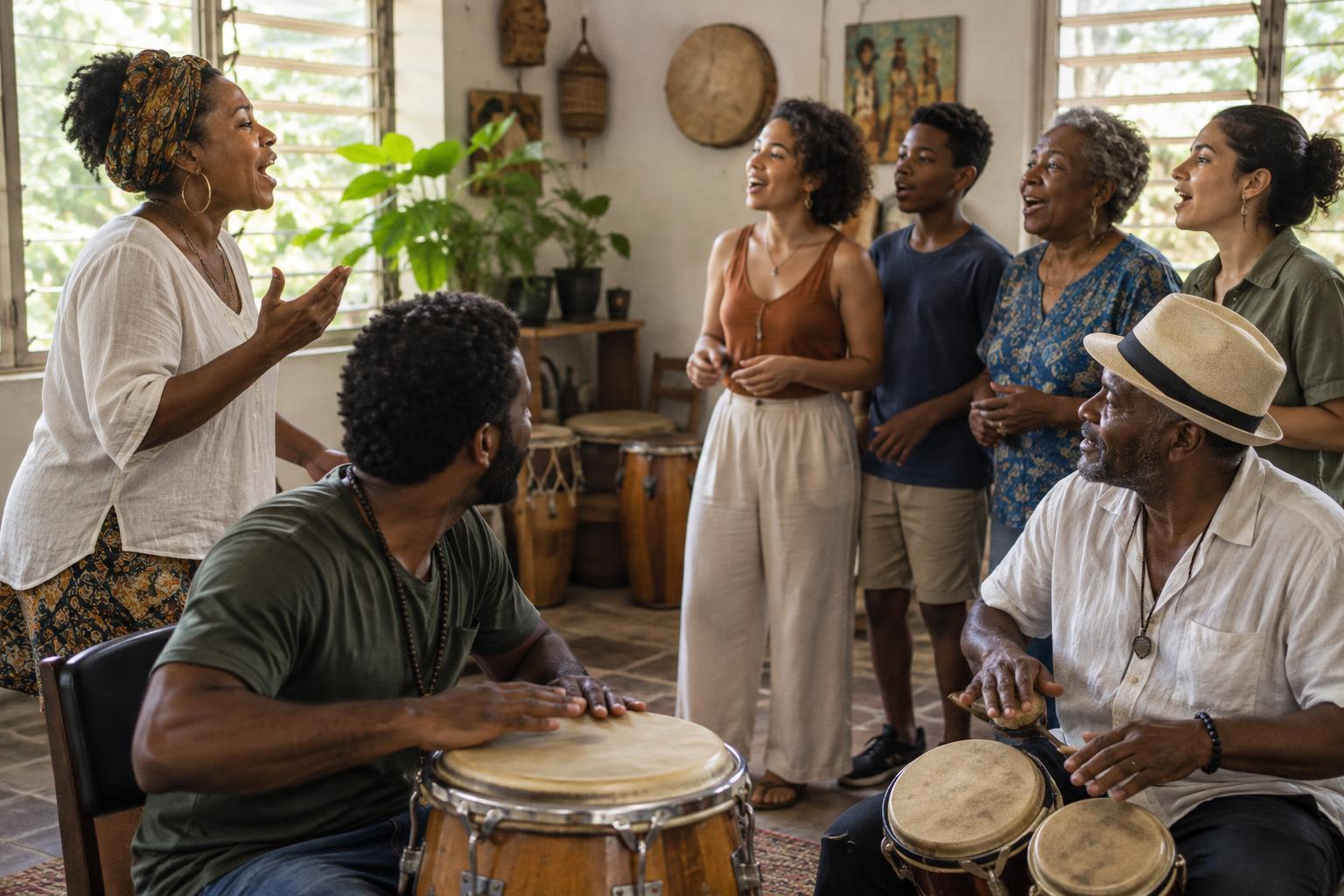
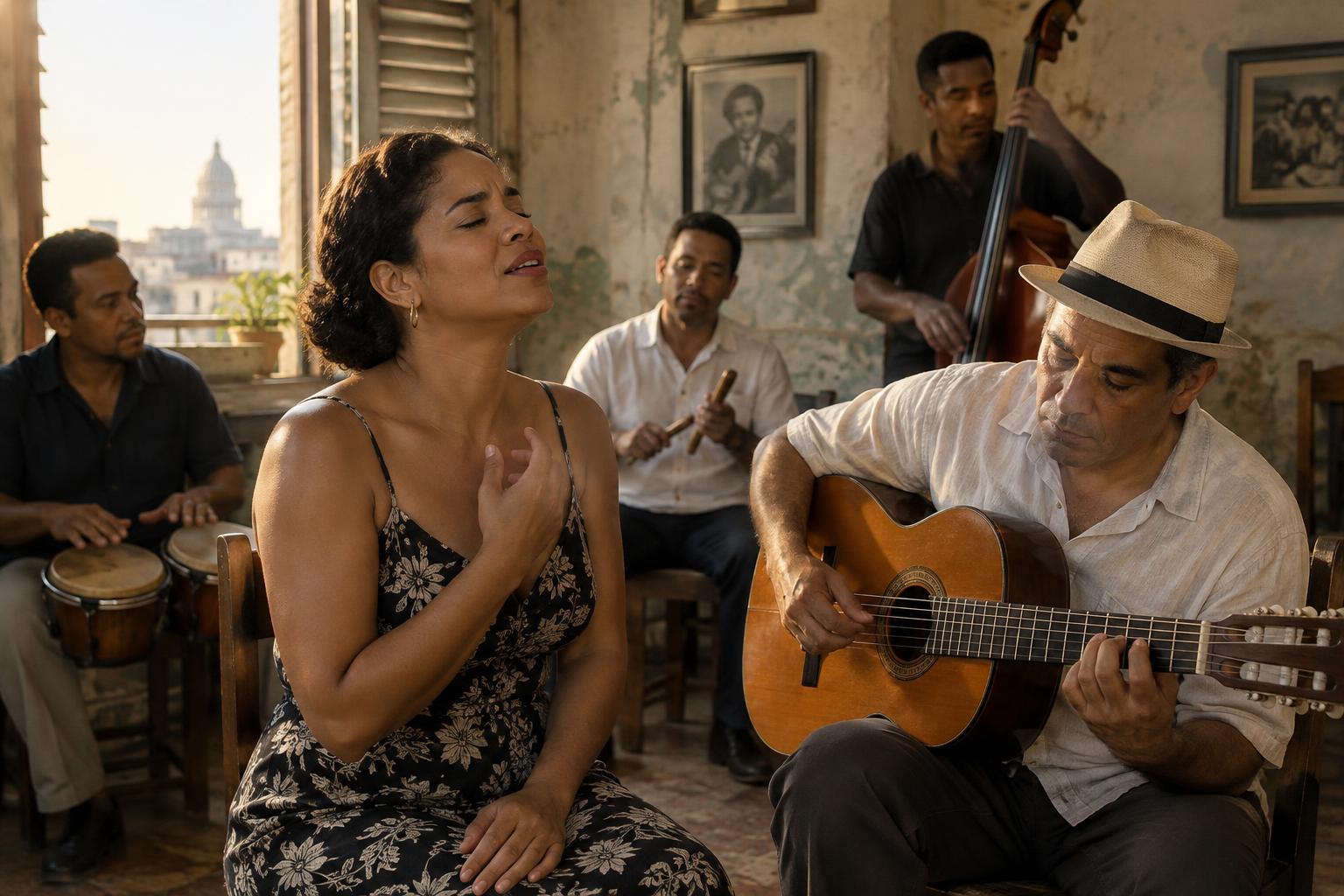
A recording may foreground the percussion, but singing and movement are central to the experience. A lead voice can offer a phrase that others answer, making participation possible even for someone who is not playing an instrument. The repeated response helps hold the group together as it travels. Listen for the point where the voices enter: does the groove seem to change, or does your attention shift to a pattern that was already there?
Movement is equally revealing. In Cuban usage, arrollar can describe moving along with a conga procession. A dancer does not need to mark every percussion accent. A steady step can sit inside a more intricate web of sounds. This is one reason conga de comparsa can feel both accessible and rhythmically dense: the feet, drums, metal percussion and voices may emphasize different moments without losing their shared direction.
A comparsa is also a community expression, not simply a collection of musical parts to copy. Costumes, neighborhood ties and the setting of carnival help shape what participants and listeners experience. When exploring the music from outside that context, it is useful to learn the names of groups and traditions where possible, and to remember that no single recording represents every procession.
Is there a clave to find?
Listeners familiar with Afro-Cuban music may immediately search for a familiar clave pattern. That can be a useful question, but it is not always the best first question. Clave can mean a specific two-measure pattern, a pair of wooden sticks, or a broader sense of rhythmic organization, depending on context. Conga de comparsa has its own interlocking patterns; forcing every performance into a son-clave or rumba-clave template may hide what the players are actually doing.
Begin instead with the pulse. Can you keep a comfortable walking beat while the percussion accents fall around it? Then identify one bright, repeating metal sound and follow it through several cycles. Finally, listen for the low drum and ask how it supports or challenges your sense of the beat. You do not have to name a pattern correctly to hear how the parts cooperate.
A short listening and practice exercise
Choose a recording identified as a Cuban carnival conga or conga de comparsa. On the first listen, do nothing but tap an even pulse and notice entrances by singers or other prominent sounds. On the second, follow just one repeating percussion part. If you lose it, return to the pulse rather than trying to catch every note. On the third, imagine walking with the procession: which sounds help you keep moving, and which add excitement around your steps?
To try the principle with friends, have one person keep an even pulse by stepping, another repeat a short pattern on a safe household percussion object, and a third answer with a contrasting sound. Keep the volume comfortable and leave room for everyone to hear the shared beat. This is an exercise in listening and coordination, not a reproduction of a comparsa. The deeper lesson is that a procession’s energy comes from people maintaining a connection while each contributes something different.