A dance rhythm shaped in Cuba
Cha-cha-chá emerged in Cuba in the mid-twentieth century from a lively conversation between dancers and musicians. It is closely associated with violinist and composer Enrique Jorrín, who developed a more clearly articulated dance pulse within the world of danzón and danzón-mambo. Accounts of a genre’s beginnings can simplify a collective process: players, arrangers, bands and dancers all helped turn musical ideas into a recognizable style.
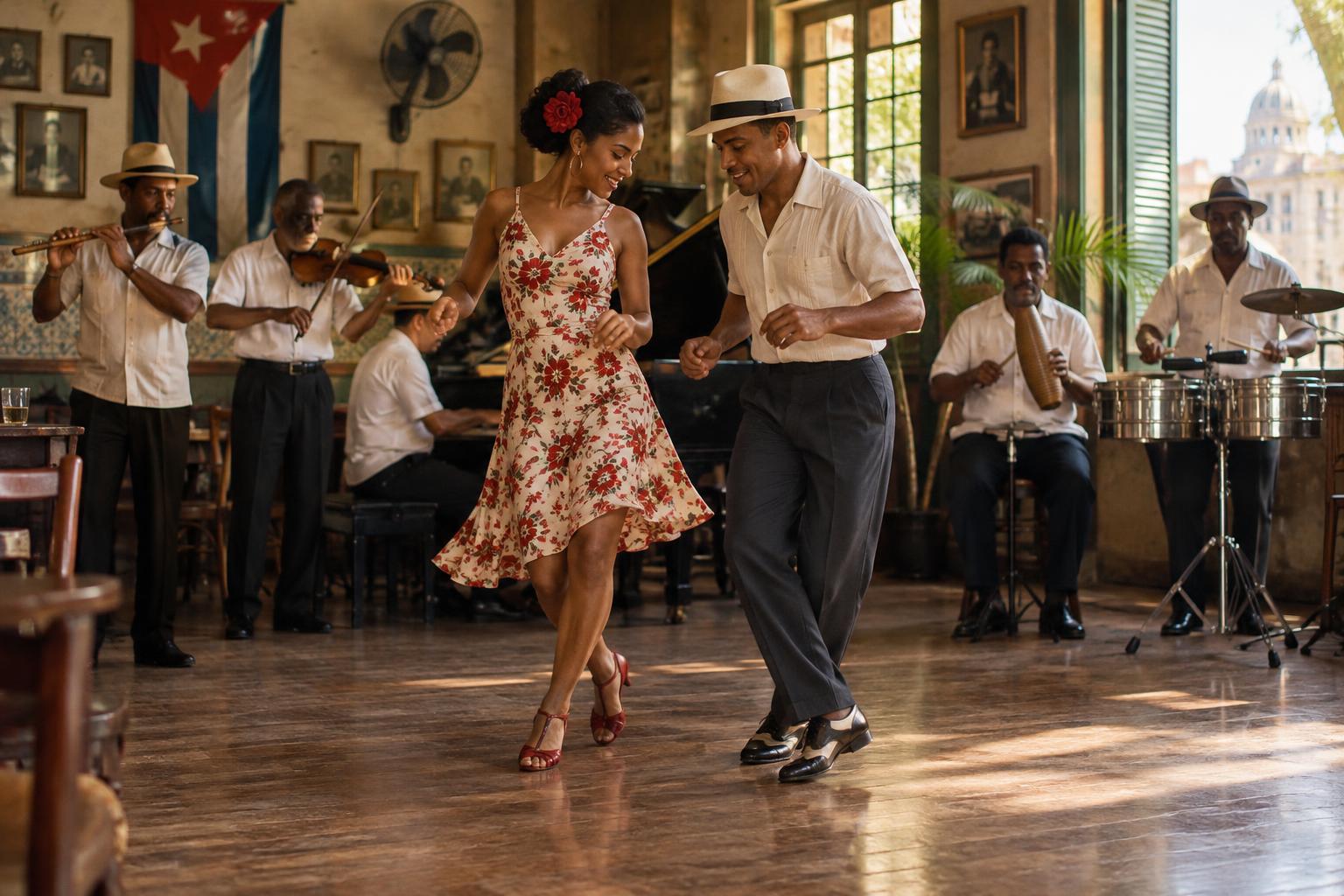
The sound is often linked to the charanga, an ensemble whose textures commonly include flute, violins, piano, bass and percussion. In that setting, a light flute melody can float above clipped rhythmic figures while the bass and percussion keep the dancers oriented. Cha-cha-chá did not replace other Cuban forms. It became another way for musicians to organize familiar instruments, syncopations and dance-floor energy.
Where the “cha-cha-chá” lives in the beat
If you are new to the style, begin with a steady count of four. Then listen for the characteristic quick-quick-quick motion near the end of a dance phrase. The name “cha-cha-chá” is often connected to the sound of dancers’ feet marking that motion. You do not need to hear three identical percussion strikes every time someone plays cha-cha-chá; the effect comes from how the ensemble and the dancers make the pulse feel.
A common dance count is “two, three, cha-cha-chá,” with the quick steps occupying beats four and one. That is a useful entry point, not a rule that every instrument states literally. The bass, piano and percussion may each emphasize different parts of the measure. Try tapping all four beats evenly while saying the dance count aloud. Keep the taps steady as your voice adds the quicker grouping. This separates the underlying pulse from the accents that give the style its character.
Cha-cha-chá and mambo: related roots, different feels
Cha-cha-chá and mambo share Cuban musical roots, and a listening comparison can reveal overlapping instruments and rhythmic ideas. Mambo can refer to more than one sound, from passages in Cuban dance music to fuller band arrangements. For that reason, tempo alone is an unreliable test. A fast performance is not automatically mambo, and a slower one is not automatically cha-cha-chá.
As a practical listening guide, cha-cha-chá often makes its dance pulse especially easy to locate. Short, repeated figures leave room for the quick-step feel to settle in. Mambo often feels more driving and may use bold ensemble hits, active syncopation and contrasting sections to build momentum. These are tendencies rather than strict boundaries. Instead of asking only “Which is faster?”, notice whether the arrangement invites a compact, recurring cha-cha-chá step or pushes forward through more forceful accents and changes in texture.
Listen across the ensemble, not just the percussion
Start at the bottom of a recording. Find the bass notes, then notice how the piano fills spaces around them. Listen next for a repeating percussion pattern that helps you keep your place. In many Afro-Cuban styles, clave provides an organizing rhythmic reference, whether it is played openly, suggested by other parts or difficult to pick out at first. Avoid assuming that every instrument must strike on the same beat: their interlocking parts are central to the groove.
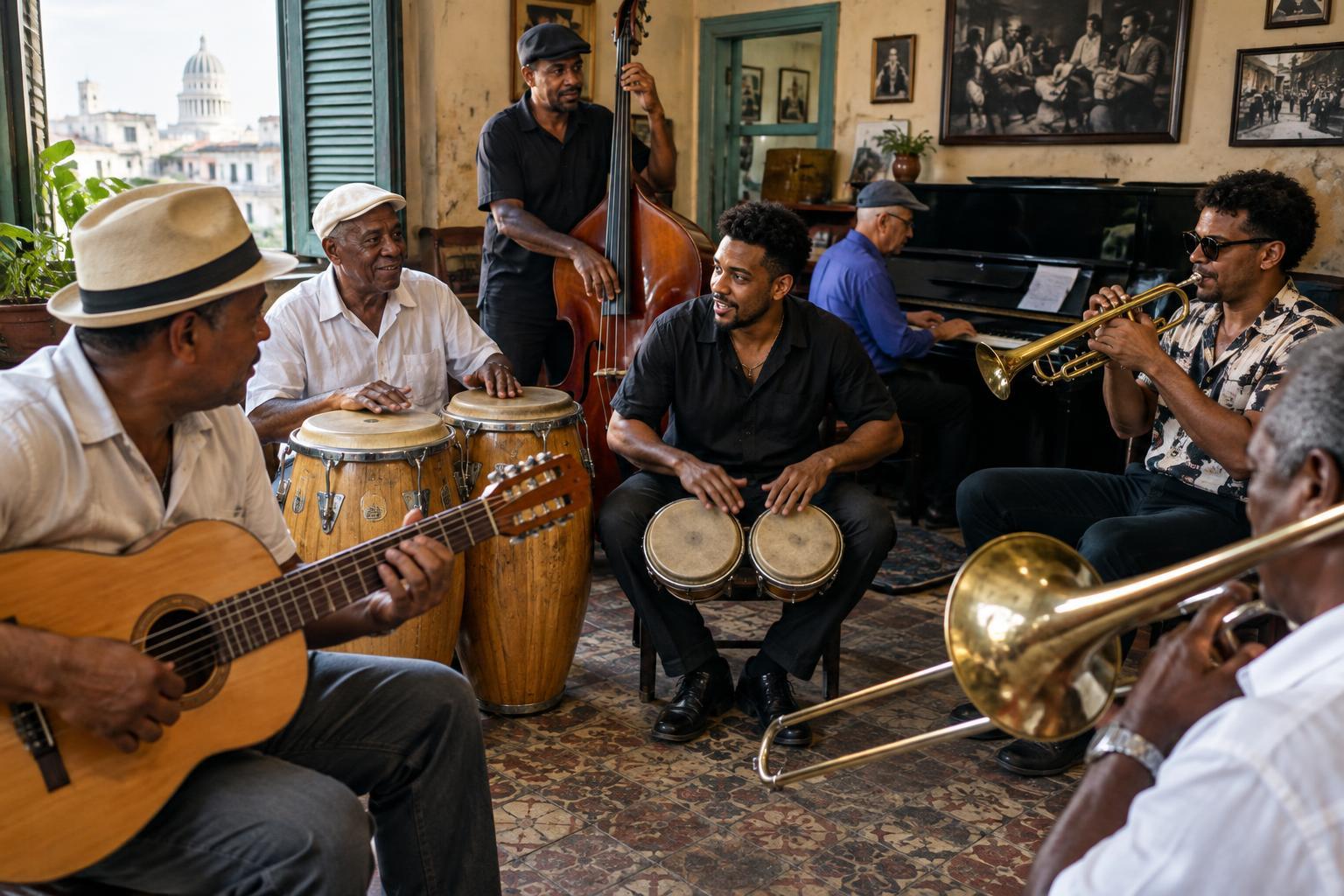
Now move your attention to the melody. In a charanga performance, flute and violins may phrase lightly over the rhythm section. Notice whether a melodic line begins before a beat, lands squarely on it or stretches past it. That small listening shift helps explain why a groove can feel relaxed and precise at once. A brass-led mambo arrangement may offer a useful contrast, but instrumentation alone cannot identify a style; listen to the arrangement and pulse together.
A short practice routine for hearing the difference
Choose one cha-cha-chá recording and one mambo recording, preferably performances you can replay several times. On the first pass, tap a comfortable, even pulse without trying to name every sound. On the second, listen for recurring accents and sing a simple “two, three, cha-cha-chá” against the cha-cha-chá track. If your counting slips, return to the bass or a steady percussion part rather than tapping harder. On the mambo track, notice where ensemble accents surprise you and where the underlying beat remains stable.
Finally, describe each recording in your own words: which parts make the pulse clear, which create movement around it, and where the arrangement changes. These observations are more useful than treating either genre as a fixed rhythmic formula. Cha-cha-chá’s approachable quick-step feel and mambo’s often more emphatic drive make a rewarding comparison, while both reward careful attention to the Cuban musicians and dancers who shaped them.