Music with a ceremonial context
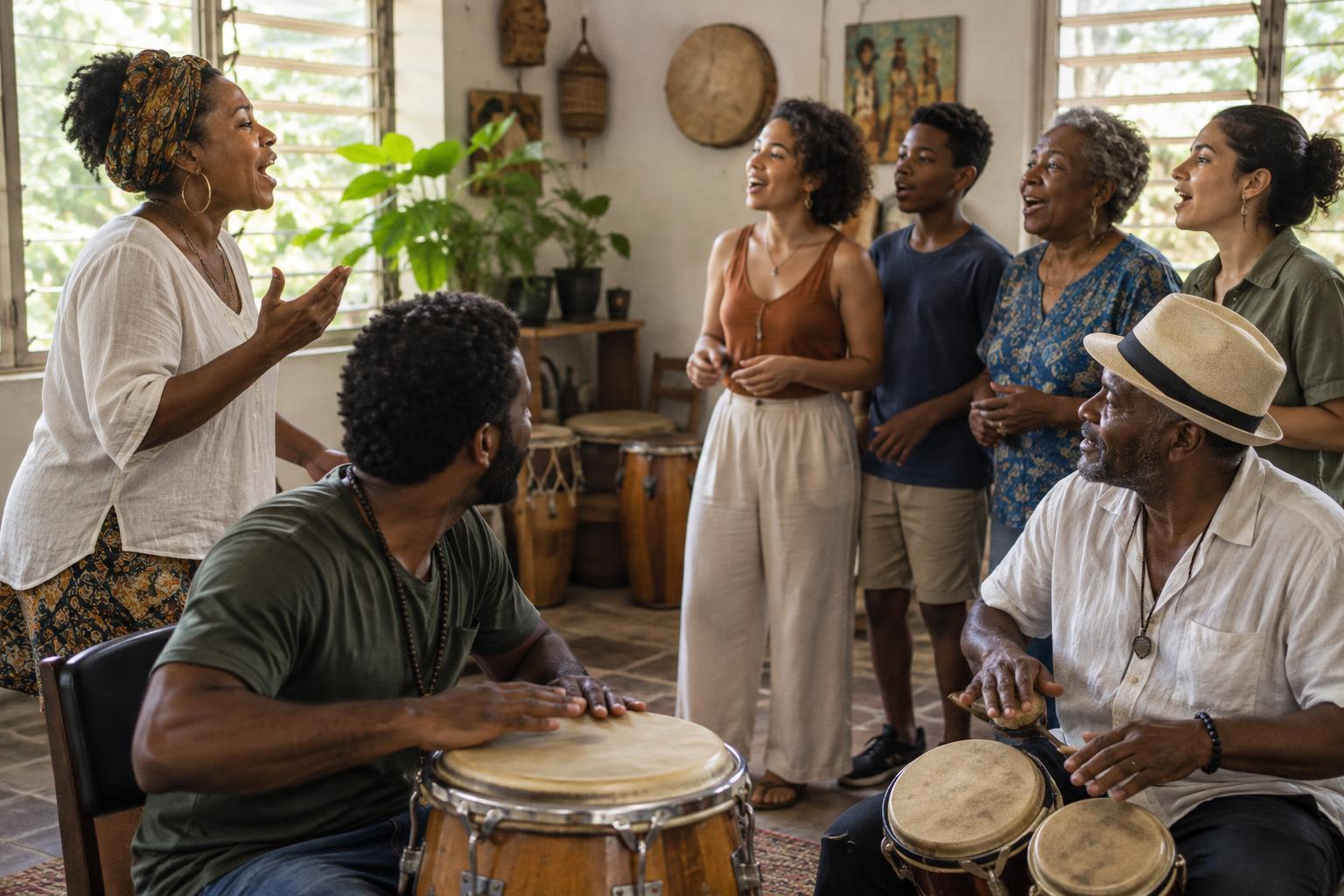
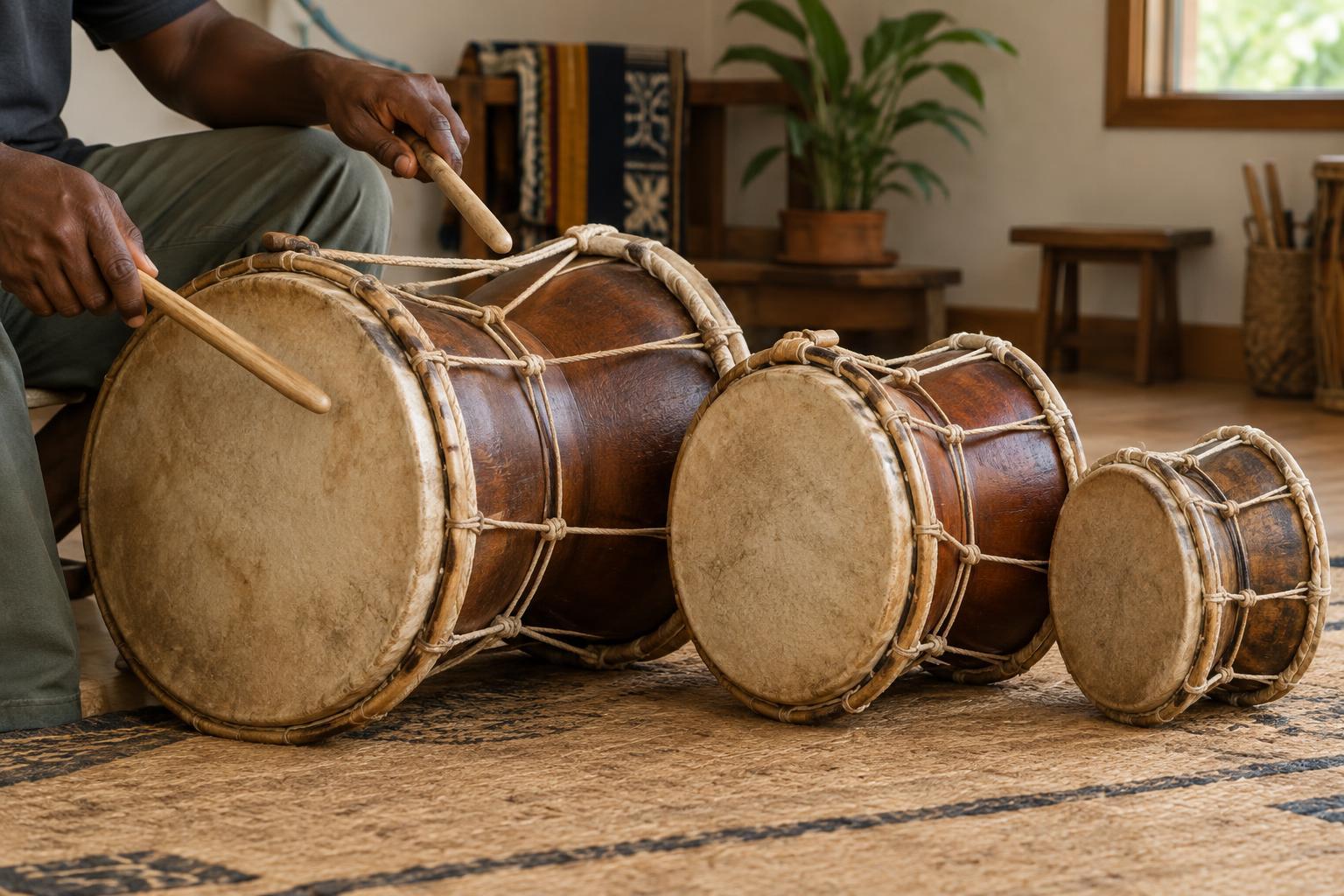
Batá are a family of three double-headed drums closely associated with Lucumí religious traditions in Cuba. Lucumí developed through the lives and practices of people of Yoruba heritage and their descendants in Cuba. Batá drumming can accompany singing and dancing that honor orishas, understood within the tradition as divine beings. The music is therefore more than a collection of interesting rhythms: in ceremonial settings, it belongs to relationships among people, community and religion.
Not every batá performance takes place in the same setting. Listeners may encounter the drums in ceremonies, public cultural presentations, recordings or music inspired by batá. These settings do not carry identical meanings or expectations. In particular, consecrated drums have a religious status that should not be treated as interchangeable with instruments used for study or performance. When listening, it helps to ask what kind of event or recording you are hearing rather than assuming that every performance represents a ceremony.
Three drums, distinct roles
A batá ensemble has three drums, commonly called iyá, itótele and okónkolo. The iyá is the largest and often takes a leading role, shaping phrases and cueing changes. The middle-sized itótele responds and interacts closely with it. The smaller okónkolo provides a recurring part that helps hold the ensemble together. Each drum has two heads, giving players contrasting sounds to work with. The result is not simply a large drum carrying a tune over two background drums; all three parts contribute to the rhythmic conversation.
Try listening for relationships before attempting to count every stroke. Can you hear a short phrase answered by another drum? Does a recurring sound continue while the other parts change? At times, the iyá and itótele may seem to exchange ideas; at others, the three parts lock into a pattern that feels like one larger movement. Drum roles offer a useful starting point, but they do not replace learning from knowledgeable practitioners about a particular performance.
Rhythm in conversation with song and dance
Batá music is often organized through named rhythmic pieces or patterns, sometimes called toques. In Lucumí practice, their significance depends on context, including the singing and the orisha being honored. Describing a toque only by its meter or a written transcription leaves out much of what makes it meaningful. A phrase may also feel different when heard alongside a singer, a chorus and dancers than it does in an isolated drum excerpt.
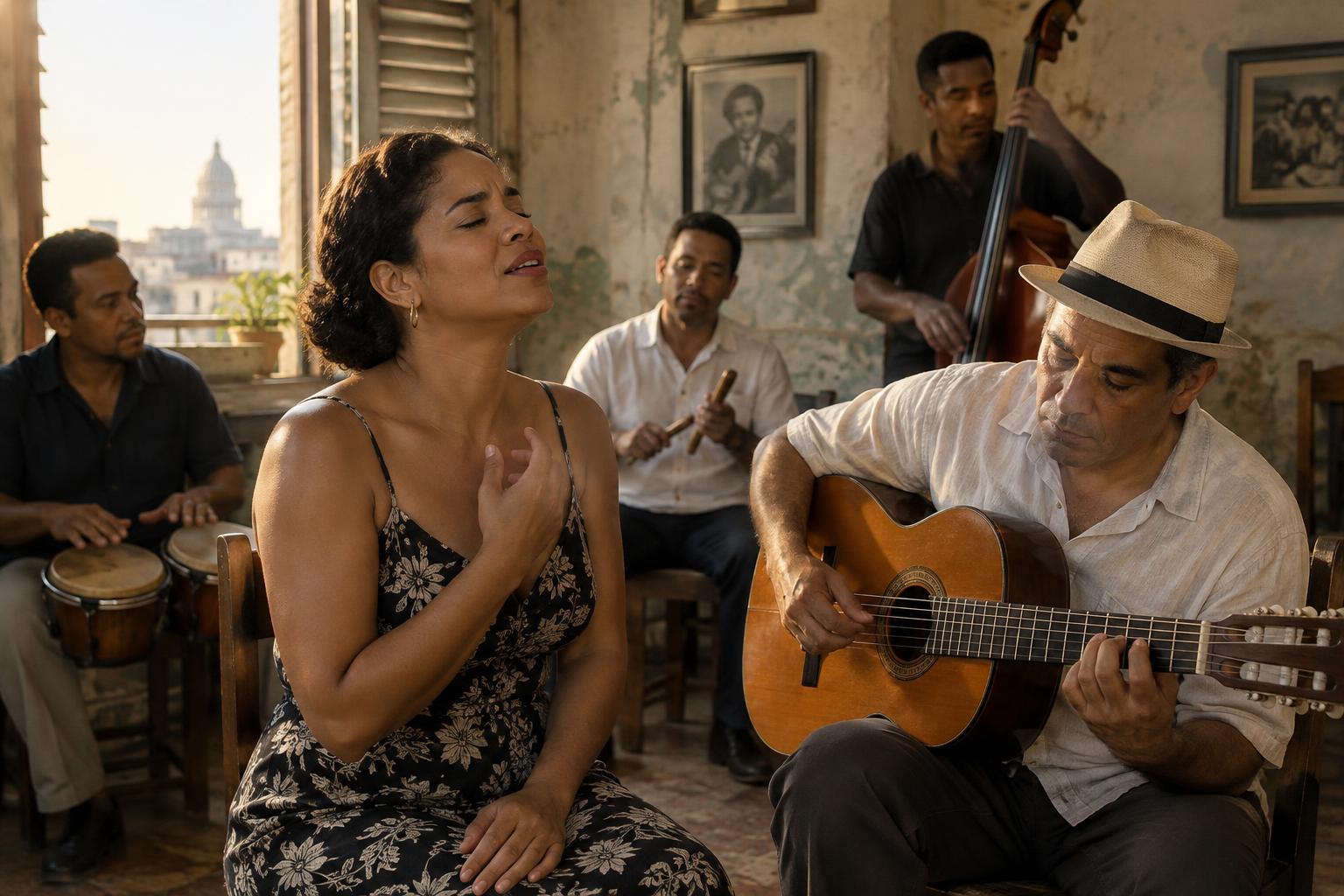
For a practical listening exercise, choose a recording that has been shared publicly for listening or study. On a first pass, follow the most consistent recurring drum sound. On a second, notice where a leading phrase enters and whether another drum answers it. On a third, listen to the voices: when do singers enter, repeat or leave space for the drums? If dance is visible, notice how movement relates to musical phrases without assuming that every gesture has a meaning you can identify from observation alone.
Listening without reducing the tradition to a beat
Listeners familiar with Afro-Cuban popular music may be tempted to fit every rhythm into a familiar clave count. Clave can be a useful concept in many styles, but it is not a universal shortcut for understanding batá. Start instead with the audible interplay of the three drums and with the wider setting. Similarly, hearing a drum phrase as expressive does not mean an outsider can confidently translate it into words. Musical communication here involves shared knowledge that a short recording may not reveal.
Terms, pronunciations and practices can vary across communities and teachers. When someone identifies a rhythm, song or ceremonial purpose, pay attention to who is providing that explanation and the setting they are describing. Avoid treating one example as a complete map of Lucumí practice. Careful listening can deepen appreciation while leaving room for meanings that are not yours to define.
How to learn with respect
A useful next step is to seek out public performances and educational material presented by practitioners, and to follow the context they provide. Credit musicians and teachers when discussing what you have learned. If you are developing your own percussion skills, you can practice general listening abilities—holding a steady pulse, recognizing repeated phrases and hearing call-and-response—without presenting a copied ceremonial passage as an all-purpose exercise or performance piece.
Respect also means accepting limits. Not every ceremony is intended as a lesson for visitors, and access to a recording does not settle whether every part of an event should be imitated, sampled or shared further. Ask permission where appropriate, follow the guidance of hosts and teachers, and be willing to listen more than you play. Batá reward close attention: the three drums reveal increasingly rich relationships, while their cultural setting reminds us that understanding music involves understanding how people care for it.