A history of people, not just patterns
African musical lineages in Cuba begin with people brought to the island through slavery and with their descendants, who sustained and transformed cultural practices under changing conditions. Those people came from different parts of Africa and did not share one language, religion or musical system. In Cuba, they encountered one another as well as European and other Caribbean traditions. The music that developed through those encounters cannot be reduced to a single African source.
This matters when we listen to a familiar rhythm. A repeating pattern may suggest a connection, but patterns can travel between communities, change their purpose or arise in more than one place. To understand a lineage, historians ask more than “Where have I heard this beat?” They also ask who performed it, what it accompanied, what participants called it and how it was passed on.
Connections that can be traced
Some connections are supported by several kinds of evidence. In Lucumí religious practice in Cuba, for example, Yoruba-derived names, songs, ritual relationships and batá drumming offer ways to trace continuities with traditions associated with Yoruba-speaking communities. That does not mean every performance stayed unchanged after crossing the Atlantic. Continuity can include adaptation: people preserve knowledge while responding to new neighbours, restrictions and circumstances.
Historians also examine traditions associated with Kongo and other Central African peoples, and with communities often described in Cuba as Arará, whose histories connect to parts of West Africa. These names are useful starting points, not tidy boxes. Labels found in records may reflect colonial classifications rather than the identities people would have chosen for themselves. Even a recognizable word or instrument name needs context before it can support a claim about a musical practice’s origin.
Evidence may come from archival records, language in songs, accounts within communities, instruments, dance and the relationships between music and ceremony. Each kind of evidence has limits. A written record may tell us that a group gathered, for instance, without telling us what its music sounded like. Oral knowledge can preserve details absent from archives, but it should be heard in its own context rather than treated as a shortcut to a simple historical timeline.
Why the gaps are part of the story
The historical record is uneven. Enslaved people were often documented by those who controlled them, and those documents did not necessarily record their musical knowledge or use their own names for it. Music also changes through teaching and performance, leaving no fixed original version to recover. Historians can sometimes make a strong case for a cultural connection without being able to identify the exact route by which a song, technique or rhythmic idea reached a particular community.
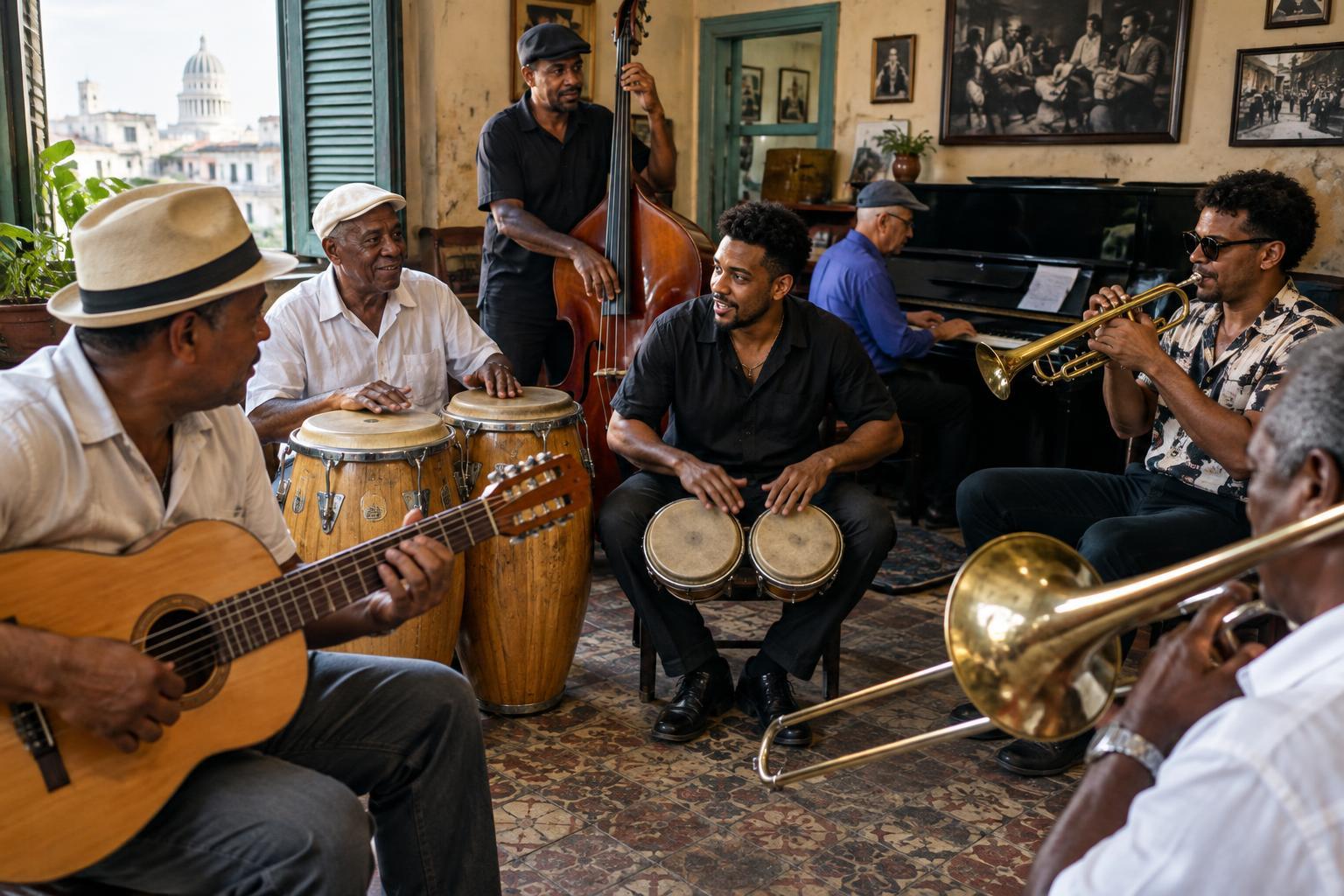
Genre names can make the problem harder. Rumba, for example, took shape in Cuba and draws on multiple experiences and practices; calling it simply “African” leaves out the Cuban communities that developed it. Likewise, hearing a timeline in an arrangement does not prove that the entire piece descends from one named tradition. There is a difference between describing an audible resemblance, identifying an influence and demonstrating a documented lineage.
How to listen without flattening the history
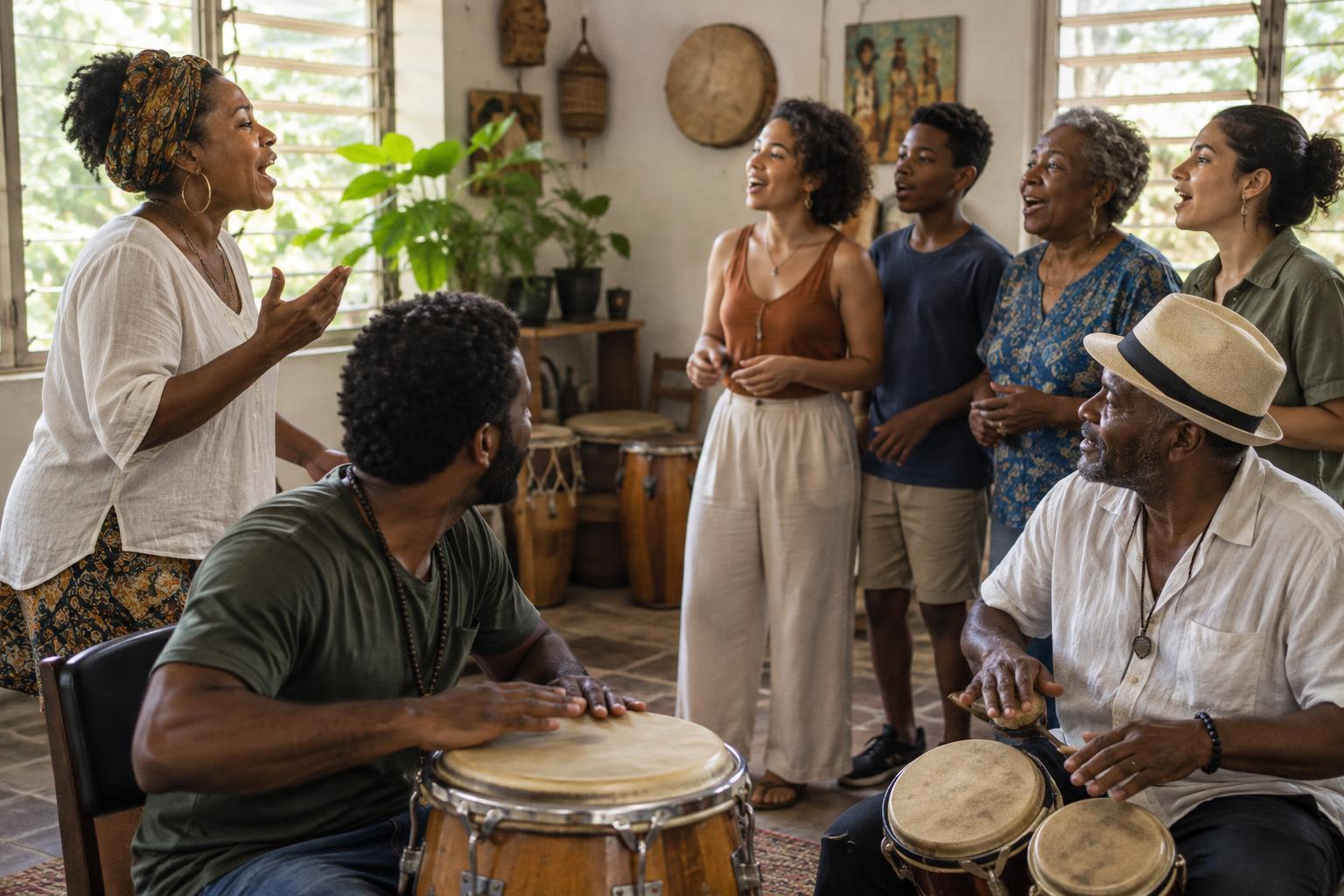
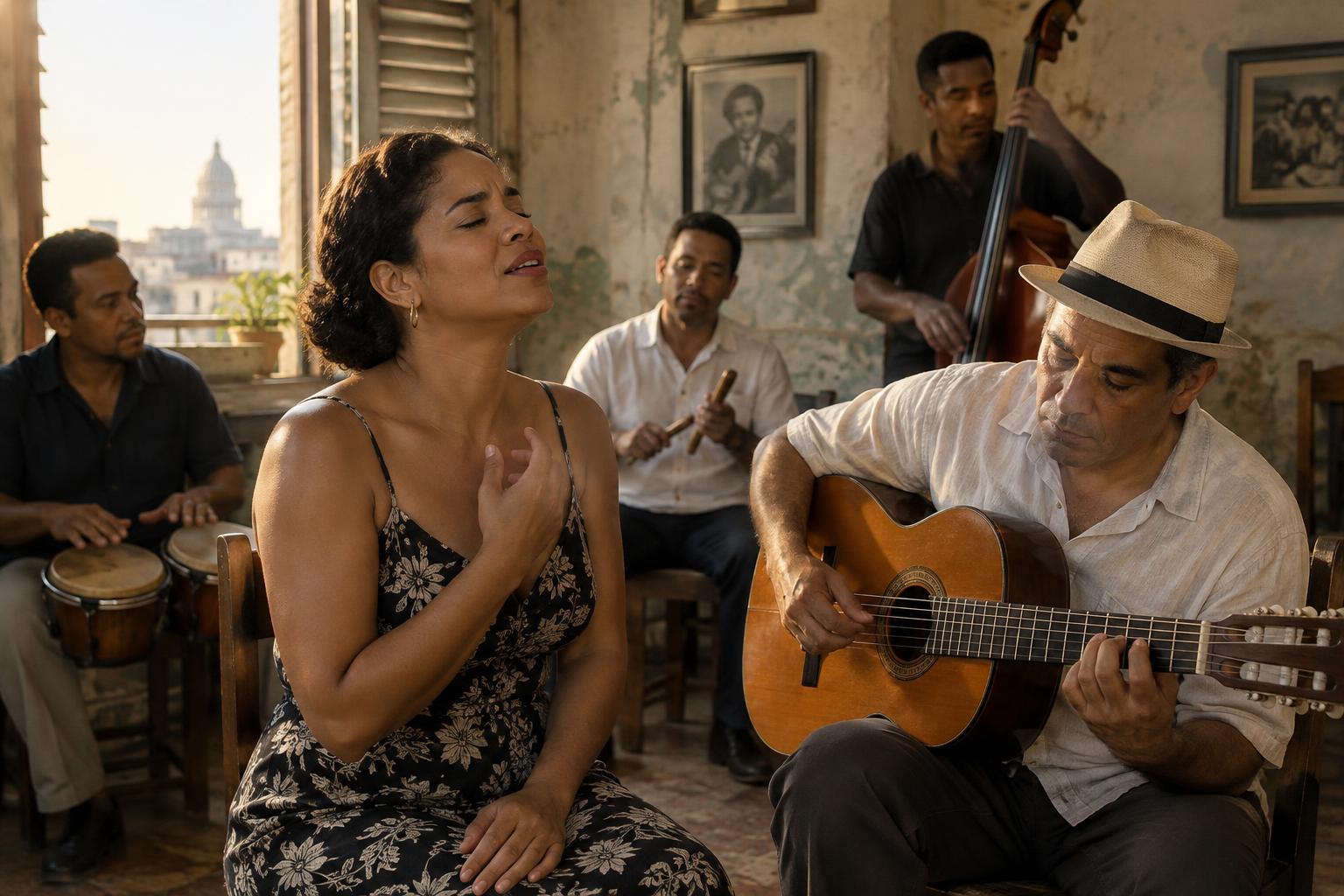
Start with the setting. Is the music part of a religious ceremony, a community gathering, a staged performance or a commercial recording? The same instrument or rhythmic figure can carry different meanings in each. Listen for how voices, drums, dance and repeated phrases interact, rather than isolating a percussion part as though it explains the whole tradition.
When learning a rhythm, name the practice as specifically as your knowledge allows. If you know only that a pattern reminds you of something you have heard in Afro-Cuban music, say that instead of assigning it a precise African birthplace. Seek out musicians and educators who identify the community and setting of the material they teach. Some knowledge is shared publicly; other knowledge belongs within particular relationships and ceremonies. Respecting that distinction is part of learning to listen well.
A useful question to keep asking
The most productive question may not be “Is this rhythm African or Cuban?” It may be “What can we say about the people and practices through which this music was carried and remade?” African lineages are central to Cuban musical history, and Cuban musicians have shaped those inheritances in distinct ways. Holding both ideas together makes room for connection without pretending that every gap in the evidence has been closed.