Clave is a pattern and a point of reference
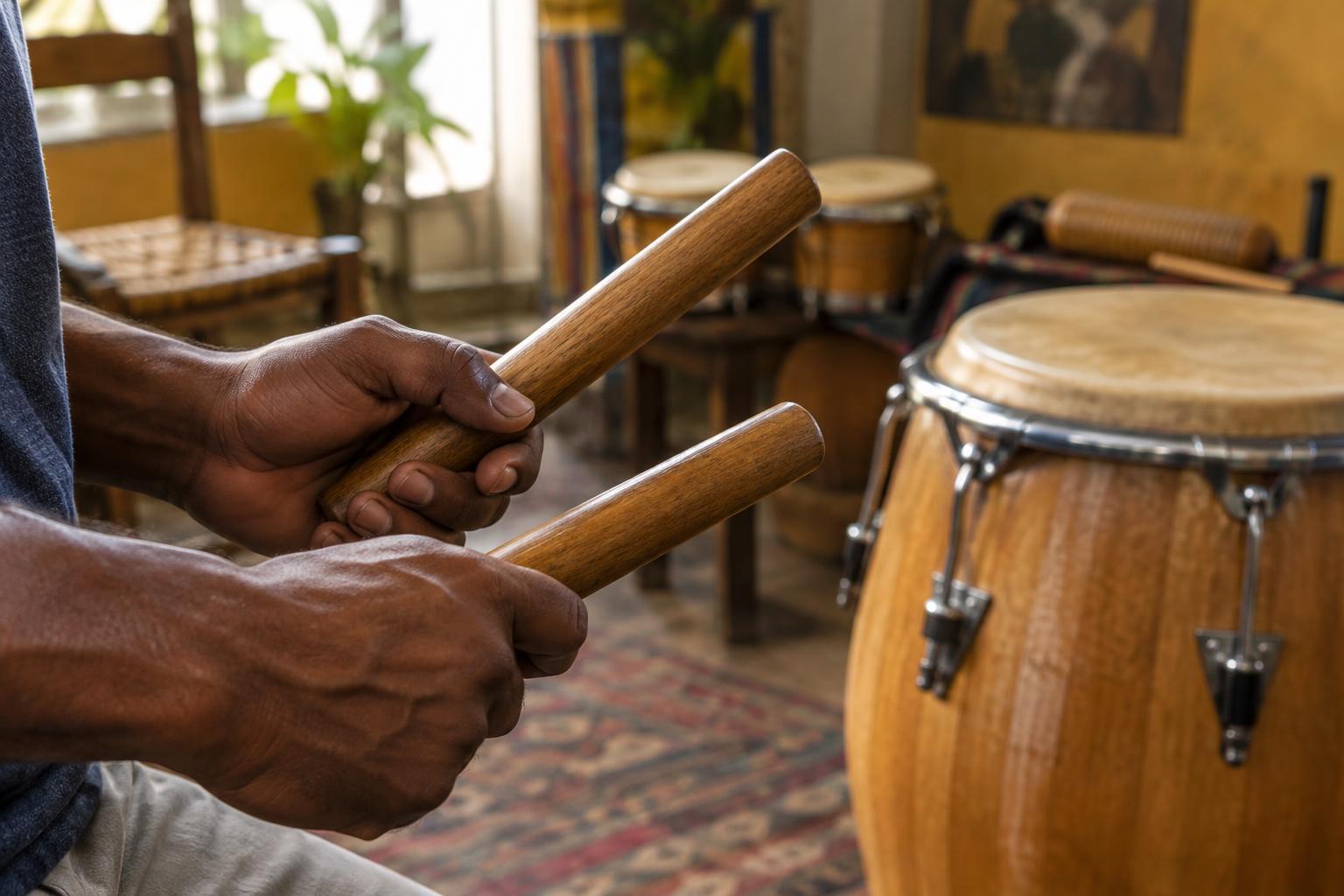
In Cuban music, clave can mean the pair of wooden sticks played together, the pattern they sound, or the rhythmic relationship that helps organize an ensemble. The five-stroke pattern extends across two measures: one measure has three strokes, and the other has two. Musicians call these the three-side and the two-side. The pattern may be played plainly, suggested by other instruments, or left unstated while performers still feel its placement.
Clave is useful to a listener because it gives a longer phrase to hear against the steady beat. A bass line, melody, or percussion part may leave space where a clave stroke falls or answer it rather than copy it. Hearing that conversation is more revealing than searching for five identical clicks in every recording.
The stroke that changes
A simple way to compare son clave and rumba clave is to count two measures of four beats, dividing each beat into two equal parts: “1 and 2 and 3 and 4 and.” Starting with the three-side, place son clave strokes on 1, the “and” of 2, and 4. In the next measure, place the two-side strokes on 2 and 3. For rumba clave, keep those first two three-side strokes and both two-side strokes in the same places, but move the final three-side stroke from beat 4 to the “and” of 4.
That small shift changes the approach to the next measure. Son clave’s last three-side stroke lands on the beat; rumba clave’s arrives between beats, closer to the following downbeat. The count is a learning aid, not a claim that every performance divides time with mechanical evenness. Feel, tempo, and the parts around clave all affect how the pattern comes across.
Why style and direction both matter
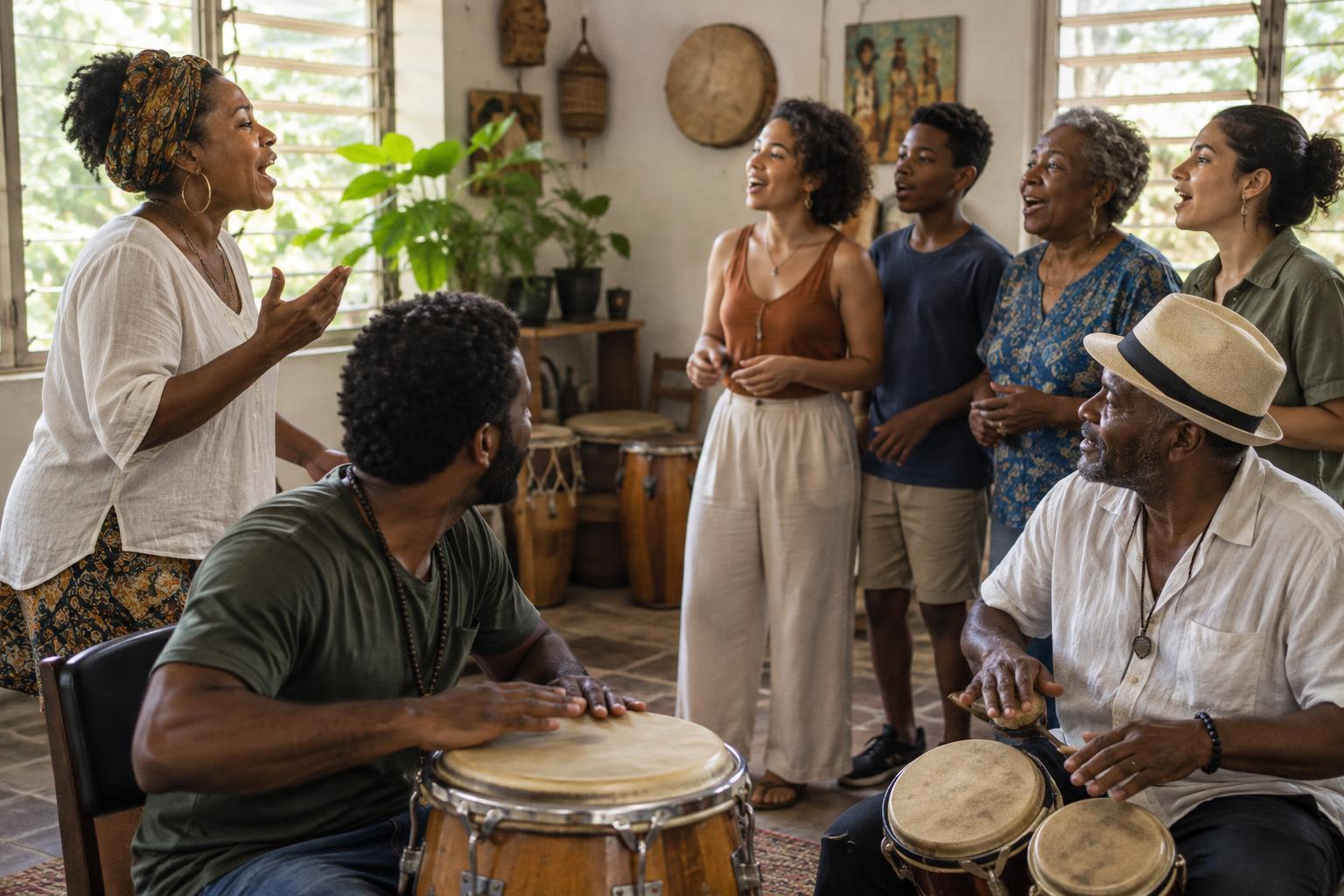
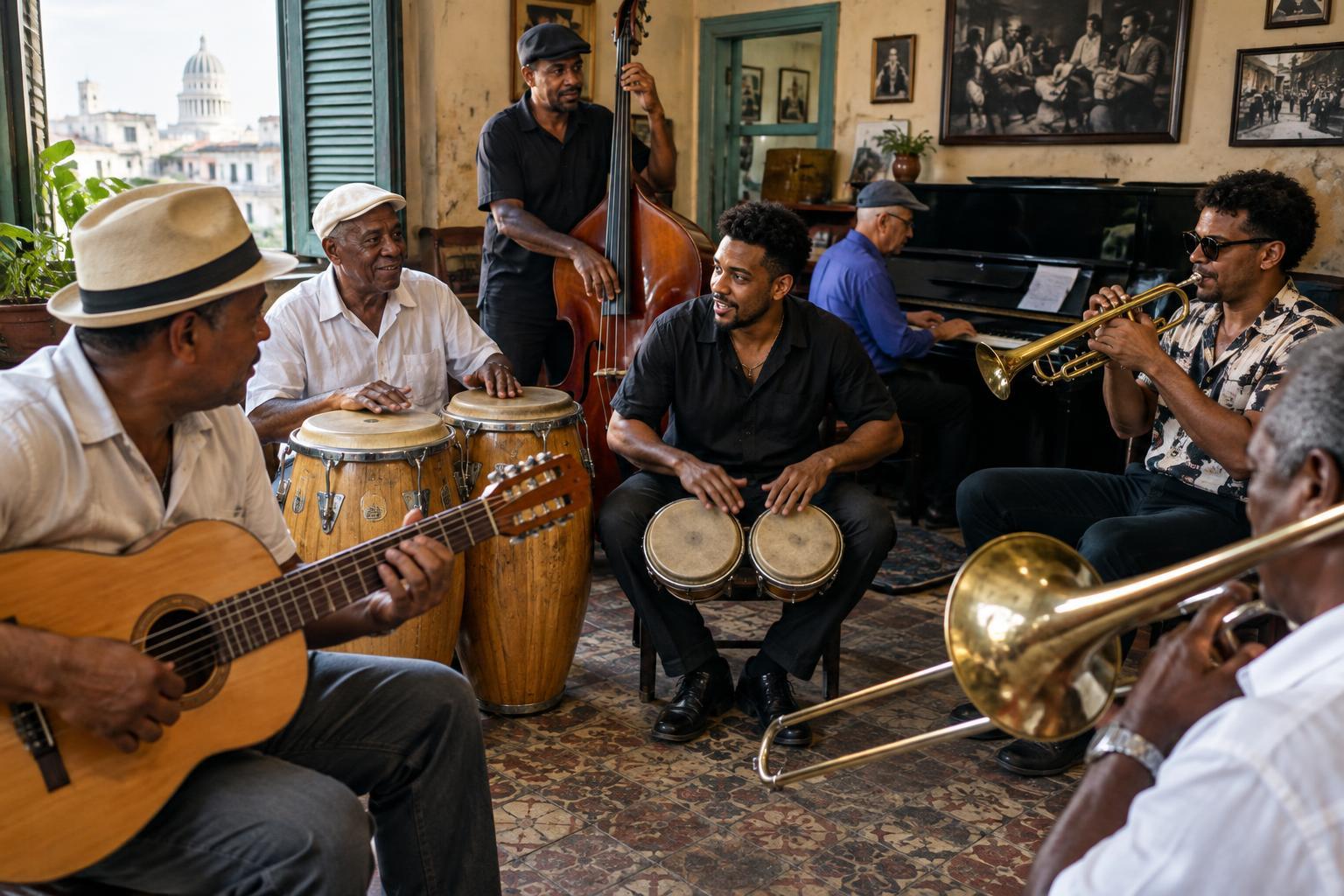
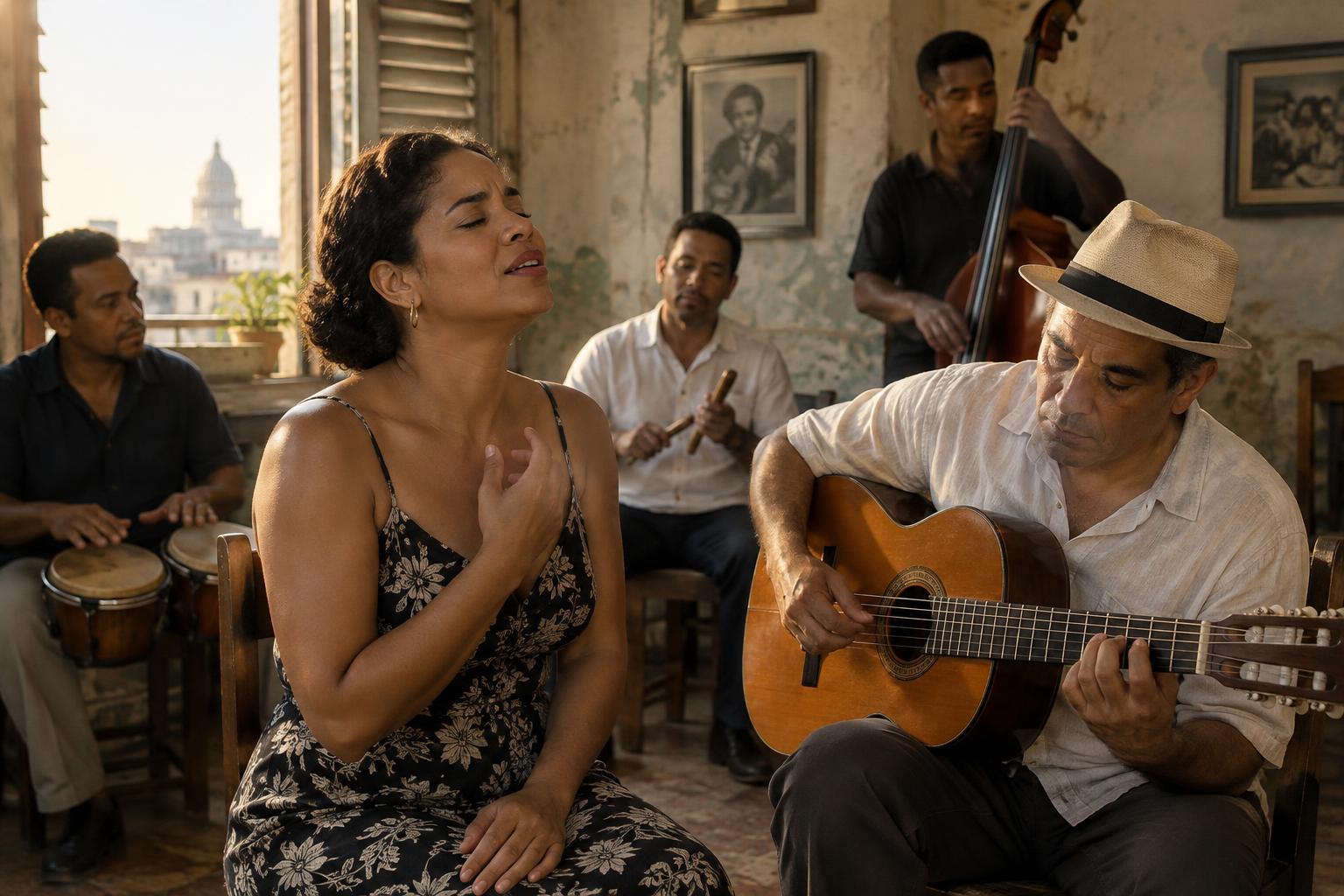
Son and rumba name distinct Cuban musical traditions, not merely two settings for the same percussion part. Son is associated with song and dance ensembles whose interlocking parts helped shape many later Cuban popular styles. Rumba encompasses several performance traditions, including yambú, guaguancó, and columbia, in which drumming, singing, and dance interact closely. These traditions developed through the creativity of Cuban communities, particularly within Afro-Cuban cultural life. A clave diagram can help you listen, but it cannot stand in for those wider practices.
You may also hear musicians describe clave as 3-2 or 2-3. Those labels tell you which side comes first in the phrase; they do not tell you whether the pattern is son or rumba clave. A 2-3 son clave begins with its two-stroke measure, then continues with son clave’s three-stroke measure. Learning both directions helps you follow a song whose melody begins on a different side from the one you first practiced.
The distinction matters in arranging because a phrase can sound awkward when its accents imply one placement while accompanying parts strongly imply another. Yet clave is not a rule that every instrument must strike on all five points. Musicians can create tension, anticipation, and release by playing around it.
A short practice routine
Tap a steady beat with your foot and say the count aloud for two measures. Clap the three-side of son clave in the first measure—1, the “and” of 2, and 4—then clap 2 and 3 in the second. Repeat until you can keep the foot steady without rushing between claps. Next, change only the final clap in the first measure to the “and” of 4. Notice how much more quickly that stroke leads into measure two.
Once each version feels familiar, alternate several repetitions of one with several of the other. Record yourself and listen for the shifted stroke rather than judging only whether you completed the pattern. Then try beginning with the two-side. If the beat disappears when you reverse the order, slow down and return to speaking the count.
For listening practice, choose a recording you know well and first find the pulse and repeating phrases. Listen for a sung or instrumental line that helps locate the two-measure cycle. Only then ask whether a clave pattern is audible or implied. If you cannot confidently identify it, keep listening rather than forcing every phrase into your counting exercise.
Use the pattern to hear more, not less
The clearest technical difference between these two commonly taught patterns is one stroke: beat 4 in the three-side of son clave becomes the “and” of 4 in rumba clave. That fact is worth learning because it sharpens your sense of phrasing. It is not, by itself, a complete account of son, rumba, or the people who make that music.
As your ear develops, shift attention from naming the pattern to hearing what performers do with it. Notice how a singer enters, where a drum leaves space, and how a bass line draws you toward the next measure. Clave becomes most useful when it helps those musical relationships come into focus.