Two lines, different jobs
A melody often feels like the part you could sing after one listen. A countermelody is another recognizable line moving alongside it. It may appear in a different instrument, register, or vocal part, and it does not have to play continuously. Sometimes a brief answer at the end of a sung phrase is enough to give the music a second thread.
The word “counter” can suggest opposition, but the most useful question is how the lines relate. Does the second line answer a pause, sustain a note while the tune moves, or climb as the tune settles? A good countermelody has a shape of its own without demanding that you stop hearing the main tune. The two lines may trade attention from moment to moment, while the arrangement makes their roles clear.
Listen for space before you listen for notes
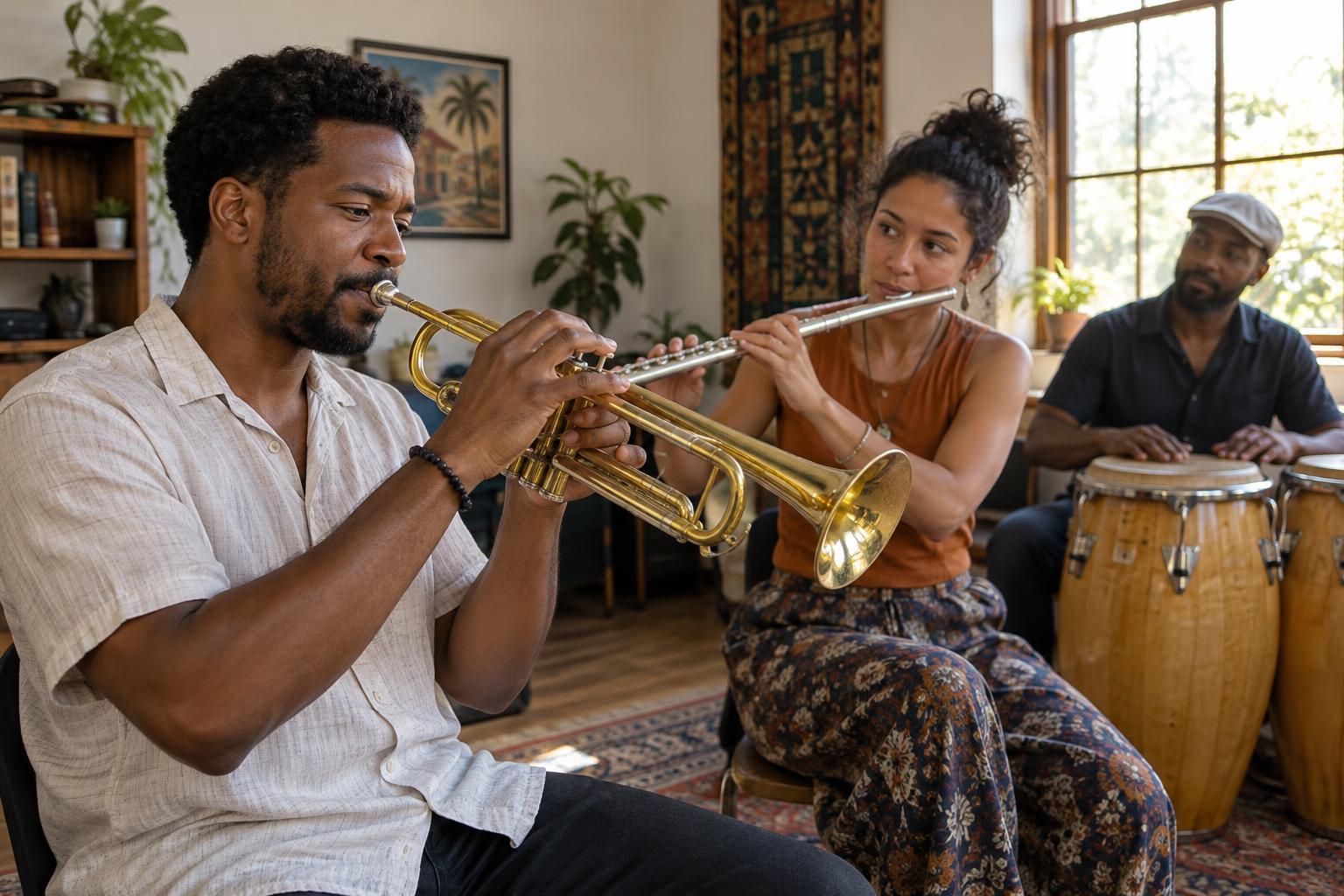
Start by following only the main tune. Notice where its phrases begin and end, where it holds a long note, and where it rests. On a second listen, pay attention to what fills those openings. A horn figure, a backing voice, or a higher instrumental phrase might enter just as the lead gives you room to hear it. You do not need to identify every pitch to recognize that exchange.
Try describing the second line in simple terms: “it rises after the singer stops” or “it repeats a short idea beneath the long note.” Then return your attention to the tune while keeping that description in mind. This is often easier than trying to track both lines note by note. It also helps distinguish a countermelody from accompaniment that mainly marks the beat or outlines the harmony.
Keep the rhythmic conversation in view
Countermelodies are shaped by timing as much as pitch. A second line can avoid the tune’s busiest moments, answer it between phrases, or use a contrasting pattern of short and long notes. If both parts attack every note together, they may sound like a thickened single melody rather than two distinct lines. If they never seem to meet, the music may feel disconnected. Listen for points where the lines separate and where they come back together.
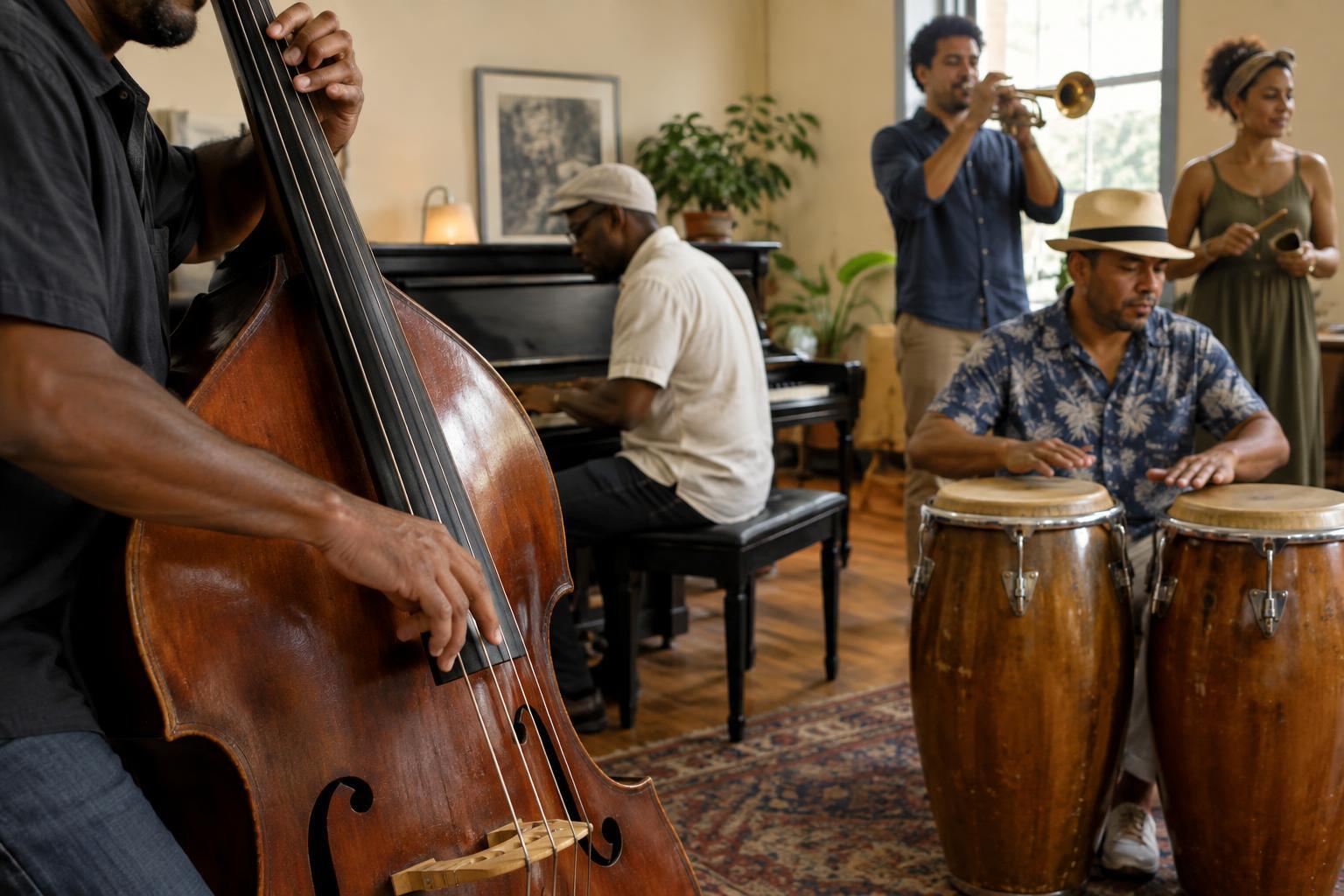
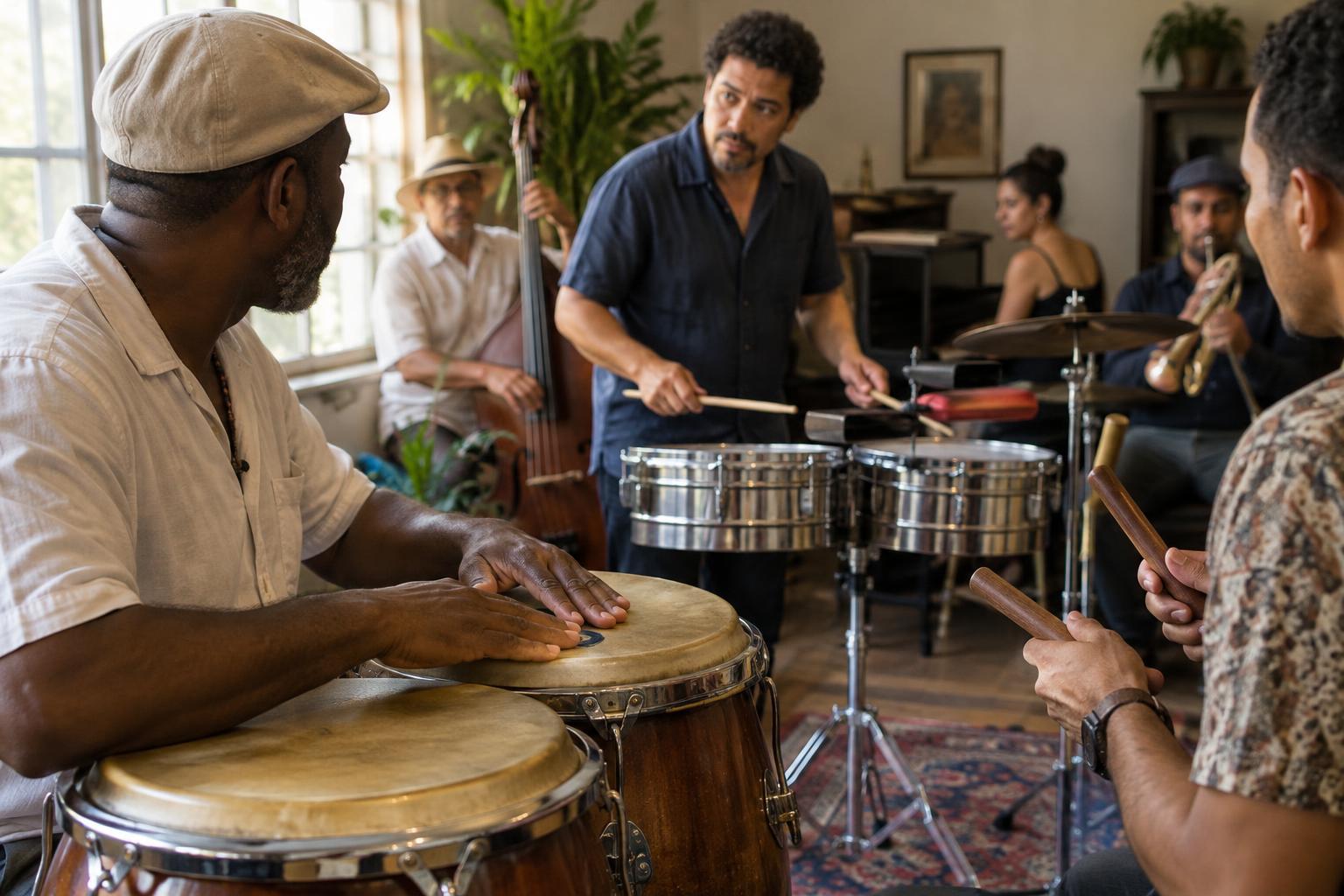
In an Afro-Cuban ensemble, that conversation also sits within a larger rhythmic arrangement. Depending on the piece, a recurring bell pattern, bass figure, percussion parts, and clave orientation may all affect where a new phrase feels settled or tense. Clave is not a general name for any syncopation, nor is it a rule that can be inferred from one isolated instrument. When learning a particular style, listen to how the complete arrangement places its phrases before adding a second line of your own.
A three-pass listening exercise
Choose a short passage with a lead voice or instrument and another audible line. On the first pass, hum the lead and tap a comfortable pulse. On the second, stop humming and trace the other line instead, even if you can only sing its rhythm on one note. On the third, hum the lead again and mark each place the second line enters with a small gesture. The aim is not a perfect transcription; it is to hear when each part asks for attention.
If the passage feels crowded, work with just a few seconds at a time. Write down a timeline using plain words such as “lead begins,” “second line answers,” and “both land together.” Then listen without your notes. Can you anticipate the answer without dropping the tune? Repeating this exercise with different arrangements helps you notice that countermelodies can be sustained, playful, sparse, or rhythmically active.
Try writing a second line
Sing a short, familiar phrase of your own and record it. Leave a little silence after it. Play it back and improvise a response using only a few notes. Next, try a line that begins while the original holds its longest note. Keep both versions short enough that you can remember them. Rather than judging which is more complicated, ask which lets you hear the original phrase most clearly.
Finally, sing both parts with a friend or record them separately. Lower the volume of the new line if it masks the tune, or move it to a different register. Remove notes where the two parts feel crowded and leave the gestures that create a clear exchange. A countermelody succeeds not by staying interesting every second, but by giving the listener another line to follow and a reliable way back to the main tune.