When the groove steps aside
A steady groove gives listeners a sense of what might happen next. A break interrupts that expectation: the accompaniment drops out or becomes much thinner for a moment, perhaps leaving a voice, a drum pickup, or silence exposed. When the full band returns, the familiar rhythm can feel newly forceful—not because anyone plays louder, but because the contrast sharpens our attention.
Stop-time creates a related effect through a repeated pattern of brief, coordinated hits followed by open space. Instead of maintaining a continuous accompaniment, the band marks selected moments while a singer or soloist may continue across the gaps. The terms are used in different ways across musical settings, so it is more useful to hear what the players do than to assume every break or stop-time passage follows one fixed formula.
The shared pulse does not have to be audible
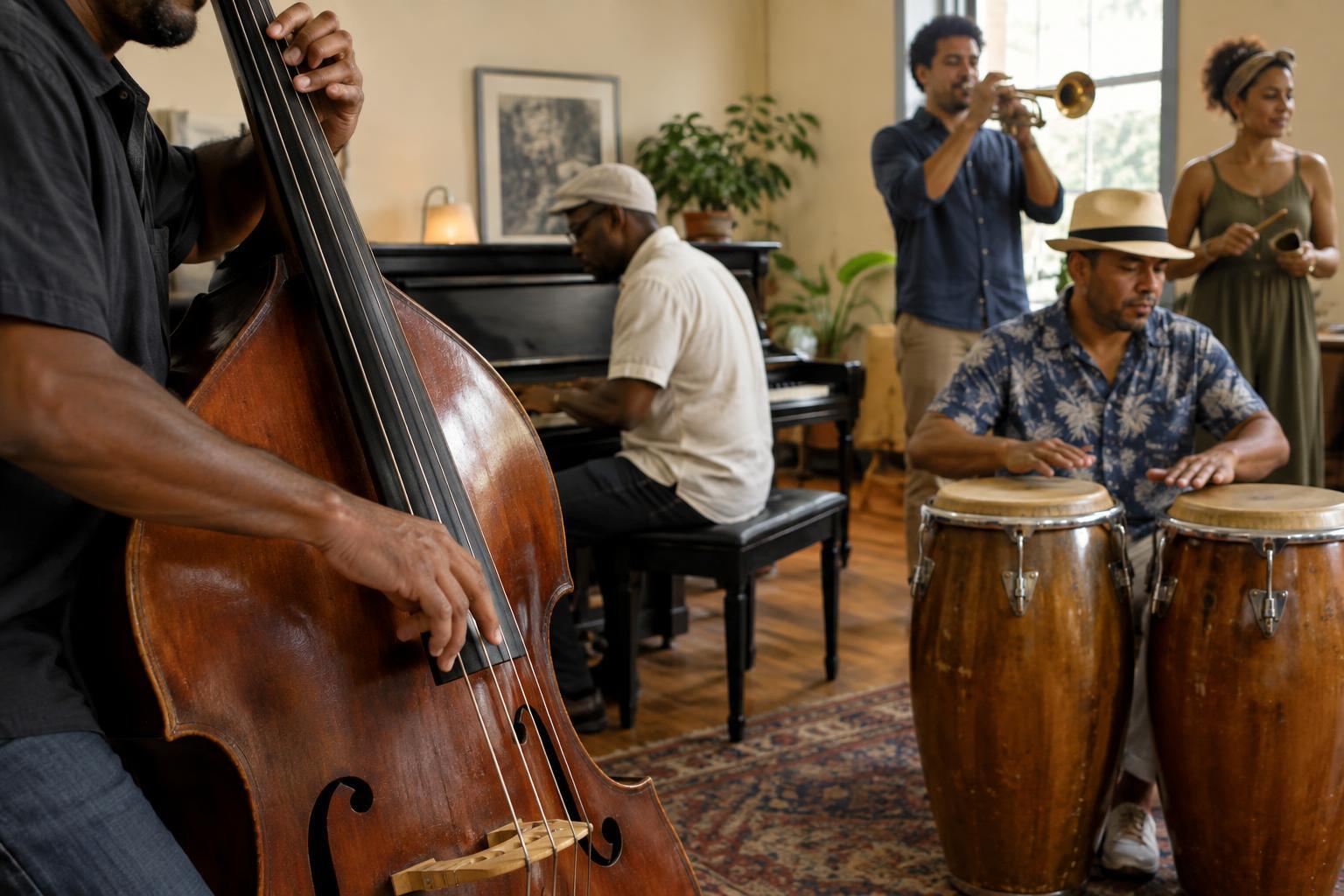
A convincing break depends on musicians agreeing about where they are in the phrase, even when no instrument states every beat. A drummer may stop playing the ride pattern, a bassist may leave out a walking or tumbao figure, and a pianist may release a chord. The pulse has not vanished; the players are tracking it internally so their next entrances land together.
In music organized around clave, the orientation of the rhythmic cycle can help players understand where an accent or reentry belongs. That does not mean every ensemble must play a clave instrument throughout a break, or that clave should be reduced to a generic count-in. Listen for how the surrounding phrase establishes its rhythmic direction, then notice whether the break preserves that relationship. Different styles and arrangements handle these choices differently, and learning a particular piece by attentive listening is more reliable than applying a rule to every recording.
Arrange the exit and the return
To arrange a break, start with its purpose. Is it making room for a lyric, highlighting a solo response, setting up a new section, or inviting the audience to anticipate a downbeat? Then decide exactly what stops. Dropping the whole rhythm section produces a different shape from keeping a quiet shaker or bass note underneath. A short ensemble hit can make the silence feel deliberate; a cymbal choke or sharply released chord can give that hit a clear ending.
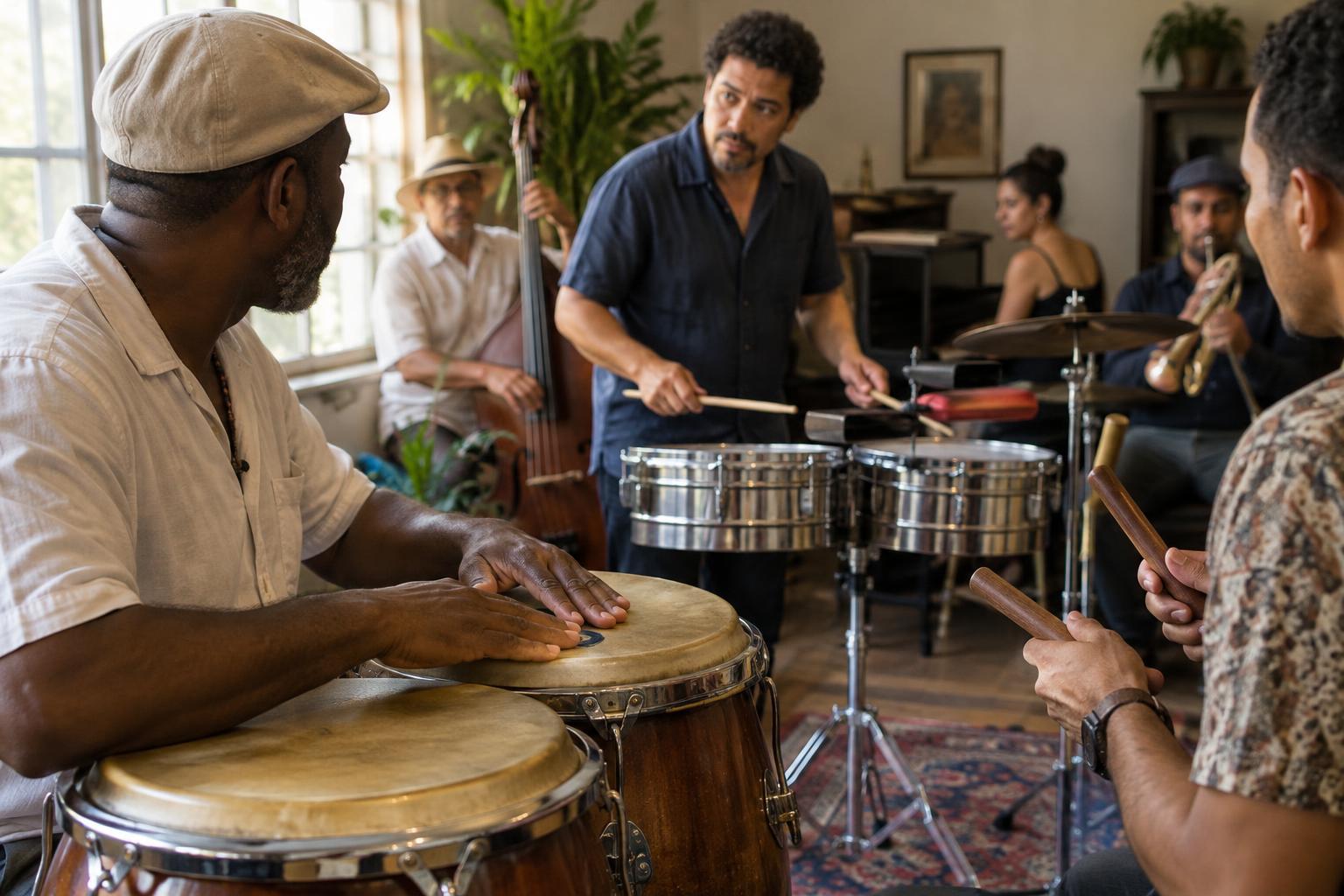
The return needs just as much planning. Players can reenter together on a strong beat, or one instrument can lead with a pickup that draws the others in. A percussion fill may signal the entrance, but it should be placed so it clarifies the phrase rather than covering the first note of a singer or horn line. Rehearse the final sound before the gap, the length of the gap, and the first sound after it as one connected gesture. Those edges are where a loose arrangement often becomes audible.
Listen through the empty space
On a first listen, tap a comfortable pulse and notice when the texture changes. Which instrument leaves first? Does anyone sustain a note into the gap? Does a voice or soloist keep moving while the accompaniment pauses? Try to predict the return without checking a count. If you miss it, listen again and follow a longer phrase rather than focusing only on the last hit.
On another pass, attend to the size of the release. A band may resume the same groove, making the interruption feel like a breath within a sentence. It may return with an added horn line, a new bass figure, or a denser percussion texture, making the break a doorway into a new section. These are arrangement choices, not merely moments when the band stops playing.
Practice a break without losing your place
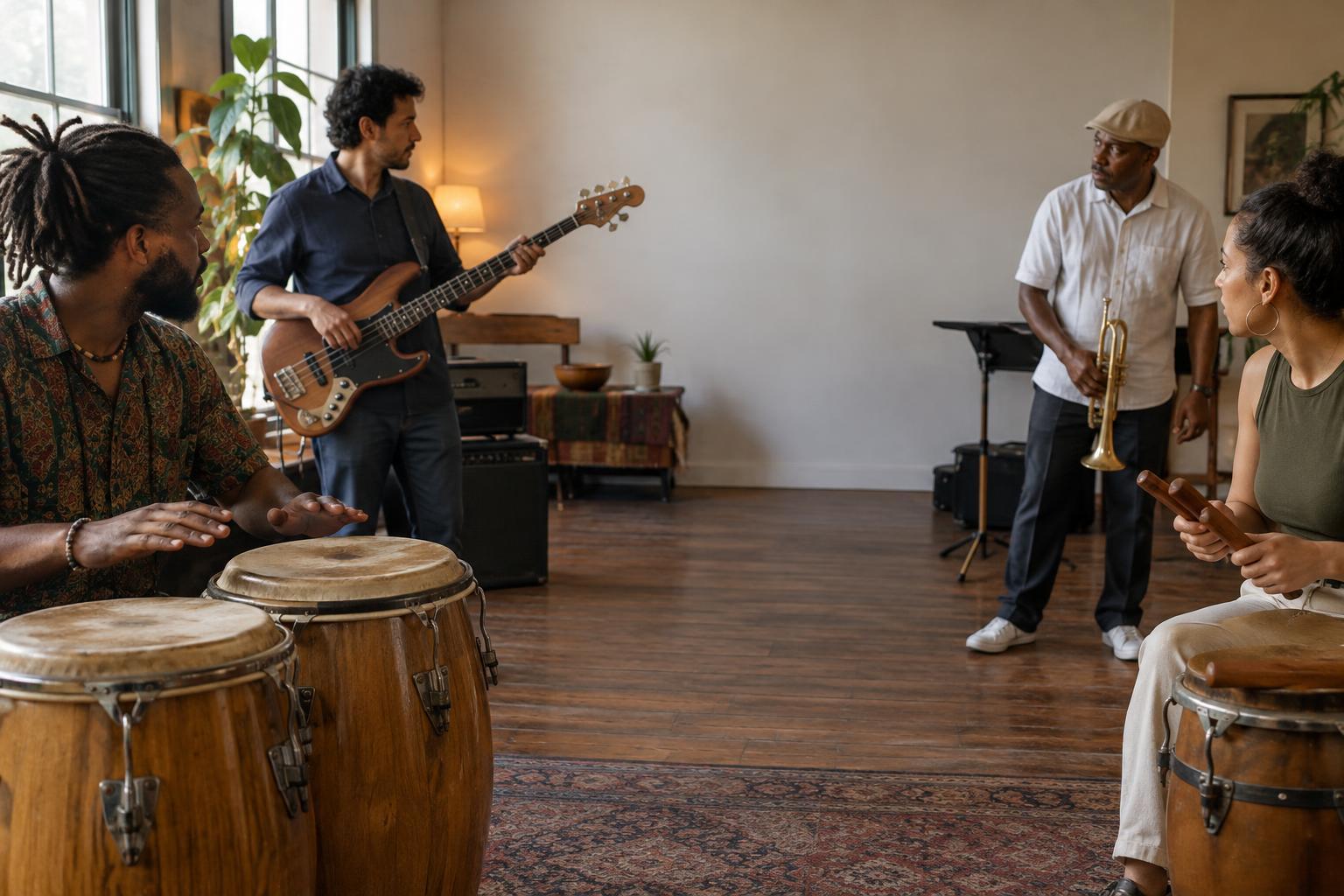
Try a simple exercise in four beats. Clap a steady pattern for two measures, stay silent for the next measure while continuing to count, then clap again on the first beat of the following measure. Make a quiet foot tap your initial guide, then remove it. Repeat with a partner: one person keeps the pulse while the other takes the break, and then trade roles. The goal is a calm, predictable return, not a dramatic rush into the next note.
For stop-time, agree on one brief hit at the start of each measure and leave the remaining space open for a spoken phrase, melody, or improvised rhythm. Once that feels secure, move the hit to another agreed position and observe how the tension changes. If you are working within a specific Afro-Cuban piece, learn its actual rhythmic phrasing before inserting these exercises into it. The most effective gap serves the music already in motion—and lets the band’s return answer what the silence set up.