Choose a phrase you can hold in your ear
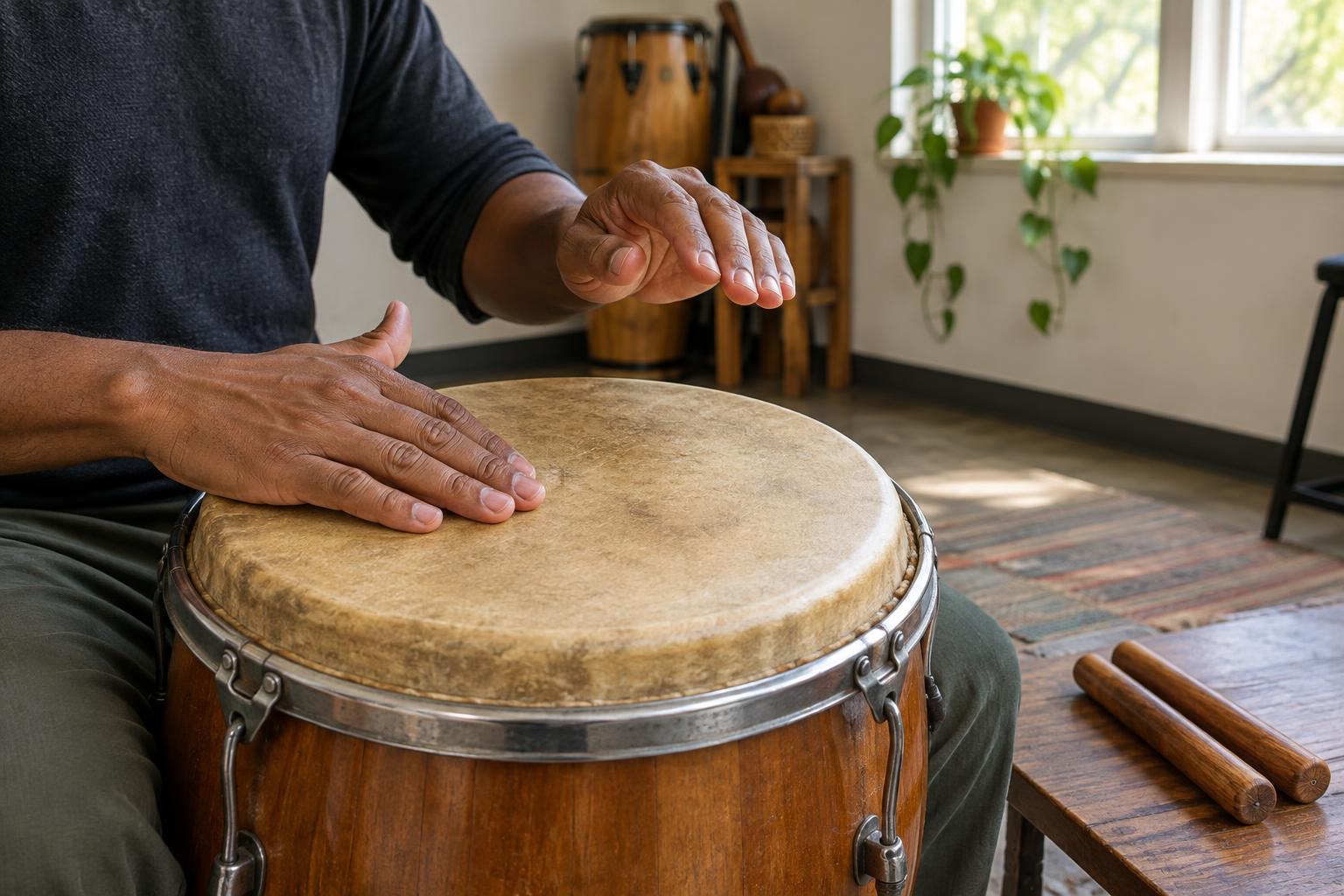
Pick a recording with a short, repeating percussion part you can hear clearly. A phrase lasting one or two cycles is enough. Your first goal is not to identify every instrument or write a complete arrangement; it is to capture one audible layer. If several sounds overlap, follow the part whose attacks are easiest to distinguish, such as a bell, woodblock or hand drum played with a clear tone.
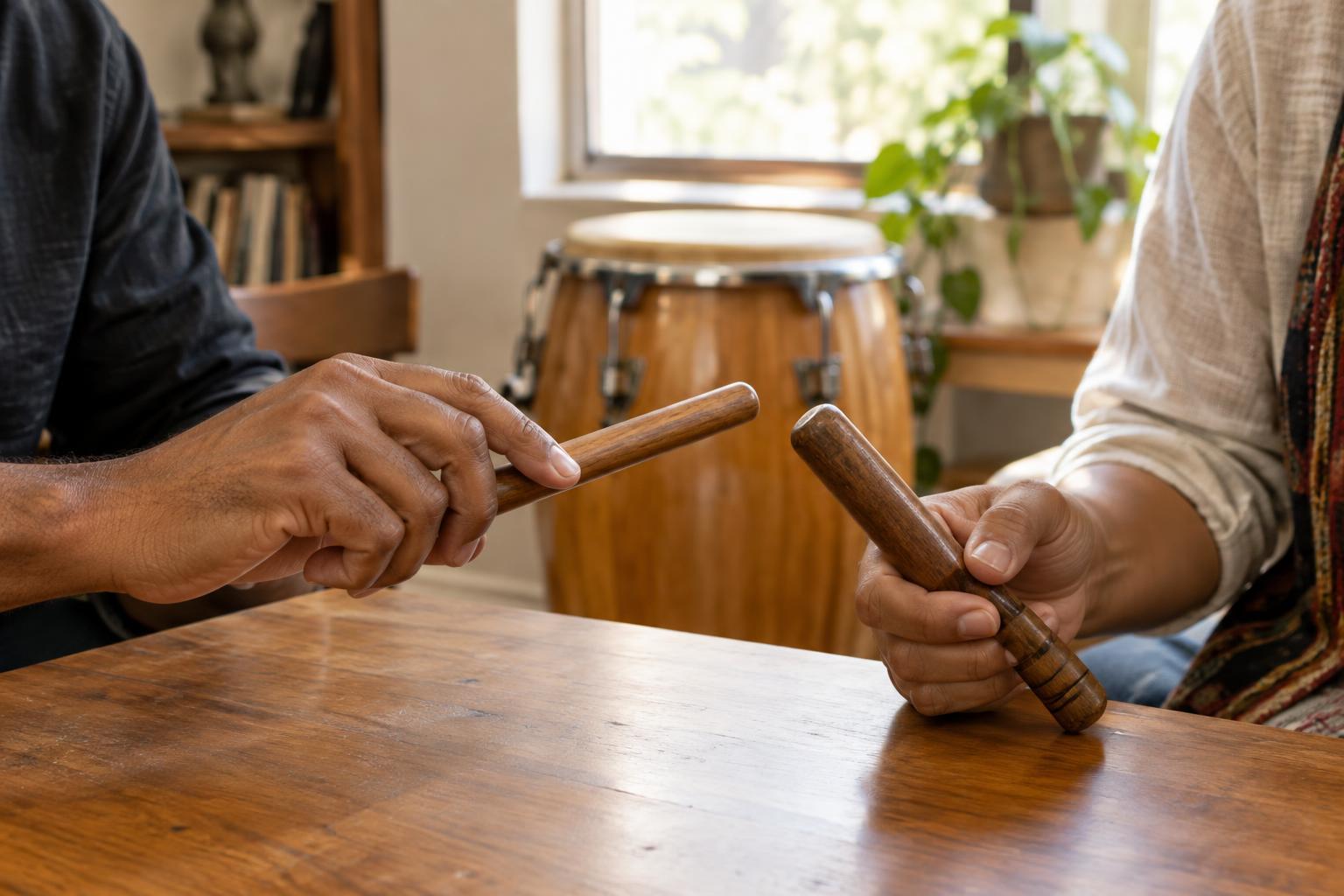
Listen to the phrase several times before writing anything. Notice where it seems to begin again, but stay open to revising that boundary. A prominent hit is not necessarily the start of a measure. If the phrase comes from an Afro-Cuban tradition, also listen for how it sits alongside the other parts. A single percussion line may make more sense as part of an interlocking pattern than as an isolated beat.
Find the pulse before the individual hits
Tap a steady pulse with your foot or hand while the recording plays. Then keep tapping through a few repetitions of the phrase. If your pulse speeds up to meet a busy cluster of notes, try a slower, more even beat. If it feels too slow to follow, try a quicker one. There may be more than one useful level of pulse; choose one you can maintain comfortably.
Next, count a small group of beats aloud, such as “1, 2, 3, 4,” without assuming that every recording is organized in four-beat measures. Listen for where the phrase returns relative to your count. For now, separate two questions: “Where is the steady beat?” and “Where does this particular sound happen?” That distinction makes syncopated hits easier to hear because you are not trying to turn every attack into a beat.
Clap the attacks, then make a first sketch
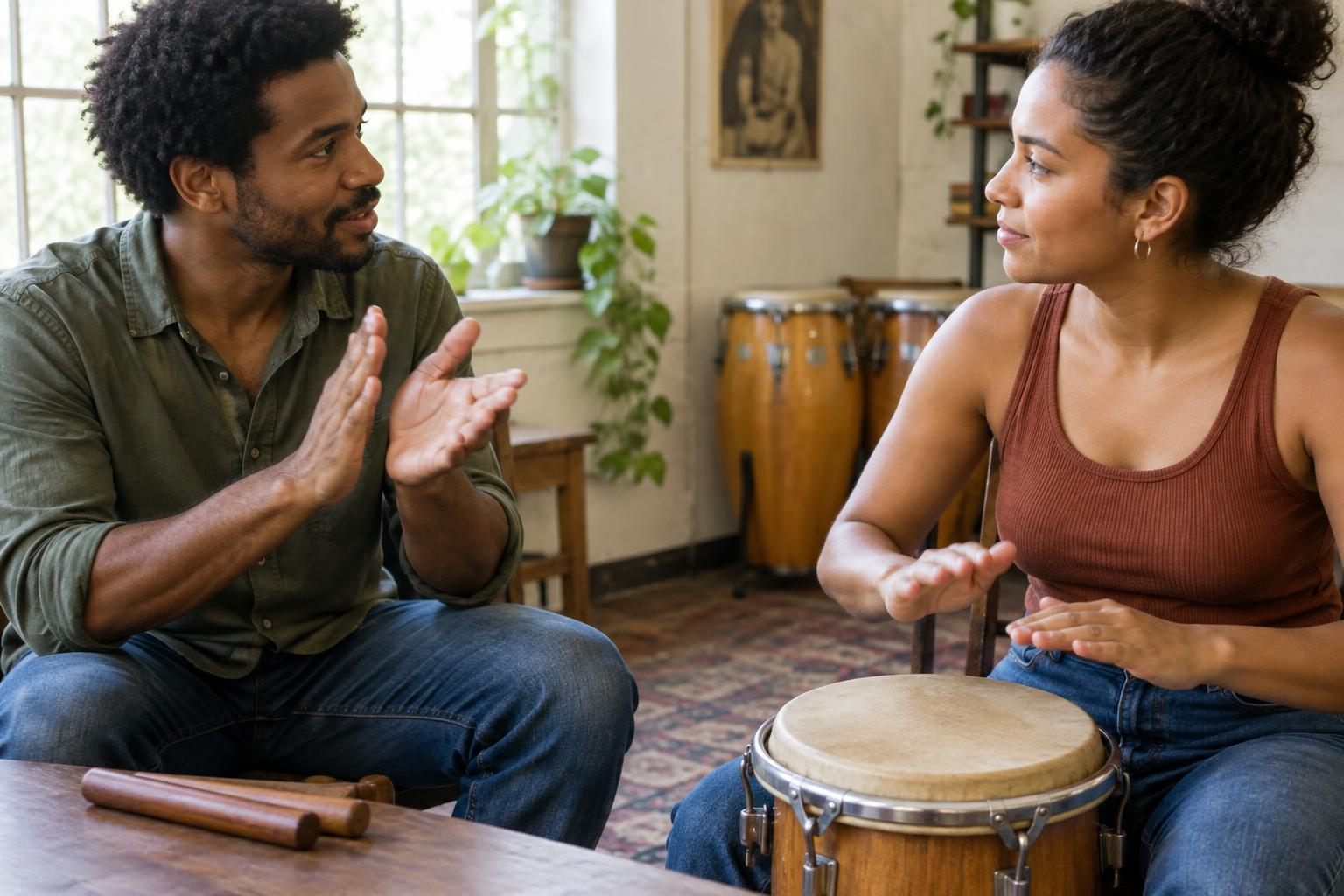
Without the recording, clap the part as you remember it. Play the phrase again and clap along. When your clap lands before or after an attack, note the spot rather than restarting immediately. Try speaking a neutral syllable such as “ta” for each hit while your foot keeps the pulse. This lets you test the rhythm without having to imitate the instrument’s tone or technique.
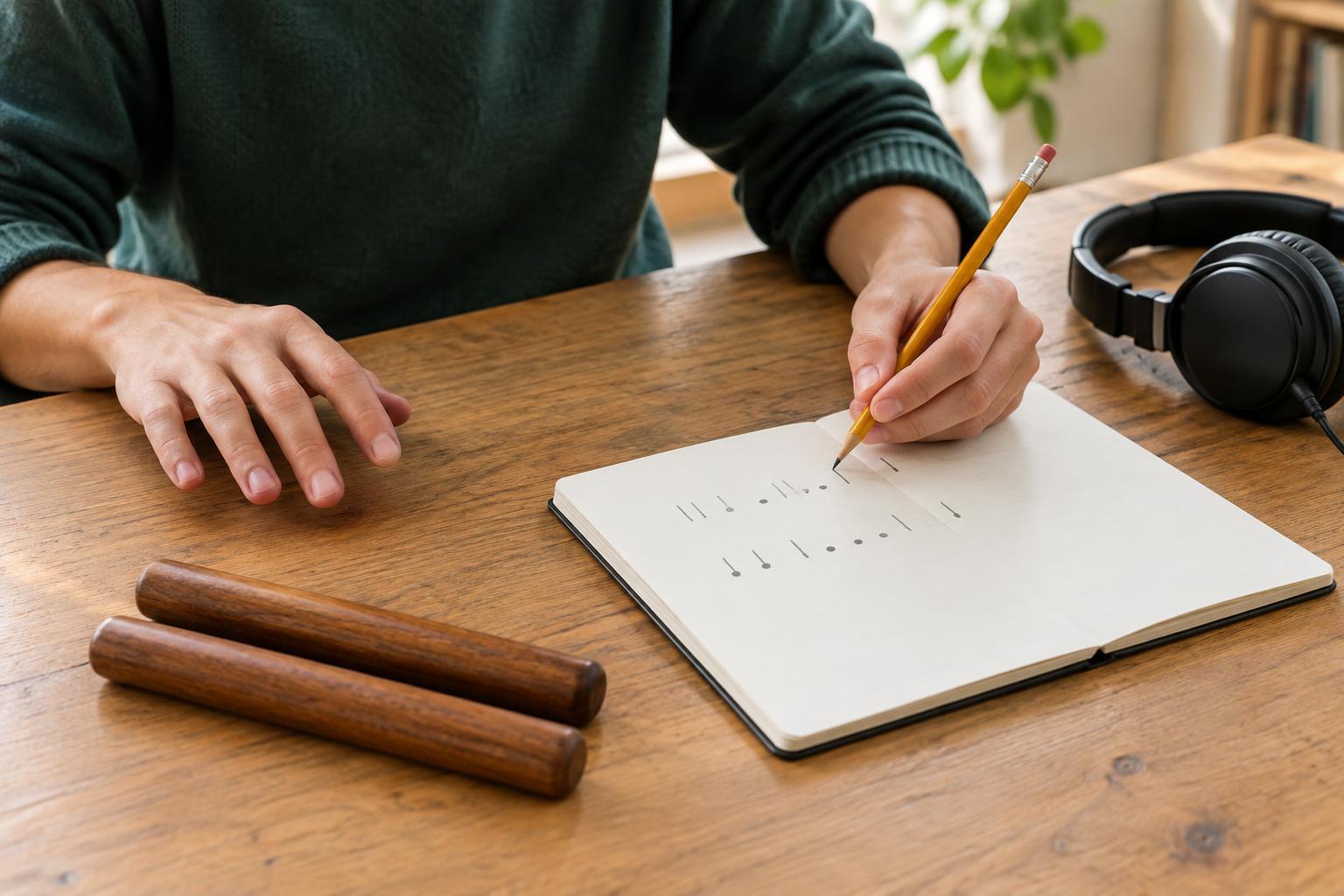
Draw one space for each beat in your chosen count and put a mark where you are confident a hit occurs. Add subdivisions only when you need them. For example, if a hit falls halfway between beats 2 and 3, count “1 and 2 and 3 and 4 and” and place it on the “and” after 2. Leave uncertain hits as question marks. A rough map of attacks and silences is more useful at this stage than notation that looks finished but rests on guesses.
Check the sketch against the sound
Listen again while pointing to your marks in time. Check one feature per pass: first the number of attacks, then their placement, then the spaces between them. Silence is part of the pattern. If your clap fills a gap that the recording leaves open, remove that hit even if the version you played feels more natural. Repeat a short passage when possible, but also hear it in the surrounding music; context can help you locate its entry and return.
Once the attacks seem right, mark accents or contrasting sounds separately. A louder stroke and a softer stroke may share the same timing but give the phrase a different shape. If you can adjust playback speed, use that as a checking aid rather than your only reference: slowed audio can change how an attack sounds. Return to normal speed and clap along before calling the transcription complete.
Turn the result into a repeatable practice exercise
Clap your written rhythm for several cycles while tapping the pulse, then stop clapping and continue the pulse alone. Bring the rhythm back in at the point where it should return. If that entry is difficult, check whether you have placed the phrase boundary or a rest incorrectly. You can also record your claps and compare them with the original, listening for attacks that drift consistently early or late.
Keep your first transcription short. When you can clap it reliably, try speaking one layer while tapping another, or transcribe a second part from the same passage. In interlocking percussion music, compare how the parts relate without assuming that any one line tells the whole rhythmic story. The useful outcome is not simply a page of notes: it is a clearer sense of where the pulse continues, where the attacks fall, and how the spaces help the pattern move.