Keep the six steady
The useful starting point for this exercise is a repeating cycle of six evenly spaced subdivisions. Say “one, two, three, four, five, six” at a comfortable pace, then begin again without a pause. Tap all six lightly on your leg. Before adding an accent, make sure each tap has the same amount of space around it. A recording can provide a musical setting later; for now, your steady count is the foundation.
Those same six taps allow two ways of feeling the larger beats. Accent counts one and four, and you hear two groups of three: ONE two three, FOUR five six. Accent counts one, three and five, and you hear three groups of two: ONE two, THREE four, FIVE six. The length of the cycle does not change. Only the way you organize it changes.
Alternate the groupings without rushing
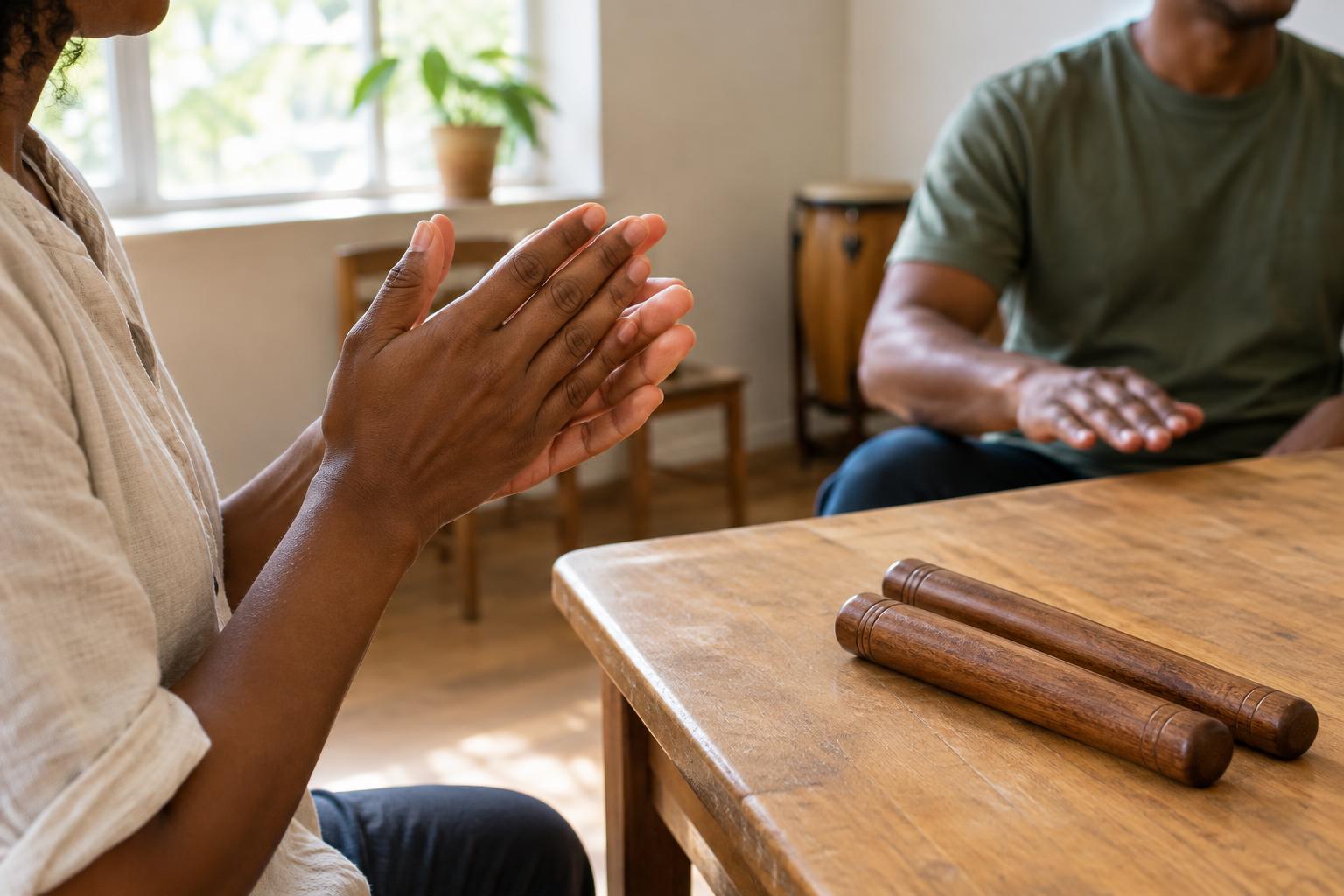
First, speak the numbers while clapping only the two-beat grouping: clap on one and four for four complete cycles. Keep counting aloud on the other subdivisions. Next, clap on one, three and five for four cycles. If a clap pulls your counting faster, slow the whole exercise down. Accuracy matters more than speed.
Now alternate one cycle of each grouping. Your claps will land on one and four in the first cycle, then one, three and five in the next. Count all six subdivisions through both cycles, including the ones without claps. After several repetitions, switch every two cycles instead. That longer stretch gives you time to settle into each feel before moving to the other.
Try a quieter version when the pattern becomes familiar: tap all six subdivisions with one hand and place the accents with the other. You can also step on the accents while whispering the numbers. Using different parts of the body helps separate the steady subdivision from the grouping you choose to emphasize.
Hear both groupings at once
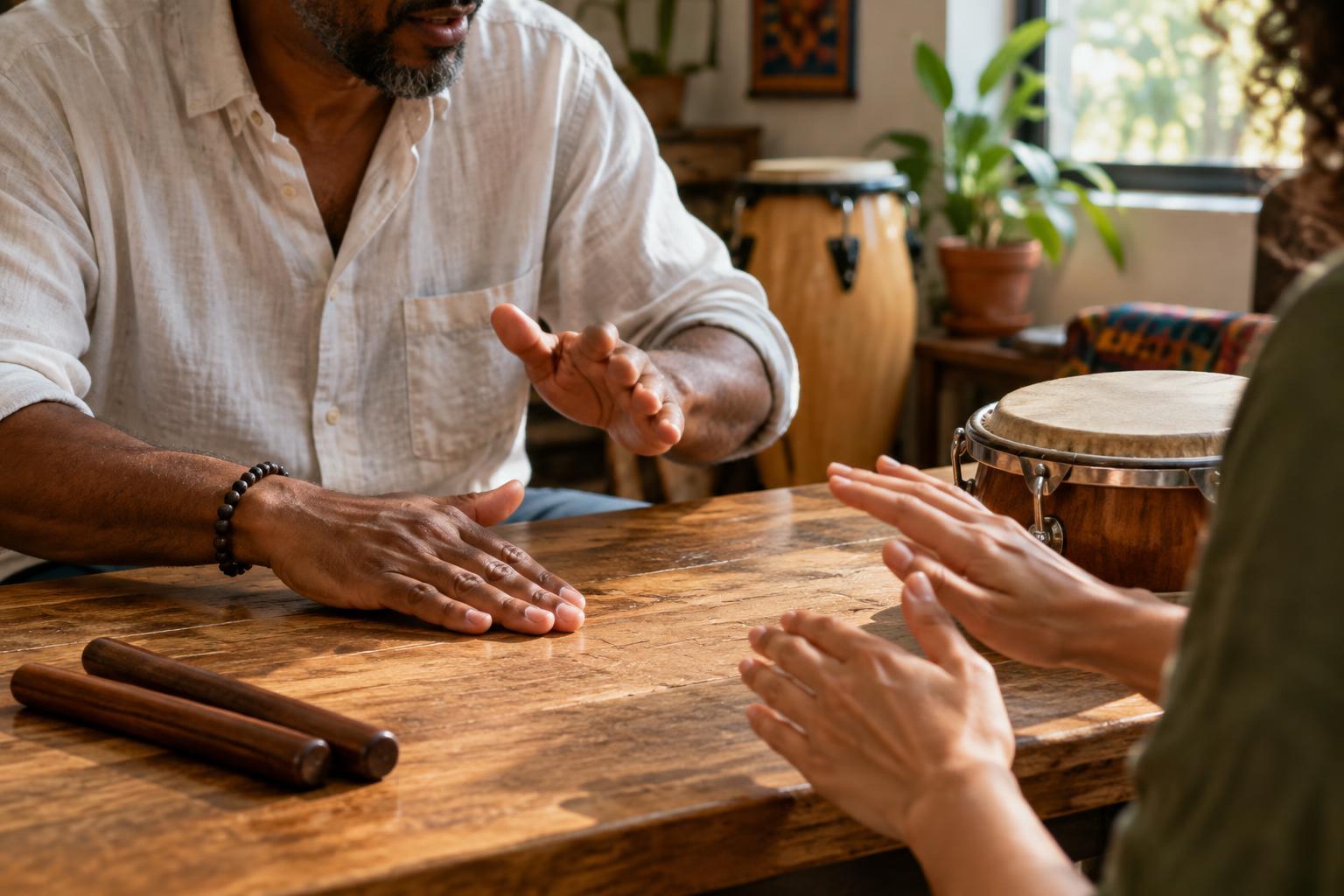
Alternating is a helpful first step, but the richer challenge is to hold one grouping while another remains present. Tap all six subdivisions with your fingers, clap on one and four, and say “one, three, five” as those counts pass. Then reverse the roles: clap on one, three and five while saying “one, four.” Work slowly enough that the spoken counts stay in their original positions.
Notice how count one belongs to both accent patterns. It can serve as an anchor when the two feelings seem to compete. If you lose your place, stop the accents but keep tapping the six even subdivisions. Restart at one rather than guessing where the next accent should fall. The goal is not to force two separate meters into the exercise; it is to recognize two ways of hearing emphasis within one repeating span.
Bring the exercise to a recording
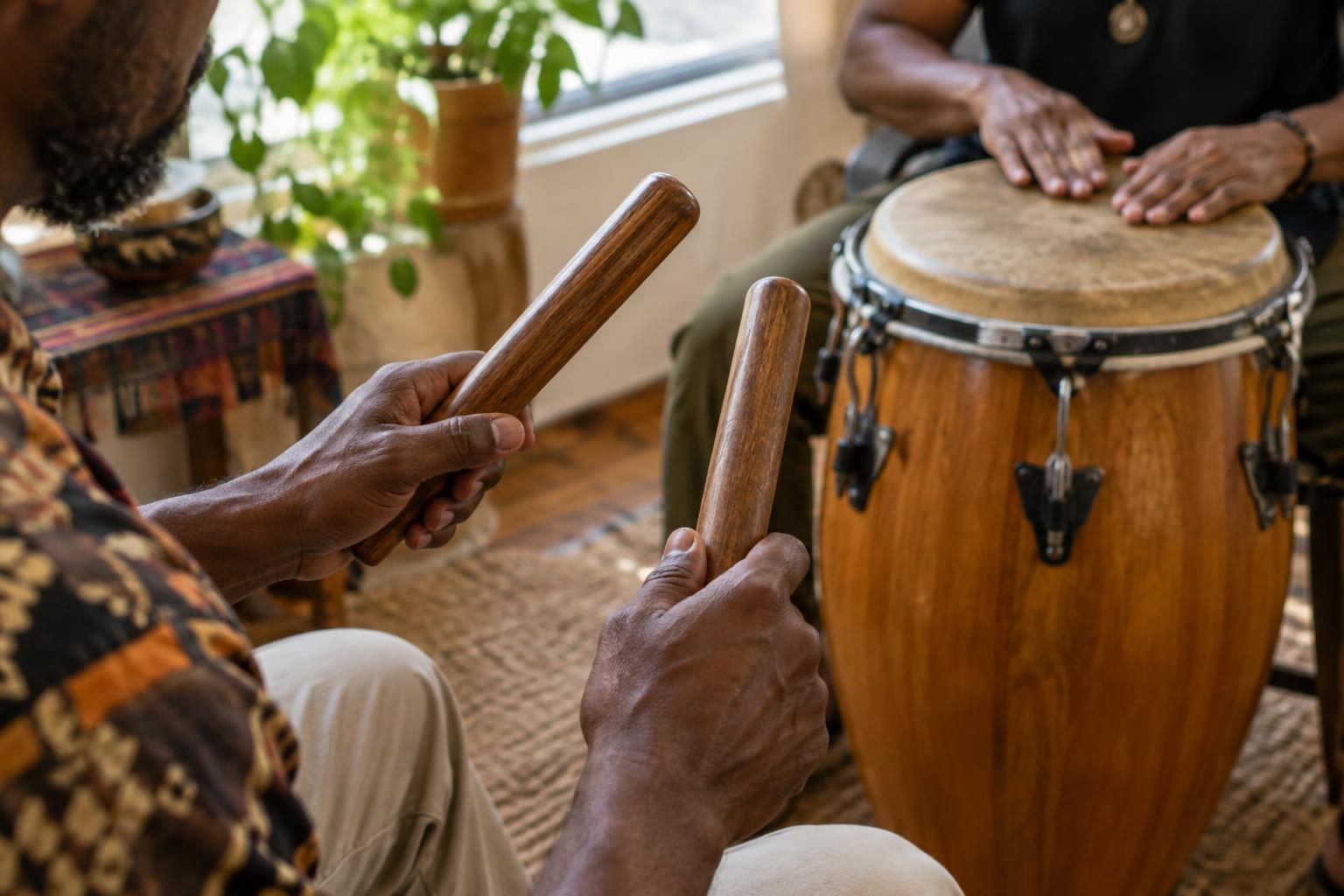
Six-subdivision rhythms appear in a range of Afro-Cuban musical practices, but no single counting drill captures an entire tradition. Percussion parts, singing, movement and phrasing can shape the feel in ways that accents on paper cannot. Treat this exercise as a listening aid, not a substitute for learning a particular style from musicians who know it.
Choose a recording whose pulse you can follow comfortably. Listen through once without clapping. On the next pass, tap a quiet, even six if you can hear where the cycle repeats. Try accenting one and four for a short stretch, then one, three and five. Neither pattern needs to describe every instrument. Ask instead which sounds support each grouping, whether a phrase seems to lean across your accents, and whether your count remains steady when the texture changes.
If you cannot confidently locate six subdivisions, do not assume the performers are playing them incorrectly. Your chosen starting point may be off, or the music may call for a different listening approach. Return to the recording without counting, follow one audible part, and try again later.
Make the contrast musical
Finish with a short phrase of your own. Keep the six taps going and speak a simple syllable, such as “ta,” on one and four for two cycles. Answer with “ta” on one, three and five for two cycles. Then vary the volume or leave out one spoken note while keeping the underlying taps unchanged. You are practicing how a phrase can suggest one grouping without erasing the other.
When you can make the shift comfortably, reduce the number of sounds you produce. Let your foot mark the recurring start of the cycle while you hear the remaining subdivisions internally. This makes the exercise more useful for listening and playing with others: you can recognize contrasting accents without needing to count over the music.