What a tempo ladder is for
A tempo ladder is a way to practice a short musical passage at several speeds rather than jumping straight from slow to fast. You begin at a tempo where you can play comfortably, move up in small increments and check the quality of your playing at each step. The goal is not merely to reach a higher number on the metronome. It is to carry the same rhythmic shape, sound and sense of pulse into a quicker version of the music.
Choose a passage short enough to hear clearly: a one- or two-bar percussion pattern, a bass figure, a hand-clapping exercise or a brief phrase from an arrangement. Before raising the tempo, decide what must remain intact. That might mean even subdivisions, a particular accent, clean coordination between two hands or a rest that stays silent. Naming those details gives you something more useful to measure than speed alone.
Set a starting tempo you can trust
Start by singing or tapping the pulse, then play the passage slowly enough that you can notice every attack and space. A metronome can help keep the pulse steady, but it does not need to mark every note. Try hearing subdivisions internally while the click marks the main beats. If the pattern has an established relationship to clave, keep that orientation clear as you slow it down; changing the tempo should not quietly change where the phrase sits.
Your first rung should feel controlled, not like a test of your limits. Play the passage several times without stopping and listen for the same result on each repeat. If an accent moves, a rest fills with an unintended sound or your body tenses in anticipation of a difficult note, lower the tempo. Slower practice is useful when it reveals the structure of the phrase, not when it becomes a different, disconnected motion.
Climb in small steps, then check the sound
Pick a modest increase between rungs. For example, you might move a metronome from 80 to 84 beats per minute, then to 88. Those numbers are only an example; the right spacing depends on the passage and your level of control. At each rung, repeat the phrase enough times to settle into it, then ask whether the pulse, subdivisions, accents and rests still match your slower version. If they do, move up. If they do not, stay or step back.
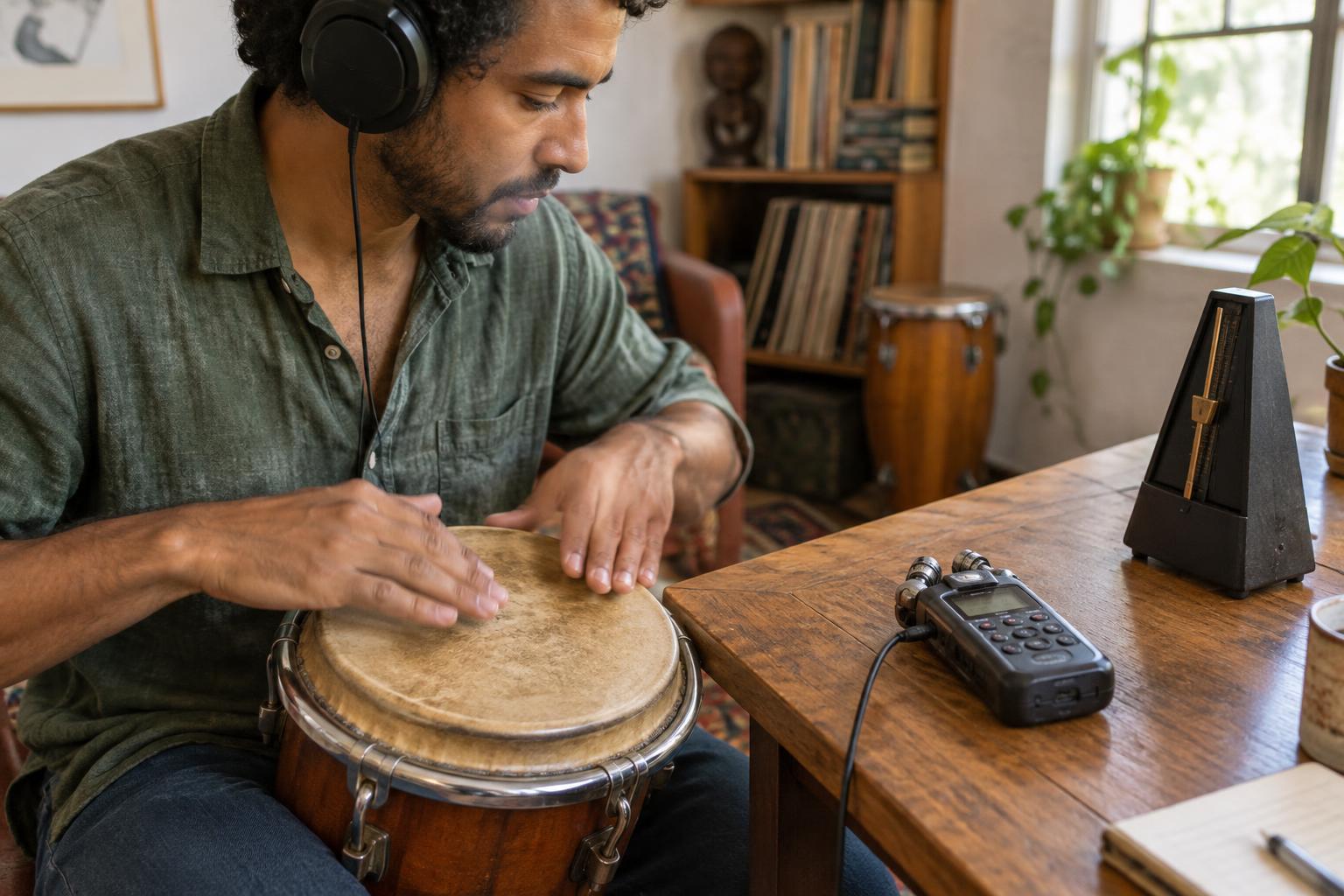
Record a few repetitions occasionally, especially around the point where the exercise starts to feel demanding. While playing, you may notice effort more easily than a softened accent or an uneven gap. Listening back can help you identify what actually changes. Check the transitions between repetitions, too: a pattern that sounds clear once but rushes as it loops needs more work at that tempo.
Treat a stumble as information
When clarity disappears, avoid repeating the whole passage faster in the hope that it will fix itself. Isolate the smallest part that causes trouble: a pickup, a hand-to-hand exchange, a note after a rest or the point where an accent falls against the beat. Practice that piece slowly, then place it back into the full phrase. You can also alternate one careful repetition at a comfortable tempo with one at the challenging tempo, listening for the same musical shape in both.
Physical ease matters. Use movements that suit your instrument and allow the notes to sound clearly without unnecessary force. If your shoulders rise or your hands feel hurried, pause and reset. Some passages become harder because the motion is inefficient; others become harder because the beat is no longer clear in your mind. Tapping or singing the pulse away from the instrument can help you tell the difference.
Come back down the ladder
After reaching your highest clear tempo, descend through a few earlier rungs. This tests whether you can change speed without losing the phrase’s character. Faster playing can sometimes flatten dynamics or shorten rests; returning to a slower tempo makes those changes easier to hear. Finish with a version that feels steady and musical rather than ending on the fastest attempt.
Keep a simple note of the passage, the tempos you tried and the detail you want to improve next time. Your top tempo may vary from day to day, and that is not a failure. For rhythm practice, progress includes hearing more precisely, recovering the pulse sooner and making intentional choices about sound. A useful tempo ladder builds those skills alongside speed.