Hear the cycle before you play the pickup
A pickup is a note or small group of notes that leads into the beginning of a phrase. In a repeating two-bar cycle, the end of bar two can point toward the next bar one. The challenge is to feel that destination without treating the pickup as an extra beat or speeding up to reach it.
Start with two bars of four beats. Count aloud, “one, two, three, four; one, two, three, four,” and keep repeating. Tap a steady pulse with your foot. Each time the cycle begins again, give the first “one” a slight vocal emphasis, but do not make the foot tap louder. That difference helps you distinguish the phrase boundary from the steady beat.
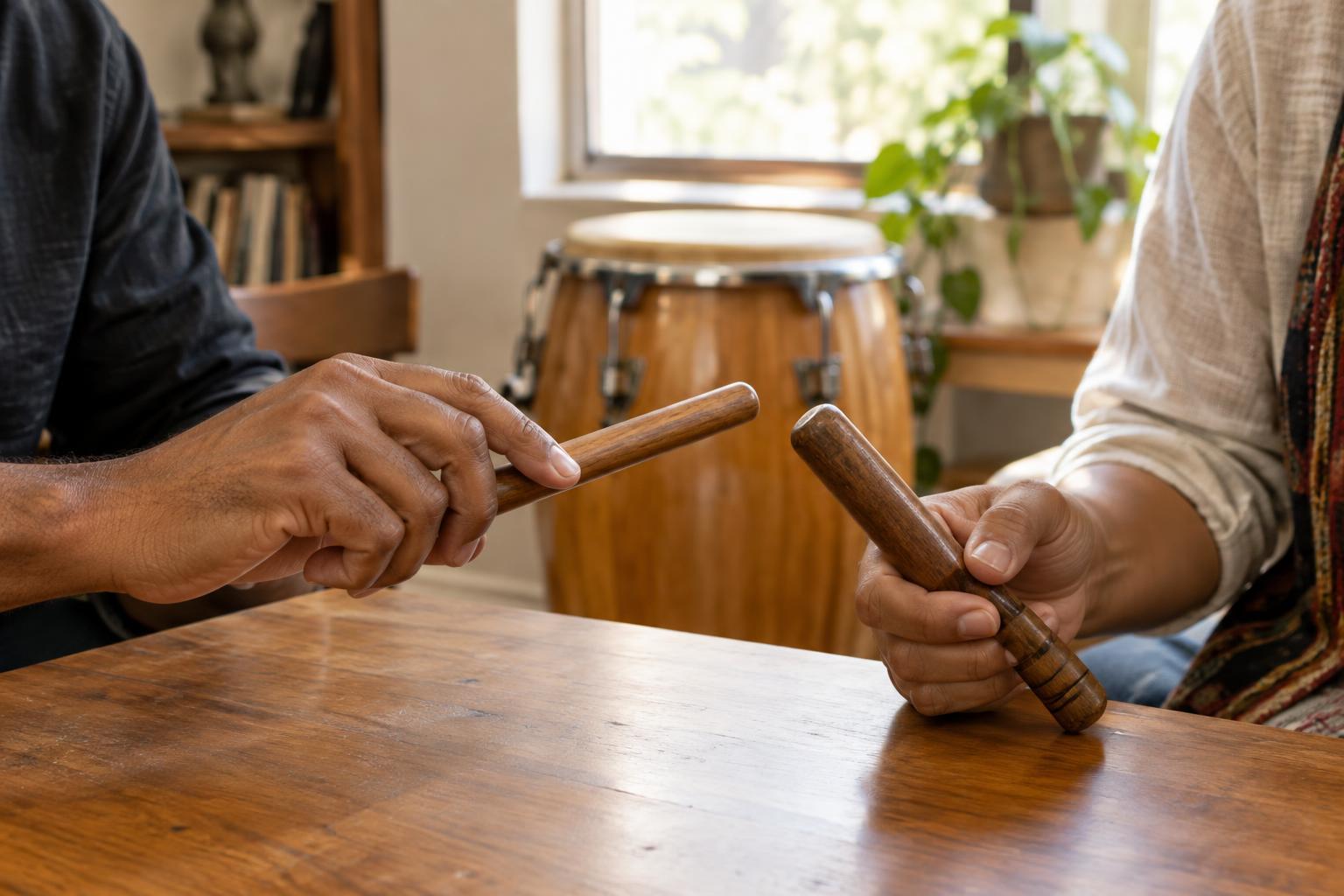
If you are practicing alongside clave, agree on its orientation before you begin. One common son clave pattern places three strokes in the first bar—on beat one, the “and” of two, and beat four—and two in the second bar, on beats two and three. The reverse orientation begins with the two-stroke bar. Neither is a universal template for every Afro-Cuban style or arrangement. For now, the useful habit is to keep the chosen cycle steady while you practice entering it.
Begin with one quiet note
Count both bars while tapping your foot. In bar two, clap once on the “and” after beat four, then clap again on beat one as the cycle restarts. Say the final counts as “four, and, one.” The clap on “and” is the pickup; the clap on “one” is its destination. Repeat several cycles, leaving the rest of each cycle empty. Your counting and foot tap should continue through the silence.
Next, make the pickup quieter than the note on one. This is not a rule for every musical phrase, but it makes the exercise’s direction easy to hear. Try clapping the pickup while speaking “one,” rather than clapping it. Can you still place that spoken landing exactly on the next foot tap? Then swap roles: speak the pickup and clap on one.
Be careful not to insert a pause between “and” and “one.” They are neighboring eighth-note positions at a steady tempo. If the landing feels late, slow the pulse until you can move across the bar line comfortably.
Try two-note pickups without shifting the bar
Keep the same two-bar count. This time, clap on beat four and its “and” in bar two, then land on beat one of the new cycle: “four, and, ONE.” Play it for four cycles. After that, clap only the two pickup notes and leave beat one silent while saying it aloud. The missing clap tests whether you can still hear where the phrase begins.
For a different shape, clap on the “and” of beat three and on beat four, then speak beat one. Count “three, and, four, and, one,” with claps only on “and” after three and on four. There is no clap on the “and” after four in this version. Resisting the urge to fill every space makes the two notes sound like a deliberate lead-in rather than a flurry of activity.
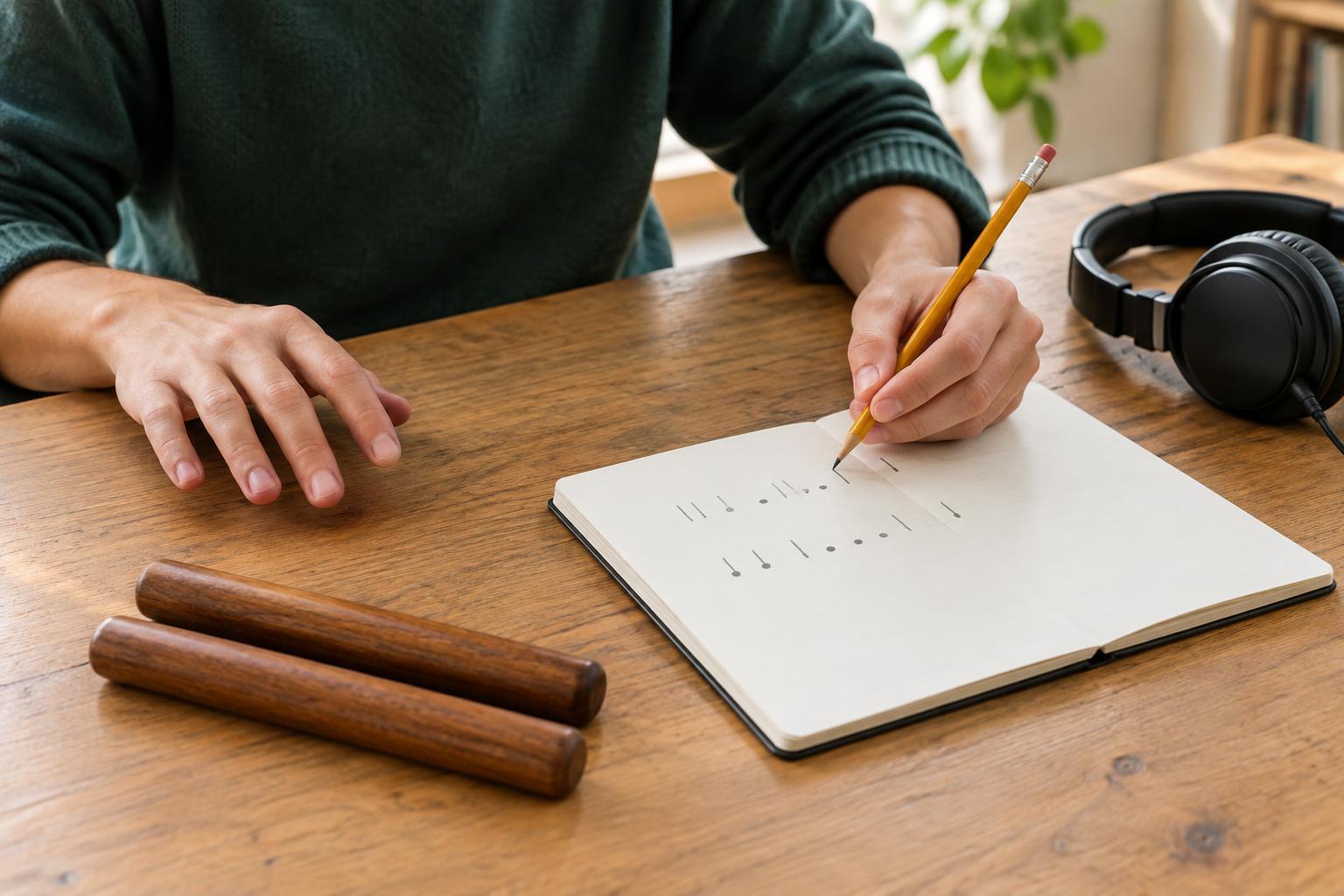
Use a metronome or a simple repeating pulse if it helps, but also practice without one. Record a few repetitions and listen for the distance between the pickup notes and the next one. If each cycle gets shorter, return to counting aloud before adding more notes.
Place the pickup beside a repeating pattern
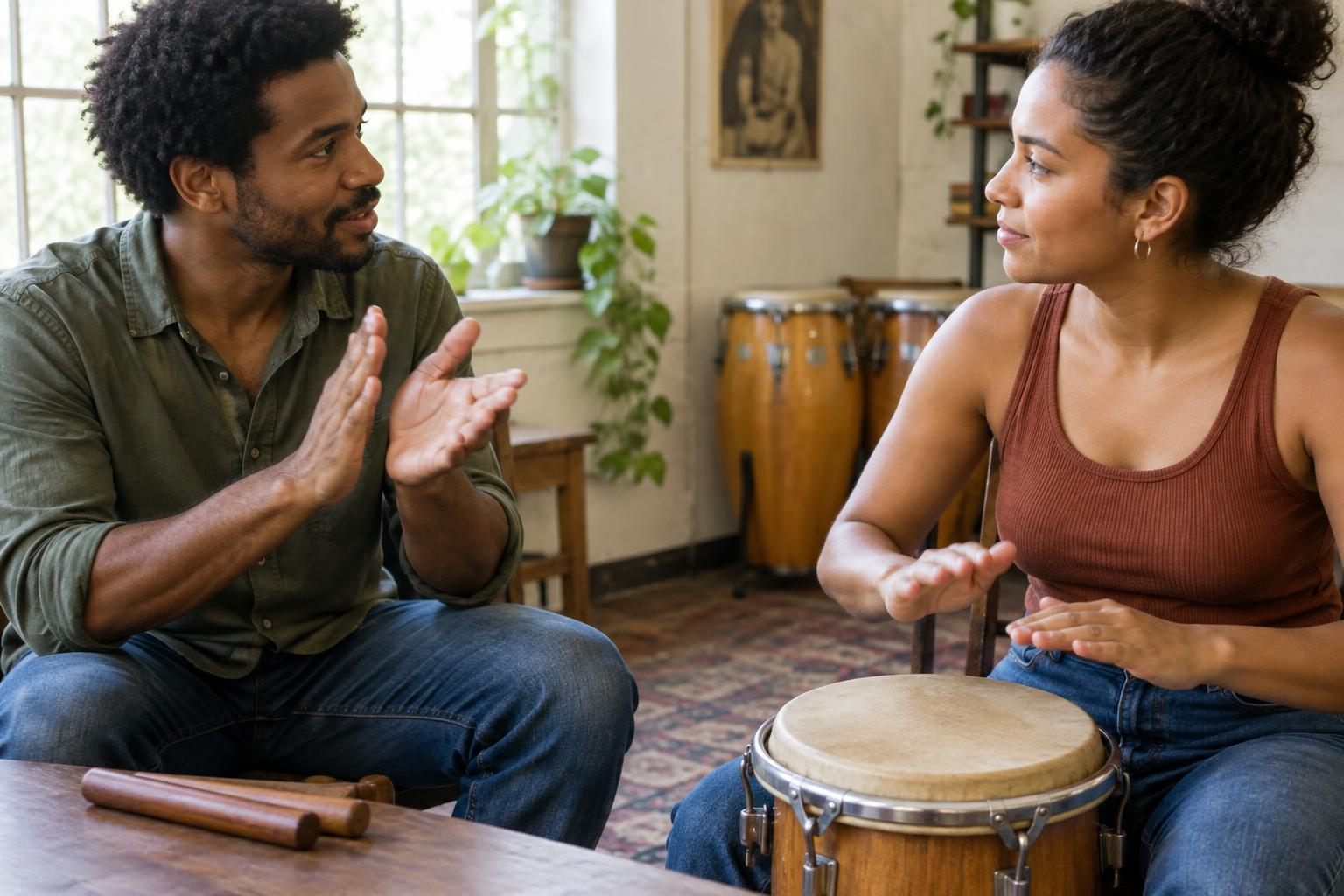
Once the entry feels stable, ask a partner to maintain a two-bar pattern while you play the pickup, or record the pattern and play it back. A steady clave pattern is one option; a simple handclap on each beat also works. Keep the accompanying pattern unchanged. Your task is to hear the approaching boundary and enter on the intended subdivision.
Notice that landing on the beginning of the cycle does not always mean matching a clave stroke. In the son clave example above, the three-stroke bar has a stroke on beat one, while the two-stroke bar does not. You can still play or speak a phrase beginning on beat one of either bar. Listen to how that entry relates to the surrounding strokes rather than assuming every sound must coincide with them.
Finally, alternate a full cycle of silence with a cycle containing your pickup. Continue counting internally during the silent cycle. When you can return reliably, vary the sound—clap, tap a drum, sing one pitch or play a single instrument note—without changing its timing. The aim is not to collect complicated pickups. It is to make a small gesture that leads clearly into the cycle while the underlying rhythm remains intact.