The idea: one pattern, four points of emphasis
An accent is a note that stands out from the notes around it. It may be a little louder, sharper, or more clearly articulated. Moving an accent does not mean moving the note itself. In this exercise, every note stays at the same point in time; only the emphasis changes.
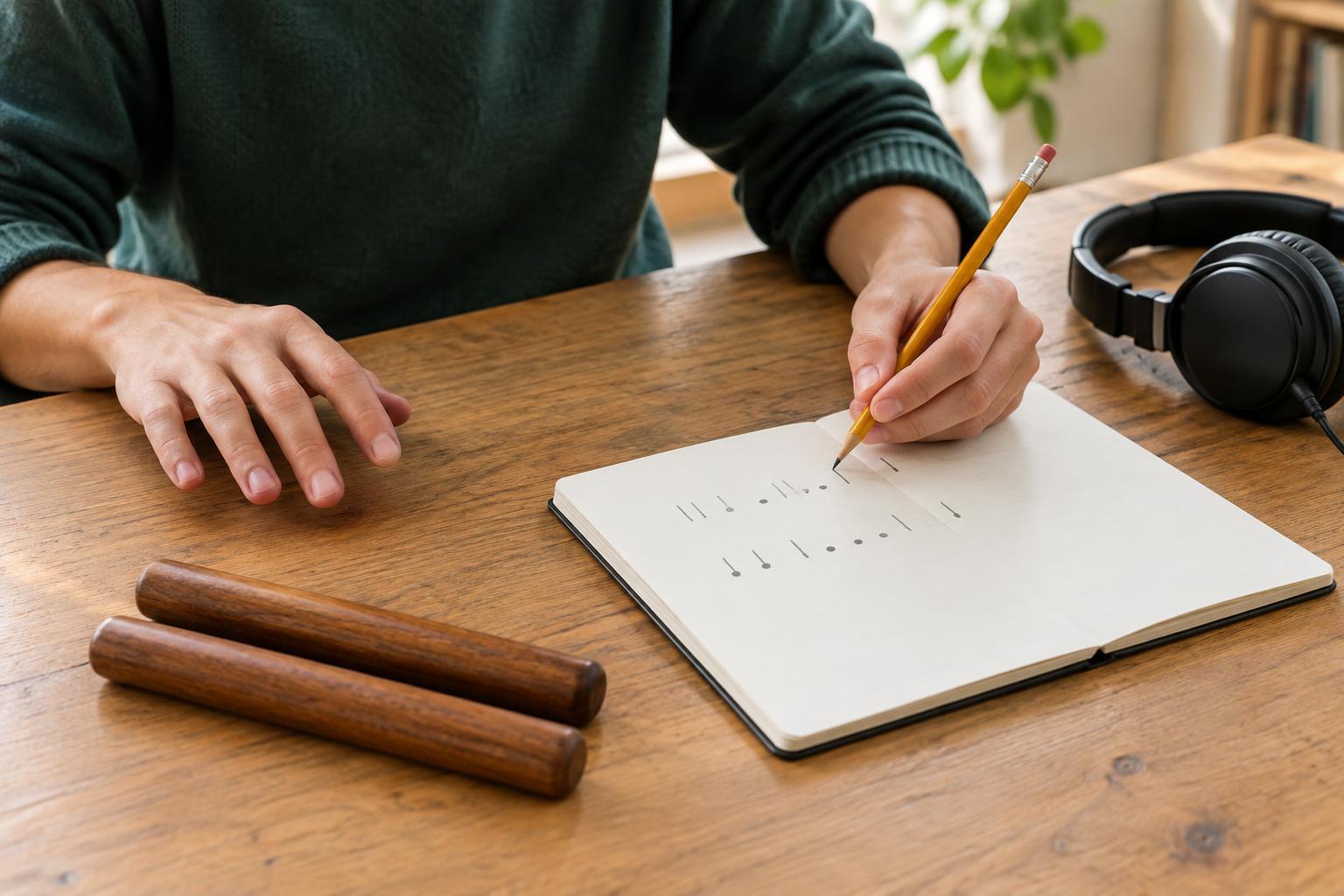
Start with a bar of four beats and play two evenly spaced notes on each beat. Count aloud, “one and two and three and four and.” You will play eight notes per bar, one on every number and every “and.” In the first bar, accent the note on one. In the next bar, accent two. Continue with three, then four, and return to one. The eighth-note pattern never changes. If you stop accenting, all four bars should sound rhythmically identical.
Build a steady foundation
Choose a sound you can repeat comfortably: taps on a practice pad, claps, a single piano key, muted guitar strums, or a spoken syllable. Keep the unaccented notes quiet but audible. At first, make the accent only slightly stronger. A large difference in volume can make you tense up or rush toward the note you want to emphasize.
Work at a pace that lets you say the count while you play. A metronome can mark the four numbered beats, but you can also begin without one and check your steadiness by recording a short attempt. Listen for even spacing between notes, especially just before and after each accent. The accented note should not arrive early, and the note after it should not be delayed. Tap your foot on the four beats if that helps, but let the foot remain steady as the emphasis moves.
Practice the four-bar cycle
Give each accent position a full bar: accent one for eight notes, then two for eight notes, then three, then four. Say the beat you plan to accent just before the bar begins. If the change between bars feels confusing, pause, name the next beat, and start again. Accuracy matters more than completing the cycle without a break.
Once you can play all four bars, loop them for several rounds. Keep counting the complete bar rather than listening only for the accented notes. That helps you notice the difference between “the accent is now on three” and “three has become a new one.” Try two passes: first with one clear accent per bar, then with a smaller accent that a listener could still identify. The quieter pass tests whether you are controlling emphasis rather than relying on force.
Check what changed, and what did not
Record the cycle and listen without playing along. Can you identify which numbered beat is accented in each bar? Do the notes remain evenly spaced when the accent reaches four? A common difficulty is treating the accent as an extra event, making that part of the bar feel crowded. Another is leaving a gap after a strong note. In either case, slow down and play one bar of evenly quiet notes before adding the accent back.
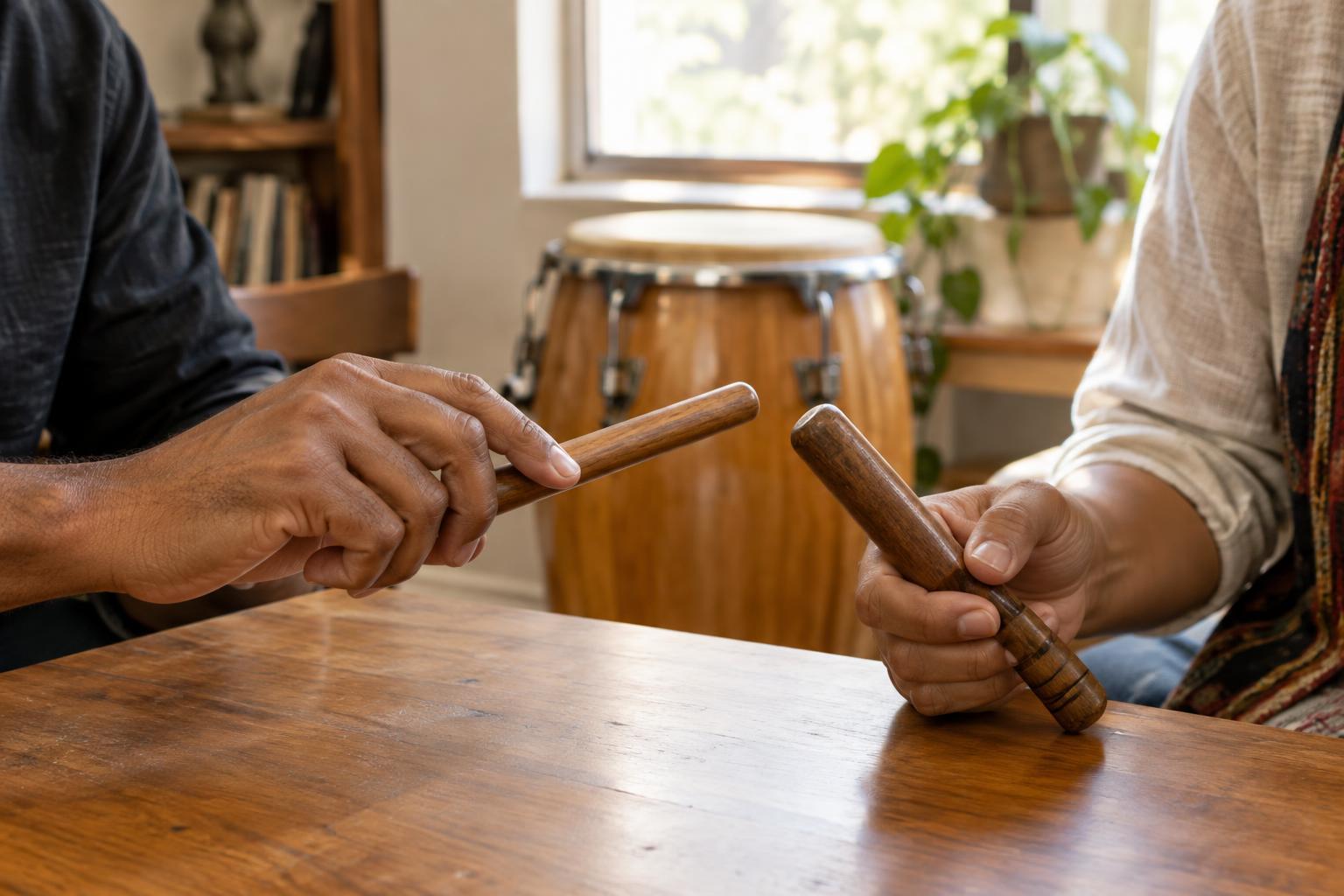
You can also alternate with a partner. One person plays the eight-note pattern while the other counts aloud and names the accented beat after each bar. If they cannot hear the intended beat, adjust the contrast between accented and unaccented notes. If they hear a change in speed instead, reduce the force of the accent and focus on keeping your hands or voice moving evenly.
Take the skill into listening and music-making
When the four-beat cycle feels secure, try accenting an “and” instead of a numbered beat. Keep all eight notes where they are and shift the emphasis through “one and,” “two and,” “three and,” and “four and.” This is a new challenge: the accent now falls between the beats your foot or metronome marks. Return to the numbered beats whenever your timing becomes uncertain.
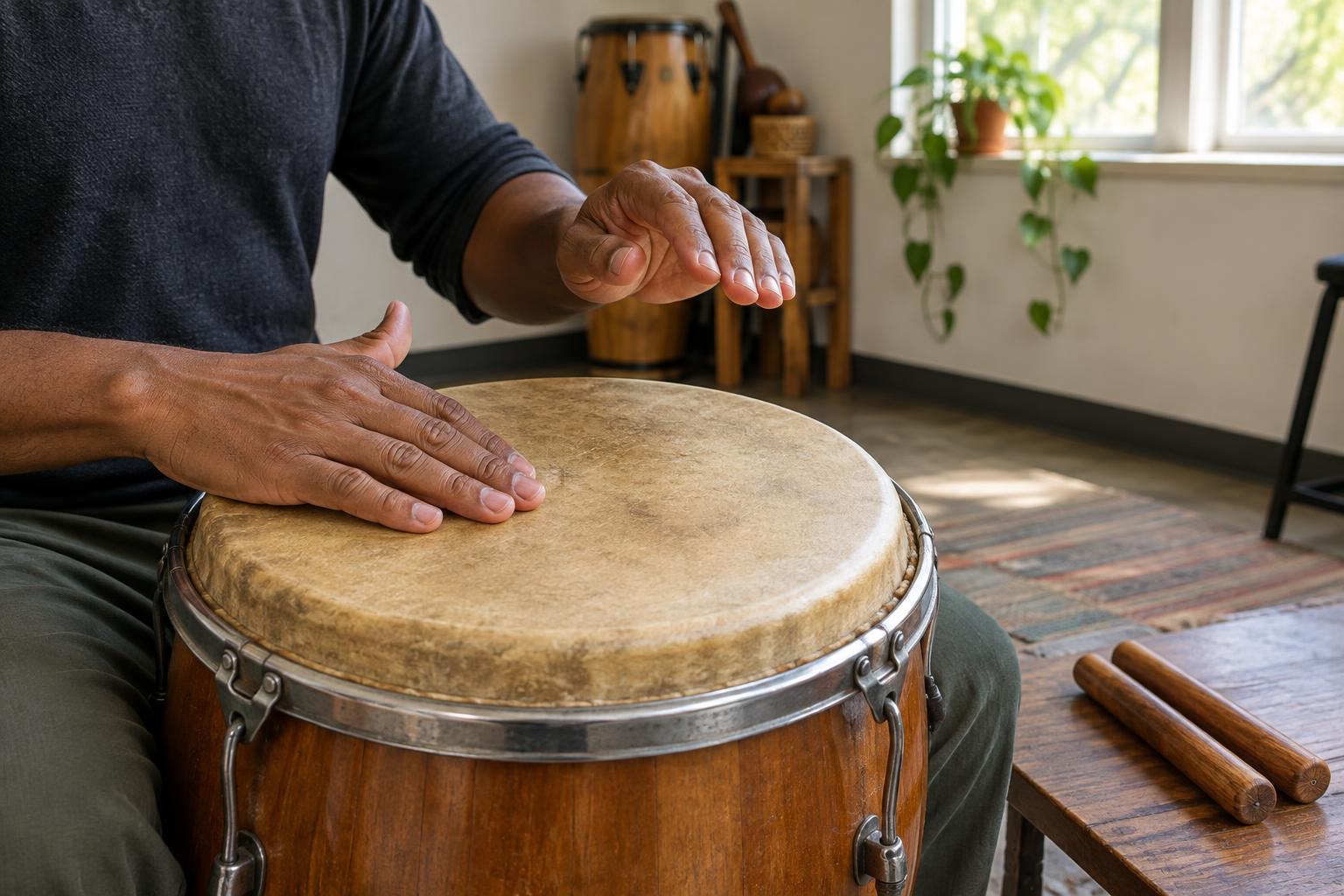
Accent control is useful when playing a repeated figure or listening to an arrangement. A change in emphasis can make a familiar pattern feel different without changing its sequence of notes. In Afro-Cuban music, rhythmic parts have specific relationships and cultural contexts; this general drill is not a substitute for learning those parts on their own terms. Use it to strengthen your timing and attention, then listen closely to how musicians place accents within an actual groove.