Let the missed stroke go
When you miss a percussion stroke, the impulse to play it a moment late can be strong. That extra hit may feel like a correction, but it can make the next few beats harder to place. A more useful recovery is to let the missed stroke go, keep your body connected to the pulse, and rejoin at the beginning of the next two-bar cycle.
This approach is especially helpful when practicing a repeating pattern with a clear two-bar shape, such as a clave pattern or a part organized around one. It is not a rule for every musical situation: in an ensemble, your part and the other musicians may make an earlier re-entry appropriate. As a practice exercise, though, waiting for the next cycle gives you one unambiguous place to return.
Know where the cycle begins
Before practicing recovery, make the cycle easy to hear. Choose a two-bar pattern you already know at a comfortable tempo. Count the beats aloud while tapping your foot or moving gently with the pulse. Then mark the beginning of bar one with a quiet spoken word such as “one.” Repeat until you can identify that point without stopping to calculate where you are.
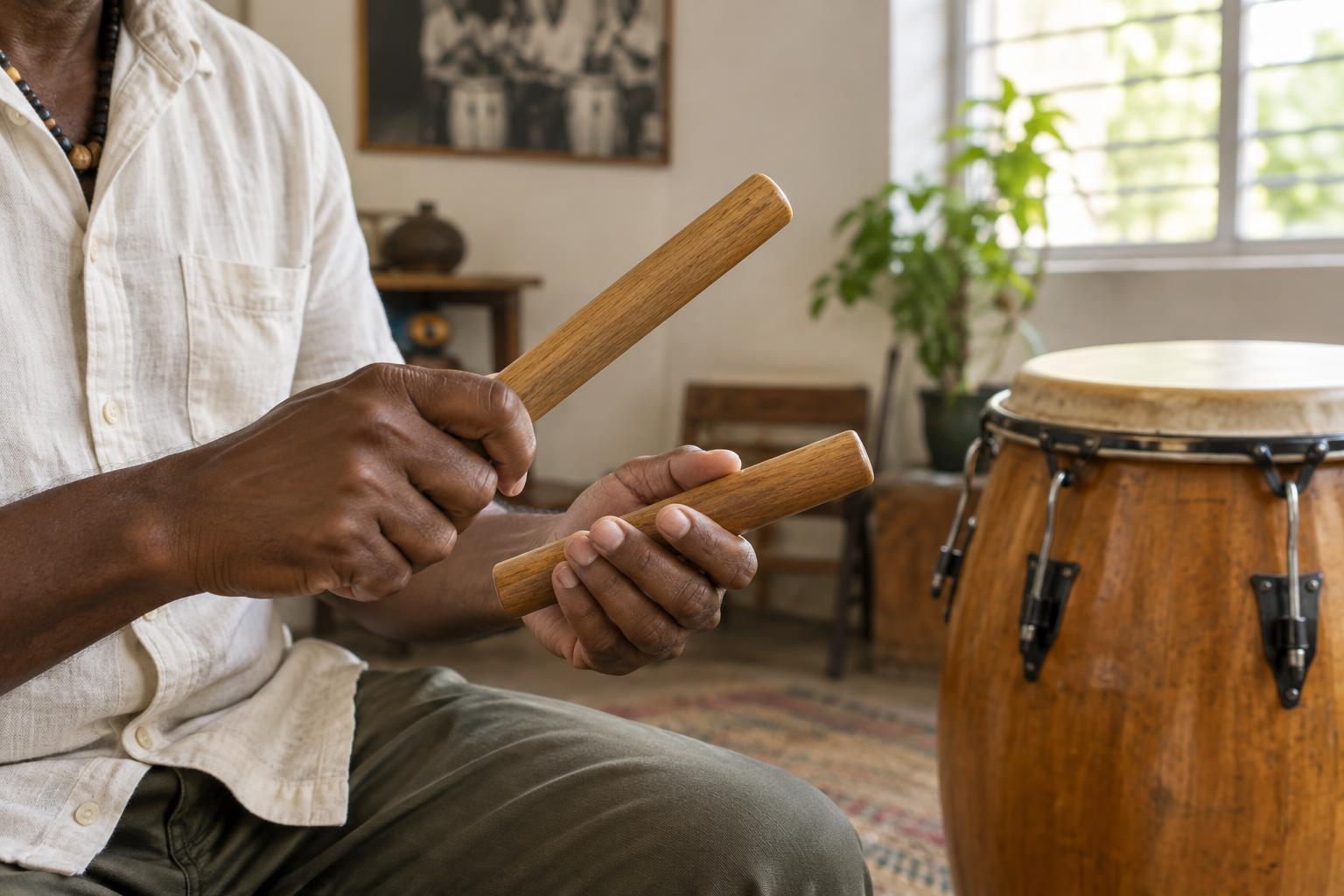
In music organized around clave, the two sides of the pattern have distinct identities. You may hear musicians describe a pattern by which side comes first. For this exercise, keep one orientation throughout; do not reverse the sides after a mistake to make your re-entry seem closer. If you lose track of which bar you are in, listen to the repeating phrase and wait until you can identify its beginning again. The goal is to return to the shared cycle, not merely to find a convenient beat.
Practice the recovery in three passes
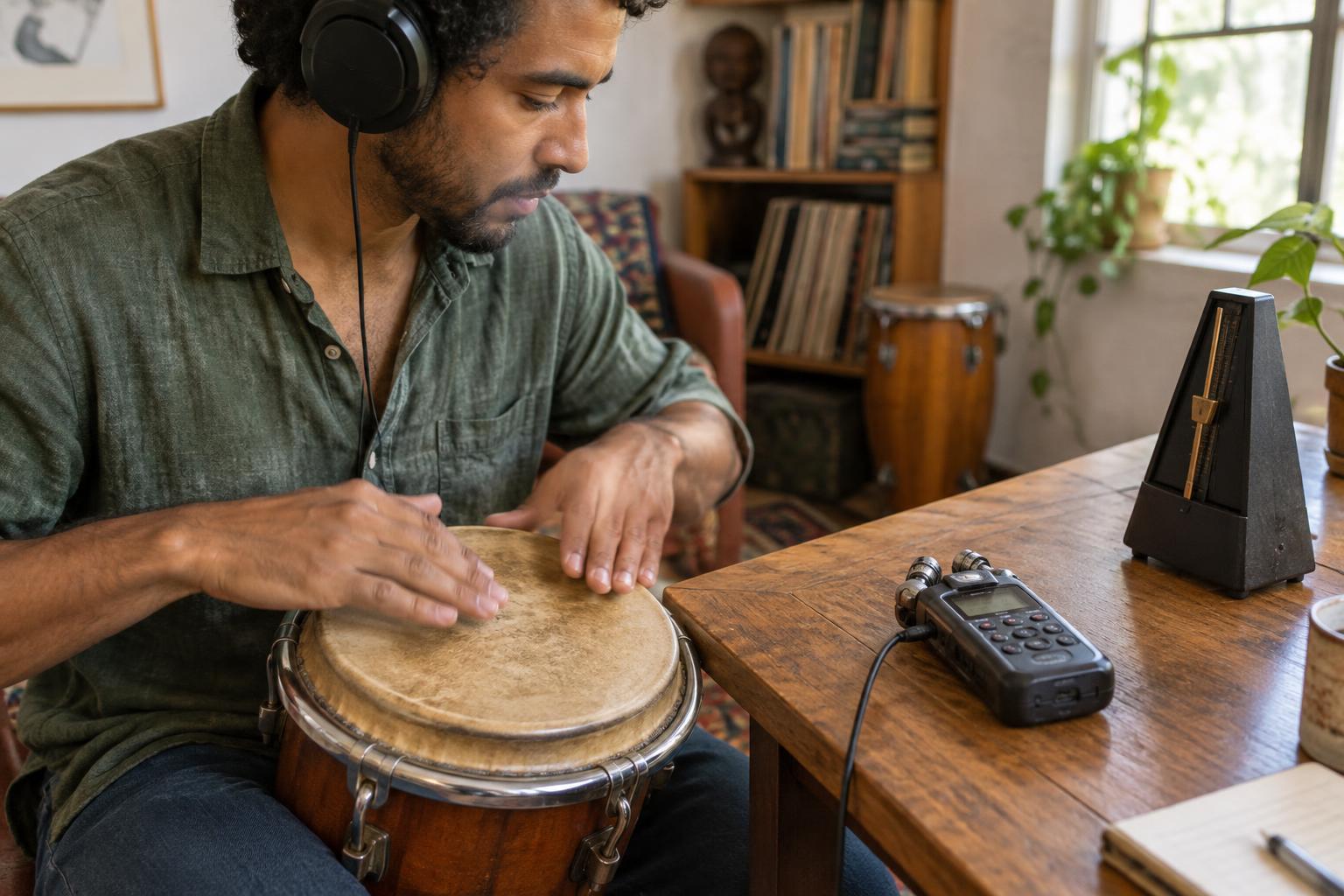
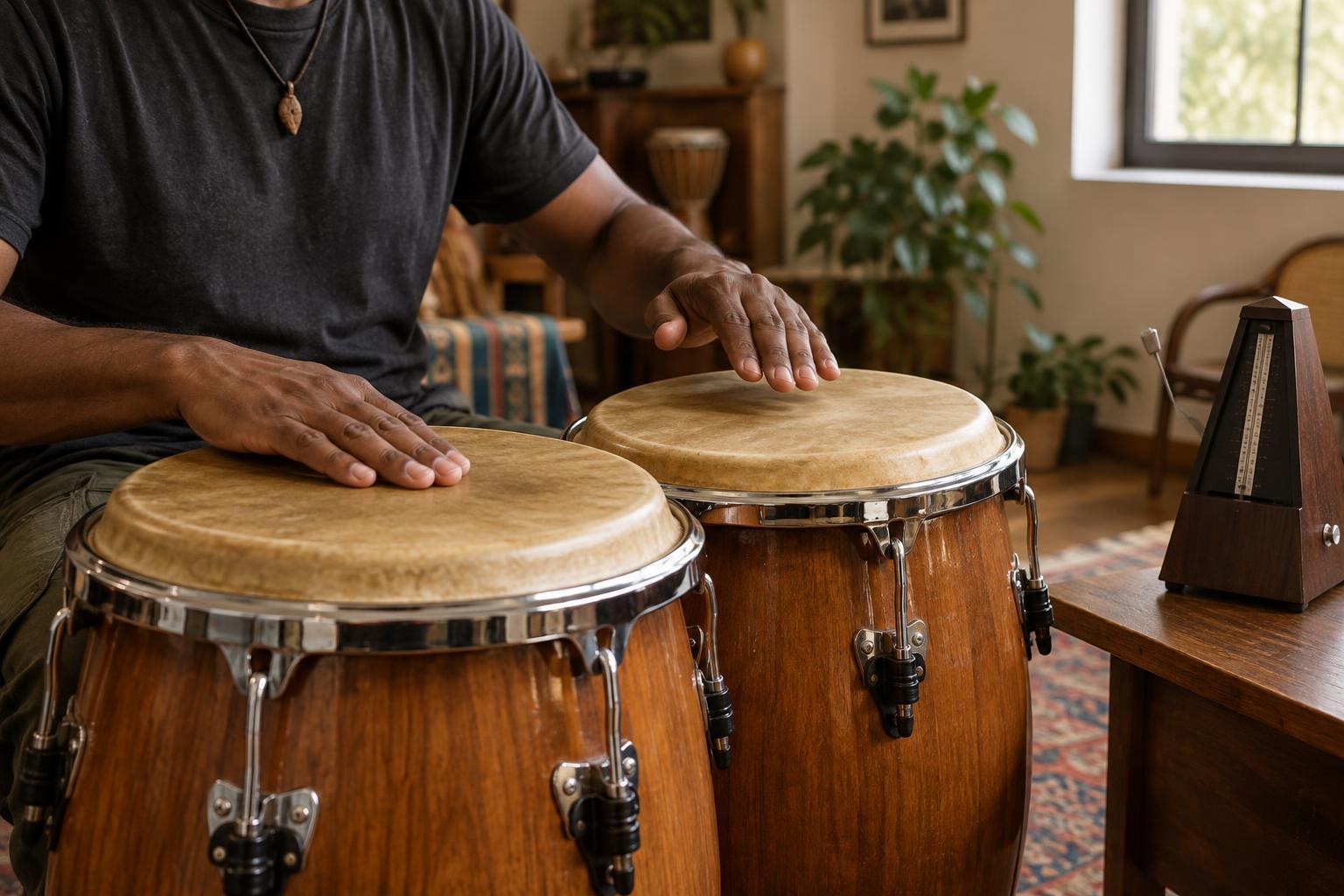
First, play your pattern continuously for several cycles. Keep an audible count or use a simple, steady reference pulse. Aim for a relaxed sound and an even tempo rather than speed. Next, deliberately leave out one stroke while continuing to count and move with the pulse. Do not fill the gap. Keep track of the remainder of the cycle, then enter cleanly at the start of the next one.
For the third pass, stop playing immediately after the deliberate omission. Continue counting silently while listening to the reference pulse or to someone else playing the pattern. Rejoin at the next cycle boundary. This version separates two skills that often get tangled together: knowing where you are and making the physical stroke. If you cannot find the boundary reliably, slow down or speak the count again before trying to play.
Vary the stroke you omit. A gap near the start of the cycle leaves more time to stay oriented; a gap near the end asks you to prepare your return quickly. You can also alternate between counting aloud and counting internally. In either case, resist the urge to speed up through the silence. The empty space still has a duration.
Use your ears as well as your count
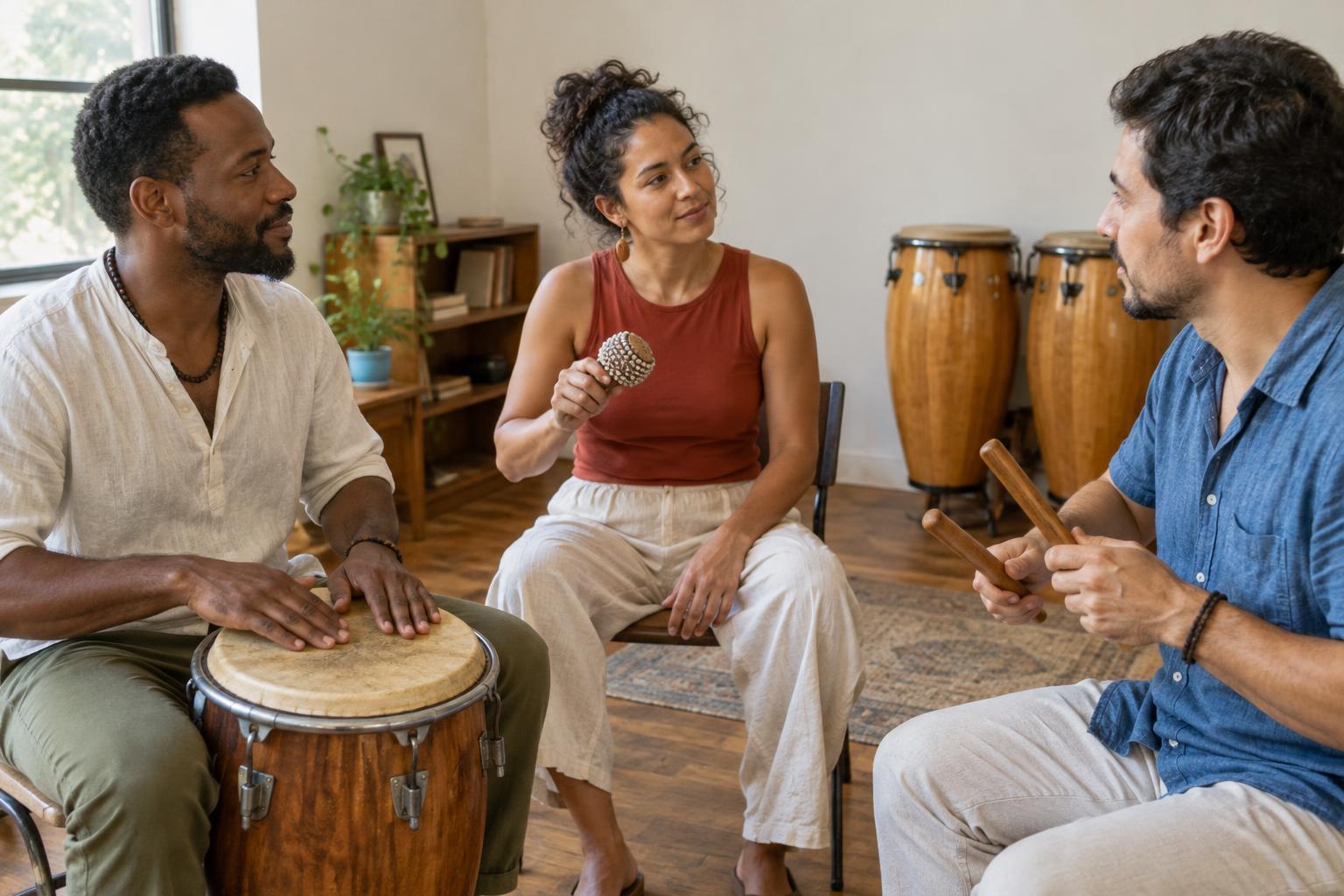
Counting is a useful scaffold, but an ensemble offers other clues. A recurring bass figure, a bell pattern, a chord change, or a repeated vocal phrase may help you hear where a larger phrase turns over. These cues vary by arrangement; none is a universal substitute for listening to the people you are playing with. Notice which sounds remain dependable when your own part drops out.
Try the exercise with a recording or a partner playing a steady part. Lower your volume for a few cycles so you can hear that part clearly. Then omit a stroke, stay quiet until the next two-bar beginning, and come back at your normal volume. If you discover that you entered on the wrong bar, avoid another rushed correction. Listen, locate the cycle again, and make your next entrance deliberate.
Make recovery part of the pattern
A missed stroke can feel conspicuous, particularly in a sparse arrangement. In practice, treat it as a cue to listen more carefully rather than as a reason to play more notes. One clean gap followed by a confident entrance often preserves the shape of the phrase better than a late stroke and several hurried adjustments.
Finish by playing a few uninterrupted cycles after each recovery. This checks that your entrance has restored the flow, not just landed on a single correct beat. Over time, you are practicing more than error repair: you are learning to hold the pulse, recognize a two-bar phrase, and stay connected to the music even when your hands briefly stop.