One click for every two beats
Suppose you want to practice a groove at 100 beats per minute in 4/4. Set the metronome to 50 beats per minute. Keep your quarter-note pulse at 100: count “one, two, three, four” at that pace while the metronome clicks only on “two” and “four.” The click has slowed down, but your playing has not. There are two clicks in each bar instead of four.
This distinction matters because a slower click can invite you to slow your count along with it. If each click becomes your next numbered beat, you are practicing at 50, not 100. Think of the clicks as landmarks within a steady four-beat bar. Your job is to supply the beats that fall between them. If you are working at a different playing tempo, use the same relationship: set the click to half that tempo.
Give the first click a place
A metronome does not know which beat is two. You assign that meaning to its clicks. Start the click at 50, then say “two” with one click and “four” with the next. Fill the gaps aloud: “two, three, four, one, two, three, four.” Once that feels secure, begin a fresh bar by saying “one” halfway between a click on four and the next click on two. Continue counting full bars: “one, TWO, three, FOUR,” with the capitalized beats landing on clicks.
It can help to tap your foot on every numbered beat while you speak. At 100 beats per minute, each foot tap falls halfway between successive clicks or directly on a click. Check that the interval from one to two feels the same as the interval from two to three. Do not rush across the silent beats simply because there is no click there.
If your device accents a downbeat automatically, turn that accent off if possible. An accent presented as “one” may make it harder to hear the first click as two. A plain, even click leaves the placement up to you.
Build the groove in layers
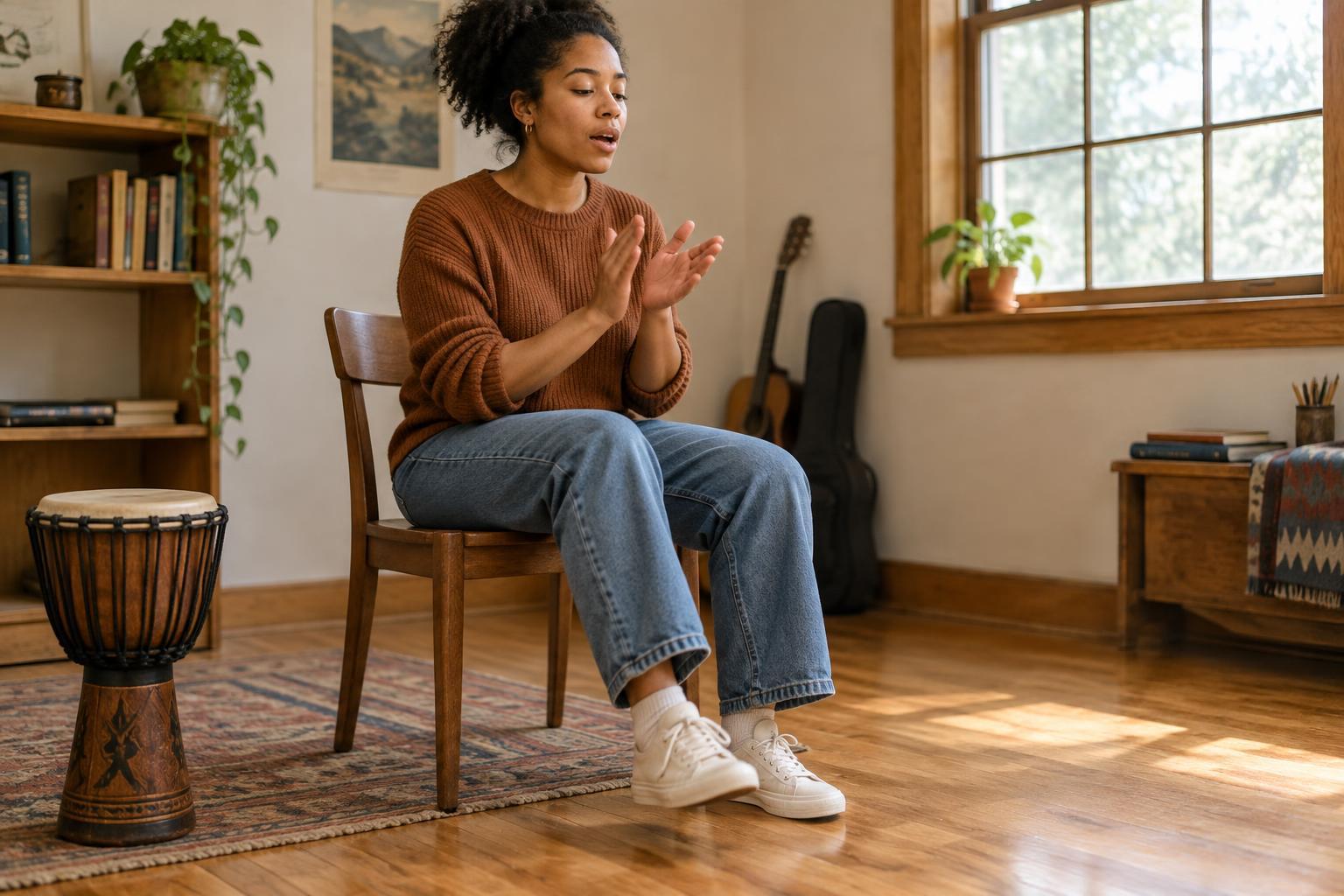
First, count aloud for several bars without playing. Next, clap only with the metronome on two and four while your foot keeps all four beats. Then switch roles: clap on one and three, letting the click answer on two and four. This makes the empty spaces audible without changing the tempo.
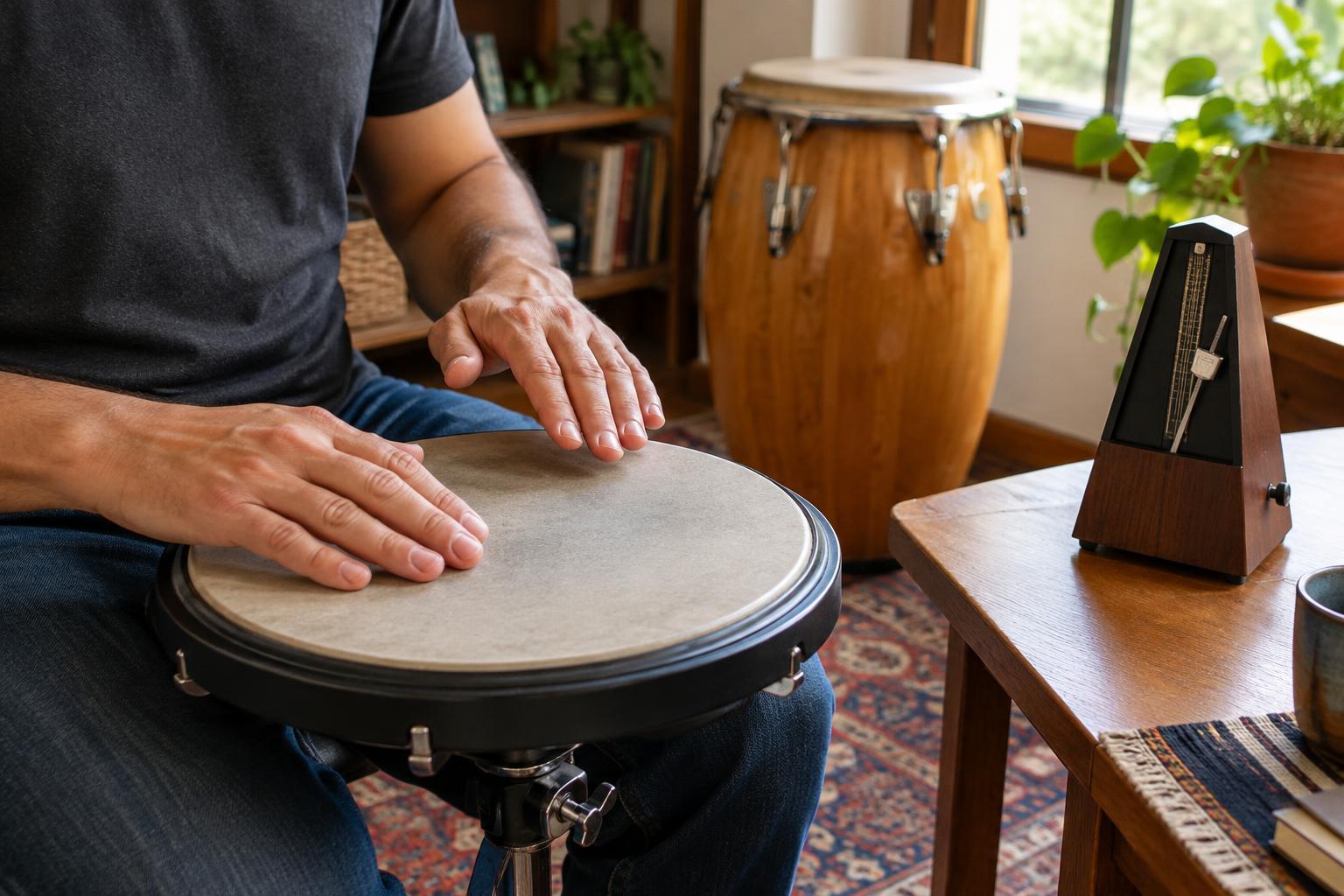
Once the count is stable, play a short pattern you already know. A drummer might put a simple backbeat on the clicks; a bassist might play quarter notes and notice whether notes on one and three stay evenly spaced. A hand percussionist can begin with a repeating, uncomplicated pattern before adding subdivisions. Keep the exercise simple enough that you can still say the beat numbers aloud.
After that, try eighth notes: “one and two and three and four and.” The clicks still mark two and four; the “ands” divide each beat in half. Subdivision is useful when the space between clicks feels vague, but it should support the pulse rather than turn into a new, faster beat.
Notice when the click changes meaning
A common slip is to hear the clicks as one and three. The spacing sounds identical, so you may not notice the change until you count or play an accent. Stop and reset deliberately: say “two” on a click, “three” in the middle, and “four” on the next click. Then find “one” in the following gap. If that remains difficult, practice at a comfortable tempo with a click on every beat, then return to the half-speed setting.
Another slip is to play twice as fast to fit more notes between clicks. At a 50-beat-per-minute setting, there should be exactly two of your 100-beat-per-minute quarter notes from one click to the next. You can test this by counting “two, three, four”: two lands on the first click, three in the middle, and four on the second click. Record a few bars if you can; listen for whether your count and playing stay aligned through the silent beats.
Treat two and four as a listening exercise, not a rule for every musical setting. Backbeat placement is useful in many grooves, but rhythm also depends on phrasing, interaction, and style. In Afro-Cuban music, for example, a steady count is only a starting point for hearing how parts relate to a clave pattern. Keeping the metronome sparse can strengthen your internal pulse, leaving more attention for the relationships among the parts.