Know where each movement belongs
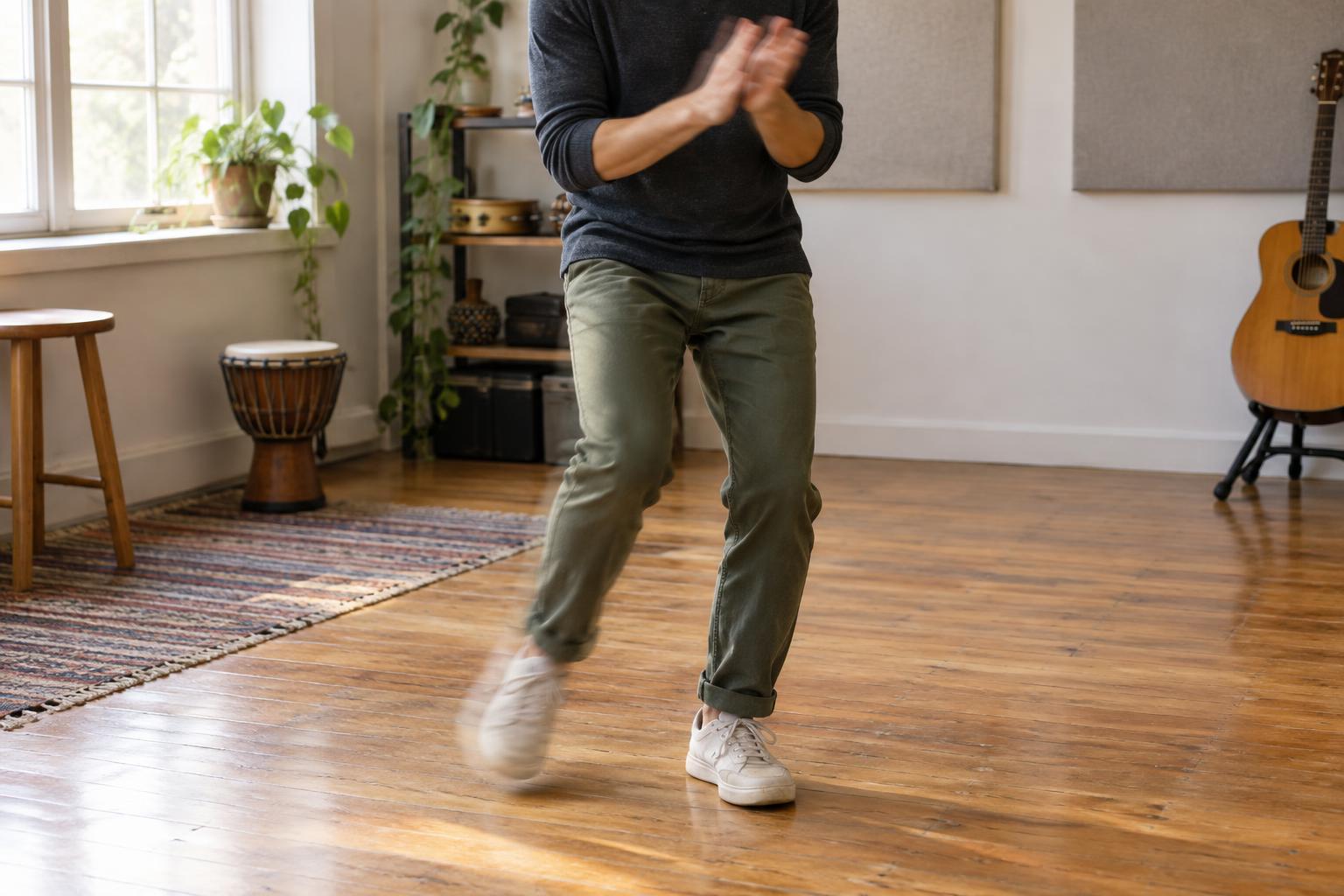
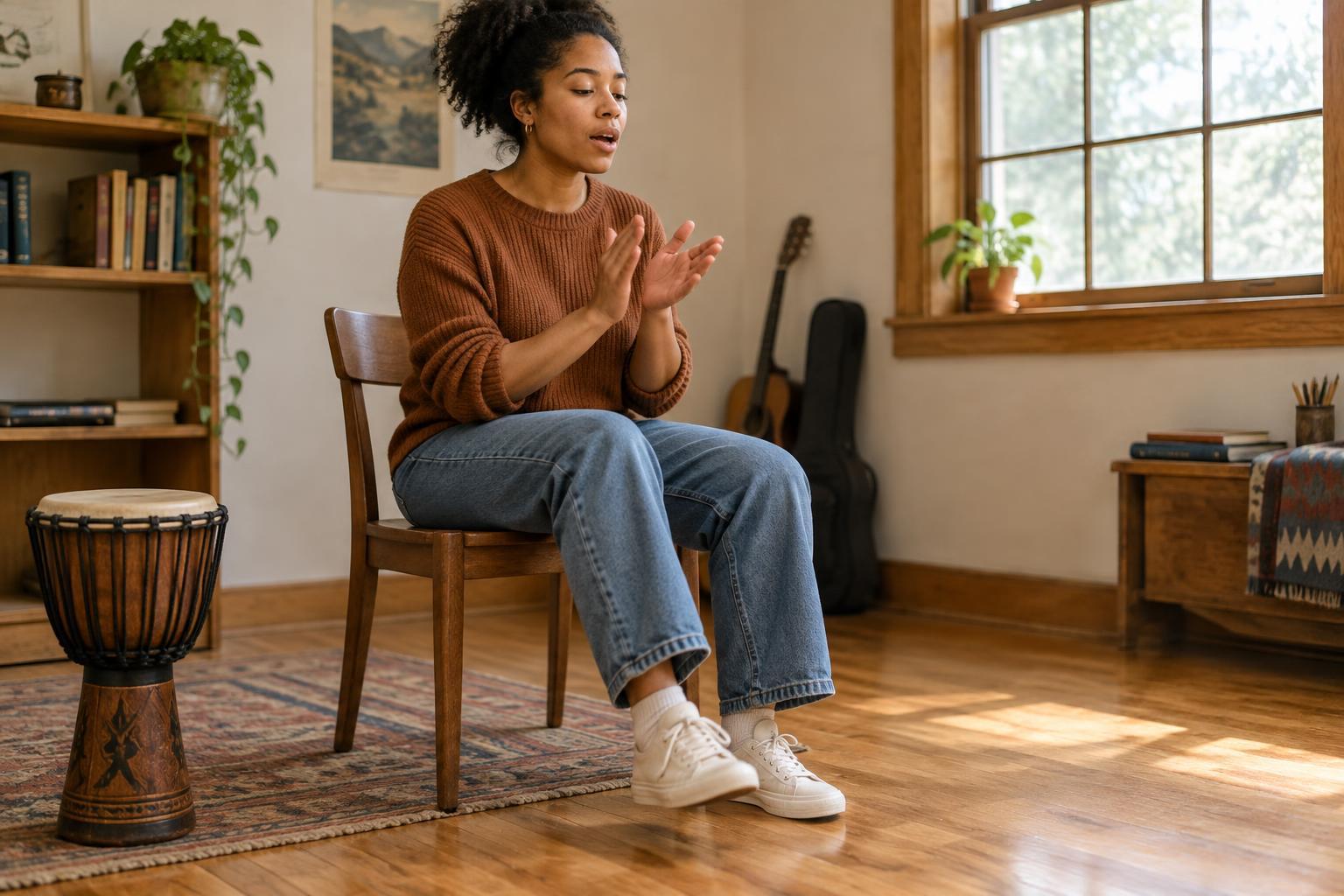
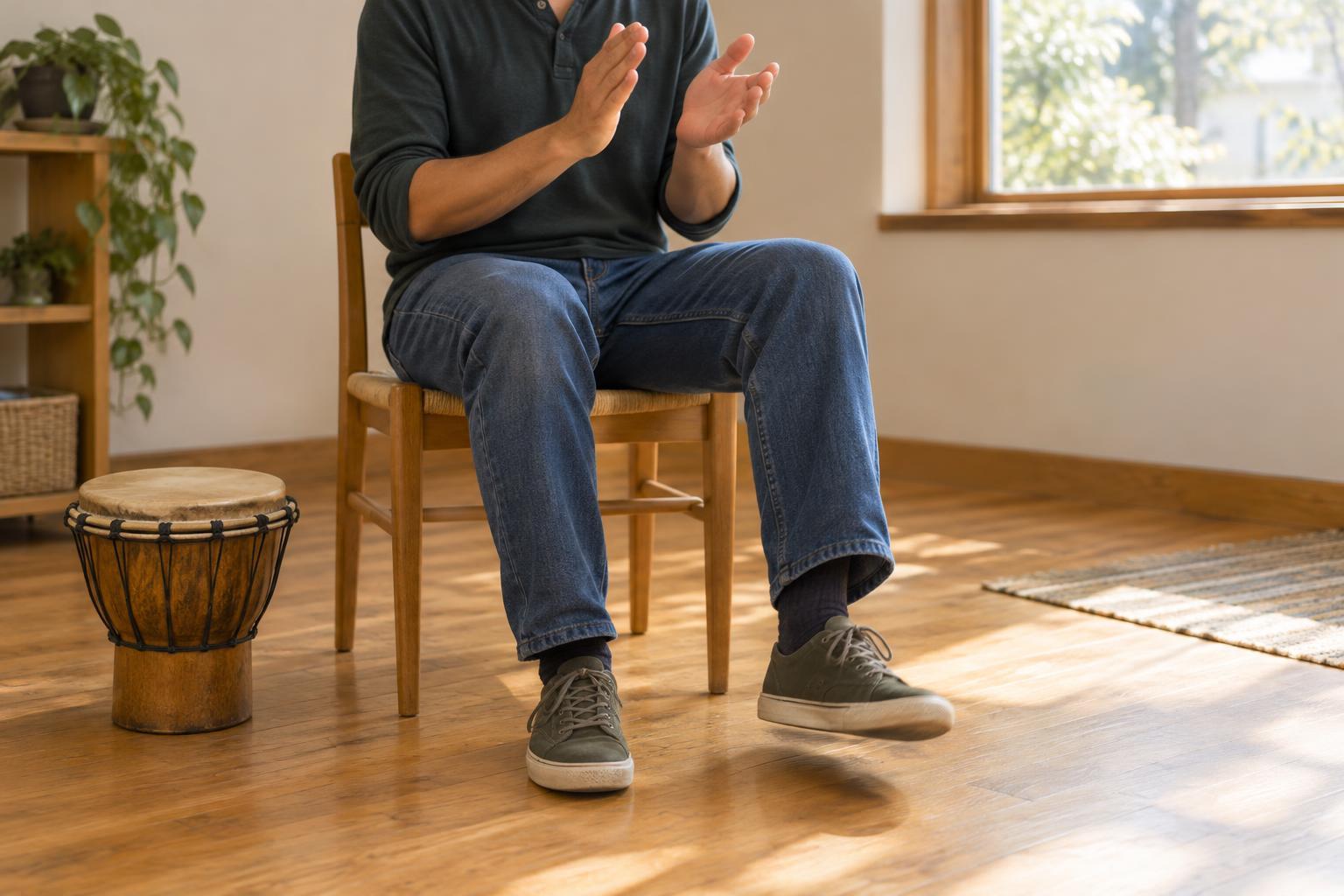
An eighth-note offbeat falls halfway between two quarter-note beats. If you count “one and two and three and four and” at an even pace, your foot taps on the numbers and your hands clap on the word “and.” The foot does not switch to the claps. It remains your reference for the beat while the hands mark the spaces between taps.
Start without moving. Say the full count aloud, giving every syllable equal spacing: “one and two and three and four and.” Do not rush the “and” toward the next number. Then tap your foot gently on each number while continuing to speak. If your foot is steady, you should be able to predict exactly when the next tap will arrive.
Build the clap one offbeat at a time
Keep counting and tapping, but clap only on the “and” after one. Repeat several four-beat cycles this way. Leave the other offbeats silent; the goal is to place one clap precisely between two foot taps. Next, clap after one and after three. When those feel secure, clap on all four “ands.”
Keep both motions small. A heavy foot stomp or forceful clap can make the exercise harder to control and tiring to repeat. Try counting aloud throughout: “one CLAP two CLAP three CLAP four CLAP.” The spoken “and” still belongs at each clap, even if you eventually stop saying it. If the coordination falls apart, remove a few claps rather than speeding up to catch the beat.
You can test the spacing by pausing after any clap and asking where the next foot tap belongs. It should arrive after the same amount of time that passed between the preceding tap and the clap. The two movements alternate evenly, but they have different jobs: foot on the beat, hands between beats.
Practice without letting the foot follow your hands
A common slip is to move the foot onto an “and” as soon as the hands begin clapping. To notice this, look down briefly and speak the count while you play. Every foot tap should line up with a number. If it starts lining up with “and,” stop and restart with foot and voice alone. Reintroduce a single clap before attempting the full pattern.
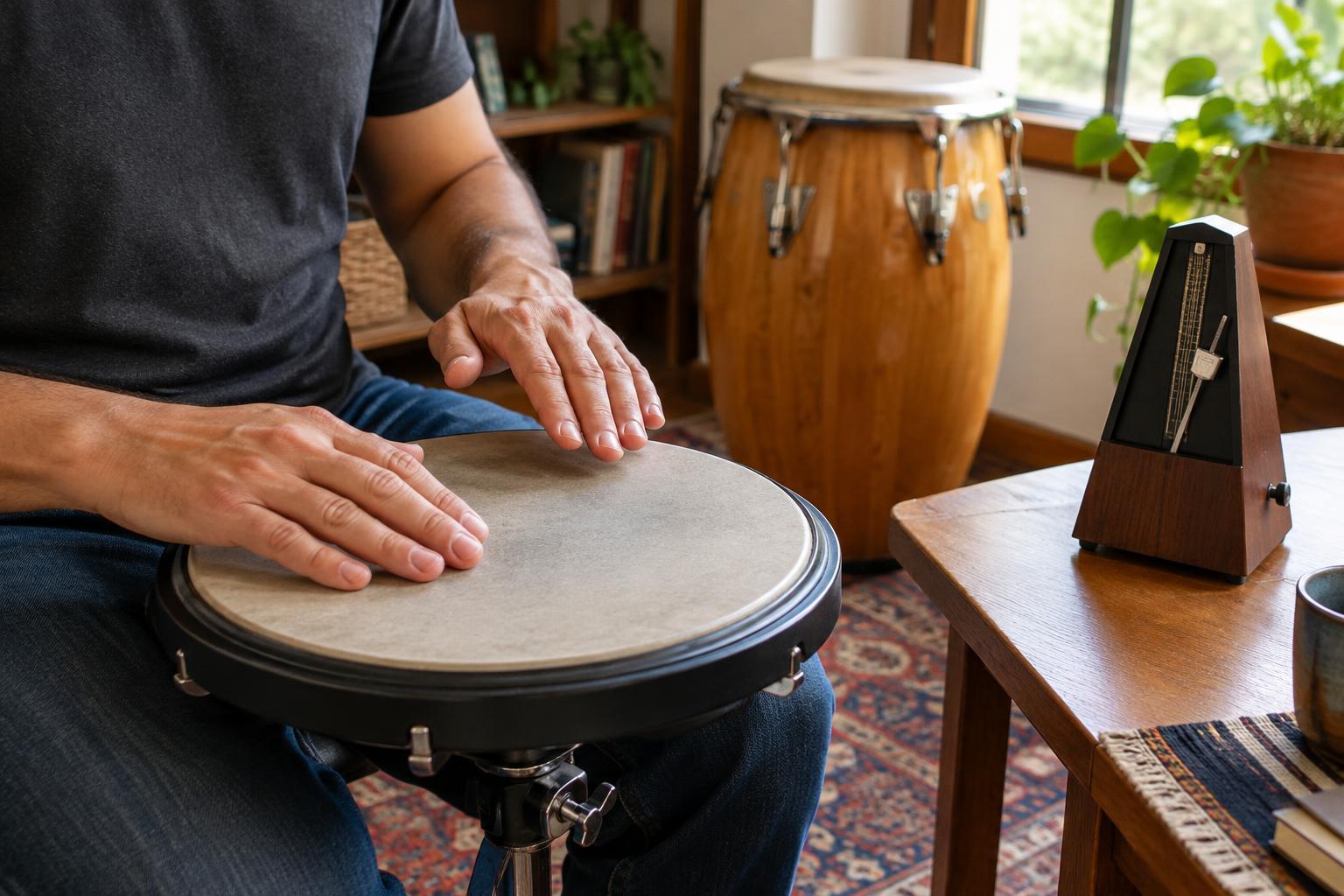
Another slip is an uneven gap: the clap crowds the previous tap or leans toward the next one. Slow your count until you can feel two equal halves inside each beat. You might say “one-and” as one smooth pair rather than treating “and” as an afterthought. A metronome, if available, can mark the numbered beats; begin at a comfortable setting and use it to check your foot, not to force a faster performance.
Make the pattern useful in music
Once you can clap every offbeat for several cycles, try clapping only the “and” after two and four. Then return to all four offbeats without changing your foot. You can also clap softly for one cycle and more strongly for the next. These changes test whether you still know where the beat is when the hand pattern becomes less predictable.
For a listening variation, play a recording with a pulse you can follow and tap your foot along with it. Count before adding the claps, and choose a passage where you can hear the beat clearly. Some rhythms may make an offbeat feel especially prominent; your task is not to label every sound you hear, but to keep the counted beats steady while placing your own claps between them.
This exercise develops one useful coordination skill, not a complete understanding of any musical tradition. Offbeat accents appear in many styles, including Afro-Cuban music, where percussion parts work together in ways that deserve attentive listening on their own terms. Being able to hold a beat while hearing what happens around it gives you a better starting point for that listening.
Finish with a short consistency check
Try four cycles of foot taps and offbeat claps, followed by four cycles with the foot alone. Keep counting through both. When the claps return, the foot should continue as though nothing changed. If you can repeat that transition comfortably, try it at a different, still-manageable tempo.
Progress is less about how fast you can clap than whether the beat stays dependable. A quiet, even foot and a well-placed clap give you a clear way to check your timing. Return to one offbeat at a time whenever you need to; rebuilding the spacing is part of the practice.