Choose a groove you can repeat
When you are playing, your attention is busy with notes, sound and coordination. A recording lets you listen again without having to keep the groove going at the same time. The aim is not to prove that every hit belongs on a perfect grid. It is to find out whether your pulse stays where you intend it to stay.
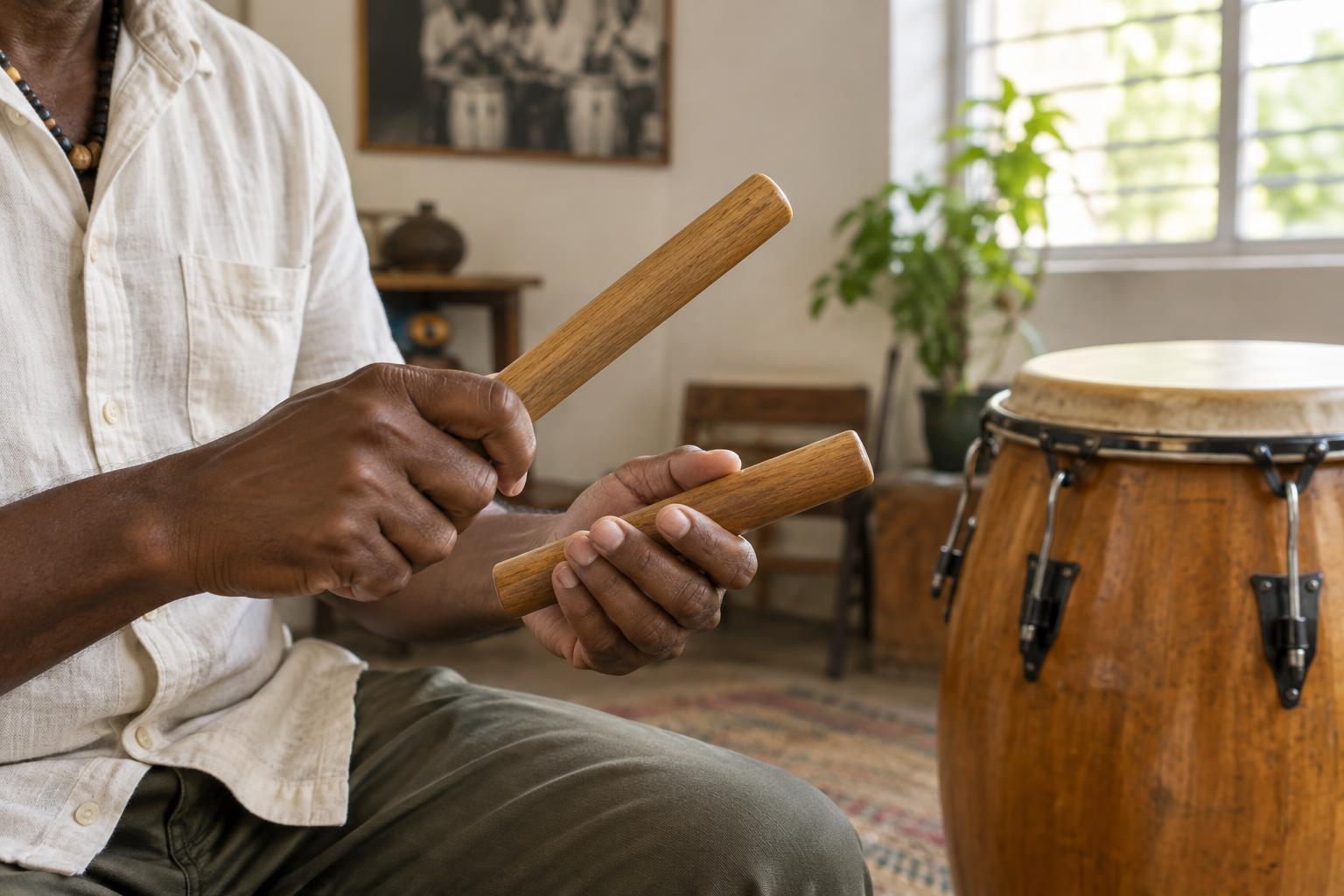
Choose a pattern you can play comfortably for about 30 seconds. It might be a hand-drum rhythm, a shaker pattern, a bass line or a two-chord accompaniment. If you are practicing music organized around clave, decide which clave orientation and part of the cycle you are using before you begin. Keep that relationship consistent throughout the take. Start with a pattern simple enough that you can hear its timing, rather than one that demands all your attention just to remember it.
Make a recording you can compare
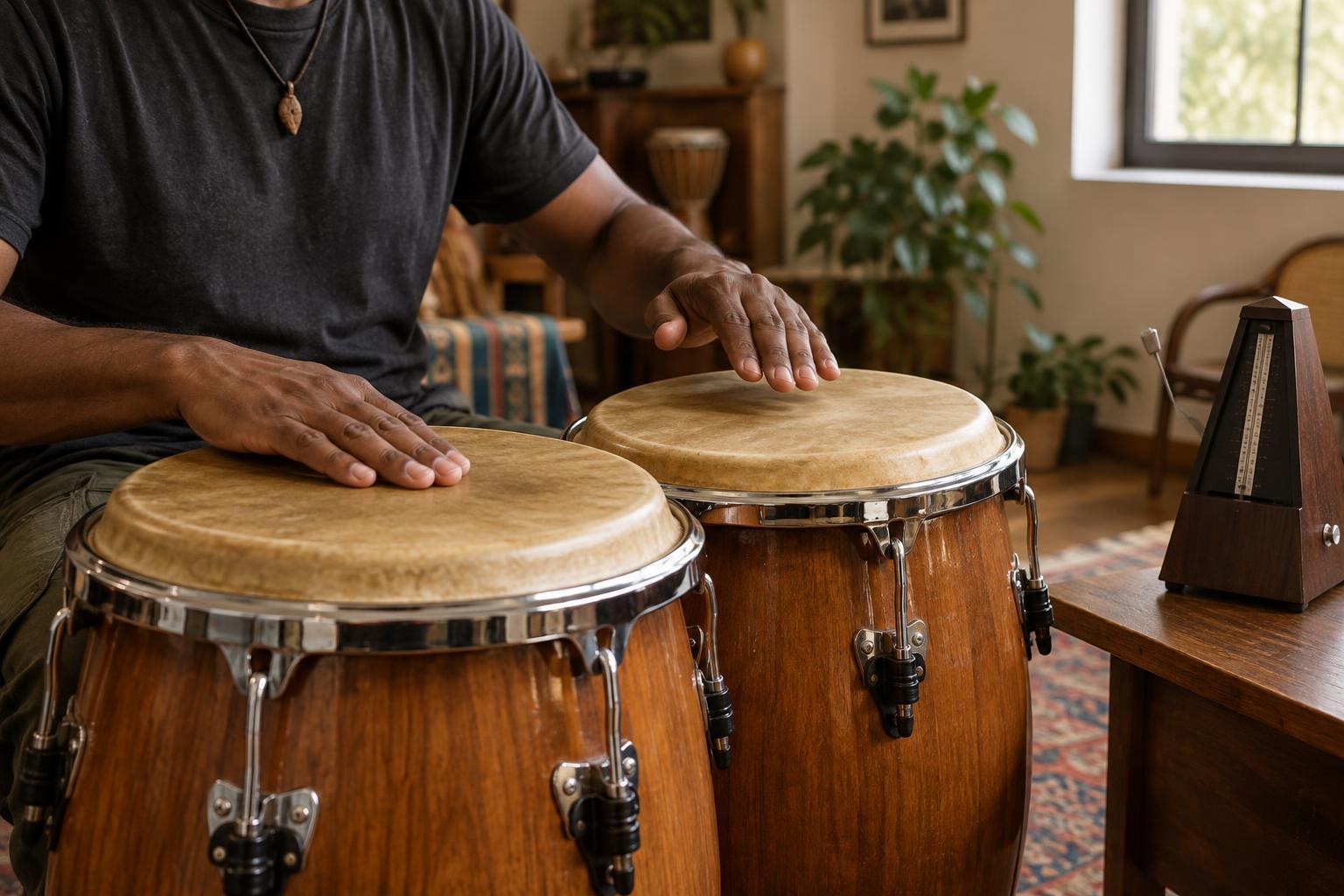
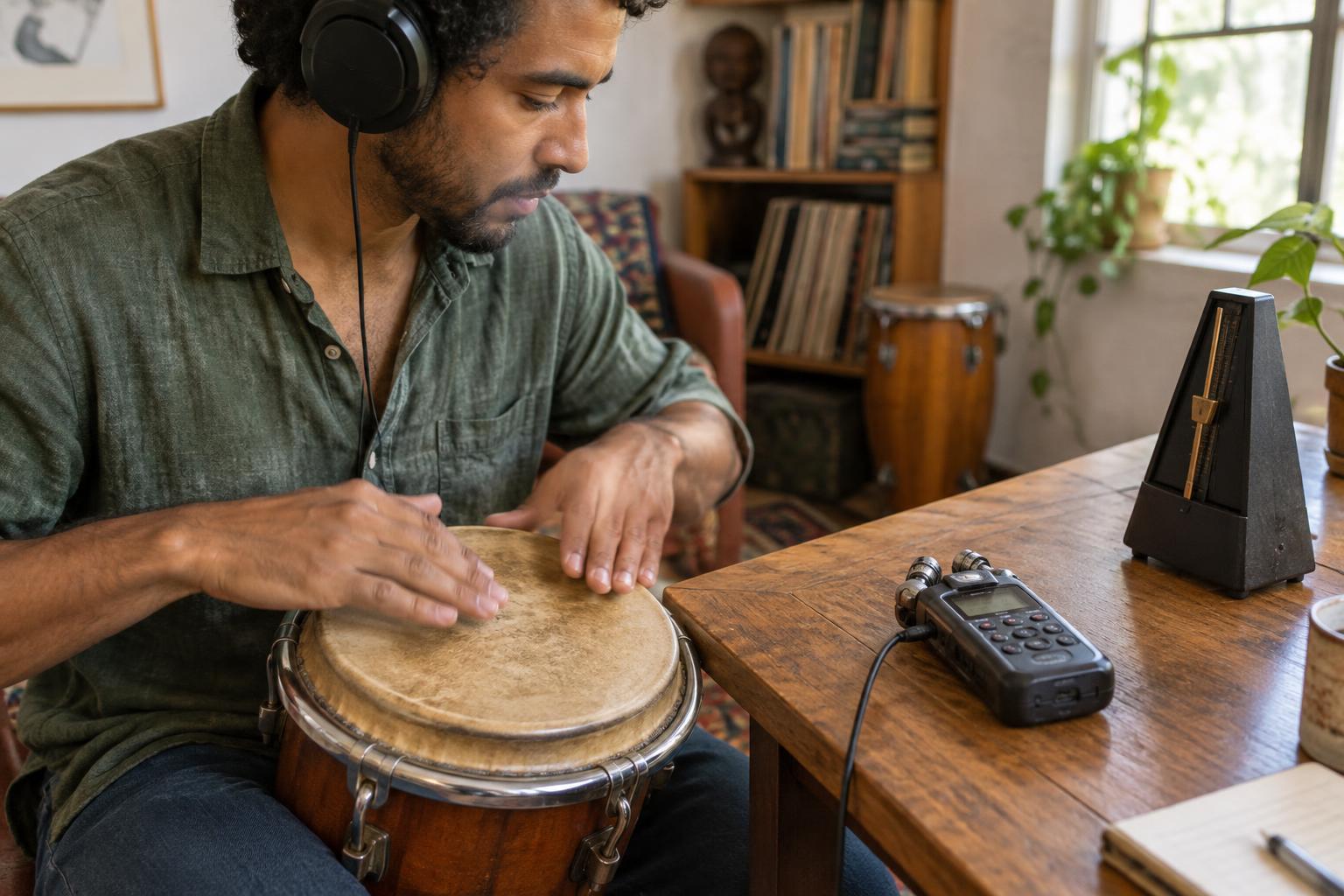
Use a phone, a portable recorder or a recording app. Place it where both your instrument and your timing reference will be audible without either drowning out the other. Set a metronome to a comfortable tempo and record a few bars of clicks before you start playing. Then play several repetitions without stopping, even if you make a small mistake. Stopping whenever a note goes wrong can hide the timing habit you are trying to hear.
You can also record without a click to learn how your pulse behaves on its own. For a first check, though, an audible reference makes gradual changes easier to notice. If you use headphones and recording software, be aware that monitoring delay can make a performance sound later than it was played. A simple room recording with an audible click is often easier to interpret than a setup whose latency you have not checked.
Listen for a trend, not one imperfect note
On the first playback, tap your foot with the click and listen to the whole phrase. Does the groove feel settled at the beginning but increasingly urgent near the end? That can be a sign of rushing: your recurring accents arrive progressively ahead of the reference. If they fall progressively behind it, you may be dragging. Listen across several cycles before deciding. One early or late note is not the same as a tempo trend.
Next, focus on one recurring event, such as a bass note on beat one, a hand-drum accent or a repeated chord attack. Compare that event with the same point in each cycle. Then listen to the quieter notes between accents. Some players keep the main beats steady while squeezing the spaces between them; others stretch those spaces and hurry to reach the next accent. If your recording software shows waveforms, it may help you locate attacks, but use your ears too: soft notes, ringing sounds and room echoes do not always produce obvious visual markers.
Not every note is meant to sit directly on a click. A percussion layer may have a deliberate placement that gives the groove its character. Judge the timing against the role you intended for that part and the shared pulse, rather than moving every sound to the nearest beat.
Test one adjustment at a time
If you hear rushing, play the pattern more quietly and reduce unnecessary movement. Count or feel the space after each accent instead of treating the next note as something to reach quickly. If you hear dragging, check whether you are preparing a difficult motion too late. Practice that motion alone, then put it back into the pattern. In either case, slow the tempo until you can repeat the groove without bracing for the next note.
Record a second short take after changing just one thing. Compare the opening and closing cycles of both takes. You are looking for a steadier relationship to the reference, not a performance that sounds mechanical. Once the click version feels stable, try a take with fewer clicks or without the reference, then listen for whether the same pulse remains clear.
Bring the exercise back to the music
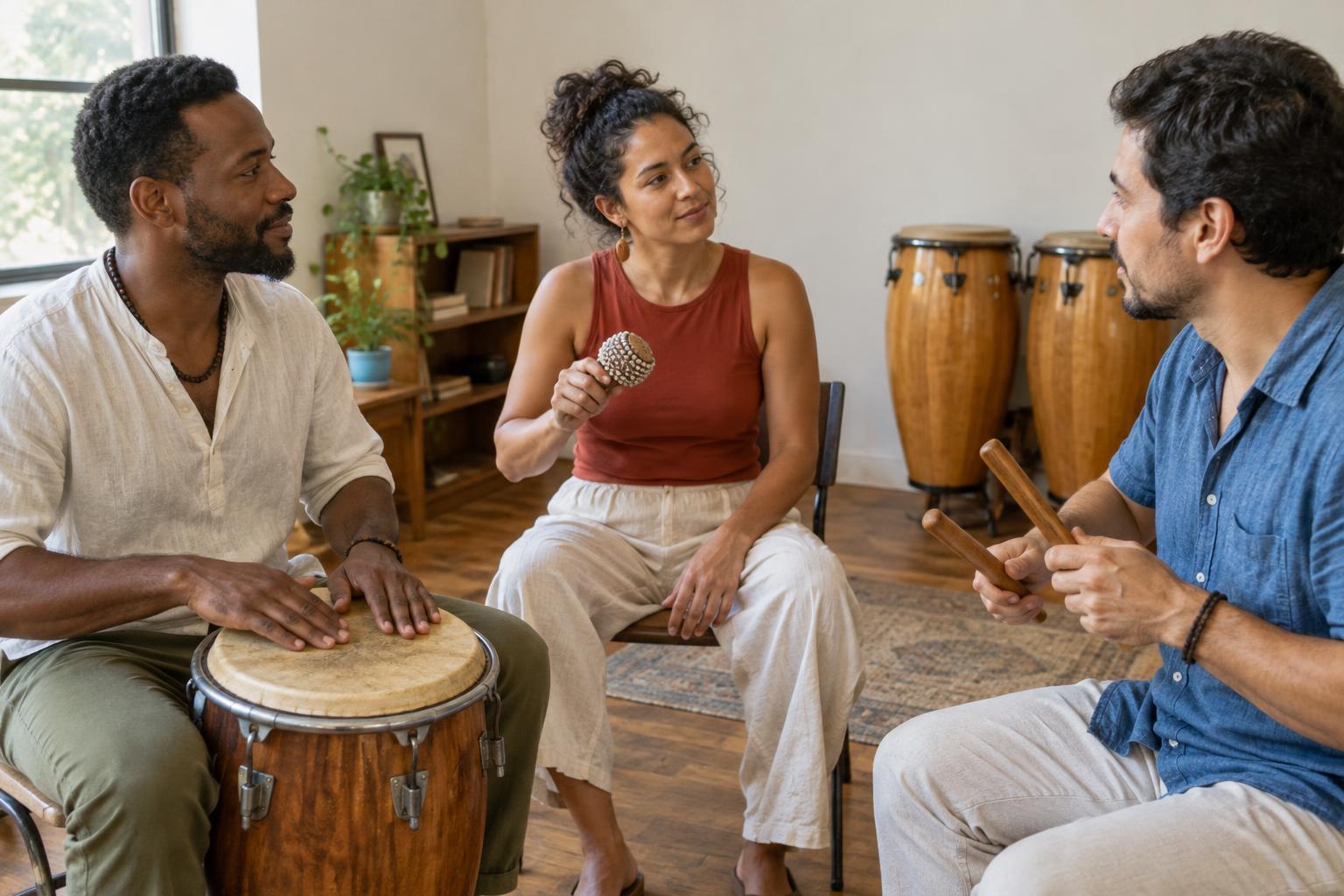
Timing becomes more meaningful when you hear how parts fit together. If you are working with a clave-based groove, listen for the relationship among clave, the supporting percussion and the instrument you recorded. Avoid using clave as a generic name for any two-bar accent pattern: in Afro-Cuban music, its placement helps organize phrases and ensemble parts. Learning a specific groove from a knowledgeable teacher or a recording you are studying can help you understand what your part is meant to support.
Keep your recordings brief and your notes specific: “the last two cycles sped up” is more useful than “bad timing.” Revisit the same groove after practicing it on another day. The exercise works best as a way to ask a clear listening question, make one adjustment and hear whether it helped.