Think of rhythm as a conversation
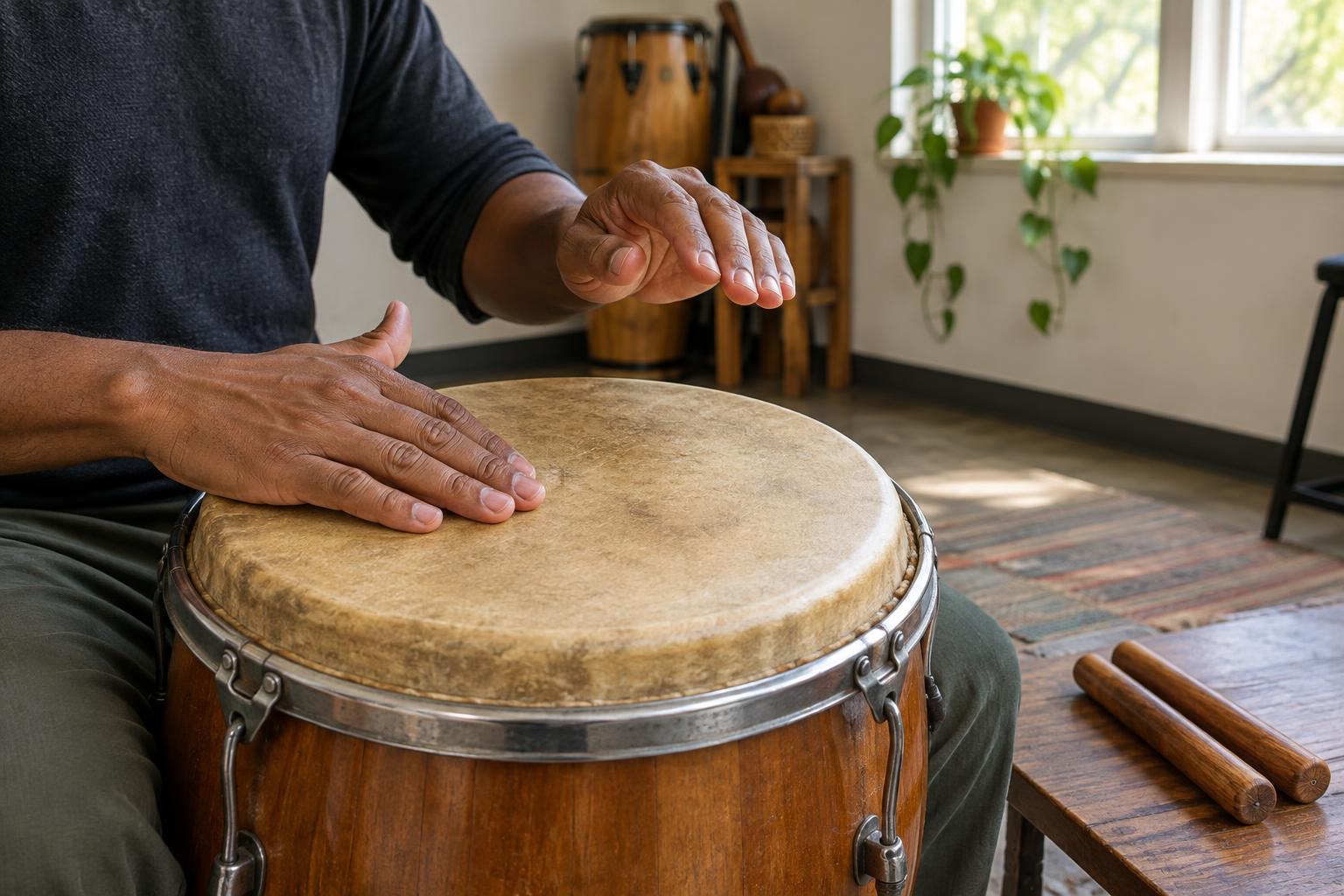
A call is a phrase that invites a response. An answer can repeat part of the call, but it does not have to copy it. In this exercise, you will make a two-bar call with a few unexpected accents, then give it a two-bar answer that feels more grounded. You can clap both parts, speak them on a syllable such as “ta,” or play them on a single drum.
Start with four bars of 4/4: two bars for the call and two for the answer. Count each bar aloud as “1 & 2 & 3 & 4 &.” Each number is a beat, and each “&” is halfway between beats. Keep the count even, including when your hands are silent. A foot tap or a quiet metronome can help you hear whether a rest is truly measured or just a pause while you decide what to play.
Build the two-bar call
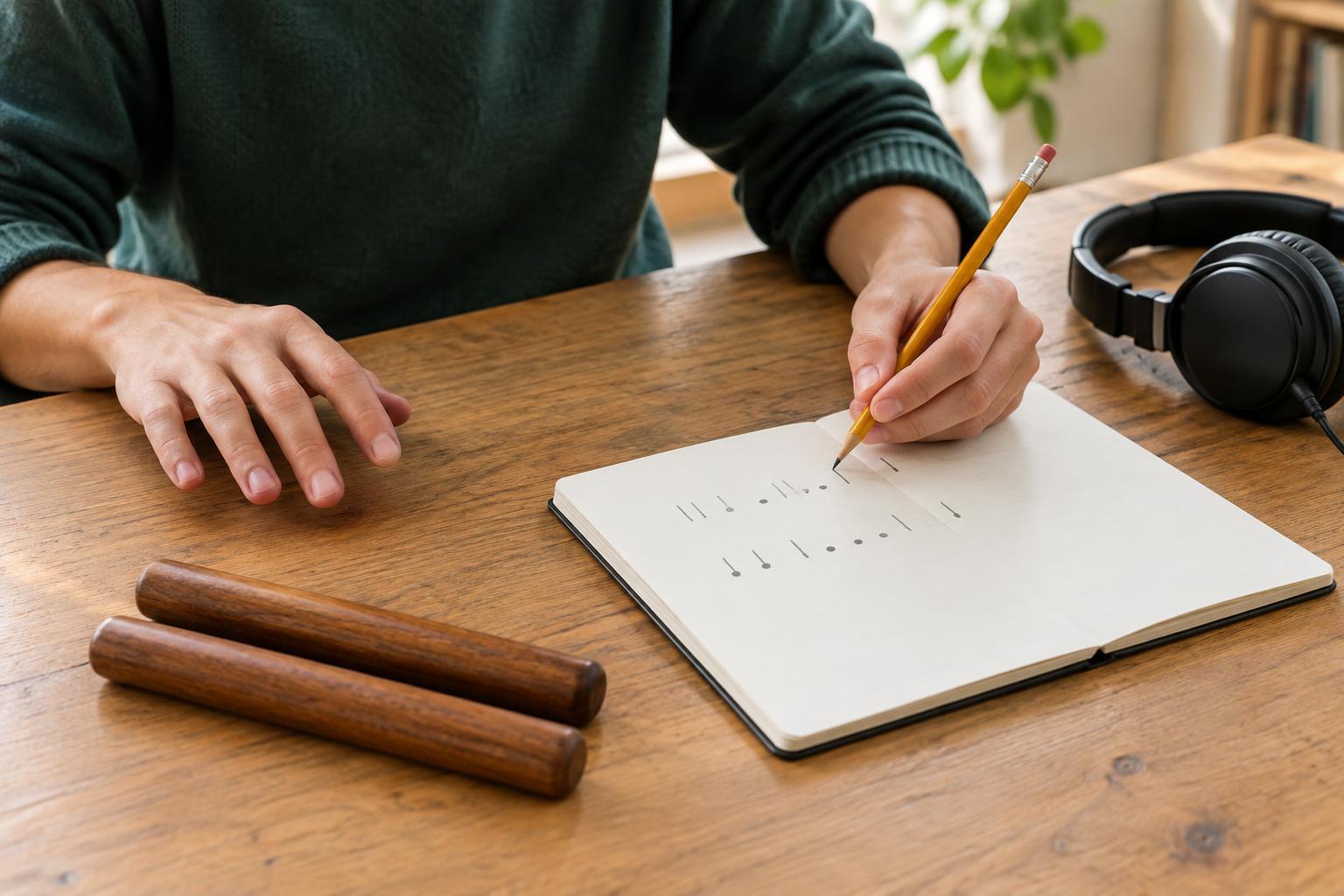
Use eight positions per bar, one for each spoken count. In the grid below, X means clap or play a note; a dot means rest. Read each row from left to right against the same count: 1 & 2 & 3 & 4 &. Call, bar 1: X . . X . . X . Call, bar 2: . . X . . X . .
In the first bar, play on beat 1, the “&” after beat 2, and beat 4. In the second bar, play on beat 2 and the “&” after beat 3. The call begins clearly but moves away from a steady run of notes. Its final sound arrives before the end of bar 2, leaving room for the answer. Count through the remaining space rather than shortening the bar.
Try the call several times while tapping every beat. If the offbeat notes are difficult, speak the full count and replace only the X positions with a louder “ta.” Once the spacing feels reliable, clap the phrase without speaking, then check it again against the count. The aim is not speed; it is to know exactly where each sound and silence belongs.
Answer with a different shape
Now make the answer easier to locate against the pulse. Keep the same eight-position grid: Answer, bar 1: X . X . X . X . Answer, bar 2: X . . . X . . . Play beat 1, beat 2, beat 3, and beat 4 of the first answer bar. In the last bar, play beats 1 and 3, then let the phrase finish in silence.
This answer contrasts with the call in two ways. It avoids the call’s offbeat placements, and it moves from a busy bar to a spacious one. The first answer note lands immediately after the call’s final rest, making the exchange easy to hear. The last note does not need an extra flourish: holding the pulse through the final rests can make the ending feel complete.
Play all four bars without stopping between phrases. Then listen for the point where the character changes. If the answer sounds too similar to the call, make its notes softer, or give its first bar a different sound—for example, clap the call and tap the answer on your knee. Keep the rhythm itself intact until you can hear what each change contributes.
Make the exchange your own
Once this version is comfortable, change one feature at a time. Move one call note to a neighboring eighth-note position, but leave its other notes alone. Or keep the call fixed and remove one note from the answer. After each change, play the full four bars twice. Ask yourself whether the answer still feels connected to the call and whether the contrast remains audible without looking at the grid.
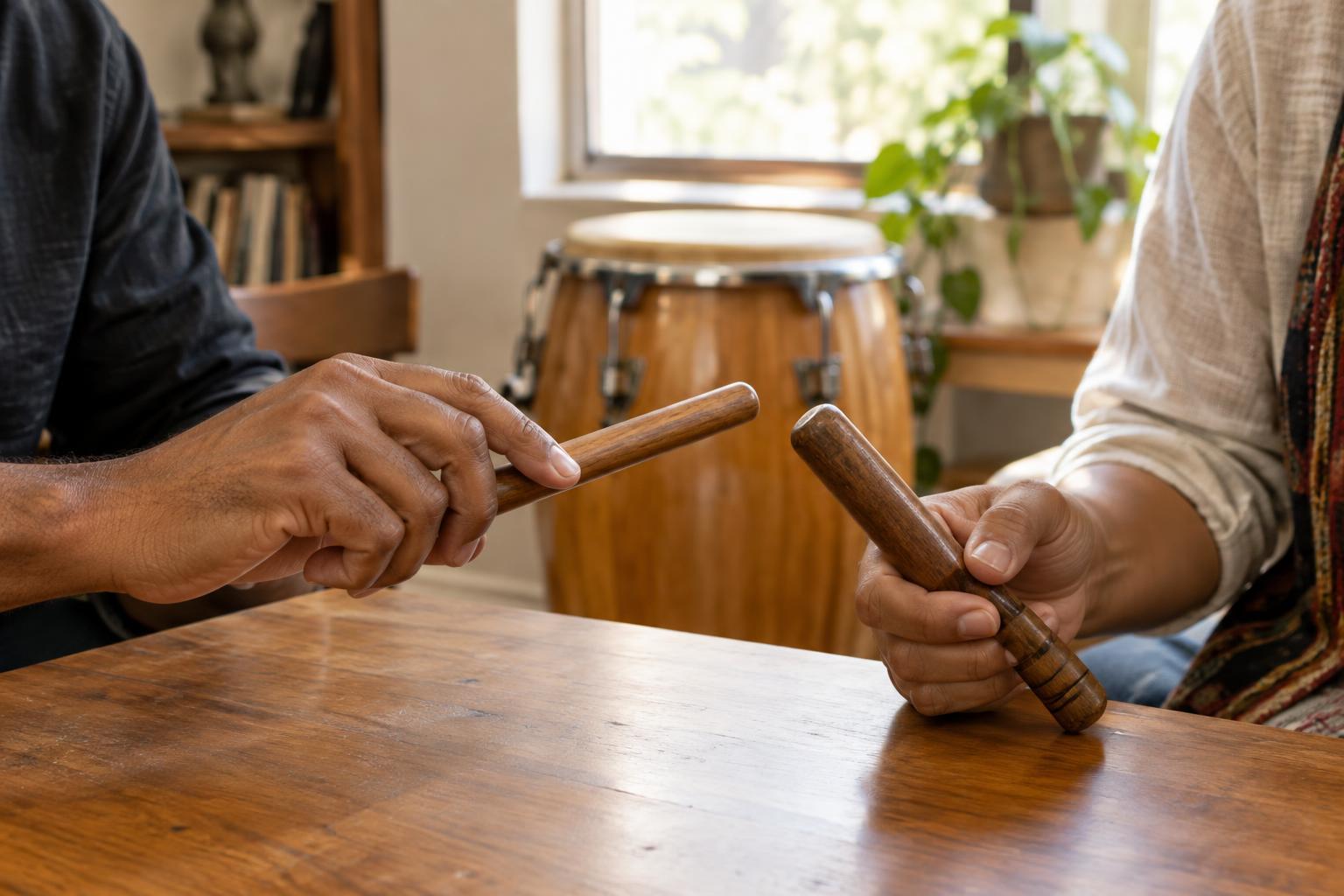
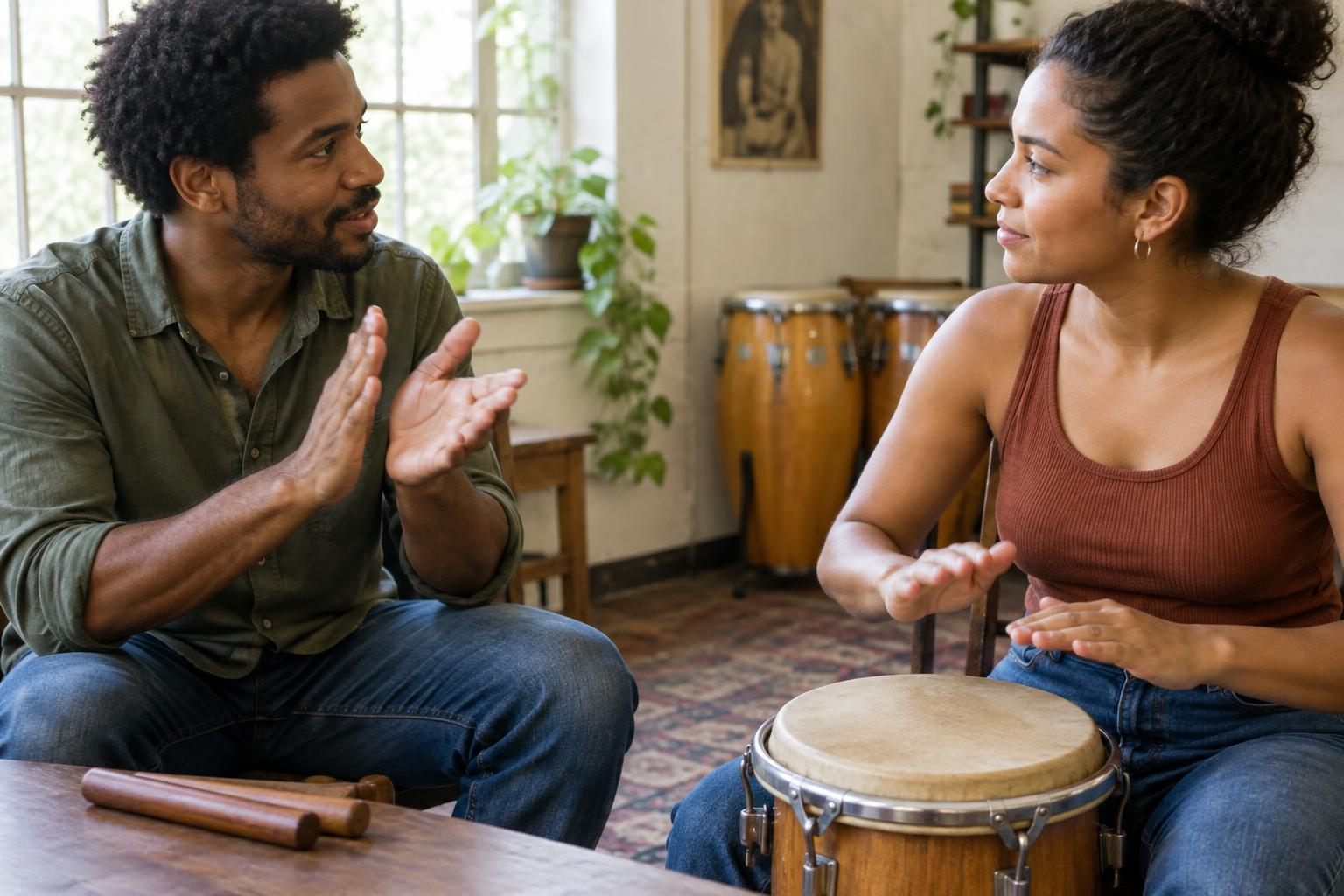
For a partner exercise, one person plays the call while the other improvises a two-bar answer. Agree on the count and on who begins the next cycle. The listener’s job is to notice a detail worth responding to: a gap, a cluster of notes, or a strong ending. Switch roles so both players practice listening as well as playing.
Call-and-response is a broad musical idea found in many traditions, including Afro-Cuban music, but this counting exercise is not a substitute for learning any tradition’s specific rhythms or ensemble roles. If you are practicing alongside clave-based music, listen to how the parts relate before adding your phrase. A useful answer respects the time already being established; it does not need to fill every open space.