Give the silence a destination
When your part drops out, the music keeps moving. A clean re-entry depends on knowing not just how many bars to rest, but exactly where your next sound belongs. Before practicing, mark the beat of the return: beat one of the following bar, for example, or the “and” after beat two. If the entrance falls between beats, say its subdivision aloud before you play.
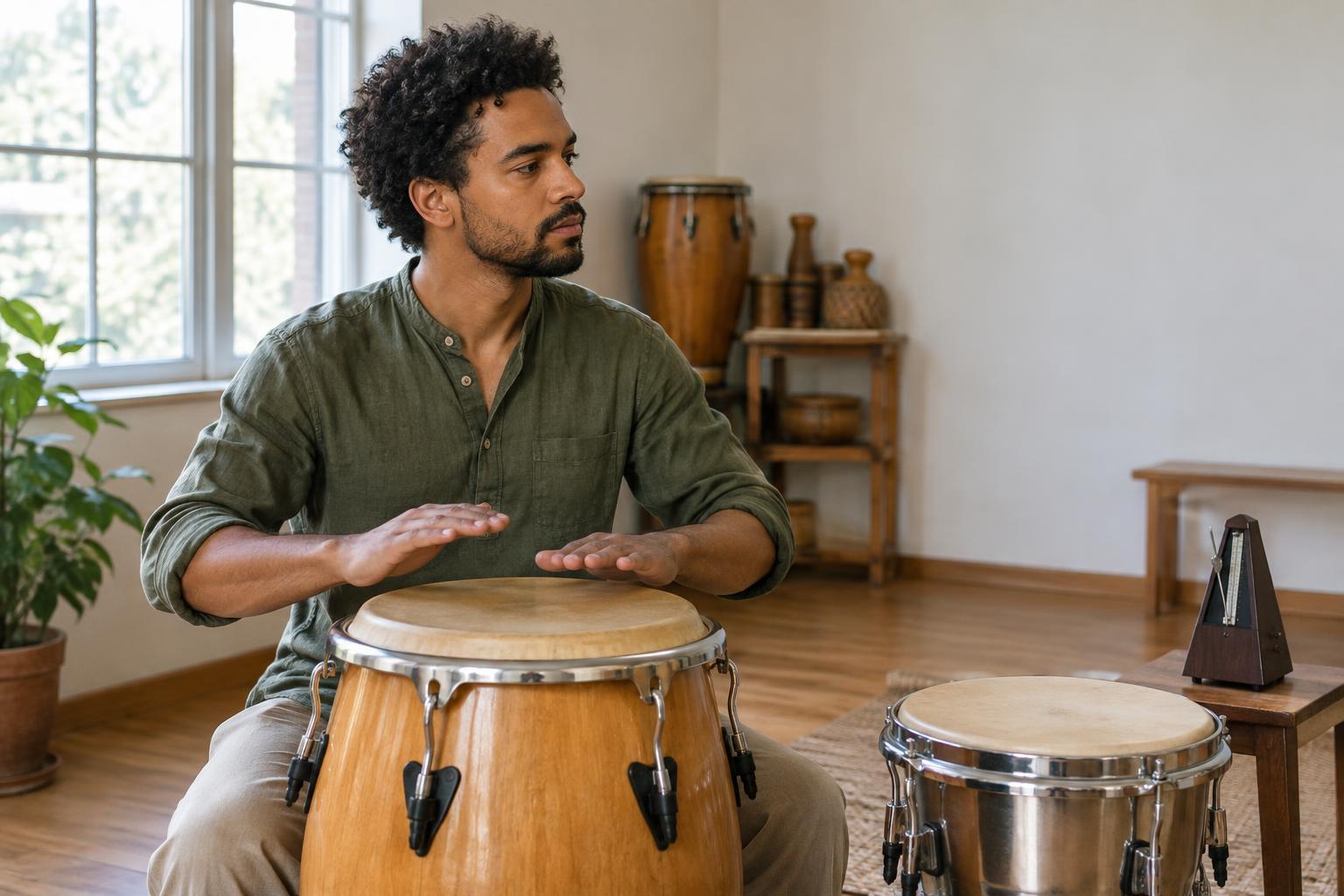
Start with a short pattern in 4/4: play one bar, rest one bar, then play the same pattern again. Choose something easy enough that you can focus on placement rather than technique, such as four evenly spaced claps. Set a metronome to a comfortable tempo and let it click on every beat. During the rest, count “one, two, three, four” without making your practice sound. Aim to make the first clap after the rest feel like a continuation of the phrase, not a fresh start.
Build from one silent bar to four
Once a one-bar rest feels reliable, extend the gap to two bars. Keep counting beats, but also label the bars: “bar one: one, two, three, four; bar two: one, two, three, four.” Bar labels prevent a common mistake: counting four steady beats accurately, then returning a bar too soon. Play several cycles before judging the result. If you miss an entrance, keep going until the next cycle rather than stopping to correct it mid-phrase.
Move to four-bar rests only when two bars feel settled. A simple structure is one bar of sound, four bars of silence, then one bar of sound. Count the silent bars as one through four while maintaining the beat within each. At first, you may need to speak the counts. Next, whisper them; finally, count internally. Reducing the volume of your counting is useful, but only if the timing stays steady.
Keep a pulse without filling every gap
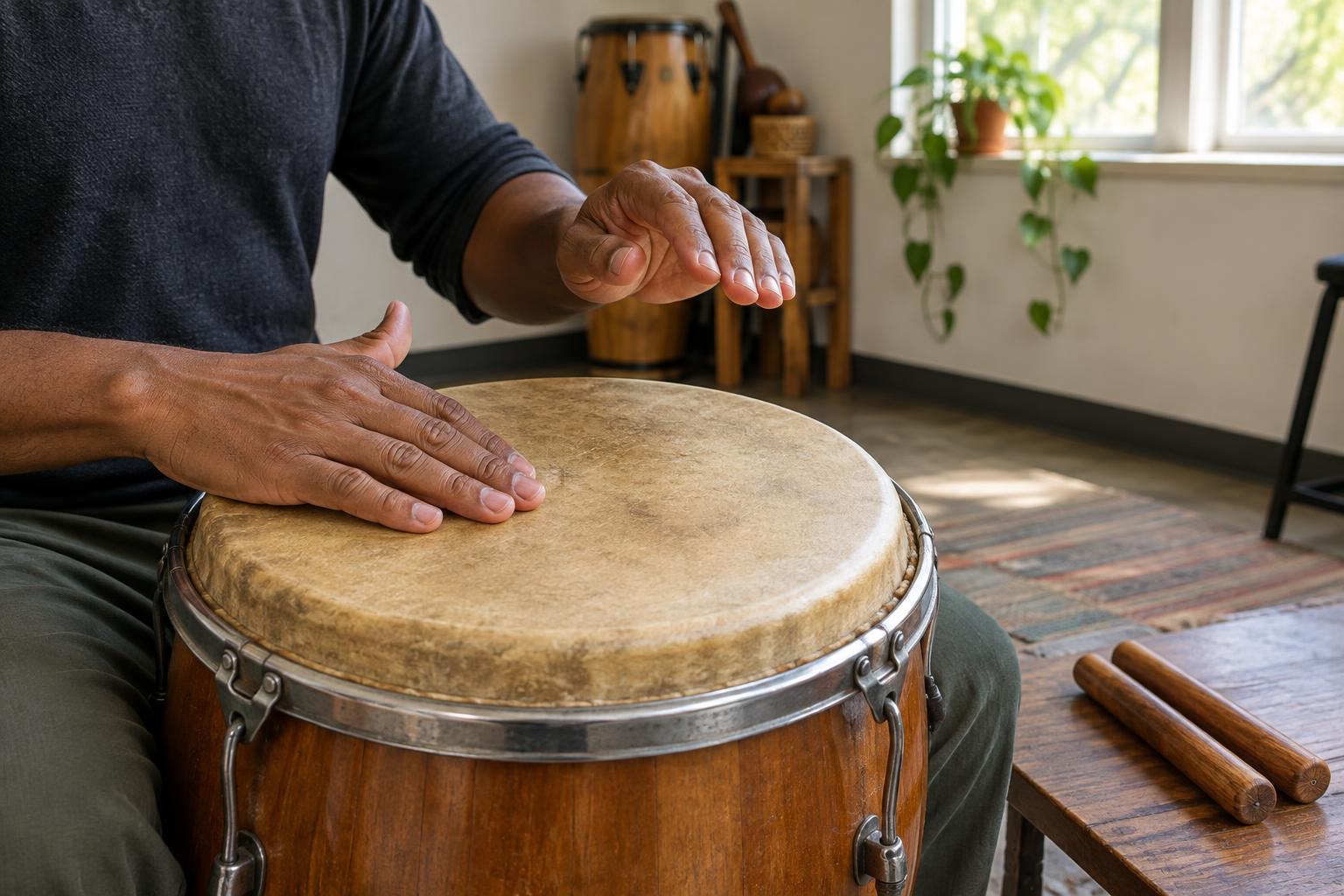
Physical motion can help you track silent time. Try gently shifting weight on the beat or moving one hand in a small, regular motion. Keep that motion going when you stop playing. It should support the pulse, not become an extra performance habit that makes you tense or distracts other musicians. If you are practicing an instrument that occupies both hands, a subtle breath or body sway may work better than tapping.
Also notice subdivisions: the smaller, even spaces between beats. In 4/4, you might quietly think “one and two and three and four and” during the final resting bar. This is especially helpful when your return falls on an offbeat. You do not have to count every subdivision through all four bars; a useful approach is to feel the larger pulse during most of the rest, then bring the smaller divisions into focus shortly before the entrance.
Test whether you are holding time or following the click
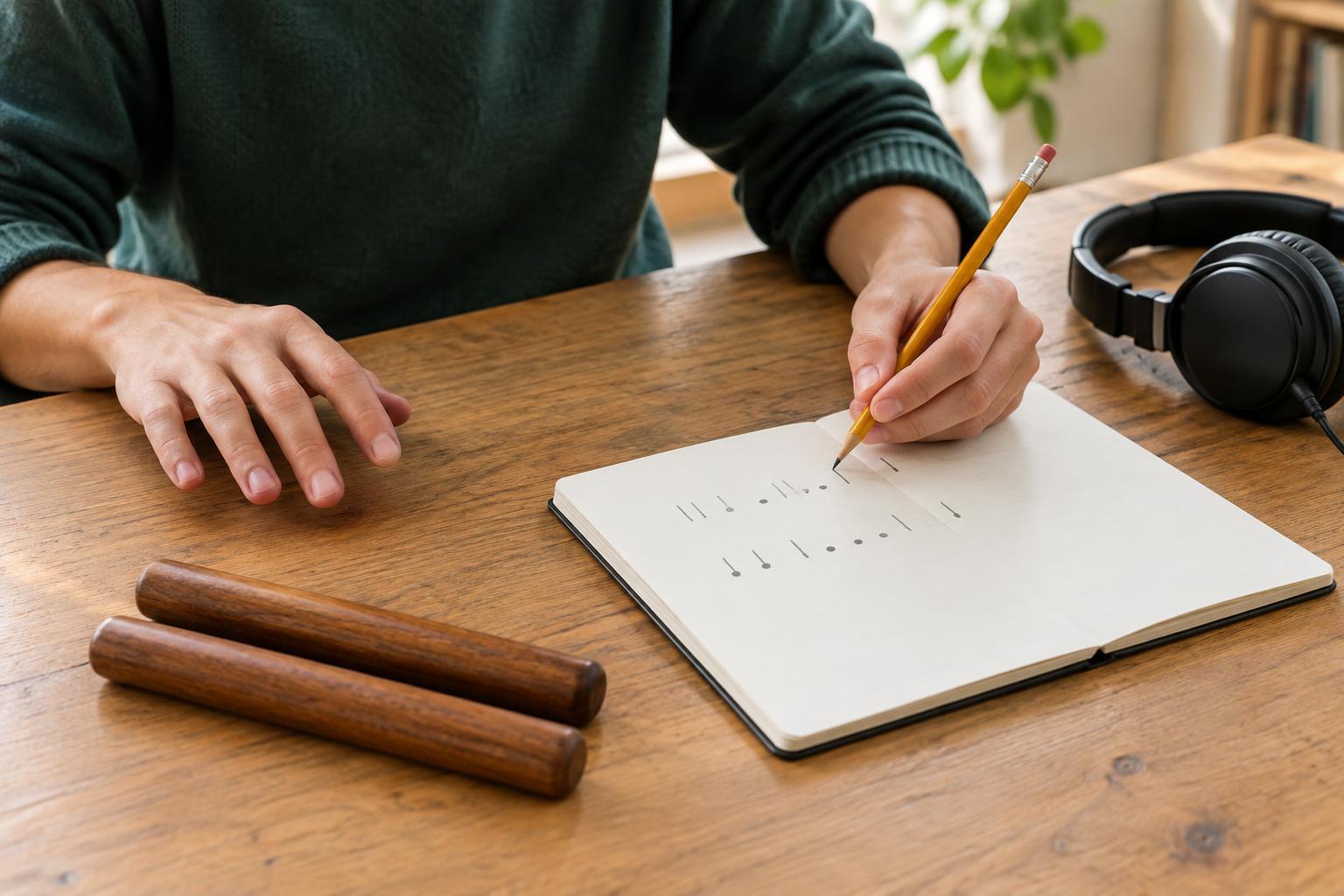
A metronome on every beat gives immediate support, but it can hide a weak internal pulse. After you can complete the exercise comfortably, set the click to mark fewer beats if your metronome allows it, or use a simple repeating backing pattern with a clearly identifiable bar line. Another test is to record yourself playing before and after the rest. Listen for whether your return lands where the continuing pulse predicts, not merely whether it sounds confident.
Vary the material without changing the goal. Rest for one, two or four bars in an unpredictable order; return with a single note instead of a full pattern; or place the entrance on a different beat. If an attempt goes wrong, shorten the rest or slow the tempo. Accuracy at an easy tempo is more useful than repeatedly guessing at a difficult one.
Connect your part to the larger rhythm
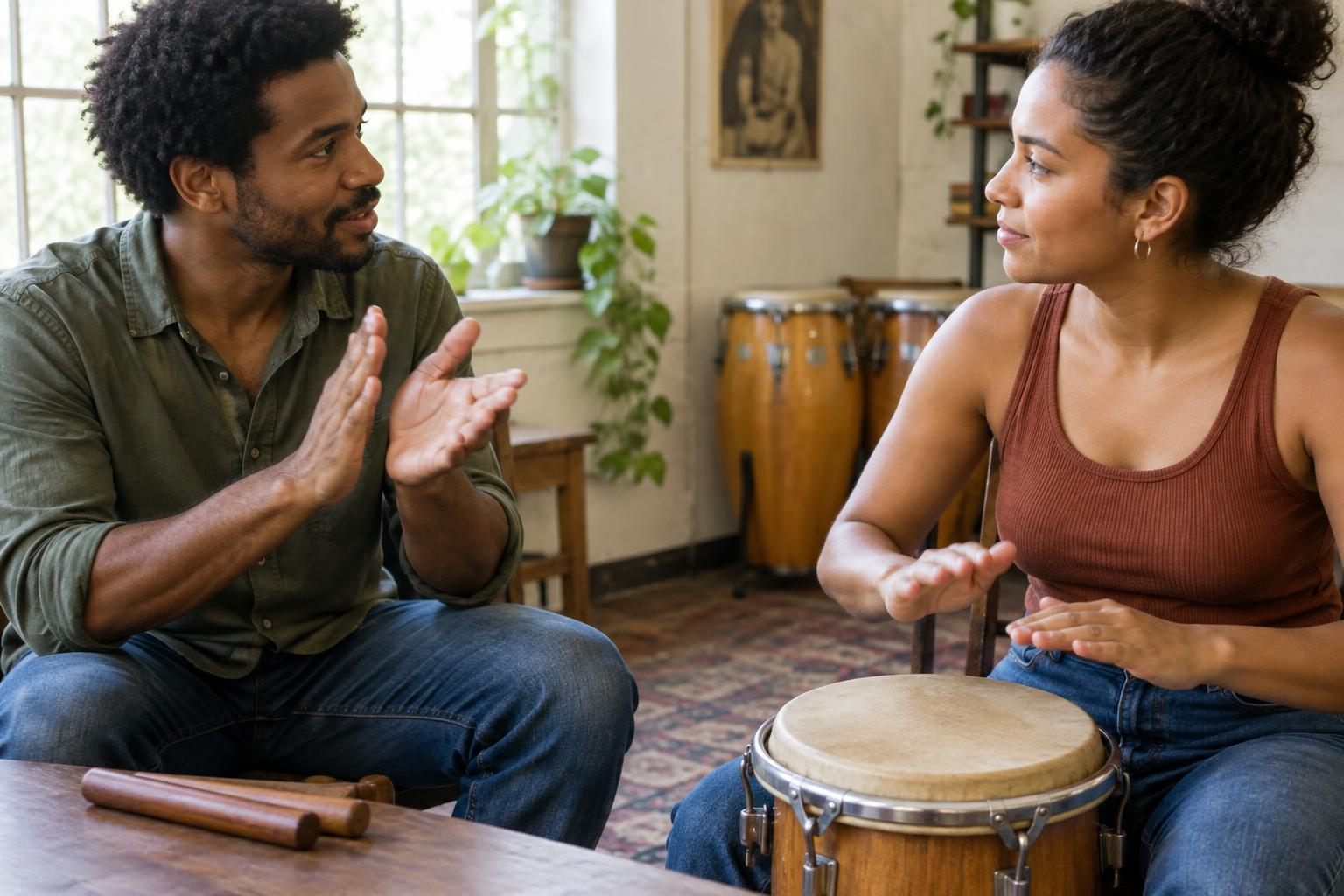
In an ensemble, rests give you a chance to listen. Follow a reliable part that continues through your gap, and notice how its accents locate the phrase. In music organized around clave, the clave pattern may help you hear where you are within a two-bar cycle. Its relationship to your entrance matters more than treating it as a generic counting device: identify the specific pattern and arrangement you are playing before using it as a guide.
Practice both ways: with another part to listen to, and alone with minimal cues. Listening builds awareness of the arrangement; practicing alone shows whether you can maintain time without leaning on someone else. When you can leave space for four bars and return in the right place, silence starts to feel less like an absence and more like an active part of the groove.