Count the bar, then count the cycle
In 4/4, one bar contains four quarter-note beats. Count two bars aloud as “1, 2, 3, 4 | 1, 2, 3, 4.” The vertical line marks the start of the second bar. After its beat 4, return to the first bar and repeat. You have counted eight beats in all, but the two bars are not interchangeable: only one “1” begins the full cycle.
To feel the difference, tap a steady beat with one hand while counting. Make a quiet extra tap with your other hand on the first beat of the first bar. Keep both bars at the same tempo; do not lengthen the gap before the cycle returns. The aim is to remember where you are while the pulse continues, not to announce the beginning with a heavy accent.
Give each bar a different job
If the two bars keep blending together, say “A, 2, 3, 4 | B, 2, 3, 4” for a few repetitions. A and B are temporary labels, not names for particular rhythms. Once you can alternate them comfortably, go back to counting both bars from 1. You should still know whether you are in the first or second bar.
Next, use your voice to mark the cycle while your hand keeps the beat. Say “start” only on the first beat of bar A; say the other numbers softly. After several passes, stop saying “start” but continue to imagine it. This separates the sound of a marker from your sense of position. If you can feel the return without making it louder, you are less likely to depend on an obvious accent in the music.
Add a pattern without letting it replace the count
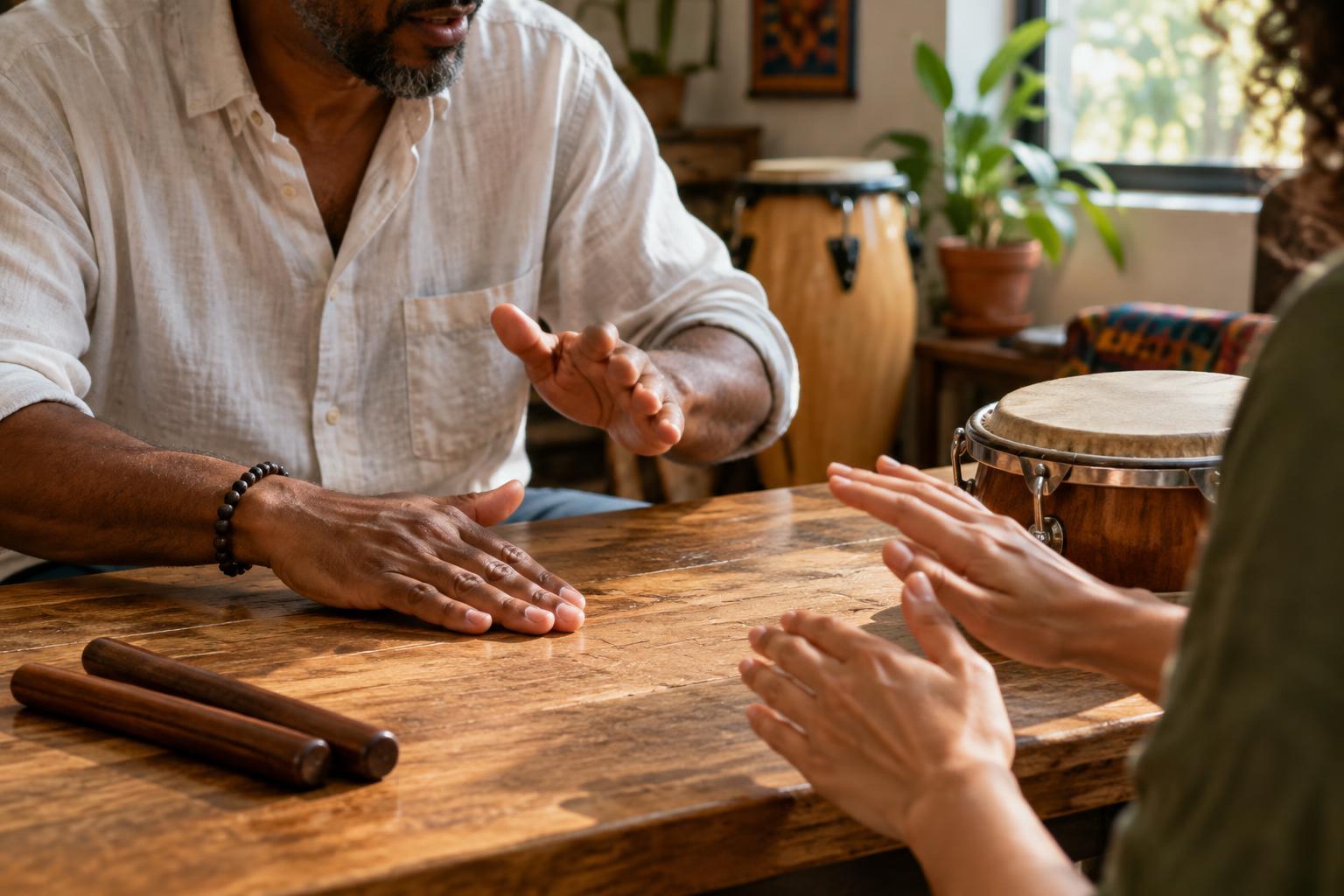
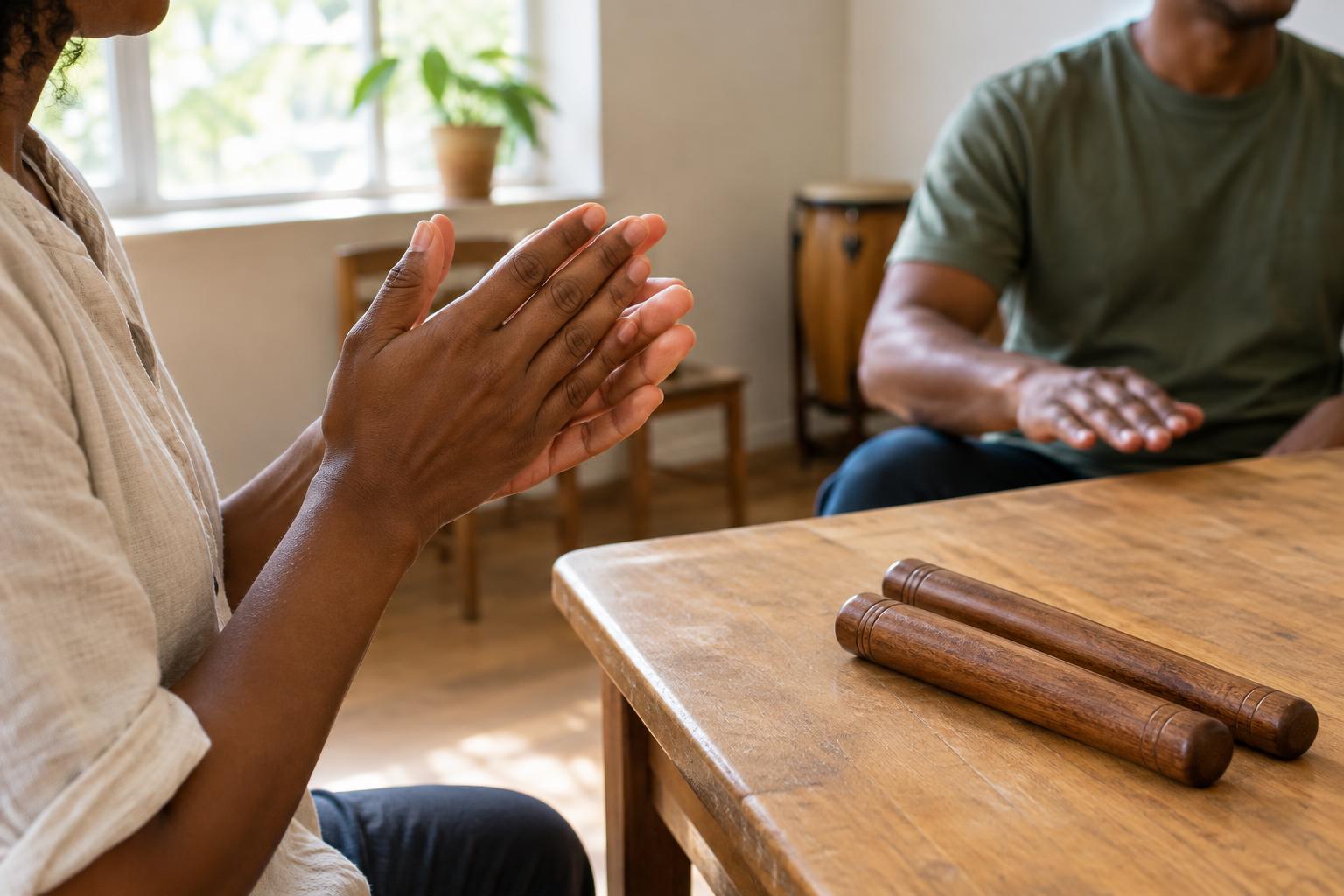
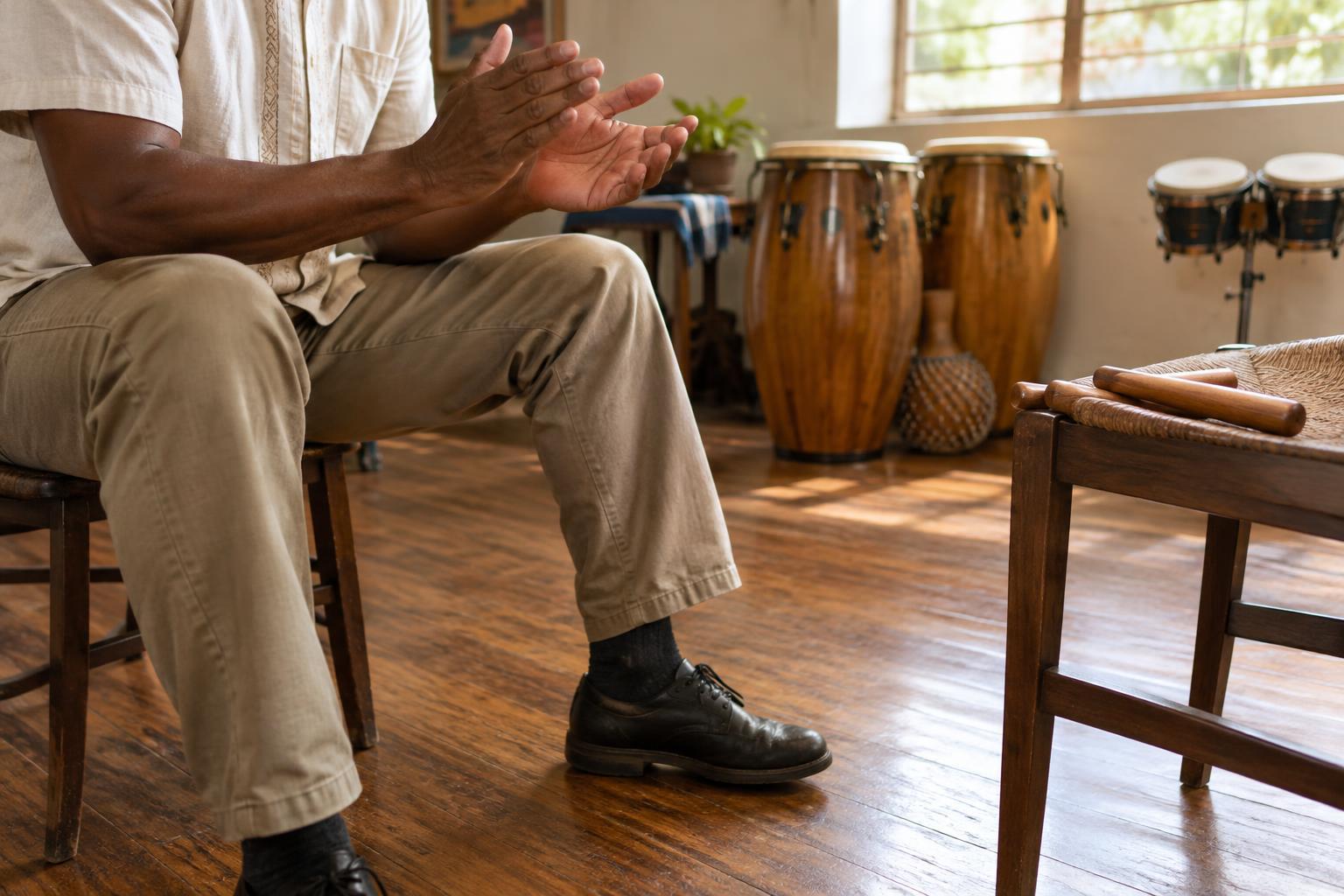
A repeating pattern can help you hear a two-bar span, but it can also distract you from the underlying beats. Try clapping once on beats 1 and 4 of bar A, then once on beats 2 and 3 of bar B. Keep tapping all four beats of each bar with your foot or hand. First count aloud; then count silently while maintaining the claps. If the claps make you rush, return to the plain eight-beat cycle.
For a different challenge, clap an even rhythm on every offbeat: say “1 and 2 and 3 and 4 and” through both bars, clapping each “and.” Your beat tap should stay on the numbers. This exercise does not make the offbeats a new first beat. It teaches you to keep the larger cycle in mind while another sound occupies the spaces between beats.
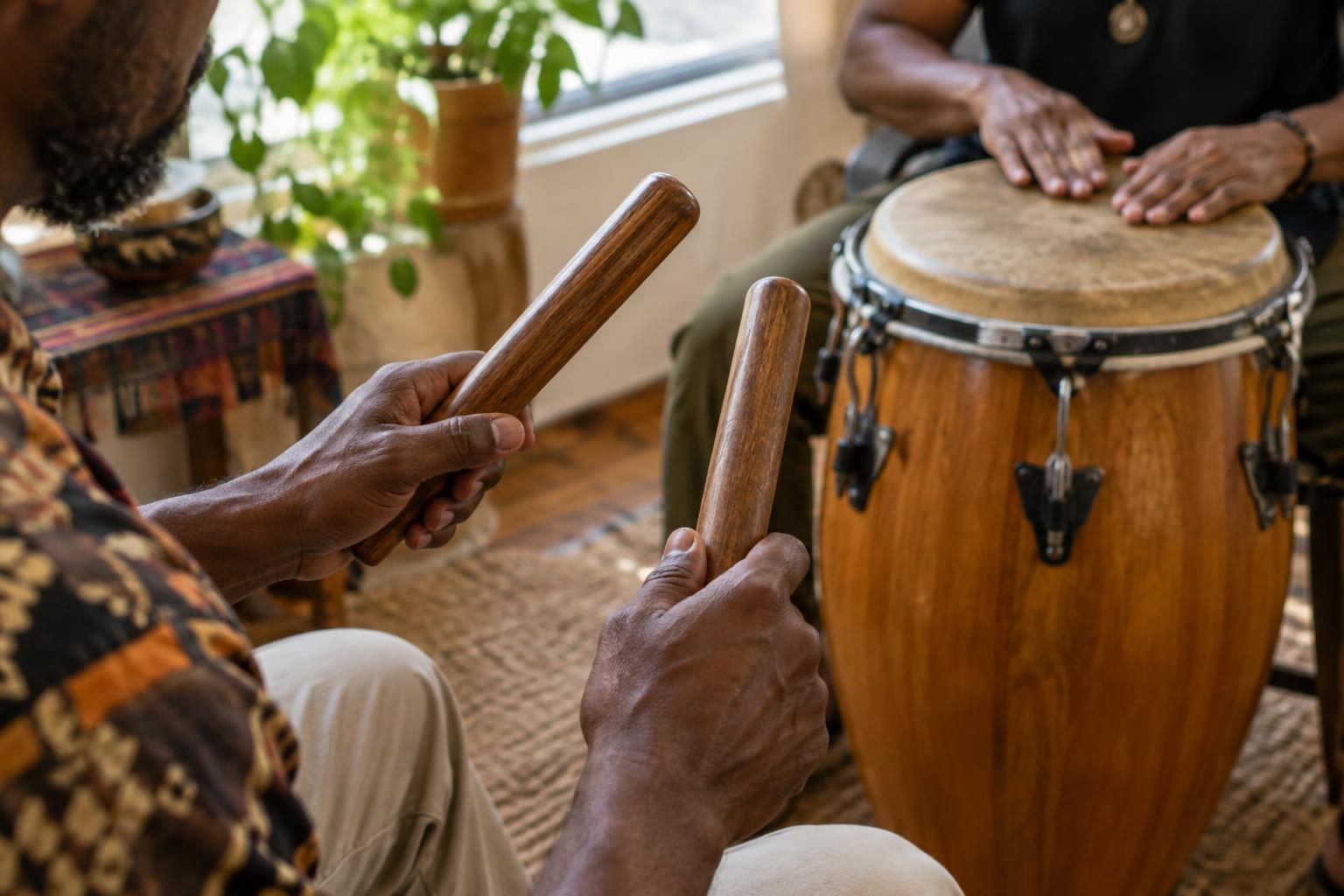
In Afro-Cuban music, a two-bar clave pattern can be an important point of orientation, but clave is more than a counting shortcut. Its relationship to other parts depends on the musical style and arrangement. Practice patterns with attention to their context rather than assuming that every piece marks the cycle’s beginning in the same way.
Practice losing your place safely
Deliberately look away from the count for a moment. Start your eight-beat cycle, then spend one or two bars listening only to your steady beat tap. Bring the spoken count back when you think bar A returns. If you are unsure, keep the pulse going and wait for another complete cycle instead of inserting or skipping a beat to make your answer fit.
You can also record yourself tapping the beat and making one soft sound at the beginning of each cycle. Play it back and join in at an arbitrary point. Count through what you hear before deciding where the first bar begins. Because the recording gives you a known marker, you can check your answer. Gradually make that marker quieter so your internal count does more of the work.
Use musical clues, but stay with the pulse
When listening to an arrangement, notice which events repeat over two bars: a bass figure, a percussion phrase, a melodic response, or a change in harmony may help you locate the return. Do not assume that the loudest note is beat 1. An upbeat or an anticipated bass note can make the music feel as if it has turned a corner before the bar line.
If you lose the first beat, listen for a phrase you can recognize, keep a quiet four-beat pulse, and test where that phrase falls on the next repetition. Then count both bars once more before settling on a starting point. Being able to hold the beat while postponing your answer is a useful skill: you can lose your place in a cycle without losing contact with the music.