Why silence makes syncopation clearer
When a rhythm feels empty, it is tempting to fill every space with another note. That can make the pattern harder to hear. In syncopation, an accent gains much of its character from its position against a steady pulse. The spaces around it help you recognize that position. Practicing a deliberate rest is therefore an active task: you keep track of time without making a sound.
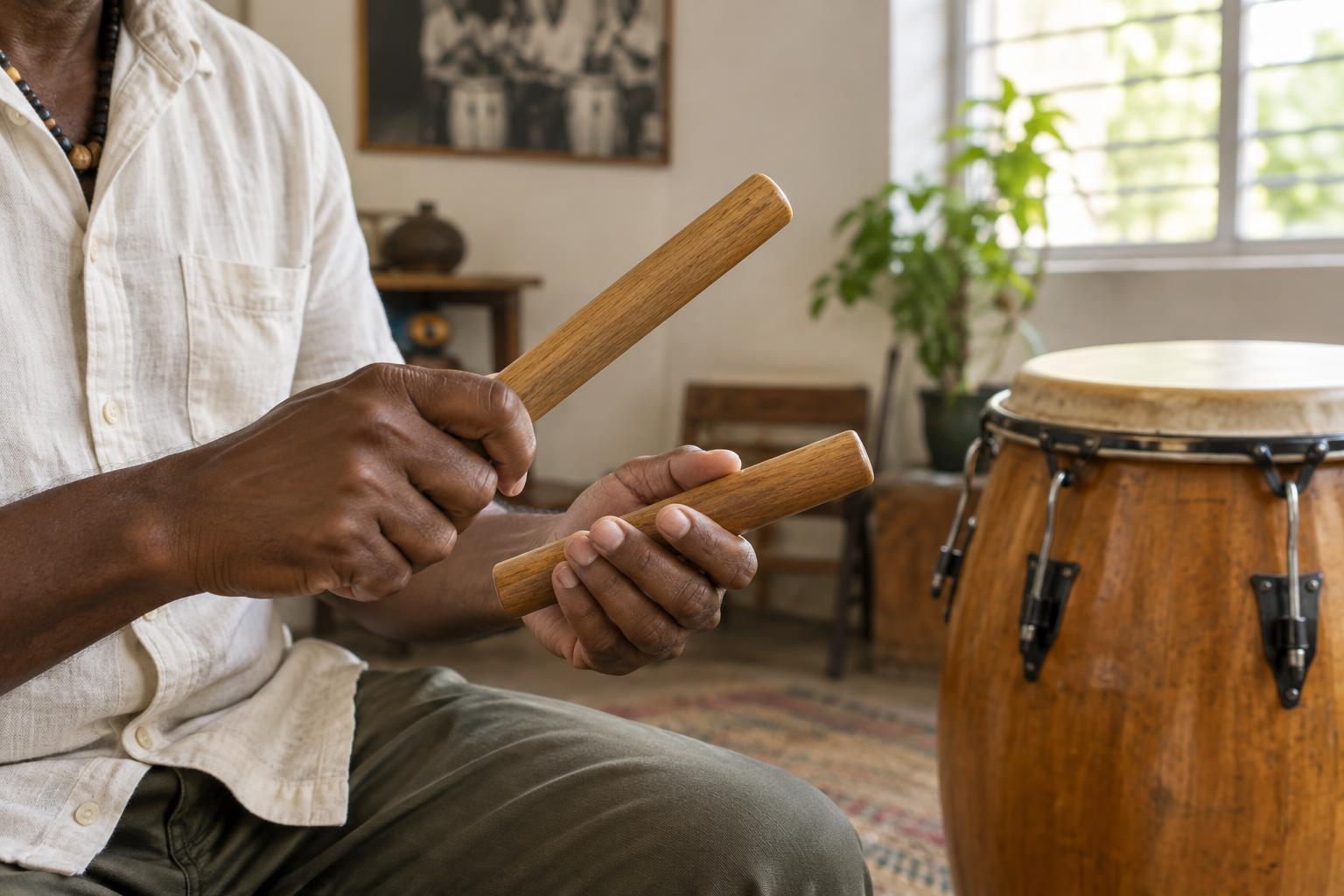
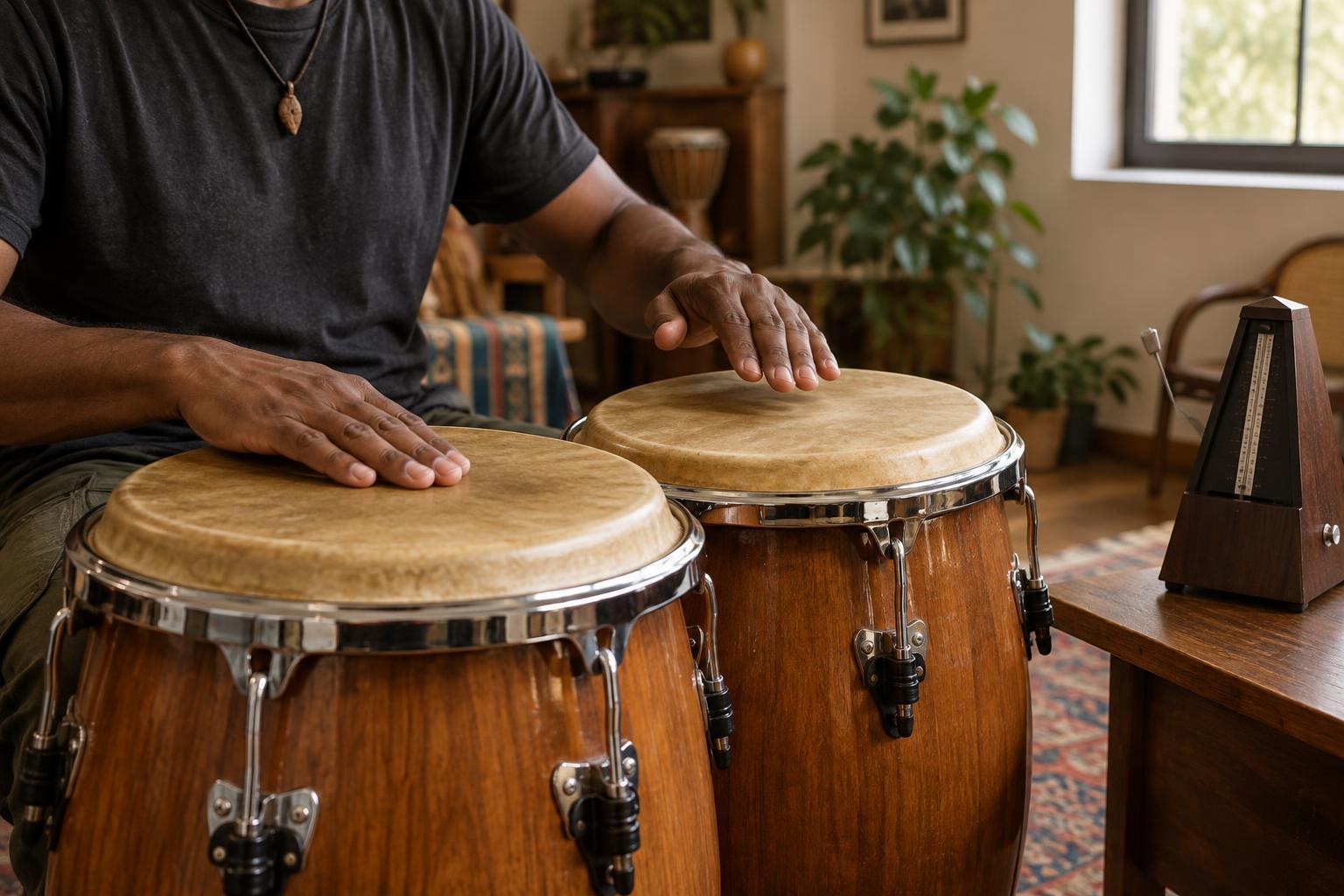
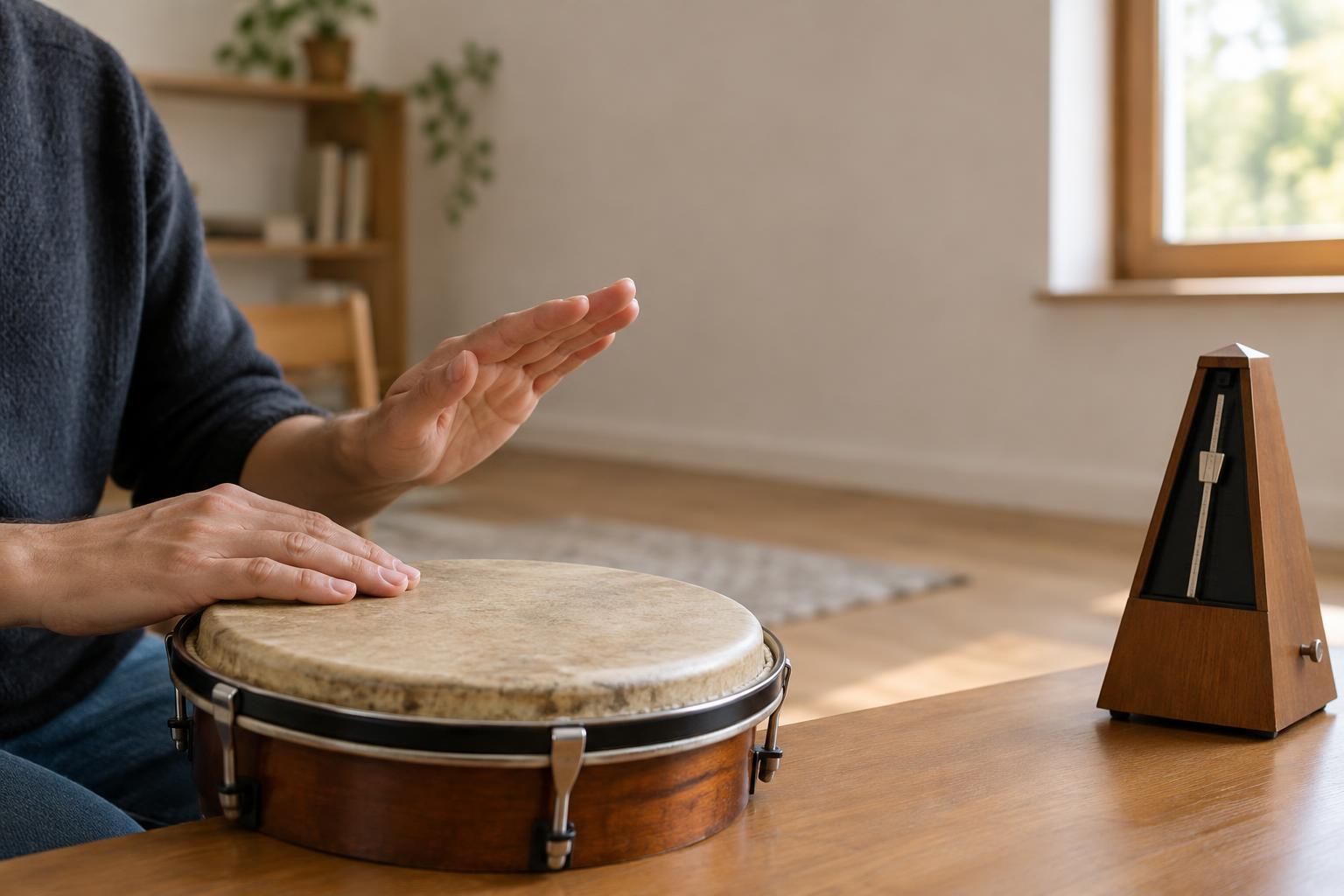
You do not need an instrument for this exercise. Clapping will make each attack easy to hear, while a quiet foot tap or gentle body movement can help you feel the underlying beats. If you use a drum, aim for a short, consistent sound rather than a roll or flourish. The goal is not speed or complexity. It is to know exactly when to play and when to leave room.
Set up one bar you can repeat
Start in 4/4 and count aloud, evenly: “1 & 2 & 3 & 4 &.” The numbers are the four beats; each “&” falls halfway between two beats. Tap your foot on each number. For the first few repetitions, do nothing else. Notice that your foot keeps moving through both the counted beats and the spaces between them.
Now clap only three times per bar: on 1, on the “&” after 2, and on the “&” after 3. Do not clap on 2, 3, 4, or the remaining “&” counts. Repeat the bar without inserting an extra clap before the next 1. In spoken form, the pattern is “CLAP & 2 CLAP 3 CLAP 4 &,” where the spoken counts without “CLAP” remain silent in your hands. Keep saying the full count so those silences have a precise length.
Pay special attention to beat 3. Your second clap comes just before it, but your hands must stay quiet when the foot lands on 3. After the clap on the “&” of 3, leave all of beat 4 empty. That longer gap gives you time to feel the return to 1. If you lose your place, stop, tap four steady beats, and begin again rather than adding a note to find the pulse.
Build control without speeding up
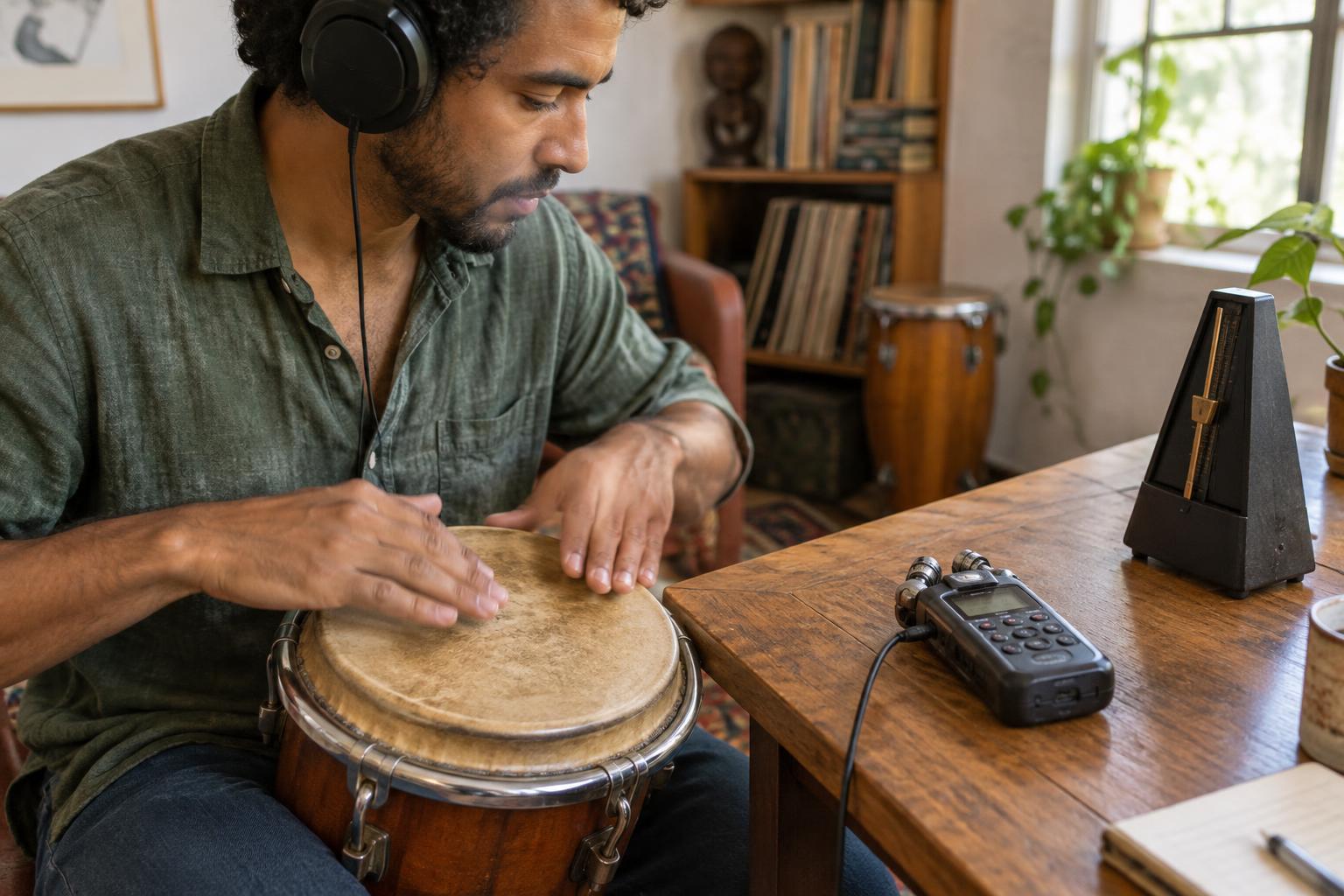
Work in short stages. First, count and clap slowly enough that you can name every rest. Next, count at the same pace but lower your voice on the silent counts; do not omit them. Finally, count internally while your foot continues to mark the beats. Record a few repetitions if that helps you listen back. Check whether the offbeat claps fall between foot taps and whether the empty beat 4 stays empty.
For a useful variation, play the same three claps for three bars, then make the fourth bar entirely silent while maintaining the foot tap. Return to the pattern on the following 1. This tests whether you can carry the pulse without relying on the sound of your hands. Another variation is to switch roles: have a partner tap the beats while you clap the pattern, then trade parts. Neither person should chase the other’s attacks; both should share the same steady count.
Take the exercise into listening
When you listen to an ensemble, choose one part at a time. Follow a steady pulse, then notice where another part enters between beats and where it leaves space. Try tapping the pulse quietly without copying every sound you hear. This can reveal how a sparse part remains connected to the groove even when it does not play on each beat.
This practice pattern is a general timing exercise, not a clave pattern or a substitute for learning a musical tradition. In Afro-Cuban music, rhythmic parts work in relationships shaped by particular styles, instruments, and players. Listen to complete recordings and, when possible, learn from knowledgeable musicians before assigning a named role to a rhythm. The transferable lesson here is modest but valuable: a rest has a place in the cycle. If you can feel that place, you can make fewer notes sound more intentional.