Start with one beat and three equal parts
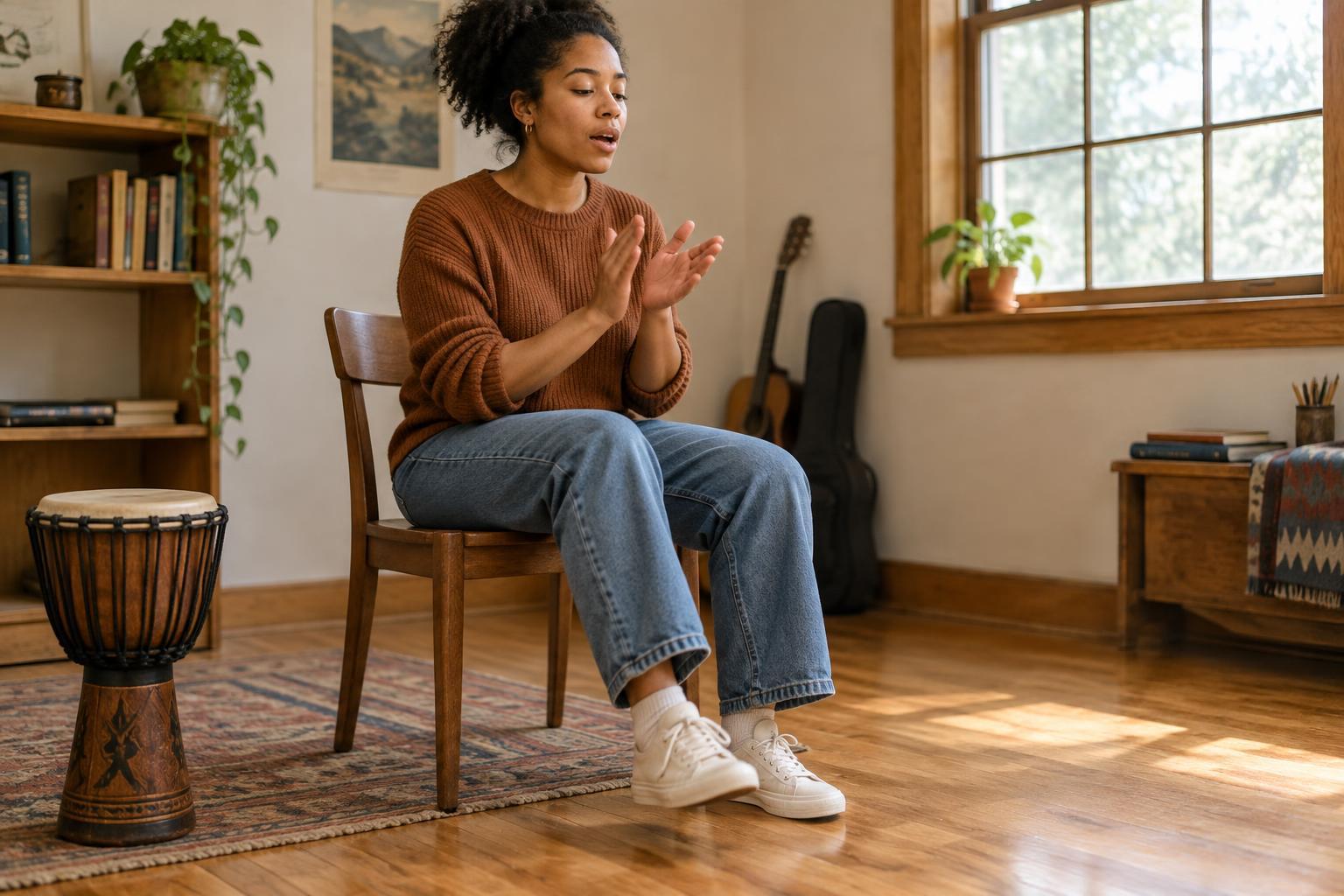
A triplet divides a beat into three evenly spaced parts. You can feel that division without an instrument: tap a comfortable, steady beat with one foot and say “one-trip-let, two-trip-let, three-trip-let, four-trip-let.” Each numbered word lands with a foot tap. Keep the syllables between taps as even as you can. Then repeat the four-beat cycle without speeding up at the start of a new bar.
Choose a pace slow enough that you can speak clearly. At first, the goal is not to make an exciting rhythm. It is to keep the foot taps equally far apart while fitting three spoken sounds into each beat. If your foot starts following your voice instead of marking the beat, stop, tap four plain beats, and add the words again.
Give your voice, foot and hands separate jobs
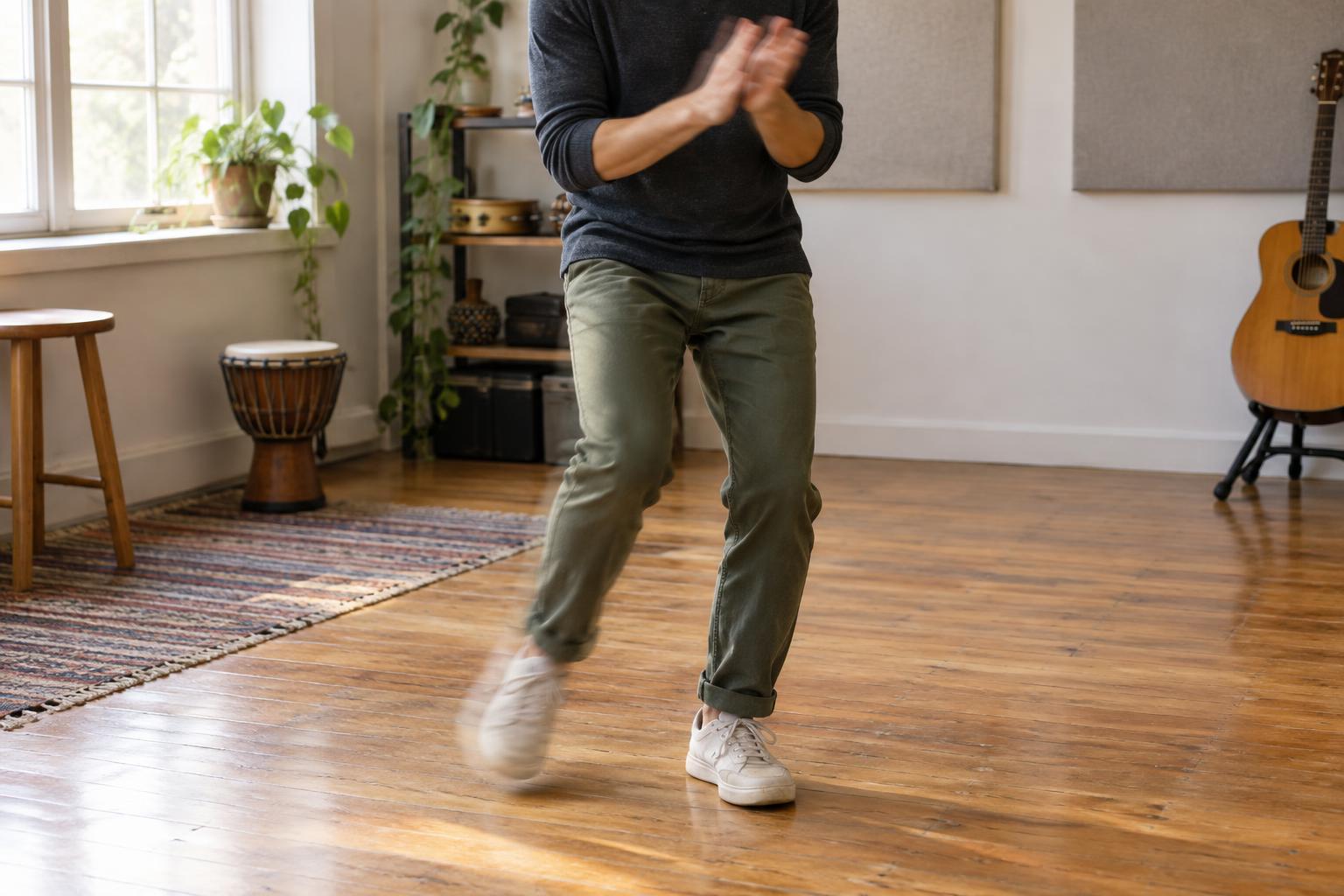
Keep your foot on the four numbered beats and speak every triplet syllable. Now clap only on the numbers: “ONE-trip-let, TWO-trip-let, THREE-trip-let, FOUR-trip-let.” Your clap and foot should meet each time. Continue until you can do it without pausing to plan the next beat.
Next, keep the same foot taps and spoken syllables, but move the clap to “trip,” the middle part of every beat. Finally, clap on “let,” the last part. Resist the temptation to move your foot toward the clap. The foot is your reference point; the changing clap helps you locate each of the three positions around it.
You can make the roles easier to hear by tapping a hand on your thigh instead of clapping. A quiet tap often reveals whether you are placing a note carefully or simply rushing toward the next beat.
Turn the positions into a short pattern
Once each position feels familiar, try this four-beat pattern: clap on “one,” then on “trip” after two, then on “let” after three, then on “four.” Keep saying all twelve syllables and tapping all four foot beats. In words, the claps land on the first part of beat one, the middle part of beat two, the last part of beat three, and the first part of beat four.
Repeat the pattern several times. Notice that the gap between claps changes even though your foot and voice stay steady. If you lose your place, return to clapping on every numbered beat for one cycle, then begin the pattern again. This reset is part of the drill, not a mistake to hide.
Use silence to check your timing
After a few repetitions, speak the triplets more softly. Then try one cycle in which you say only the numbers aloud while imagining “trip-let” between them. Keep the same clap pattern. Bring back all the syllables on the following cycle to check whether the claps still fall where you intended.
You can also reverse that test: speak every syllable, keep the foot going, and leave out the hand claps for one cycle. When the claps return, aim for the same positions rather than starting the pattern over early. Short, accurate attempts are more useful than a long run in which the pulse gradually shifts.
Carry the feeling into listening
Triplets are one way musicians organize subdivisions, but not every three-part sound has the same accent or feel. In a recording, listen first for a dependable pulse. Then ask whether a phrase seems to place three evenly spaced sounds within a beat. Try speaking your triplet syllables quietly along with a short passage, and notice whether they fit without forcing the music to match your count.
This drill is a coordination tool, not a recipe for any particular tradition. Afro-Cuban music, for example, contains many distinct rhythmic approaches; its patterns should not be reduced to a generic triplet exercise. A steady foot, flexible hands and an attentive voice can help you listen more closely before you try to name or reproduce what you hear.