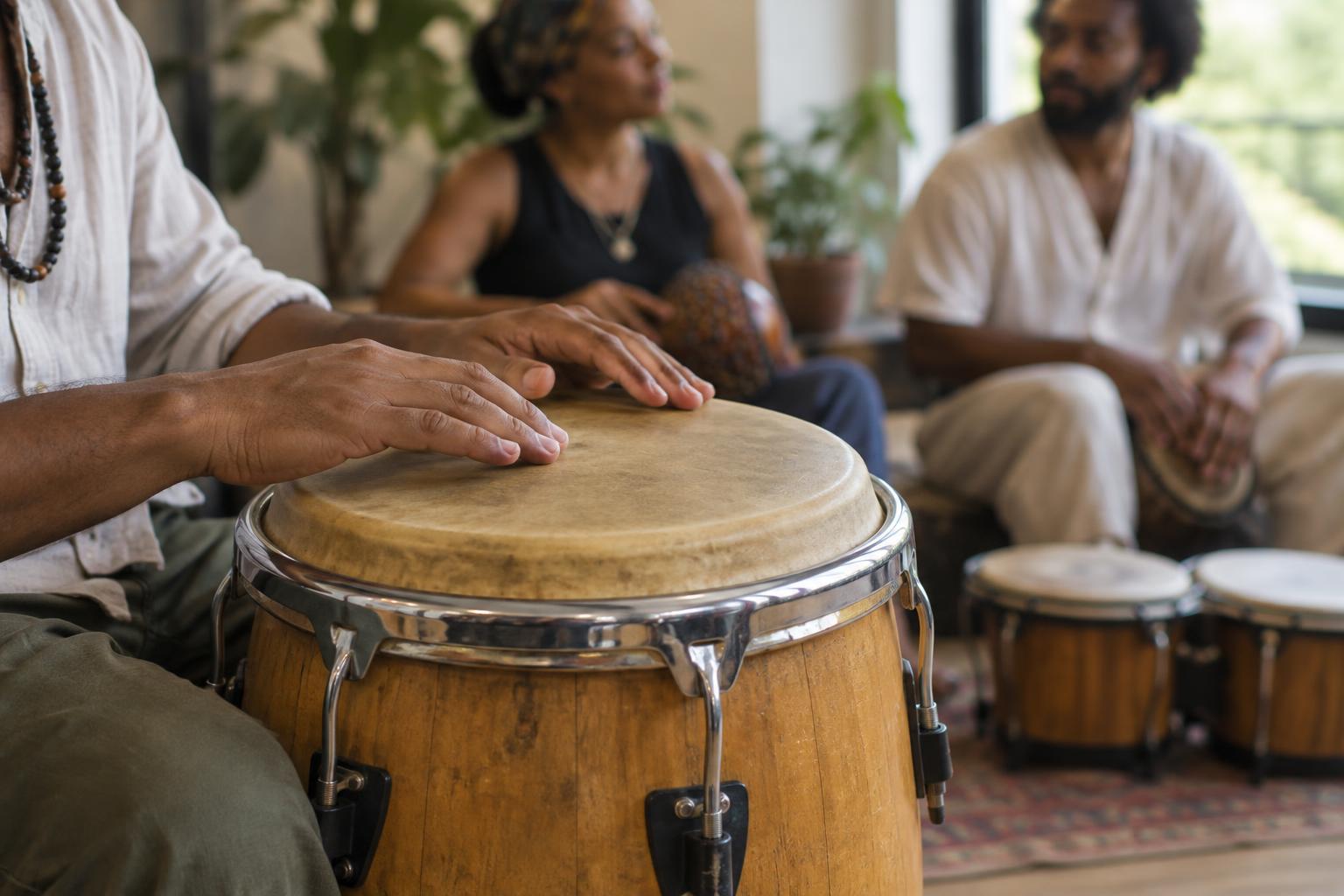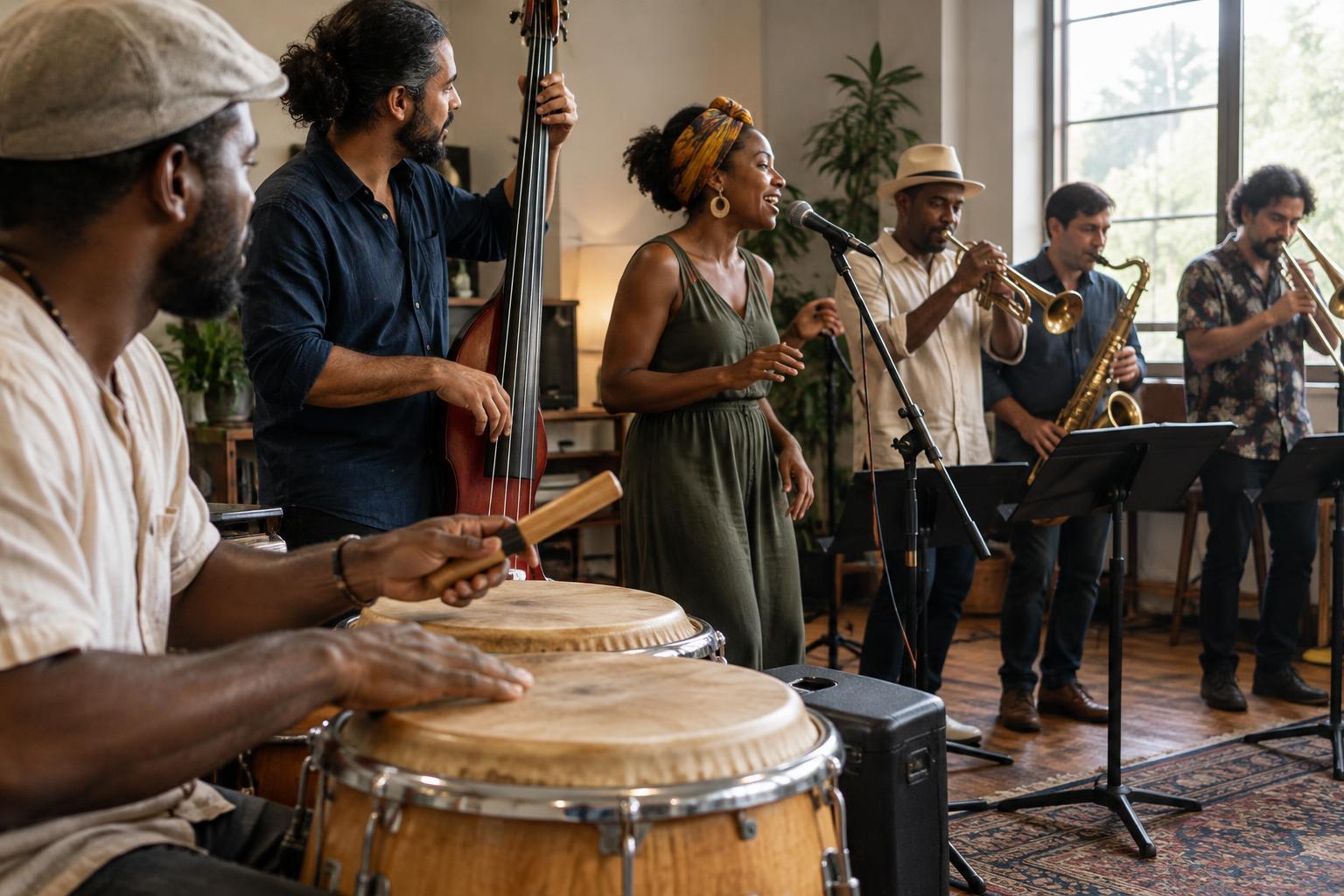
Start with the rhythm, not the instrument
A short musical idea may appear more than once in a piece without being played by the same instrument each time. A percussionist taps a distinctive pattern; later, a horn plays notes with similar spacing; later still, a singer places a phrase in much the same spot. These moments can make an arrangement feel connected even as its sound changes. Hearing that connection is easier when you listen for when the sounds happen, rather than for their pitch or tone.
Choose a phrase you can remember after one listen: perhaps two quick attacks followed by a longer gap. Tap it gently while the recording continues. When another part enters, ask whether its attacks fall in roughly the same places. The new part need not copy every detail. It may stretch the last note, add a pickup or leave out one attack while keeping enough of the shape for you to recognize it.
Notice what changes at each hand-off
Passing an idea between parts changes more than its sound. A dry percussion accent can make a pattern feel like part of the groove. Played by a bass, a similar pattern may draw attention to movement between notes. In a vocal phrase, it can become part of the lyric’s delivery. When horns play it together, the idea may stand out as a response or a signal that a new passage is beginning. These are listening possibilities, not fixed jobs for any instrument.
Pay attention to what happens around the new entrance. Does the first player stop, leaving room for the next one? Do both parts overlap for a moment? Does one keep repeating the pattern quietly while the other brings it forward? An overlap can make the idea sound continuous, while a clean exchange can make the change of color more striking.
In music built around interlocking rhythmic parts, including many Afro-Cuban styles, it is especially useful to hear an idea in relation to the ongoing groove. Do not assume that every similar-sounding phrase is a direct imitation. Parts can share accents because they respond to the same rhythmic framework. Listening for both the resemblance and the difference is more useful than trying to assign a single origin to every phrase.
Use a simple three-pass listening exercise
On the first pass, listen without stopping and pick one brief figure that catches your ear. It might be a vocal response, a bass rhythm or a compact horn phrase. On the second pass, tap only that figure when you hear it. If you lose it, return to the next clear appearance rather than trying to track every note at once. The aim is to hold its rhythmic outline in memory.
On the third pass, stop tapping when the original player drops out. Keep listening for another part that takes up a similar outline. Name the change in ordinary words: “the bass plays it lower,” “the singer adds a note,” or “the horns make it louder and longer.” If you hear no hand-off, that is a useful observation too. Perhaps the figure stays with one part while the accompaniment changes around it.
You can try the same exercise with a friend. One person taps the first figure; the other listens for a possible return elsewhere in the arrangement. Compare what each of you heard before replaying the passage. Differences may reveal that one listener followed the spacing of the attacks while the other followed a particular sound.
Hear the larger shape through small returns
A returning rhythm can help link sections that otherwise contrast. An earlier figure might reappear after a quieter passage, or one part might hint at it before the full ensemble plays a stronger version. Once you recognize the return, you can ask what has changed: the number of players, the register, the length of the phrase or the space left around it. Those choices can give a familiar idea a different weight.
Not every recurrence is meant to be prominent. Some hand-offs are subtle, and you may hear a connection on one listening session that seems less convincing on another. Treat your first impression as a question to test, not a rule to impose on the music. Following a small rhythm through an arrangement gives you a practical way to notice how musicians create variety while keeping a piece coherent.