Start with the song, not a fixed beat
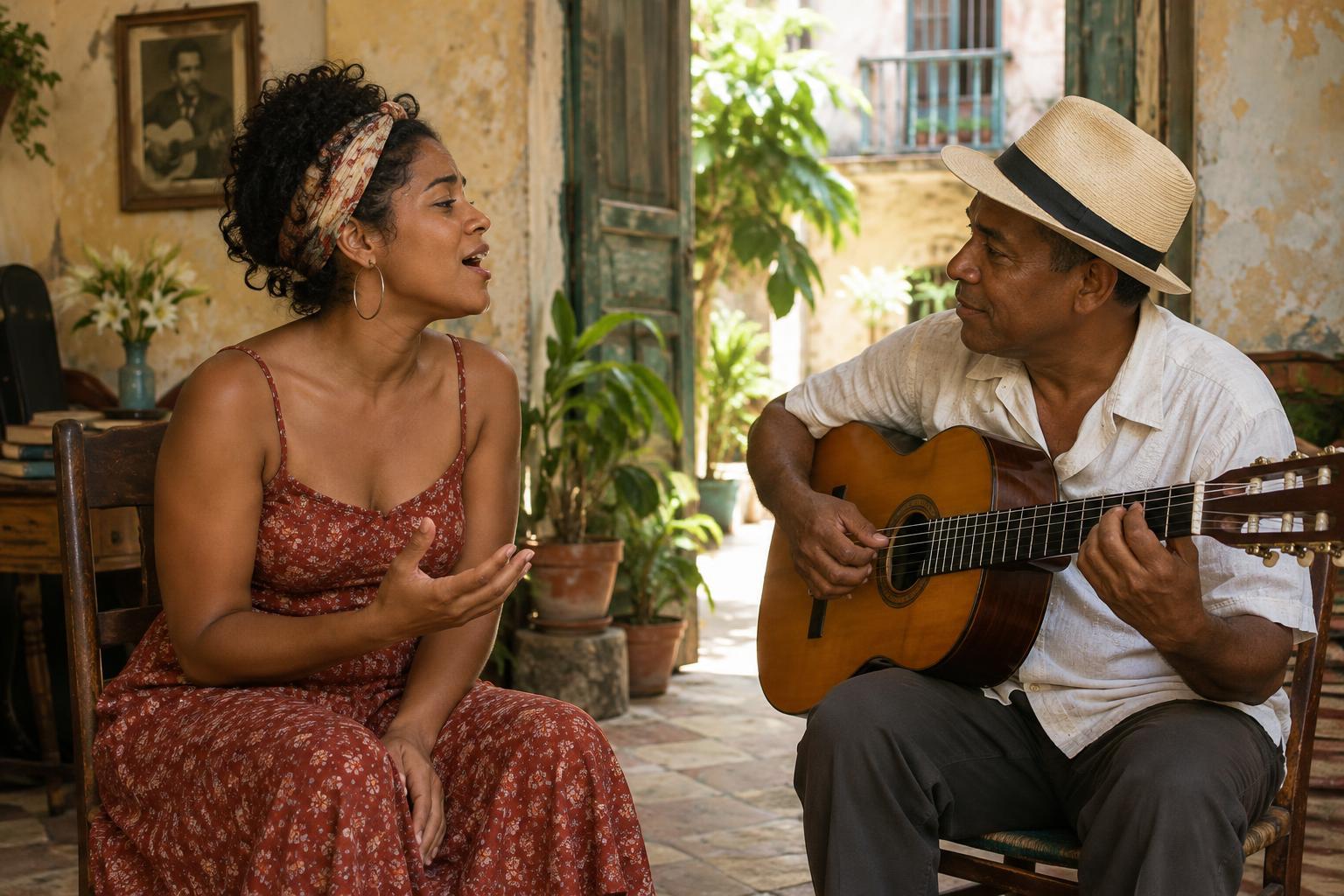
Cuban trova is a tradition of songmaking and performance often associated with a singer and guitar. That small-scale setting can make it sound simple at first, but it leaves plenty to notice: the shape of a melody, the timing of a lyric, and the way an accompanist prepares for the next phrase. Rather than looking for one rhythm that identifies every trova performance, start by asking how the performers bring a particular song to life.
A useful first listen is almost conversational. Where does the singer pause? Does the guitar fill that space, hold a chord, or leave it open? Notice whether the vocal line lands squarely with the accompaniment or stretches across it. These choices can make a familiar verse feel intimate, playful or reflective. They also remind us that a written song and a performance of that song are not quite the same thing.
Hear what the guitar is doing
The guitar in a trova performance may provide a steady harmonic foundation, articulate a bass note before a chord, or add a short answering figure after the voice. Its job is not necessarily to keep every beat equally busy. Listen for changes in texture: a lightly picked passage may give the words room, while fuller strumming can lift a refrain or mark a transition. Even when one player both sings and plays, the two parts can seem to respond to each other.
To hear that relationship, choose a recording and listen once for the voice alone. On a second pass, attend to the guitar whenever the singer takes a breath. On a third, listen for places where both parts change together. You do not need to name the chords to notice that a change of harmony makes a lyric feel settled, expectant or unresolved.
Place trova among neighboring traditions
Trova has connections with other Cuban song and dance traditions, but it is more useful to hear those connections than to treat the styles as interchangeable. A song associated with trovadores might be performed in a bolero-like manner, for example, or arranged for a larger ensemble. Son performances can also feature prominent singing and guitars or related string instruments. Similar instruments do not, by themselves, tell you which tradition you are hearing; phrasing, accompaniment, repertoire and performance setting all matter.
The word “trova” can also cover different people and approaches. It is worth distinguishing the earlier tradition of itinerant and local songmakers from later movements that used the term in new contexts. Neither label guarantees a single sound. When exploring a recording, look for information about the performer and the song, then let what you hear guide your questions. Who seems to lead the timing? Is there room for an instrumental response? How much does the arrangement emphasize dancing, storytelling or both?
Try a focused listening exercise
Pick a short verse and mark its phrases by tapping one finger each time the singer begins a new line. Resist the urge to impose a strong dance pulse immediately. First find the recurring shape of the words and melody. Then tap a comfortable underlying pulse and notice whether the singer begins before it, on it or just after it. If the timing feels flexible, keep listening rather than forcing every syllable into an even grid.
Next, hum the final note of each vocal phrase and listen to what happens before the next one begins. A guitar fill may answer the singer; a sustained chord may let the last word linger. Finally, compare two performances of the same song if you can find them. Focus on one feature, such as the length of a pause or the weight of a refrain, rather than trying to judge which version is definitive. Trova becomes easier to appreciate when you hear both the song’s recognizable shape and the choices performers make within it.